Photosynthesis Set 2
 Call Kai
 Learn
Learn Practice Test
 Spaced Repetition
 Match
Match Flashcards
1/15

There's no tags or description
Looks like no tags are added yet.
Name | Mastery | Learn | Test | Matching | Spaced | Call with Kai | Chat |
|---|
No analytics yet
Send a link to your students to track their progress
16 Terms
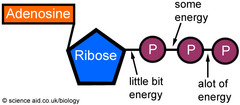
Adenosine Triphosphate (ATP)
compound used by cells to store and release energy
Heterotroph
An organism that gets its food from other living organisms.
Autotroph
An organism that is able to capture energy from sunlight or chemicals and use it to produce its own food.
Photosynthesis
A process used by plants and other autotrophs to capture light and energy and use it to power chemical reactions that convert carbon dioxide and water into oxygen and energy-rich carbohydrates, such as sugars and starches.
Pigment
light-absorbing molecule used by plants to gather the sun's energy
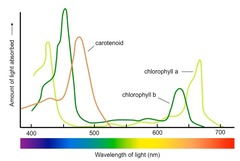
Chlorophyll
principal pigment of plants and other photosynthetic organisms
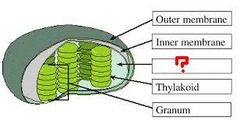
Thylakoid
saclike photosynthetic membranes found in chloroplasts
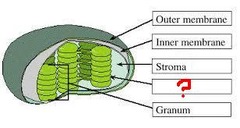
Stroma
fluid portion of the chloroplast; outside of the thylakoids
NADP+ / NADPH
carrier molecule that transfers high-energy electrons from chlorophyll to other molecules
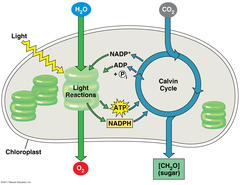
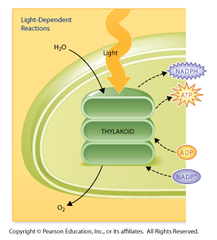
light-dependent reactions
set of reactions in photosynthesis that use energy from light to produce ATP and NADPH and Oxygen as a byproduct
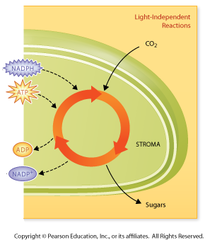
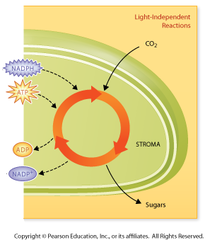
light-independent reactions
set of reactions in photosynthesis that do not require light; energy from ATP and NADPH is used to build high-energy compounds such as sugar; also called the Calvin cycle
Photosystem
cluster of chlorophyll and proteins found in the thylakoid membranes
Electron Transport Chain
series of electron carrier proteins that shuttle high-energy electrons during ATP-generating reactions
ATP Synthase
cluster of proteins that span the thylakoid membrane and allow hydrogen ions (H+) to pass through it
Calvin Cycle
light-independent reactions of photosynthesis in which energy from ATP and NADPH is used to build high-energy compounds such as sugar
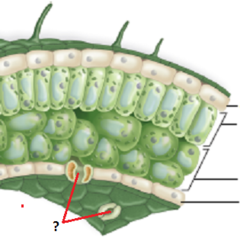
Stomata
Small openings on the underside of a leaf through which oxygen and carbon dioxide can move