Psych/Mental Health Exam 1
 Call Kai
 Learn
Learn Practice Test
 Spaced Repetition
 Match
Match Flashcards
 Knowt Play
1/93

There's no tags or description
Looks like no tags are added yet.
Name | Mastery | Learn | Test | Matching | Spaced | Call with Kai | Chat |
|---|
No analytics yet
Send a link to your students to track their progress
94 Terms
Mental Health
foundational for:
emotions
thinking and learning
communication
relationships
daily functioning
VITAL TO THE ABILITY TO INTERACT, THINK, AND HAVE A FULFILLING LIFE
cannot be HEALTHY without being MENTALLY HEALTHY
Mental Illness
DISABILITY = a physical or mental impairment that substantially limits major life activities
results in change in:
emotions
thinking
behavior
associated with distress/problems in daily functioning
social relationships
work or school
factors associated with increased risk:
traumatic life experience
biology/genetics
substance use
loneliness/isolation
Mental Health Disorders
characterized by a group of clinical manifestations
examples:
neurodevelopmental disorders
neurocognitive disorders
anxiety disorders
eating disorders
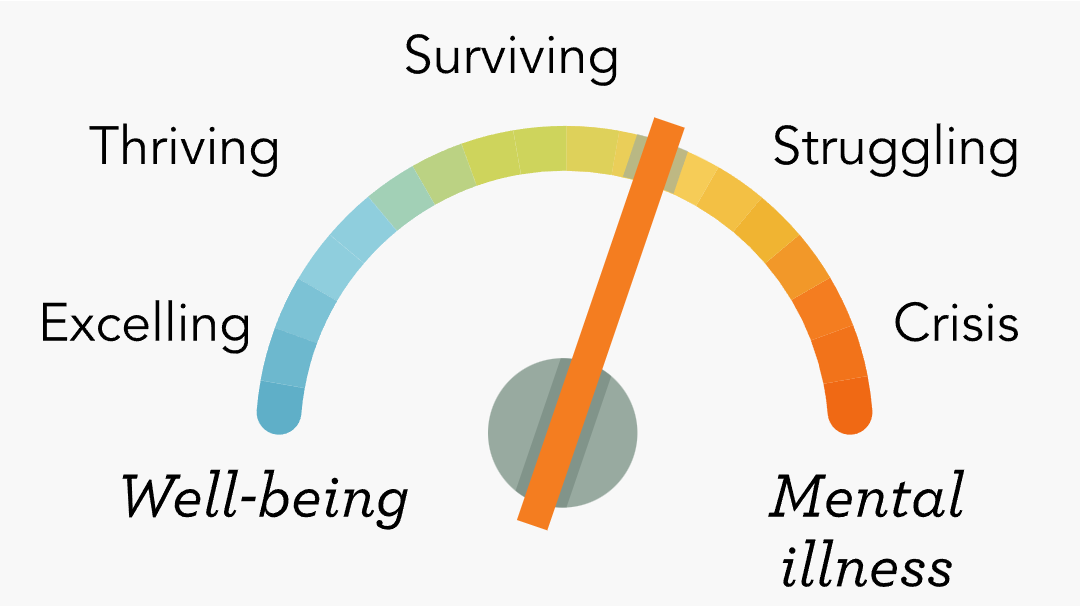
Mental Health Continuum
Well-Being = experiencing an absence of mental illness
Excelling = mental wellness… absence of mental illness symptoms
Thriving = stress does not cause significant daily impairment
Surviving = not a state of distress, but may need action… feel “on edge”
Struggling = significant struggle, worry and misery on daily… worthlessness
Crisis = severe clinical manifestations of mental illness + disruption of functioning
Mental Illness = difficulty functioning
Wellness
being in good physical and mental health; not the absence of disease
8 Dimensions of Wellness
emotional
spiritual
physical
intellectual
environmental
occupational
financial
social
Diathesis-Stress Model
Diathesis = genetics/biological predisposition for developing an illness
Stress = change in environment which may precipitate manifestations of mental illness
Impact = increased risk for developing a mental disorder linked to combination of genetics + stressors
EXAMPLE
Diathesis = Hx depression on paternal side
Stress = job loss + divorce
Impact = development of major depressive disorder

SAMSHA’s 8 Dimensions of Wellness
Emotional = coping with stress through skills + strategies
Social = developing a sense of connection + support system
Physical = recognizing the need for physical activity, diet, and nutrition
Intellectual = recognizing creative abilities + finding ways to expand knowledge
Environmental = occupying pleasant, stimulating environments to support well-being
Spiritual = search for meaning and purpose in human experience
Financial = satisfaction with present and future situations
Occupational = personal satisfaction and enrichment from one’s work
Social Determinant of Mental Health
CONDITIONS A PERSON LIVES IN + HOW IT IMPACTS MENTAL HEALTH
environmental factors = weather, housing, resources
genetics/behaviors = disability
socioeconomic = racism, job loss, divorce, education
contributing factors:
life course = exposure to events at critical stages throughout life… ACEs (adverse childhood experiences)
household = income, food, water, paternal health, social support
community = violence, security, crime, natural environment
local services = schools, health services
community + glovbal = human rights, healthcare access, poverty, disasters
Stigma
a negative attitude or discredit against an individual/group in which the individual/group is labelled as different
public = there is a negative attitude toward those with a mental illness, expressed with discriminatory words + actions
self = an individual adopts internalized shame about condition… sees as a flaw
institutional = policies or organizations limit opportunities for those with mental illness
Bias
includes stereotyping, prejudice, and discrimination against a group of people that is unfair, often resulting in unfair treatment
stereotyping = generalization about a group
prejudice = preconceived belief not based on facts
discrimination = unjust treatment
implicit bias = bias outside of conscious awareness
explicit bias = intentionally displaying discrimination
DSM-5
DIAGNOSTIC AND STATISTICAL MANUAL OF MENTAL DISORDERS
defines and diagnoses mental health conditions in a common language
does not teach how to treat or medicate
Cultural Humility
the practice of trying to appreciate and respect another’s culture and the role it plays in the individual’s life and health practices
client-centered care
Beneficience
obligation to act in a manner of DOING GOOD
Autonomy
clients should have ability to make rational decisions for themselves
Nonmaleficence
doing NO HARM
Justice
fair and equal care for ALL clients
Self-Determination
allows a client to refuse treatment
Confidentiality
ensuring privacy of information
Fidelity
keeping trust/a promise
Mental Health Parity and Addiction Equity Act
laws require EQUAL COVERAGE of mental + physical illness
Health Insurance Portability Accountability Act (HIPAA)
protects sensitive information that cannot be disclosed without consent
Duty to Warn
responsibility to warn when there is a threat from a client to cause harm to another
ex: a client says “tomorrow when my mom comes home, I am going to stab her with a kitchen knife”
Mandated Reporter
nurse is required to report when a vulnerable population is threatened/abused
threatened populations = elderly, children, disabled
Therapeutic Milieu
milieu = healing environment
MANAGE ENVIRONMENT TO PROMOTE HEALING + LIFE SKILLS IN A SAFE ENVIRONMENT
creating a therapeutic milieu:
trauma-informed care
physical, emotional, and psychological SAFETY
open expression of feelings
development of trust
consistency
self-management
nurse should allow for autonomy, safety, and orientation to the unit
Ethics
system of moral principles governing conduct
relies on culture, personal values, and values of profession
principles:
autonomy
nonmaleficence
beneficence
fidelity
veracity
justice
confidentiality
informed consent
Code of Ethics
guides nursing ethics
practice
commitment and duty to society
decision-making
Informed Consent
competency must be determined if client is undergoing an exacerbation of illness
must include:
description of treatment
possible benefits
possible risks
alternative treatments
possible consequences of not receiving treatment
client CANNOT provide informed consent if:
deemed legally is mentally incompetent
alternate decisionmaker
Implied Consent
occurs in an emergency situation
client unconscious
unable to provide informed consent
assumes client action demonstrates willingness for treatment
Psychiatric Advanced Directives (PAD)
allows client with a mental illness to outline wishes before a mental health crisis
surrogate decision-maker
treatment choices
medication choices
choice of provider
De-Escalation Strategies
FIRST STEP TOWARD ASSISTING A CLIENT TOWARD SELF-CONTROL + MAINTAINING A SAFE + THERAPEUTIC MILIEU
directed at reducing a client’s agitation or aggression
use clear and calm communication
ensure body language is nonthreatening
approach client with respect by being supportive of their concern
create a sense of trust
set clear limits or boundaries
make a therapeutic environment- reduced sound, calm activity, lower lighting
Interventions: Timeout, Seclusion, and Restraints
timeout = allows client time to think, calm down, and prepare to control behavior
seclusion = involuntary confinement that prevents the person from leaving… usually in case if self-harm or harm of others
restraints = physically or chemically restricting movement + freedom
Physical Restraints
a manual method, mechanical device, or physical material/equipment that reduces movement or the ability of a client to move arms, legs, or body freely
Chemical Restraints
a substance or drug used to restrict movement or manage a client’s behavior or restrict their freedom
Restraint Protocol
protocol:
provider order
continuous focus on client well-being
observation and client response
care of basic needs
release from restrains as soon as safe
Restraint Documentation
prescription from provider
behavior leading up to restraint use
indication that de-escalation was attempted
type of restraint
interventions + client response
ongoing + continuous monitoring every 15 mins
plan for discontinuation
Restraint Care
reassurance of safety
skin and circulation assessment
hydration, food, and elimination
ROM
medications
Least Restrictuve
de-escalation
timeout
seclusion
restraints
Voluntary Admission
at the request of the client
needs signed consent form
client recognition of need for care
ex: Sarah (28yo F) has been hearing voices telling her to kill herself, so she requests admission into a hospital and signs consent form
Involuntary Admission
client is at least one:
danger to self
danger to others
unable to meet basic self-care needs
mental illness prevents recognition or need for care
Physician’s Emergency Certificate (PEC) needed within 72 hours… document needing a legal healing to stay or leave
ex 1: Bob (30yo M) is walking up and down the street talking to himself and threatened to attack a police officer
ex 2: Miley (18yo F) confided in her friend that she is planning on killing herself with chemicals that night
ex 3: Jane (25yo F) has not left her house in a month, with no hygiene and nutritional needs met due to her depression
ex 4: Dylan (29yo M) is in a manic state where he cannot recognize his need for hospitalization
Emergency Admission
temporary admission
client imminent danger to self or others
for evaluation of mental illness
ex: James (24yo M) assaults a police officer in a manic state and attempts to kill himself
Client Rights to Privacy
confidentiality + privacy
exceptions:
danger to self (suicidal)
duty to warm (patient plans to harm another)
evidence of abuse/reported abuse (against or perpetrated by client)
Client Rights to Treatment
right to treatment regardless of ability to pay
right to refuse treatment based on cost, lack of understanding, second opinion, serious mental illness
least-restrictive setting
Self-Awareness
the process of understanding one’s own beliefs, thoughts, motivations, biases, and limitations and recognizing how they affect others
look introspectively… what are my own biases + beliefs?
Peplau’s Therapeutic Relationship (Nurse-Patient)
pre-orientation
recognize needs of client
self-evaluation of beliefs + behaviors
orientation
collect data, assess knowledge
work with client to develop mutual goals
working
nurse and client have established a mutual level of trust + comfort
work toward goals together
termination
original goals met
improvement in self-reliance
relationship ends
Techniques that PROMOTE Communication
acceptance
non-judgement
observation
open-ended questions
active listening
validation
reflection
clarifying
silence
Barriers to Effective Communication
advice
agreement
challenges
false reassurance
why questions
Therapeutic Communication
principles:
client as primary focus
non-judgmental attitude
no advice
no social relationships
client confidentiality
limit self-disclosure
Defense Mechanisms
psychological mechanisms that help individuals respond to and cope with difficult situations, emotional conflicts, and external stressors
Nonverbal Communication Strategies
need facial expressions to match tone + voice
Sit squarely to client
Open posture
Lean forward
Eye contact
Relax
Verbal Communication Strategies
open-ended questions
keeps conversation going
affirmations
convey support and encouragement
reflections
restate what client said to confirm understanding
simple = restate what client said with different words
complex = attempt to convey what you think a client is feeling
summaries
restate concepts to transition or close interview
Transference
client displaces feelings and past experiences towards nurse
ex: patient was mistreated by a nurse and now is hostile to all
ex: child lost mother young and clings to a maternal-feeling nurse
Countertransference
nurse displaces feelings and past experiences onto client
ex: nurse assumes a manic patient will be violent after a previous patient
Interview Techniques
determine goal + consider any challenges to gathering information
clarification = “tell me more about your current thoughts”
probe assumptions = “i wonder how someone would explain this belief”
probe reasons = “what do you think causes this to happen”
probe viewpoints = “what are the strengths of…”
probe implications = “what might be the consequence of…”
Suicide Phone Numbers
National = 988
CT = 211
Nursing Process
Assessment
Diagnosis/Analysis
Planning
Implementation/Intervention
Evaluation
Clinical Judgement Action Model
recognize cues
analyze cues
prioritize hypothesis
generate solutions
take actions
evaluate outcomes
Assessment
recognize clues
affect
mood
orientation
speech
behavior
thoughts
appearance
physiologic status = is patient able to participate in assessment
physical health = medical clearance, labs, comorbidities r/o (withdrawal, infection, active drug use)
patient history = demographics, HPI, health hx, coping strategies, beliefs, current meds
PHYSICAL ASSESSMENT
dental health (gums + teeth) → malnutrition, drug use, med SE
eye health → ototoxic meds, psychotropic meds
sexual health → STIs, hx abuse
SUBSTANCE USE
tobacco, alcohol, opioids, street drugs
current use, amount
PSYCHOLOGICAL
MSE
risk for suicide
current treatments
coping skills
Mental Status Assessment
allows determination of patient risk for:
inability to care for self
self-harm
suicide
harm to others
child welfare
ABCT
Appearance
what they look like:
grooming
facial expression
tremors
dress
skin condition
identifying characteristics
scars
age
body build
position
alertness
affect
psychomotor:
gait
pacing
crying
withdrawn
angry
suspicious
eye contact
Behavior
physical:
pacing
crying
threatening
tremors
grimacing
speech:
loud
quiet
slurred
pressured
incoherent
stuttering
mute
self-care:
appetite good or bad
sleep good or bad
Cognition
orientation = time, place, person
LOC = lethargic, drowsy, hypervigilant
mood = depressed, euphoric, labile
memory = impaired, intact
concentration = poor/good
judgment = poor/good
insight = none/limited/good
Thoughts
content:
suicidal
homicidal
guilt
worthlessness
hopelessness
ruminations
phobias
hallucinations
process:
coherence
logical
flight of ideas
tangential (jumping)
Holistic Assessment
family function
community needs
spirituality
cultural
situational
Analysis
analyzing cues
recognize patterns
link cues
determine what is concerning
prioritize problems
narrow possibilities
determine order of prioritizes → Maslow
risk
problem list
use the DSM-5 to define and diagnose
Planning
generating solutions
what is best outcome
what care is needed (resources, people)
collaborate with client + family to set goals
discharge planning
begins at diagnosis
Implementation
take action
recovery framework
wellness is not absence of disease
public health model
primary = prevent → vitamins to prevent dementia
secondary = screening → screen teens for depression
tertiary = treat → prevent decline
IOM Model
universal = everyone → class at school about mental health
selective = those affected → group therapy
indicative → those at high risk → treatment
Evaluation
did the interventions help the client achieve their goals?
revise care plan as needed
oversee treatments
review interventions for efficacy
Freud
childhood experiences influence adult personality and life
transference + countertransference
transference = patient projects biases/memories onto HC worker
ex: a patient is afraid of therapy because of mistreatment from a former HC worker
countertransference = HC worker projects biases/memories onto patient
ex: a therapist is especially chatty with a patient who reminds them of a friend
defense mechanisms
unconscious assists the ego in dealing with threats that cause a state of anxiety
Id, ego, superego
Id = instant gratification through desires… DEVIL
Superego = morals and what is right and wrong… ANGEL
Ego = rational balance… DECISION-MAKER
psychosexual development
stage 1 = oral (0-1yr) → oral gratification
stage 2 = anal (1-3yr) → toilet training
stage 3 = phallic (3-6yr) → pleasure via genitalia, fixation to caregiver
stage 4 = latency (6-12yr) → act on impulses, libido repressed
stage 5 = genital (13-18yr) → seeks independence, sexual desires, ego developed
Bandura
modeling = learning through imitation
self-efficacy = can deal with own issues w/ self-motivation
Skinner
operant conditioning
positive consequences vs negative consequences
Maslow
humanistic theory
NEED TO MEET MOST BASIC NEEDS BEFORE YOU CAN MOVE ONTO OTHERS
self-actualization = development of full potential
esteem needs = self-worth, positive self-image
love + belonging needs = affection + acceptance, intimacy
safety + security needs = shelter from harm, predictable environment
physiologic + survival needs = air, food, water, shelter, sleep, sex, exercise
Peplau
nurse-patient relationship
pre-operative
operative
working
termination
empathy
anxiety spectrum + response
adaptive + maladaptive responses
Orem
self-care deficit- need to provide for a patient until they can provide for themself
Erikson
psychosocial development- NEED SUCCESS IN A STAGE TO MOVE ON + DEVELOP WELL
infancy = trust vs. mistrust
birth to 18 months
basic trust with primary caregiver developed
early childhood = autonomy vs. shame and doubt
18 months to 3 years
self-control and interdependence… potty training important
late childhood = initiative vs. guilt
3 years to 6 years
sense of purpose and can guide own activities
school age = industry vs. inferiority
6 years to 12 years
self-confidence achieved though learning, performing tasks, and recognition
adolescence = identity vs. role confusion
12 years to 20 years
developing an understanding of oneself
young adult = intimacy vs. isolation
20 years to 30 years
forming relationships resulting in love and lasting bonds
middle adult = generativity vs. stagnation
30 years to 65 years
ability to achieve life goals
maturity = ego integrity vs. despair
65 years to death
reviewing life and finding purpose
continued aging = transcendence
80 years and older
development of purpose and spirituality
Cognitive Theory
choice contends that human behaviors are influenced by an individual’s thought process
Social Cognitive Theory
social situations influence how a person thinks and behaves… peer pressure
Humanistic Theory
people are innately good and see the world based on their own experiences
Interpersonal Theory
talking with therapeutic communication
helps people feel better by improving their relationships and communication with others
effective for depression
Cognitive Therapy
based on the concept that problems, distorted thought pattern causes negative emotions, can lead to maladaptive behaviors
Cognitive Behavioral Therapy
unhealthy thinking → unhealthy behaviors → unhealthy patterns of living
goals:
recognize unhealthy thought patterns
learn new ways of thinking + coping
gain healthy thoughts and behaviors
EFFECTIVE FOR DEPRESSION + ANXIETY
teaches patients to identify negative thoughts, recognize they are distorted, and help replace them with more positive thoughts
Dialectal Behavior Therapy
helps people with emotional regulation difficulties to improve coping and emotional regulation
CHIME
C = connections to others
H = hope for the future
I = identity… sense of self
M = meaning and purpose in life
E = empowerment… control + autonomy in life
Neurobiological Causes of Mental Illness
neurobiology- studies how the functioning of the brain impacts behavior
genetics- family study (genetic Hx), adoptive study (same environment different genes), twin study (genetic identical + behavior)
psychiatric pharmacogenomic testing- selecting a med based on genes + pharmacokinetics
stress- psychoimmunology… how stress impacts the immune system → process of neurotransmission
infection- may be link between viral infection + CNS alteration → mental illness
neuroplasticity- brain’s ability to adapt synaptic connections in response to stress, learning, or injury
Neuroplasticity
neurons first respond to a new stimulus by making chemical changes
structural change occurs to better support new stimulus
brain experiences change through utilization of new neuronal pathways
Neurons
cells that are prevalent in the brain and have a role in sending and receiving electrochemical messages
Neurotransmitter
chemical components that the neuron sends and receives which can excite or inhibit processes in cells by key and lock
Neurotransmission
KEY AND LOCK
presynaptic neuron releases a neurotransmitter KEY → goes through synapse → postsynaptic neuron has a receptor LOCK → neurotransmitter KEY binds to receptor LOCK → instructs postsynaptic neuron on how to function → neurotransmitter is reuptake/deactivated/inactivated
Serotonin
function = emotional regulation, sexual behaviors, temp regulation, sleep, pain management
action location = brain and gut
clinical relevance = LOW levels linked to DEPRESSION
domains = depression, obsession, migraines, anxiety, intestines, nausea, sexual side effects
SEROTONIN CONTROLS MOOD
INHIBITORY
Dopamine
function = movement, cognition, emotion, motivation, reward center
action location = brain
clinical relevance =
LOW levels linked to Parkinson’s (movement problems)
HIGH levels linked to Schizophrenia
domains = drugs, psychosis, prolactin, attention, motivation, involuntary movements, nausea, energy
DOPAMINE CONTROLS MOVEMENT + MOTIVATION
EXCITATORY
Norepinephrine
function = involved in fight or flight… controls alertness, focus, blood pressure
action location = brain and sympathetic ns
clinical relevance =
LOW levels linked to depression
HIGH levels linked to anxiety or stress
NOREPINEPHRINE ACTIVATES THE BODY
EXCITATORY
Histamine
function = keeps you awake and alert, regulates sleep-wake cycle, linked to learning + memory
linked to gastric secretions + allergic response
HISTAMINE MAKES YOU AWAKE + ALERT… antihistamines make you sleeepy
GABA
function = sloooows brain down → sleep + relax
clinical relevance =
LOW levels linked to anxiety, sleep issues
drugs that work on GABA = benzos, barbiturates, alcohol
INHIBITORY
Glutamate
function = EXCITATORY, linked to affective + cognitive functioning, learning + memory
Acetylcholine
function = controls muscle contractions, learning, memory, attention
clinical relevance =
LOW levels linked to Alzheimer’s