Lecture Exam 1
 Call Kai
 Learn
Learn Practice Test
 Spaced Repetition
 Match
Match Flashcards
 Knowt Play
1/147

There's no tags or description
Looks like no tags are added yet.
Name | Mastery | Learn | Test | Matching | Spaced | Call with Kai | Chat |
|---|
No analytics yet
Send a link to your students to track their progress
148 Terms
study of structure
Anatomy
study of function
Physiology
Anything that takes up space and has mass (weight). It is composed of elements.
Matter
smallest particle of an element
Atom
the smallest structural and functional unit of all living organisms
Cell
the self-regulating process by which an organism maintains a stable, balanced internal environment despite changes in the outside world
Homeostasis
It temporarily disrupts homeostasis by surging adrenaline to prioritize immediate survival; the parasympathetic system later restores balance.
Fight or Flight Mechanism
when some variable triggers a counteracting response-in order to come back to a set point
Negative feedback
instead of getting a counteracting response to some variable you instead intensify the variable
Positive feedback
Temperature regulation
(NEG) If you get too hot, you sweat to cool down. If you get too cold, you shiver to generate heat
Blood Pressure Control
(NEG) Baroreceptors detect changes in blood pressure and trigger responses to maintain it within normal limits.
Glucose
(NEG) If glucose is too low Glucagon is released–if glucose is too high Insulin is released
Blood Clotting
(POS+) When a blood vessel is damaged, platelets adhere to the site and release chemicals that attract more platelets, rapidly forming a clot.
Pos-uterine contraction
(POS+) During childbirth, cervical stretching triggers oxytocin release to cause stronger uterine contractions, a positive feedback loop that amplifies itself until the baby is delivered.
Milk Letdown
(POS+) the stimulus of a baby nursing triggers the continuous release of hormones to eject milk until the feeding session ends.
6 MAJOR Structural levels of organization
Chemical, cellular, tissue, organ, organ system, organism
Definition: The simplest and smallest level of organization.
Components: Made of atoms (like carbon and oxygen) that combine to form molecules (like water, DNA, and proteins).
Chemical Level
Definition: The smallest, basic structural and functional unit of life.
Components: Composed of cells, the smallest living units in the human body, formed by different types of molecules combined together to carry out various functions.
Cellular Level
Definition: Groups of similar cells working together to perform a shared, specific function.
Tissue Level
Definition: Distinct structures composed of two or more different tissue types.
Examples: Heart, lungs, stomach, and brain. They perform specific, complex functions
Organ Level
Definition: Groups of organs that work closely together to meet a major systemic body need.
Examples: Digestive system, cardiovascular system, and respiratory system.
Organ System Level
Definition: The highest, most complex level of organization.
Components: A complete, living human being formed by all the organ systems working together in harmony.
Organism Level
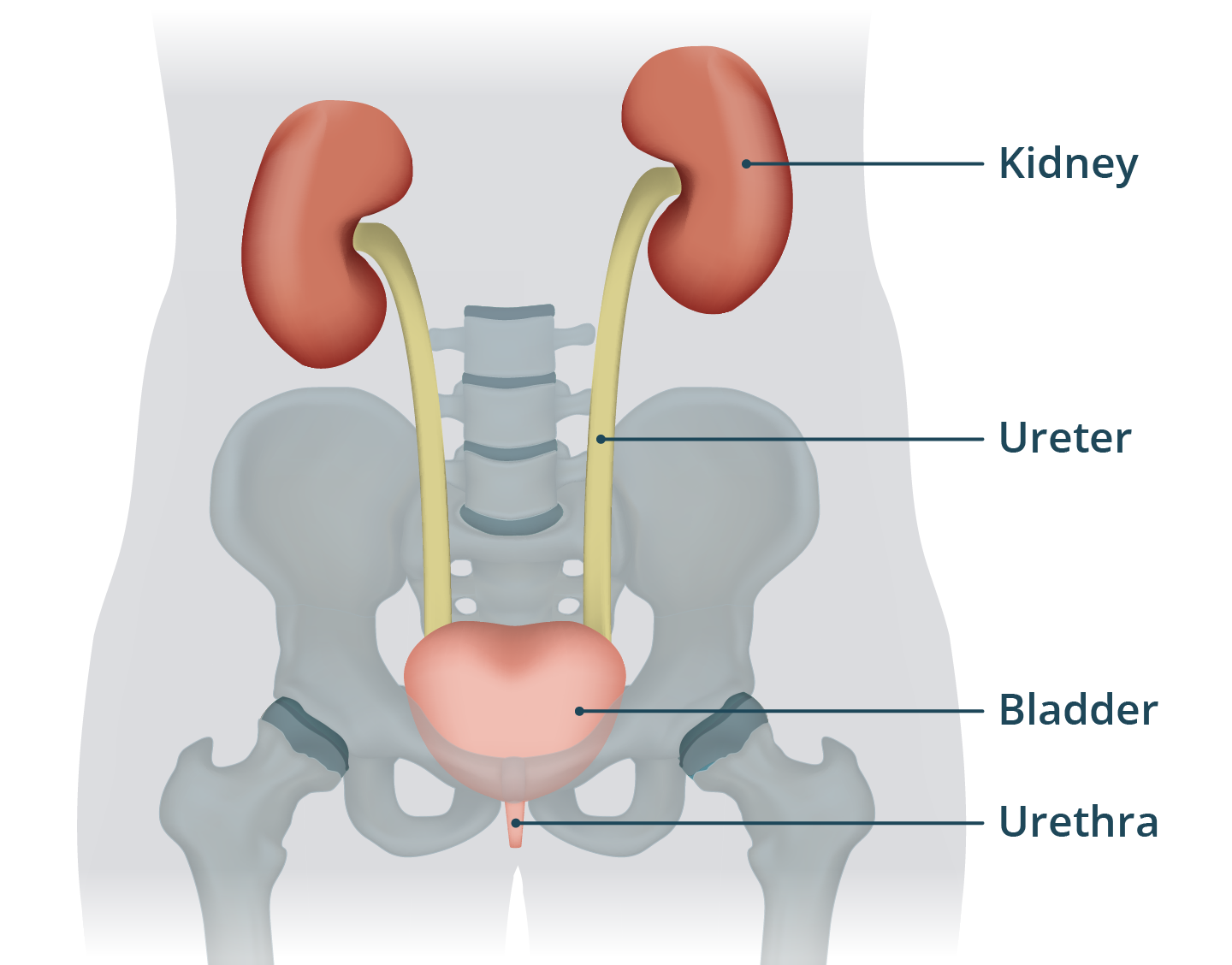
What body system is this?
urinary system
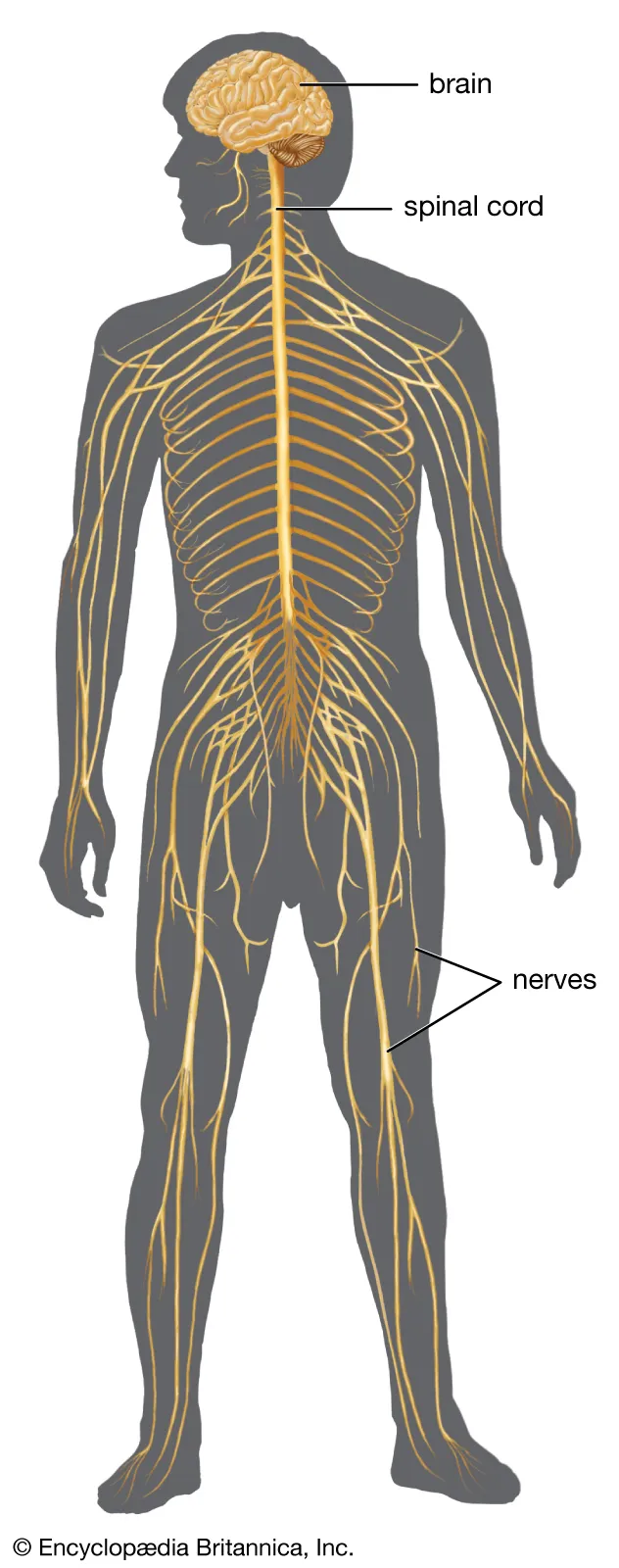
What body system is this?
nervous system

What body system is this?
endocrine function system
Type of Division: Vertical
Key Feature: Houses the heart, trachea, and esophagus. It isolates the lungs so that an injury to one side does not automatically collapse the other.
Mediastinum
Type of Division: Horizontal
Function: Separates the chest (heart/lungs) from the abdomen (digestive organs).
Key Feature: Contains three major openings (hiatuses) for the aorta, esophagus, and inferior vena cava to pass through.
Diaphragm
What is the difference between Visceral & Parietal serous membranes?
Visceral = hugs the organ directly.
Parietal = lines the cavity wall.
What does the visceral pleura cover?
The outer surface of the lungs
What does the parietal pleura line?
The inner walls of the thoracic cavity (chest wall, superior diaphragm, and mediastinum).
What does the visceral pericardium (epicardium) cover?
The external surface of the heart and great vessels
What does the parietal pericardium line?
The inner surface of the tough, fibrous pericardial sac that surrounds the heart.
What does the visceral peritoneum cover?
The external surfaces of most abdominopelvic organs (e.g., stomach, intestines, liver).
What does the parietal peritoneum line?
The internal walls of the abdomenal and pelvic area
standing erect, facing forward, upper limbs at the sides, palms facing forward and thumbs out
Anatomical Position
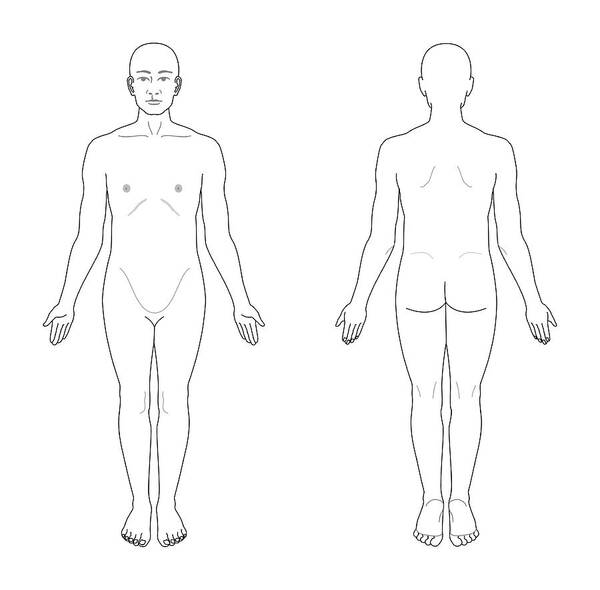
Anatomical Position
Superior
Above (towards head)
Inferior
Below (towards feet)
Medial
towards midline
Lateral
away from midline
Proximal
Closer to the point of origin of the body part
Distal
Further away from the point of origin of the body part
Anterior
Toward the front side of the body
Posterior
Toward the back side of the body
Ipsi-lateral
the same side of the body
Contra-lateral
the opposite side of the body
Superficial
closer to the surface of the body
Deep
farther away from the surface and more internal
Internal
Away from the surface, deep
External
Towards the surface, superficial
Sagittal or Median Body Plane
divides body into left and right portions
Transverse or Horizontal
divides the body into superior and inferior portions
Coronal or Frontal
divides the body into anterior and posterior portions
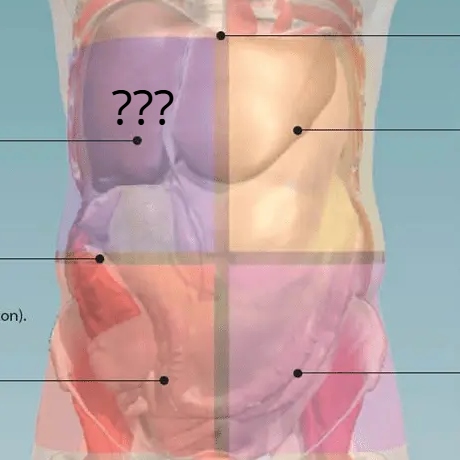
What body quadrant ???
RUQ: right upper quadrant
Gallbladder related
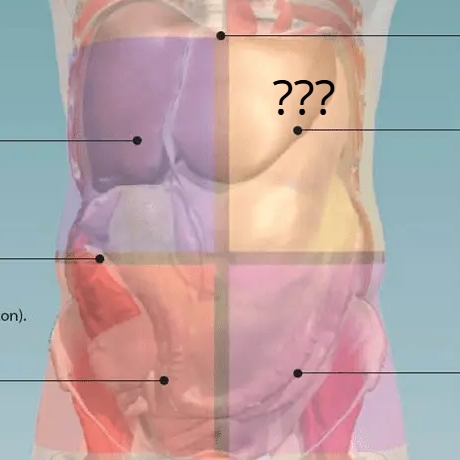
What body quadrant ???
LUQ: Left upper quadrant
Stomach related
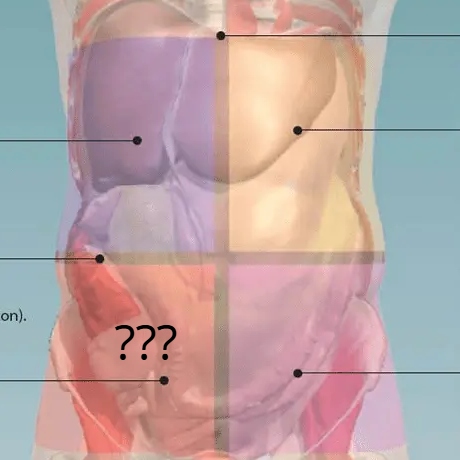
What body quadrant ???
RLQ: Right lower quadrant
Appendix related
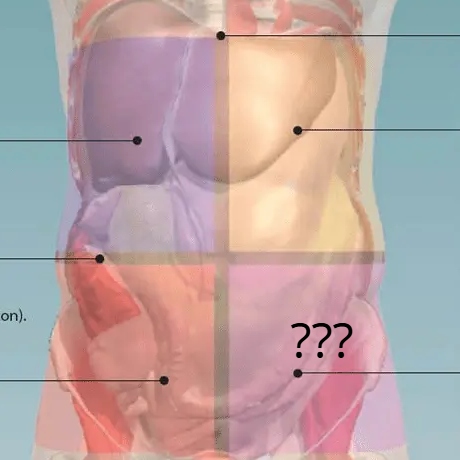
What body quadrant ???
LLQ: Left lower quadrant
Bowel related
Otic
ear
Nasal
nose
Oral
Mouth
Cervical
Neck
Acromial
point of shoulder
Axillary
arm pit
Mammary
breast
Brachial
arm
Antecubital
front of elbow
Abdominal
abdomen
Antebrachial
forearm
Carpal
wrist
Palmar
palm
Digital
finger or toe
Genital
reproductive organs
Patellar
front of knee
Tarsal
instep
Cephalic
head
Frontal
forehead
Orbital
eye cavity
Buccal
cheek
Mental
chin
Sternal
located near the sternum
Pectoral
chest
Umbilical
naval or bellybutton
Inguinal
groin
Coxal
hip
Pedal
foot
Crural
leg
Sural
Calf
Occipital
Back of head
Vertebral
spinal column
Dorsum
Back
Cubital
elbow
Lumbar
lower back
Sacral
between hips
Gluteal
buttocks
Perineal
The surface area of the body located between your genitals and your anus.
Femoral
thigh
Popliteal
back of knee
Plantar
sole of feet
• Number of protons in the nucleus of one atom (also = the number of electrons in a neutral atom)
• Each element has a unique number
Atomic Number
• The number of protons plus the number of neutrons in one atom
• Electrons do not contribute to the weight of the atom
Atomic Weight