Homeostasis ( 2x2x)
 Studied by 0 people
 Call Kai
 Learn
Learn Practice Test
 Spaced Repetition
 Match
Match Flashcards
 Knowt Play
1/75

There's no tags or description
Looks like no tags are added yet.
Name | Mastery | Learn | Test | Matching | Spaced |
|---|
No study sessions yet.
76 Terms
What is homeostasis?
The state of balance in the body when the temperature and other conditions are stable for cells and enzymes to work.
The regulation of internal conditions of a cell or organism to maintain optimum conditions for function in response to internal and external changes.
What should a runner do to reduce dehydration?
Drinks lots of water
To replenish water lost through sweating
What are the main internal conditions?
Body temp
Water levels
Blood glucose levels
What are the features of the automatic control system?
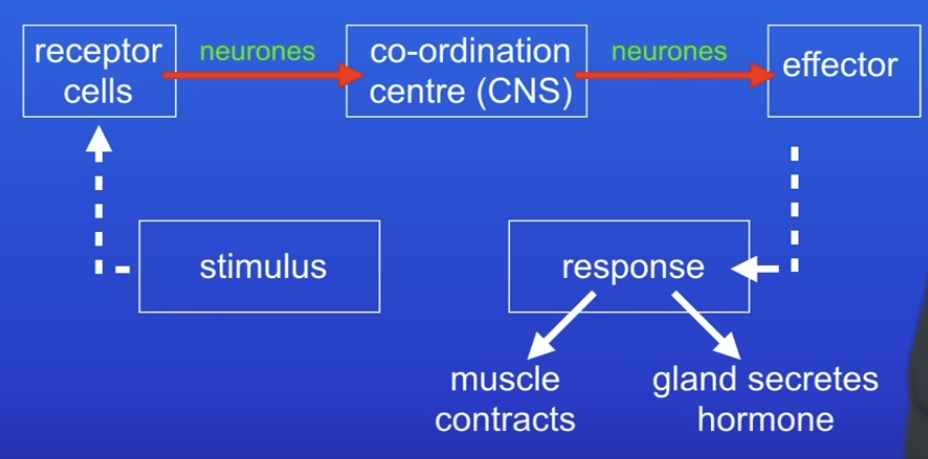
What is a reflex arc?
Stimulus is detected by receptor
Electrical impulses travel along sensory neurones to the CNS
Reaches the synapse where a chemical is released
Diffuses to a relay neurone and triggers an electrical impulse which travels across relay neurone.
Reaches another synapse & another chemical released
Chemical triggers an electrical impulse in a motor neurone.
Electrical impulse travels down motor neurone to an effector
E.g. hand touches heat, skin (receptor) senses heat, effector (muscle) contracts and pulls hand away from heat (response).
What is a reflex?
No decision making from the conscious part of the brain
Automatic & rapid
Protect us from danger
E.g. removing hand from heat, protect face from object in flight
Reaction time Required Practical method
Person 1 sits on stool with dominant hand over table
Person hold meter ruler with 0 mark between P1 thumb and first finger
P2 drops ruler at random time
P1 must catch the ruler as fast as possible
Measure cm spot that the ruler was caught
Record on a table and repeat 10 times to calculate mean
Repeat with different people
What is the function and name of the master gland in the brain?
Pituitary gland - coordinates many hormones
What is the Endocrine system?
Number of glands which secrete hormones into blood stream. Blood carries hormones around body.
Slower and longer lasting effect than nervous system
Label this Endocrine system diagram
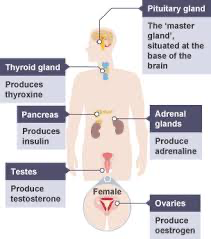
What are the functions of the glands?
Pancreas - Blood glucose concentration
Ovaries & Testes - Puberty & reproduction
Thyroid - Growth & Basal metabolic rate (How fast chemical reactions happen)
Adrenal glands - release adrenaline when stressed
Pituitary gland - Releases 7 different hormones depending on conditions and act on other glands
How is blood glucose concentration controlled?
Carbs cause blood glucose concentration to rise.
Pancreas senses this and produces hormone insulin.
Triggers body cells to take glucose from blood.
Triggers liver and muscle cells to store it as glycogen
If blood glucose concentration falls too low, glucagon triggers liver cells to turn glycogen back into glucose into blood.
What is diabetes? Describe the types.
Type 1 - Pancreas doesn’t produce enough insulin. When carbs are consumed, the blood glucose rises but doesn’t go back down as far as it needs to
Type 2 - Body stops responding to the insulin produced. Must avoid carbs and exercise.
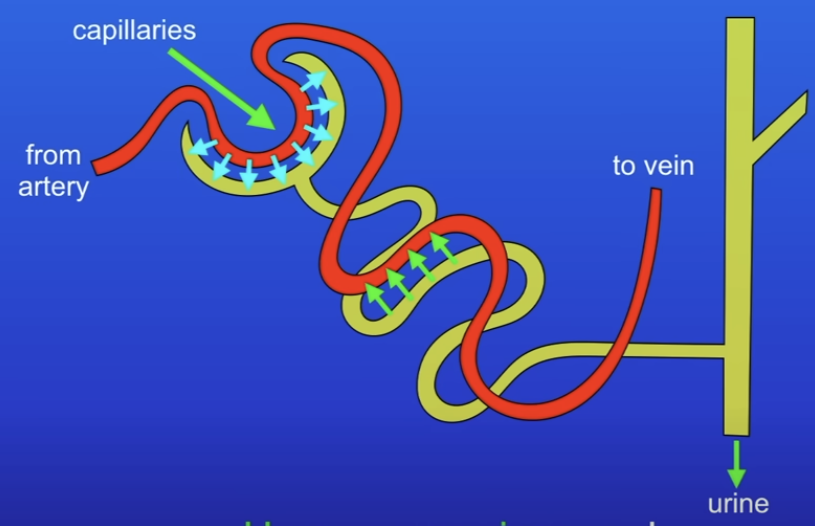
Explain this diagram
From kidneys to bladder
Blood passes through capilleries
Small molecules are filtered out (Urea, ions & water, glucose)
Pass into tube (yellow)
(Green arrows) Some of the molecules (not urea) are reabsorbed into blood (Selective reabsorption)
Urea, excess ions & excess water are released as urine.
How does the body deal with excess amino acids?
Amino acids go into blood during digestion
Liver breaks down excess amino acids into ammonia (Deamination)
Ammonia is toxic so it it converted into urea
The menstrual cycle
Ovulation (release of egg) every 28 days
To prepare, uterus lining becomes thick and spongy
Egg goes to uterus and can be fertilised if sperm is present, then implant into uterus wall, develop into a baby
If not fertilised, egg and uterus lining is released (period)
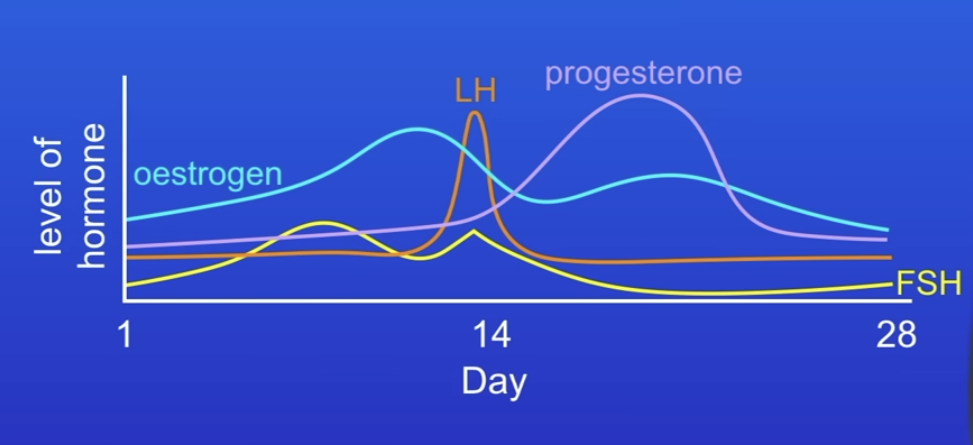
Hormones during the menstrual cycle
Follicle stimulating hormone (FSH) is secreted by the pituitary gland and caused an egg to mature in the ovaries.
Luteinising hormone (LH) causes ovulation
Oestrogen (Produced by ovary) and progesterone maintain uterus lining incase egg is fertilised and implants.
How do the hormones interact with the menstrual cycle?
Pituitary gland releases FSH
FSH travels in blood to ovaries, causing egg to mature
FSH triggers ovaries to produce oestrogen, causing lining to become thick & stops pituitary gland releasing FSH
Pituitary gland release LH, triggers ovulation
Ovaries now produce progesterone, stops pituitary gland releasing LH and FSH to stop anymore eggs maturing or being released.
Progesterone also causes lining to become thick. progesterones falls if not fertilised, uterus lining and egg are released (period)
How does the pill work?
The pill - contains hormones which prevent the production of FSH which stops any eggs maturing. Highly effective if taken correctly (everyday)
Side effects: Risk of breast cancer, blood clots
What other hormone methods can a woman use for contraception?
Implant / Skin Patch / Injection, contains progesterone stopping the egg maturing or being released.
More convenient than taking a daily pill, has side effects
These don’t prevent STI’s or STD’s
What barrier methods are there?
Condom/Diaphragm: Barrier method stops sperm reaching egg, effective if used correctly.
Adv: no side effects
Disadv: condoms can break or slip off
More effective if used with a spermicide gel which kill or disable sperm.
What are surgical forms of contraception?
Sterilisation
Prevent women’s eggs reaching uterus
Men: Prevents sperm leaving the penis.
Difficult to reverse, be certain they don’t want children.
Don’t protect against STI’s
What is the natural form of contraception?
Abstain from sex after ovulation
Hard to tell when ovulation occurs
Doesn’t protect against STI’s
Opinions on contraception
Some religions see it as unethical
Some people think everyone should be able to choose for themselves.
Condoms reduce risk of STI’s
What options are there to treat infertility?
Fertility drug - injection of LH & FSH, ovulate more than usual
IVF - fertilisation outside of body. First administer FSH & LH, eggs mature, collected, collect sperm and fertilise eggs in lab. Develop into embryos which are inserted into the womb.
Not high success rates
Emotionally stressful & Physically demanding on mum
Lead to multiple births (risky for mum and babies)
Ethical views: Destroying unwanted embryos
Expensive
What is adrenaline?
Adrenal glands (On top of kidneys) release adrenaline in fear or stress. Released into blood. Increases heart rate to deliver more oxygen and glucose to body (Fight or flight)
What is thyroxine?
Thyroid gland in base of neck
Releases Thyroxine
Stimulates the basal metabolic rate (makes bodys chemical reactions take place faster)
Role in growth and development
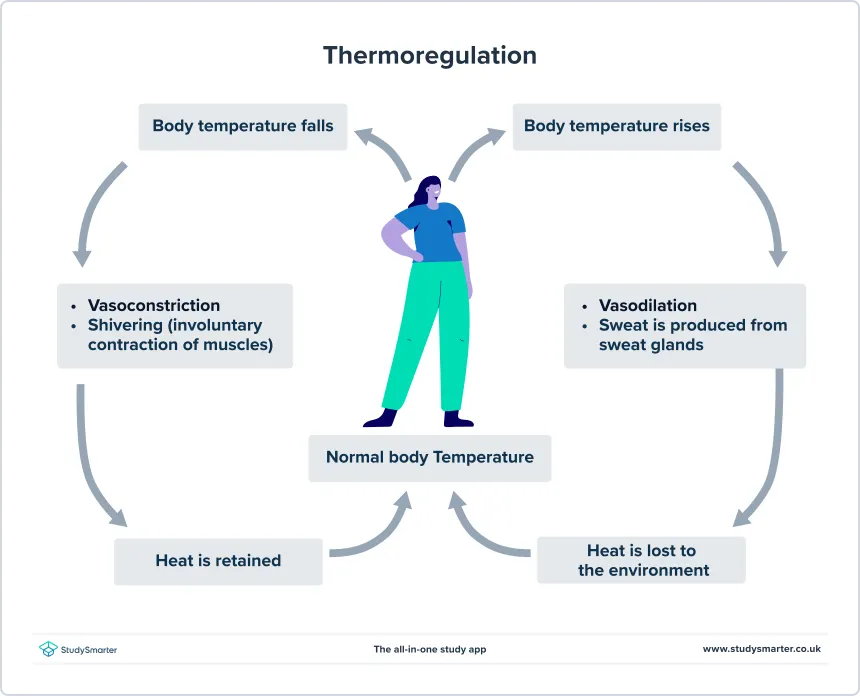
What is a negative feedback loop?
WHat other chemical are used in plants?
Gibberellins - germination of seeds
Ethene - controls cell division and fruit ripening
Plant Response RP (light) and variables
Investigate light intensity on height of seedlings
IV - light intensity
DV - Height
CV - Water volume
The full and partial light seedlings have similar heights because the chlorophyll is very efficient at absorbing light energy. They don’t need full light to grow
They tilted towards the light - phototropism
Darken ess - grew longest, when the seeds germinate, they grow rapidly to reach the light and in the darkness they continued grow rapidly to try and reach the light. Small yellow leaves, no energy for photosynthesis
How are hormones used in agriculture and horticulture?
Auxins - weed killers, rooting powders, promoting growth in tissue culture
Gibberellins - Force a seeds to germinate before it normally would (end seed dormancy), encourage plants to flower, make fruit grown larger
Ethene - Ripen fruits just before sale.
Homeostasis
The maintenance of a constant internal enviro ment in response to environmental changes
Thermoregulation
Maintain and regulate internal body temperature at 36-37c as enzymes work best at their optimum temperature.
Osmoregulation
Maintain and regulate water content from exhalation, sweating, and urine
Endocrine gland
Releases hormone to maintain homeostasis
Hormone
A chemical substance (protein) produced by a gland and carried in the bloodstream which alters the activity of specific target organs and brings about a change in other cells.
define homeostasis
regulation of internal conditions of a cell/ organism to maintain optimum conditions for functions as a response to internal & external changes
what does homeostasis allow for
efficent cellular function
what is stimuli detected by
receptors in the skin
where are impulses sent after being detected
along the sensory neurone to the spinal chord to central nervous system
where are impulses sent after being received in the cns
sent along motor neurones to the effectors
give examples of an effector
hand, arm muscles, any muscles given
what do effectors (e.g. hand) do when in contact with a hot object
contract and drop the object
give 3 coordination centres
brain, spinal chord, pancreas
function of coordination centres
receive and process information from receptors
what brings about responses in the body
effectors, muscles or glands which restore optimum levels
name 1 thing controlled by ns
temperature, thermoregulation
name 2 things controlled by hormones
blood sugar levels, water balance
what monitors & controls body temp
thermoregulatory centre in brain
describe what happens in vasodilation in terms of skin
sweat glands release sweat to cool you down
what do both of these mechanisms cause
a transfer of energy from the skin to the environment
if body temp too low what happens
vasoconstriction, blood vessels constrict
what else happens in the body during vasoconstriction
sweating stops, skeletal muscles contract (shiver)
why do we shiver
to increase heat production and body temperature when our core temperature drops
why does our hair stand on end when we are cold
conserve heat, air is trapped between thermal layers
the blood in an endocrine system does what
carries the hormone to a target organ where it produces an effect
compare ns and endocrine
endocrine has slower effects but they act for longer
define negative feedback control
system that responds when conditions change from ideal and returns conditions to this set point
what do these hormones do in turn
act on other glands to stimulate other hormones to be released to bring about effects
what monitors & controls blood glucose conc.
pancreas
blood glucose levels too high the produces the hormone that causes __ to move from the blood into the _
pancreas, insulin, glucose, cells
excess glucose is converted to what and where is it converted. why?
glycogen in liver and muscle cells for storage
what does insulin do when blood sugar levels rise
sends signals to liver, muscles and other cell to store the excess glucose
what is excess glucose stored as, and where
some as body fat other as glycogen in liver and muscles
what does insulin do when blood sugar levels = too low
liver receives a message to release some stored glucose to the blood
if blood glucose levels too low what happens
pancreas produces glucagon (hormone) to be converted to glucose and released into blood
what is type 1 diabetes?
Where the pancreas produces little to no insulin, not enough
Can’t be prevented or cured
Genetics may possibly play a role
what do people with type 1 have to monitor
their blood sugar levels through the day, their physical activity and diet
what is the "cure" for type 1
insulin injection for life
how does exercising help
lowers blood glucose levels due to increased respiration in the muscles, need energy to contract so take glucose from the blood to make energy needed
define type 2 diabetes
the cells lose their responsiveness to insulin and therefore do not take up enough glucose leaving it in the bloodstream. insulin resistance
Can be from genetics or lifeslyle
Injecting insulin into the blood or consuming it is the only way to help, alongside lifestyle changes
what is fsh and what does it do
follicle-stimulating hormone, released by the pituitary gland. causes a follicle (an egg and its surrounding cells) to mature in one of the ovaries
stimulates oestrogen production
what is lh and what does it do
luteinizing hormone
- stimulates ovulation in female and secretion of sex hormones in both the male and female
what hormones are involved in maintaining uterus lining
oestrogen and progesterone
inhibition of fsh means
no eggs mature
injection, implant, skin patch cause
a slow release of progesterone stopping the release of eggs for a number of months or years