Lecture 12: toxicity of liver and GI tract 1
 Call Kai
 Learn
Learn Practice Test
 Spaced Repetition
 Match
Match Flashcards
 Knowt Play
1/40

There's no tags or description
Looks like no tags are added yet.
Name | Mastery | Learn | Test | Matching | Spaced | Call with Kai | Chat |
|---|
No analytics yet
Send a link to your students to track their progress
41 Terms
what is the order of the hepatic zones farthest in to farthest out
periportal zone
midzonal
centrilobular zone
hepatic zone 1
most oxygenated, less susceptible to hypoxia, first to encounter toxins from GIT
hepatic zone 3
least oxygenated, more susceptible to hypoxia, area where most metabolic transformation occurs
factors that affect hepatic toxicity uptake and concentration
first pass effect
close contact with circulation/ large amount cardiac output
accumulates metals and vitamins
iron homeostasis
copper homeostasis
enterohepatic recycling
where is bioactivation and metabolism for hepatic toxicity commonly seen
zone 3
necrotic liver injury can be
focal, zonal, bridging, or massive and panlobular
where does zonal necrosis of the liver commonly occur
zone 3
bridging necrosis describes
confluent zones of necrosis that extend between zones of the lobule and between lobules
panlobular or massive necrosis denotes
hepatocyte loss throughout the lobule with loss of lobular architectures
where are pyrrolizidine alkaloids commonly found
Boraginaceae, Compositae and Leguminosae.
what do pyrrolizidine alkaloids cause
irreversible hepatic damage; toxicity signs are consequence of impaired liver function
what animals are highly resistant to pyrrolizidine alkaloid toxicity
Small herbivores such as sheep, goats, rabbits, guinea pigs and other herbivorous laboratory animals
due to low rate of hepatic production of reactive metabolites and a high rate of activity of detoxifying enzymes
toxic principles of showy rattlebox
monocrotaline and spectabiline
what type of damage does showy rattlebox cause
hepatic and pulmonary damage
toxicokinetics of tansy ragwort
contain high levels of alkaloids
what affects might happen to cattle if they eat high amounts of tansy ragwort
liver necrosis
pyrrolizidine alkaloids mechanism of toxicity
potent electrophiles so they react with nucleophilic substrates including DNA, proteins and AA
primary organ of intoxication for pyrrolizidine alkaloids
liver
clinical signs of pyrrolizidine alkaloid
acute intoxication show signs of acute liver failure,
including anorexia, depression, icterus and edema.
Chronically intoxicated animals may present with photosensitivity, icterus and
increased susceptibility to other liver insults.
pyrrolizidine alkaloid diagnosis
high elevation of liver enzymes: increase bilirubin and bile salts are seen
most common form of mycotoxins
mushrooms
should you identify a mushroom based on a picture?
NEVER consult a mycologist
most dangerous mushroom
death cap or destroying angel
amanita phalloides
toxic principle of mushroom toxicity
amatoxins and phallotoxins
mechanisms of toxicity for mushrooms
inhibiting nuclear RNA polymerase
decrease in messenger RNA results in decreased protein synthesis and cell death. Cells with high metabolic rate such as hepatocytes, renal tubular cells and GI epithelium are most vulnerable
toxicokinetics of mushrooms
amanitins are well absorbed from the GI tract and have short half life
clinical signs of mushroom toxicity
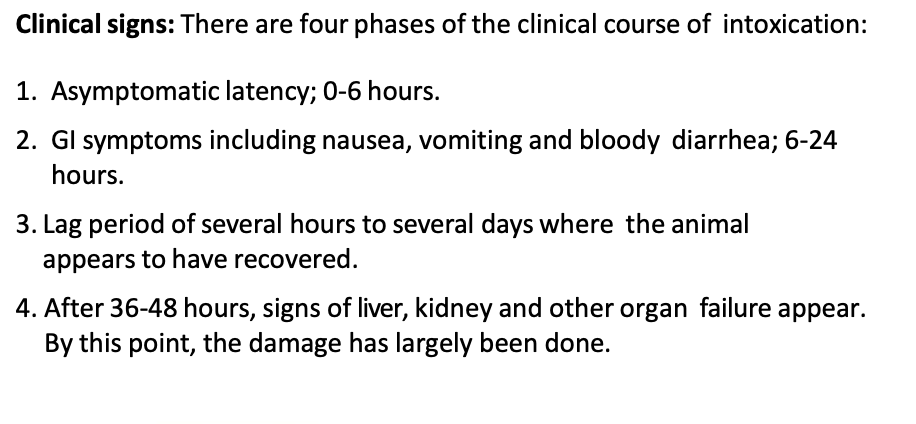
what mushroom type is known to cause hallucinogens
psilocybe spp. - psilocybin
what is the single most dangerous plant to dogs
sago palm ( cycads)
toxic principles of sago palm
cycasin causes hepatic necrosis and GI effect
beta-methylamino L-alanine is a neurotoxic AA causing muscle weakness, paralysis and seizures
mechanism of toxicity of sago palm
mutagenic, carcinogenic, and teratogenic
what animal is extremely susceptible to aflatoxicosis
turkeys
what will you see microscopically with aflatoxins
liver is enlarged and shows marekd fatty accumulations and massive centrilobular necrosis and hemorrhage
what product is notoriously susceptible to aflatoxin contamination
peanuts
what animals are susceptible to cocklebur toxicity
pigs, ruminants and horses
signs of cocklebur toxicity
weakness, vomiting, twisting neck, weak pulse
characteristic histologic lesion of cocklebur
severe, diffuse, centrilobular hepatocellular necrosis
trifolium spp toxicity is primarily in
horses
trifolium spp toxicity leads to
chronic liver failure
copper toxicity sequence

what animals are most susceptible to copper toxicity
SHEEP, also cattle, goats and dogs