depression
 Call Kai
 Learn
Learn Practice Test
 Spaced Repetition
 Match
Match Flashcards
 Knowt Play
1/35

There's no tags or description
Looks like no tags are added yet.
Name | Mastery | Learn | Test | Matching | Spaced | Call with Kai | Chat |
|---|
No analytics yet
Send a link to your students to track their progress
36 Terms
depression (MDD)
-loss of interest in usual activities for a period of a least 2 weeks
-sadness, hopelessness, irritability, somatic, sleep disturbances, changes in appetite, poor concentration, low energy
**anhedonia
treatment of MDD
SSRI's, TCAs, atypical antidepressants, CBT, ECT
persistent depressive disorder (dysthymic disorder)
-less severe
-last beyond 2 years with relief periods shorter than 2 months
-treated like MDD + CBT or ECT
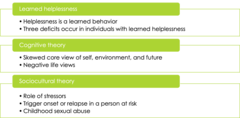
learned helplessness
-cognitive theory (skewed core view of self/ environment/ future)
-negative life views
-sociocultural theory (stressors)
risk factors of depression
-fam history
-female
-Hx of child abuse/ trauma
-unemployment
-poverty
-low education
-lack of social supports
-bullying
primary prevention & examples
-preventing illness before it happens
-diet, exercise, sleep, avoid smoking
-stress management & healthy coping
-encourage meaningful social relationships
secondary prevention & examples
-screening! (early ID)
-counseling about risks for depression, referring individuals with suspected depression for diagnosis and treatment
tertiary prevention
-stopping spread or worsening
-collaborative care & establishment of community focused programs that target high-risk individuals
depression vs. grief
-grief= emptiness, still have self worth, still can experience positive feelings, subsides over time
-depression= hopelessness, need clinical interventions to improve, comes with triggers, loss of pleasure and self worth
diagnostic testing for depression
-complete exam **rule out thyroid disease, can mimic
-evaluate existing medical conditions for side effects/ contraindication

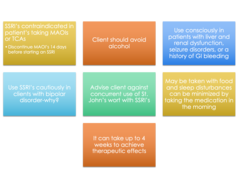
patient education for SSRIs
-4 weeks
-no alcohol
-seratonin syndrome!
atypical antidepressants **look at med sheet
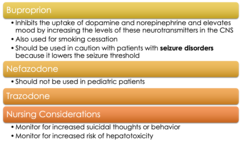
-buproprion
-nefazodone
-trazodone
(depression SAD, smoking cessation)
-increase risk of seizures **hold bupropion for alcohol withdrawal
-increased risk of suicidal thoughts
-heptatoxicity
-no for pediatric patients!
bupropion
-inhibits update of dopamine & norepinephrine
-also used for smoking cessation
-lowers seizure threshold
SO
****hold for alcohol withdrawal
nursing interventions for atypical antidepressants (6)
-w food
-weigh client weekly
-monitor for other meds that promote seizure activity
-monitor for psychosis, hallucinations, delirium & CNS effects
-monitor for suicidal thoughts/ behaviors
-monitor heptatoxicty
administration of atypical antidepressants
-tablets, sustained release & extended release
-ensure client swallows extended and sustained release tablets whole
-give w food if GI upset occurs
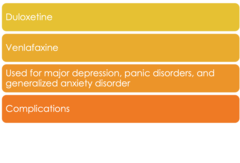
SNRIs
-avoid alcohol
-avoid MAOIs 14 days before starting
-liver function
-cardiac stuff (baseline sodium, monitor BP)
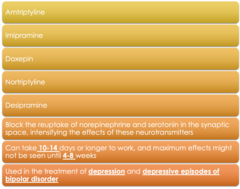
TCAs
-amtriptyline
-imipramine
-doxepin
-notriplyine
-desipramine
-can take 10-14 days, effects may not be seen until 4-8 weeks
-depression & depressive episode of BPD
adverse reactions of TCAs
-drowsiness/ sedation
-orthostatic hypotension
-anticholinergic effects
-increased risk for suicide
-withdrawal manifestations w/ abrupt cessation
-high risk for OD
OD of TCAs
-prepare for gastric lavage and administer sodium bicarb for dysthymias
considerations for TCAs
**monitor BP and HR for orthostatic changes (hold and notify)
**can cause anticholinergic effects
-obtain baseline EKG(contraindicated for patients in recovery for MI)
-lowers seizure threshold (monitor pts. with epilepsy)
-long term! don't stop abruptly, taper over 2 weeks to prevent withdrawal
**only give enough for 1 week supply

anticholinergic effects & interventions
-dry mouth
-urinary retention
-constipation
-blurred vision
-photophobia
NI: increase fluids, more fiber, sugarless gum, sunglasses
TCAs administration
-orally at bedtime
MAOIs
-phenelzine isocarboxazid, trancylpromine, selegiline
**(depression that has not responded to other classes, depression in BPD)
**if this doesn't work, ECT
considerations for MAOIs (5)
-interact & lots of side effects
-***tyramine can cause high BP or hypertensive crisis
-takes 2-4 weeks to work
**in combo with SSRI and SNRIs can cause serotonin syndrome
-suicidal ideation in children and young adults
-titrate down
if hypertensive crisis occurs with MAOIs
-IV phentolamine or sublingual nifedipine
tyramine rich foods
**MAOIs (also for 2 weeks after discontinuing)
-aged cheese, pepperoni, salami, avocados, figs, smoked fish, beer and wine

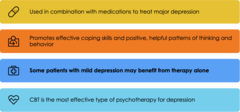
psychotherapy
lifespan children and adolescents
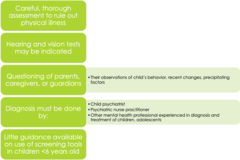
age group symptoms of depression
toddlers- regressive
preschoolers- self destructive play themes
school age- decrease academic performance, increase/ decrease physical activity, somatic complaints, loss of friends
adolescent- decreased social, poor school performance, poor self care, difficulties w parents/ teachers ,focus on violence
depression older adults
-NOT a normal part of aging
-loss of driving
-rule of hypoglycemia
**lower starting doses bc they metabolize and excrete drugs at slower rates than younger adults
manifestations: memory problems, social withdrawal, sleep disturbances, loss of appetite, irritability
nursing process
**safety is biggest thing, risk of suicide always considered
-patients may not meet daily hygiene needs/ nutrition
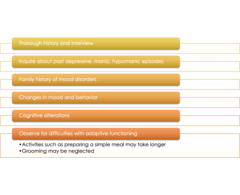
observation & patient interview depression
-saddness, anhedonia
-tearful, emotional outbursts
-impaired concentration, difficulty making decisions, poor memory, impaired problem solving
-ask about past depressive/ manic/ hypomanic episodes
-family hx
physical exam for depression
-somatic concerns often presenting complain
-fatigue, sleep disturbances, changes in appetite/ weight
-abdominal pain, headache, body aches
-lack of sexual desire
-constipation (slowing metabolism due to inactivity)
-physical issues= exacerbated when depression is present
assess for comorbidities
-medical illness --> contributing factor (chronic illness)
-metabolic, endocrine, oncologic, autoimmune
-substance use can complicate depression
-assess prescription and OTC meds to see if depression is side effect
priority problems
-risk of suicide/ self harm
-situational or chronic low self-esteem
-helplessness
-social isolation
-inadequate health maintenance
-inadequate coping
implementation
-make something appropriate for cognitive and physical state
-promote activities for patient success
-general positive observations, NO overly energetic compliments
-teach assertiveness
-instill hope, decision making fosters independence, reframe! ID positive supports