Chapter 19: The Chemistry of Aldehydes and Ketones
 Call Kai
 Learn
Learn Practice Test
 Spaced Repetition
 Match
Match Flashcards
 Knowt Play
1/164

There's no tags or description
Looks like no tags are added yet.
Name | Mastery | Learn | Test | Matching | Spaced | Call with Kai | Chat |
|---|
No analytics yet
Send a link to your students to track their progress
165 Terms
Aldehydes and ketones are _____ compounds.
carbonyl
What is the carbonyl group?
C=O
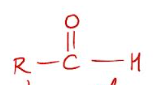
What is the suffix for this terminal functional group?
al
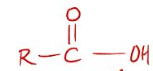
What is the suffix for this terminal functional group?
oic acid
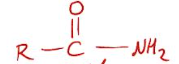
What is the suffix for this terminal functional group?
amide
What is the common name for when R attached to a terminal functional group is H?
form
What is the common name for when R attached to a terminal functional group is CH3?
acet
What is the common name for when R attached to a terminal functional group is CH3CH2?
propion
What is the common name for when R attached to a terminal functional group is CH3CH2CH2?
butyr
What is the common name for when R attached to a terminal functional group is Ph?
benz
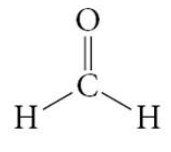
Give the common name and IUPAC name for this structure.
Common: formaldehyde
IUPAC: methanal
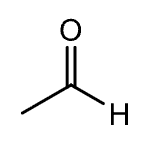
Give the common name and IUPAC name for this structure.
Common: acetaldehyde
IUPAC: ethanal
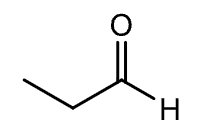
Give the common name and IUPAC name for this structure.
Common: propionaldehyde
IUPAC: propanal
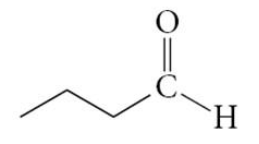
Give the common name and IUPAC name for this structure.
Common: butyraldehyde
IUPAC: butanal
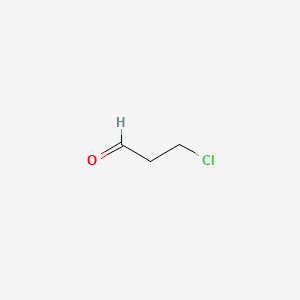
Give the common name and IUPAC name for this structure.
Common: β-chloropropionaldehyde
IUPAC: 3-chloropropanal
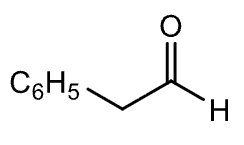
Give the common name and IUPAC name for this structure.
Common: phenylacetaldehyde
IUPAC: 2-phenylethanal
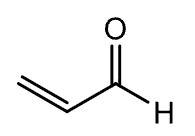
Give the common name and IUPAC name for this structure.
Common: acrolein
IUPAC: prop-2-enal
Aldehydes bonded to a ring are named using the suffix _____.
carbaldehyde
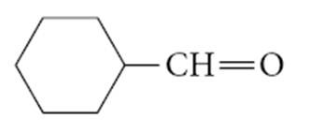
Give the IUPAC name for this structure.
cyclohexanecarbaldehyde
The final e (is/isn’t) dropped when the carbon chain has more than one aldehyde group.
isn’t
How are common names constructed for ketones?
cite the two groups in alphabetical order and add “ketone” at the end
How are IUPAC names constructed for ketones?
IUPAC name then add “-one” at the end
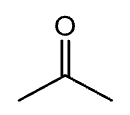
Give the common name and IUPAC name for this structure.
Common: acetone
IUPAC: propanone
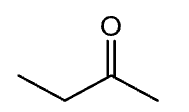
Give the common name and IUPAC name for this structure.
Common: ethyl methyl ketone
IUPAC: butan-2-one or 2-butanone
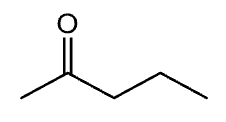
Give the common name and IUPAC name for this structure.
Common: methyl propyl ketone
IUPAC: pentan-2-one or 2-pentanone
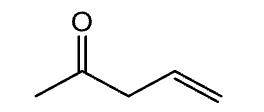
Give the common name and IUPAC name for this structure.
Common: allyl methyl ketone
IUPAC: pent-4-en-2-one
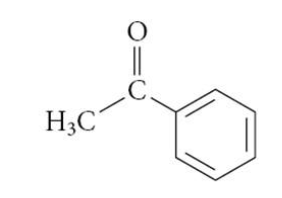
Give the IUPAC name for this structure.
acetophenone
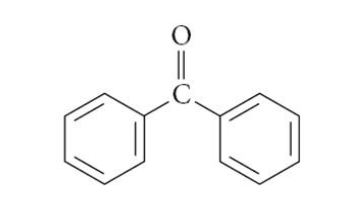
Give the IUPAC name for this structure.
benzophenone
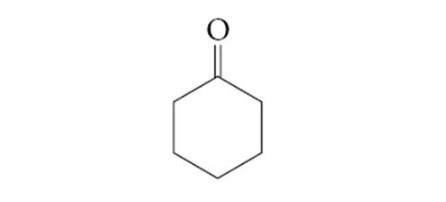
Give the IUPAC name for this structure.
cyclohexanone
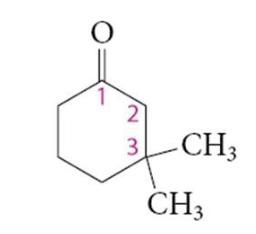
Give the IUPAC name for this structure.
3,3-dimethylcyclohexanone
If there is more than one functional group present in the compound, how do you name the compound?
one of the functional groups is given priority as principle functional group and the others are considered substituents and given prefix names
How is priority assigned to the principle functional group when there is more than one present in a compound?
aldehyde > ketone > —OH > NH2 > —SH
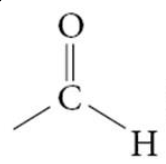
What is the prefix name for this functional group?
formyl-
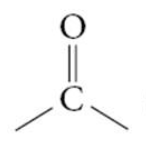
What is the prefix name for this functional group?
oxo-

What is the prefix name for this functional group?
hydroxy-

What is the prefix name for this functional group?
amino-

What is the prefix name for this functional group?
mercapto-
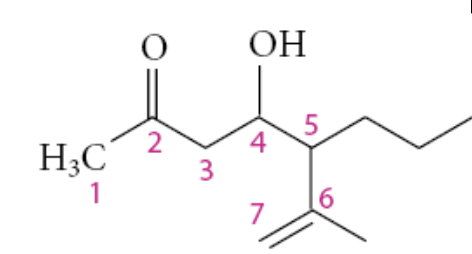
Give the IUPAC name for this structure.
4-hydroxy-6-methyl-5-propyl-6-hepten-2-one
Are aldehydes and ketones polar?
yes
Why are aldehydes and ketones polar?
because of their C=O bond dipoles
Most simple aldehydes and ketones are (solids/liquids/gases).
liquids
Aldehydes and ketones have considerably (higher/lower) boiling points than their corresponding alcohols. Why?
lower;
they are not H-bond donors
What is the solubility of small aldehydes and ketones (≤ 4 carbons) in water? Why?
fairly soluble;
they are H-bond acceptors
What is the IR spectroscopy for the strong C=O stretch of both aldehydes and ketones?
1700 cm-1
How do you differentiate between aldehydes and ketones on an IR spectrum?
aldehydes have a C—H stretch around 2700 - 2800 cm-1
Conjugation with a π bond (increases/decreases) absorption frequency/
decreases
The C=O stretching frequency (increases/decreases) with increasing ring size.
decreases
The C=O stretching frequency (increases/decreases) with decreasing ring size.
increases
Why do aldehydic protons have a large chemical shift?
magnetic field of π electrons and inductive effect of O
What is the chemical shift range of aldehydic protons (1H NMR)?
9 - 10 ppm
What is the chemical shift range of ketonic protons (1H NMR)?
2 - 3 ppm
What is the chemical shift range of aldehyde and ketone C=O carbons (13C NMR)?
190 - 220 ppm
What is the UV-vis spectroscopy for π → π* of aldehydes and ketones?
150 nm (below operating range)
What is the UV-vis spectroscopy range for n → π* of aldehydes and ketones?
260 - 290 nm
Conjugated systems have (strong/weak) absorptions in the UV spectrum.
strong
What is the order of orbitals from lowest to highest energy level?
σ < π < n < π* < σ*
Lower ∆E = (higher/lower) λmax
higher
Increased number of conjugated double bonds and substitution on double bonds → (higher/lower) λmax
higher
In aldehydes and ketones, peaks arise in mass spectrometry due to…
inductive cleavage and α-cleavage
What is the McLafferty rearrangement? Show the mechanism.
a H transfer via a transient 6-membered ring
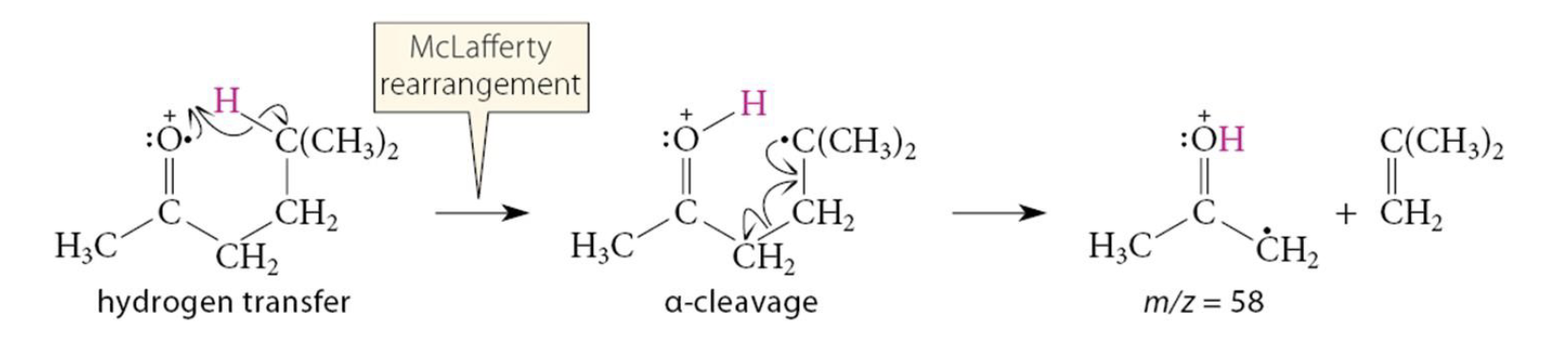
What does the McLafferty rearrangement require?
an available gamma-H
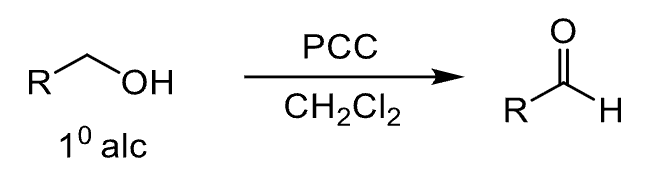
What is the reagent used in oxidation of 1º alcohols to synthesize aldehydes? Draw the simplified reaction.
PCC and CH2Cl2
or
CrO3, Py and CH2Cl2
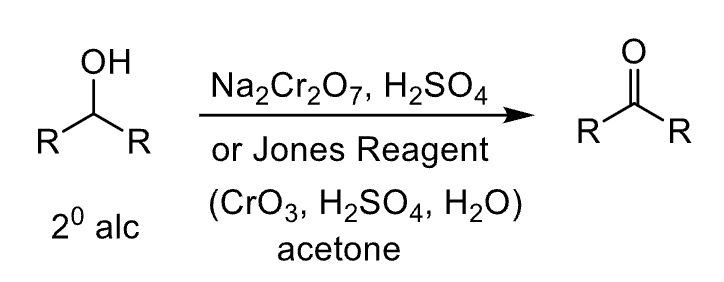
What is the reagent used in oxidation of 2º alcohols to synthesize ketones? Draw the simplified reaction.
Na2Cr2O7, H2SO4
or
CrO3, H2SO4, H2O and acetone
What is the reagent used in the synthesis of aldehydes from alkynes? Draw the simplified reaction.
(Sia)2BH, THF
H2O2, NaOH, H2O

What is the reagent used in the synthesis of ketones from alkynes? Draw the simplified reaction.
H2O, H2SO4 and HgSO4

What is the reagent used in the synthesis of aldehydes through the Friedel-Crafts acylation? Draw the simplified reaction.
no reaction
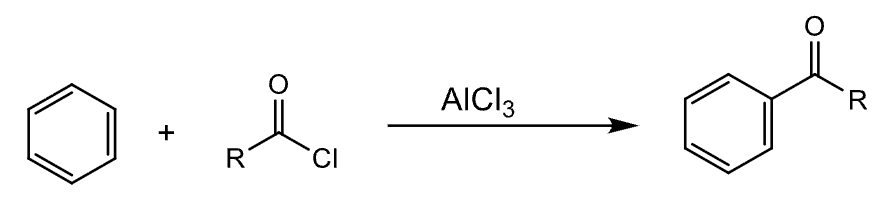
What is the reagent used in the synthesis of ketones through the Friedel-Crafts acylation? Draw the simplified reaction.
AlCl3
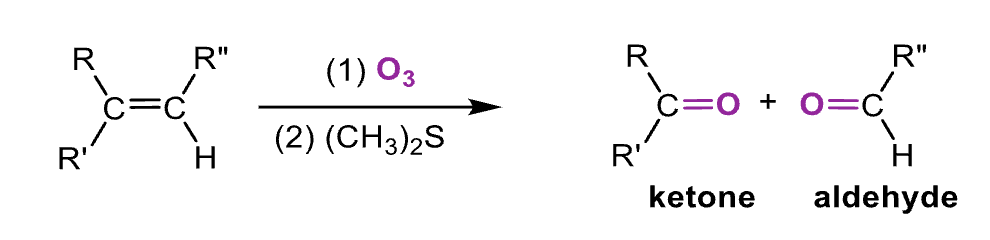
What is the reagent used in the synthesis of aldehydes and ketones through the ozonolysis of alkenes? Draw the simplified reaction.
O3
(CH3)2S
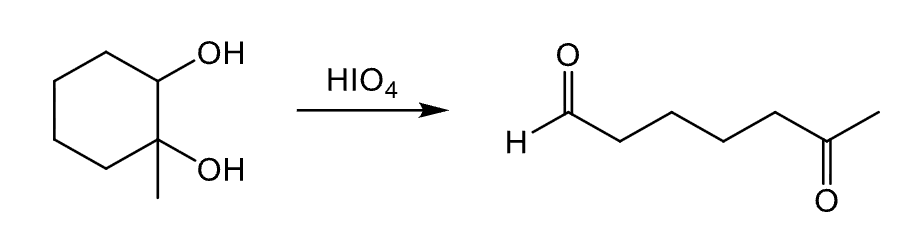
What is the reagent used in the synthesis of aldehydes and ketones through the periodate cleavage of glycols? Draw the simplified reaction.
HIO4
α-hydroxy and α-alkoxy carbocations → (more/less) stable than ordinary carbocations.
more
Conjugate acids of aldehydes and ketones can be viewed as…
α-hydroxy carbocations
Less stable carbocations rearrange to more stable by…
1,2 shift
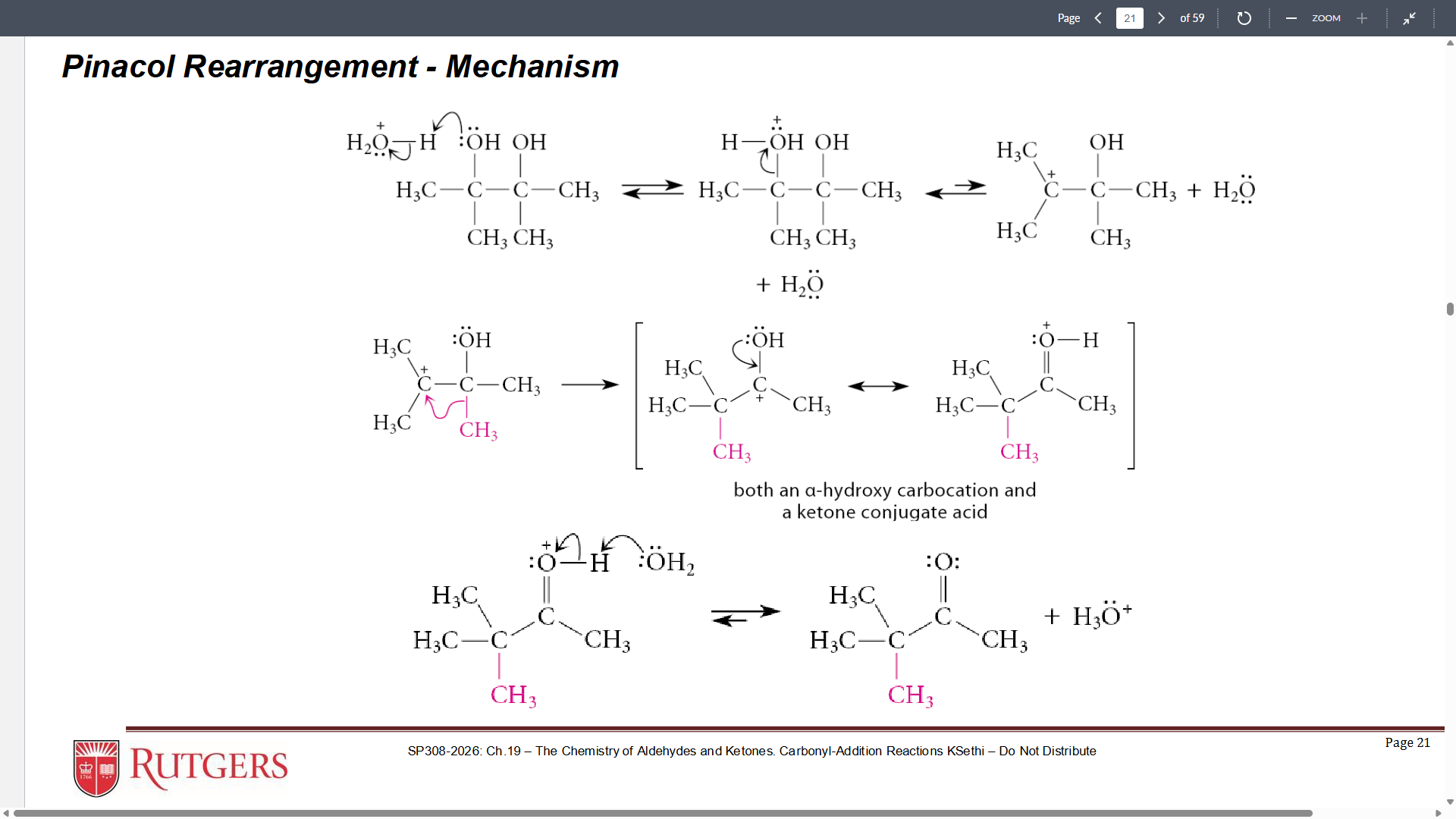
draw the pinacol rearrangement mechanism
The carbonyl oxygen is (strongly/weakly) basic.
weakly
Protonated alcohols are (more/less) acidic.
less
Which are more basic, alcohols or ketones?
alcohols
Why are alcohols more basic than ketones?
alcohols deprotonate at a faster rate than ketones;
hybridization is sp2;
solvent effect
Order these by increasing electrophilicity of C.
alkyl group, electronegative group, H, steric factor, resonance
resonance < steric factor < alkyl group < H < electronegative group
What are the two strong basic nucleophiles?
R’MgX or R’Li
LiAlH4 (H- source)
What are the moderate/weak basic nucleophiles?
moderate = CN- and RNH2
weak = H2O and ROH
Which are the irreversible nucleophiles?
R’MgX or R’Li
LiAlH4 (H- source)
Which are the reversible nucleophiles?
CN-, RNH2, H2O, and ROH
What are the reversible additions to aldehydes and ketones?
addition of HCN (NaCN, pH 9-10 H2O)
addition of H2O
draw the forward mechanism for addition of HCN to a carbonyl group
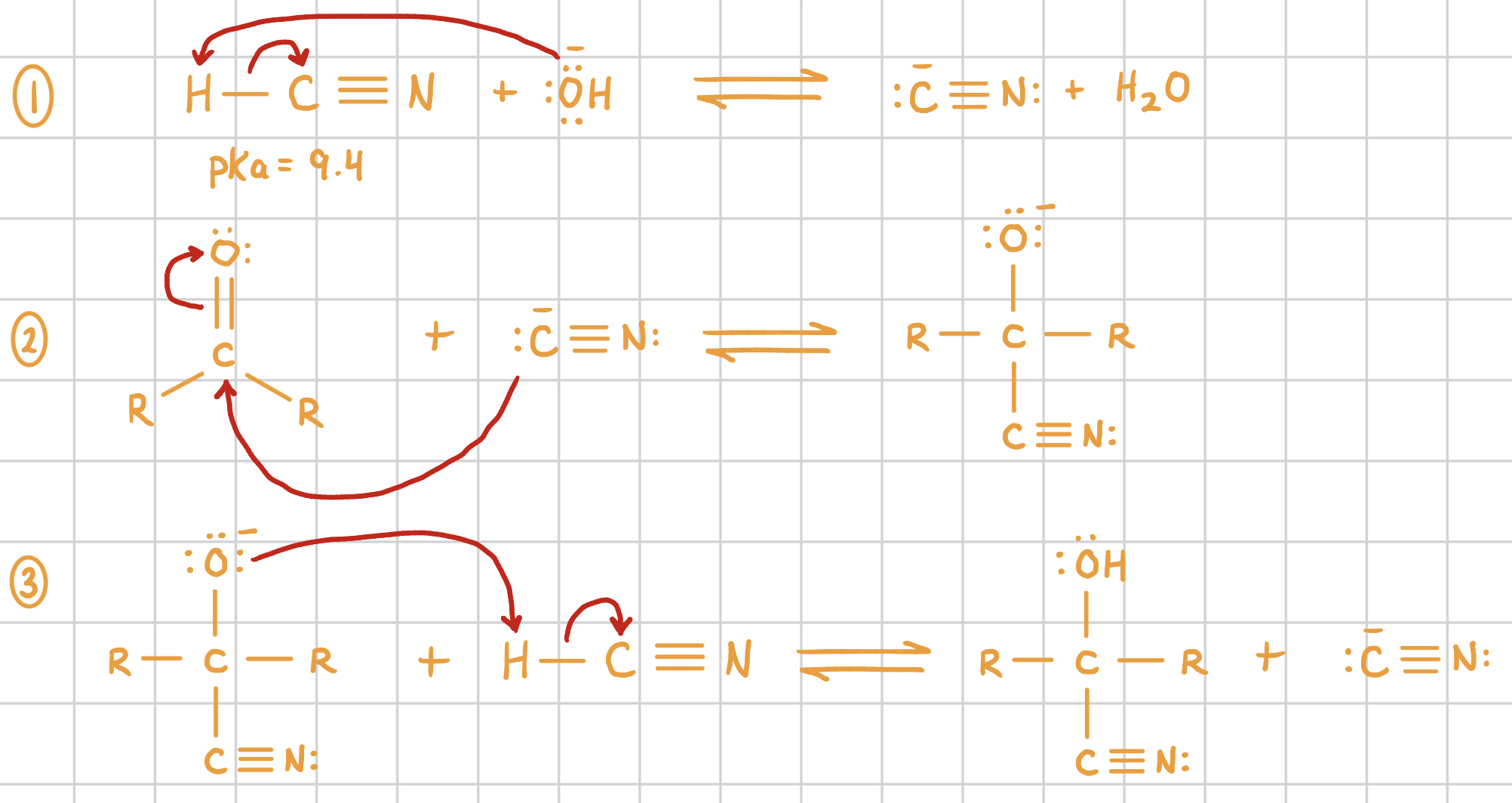
What is HO—C—CN?
cyanohydrin
Is cyanohydrin formation reversible?
yes, under basic conditions and carbonyl formation is thermodynamically favored
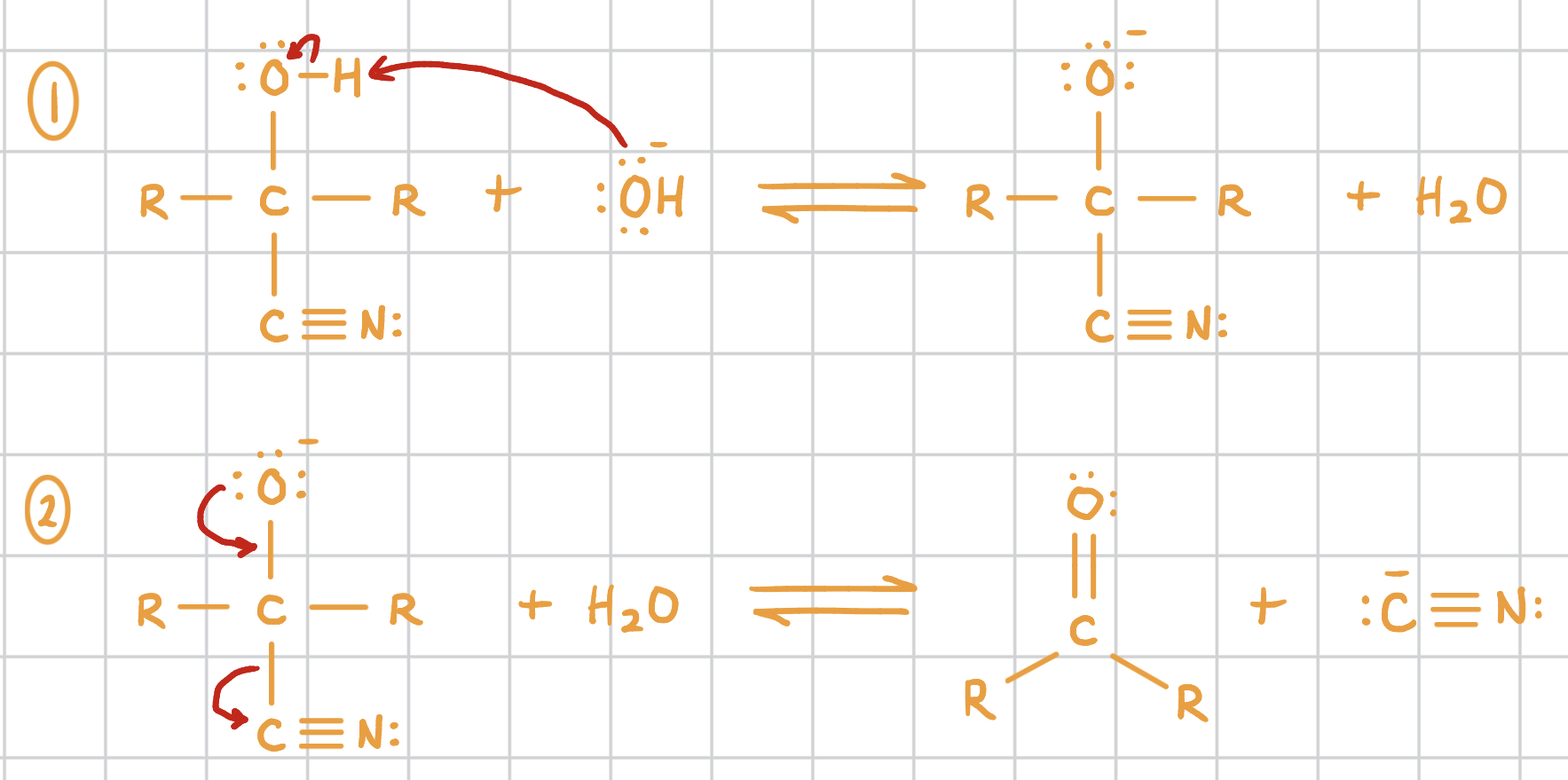
draw the reverse mechanism for addition of HCN to a carbonyl group
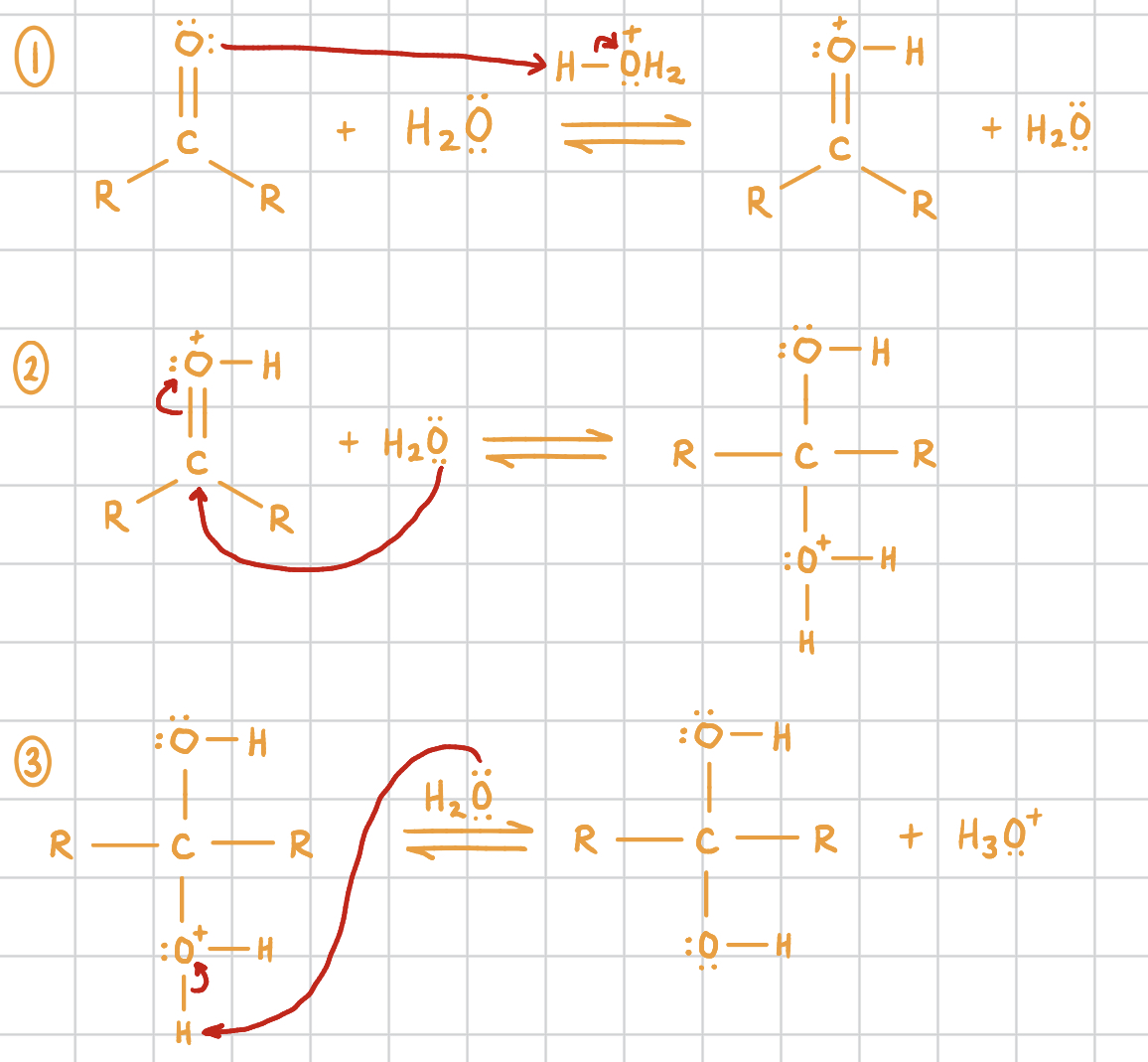
draw the forward mechanism for addition of water to a carbonyl group in acidic conditions
draw the reverse mechanism for addition of water to a carbonyl group in acidic conditions
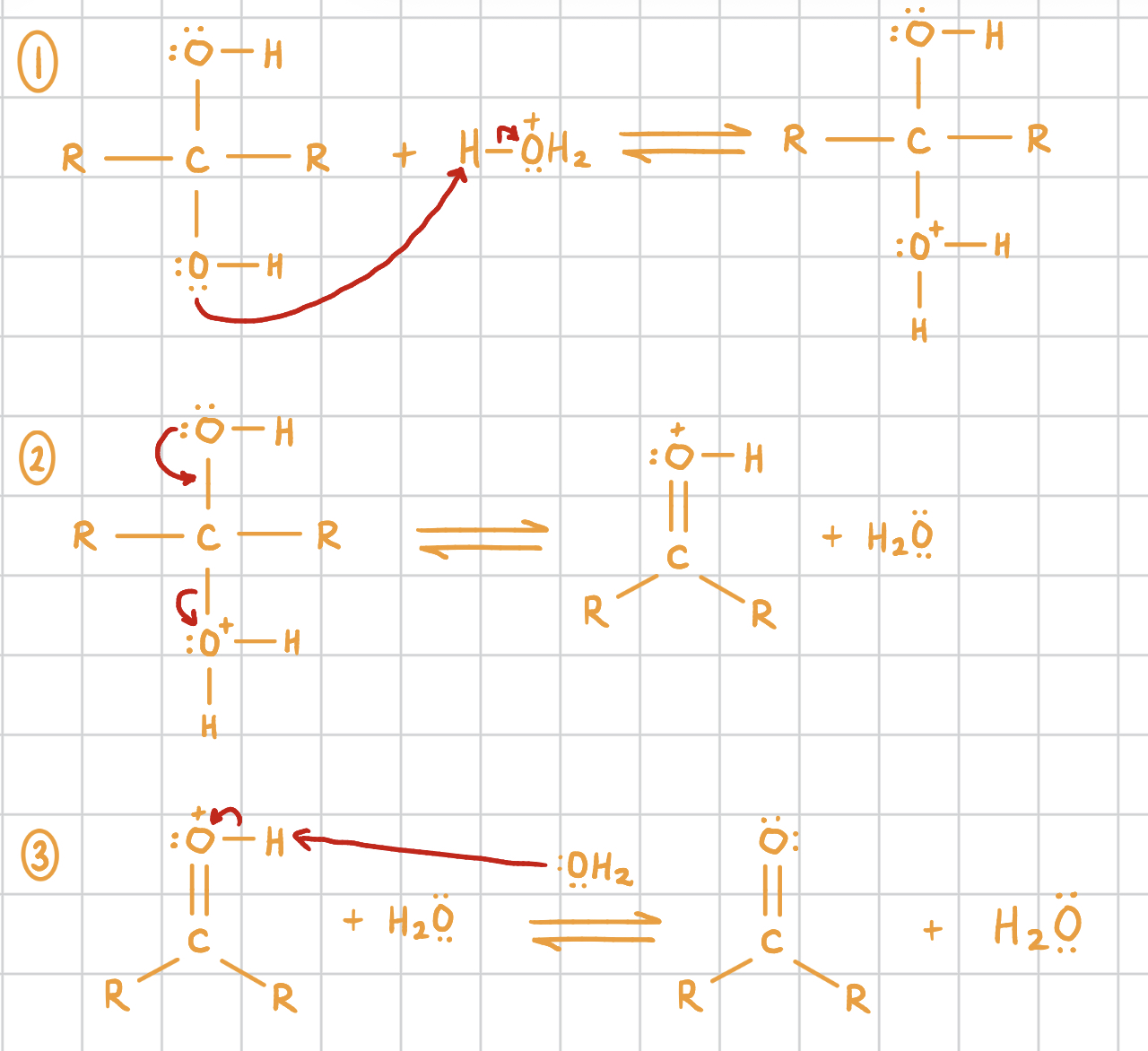
draw the forward mechanism for addition of water to a carbonyl group in basic conditions
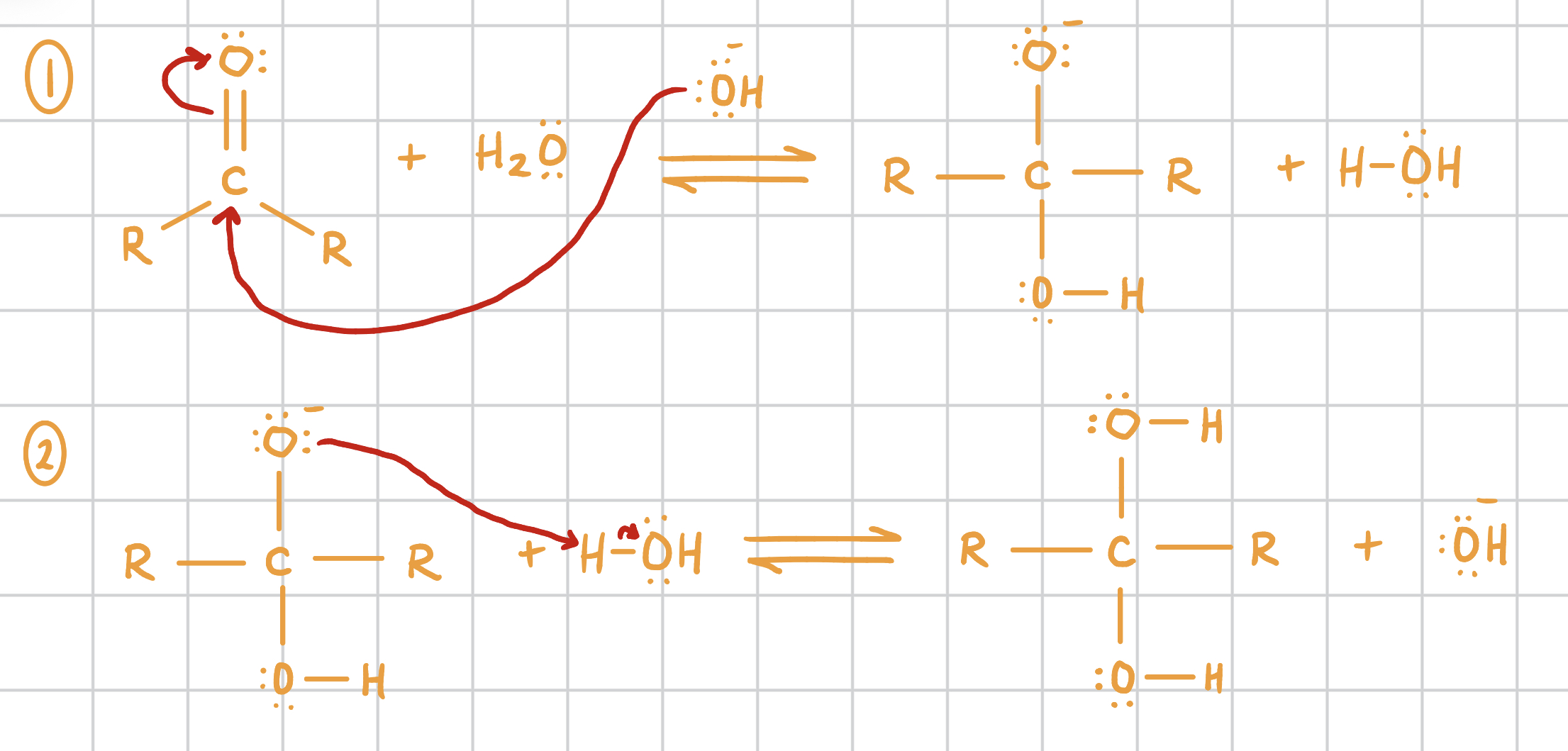
draw the reverse mechanism for hydrolysis of a carbonyl group in basic conditions
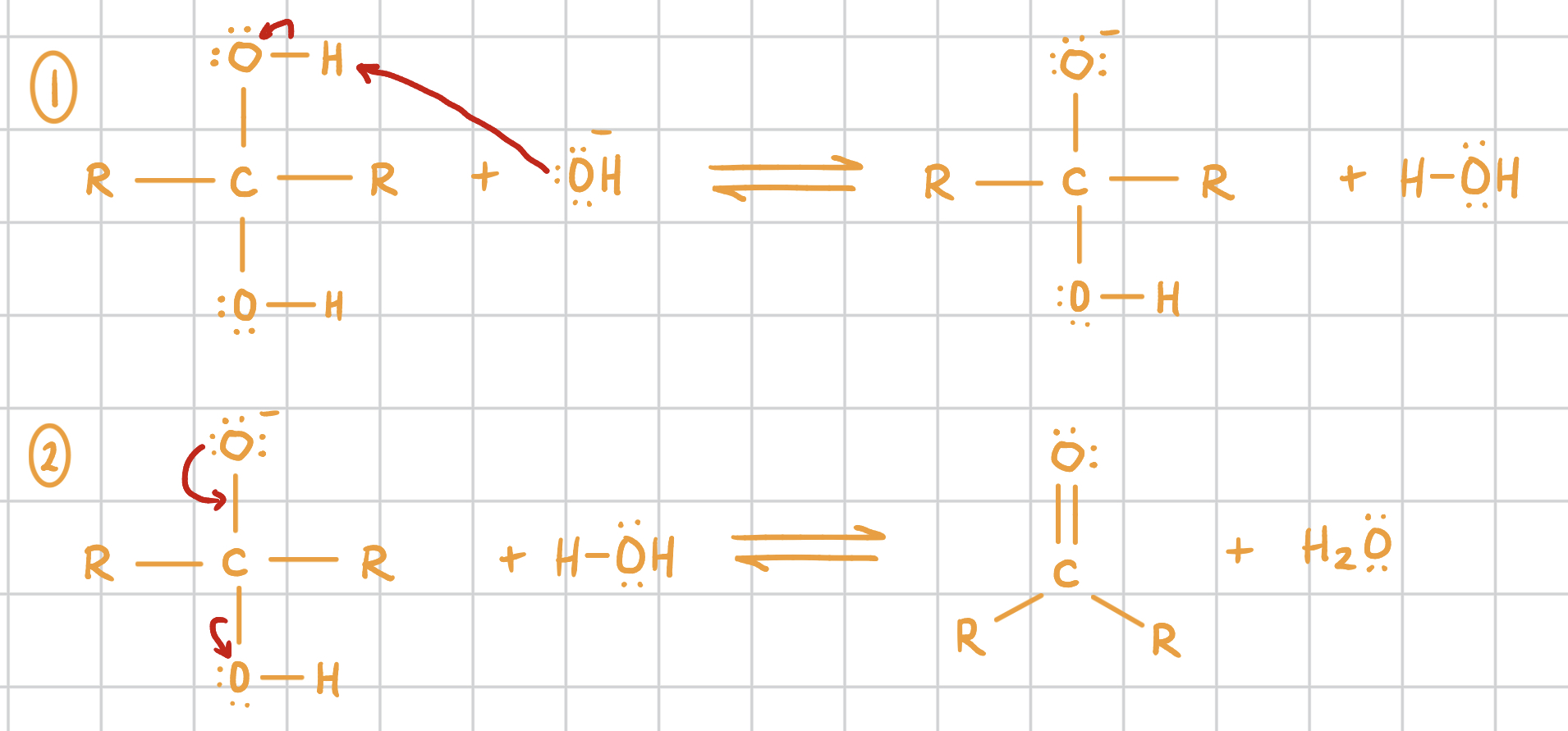
What does the addition of water to a carbonyl group in the presence of an acid or base catalyst result in?
formation of hydrates
What is a hydrate?
compound with two OH groups attached to the same carbon
Compounds with the (most/least) favorable addition equilibria tends to react most rapidly.
most
What does the equilibrium for a reversible addition depend strongly on?
the structure of the carbonyl compound
Electron donating groups (increase/decrease) reactivity of a carbonyl compound.
decrease
Electron withdrawing groups (increase/decrease) reactivity of the carbonyl carbon.
increase
Partial positive charge (increases/decreases) reactivity of the carbonyl carbon.
increases
More hyper-conjugation structures for ketones (increase/decrease) reactivity of the carbonyl carbon.
decrease
Why do more hyper-conjugation structures for ketones decrease reactivity of the carbonyl carbon?
it stabilizes the structure, which lowers reactivity