ASL
 Studied by 0 people
 Call Kai
 Learn
Learn Practice Test
 Spaced Repetition
 Match
Match Flashcards
 Knowt Play
1/78

There's no tags or description
Looks like no tags are added yet.
Name | Mastery | Learn | Test | Matching | Spaced |
|---|
No study sessions yet.
79 Terms
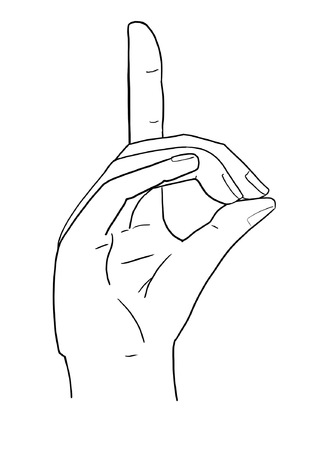
Index
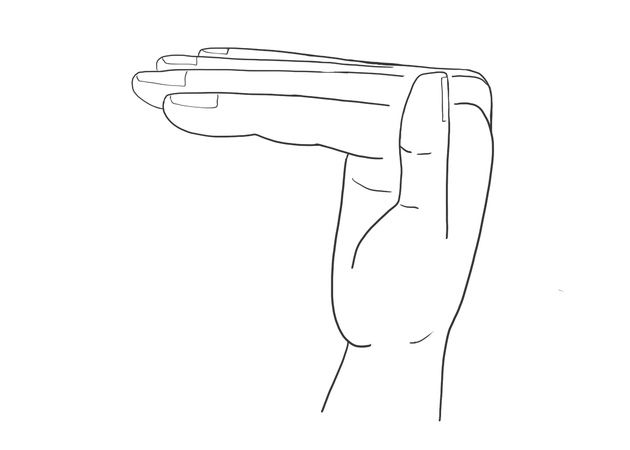
Bent Hand
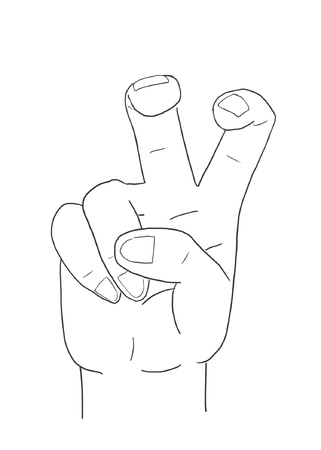
Bent V
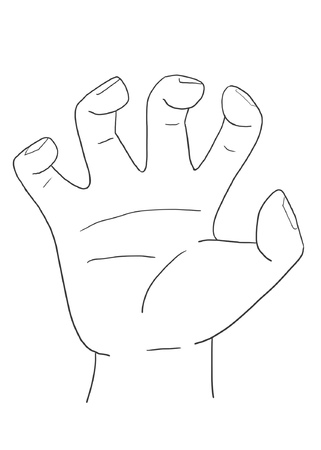
Claw Hand
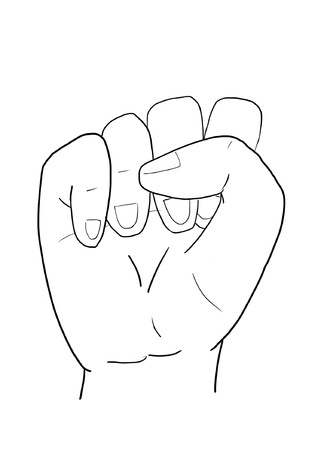
Closed Hand
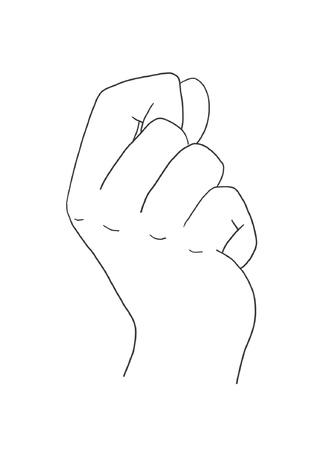
Cocked Index
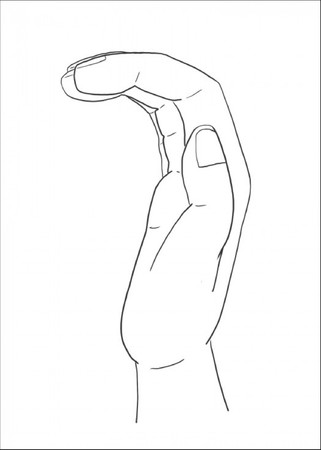
Curved Hand
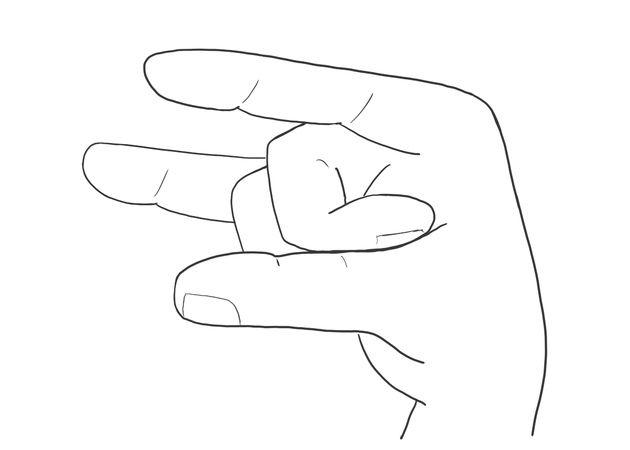
Horns
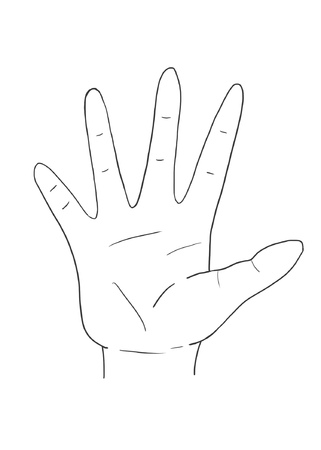
Open Hand
Thomas Hopkins Gallaudet
Graduate of Yale. Become friends with a young deaf girl, was hired by her father to learn how to teach the deaf.
Alice Cogswell
Deaf girl who was the student of Thomas Hopkins Gallaudet
Mason Cogswell
Father of a deaf girl who hired a teacher to help educate his daughter
Laurent Clerc
Deaf man who traveled to America to help set up the first school for the deaf in America
Abbe Charles Michel de L’Epee
Founder of the first free school for the deaf in Paris where French sign language was methodically developed
Deaf (capital and lowercase ‘D’)
The term “deaf” spelled with a lowercase d refers to all individuals with little or no ability to hear sound. “Deaf” is the community
Early ASL was influenced by…
both signs from the U.S. and France
ASL
A distinct language that is used by the Deaf community in North America
PSE
Pidgin Signed English- a mixture of ASL and signed English
MCE
Manually Coded English- sign systems that have been developed to represent forms of signed English. These are not established languages; they are extensions of English
Sign Language Continuum
A continuum that shows the path from using ASL to English and how they connect with signed systems
signed systems
Signs are set up to use for communication in a Manually Coded English System. They are not complete, distinct languages.
conceptual language
ASL is concept-based language. When a concept is presented in ASL, the correct sign must be used to show the meaning of the concept and not the wording in English. There is not a sign in ASL for each word in English; the signs shoe concept, not word-for-word translations from English.
gloss
A written label for a sign. An English word that is associated with signs in ASL
handshapes
Making a handshape in ASL can be used to convey letters and classifiers connected to concepts and meaning for communication. This could be a letter shape, or another handshapes used in producing signs
signing space
Area from the top of the head just below the waist where most signs are produced
negation
When using signs, many can be negated by shaking the head as in “no”.
aspects of a sign
handshape, placement, palm orientation, movement
“wh” questions
Questions that use who, where, when, why, and how. These questions use the NNM’s: eyebrows down, head tilt, and hold the last sign
“yes/no” questions
questions that can be answered with a Yes or No. These questions use these NNM;s: eyebrows up, head tilt, and hold the last sign
present referent
using the index finger to point to someone who is present
absent referent
using the index finger to point to the right or left of the signer and indicate a pronoun for someone who is not present
indexing
referencing someone or something by pointing to them
My/Mine
a flat hand on the chest
Your/Yours
a flat hand in the direction of the receive
His/Hers
A flat hand in the direction of a 3rd person
Their/Theirs
flat hand in a sweeping motion showing pluralization
I/Me
pointing toward oneself
You
pointing toward the person that you are addressing
He/She
pointing toward a 3rd person
Numbers
Adding a number with a sign. GIRL-3 (three girls)
Repetition
Repeating a sign GIRL +++ (three girls)
Quanitifiers
Using a quanitifer sign GIRL-MANY (many girls)
Sweeping Motion
Sweeping motion using the index finger or flat hand. GIRL-THEY (those girls)
Directionality
using a sign in a specific direction to show agreement or inflection
Directional Signs
those signs that use directionality for agreement or inflection. Examples: GIVE-YOU (sign directed toward person being addressed) - GIVE-ME (sign directed toward the signer)- GIVE-HIM/HER (sign directed to the side of the signer)
Negation
When using signs, many can be negated by shaking the head as in “no”
Affirmation
Nodding the hehad to signify “yes”
Non-Manual Markers
(NMMs) facial expressions or other body movements used to indicate meaning when using signs
Rhetorical Question
Rhetorical questions are used when an answer is not expected but mostly to gain attention. Rhetorical questions use the NNM’s: eyebrows up, head tilt, hold the last sign (Same as yes/no)
Initialization
the use of fingerspelling handshape added to a sign concept to indicate a specific class. Example: GROUP can be initialization signing G followed by sign for BUNCH
Handshapes
Making a handshape in ASL can be used to convey letters and classifiers connect to concepts and meaning for communication. Could be letter shape, another handshape
Placement
The position of the hands in relation to the body
Movement
Type of movement the hand makes when producing a sign.
Palm Orientation
The direction the palm of the hand is facing when producing a sign
Topic-Comment Structure
The topic is established, and then signs are used to tell about the subject. “she” is a topic, “is beautiful” is the comment
Topic
The topic establishes who/what a sentence is about—equivalent to the subject in English
Comment
The comment tells something about the subject of a sentence—equivalent to the predicate in English
Subject
The subject is a person or thing that is doing an action or that is the focus of a sentence
Predicate
A sign, word, or phrase that says something about the subject
Tense
in ASL, referring to concepts connected with time such as YESTERDAY, TOMORROW, LAST-NIGHT. Tense is established by using time signs at the beginning of the phrase or communication. (Time+topic+comment)
Timeline in ASL
=Past is behind the signer. -Present is directly in front of the signer. -Future is further out in front of the signer.
Time Indicators
Concepts such as yesterday, today, tomorrow, already, finished, etc.
Modulation
Variations in sign with speed or slowness, repeating the sign, or using a change movement. Modulation signs can change the tense of the sign. For example, If something is “dying” then the sign for DIE can be done slowly o show the inflection. If something has died, then the sign can be done quickly. If someone is learning, then the sign for LEARN is repeated.
Reversal of Orientation
When using signs the palm orientation is important and with these signs, the orientation is changed for the intended meaning. LIKE/DON’T LIKE WANT/DON’T WANT KNOW/DON’T KNOW
Head Shake
Much of the time the head shake is added to a sign to mean the opposite.
NOT sign
Sometimes, the sign for not can be added. This is when a rhetorical statement is signed and then “NOT” is added to clarify the meaning.
Iconic Signs
An icon is a symbol that looks like what it represents, some signs tend to look like what they represent.
Arbitrary Signs
There is no connection between the form used for the sign and the actual concept represented.
Conventions
The rules and components of the language that are generally accepted among the people who use it.
Inflection
Changing a sign to represent a related, but different meaning. Ex: (Same handshape, placement, palm orientation, but movement may be changed or exaggerated). This means changing the movement to indicate a verb tense, an adverb, or an adjective that modifies the meaning of a sentence or phrase.
very-SAD
slower movement than SAD, appropriate facial expression
really-ANGRY
bigger movement than ANGRY, hold the sign, angry expression
really-SORRY
slower movement than SORRY, sad expression
Classifiers
Classifiers can be used to: describe the size and shape of an object, represent the object itself, demonstrate how the object moves, convey how it relates to other objects and/or people
Classifier 1
The “1” handshape can be used to show long, skinny things. It can also be used for tracing the shape of a 2-demensional object
Classifier V
The “V” handshape can be used to show things like how someone’s legs move or fangs