The Co-Variation Model
 Call Kai
 Learn
Learn Practice Test
 Spaced Repetition
 Match
Match Flashcards
 Knowt Play
1/10

There's no tags or description
Looks like no tags are added yet.
Name | Mastery | Learn | Test | Matching | Spaced | Call with Kai | Chat |
|---|
No analytics yet
Send a link to your students to track their progress
11 Terms
Who created the co-variation model
Kelley: causality is attributed using the co-variation principle
Co-variation principal
For something to be the cause of a particular behaviour, it must be present when the behaviour is present and absent when the behaviour is absent
What are the three types of information that is important when arriving at an internal or external attribution
WHAT
WHAT
WHAT
What are the three types of information that is important when arriving at an internal or external attribution
Consensus
Consistency
Distinctiveness
The combination of these three determines WHAT
The combination of these three determines ATTRIBUTIONS
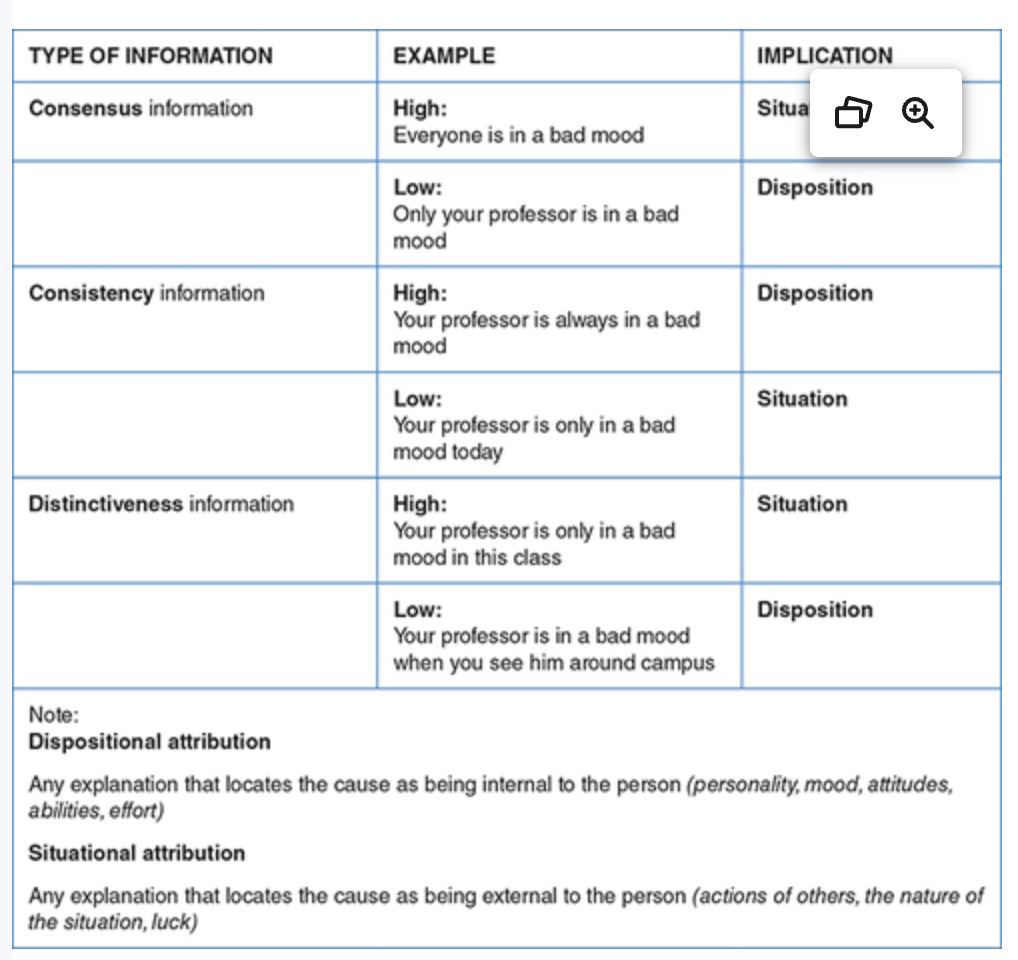
Consensus information
The extent to which other people in the scene react in the same way as the target person (is everyone late this morning)
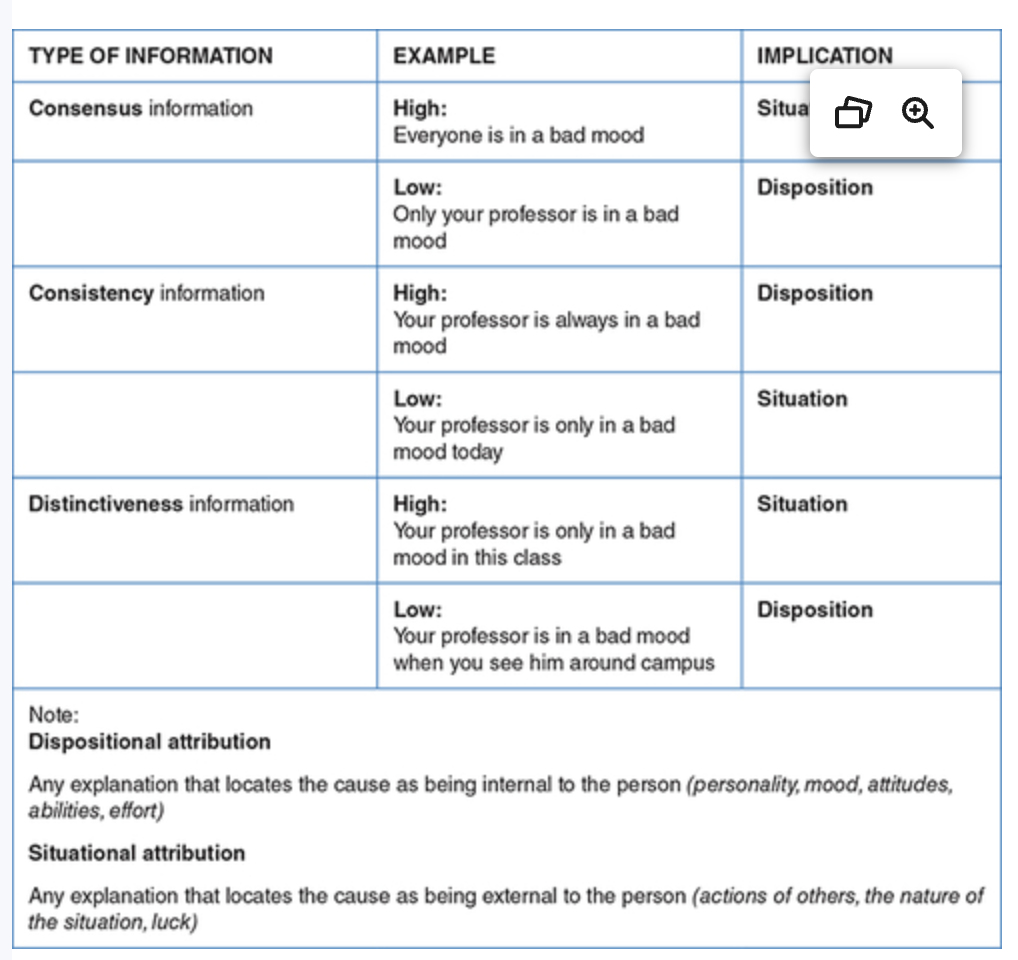
Consistency information
The extent to which the target person reacts in the same way on different occasion (is Mark always late to work)
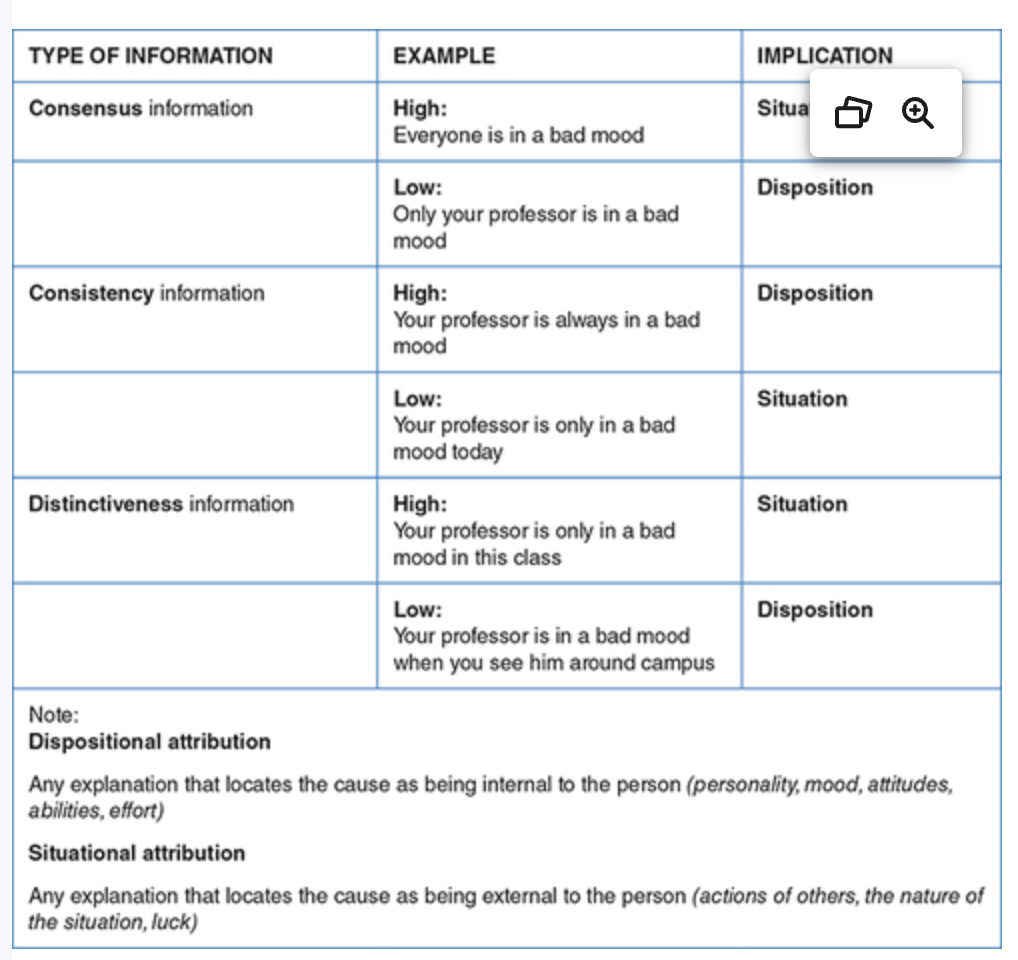
Distinctiveness information
The extent to which the target person reacts in the same way in other social contexts (is Mark usually late or was it just this time)
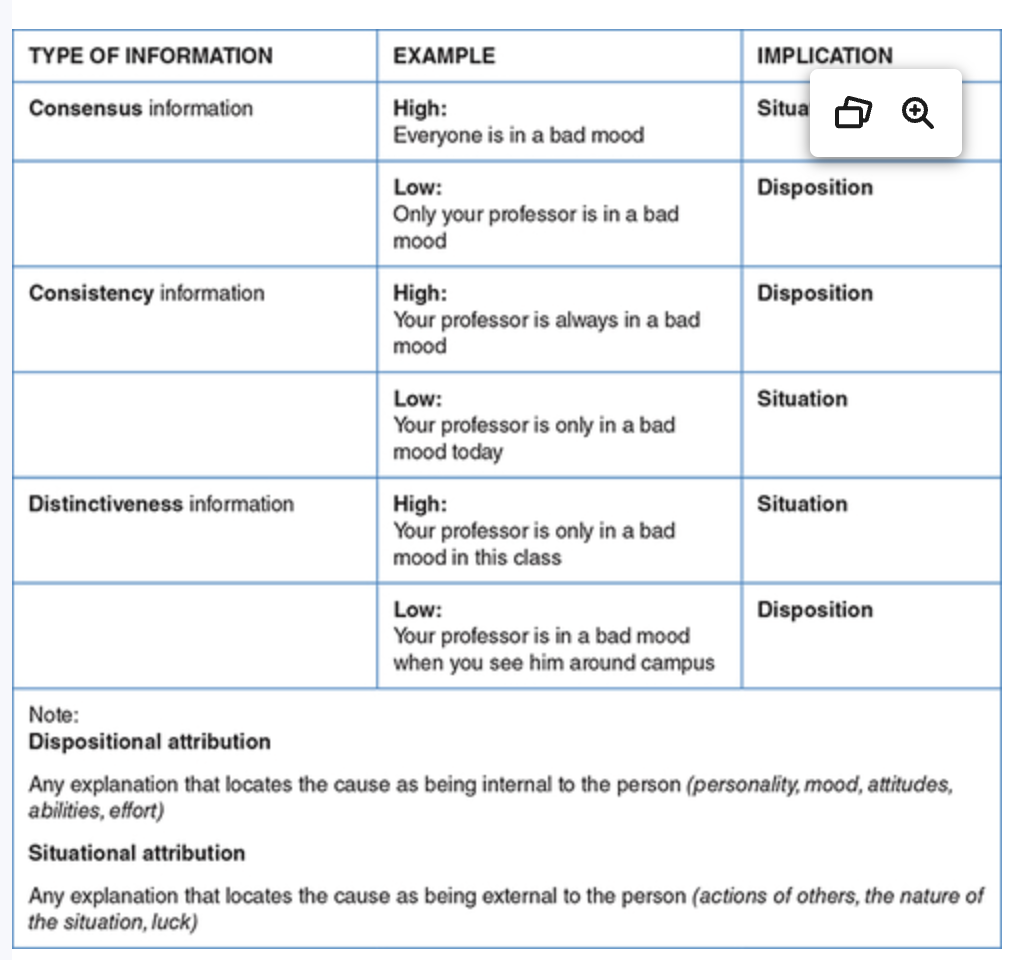
Presence of consensus information - A WHAT cause
Absence of consensus information - A WHAT cause
Presence of consensus information - A SITUATION cause
Absence of consensus information - A DISPOSITION cause
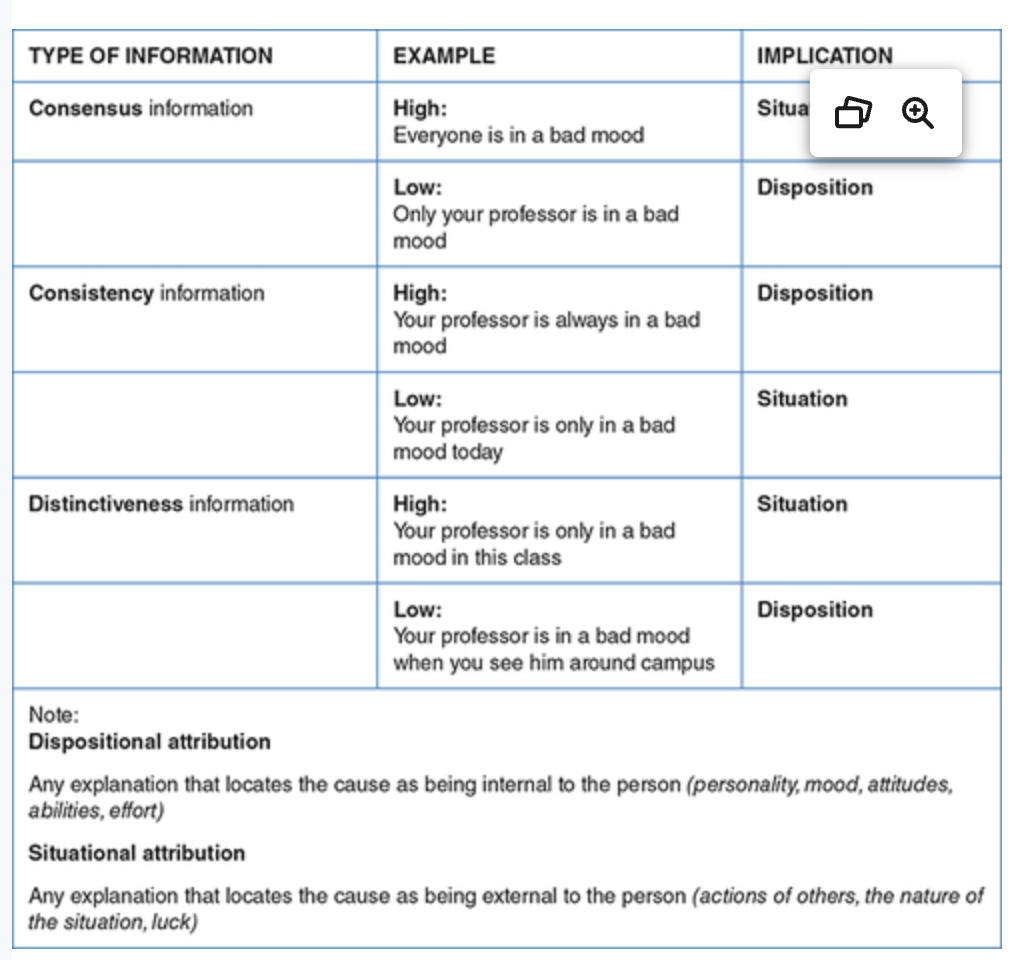
Presence of consistency information - WHAT cause
Absence of consistency information - WHAT cause
Presence of consistency information - DISPOSITION cause
Absence of consistency information - SITUATION cause
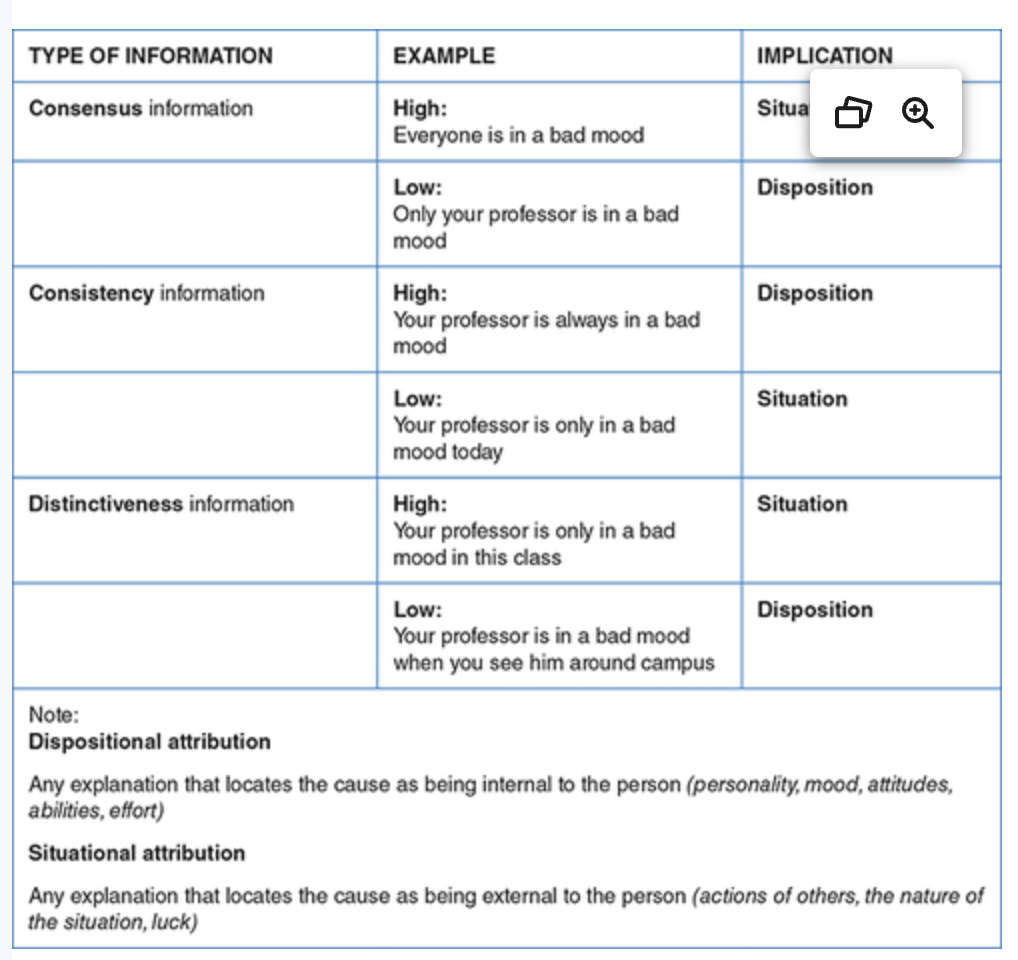
Presence of distinctiveness information - WHAT cause
Absence of distinctiveness information - WHAT cause
Presence of distinctiveness information - SITUATION cause
Absence of distinctiveness information - DISPOSITION cause
Issue with the co-variation model: when using the model, all three types of information are not WHAT attended to, we attend more toward WHAT (WHAT and WHAT) information than to WHAT information (WHAT)
Issue with the co-variation model: when using the model, all three types of information are not EQUALLY attended to, we attend more toward TARGET (CONSISTENCY and DISTINCTIVENESS) information than to OTHER PEOPLE information (CONSENSUS)