Oraganometallic Compounds
0.0(0)
Studied by 9 people Call Kai
 Learn
Learn Practice Test
 Spaced Repetition
 Match
Match Flashcards
 Knowt Play
Card Sorting
1/22

Earn XP
Description and Tags
Last updated 11:08 PM on 10/19/22
Name | Mastery | Learn | Test | Matching | Spaced | Call with Kai |
|---|
No analytics yet
Send a link to your students to track their progress
23 Terms
1
New cards
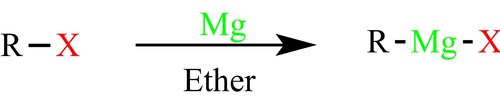
structure of a Grignard reagent
alkyl-MgBr (important for the formation of carbon-carbon bonds)
2
New cards
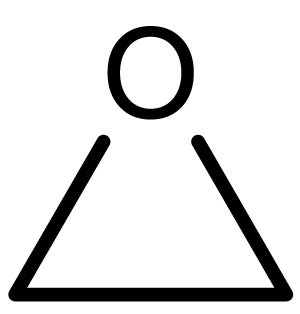
structure of an oxirane/epoxide
(used with a Grignard reagent to break the ring OR used with a Gilman cuprate/reagent to break the ring and add the R-group)
3
New cards
structure of a Gilman cuprate
(act as methylating agents when subjected to conjugate addition reactions with alkynes)

4
New cards
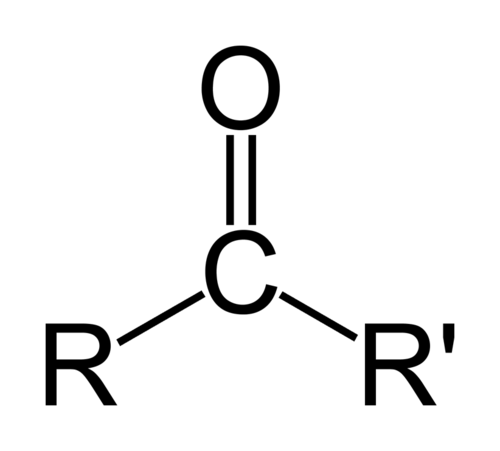
structure of a ketone
(R-C=O-R)
5
New cards
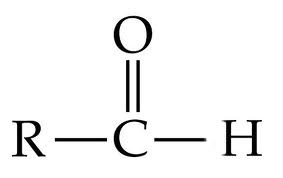
structure of an aldehyde
(R-CHO)
6
New cards
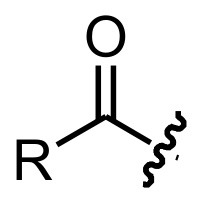
structure of an acyl
(a moiety group derived from removing an R-group from a carboxylic acid)
7
New cards
structure of mCPBA
(peroxy acid that is used widely as an oxidant in organic synthesis)

8
New cards
structure of an ylide
(a neutral dipolar molecule w/ a negatively charged atom directly attached to a positively charged heteroatom; the negatively charged atom is a nucleophilic center and the onium group is usually a good leaving group)
9
New cards
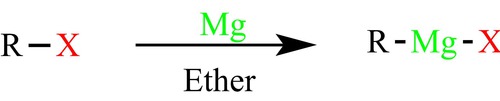
alkyl halide + [metal]°, ether
preparation of a Grignard reagent
10
New cards
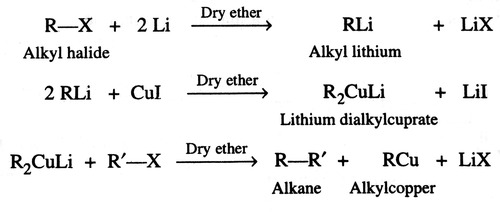
R-Li + CuI, ether
preparation of a Gilman Cuprate
11
New cards
R-Mg-X + HCl
protonation that results in R-H (alkane) + ClMgX
12
New cards
R-Li + HCl
protonation that results in R-H (alkane) + LiCl
13
New cards
alkyl halide + Gilman cuprate
results in the formation of a new C-C bond via SN2 as the halide leaves (LG) because Gilman cuprates are too basic

14
New cards
alkyl halide + Grignard reagent
results in the formation of a new C=C bond via E2 because Grignard reagents are too basic (only one R group will react)
15
New cards
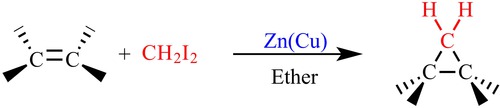
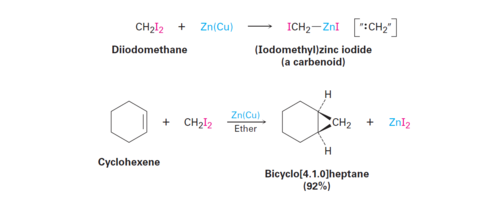
structure of a Simmons-Smith reagent
Ch2I2, Zn(Cu), ether
16
New cards
alkene + CH2I2, Zn(Cu), ether
(Simmons-Smith rxn) results in breaking of the double bond and
17
New cards
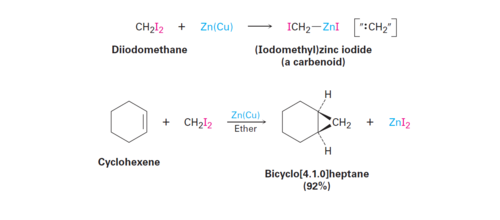
CH2I2 + Zn(Cu), ether
results in a carbenoid
18
New cards
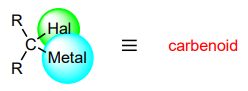
structure of a carbenoid
(a reactive intermediate that includes a metal; reacts similarly to a carbene)
19
New cards
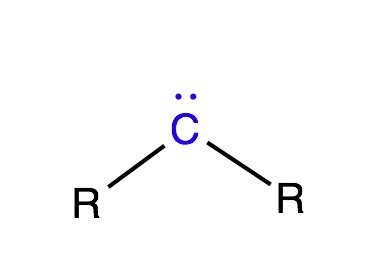
structure of a carbene
(highly reactive, uncharged molecule that can act an electrophile or nucleophile; reacts similarly to a carbenoid)
20
New cards
structure of a phenyl group
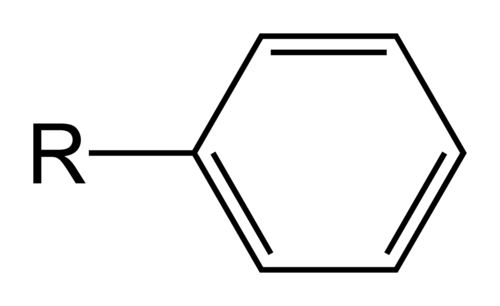
21
New cards
structure of a benzene

22
New cards
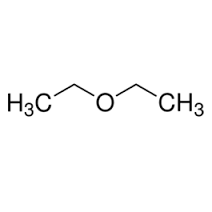
structure of diethyl ether
(used as a solvent when the rxn calls for an absence of water)
23
New cards
structure of acetylide
(metal is bonded with an alkyne via ionic bonds; the other carbon is bonded to an R group)
