APEX MOCK EXAM 2
 Call Kai
 Learn
Learn Practice Test
 Spaced Repetition
 Match
Match Flashcards
 Knowt Play
1/100

There's no tags or description
Looks like no tags are added yet.
Name | Mastery | Learn | Test | Matching | Spaced | Call with Kai | Chat |
|---|
No analytics yet
Send a link to your students to track their progress
101 Terms
which measures the concentration of an anesthetic by bombarding the gas sample w/ electrons?
mass spectometry
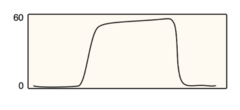
which conditions are consistent w/ this capnograph? (select 3)
a. incompetent expiratory valve
b. opioid OD
c. hole in inner tubing of a Bain circuit
d. exhausted soda lime
e. malignant hyperthermia
f. seizures
1. opioid OD
2. malignant hyperthermia
3. seizures
💡this capnograph shows hypercarbia & yes, all answer choices can cause hypercarbia BUT notice that the waveform returns to baseline, which rules OUT rebreathing
-causes of rebreathing = incompetent unidirectional valve, exhausted soda lime, & hole in inner tubing of Bain circuit
💡MH & seizures are hypercarbia due to CO2 ober production & hypercarbia from opioid OD is from reduced CO2 clearance
match each lab test that is used to monitor it: heparin infusion, coumadin, aspirin, fibrinolysis
-heparin: ACT
-coumadin: PT
-aspirin: bleeding time
-fibrinolysis: D-dimer
what drugs are safe to administer to the patient w/ a history of acute intermittent porphyria? (select 2)
a. methohexital
b. etomidate
c. succinylcholine
d. nitrous oxide
1. succinylcholine
2. nitrous oxide
💡condition can be made worse by stimulation of ALA synthetase, emotional stress, prolonged NPO status, & CYP450 induction
💡must avoid ALL barbituates + etomidate
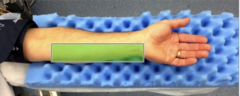
click on the area where the nerve stimulator should be placed to elicit contraction of adductor pollicus
stimulation of ulnar nerve results in contraction of adductor pollicus; distal electrode placed over proximal flexor crease of the wrist & proximal electrode placed over flexor carpi tendon
💡adductor pollicus is among the last muscles to recover from non-depolarizing NMBDs
clearance is inversely proportional to: (select 2)
a. concentration in the central compartment
b. blood flow to the clearing organ
c. extraction ratio
d. half-life
1. half-life
2. concentration in the central compartment
💡clearance: volume of plasma that is cleared of a drug per unit time ; the other things are directly proportional
muscarinic-2 stimulation causes:
a. ganglionic stimulation
b. epinephrine release from adrenal medulla
c. skeletal muscle contraction
d. bradycardia
bradycardia
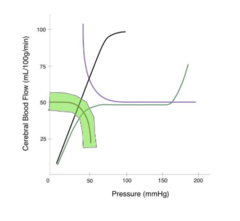
click on the region of the cerebral blood flow graph that represents ICP
red: ICP
purple: PaO2
green: CPP
black: PaCO2
following retinal detachment surgery, how long should nitrous oxide be avoided? (10 days, 5 days, 0 days)
-sulfar hexafluoride
-air bubble
-silicone oil
-silicone oil: 0 days
-air bubble: 5 days
-sulfar hexaflouride: 10 days
💡during retinal detachment surgery, a gas bubble is placed over the site of retinal break & that functions as a "splint" to hold the retina in place while healing occurs
-nitrous oxide can diffuse into the bubble faster than other gasses in the bubble can diffuse out & so there is a risk that the bubble will expand if N2O is used & cause intraocular hypertension and lead to blindness; silicone oil is an alternative to a gas bubble & thats why its fine
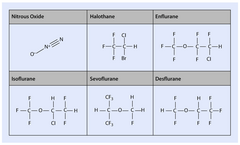
match each anesthetic agent w/ its chemical structure (it only has iso, sevo, des, & halothane but i had to get a pic off google bc it didnt pop up)
-halothane: only alkane; 1 chlorine, 1 bromine, & 3 flourine
-all other agents are ethers
-iso: 5 flourine + 1 chlorine
-des: 6 flourine
-sevo: 7 fluorine
which level is designated by the intercristal line?
a. C6
b. T4
c. T6
d. L4
L4
patient received a citrated non-particulate antacid, but the case has been delayed. how long after the initial dose should a second dose be considered?
60 minutes
💡citrate preps incease pH of gastric contents within 15 minutes & have a duration that can last up to 7 hours; some patients can have rebound acidity and so reccomended to repeat dose the 1 hour after previous administration
which statement MOST accurately describes train-of-four monitoring in the patient w/ hemiperesis?
a. affected limb has decrased sensitivity to depolarizing neuromuscular blockers
b. affected limb has an increased sensitivity to nondepolarizing neuromuscular blockers
c. TOF can be monitored on either side
d. TOF monitoring on hemiparetic limb yields a falsely elevated response
TOF monitoring on hemiparetic limb yields a falsely elevated response
💡patients w/ hemiparesis from stroke or brain tumor have denervation injury & on the affected (weak) side there is a/an:
-expression of extrajunctional receptros at the NMJ as well as on the sarcolemma
-decreased sensitivity to nondepolarizers
-potential for hyperkalemia following exposure to succs
💡affected limb yields falsely elevated response that might lead you to believe they are adequately reversed even though they're not; take away is that you should NOT monitor the NMJ on the affected hemiparetic limb
choose the hormones that are released from the posterior pitutitary gland (select 2)
1. Antidiuretic hormone (ADH)
2. oxytocin
💡anterior pituitary secretes 6 hormones (FLAT PIG): Follicle stimulating hormone, Lutenizing hormone, Adrenocorticotropic hormone, Thyroid stimulating hormone, Prolactin, Growth hormone
💡posterior secretes 2 hormones: ADH & oxytocin
MAC of isoflurane in the full term parturient?
0.6%
💡in the adult, MAC of iso is 1.2% & in full tterm pregnant MAC is reduced ~40% so 0.6%ish
diagnostic criteria for type II, but not type I, complex regional pain syndrome include:
a. previous nerve injury
b. previous trauma
c. previous surgery
d. female gender
previous nerve injury
💡complex regional pain syndrome (CRPS) is characterized by neuropathic pain w autonomic involvement & presentation of both forms are the same except for type II is ALWAYS preceded by nerve injury
-other risk factors = female gender, previous trauma, & previous surgery
💡treatment of type I & type II CRPS = ketamine infusion, memantine (an NMDA antagonist), gabapentin, regional sympathetic blockade, physical therapy
which factor will decrase in the elderly?
a. work of breathing
b. degree of small airway closure
c. PaO2
d. dead space
PaO2
all of the following are anesthetic considerations for the patient w/ post-operative tonsillar bleed EXCEPT:
a. hemorrhage most commonly occurs within 6 hours of surgery
b. an LMA is an acceptable airway device
c. the patient should be volume resuscitated before induction
d. the patient requires a rapid sequence induction
an LMA is an acceptable airway device
which structures reside in the renal medulla? (select 2)
a. collecting ducts
b. distal tubule
c. loop of Henle
d. glomerulus
1. loop of Henle
2. collecting ducts
when used as part of a balanced anesthetic, cardiovascular effects of nitrous oxide include: (Select 2)
a. decreased SVR
b. increased BP
c. myocardial depression
d. unchanged heart rate
1. myocardial depression
2. increased blood pressure
💡N2O activates the SNS & so it increases SVR, BP, & HR
💡when combined w/ opioids, the myocardial depressant effects can create hemodynamic instability in the patient w/ a sick heart (poor LV function or valve disease)
when comparing dexmedatomidine to propofol for monitored anesthesia care, which statements better describe dexmedatomidine? (select 3)
a. more respiratory depression
b. less risk of bradycardia
c. longer onset
d. better analgesia
e. more pain on injection
f. inferior amnesia
1. better analgesia
2. inferior amnesia
3. longer onset
💡when compared to propofol, dexmedatomidine is associated with: better analgesia, inferior amnesia, less pain on injection, higher risk of bradycardia, longer onset (5-10 mins), less respiratory depression
in a male patient, what is the next step after the tip of the double lumen ETT passes through the vocal cords?
a. advance the DLT to 27cm at the teeth
b. rotate the DLT 90 degrees in the direction of the bronchus to be intubated
c. inflate the tracheal cuff
d. listen for breath sounds
rotate the DLT 90 degrees in the direction of the bronchus to be intubated
💡after the tip is placed beyond the cords, you should:
-remove the stylet to avoid mucosal damage
-rotate the DLT 90 degrees in the direction of the bronchus to be intubated
-advance the tube to 29cm in males & 27cm in females at the teeth; stop if you encounter resistance
-fill tracheal cuff w/ 5-10 mL of air & the bronchial cuff w/ 1-2 mL of air. be aware that the bronchial balloon is a low volume and high pressure cuff (keep it deflated when you don't need lung seperation)
-auscultation is NOT the most reliable method of determinign correct placement; confirm placement w/ a fiberoptic scope
when properly placed, the ProSeal LMA allows a positive ventilation pressure of:
a. 20 cmH2O
b. 30 cmH2O
c. 40 cmH2O
d. 50 cmH2O
30 cmH2O
💡PLMA is an adaption of the classic LMA that has a larger bowl, a bite block, & a second posterior cuff that seperates the respiratory & GI tracts and it incorporates a gastric tube opening for easy gastric decompression
-it takes longer to seat but provides a better seal than the classic LMA & the max pressure for PPV should not exceed 30 cmH2O (classic LMA max is 20 cmH2O); the disposable version of the PLMA is called the LMA supreme
match each EKG lead to the region of the myocardium that it monitors: aVL, II, V3; RV, lateral LV, anterior LV
-II: right ventricle
-aVL: lateral left ventricle
-V3: anterior left ventricle
select the BEST antiemetic regimen for the patient w/ a prolonged QT interval:
a. ondansetron and dexamethasone
b. transdermal scopolamine and dexamethasone
c. ondansteron and droperidol
d. droperidol and transdermal scopolamine
transdermal scopolamine and dexamethasone
in experimental models, all of the following are associated with apoptosis in the developing brain EXCEPT:
a. midazolam
b. dexmedatomidine
c. ketamine
d. sevoflurane
dexmedatomidine
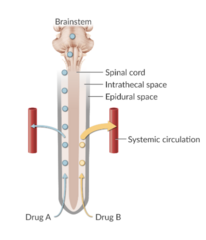
drug A, seen in the image, MOST likely represents which intrathecal narcotics? (Select 2)
a. meperidine
b. hydromorphone
c. sufentanil
d. fentanyl
1. hydromorphone
2. meperidine
💡when a hydrophillic opioid is injected into the CSF, it tends to remain there & achieves a higher level of block: morphine, meperidine, & hydromorphone
💡when a lipophillic opioid is injected into the CSF, it is more likely to diffuse across lipid membranes & enter systemic circulation; this limits the height of the block: fentanyl & sufentanil
treatment for tetanus includes all of the following EXCEPT:
a. antitoxin
b. intubation
c. debridement of the infected area
d. phenylephrine
phenylephrine
FILL IN THE BLANK: calculate the expected PaO2 when the PaCO2 = 80 mmHg, FiO2 = 28%, & the A-a gradient is 35. (enter your answer as a whole number in mmHg)
65 mmHg
💡PaO2 = FiO2 x (Pb - PH2O) - (PaCO2 / RQ)
PaO2 = 0.28 x (760-47) - (80/0.8)
PaO2 = 200 -100 = 100mmHg
A-a gradient is difference between aleolar oxygen & arterial oxygen & so if A-a gradient is 35 you just subtract it
100 mmHg - 35 mmHg = 65 mmHg
ketorolac should be avoided with all of the following EXCEPT:
a. peptic ulcer disease
b. renal insufficiency
c. samter's triad
d. chronic bronchitis
chronic bronchitis
💡non-selective COX inhibitor; contraindications = renal failure, GI bleeding, PUD, & anyone at high risk for perioperative bleeding & it negatively impacts osteoclast and osteoblast activity and may contribute to an impairment in bone healing.
💡NSAIDs should be avoided in pt w/ aspirin exacerbated respiratory disease (Samter's triad). these patients suffer from asthma, nasal polyps, & aspirin intolerance & giving an NSAID to them increases risk of bronchospasm
💡should not be administered for more than 5 days
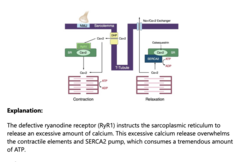
click on the area of defection that causes malignant hyperthermia
RYR1
cardiovascular complications associated w acute pancreatitis include all of the following EXCEPT:
a. myocardial depression
b. pericardial effusion
c. thrombophlebitis
d. hypervolemia
hypervolemia
💡acute pancreatitis typically begins w/ obstruction at the pancreatic duct causing injury to pancreatic acinar cells; pancreatic enzymes spill into the peritoneal space and enter the systemic circulation & can lead to severe CV issues like pericardial effusion, myocardial depression, myocardial ischemia, thrombophlebitis, DIC, & dysrhythmias
💡bradykinin released during inflammatory response & promotes vasodilation, vascular permeability, & leukocyte mitigation; loss of plasma proteins to the retroperitoneal space leads to hypovolemia and even acute renal failure
what changes in somatosensory evoked potential monitoring suggest an increased risk of nerve injury? (select 2)
a. 10% increase in latency
b. 10% decrease in amplitude
c. 50% increase in latency
d. 50% decrease in amplitude
1. 50% decrease in amplitude
2. 10% increase in latency
match each blood type with antibodies that its serum contains: O, B, A, AB
-A: anti B
-B: anti A
-O: anti A & anti B
-AB: none
polyhydraminos should raise suspicion for?
tracheoesophageal fistula
which lab values are prolonged in the patient w/ hemophilia A?
PTT only
💡hemophillia A correlates w/ factor VIII activity & causes prolonged PTT; PT is normal bc tissue factor VII-dependent pathway is NOT affected in pt w/ hemophillia A
match each type of peripheral nerve to its function: A alpha, A beta, A delta, A gamma; pressure, motor, muscle tone, temperature
-A alpha: motor
-A beta: pressure
-A gamma: muscle tone (muscle spindles)
-A delta: temperature
which option initiates hypoxic pulmonary vasoconstriction?
a. alveolar hypoxia
b. alveolar hypercarbia
c. pulmonary capillary hypoxia
d. pulmonary capillary hypercarbia
alveolar hypoxia
what are appropriate treatments for a patient with von Willebrand's disease? (Select 2)
a. recombinant factor IX
b. factor VIII concentrate
c. platelet transfusion
d. desmopressin
1. desmopressin
2. factor VIII concentrate
💡von willebrand disease is a qualitative (not quantitative) platelet dysfunction; there are enough platelets they just don't work right
💡DDAVP 0.3 mcg/kg restores vWF function in patients w/ type 1 & sometimes w/ type 2 disease; some w/ type 3 dont have endogenous supply of vWF & so DDAVP wouldn't be useful
💡non-responders should be treated w/ cryo or factor VIII concentrate; factor VIII concentrate preferred due to risk of transfusion-transmitted infection w/ cryo
💡factor IX is NOT affected by this disease & so recombinant factor IX is treatment for hemophillia B; platelet transfusion does not help a lack of vWF
which factors should be AVOIDED in patient w/ myelomeningocele?
a. desflurane
b. lateral position
c. latex
d. succinylcholine
latex
💡meningomyelocele (spina bifida) occurs when spinal cord & meninges herniate through a defect in the spinal column & this greatly incrases the risk of mechanical trauma to the spinal cord so these patients should NOT be placed in the supine position; if its required for induction &/or surgery you can place rolls or donut covered w/ sterile towel around the defect to ensure the spinal cord is free from pressure
💡frequent exposure to latex containing products containing products places these patients at high risk of developing latex allergy later in life
💡arnold-chiari malformation and hydrocephalus are pretty common, however ICP is usually normal; inhalation agents are fine & succs is fine
FILL IN THE BLANK: convert 38.3 degrees celsius to farenheit (round your answer to the nearest tenth)
100.9
💡F = (C x 1.8) + 32
compared to the adult, which is higher in the newborn? (Select 2)
a. alpha-1-acid glycoprotein
b. intracellular fluid volume
c. volume of distribution for water soluble drugs
d. extracellular fluid volume
1. extracellular fluid volume
2. Vd for water soluble drugs
match each mode of ventilation to its best description: controlled mandatory ventilation, pressure control ventilation, intermittent mandatory ventilation, assist control ventilation
-spontaneous breaths recieve full preset Vt
-tidal volume varies w/ lung compliance
-best used for apneic patients
-traditional weaning mode
-controlled mandatory ventilation: best used for apneic patients
-assist control ventilation: spontaneous breaths receive full preset Vt
-intermittent mandatory ventilation: traditional weaning mode
-pressure control ventilation: tidal volume varies with lung compliance
FILL IN THE BLOCK: patient received a bier block for carpal tunnel release. the case is complete and 10 minutes have elapsed since you injected the local anesthetic. what is the additional time you must wait before you can safely deflate the tourniquet? (enter your answer in minutes)
10 minutes
💡due to risk of local anesthetic toxicity (seizures & CV collapse), the tourniquet must be inflated for a minimum of 20 minutes after you've injected the local anesthetic; premature release/improper fitting (should be inflated to 250mmHg or 100mmHg over patient's SBP) allows local anesthetic to enter central circulation
which MOST accurately describes Gay-Lussac's Law?
a. pressure & temp are indirectly proportional
b. temp & volume are directly proportional
c. pressure is constant
d. volume is constant
volume is constant
💡Boyle: pressure & volume are inversely proportional; temp is constant
💡Charles: temp & volume are directly proportional; pressure is constant
💡Gay-Lussac: pressure & temp are directly proportional; volume is constant
which diseases are associated w/ increased incidence of MH? (Select 2)
a. central core disease
b. becker muscular dystrophy
c. king-denborough syndrome
d. myotonia congenita
1. central core disease
2. king-denborough disease
💡diseases that increase risk of MH: central core disease, minicore disease, king-denborough syndrome
💡NOT associated w/ increase risk of MH: becker muscular dystrophy, duchenne muscular dystrophy (an MH like syndrome can occur), myotonic dystrophy, myotonia congenita, neuroleptic malignant syndrome
choose the BEST neuromuscular blockers for the patient with hypertrophic cardiomyopathy. (select 2)
a. pancuronium
b. vecuronium
c. atracurium
d. rocuronium
1. rocuronium
2. vecuronium
what choices increase after placement of an infra-renal aortic cross clamp? (Select 2)
a. renal blood flow
b. preload
c. cardiac output
d. mixed venous oxygen saturation
1. preload
2. mixed venous oxygen saturation
💡mixed venous o2 sat incrases bc of decrased o2 consumption; you're putting the same quantity of o2 into the lungs but the cells distal to the aortic cross clamp don't receive it
💡preload increases bc blood volume is shifted proximal to the clamp; this increases cardiac filling pressures & wall stress
💡contractile function of the myocardium & increase in afterload determine CO; CO is usually unchanged in the healthy heart but decrased in patients w/ reduced cardiac reserve; renal blood flow decreases even if infra-renal clamp is used
what reduces serum potassium? (Select 3)
a. aldosterone antagonists
b. digitalis toxicity
c. cell lysis
d. albuterol
e. bowel prep
f. insulin
1. albuterol
2. insulin
3. bowel prep
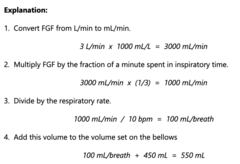
FILL IN THE BLANK: CRNA using an anesthesia machine that couples fresh gas flow to the tidal volume set on the ventilator. what is the total tidal volume delivered to the patient?
-O2 flow = 2L/min
-air flow = 1 L/min
-bellows set at 450 mL
-RR = 10 beats/min
-I:E ratio = 1:2
(enter your answer in mL)
550 mL
what are examples of acute intrinsic restrictive lung disease? (Select 2)
a. pleural effusion
b. pneumothorax
c. aspiration pneumonia
d. pulmonary edema
1. pulmonary edema
2. aspiration pneumonia
💡interferes w/ lung expansion; 3 subtypes
💡acute intrinsic: caused by fluid moving into interstital space of pulmonary perenchyma; includes pulmonary edema, aspiration pneumonia & ARDs
💡chronic intrinsic: pulmonary fibrosis; includes idiopathic pulmonary fibrosis, radiation injury, cytotoxic drug exposure, o2 toxciity, sarcoidosis, & autoimmune diseases
💡disorders of chest wall, pleura, & mediastinum: anything external to the lung that prevents normal lung inflation; includes pleural effusion, pneumothorax, & flail chest
💡other examples that cause restrictive-like defect = obesity, ascites, & pregnancy
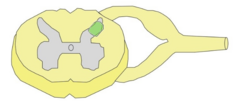
click on the substantia gelitanosa on the left side of the spinal cord:
💡substantia gelitonsa resides in Rexed laminae II & III in the dorsal horn
💡your right = the screen's left bc mirrors it lol
match each disease w/ its underlying pathology: addison's disease, hashimoto's disease, conn's disease, grave's disease
-hyperaldosteronism
-hypothyroidism
-hyperthyroidism
-hypoaldrenalism
-addison's disease: hypoadrenalism
-grave's disease: hyperthyroidism
-conn's disease: hyperaldosteronism
-hashimoto's disease: hypothyroidism
what pulmonary functions will increase during pregnancy? (select 2)
a. residual volume
b. expiratory reserve volume
c. inspiratory reserve volume
d. tidal volume
1. tidal volume
2. inspiratory reserve volume
💡increased progesterone causes minute ventilation to rise by ~50%; this is primarily due to increased Vt (20-30%) & small increase in RR
💡gravid uterus creates restrictive ventilatory defect by pushing the diaphragm upwards & compressing the lungs; expiratory reserve volume & residual volume are reduced, which also reduces FRC: consequence of this is increased inspiratory reserve volume
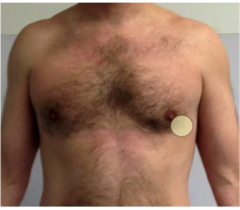
a systolic murmur heard over the following region of the chest (picture). what type of valvular disease would one expect?
a. aortic stenosis
b. aortic regurgitation
c. mitral regurgitation
d. mitral stenosis
mitral regurgitation
💡mitral valve best heard at 5th ICS at midclavicular line (APE To Man) & aortic valve best heard at 2nd ICS just right of the sternum
-systolic murmur = mitral regurg or aortic stenosis (MR. AS on top)
-diastolic murmur = mitral stenosis or aortic regurg (MS. AR on bottom)
select the MOST accurate statement about the anesthetic considerations for sickle cell anemia
a. pain increases sickling
b. heterozygous disease increases periopeartive morbidity
c. orthopedic tourniquets are contraindicated
d. hyperthermia increases sickling
pain increases sickling
💡sickle cell disease (homozygous) but not sickle cell trait (heterozygous) increases risk of perioepartive morbidity & mortality; sickling leads to vasoocclusive disease taht impairs tissue perfusion & causes intense pain
💡triggers = pain, hypothermia, acidosis, dehydration
💡extremity tourniquets are NOT contraindicated but they do increase the incidence of complications
what increases as a result of pneumoperitoneum during laparoscopic surgery? (Select 3)
a. liver blood flow
b. cardiac output
c. mean arterial blood pressure
d. alveolar-arterial oxygen gradient
e. renal blood flow
f. intracranial pressure
1. ICP
2. MAP
3. A-a gradient
💡physiologic consequences of pneumoperitoneum include:
-MAP increased: due to hypercarbia, neuroendocrine response (catecholamines, vasopressin, & cortisol), & increased afterload
-CO stays the same or decreases bc increased afterload & decreased venous return
-A-a gradient increases: decreased lung volumes (FRC) & V/Q mismatch
-ICP & CPP are increased; can be detrimental to pt w/ brain tumor or VP shunt
-renal & hepatic blood flow decreses: compression of kidneys & neuroendocrine response
match each region of the adrenal gland w/ the primary substance that it secretes: zona reticularis, zona fisculata, zona glomerulosa, medulla
-aldosterone
-catecholamines
-cortisol
-androgens
-zona glomerulosa: aldosterone
-zona fasiculata: cortisol
-zona reticularis: androgens
-medulla: catecholamines
💡🍭"the deeper you go, the sweeter it gets" -Dr. Mo
match each immunosuppressive drug to its best description: antithymocyte globulin, tacrolimus, cyclosporine, azathioprine
-polyclonal IgG
-macroline antibiotic
-11-amino-acid cyclic peptide
-prodrug that converts to 6-mercaptopurine
-tacrolimus: macrolide antibiotic
-cyclosporine: 11-amino-acid cyclic peptide
-azathioprine: prodrug that converts to 6-mercaptopurine
-antithymocyte globulin: polyclonal IgG
match each drug w/ the enzyme or pathway it inhibits: etomidate, TXA, methylene blue, nitrous oxide
-methionine synthase
-plasmin
-11-beta-hydroxylase
-nitric oxide guanlyate monophosphate
-nitrous oxide: methionine synthase (inhibits vitamin B12 metabolism & DNA synthesis)
-etomidate: 11-beta-hydroxylase (inhibits steroid synthesis)
-TXA: plasmin (inhibits fibrinolysis to reduce surgical bleeding)
-methylene blue: nitric oxide cycle guanylate monophosphate (inhibits the vasodilatory effects of NO in patients w/ vasoplegia)
what causes a non-gap metabolic acidosis? (Select 3)
a. ketoacidosis
b. excessive sodium chloride administration
c. lactate
d. renal tubular acidosis
e. diarrhea
f. renal failure
1. diarrhea
2. renal tubular acidsois
3. excessive sodium chloride administration
💡gap acidsosis = accumulation of H+: lactic acidosis, ketoacidosis, renal failure
💡non-gap acidosis due to loss of HCO3- (or increased Cl-): diarrhea, renal tubular acidosis, excessive sodium chloride administration
which option can be a source of coagulopathy?
a. increased production of cholecystokinin
b. sphincterotomy of the sphincter of Oddi
c. vitamin K supplementation
d. impaired bile production
impaired bile production
💡impaired bile production reduces absorption of the fat soluble vitamins (D,A,K,E) & vitamin K is important in producing factor II, VII, IX, & X
match the intrinsic muscles of the larynx w/ its action on laryngeal movement:
-aryepiglottic, cricothyroid, thyroarytenoid, posterior cricoarytenoid
-abducts vocal cords, lengthens true vocal cords, closes glottic opening, adducts vocal cords
-posterior cricoarytenoid: ABducts vocal cords
-thyroarytenoid: ADducts vocal cords
-Aryepiglottic: closes glottic opening
-Cricothyroid: lengthens vocal cords
in which circumstances in supplemental oxygen LEAST likely to increase arterial oxygenation?
a. COPD
b. opioid OD
c. pulmonary fibrosis
d. pulmonary edema
pulmonary edema
💡there are 5 primary casues of hypoxemia:
1. low inspired O2 content: high altitude
2. hypoventilation: opioid OD
3. diffusion impairment: pulmonary fibrosis
4. V/Q mismatching: COPD
5. shunt: pulmonary edema
💡pulmonary edema is an example of a right-to-left shunt & R-L shunts >50% typically wont respond to further incrases in fio2
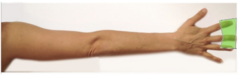
click on the region supplied by the median nerve
median nerve supplies the:
-palm of hand
-ventral region of thumb
-distal portions of index finger, middle finger, & the medial half of the ring finger
what are recognized benefits of promoting provider wellness in anesthesia workplace? (select 2)
a. improved job satisfaction & retention
b. elimination of workplace fatigue
c. lower absenteeism
d. higher staffing costs
1. improved job satisfaction and retention
2. lower absenteeism
dexmedatomidine (select 2):
a. reduces adenylate cyclase activity
b. can cause hypertension
c. increases inositol triphosphate production
d. antagonizes peripheral presynaptic alpha 2 receptors
1. can cause hypertension
2. reduces adenylate cyclase activity
💡selective alpha 2 AGONIST that works both centrally (presynaptically) & peripherally (postsynaptically); alpha-2 receptor is linked to a G-protein & stimulation of these recetpors inhibits adenylate cyclase & reduces cAMP
💡central stimulation (presynaptic) of alpha-2 receptors can cause vasodilation, sedation, & analgesia but stimulation to peripheral (postsynaptic) receptors initiates vasoconstriction; taken as a whole, the celtral alpha 2 stimulation dominates and causes sympatholysis
rank the speed of local anesthetic uptake after injection into the following sites (1 is fastest & 4 is slowest)
-caudal
-brachial plexus
-interpleural
-intercostal
1. interpleural
2. intercostal
3. caudal
4. brachial plexus
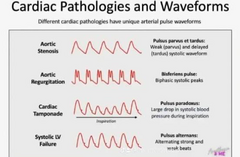
match each cardiac pathophysiology w/ its charactersitc pulse waveform: aortic regurg, systolic LV failure, aortic stenosis, cardiac tamponade
-pulsus parvus
-pulsus paradoxus
-bisferiens pulse
-pulsus alternans
-aortic stensosis: pulsus parvus
-aortic regurg: bisferiens pulse
-cardiac tamponade: pulsus paradoxus
-systolic LV failure: pulsus alternans
💡enjoy photo from the google
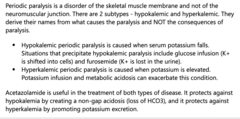
which are contraindications for hypokalemic periodic paralysis? (select 2)
a. glucose infusion
b. potassium infusion
c. acetazolamide
d. furosemide
1. furosemide
2. glucose infusion
select the physiologic changes that are MOST likely to occur during autonomic hyperreflexia (select 2)
a. tachycardia
b. hypothermia
c. seizures
d. pulmonary edema
1. seizures
2. pulmonary edema
💡classic presentation = hypertension + bradycardia
💡precipitating event leads to activation of spinal reflexes below level of spinal cord injury; manifests as vasoconstriction below level of injury + vasodilation above level of injury & reflex bradycardia
💡acute rise in SVR can precipitate LV failure, which can cause pulmonary edema; hypertension beyond limits of cerebral autoregulation can cause seizures
select the BEST agents for the neonate with necrotizing enterocolitis (select 2)
a. fentanyl
b. propofol
c. nitrous oxide
d. ketamine
1. fentanyl
2. ketamine
💡necrotizing entercolitis (NEC) leads to bowel ischemia/necrosis, peritonitis, septicemia, hypovolemia, & metabolic acidosis
💡tight abdomen necessitates muscle relaxation; these kids require RSI, but bowel necrosis can elevate serum K+ & so in this situation roc is the better choice than succs
💡hypovolemia & septicemia create hemodynamic instability; ketamine & fentanyl are better options than volatile anesthetics & propofol; gas pockets in distended bowel means no nitrous oxide
which statements BEST describe asynchronous pacing (select 2)
a. it maintains AV synchrony
b. underlying ventricular activity is a risk for R on T phenomenon
c. it is best used for patients without an intrinsic rhythm
d. VVI is an example
1. best used for patients w/ no intrinsic rhythm
2. underlying ventricular activity is a risk for R on T phenomenon
💡5 letter system to identify pacemaker's function:
-1st letter = chamber paced
-2nd letter = chamber sensed
-3rd letter = type of resonse that occurs if electrical activity is sensed
-4th letter = rate response features
-5th letter = site where multisite pacing is delivered
💡cardiac pacemaker can be asynchronous, single-chamber, or dual-chamber; asynchronous pacemaker only paces & does not sense & does not respond to electrical activity; examples = AOO & VOO
💡if pt has underlying rhythm, then asynchronous pacing could cause R on T phenomenon (this is not a risk if pt does not have underlying ventricular activity); since asychronous pacing doesn't sense electrical activity, it can't be used to maintain AV synchrony
match each hormone to its primary physiologic effect: gastrin, motilin, cholecystokinin, secretin
-stimulates pepsinogen secretion
-stimulates gallbladder contraction
-stimulates bile flow
-stimulates upper GI motility
-gastrin: stimulates pepsinogen secretion
-cholecystokinin: stimulates gallbladder contraction
-secretin: stimulates bile flow
-motilin: stimulates upper GI motility
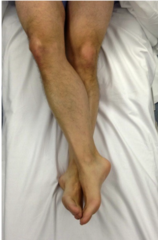
a patient has remained in this position (see pic) for several hours following induction of anesthesia. whic hnerves are at the HIGHEST risk of injury? (select 2)
a. popliteal
b. superficial peroneal
c. sural
d. perineal
1. superficial peroneal
2. sural
💡during normal sleep, we move our bodies to prevenrt compression injury; the patient under general anesthesia can't change position & are at risk for nerve compression
💡if pt's legs remain crossed for prolonged period of time, there is risk of sural nerve compression in the top leg & superficial peroneal compression in the bottom leg
FILL IN THE BLANK: drug has volume of distribution of 0.5 L/kg. In an 85kg patient, what loading dose must be administered to achieve a plasma concentration of 6 mg/L? (enter answer as mg & round to nearest whole number)
255 mg
💡Loading dose = (Vd x desired Cp) / bioavailability
💡IV drug = assume bioavailability is 1
pulmonary hypertension is defined as mean pulmonary artery pressure of at least:
25 mmHg
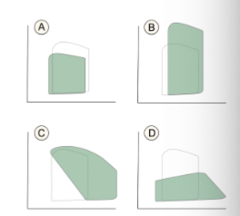
match the valvular disease w/ the appropriate pressure volume loop (see pic): aortic stenosis, aortic insufficiency (regurg), mitral insufficiency (regurg), mitral stenosis
A. Mitral Stensosis
B. Aortic stenosis
C. Aortic insufficiency
D. Mitral regurgitation
💡stenotic valves cause pressure overload & change height of PV loop; regurg valves cause volume overload & change width of PV loop
💡draw letter "A" in aortic regurg loop & draw letter "M" in mitral regurg loop
when used during a laparoscopic procedure, an LMA:
a. should never be used
b. can be used for up to 15 minutes
c. can be used if less than 25 degrees of Trendelenburg position is used
d. can be used if BMI is less than 30
can be used if the procedure is less than 15 minutes
💡LMA for laparoscopic procedures guidelines:
-select LMA that allows for gastric drainage (ProSeal or LMA Supreme)
-Observe the "15" rule: use < 15 degree tilt, < 15 cm H2O intrabdominal pressure, & a < 15 minute duration
-used in patients w/ normal BMI (avoid in obese population)
-observe traditional NPO fasting guidelines
-avoid light anesthesia
-be an experienced LMA user
what is the average amount of irrigation that is systemically absorbed during transurethral resection of the prostate?
10 - 30 mL/min
💡considerations for TURP (numbers are averages):
-absorbed volume: 10-30 mL/min
-blood loss: 2-5 mL/min
💡absorption of large volumes of irrigation solution can lead to TURP syndrome; characterized by fluid overload, water intoxication, & hyponatremia
match each twitch to its corresponding nerve: patellar twitch, adductor twitch, dorsiflexion, plantar flexion
-tibial nerve, peroneal nerve, obturator nerve, femoral nerve
-patellar twitch: femoral nerve
-adductor twitch: obturator nerve
-plantar flexion: tibial nerve
-dorsiflexion: peroneal nerve
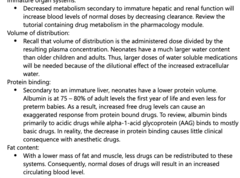
which option MOST accurately describes neonatal pharmacokinetics?
a. drug clearance is increased
b. water soluble drugs require a larger dose
c. protein bound drugs require a higher dose
d. fat to body weight ratio is higher in neonate than pediatric patients
water based drugs will require a higher dose
💡number of factors that affect the pharmacokinetics/pharmacodynamics of anesthetics in neonates:
-immature organ systems: liver, renal, neurologic
-larger volume of distribution
-decreased protein binding
-decreased fat content
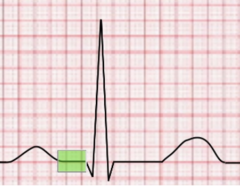
click on the area of the ECG (see pic) that coincides w/ the "a" wave of the CVP waveform
electrical events monitored by the ECG occur just before mechanical events monitored by CVP waveform
-P wave = atrial depolarization
-"a" wave (CVP) = atrial contraction
the triad of obesity, hypertension, & type II diabetes is known as:
metabolic syndrome
what choice is the MOST potent amnestic?
a. flurazepam
b. diazepam
c. midazolam
d. lorazepam
lorazepam
💡ativan; due to long duration of amnesia (up to 6 hours) but it is less attractive for preop sedation (esp outpatient, ig it lasts too long); all benzos are basically the same on cardiopulmonary & skeletal muscle function
which axes must be aligned to ensure the best chance for successful laryngoscopy & intubation? (Select 3)
a. laryngeal
b. oral
c. tracheal
d. glottic
e. pharyngeal
f. nasal
1. oral (OA)
2. pharyngeal (PA)
3. laryngeal (LA)
which complications may result from traumatic transesophgeal echocardiography (TEE) insertion? (Select 2)
a. esophageal laceration
b. perforation
c. vocal cord paralysis
d. gastric ulceration
1. esophageal laceration
2. perforation
side effects of levodopa include:
a. acromegaly
b. hyperkalemia
c. orthostatic hypotension
d. diabetes mellitus
orthostatic hypotension
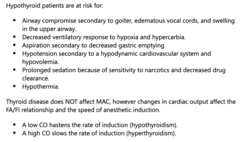
anesthetic implications for hypothyroidism include: (Select 2)
a. hypotension
b. hypervolemia
c. decreased MAC
d. aspiration
1. hypotension
2. aspiration
FILL IN THE BLANK: during laminar flow, tripling the radius will cause the flow to increase by a factor of: (do not round your answer)
81
💡poiseuille says that radius to the 4th power or whatever & 4x4x4 (tripled the radius)
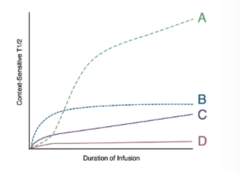
match the context sensitive half-time of each opioid w/ the corresponding letter on the graph: fentanyl, alfentanil, remifentanil, sufentanil
A: fentanyl
B: alfentanil
C: sufentanil
D: remifentanil
where is cerebrospinal fluid reabsorbed?
a. choroid plexus of the lateral ventricle
b. choroid plexus of venous sinus
c. arachnoid villi of superior sagittal sinus
d. arachnoid villi of the 4th ventricle
arachnoid villi of the superior sagittal sinus
💡CSF produced by choroid plexus in all four cerebral ventricles at a rate of ~30 mL/hr & reabsorbed by arachnoid villi in superior sagittal sinus
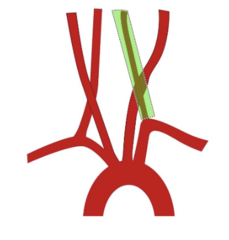
click on the vessel (see pic) that will have reverse blood flow as a result of left subclavian steal syndrome
left subclavian steal happens when there is an occlusion of the left subclavian proximal to the origin of the left vertebral artery; results in reverse flow where blood in the left vertebral artery flows away from the brain & towards the left subclavian artery
this increases risk of cerebral ischemia!!
symptoms: sycnope, vertigo, ataxia &/or hemiplegia; arm ischemia is also present; neck flexion + exercise can exacerbate the symptoms
pulse is absent or significantly weaker in the affected arm & blood pressure can be 20 points lower than the contralateral arm
subclavian endarterectomy is treatment of choice
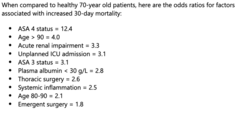
in the elderly, which characteristic is associated w/ the GREATEST risk of a 30-day mortality?
a. unplanned ICU admission
b. emergent surgery
c. ASA 4 status
d. acute renal impairment
ASA 4 status
when properly placed, the distal tip of an LMA sits at the:
a. upper esophageal sphincter
b. inferior pharyngeal constrictor muscle
c. pyriform sinus
d. base of the tongue
upper esophageal sphincter
💡when properly placed, the distal tip of an LMA will sit at the cricopharyngeus muscle (at the upper esophageal sphincter)
choose the true statements about EMLA cream: (Select 2)
a. the risk of toxicity is similar in small children & adults
b. adequate anesthesia is obtained in 60 minutes
c. it is made up of 2.5% lidocaine & 2.5% procaine
d. it can cause methemoglobinemia
1. adequate anesthesia is obtained in 60 minutes
2. it can cause methemoglobinemia
💡eutectic mixture of LA (EMLA cream) is a mixture of 2.5% lidocaine & 2.5% prilocaine (NOT procaine); adequate analgesia in 60 mins & since it contains prilocaine it can cause methemoglobinemia
💡systemic absorption of the local anesthetic mixture is dependent on the total dose & the applied surface area; when compared to the adult, toxicity is more likely in infants & small children
match each vasodilator w/ its primary site of action: prazosin, nitroprusside, nitroglycerine
-venules
-arterioles & venules
-arterioles
-prazosin: arterioles
-nitroglycerine: venules
-nitroprusside: arterioles & venules
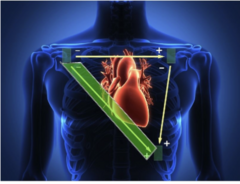
click on the arrow that best demonstrates rhythm abnormalities (see pic)
Bipolar limb leads
lead II is suggested lead for diagnosing dysrhythmias for those rhythms that require a P wave for proper analysis
which indices suggest a prerenal cause of oliguria? (select 2)
a. BUN:Creatine ratio < 20
b. urine sodium < 20 mEq/L
c. fractional excretion of sodium < 1%
d. urine osmolality < 400 mOsm/kg
1. urine sodium < 20 mEq/L
2. Fractional excretion of sodium < 1%
💡decreased renal blood flow causes prerenal oliguria but kidney function is normal so expect concentrated urine (increased osmolality) & low fractional excretion of sodium (FENa); suggests the body is holding onto sodium & water in an effort to preserve intravascular volume
💡hypovolemia, hypotension, & decreased cardiac output are common causes of prerenal failure
💡treatment focused on restoring intravascular volume & blood pressure; if not treated, prerenal azotemia can progress to acute kidney injury
match each intravenous fluid to its effect on cellular volume: D5W, D5LR, NS
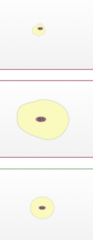
it had the pic of matching to these little circle pics
-D5LR: small dehydrated cell
-NS: normal size cell
-D5W: swollen bloated cell
💡hypotonic: lower osmolarity than plasma & causes cell to swell (hypo = hippo): 0.45% NaCl, D5W
💡isotonic: same osmolarity as plasma & there is no change in cell size (I so perfect): NS, LR, plasmalyte A
💡hypertonic: higher osmolarity than plasma & causes cells to shrink (hyper people need a shrink): D5 NaCl 0.45%, D5LR, D5 NaCl 0.9%, NaCl 3%