Biochemistry - Part One - Definitions and Topics
 Call Kai
 Learn
Learn Practice Test
 Spaced Repetition
 Match
Match Flashcards
 Knowt Play
1/38

There's no tags or description
Looks like no tags are added yet.
Name | Mastery | Learn | Test | Matching | Spaced | Call with Kai | Chat |
|---|
No analytics yet
Send a link to your students to track their progress
39 Terms
Covalent Bonds
A chemical link where two atoms share one or more pairs of electrons to stay together

Molecule
A group of two or more atoms bonded together through covalent or ionic bonds
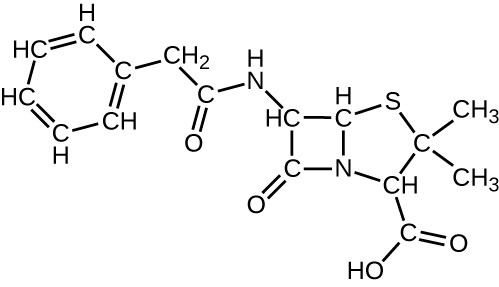
Organic Molecule
A chemical structure built around a backbone of carbon atoms that are typically bonded to hydrogen atoms
Macronutrient
Essential nutrients that the body requires in large amounts to function. Proteins, lipids, carbohydrates, and nucleic acids.
Cohesion
Molecules sticking together
Adhesion
Particles or surfaces clinging to one another.
Surface Tension
The tension that is created when water molecules adhere together. This is a part of what allows things to float.
Soluability
The ability of a substance to form a solution with another substance.
Non-Polar
An even distribution of electrons, meaning its atoms share electrons equally. Polar and non-polar do not mix (oil & water)
Polar
An uneven distribution of electrical charge. Tends to stick to like charges
Density
The amount of mass packed into a given volume.
Biochemistry
The exploration of chemical substances, compounds, and vital processes occurring within living organisms. Focuses on Proteins, Carbohydrates, Lipids, and Nucleic Acids.
Macromolecules
Large molecules build from small repeating monomers.
Proteins (CHON)
Provides material for growth and repair, makes enzymes and other proteins, helps transport oxygen, and it may be used as fuel.
Carbohydrates (CHO)
Used primarily for energy, they provide carbon chains to build other molecules.
Their molecules are composed of carbon, hydrogen, and oxygen in a 1:2:1 ratio.
They are polar and dissolve in water.
Lipids (CHO)
Provides material for building cell membranes, nerve cells, and hormones, they are also used as fuel.
Nucleic Acids (CHONP)
Provides genetic information for the cells in the form of DNA and RNA.
What are the three types of carbohydrates?
Monosaccharides, Dissacharides, and Polysaccharides
Monosaccharides (GFG)
The simplest form of a carbohydrate, consisting of a singular unit that cannot be broken down into smaller groups.
Glucose: primary source of energy for humans.
Fructose: found in plants.
Galactose: Found in dairy products.
Disaccharide (SLM)
Bonded together in a condensation reaction that produces water.
Water is required to break a _____ apart.
Sucrose: Table sugar.
Lactose: Milk sugar.
Maltose:
Polysaccharides (GSC)
Storage: Stores sugar for energy (Starch, Glycogen)
Structural: Are building materials for cells (Cellulose)
Glycogen: Energy storage in animals.
Starch: Energy storage in plants.
Cellulose: Structural support in plant cell walls.
What are the three types of lipids?
Triglycerides, Phospholipids, and Steroids.
Triglycerides
Has three fatty acids bonded to a glycerol molecule.
They store energy and help absorb some vitamins.

Saturated Fatty Acids
Max number of (C-H) bonds
Animal origins
Solid at room temperature
Hydrocarbon chain ending in a carboxyl group
Unsaturated Fatty Acids
(C=C) Double bonds
Plant origin
Liquid at room temperature due to double bonds causing the chains to kink
Trans Fatty Acids
Food chemists turn oils (unsaturated fats) into solid (saturated fats) by adding hydrogen to take away the double bonds.
Hydrogenation
A chemical reaction where hydrogen atoms are added to a molecule, used to saturate organic compounds.
Hydrophobic
Non-Polar
Does not want to bond with water
Hydrophillic
Polar
Tends to form hydrogen bonds with water
Electronegativity
An atom’s tendency to attract shared electrons in a chemical bond
Intramolecular Forces
A strong chemical bond that holds atoms together within a molecule.
Example: Hydrogen + Oxygen = H20
Intermolecular Forces
A weaker attractions between separate molecules
Example: H20 +H20 = Surface Tension
Polymers and their Monomers
Monosaccharide - Carbohydrates
Fatty Acid - Lipids
Nucleotide - Nucleotide
Amino Acid - Protein
Amino Acids
___ are made up of carbonyl groups, amino group (COOH), and an r group.
There are 20 variations.
Peptide bonds
Bonds amino acids together
Formed through condensation bonds (releases water)
Protein folding
Takes place in the endoplasmic reticulum
Vital for proteins to function properly
Diseases that are the result of errors in this process are alzheimers, parkinson’s, and cystic fibrosis.
Denaturation
When bonds in a protein are disrupted, it can lose its shape.
______ proteins can no longer perform their function.
______ can be caused by: a change in pH, temperature, addition of alcohol
DNA
A sugar phosphate that contains information to tell your cells what proteins to make and how to make them
Nucleobases:
cytosine'
Guanne
Adenine
Thymine
RNA
A sugar phosphate that converts the information stored in DNA into proteins
Nucleobases:
cytosine'
Guanne
Adenine
Uracil