Chapter 1- Why Study Continetal Aquatic Systems and Chapter 2-Properties of Water
 Call Kai
 Learn
Learn Practice Test
 Spaced Repetition
 Match
Match Flashcards
 Knowt Play
1/31

There's no tags or description
Looks like no tags are added yet.
Name | Mastery | Learn | Test | Matching | Spaced | Call with Kai | Chat |
|---|
No analytics yet
Send a link to your students to track their progress
32 Terms
What is Deifnition of Limnology
Limnology is the study of inland aquatic systems, including lakes, rivers, wetlands, and their interactions with the environment. Continental water.
Result of Dr. G Evelyn Hutchison
What the Water Cycle (Hydrolgic Cycle)
Begins with the sun hitting water in the ocean, which causes it to evaporate, which creates percipitation→ either rain back into the ocean or it leads to condenstaion and moving over to land masses, sinks and falls down which can either sick into ice/ snow onto snow and glaciers or water lands on vegetation that leads back down to the ocean. This becomes land water (soaked up) or start the process over.

How much percentage of freshwater is available?
0.0141%
What is the value of water?
Direct: Consumption, reacreation ect.. and indirect benefits: Aesthetic and Ecological
What are the things that affect the value of water
Contamination (Irrigate crops and it cost more for cleanup is due to pestiside contamination)
Climate change: Evaporation will lead to consildation of pollutants decreasing water quality
What is the chemical properties of water (H20)
Composed of two hydrogen atoms covalently bonded to a single oxygen molecule
Dihydrogen Dioxide:polar molecule due unequal sharing of electons. Causes a negative change to form and a slightly postive change form near the hydrogens.
hydrogen atoms stick to each other since they are polar (Cohesions between the hydrogen atoms)
(Hydrogen bonding dictates the pressure and temperatures at which water is liquid, Number of hydrogen bonds increase, less dense (Tetrahedral)
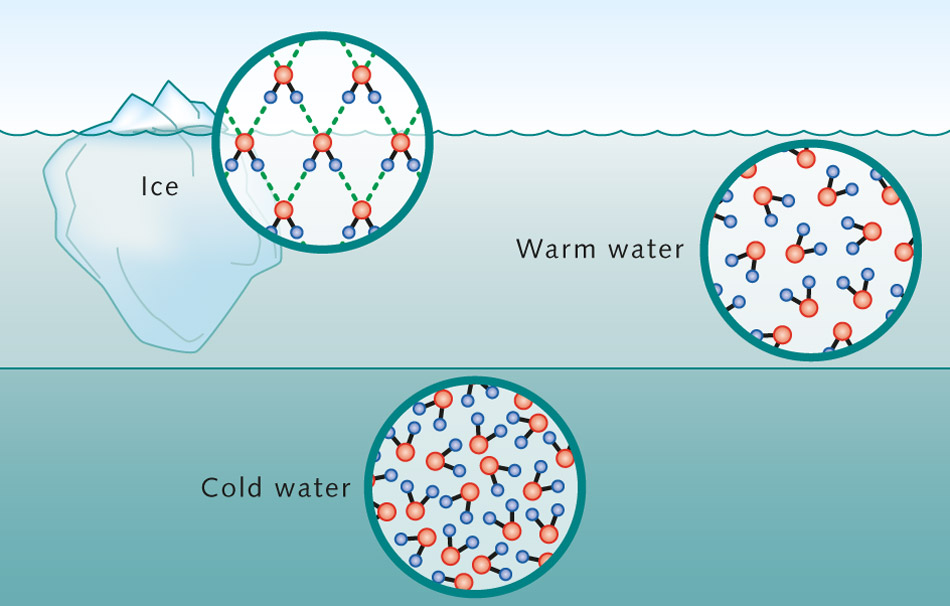
What degree is to which water is less dense?
4 C’
What is Stratification?
Variations in density (layering if water bodies)
Example of Salt water pools
What is diffusion/ osmosis?
This is the movement of particles from areas of high concentration to a low concentration, osmosis if the movement of particles of particles through a semiperular membrane high to low.
Why is water known to be a universal solvent?
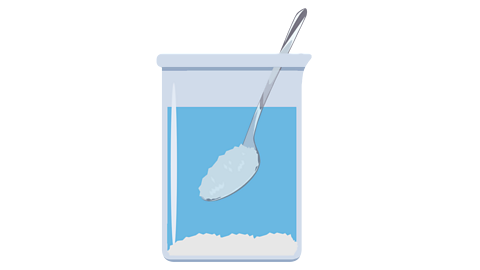
It can cause erosion, “weatherer” , it dissolves ions from rocks. Most solids dissolve more readily as temperature increases (sugar in hot water).
Solbulity of gases decreases with a increase of temperature.
HIgher dissolved solids: Lower dissolved gases
Lower dissolved solids: higher dissolved gases
What is High Heat Capacity?
(1 Calorie). Takes a large amount of energy to increase the temperature of liquid water

What is HIgh heat Fusion?
(79.7 calorie) Takes a large amount of energy to be removed to freeze water
What is high heat Fusion?
(539.6) Takes a large amount of energy to change liquid water to a gas
What is surface tension?
HIgh surface tension is a result of hydrogen bonds
What is the difference between Cohesion and Adhesion?
Water molecules sticking to other water molecules, and adhesion is water molecules sticking to other rmolecules

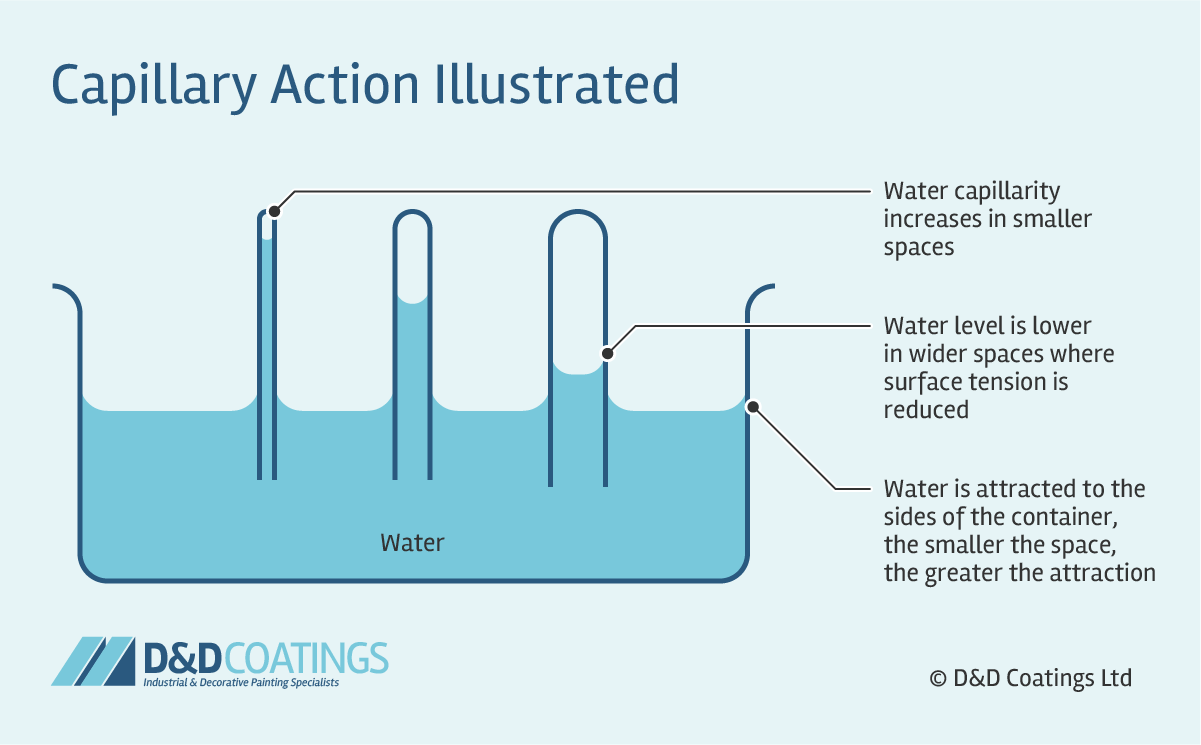
What is Capillary action?
The ability of water to up narrow tubes
How does pressure react with depth?
It increases with depth which also increases solubility of gases. Increases by 1 atmoshpere every 30ft. exmaple( Styroform heads, or a doctor pepper bottle)
What is Viscosity?
Reiststance to change in form, this increases with smaller spacital scale, greater with water movement and lower temperature (Lava and Honey) small organisms
What is inertia?
Resistance of a body to a change in its state of motion, Increases with size, density and velocity
What is the Reynolds number?
ρ is the density of the fluid (SI units: kg/m3)
u is the flow velocity (m/s)
L is a characteristic length (m)
μ is the dynamic viscosity of the fluid (Pa·s or N·s/m2 or kg/(m·s))
Quantifies spatial and velocity-related effects on viscoty and inertia
Number is greater at large spatial scales than at small spatial scales

What is Brownian movement?
Independent movement of molecules. Warmer the water more rapidly the molecules move (move rapidlt because they collide)
What is water flow and the two forms?
The bulk movement of many molecules.
Laminar flow: flow paths in the water that are primarily unidirectional (parallel) seems like the water is not moving
Turbulent flow: Flow that is not as unidirectional (decreases with scale due to its increase in velocity)

What is the flow boundry layer?
The outher edge of region where water changes from lamiar to turbulent
What is sheer stress?
Can be used to calcuate the force on attached organisms or sediments on the bottom of a flowing river or stream.
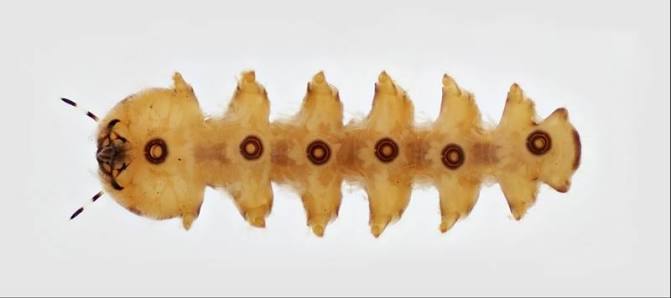
Ex: Diptera- suckers for faster movement
What is stoke law?
Can be used to calculate the sinking rates of small spherical objects (more dense sink rapidly)
V=2gr3(ρp−ρf)/ 9 u
What is drag and examples?
Affects how an organism lives in moving water and moves in water
1/2pU2SCd
Explained as water nears a surface it slows and creates a force on a animal (Shape is important to minimize drag

What is Lift?
Occurs when a fluid moves more rapidly on one side of an object than the other
Pulls it up from the top but not underneath, which is a change in angle in order to go up or down.
Larger objects have more lift as do those with greater velocities or denser fluid (raft or plane pulling up on)
What is Darcys Law?
Allows for the calculation of flow rates through porous media, and important for calculating spread of pollulant through groundwater. Sand (more porous) vs Clay
What are the forces that move water?
Solar heating and evporation to water movement
Wind- causes surface waves
Coriolis effect
Smaller spatial scales as a result of locomotion