A&P 1 Lecture - Ch. 9 - Muscular Tissue
 Call Kai
 Learn
Learn Practice Test
 Spaced Repetition
 Match
Match Flashcards
 Knowt Play
1/85

There's no tags or description
Looks like no tags are added yet.
Name | Mastery | Learn | Test | Matching | Spaced | Call with Kai | Chat |
|---|
No analytics yet
Send a link to your students to track their progress
86 Terms
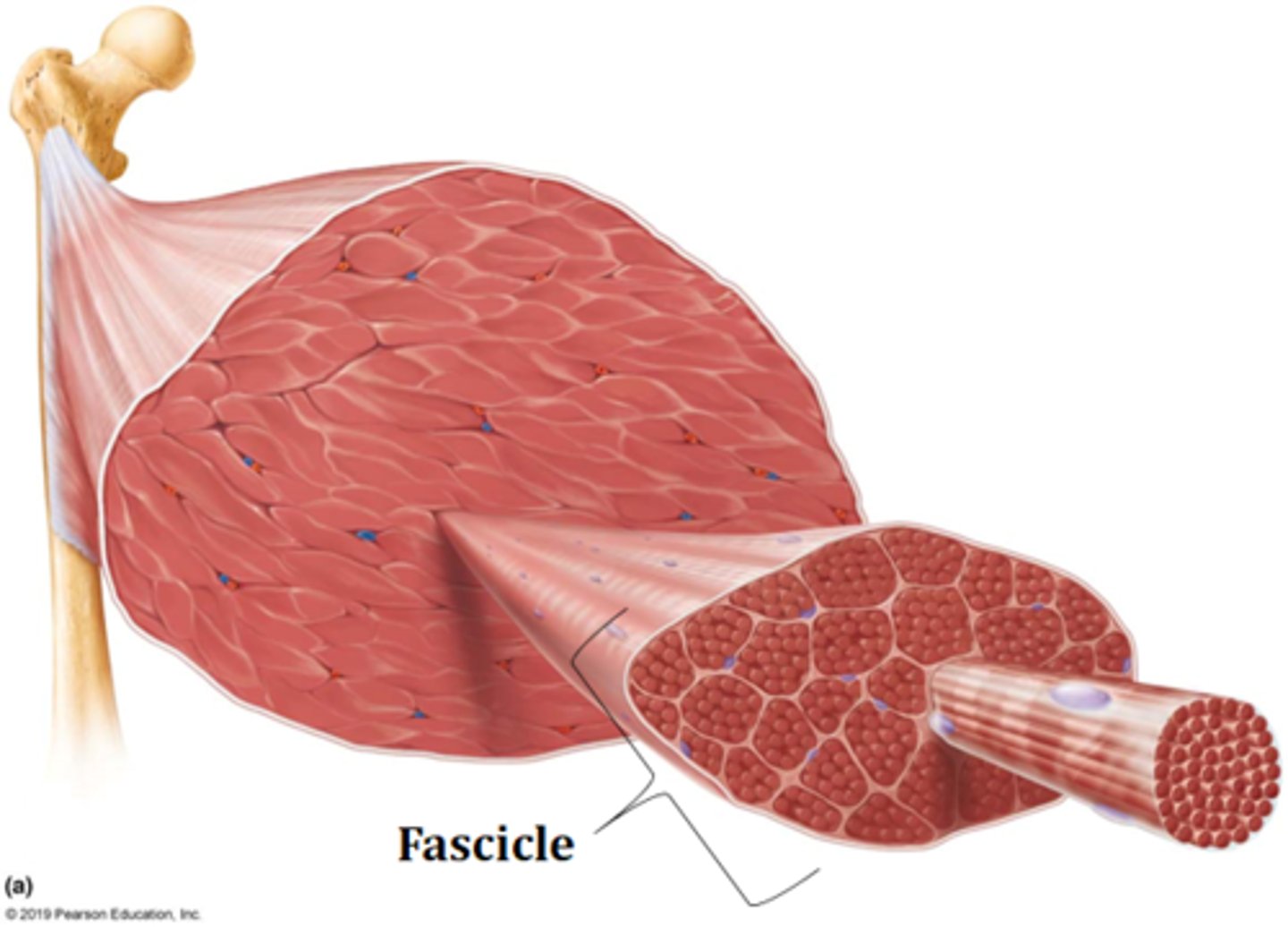
A group of muscle fibers/cells is referred to as a _________________.
fasicle
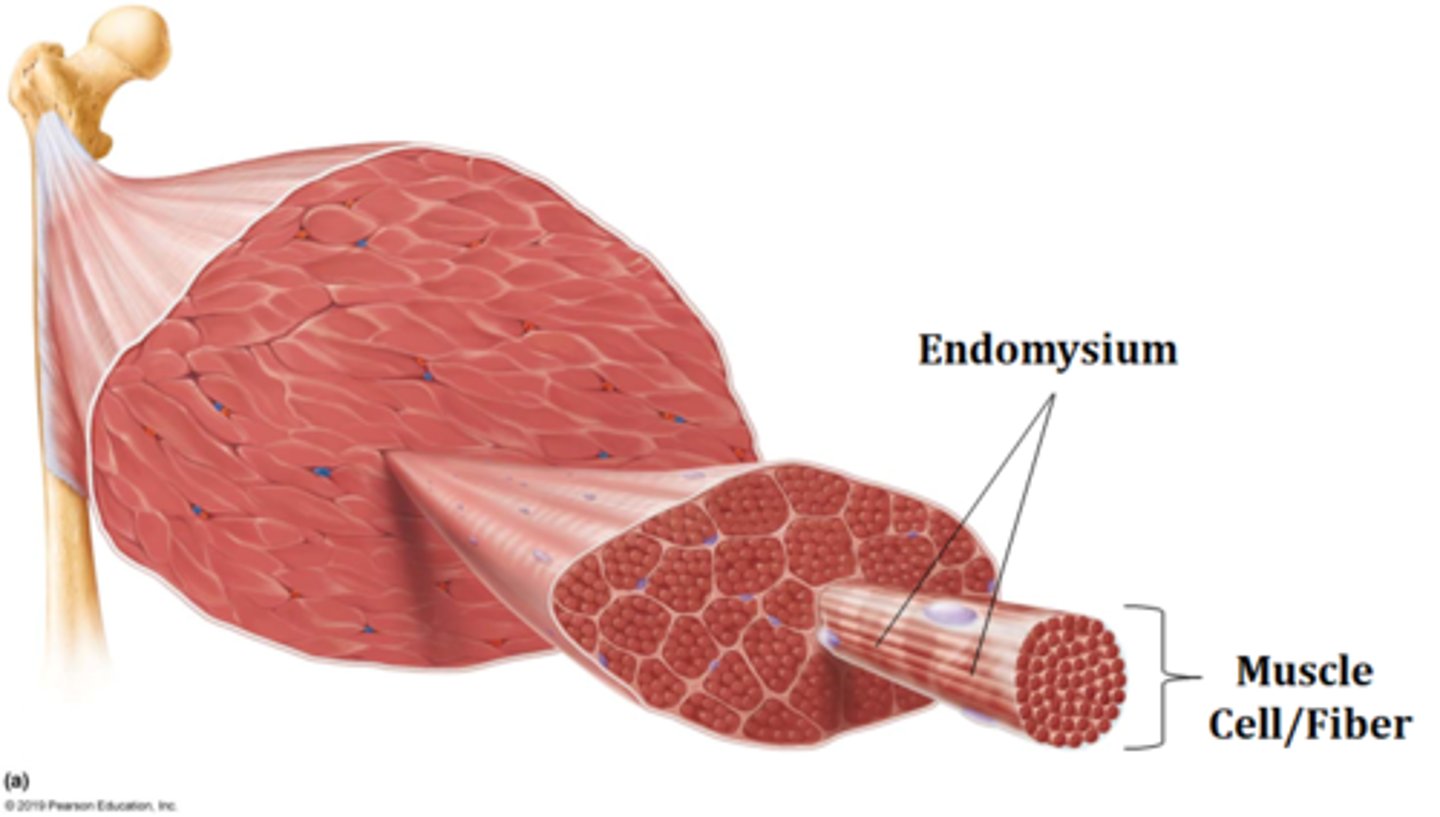
Which connective tissue sheath (layer) surrounds each muscle fiber/cell?
endomysium
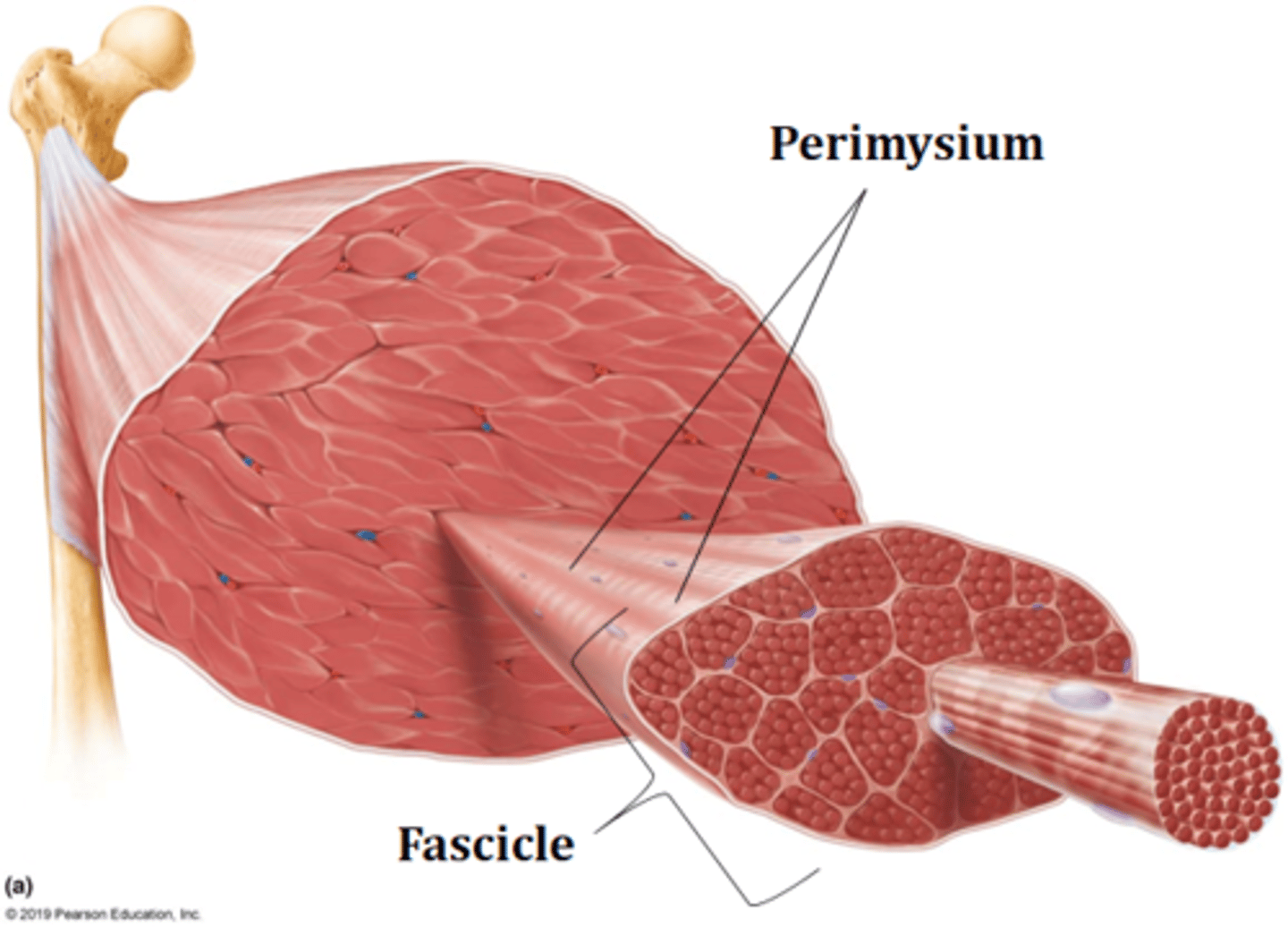
Which connective tissue sheath (layer) surrounds fascicles?
perimysium
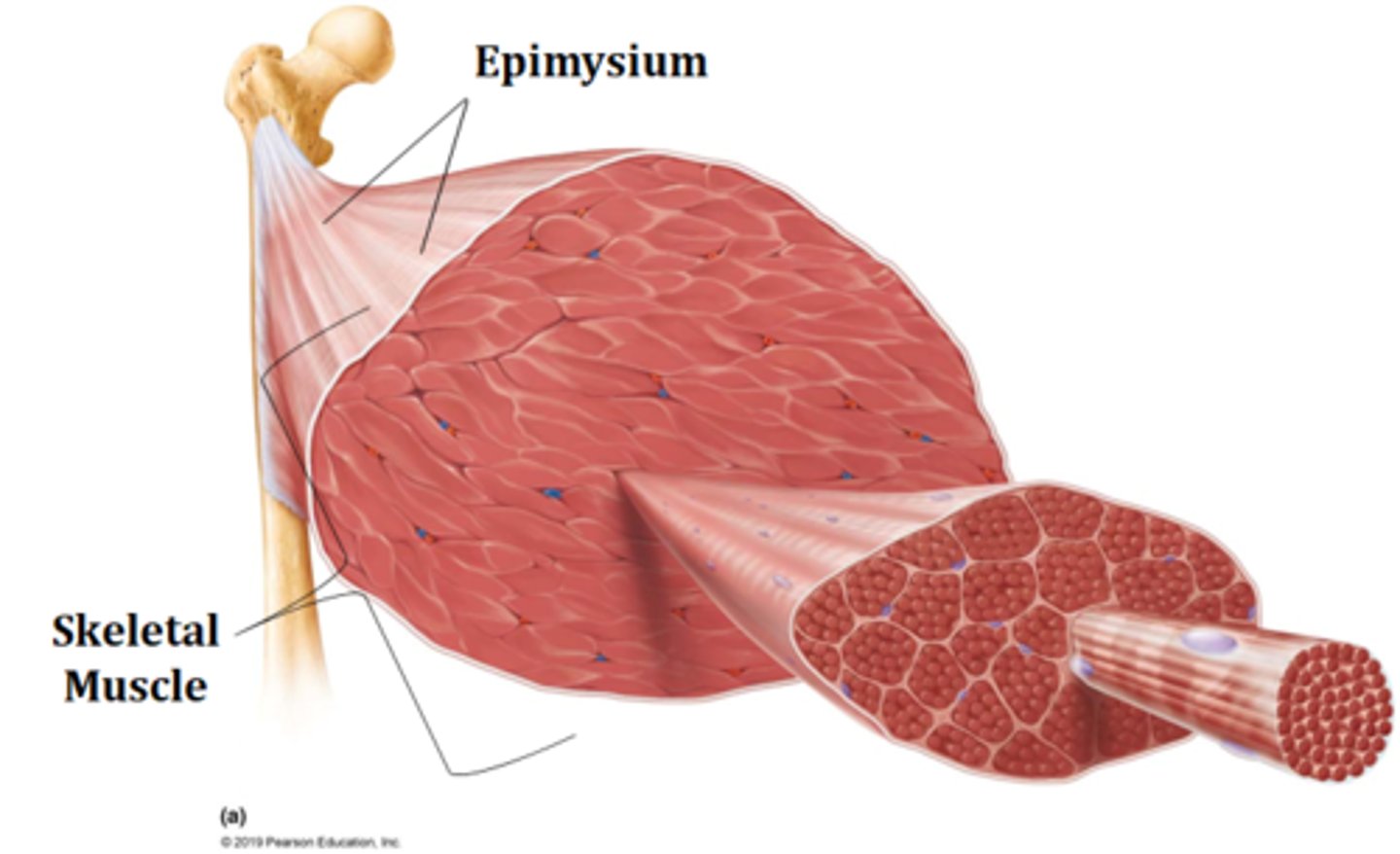
This muscle sheath is composed of dense irregular connective tissue which surrounds the entire muscle.
epimysium
Spindle shaped muscles are referred to as...
fusiform muscles
What's another name for a muscle cell?
muscle fiber
What is the plasma membrane of a muscle cell called?
sarcolemma
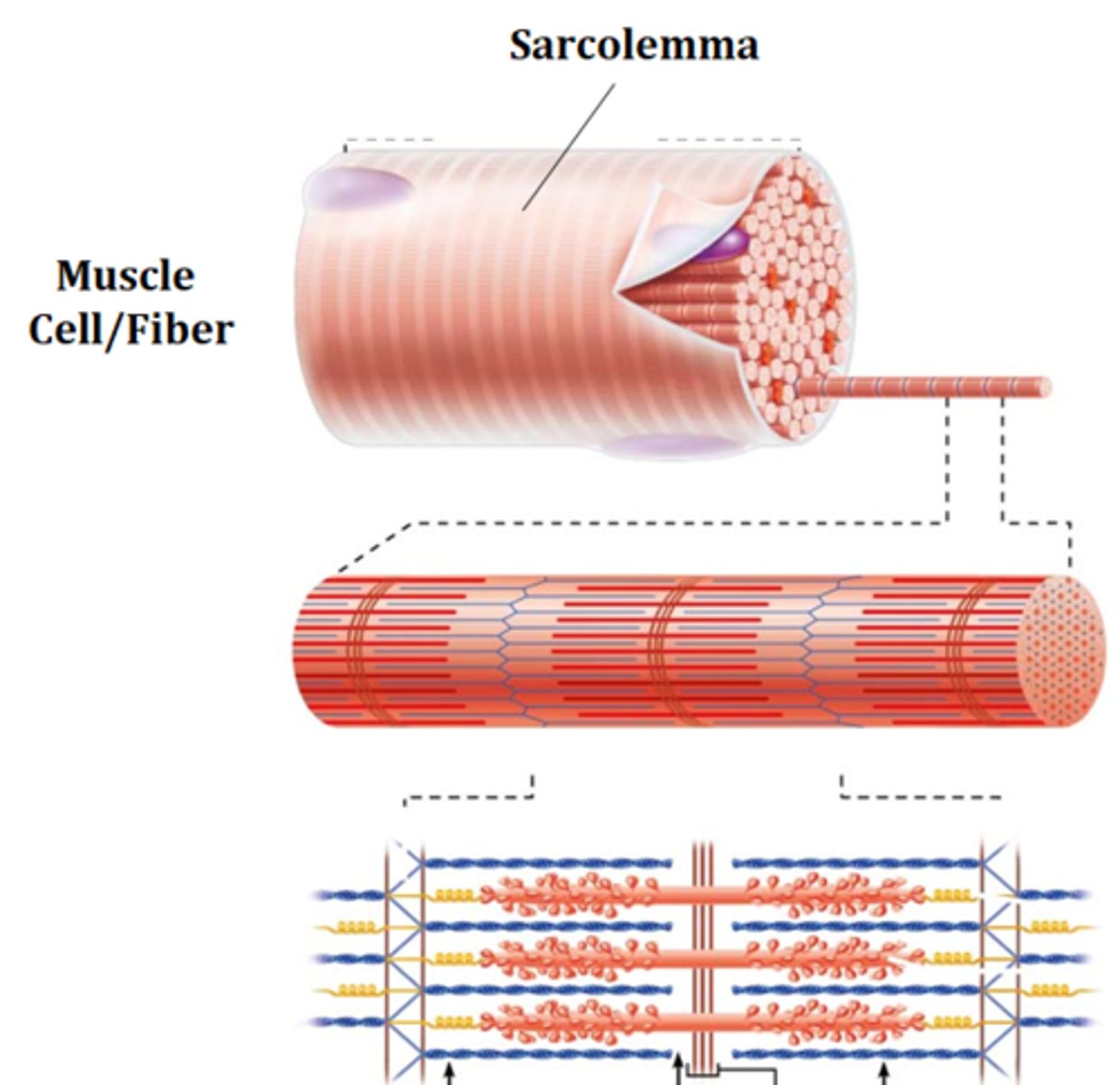
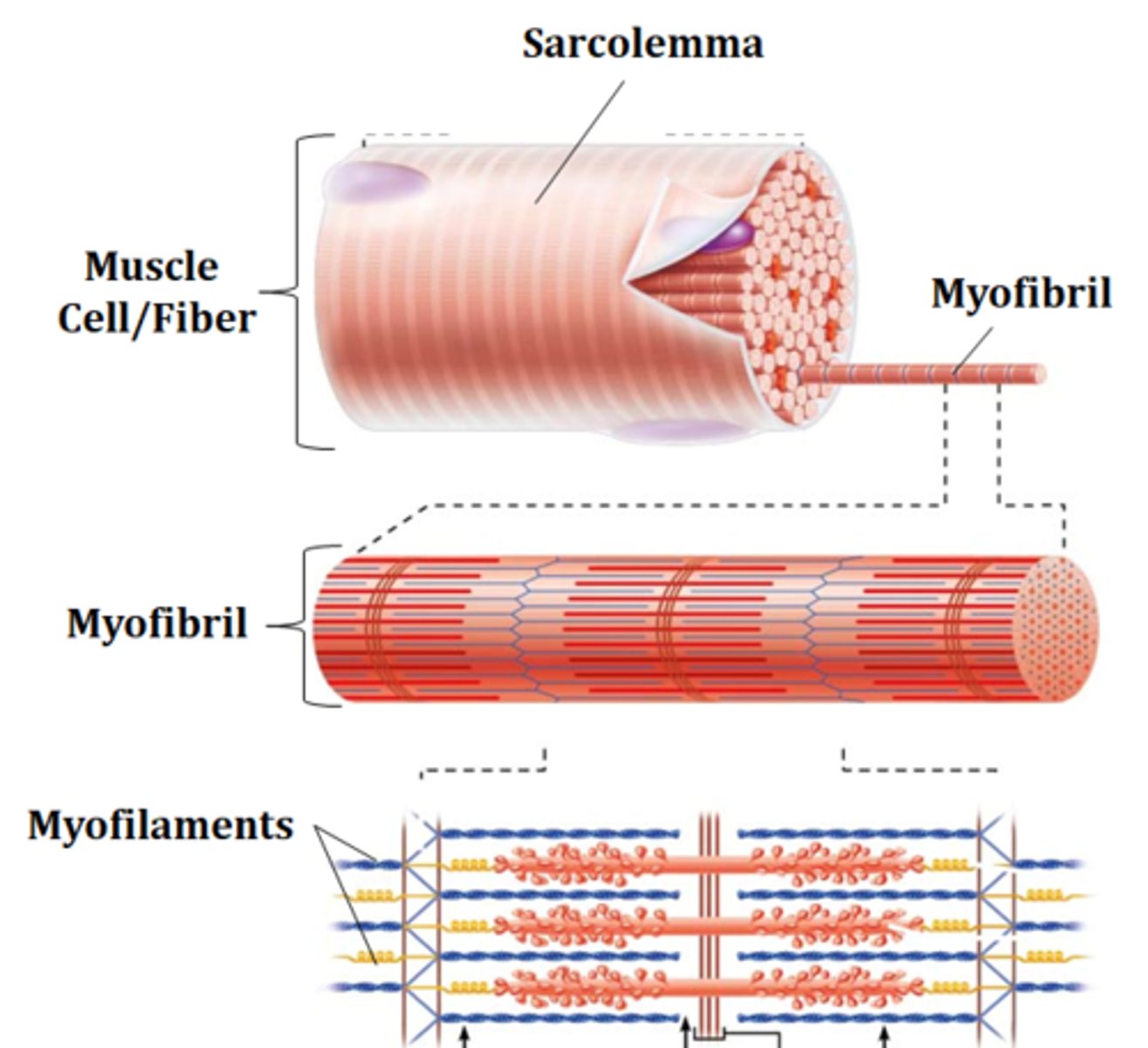
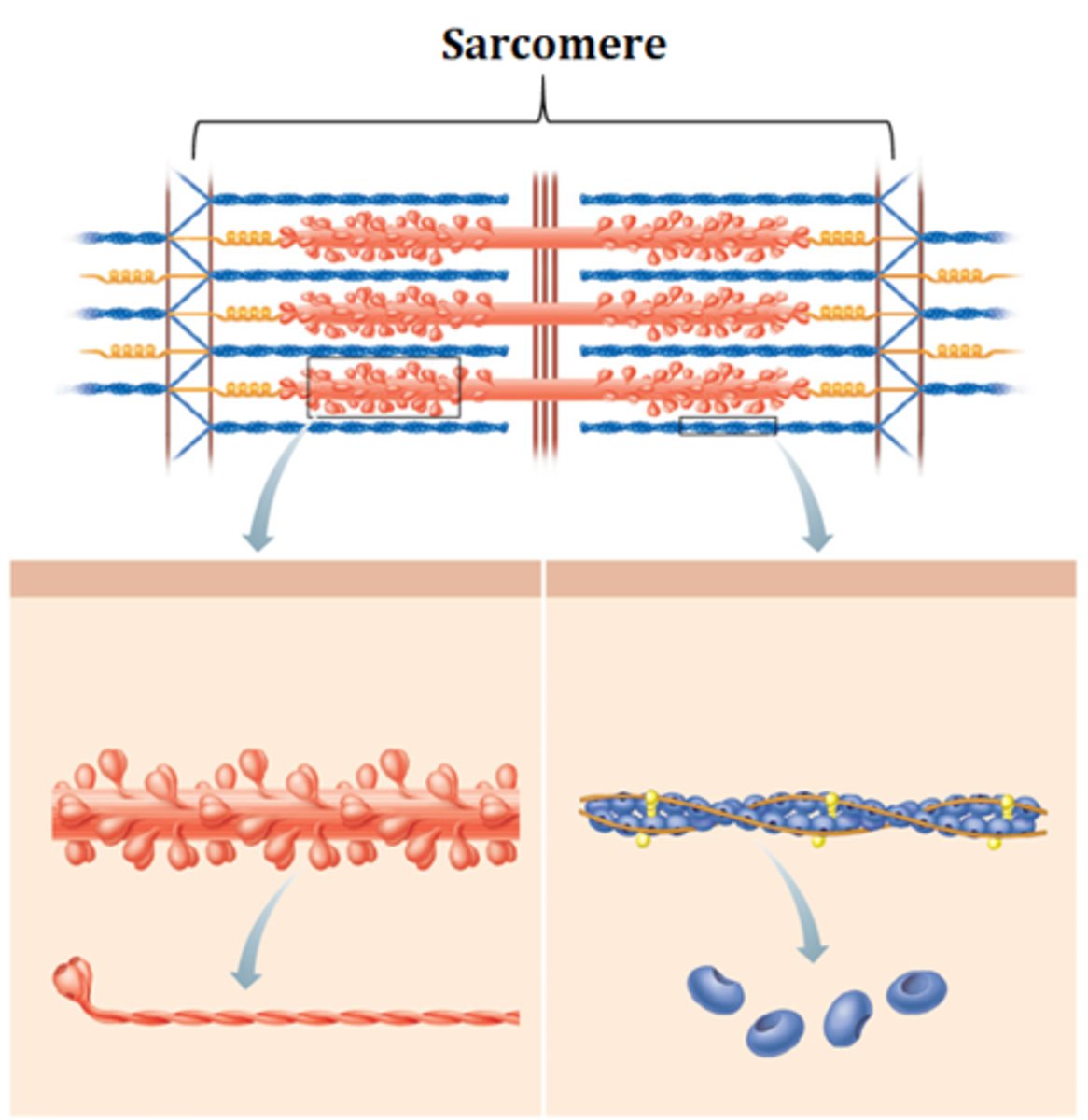
What's a myofibril?
protein bundles that contain myosin and actin myofilaments
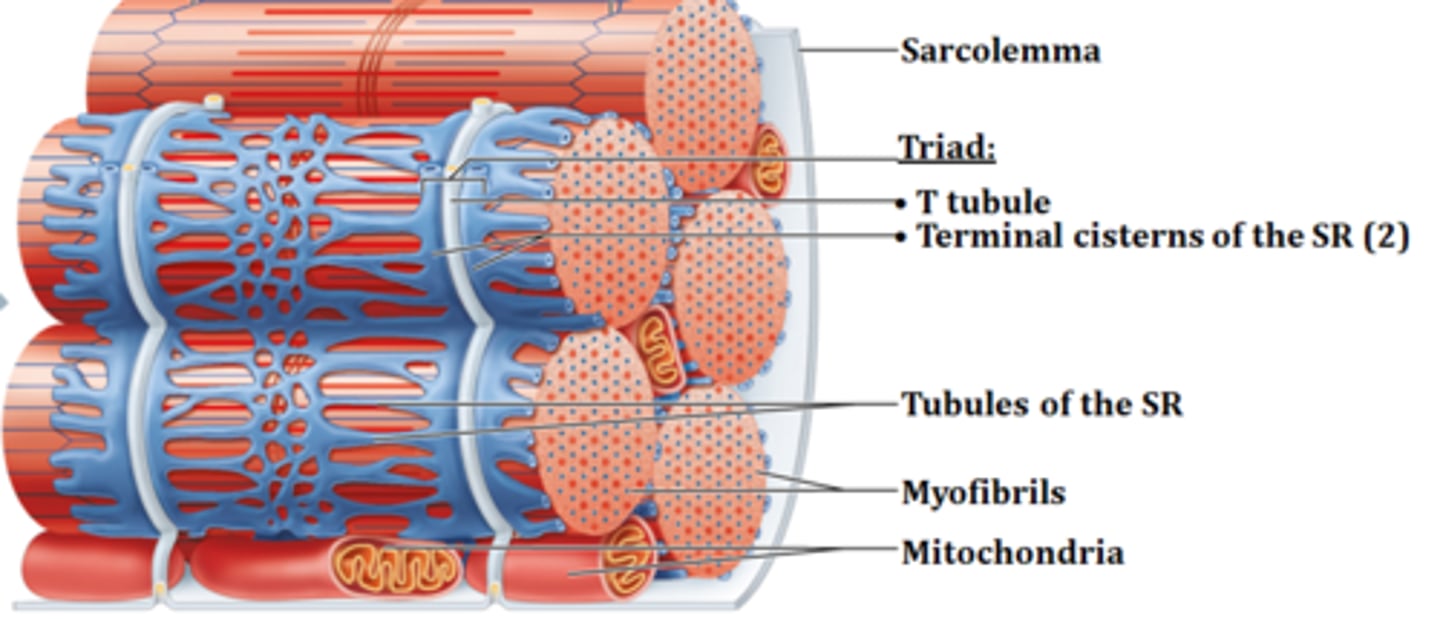
__________ are the swollen ends of the sarcoplasmic reticulum.
terminal cisterns
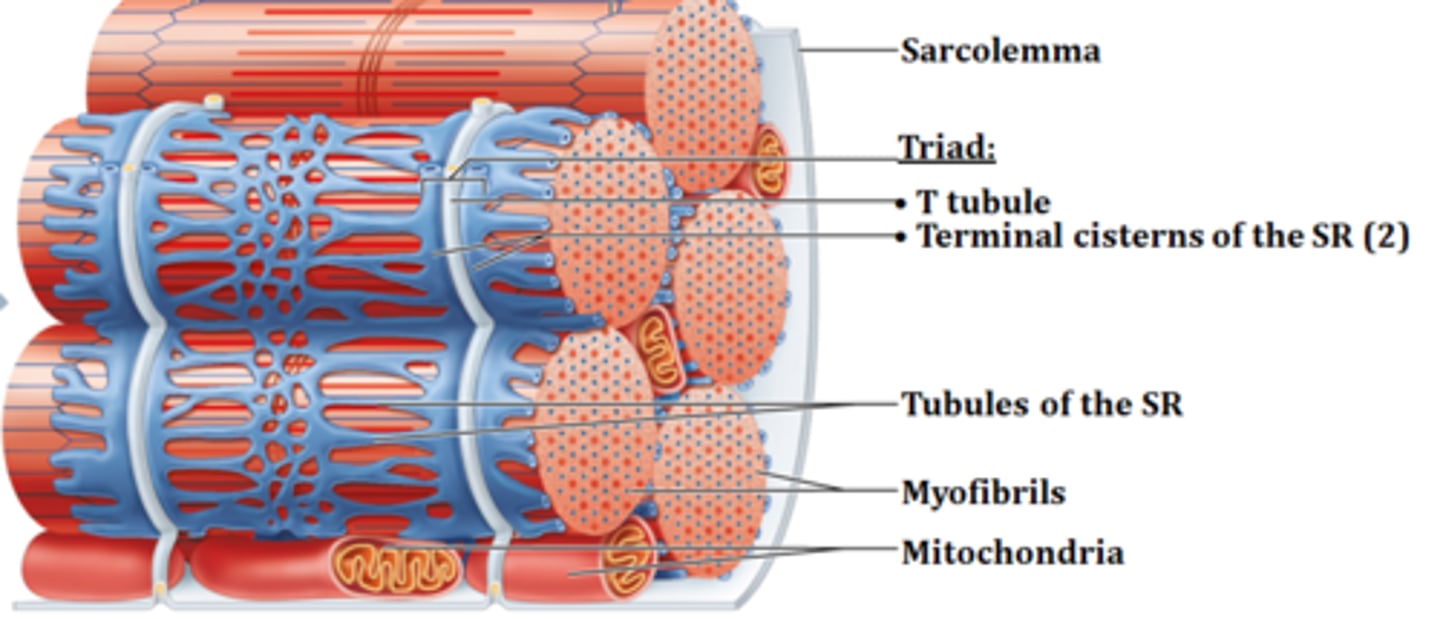
Name the tubules found in between terminal cisterns that allows action potentials to penetrate and spread along the muscle cell/fiber.
transverse tubules / T tubules
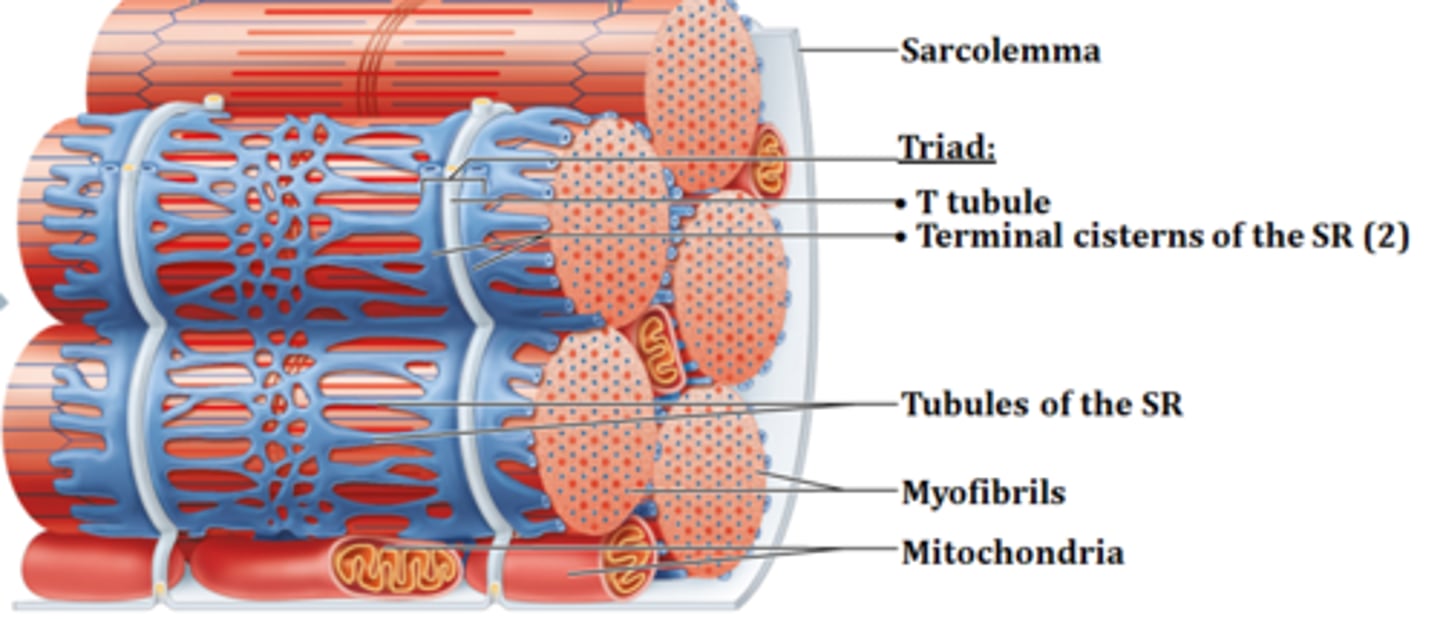
Name the modified smooth endoplasmic reticulum within muscle cells/fibers.
sarcoplasmic reticulum
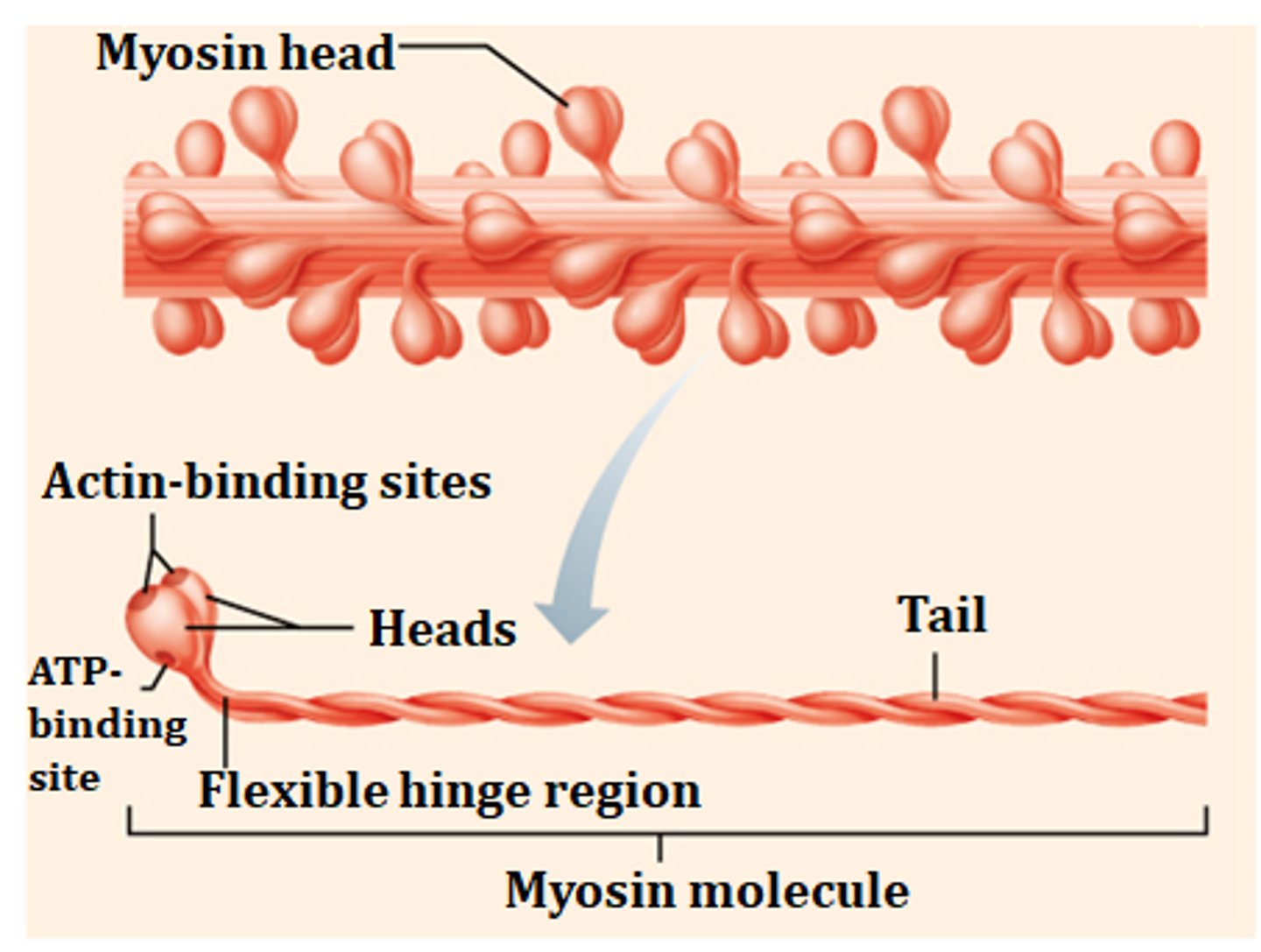
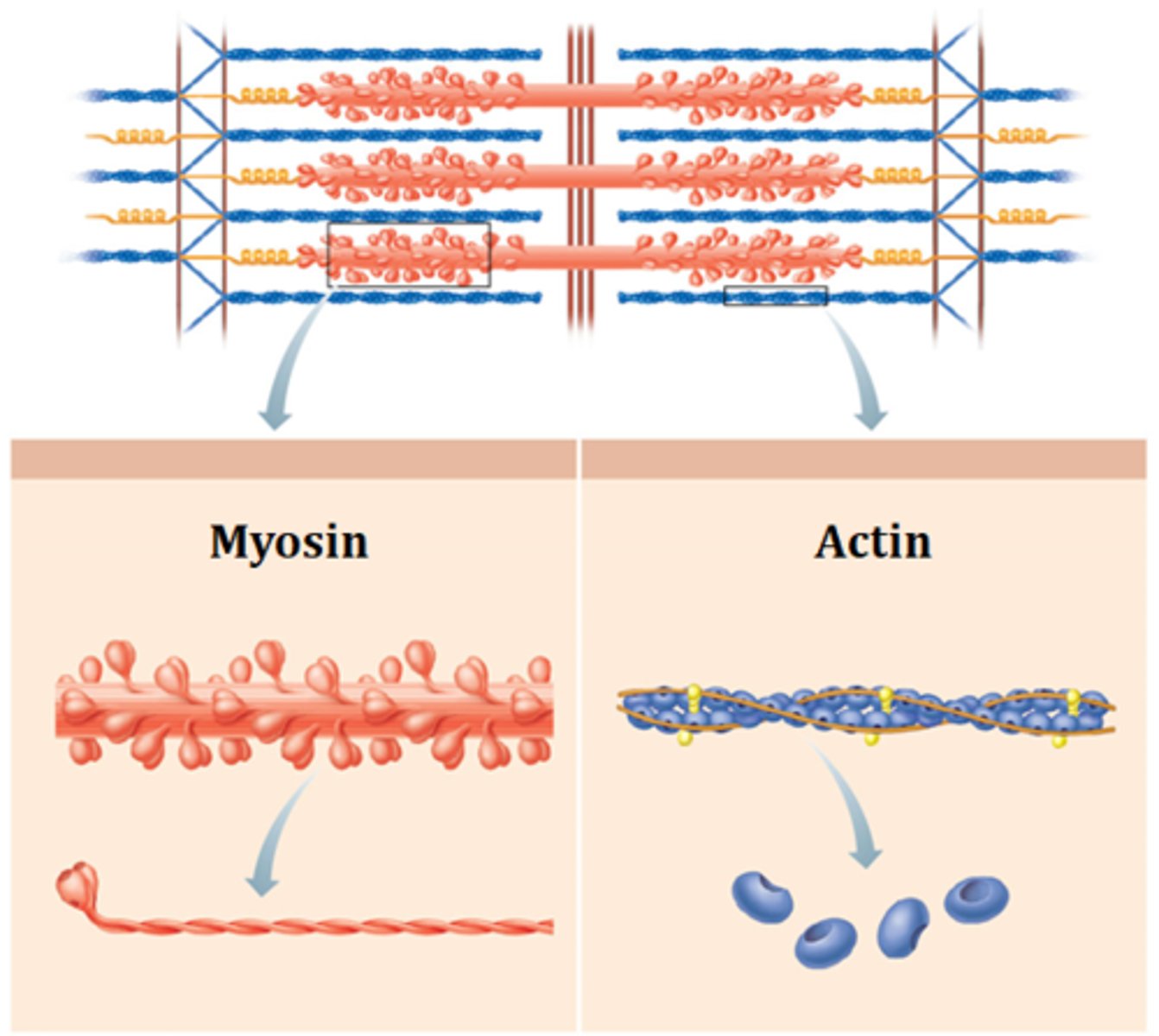
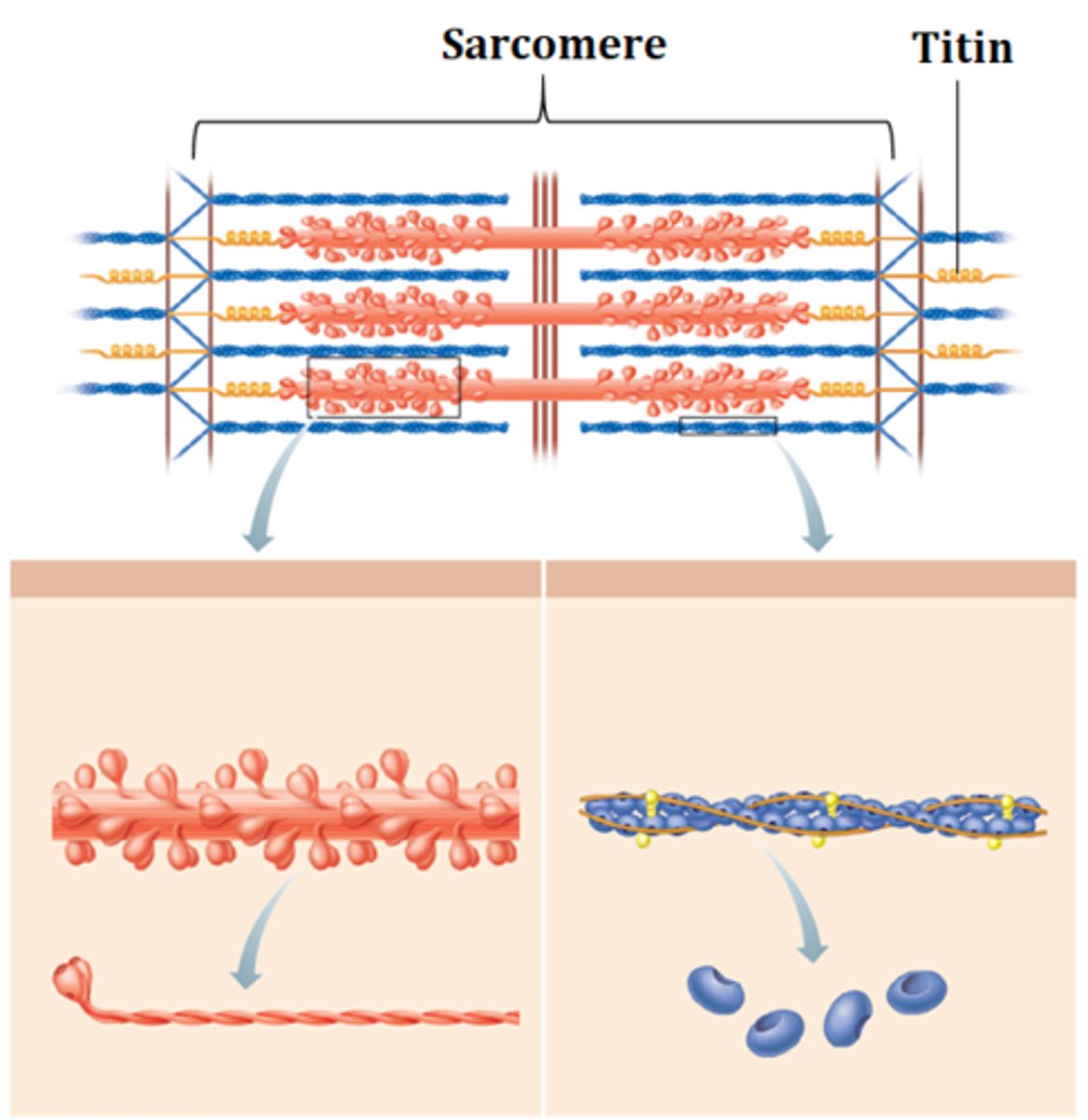
Thick myofilaments consist of proteins shaped like golf clubs called _________.
myosin
Thin myofilaments are composed of what 3 proteins?
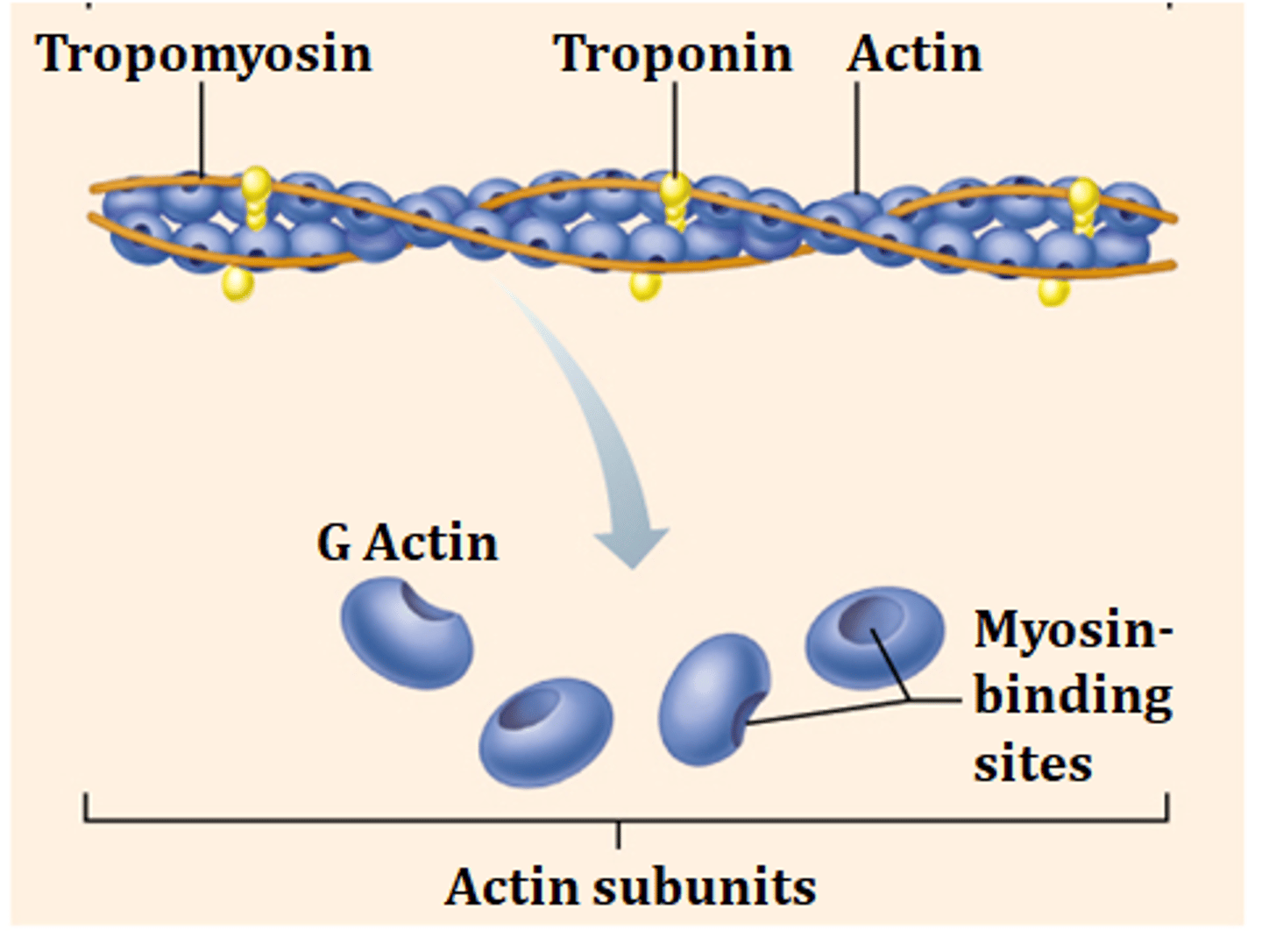
actin, tropomyosin, troponin
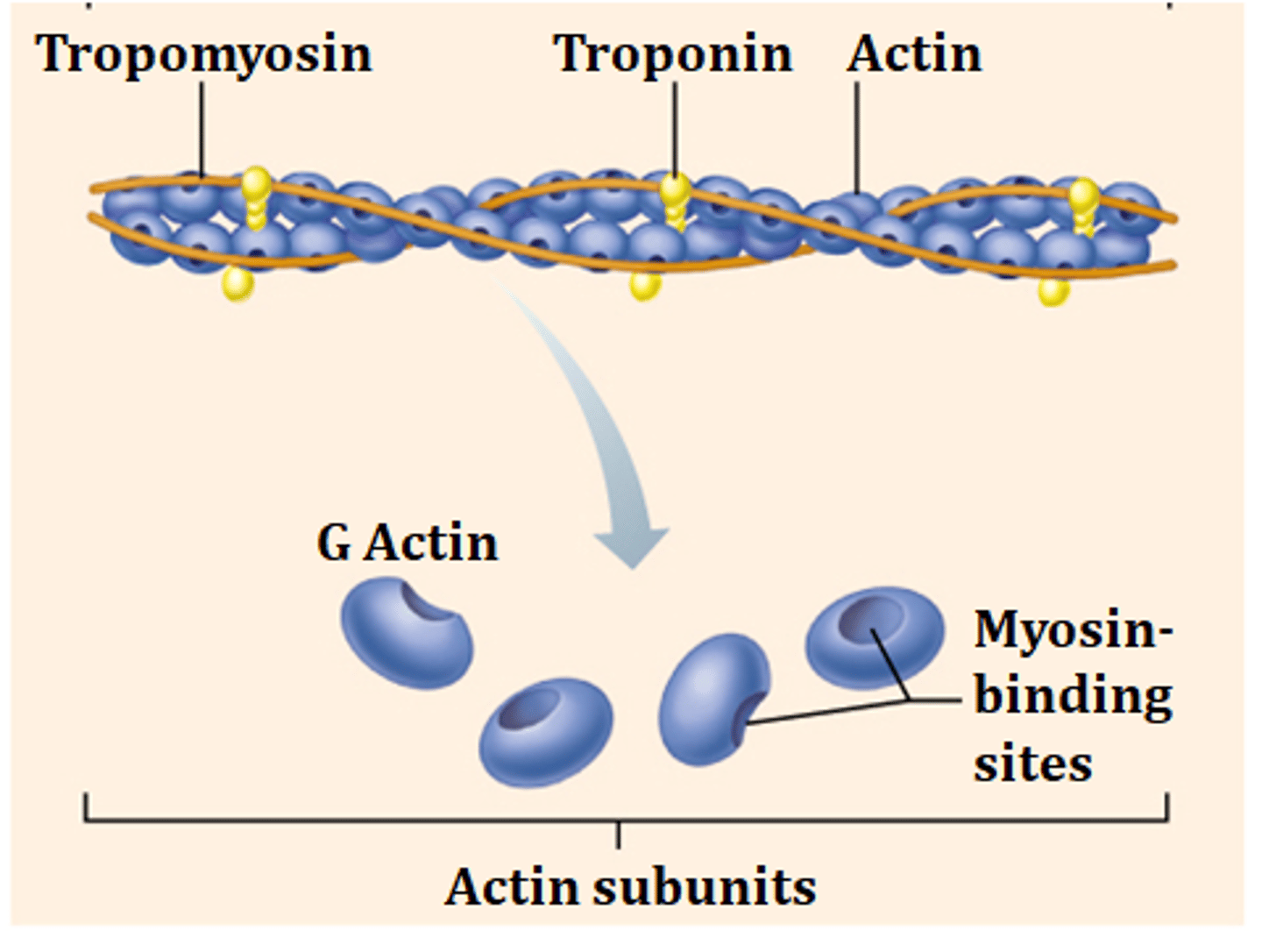
___________ are the globular proteins of actin that bind myosin heads during contraction.
G actin
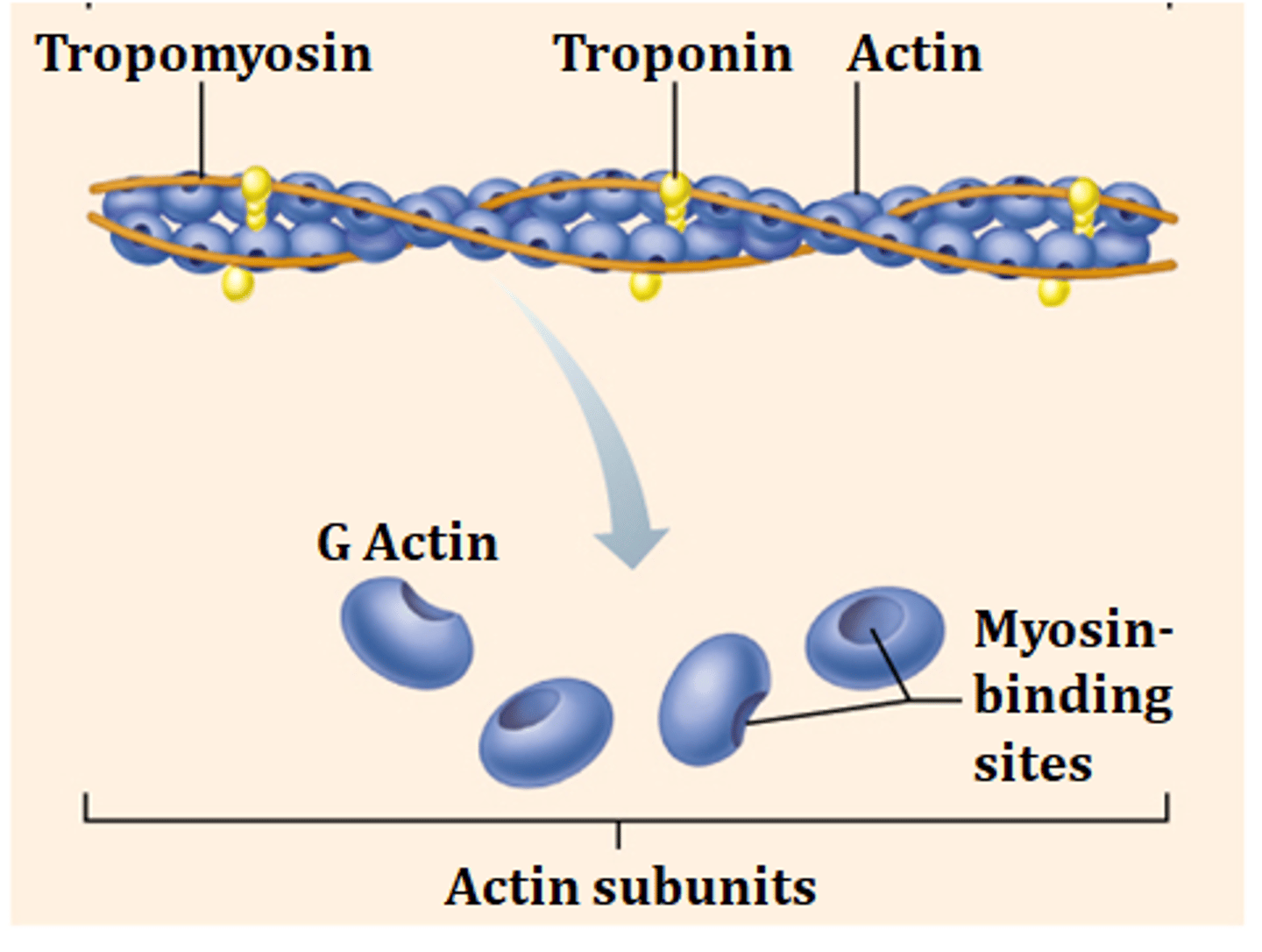
Name the rope-like strand of protein that blocks G actin binding sites and prevent myosin from binding.
tropomyosin
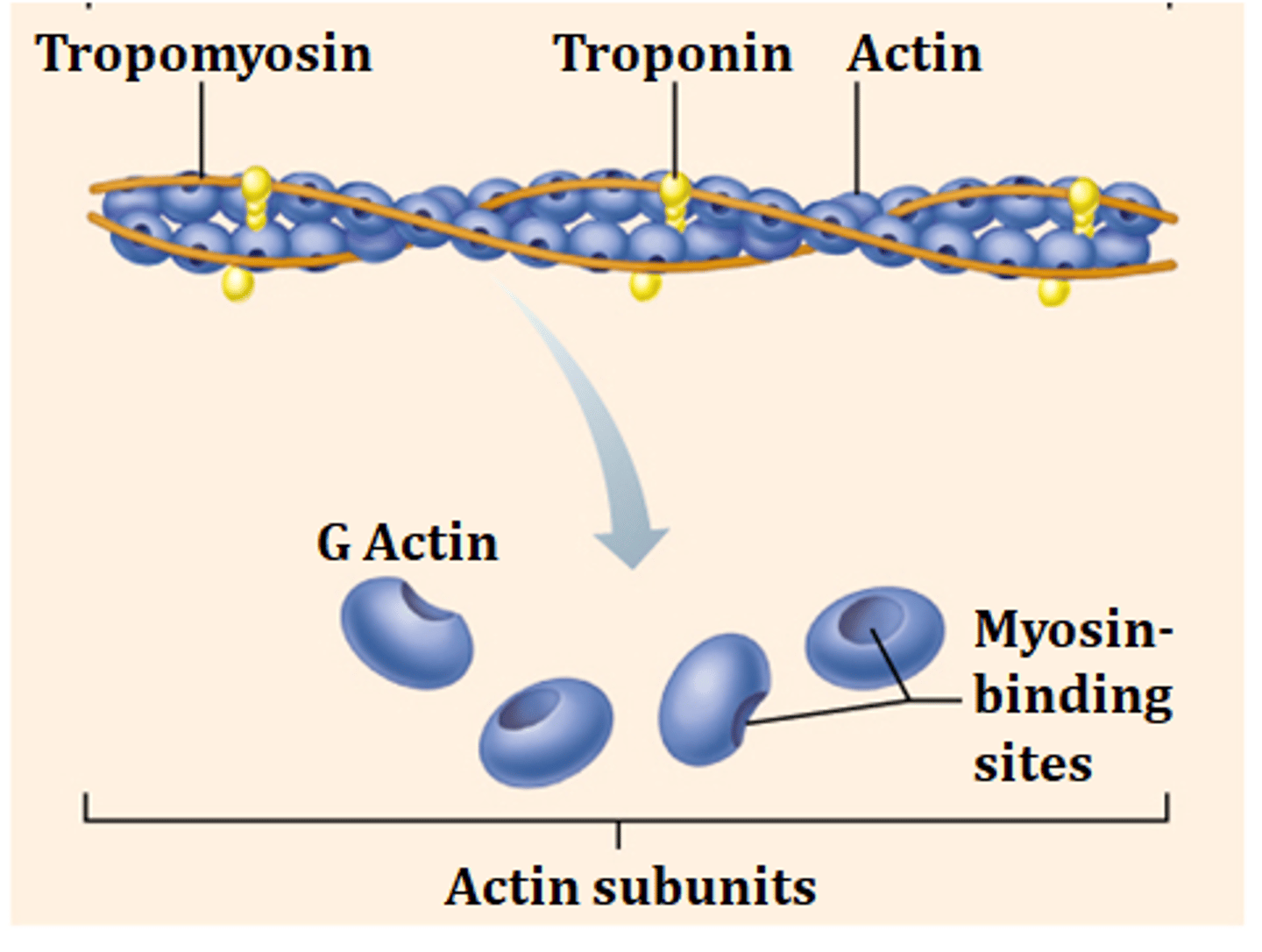
Tropomyosin contains a globular protein anchored to its fibrous strand which binds calcium, creating a reaction that moves tropomyosin allowing the actin binding sites to be exposed. Name the protein that binds calcium.
troponin
Name the 2 main contractile proteins of muscle cells.
actin & myosin
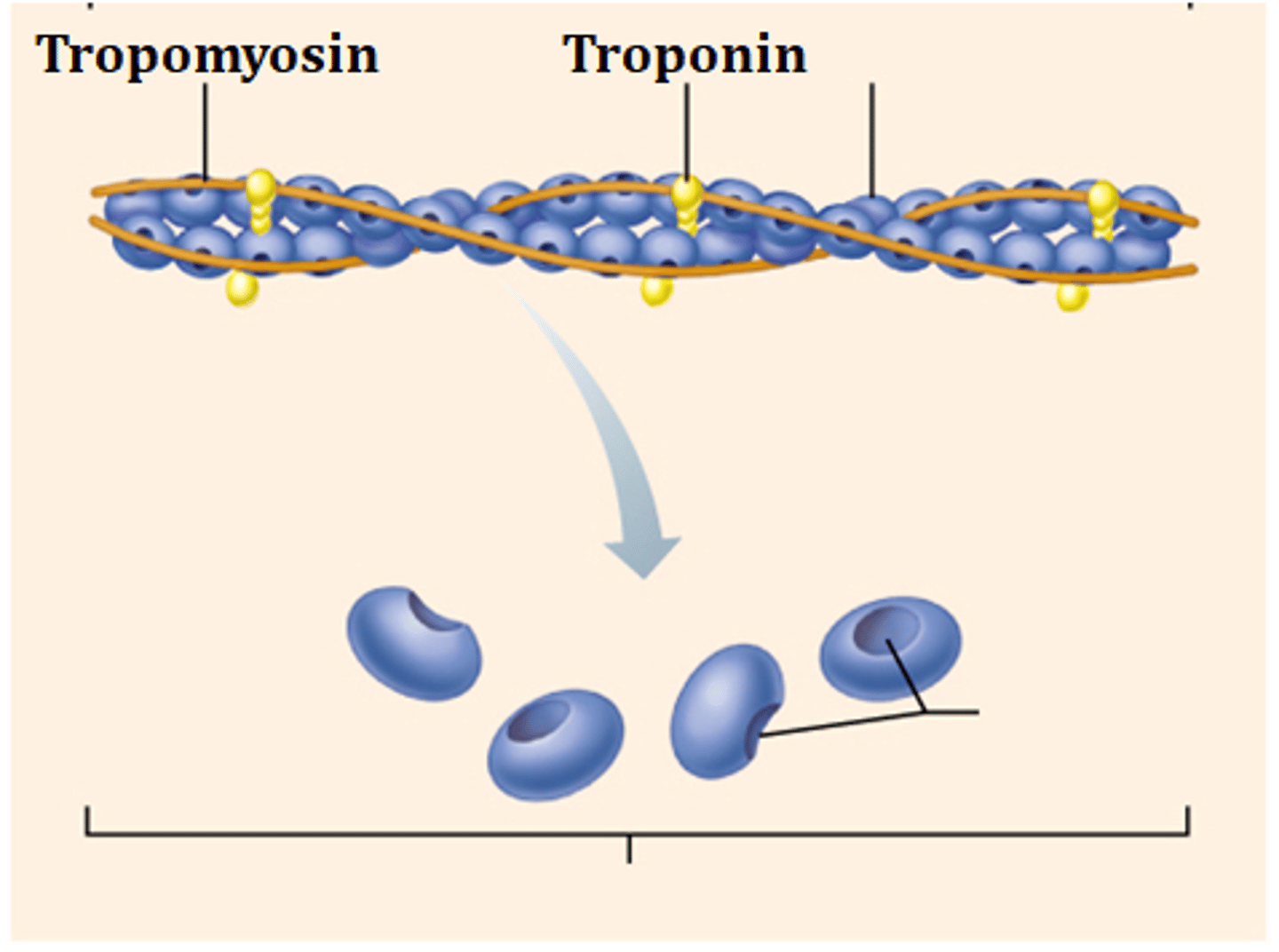
Name the 2 main regulatory proteins of muscle cells.
tropomyosin & troponin
What is a contractile unit of muscle called?
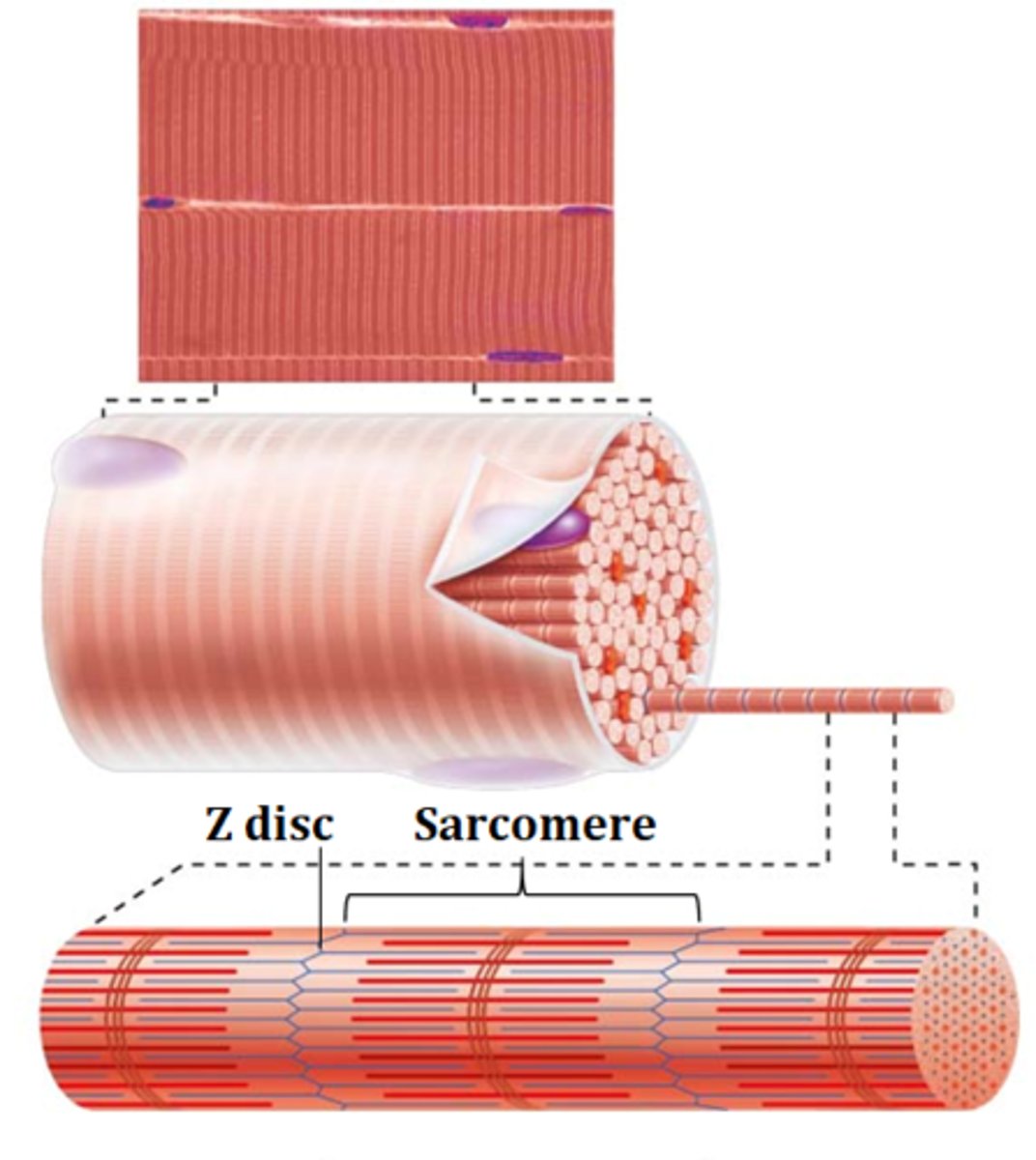
sarcomere = region of a myofibril between 2 Z discs
Which structures divide the sarcomeres and serve as anchoring structures for actin and elastic filaments?
Z discs
The A band of a sarcomere is also referred to as the _________ band.
dArk band - dark due to the overlap of myosin and actin
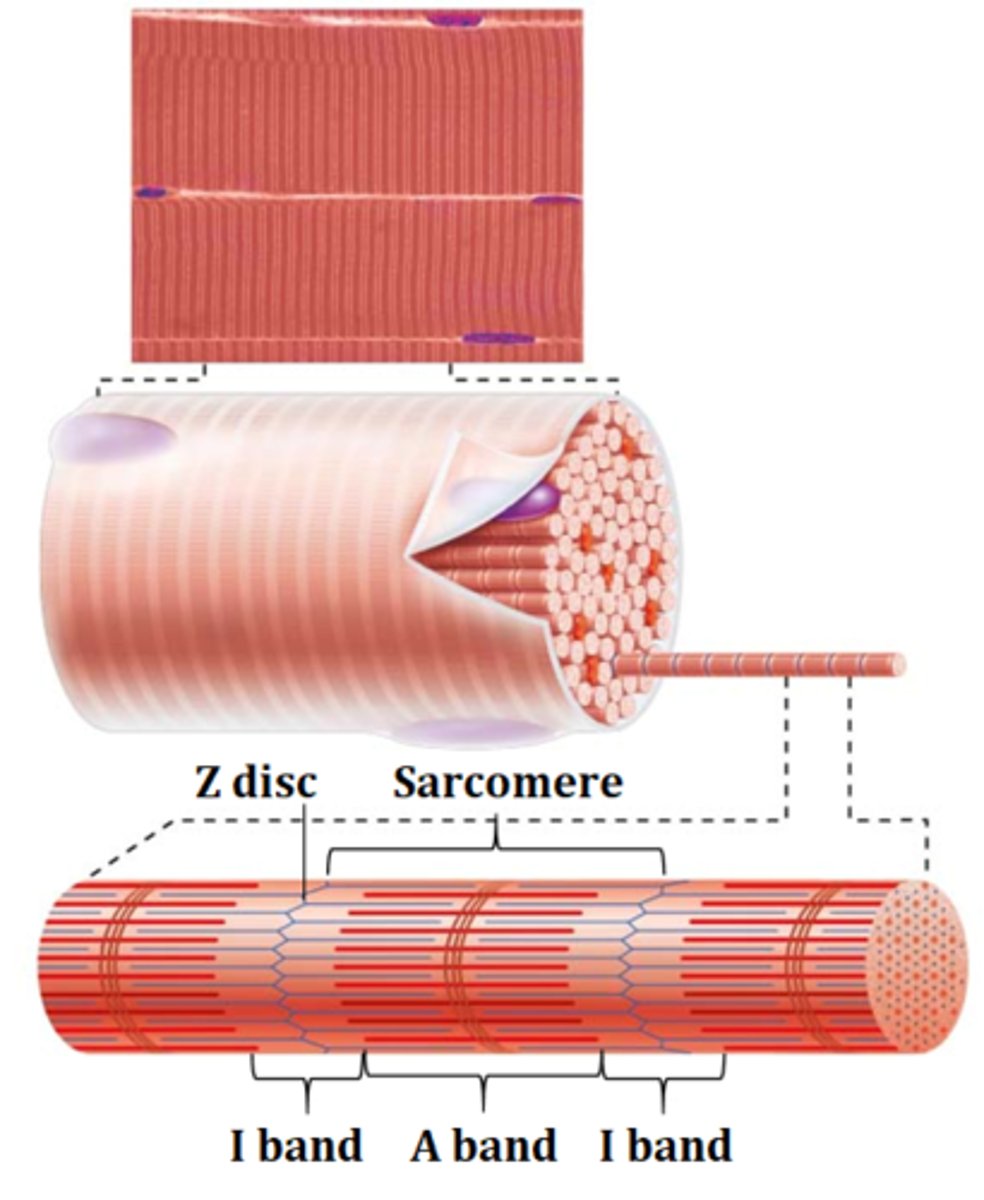
The I band of a sarcomere is also referred to as the _________ band.
lIght band - light because it only contains actin
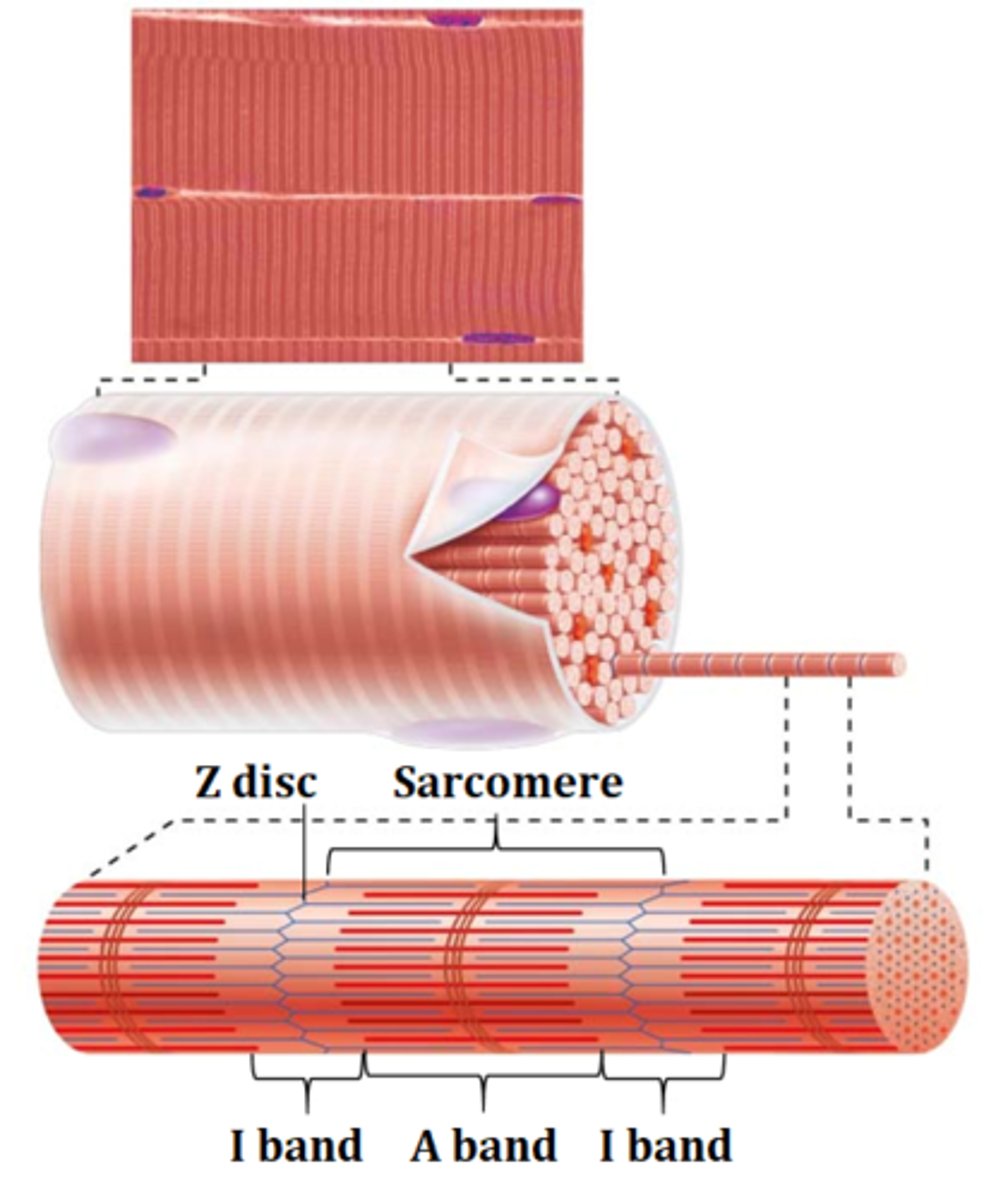
Elastic filaments composed of the protein _________ anchor thin filaments and attach to Z discs.
titin
Where are axon terminals found?
the ends of a neurons axon, they are small swollen membranous sacs
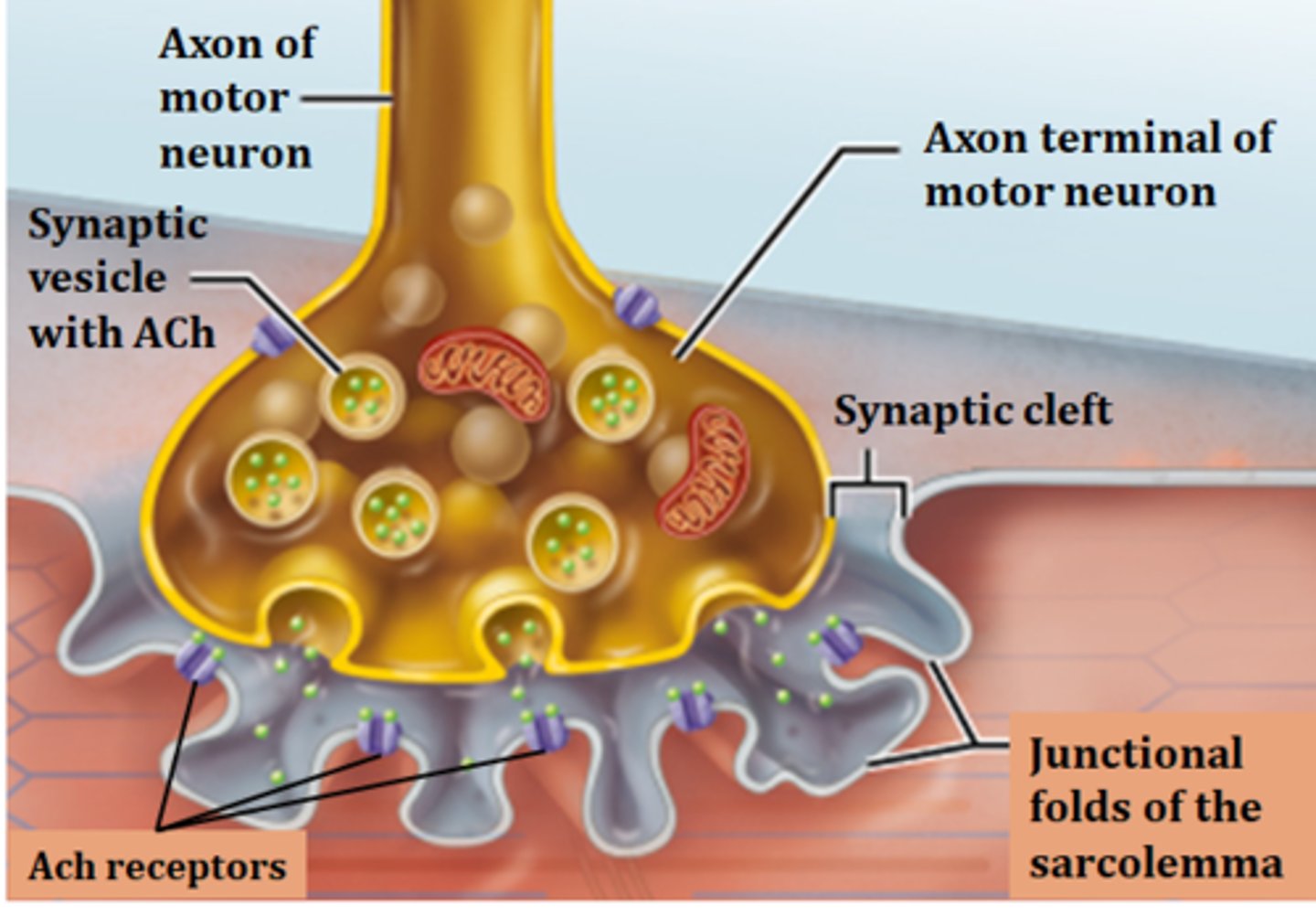
These vesicles are found within the axon terminals and contain acetylcholine.
synaptic vesicles - vesicles hold "stuff"
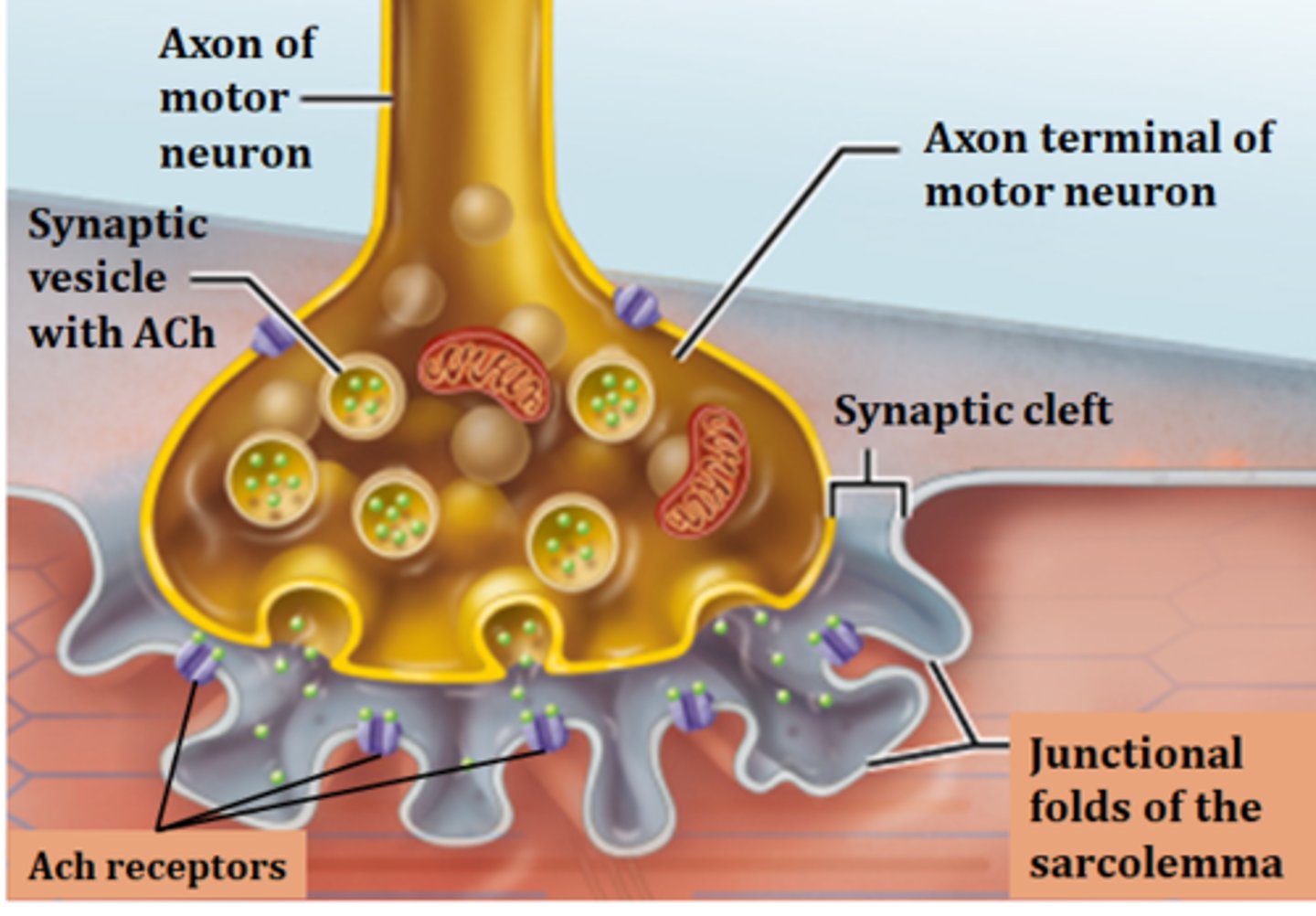
The _________________ is a special part of the muscle cell membrane (sarcolemma) where a motor neuron synapses (creates a junction) and also contains a high concentration of acetylcholine (ACh) receptors.
junctional fold
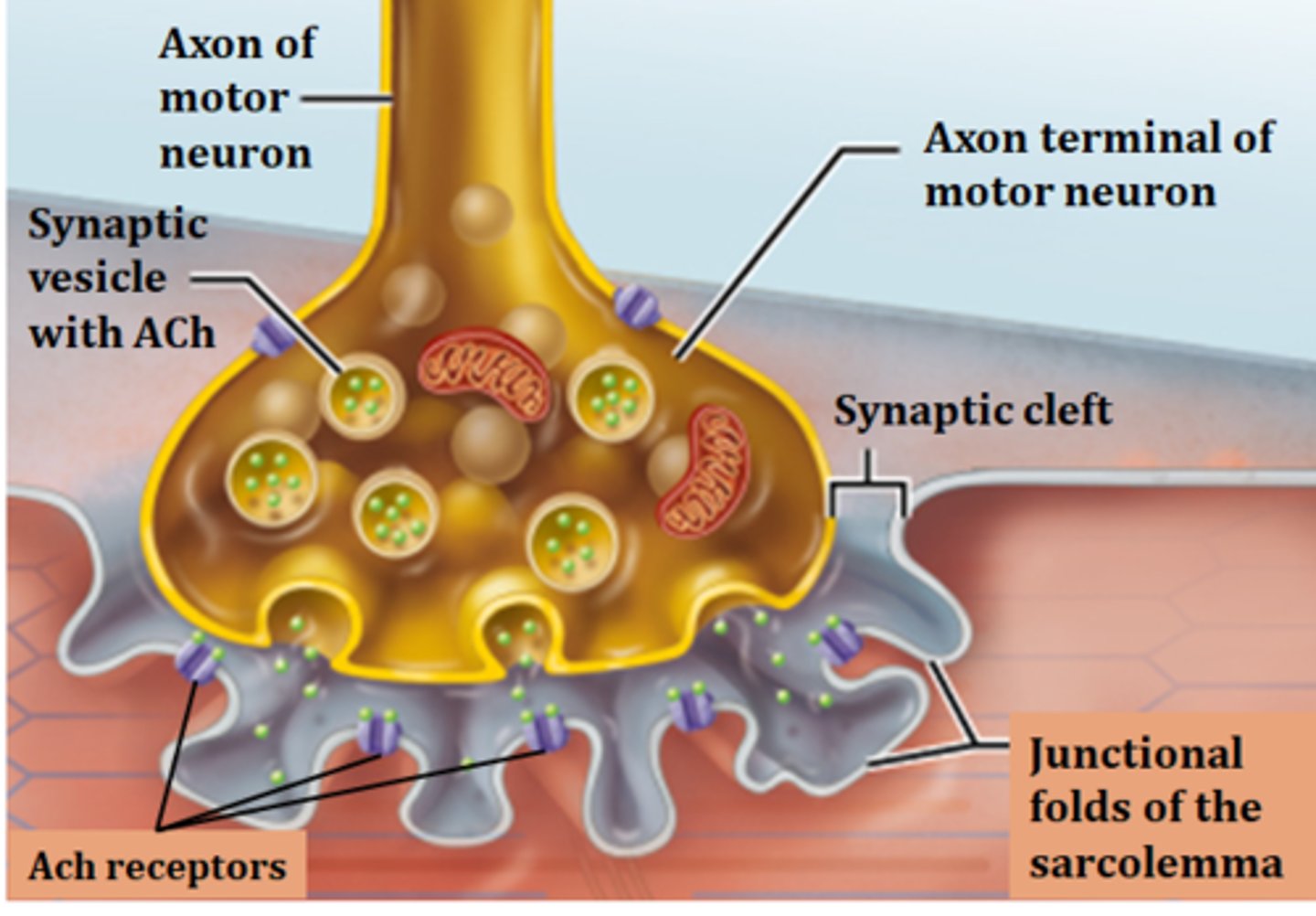
The synaptic knob of the motor neuron and the motor end plate of the sarcolemma are in close contact, but are slightly separated by a region called the ___________.
synaptic cleft
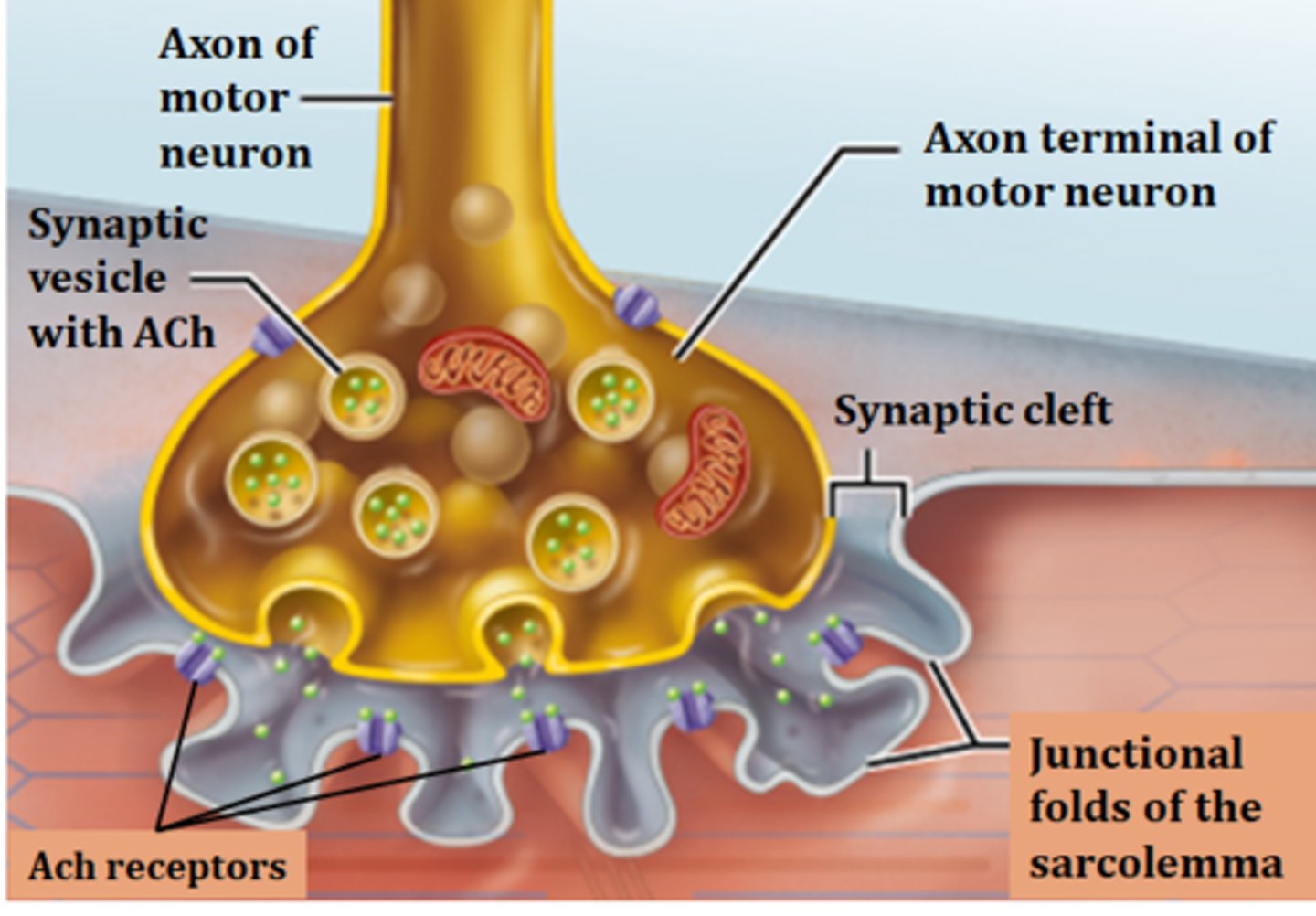
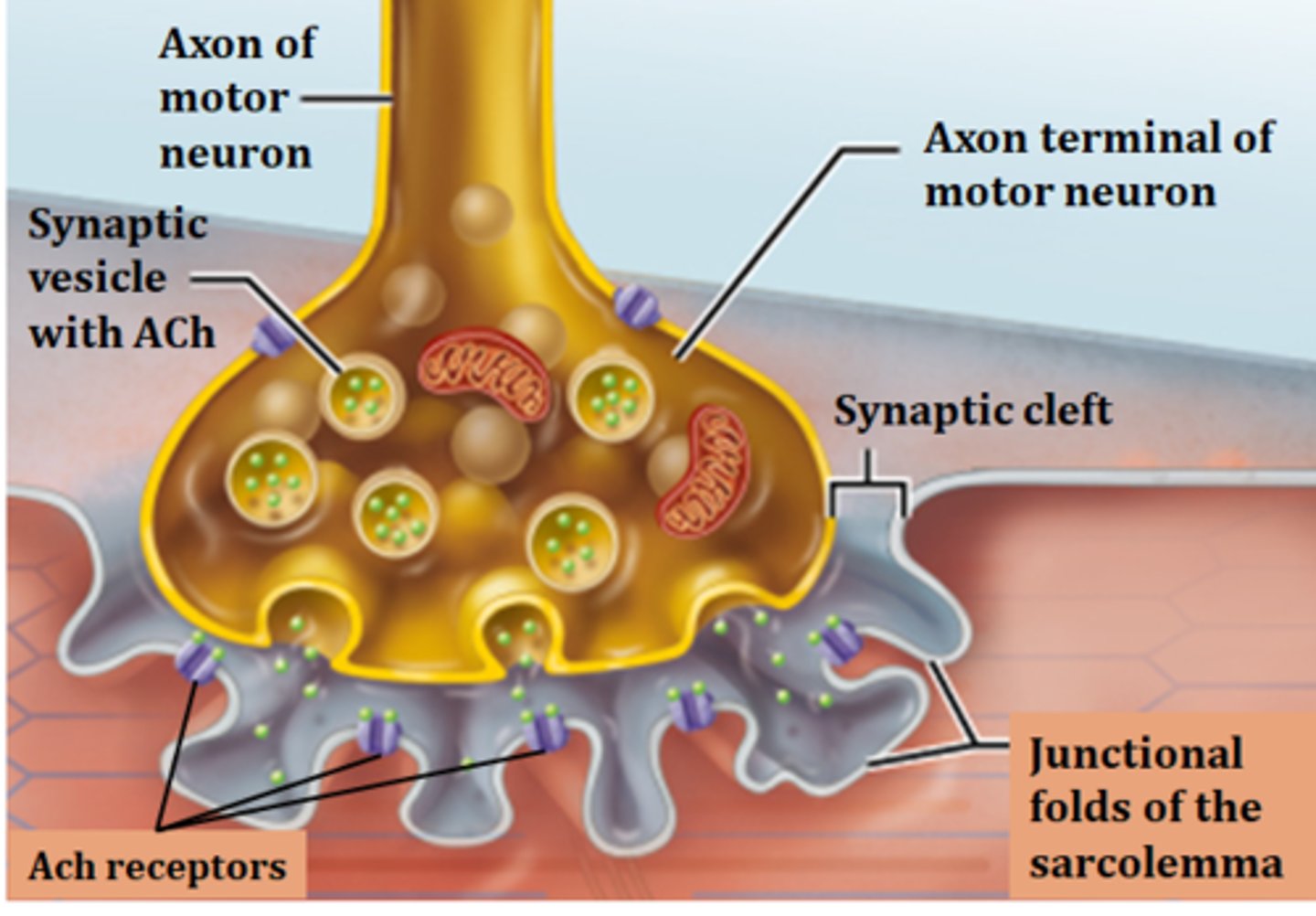
What components make up the neuromuscular junction.
synaptic knobs containing synaptic vesicles filled of acetylcholine (ACh), and the junctional folds of the sarcolemma.
Electrically excitable cells are polarized; what does is mean to be polarized?
polarization is created where there's a difference in charge between 2 things.
The difference in charge between the inside of a cell (intracellular) and outside of a cell (extracellular) creates a concentration gradient that is termed the ______________.
resting membrane potential
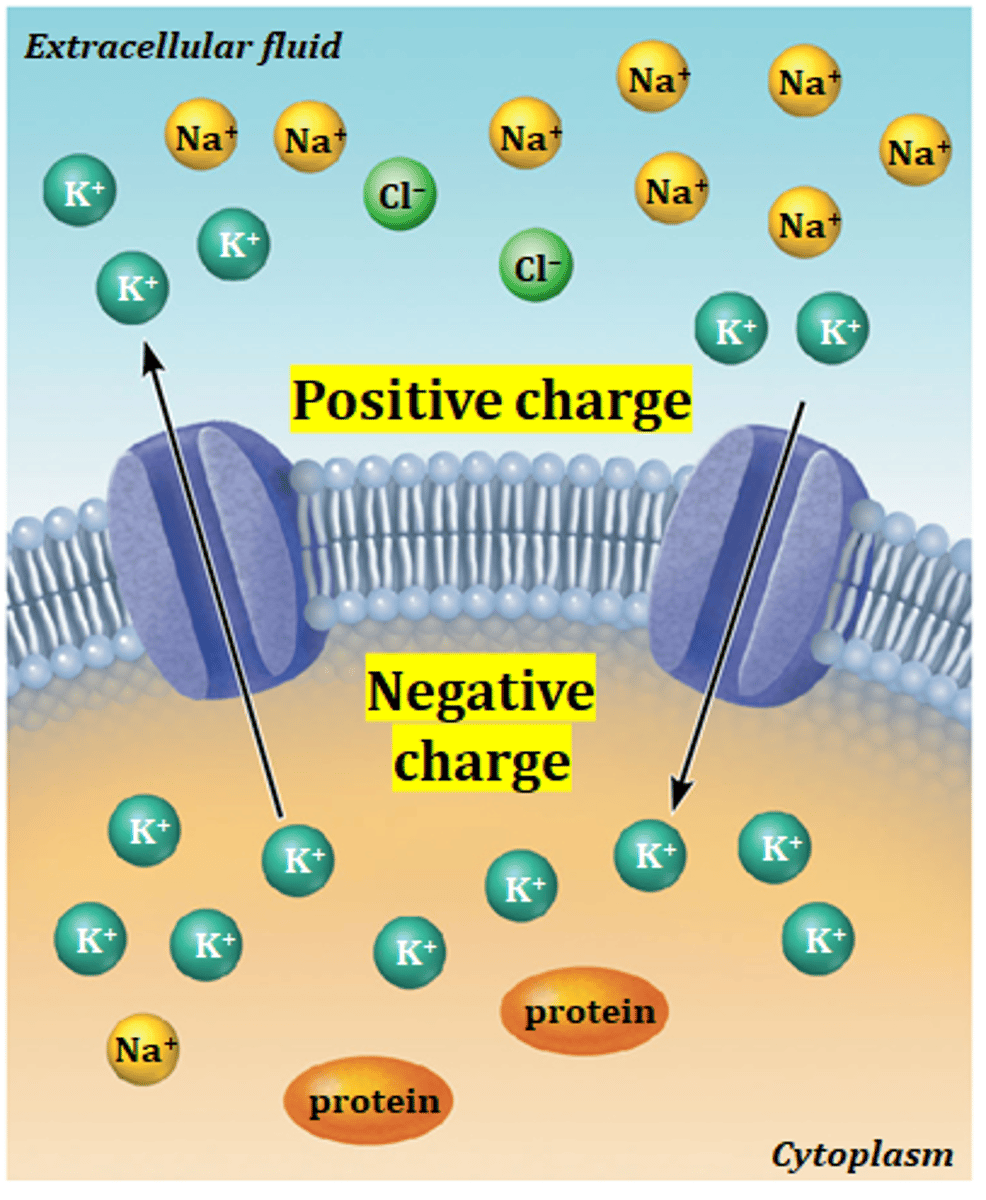
Why does polarization create a potential?
polarization (the difference in charge between 2 things) creates a concentration gradient of charged particles; this creates a potential or the possibility of the flow of charged particles to move down their concentration gradient if the barrier is opened between the 2 things.
The extracellular space is more ___________ charged, due to the abundance of the sodium cation (Na+).
positively
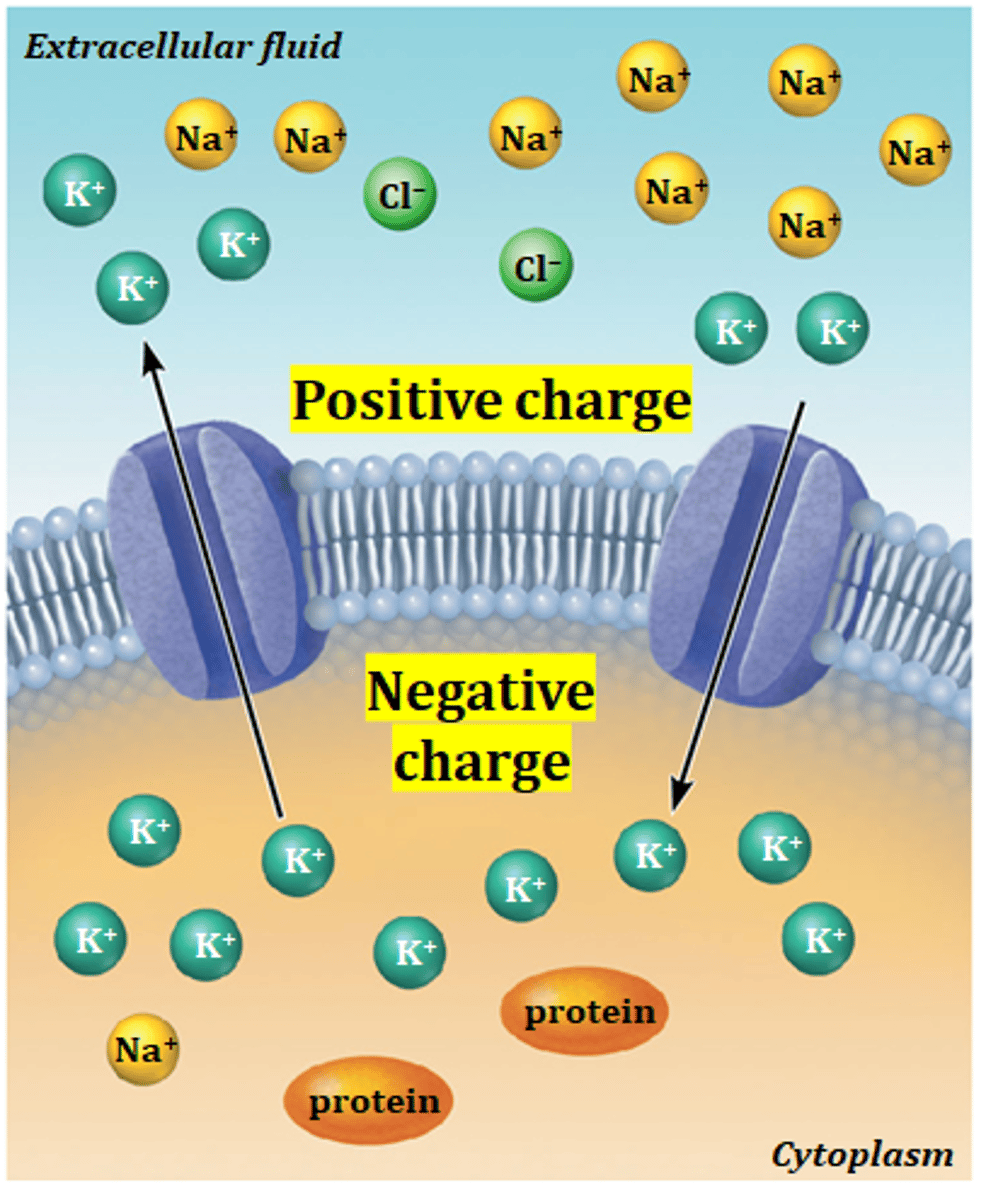
The intracellular space is more ___________ charged, due to the lack of sodium cations (Na+).
negatively
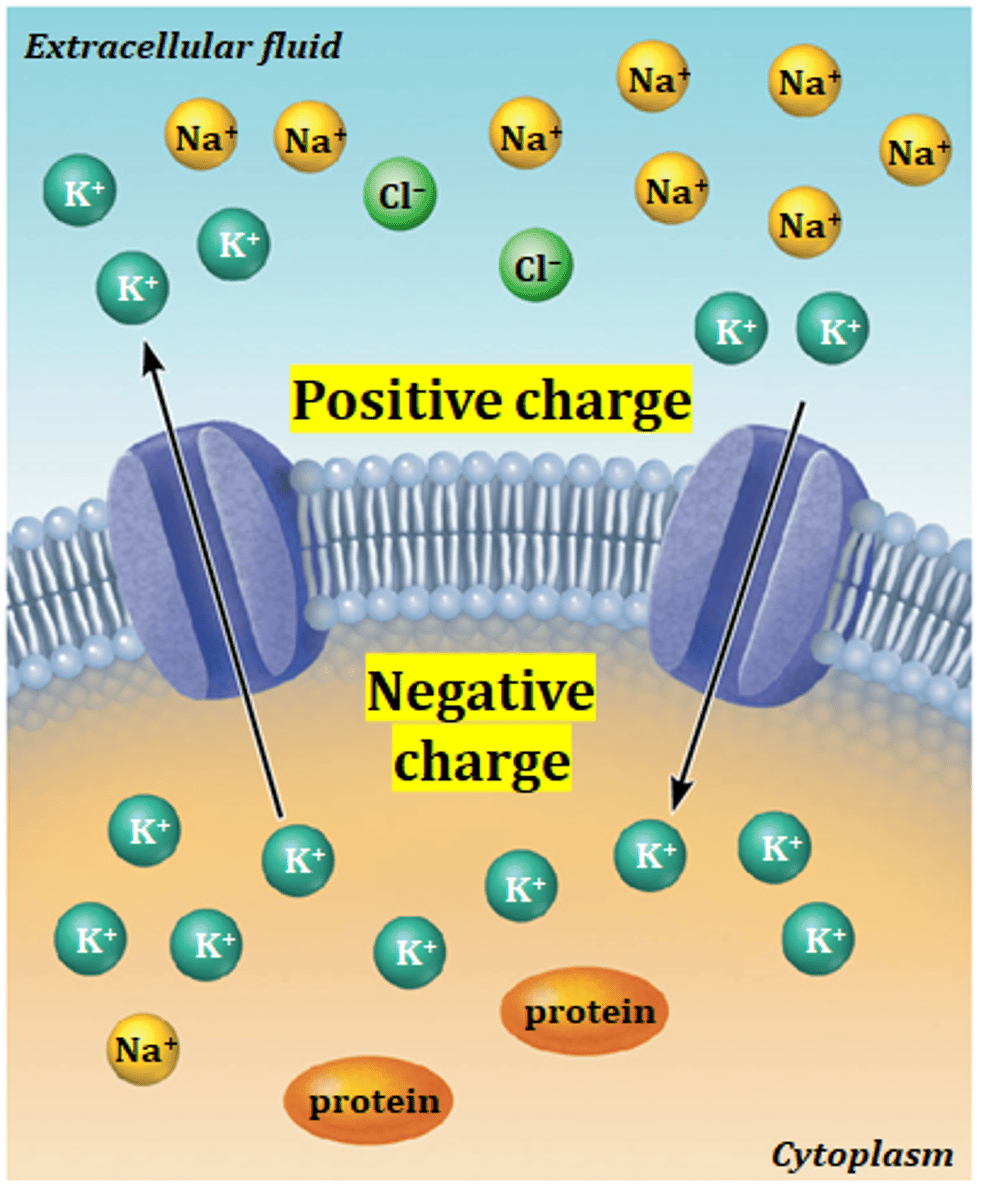
What is the predominant or chief extracellular cation?
Na+ (sodium cation)
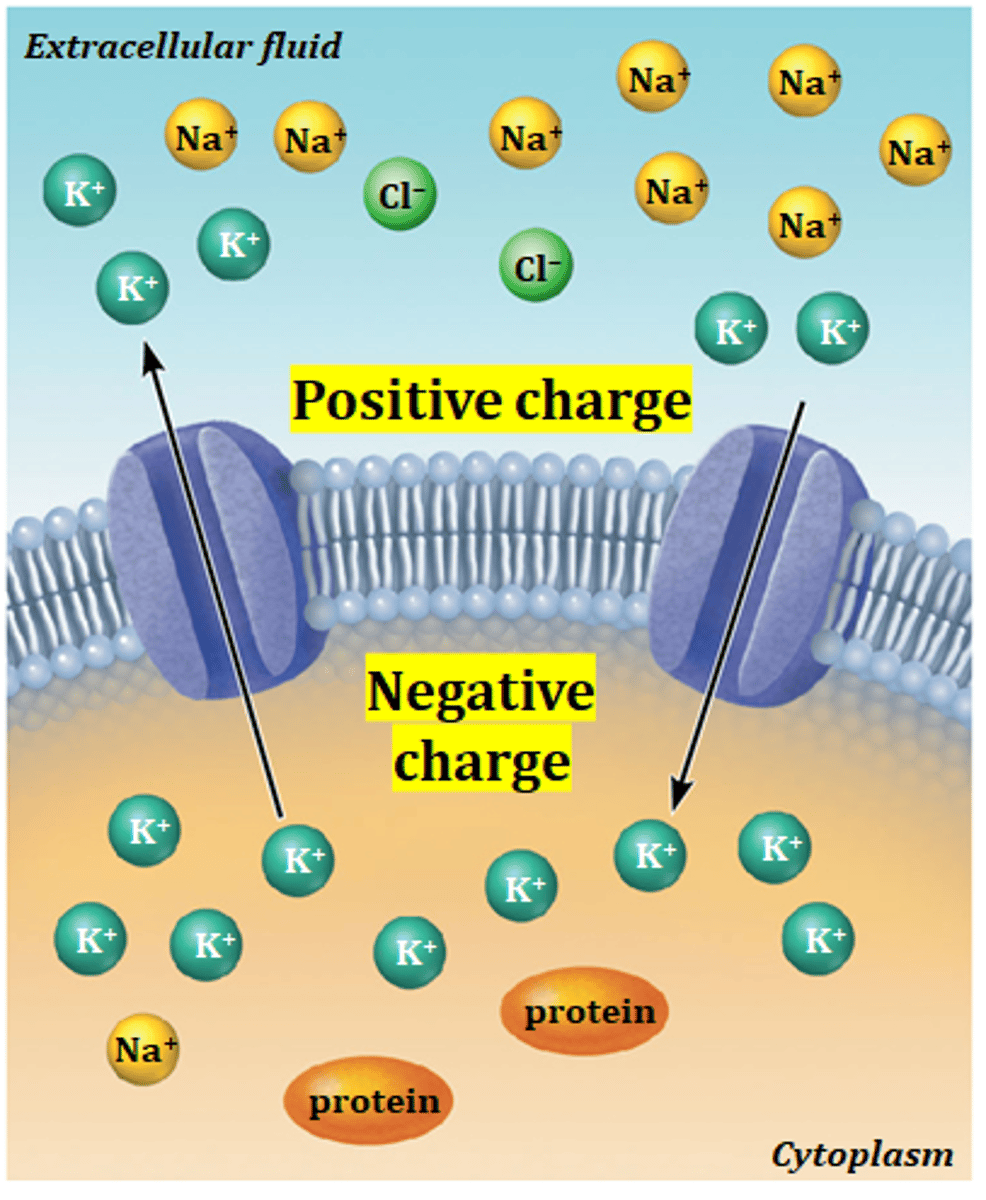
What is the predominant or chief intracellular cation?
K+ (potassium cation)
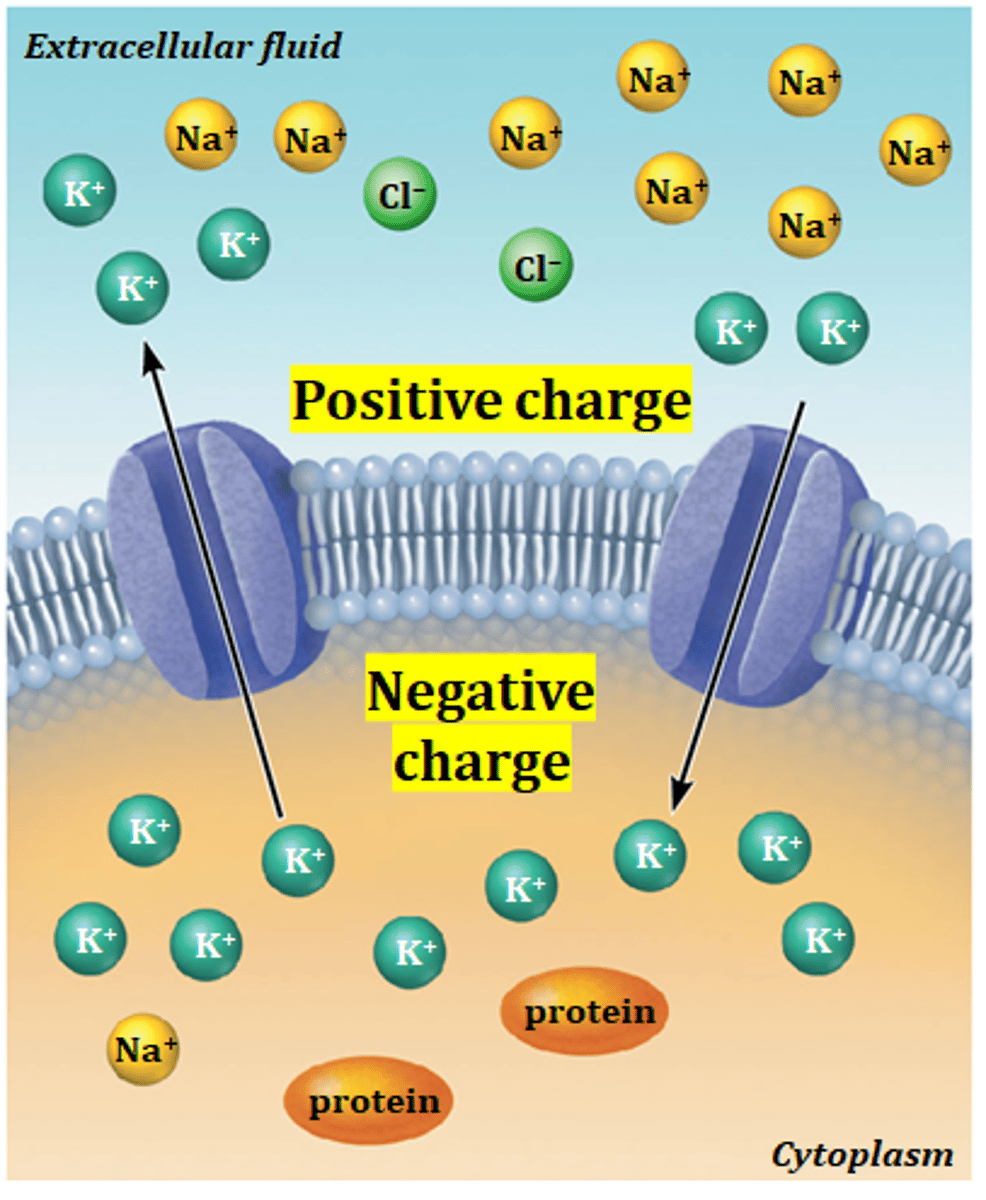
During depolarization the cell becomes ___________ polarized.
less polarized - less negative on the inside
During repolarization the cell returns to its ____________________.
resting membrane potential
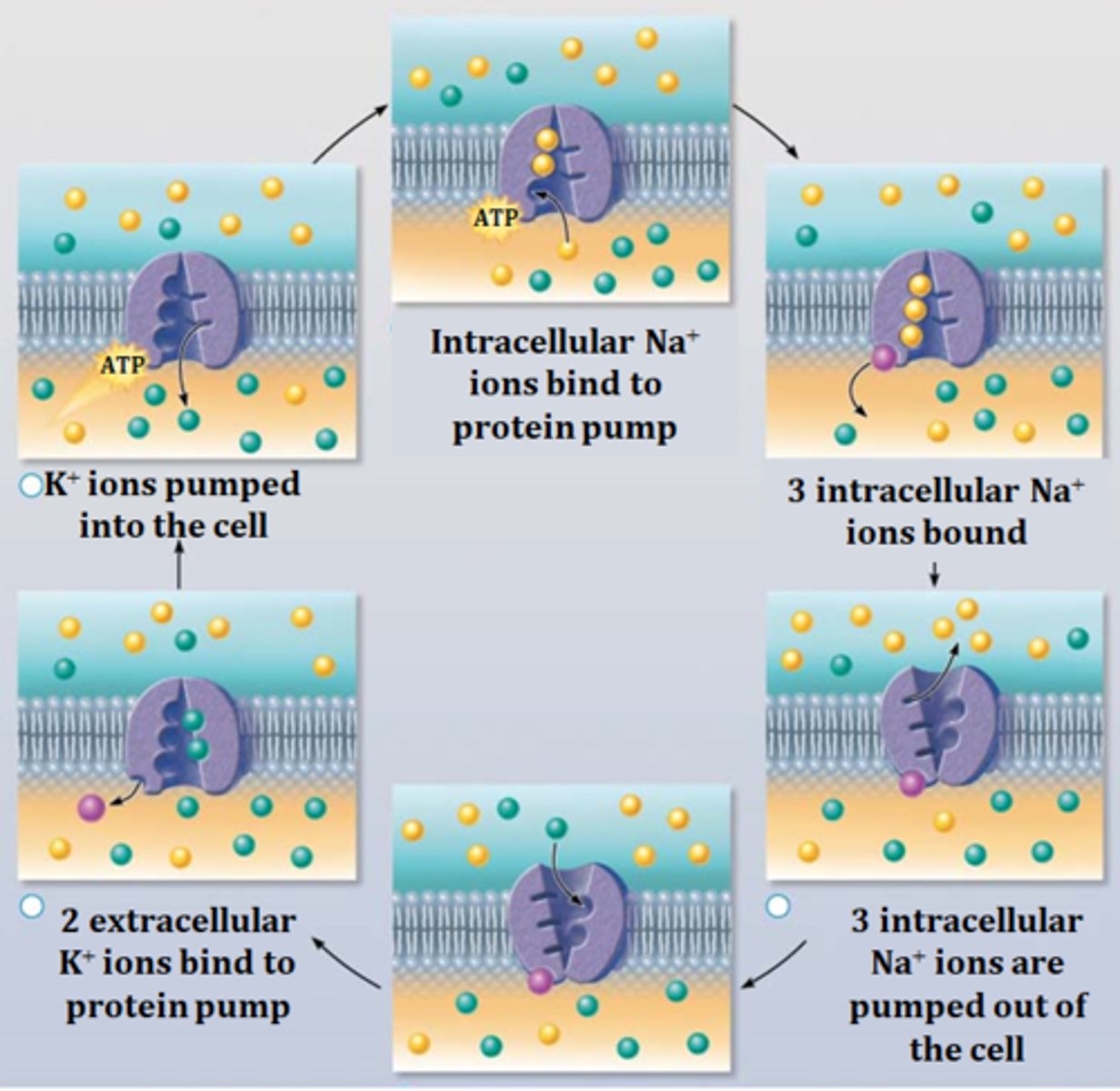
What is responsible for creating and maintaining the resting membrane potential?
sodium-potassium pump - pumps sodium (Na+) out and potassium (K+) in
What causes depolarization of the sarcolemma?
the influx (inward flow) of sodium (Na+) into the cell
List the events that occur at the neuromuscular junction.
1.Action potential arrives at the axon terminal
2.Voltage-gated calcium (Ca2+) channels open
3.Calcium (Ca2+) enters motor neuron
4.Acetylcholine (ACh) is stimulated to be released into synaptic cleft
5.ACh diffuse and binds to ACh receptors on sarcolemma
6.ACh binding open sodium (Na+) chemical gates allowing sodium (Na+) to enter the muscle cell causing an end plate potential
7.Acetylcholinesterase (enzyme) degrades ACh
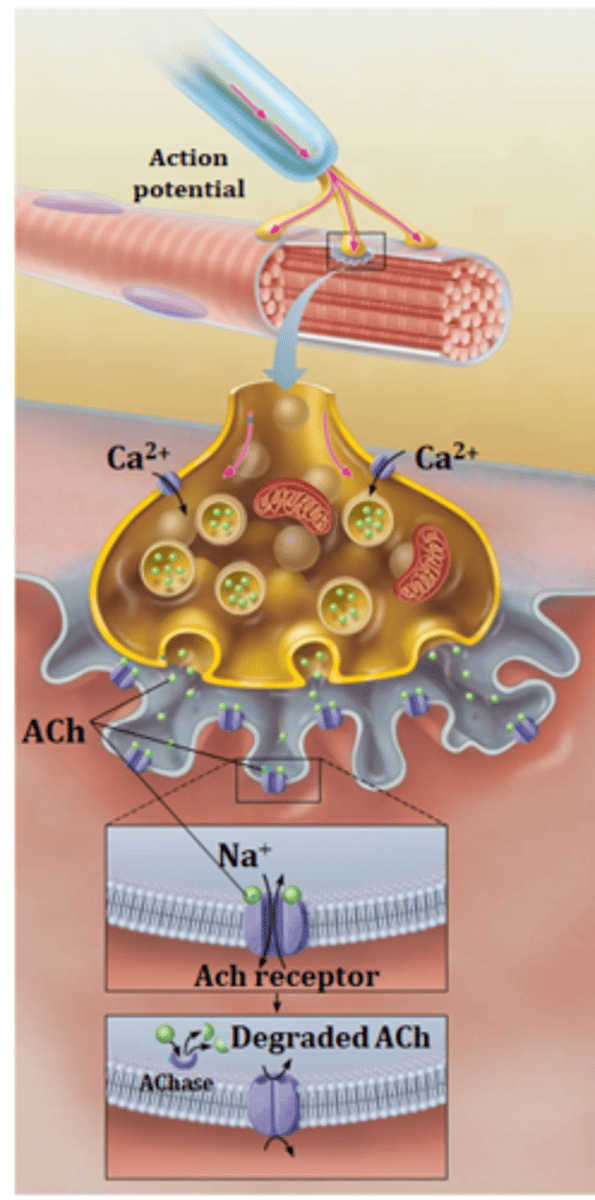
Explain excitation-contraction coupling
•Events that transmit action potentials (excitation) are coupled with sliding of myofilaments (contraction)
•Action potentials spread along the sarcolemma and down T tubules opening voltage-sensitive calcium (Ca2+ ) channels
•Ca2+ are released from the terminal cisterns of the sarcoplasmic reticulum, initiating contraction
Calcium released from the sarcoplasmic reticulum binds to...
troponin
When calcium binds to troponin it moves _______________________ away from myosin binding sites on actin.
tropomyosin
4 steps of cross bridge cycle
1. cross-bridge formation
2. power stroke
3. cross-bridge detachment
4. relaxation/cocking of myosin head
A cross bridge is formed when
myosin heads attach to actin binding sites
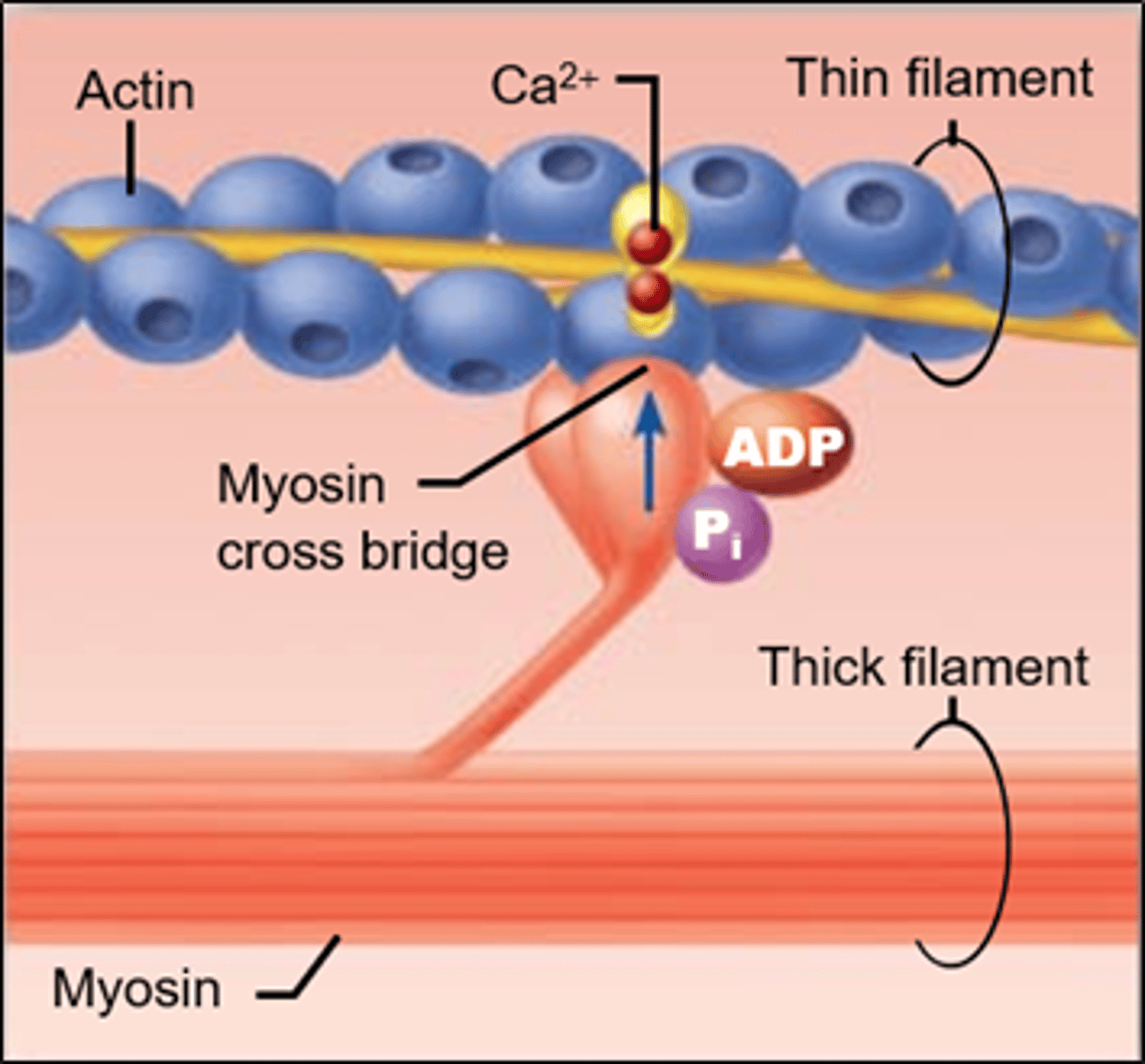
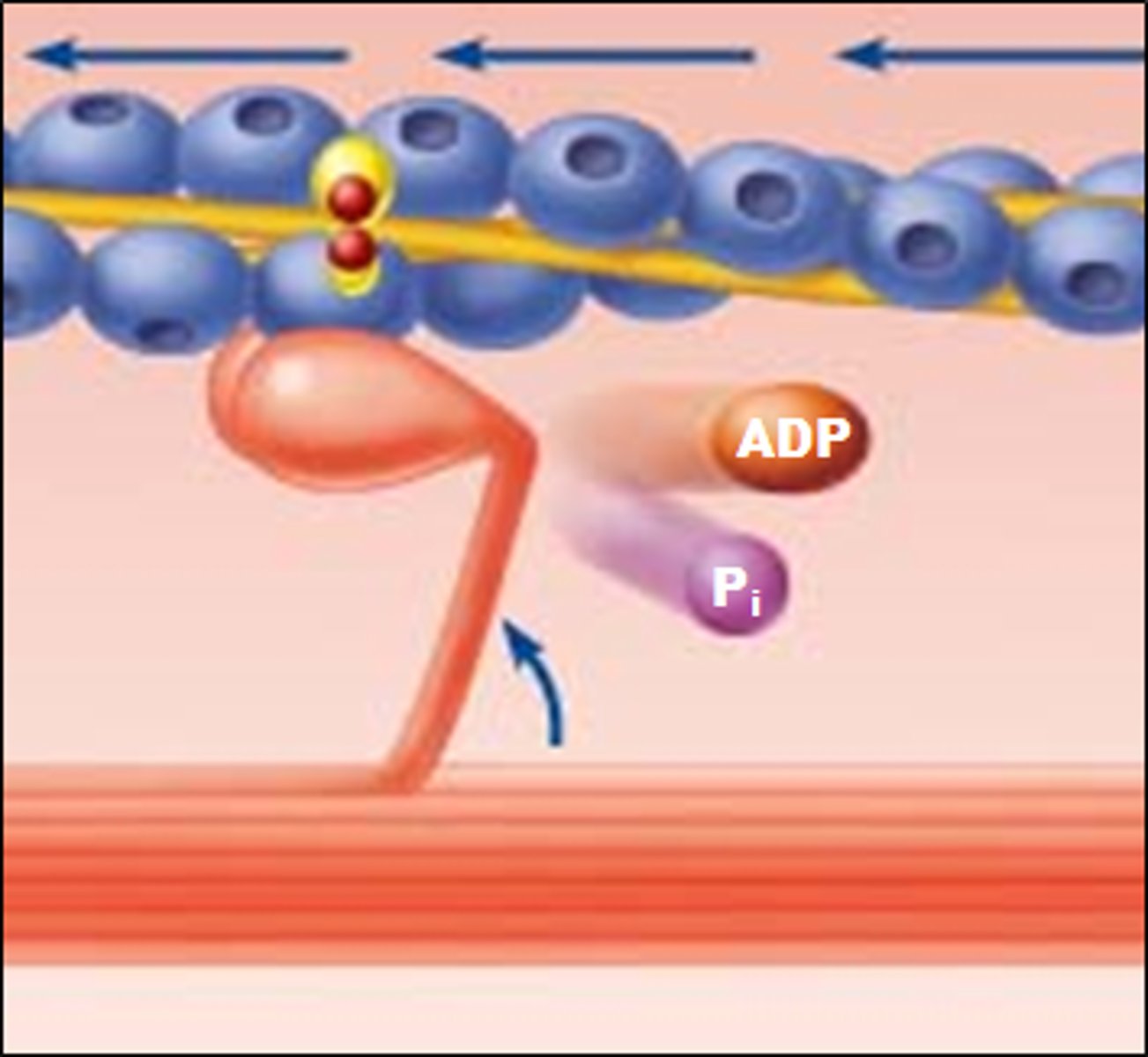
What occurs during a powerstroke?
myosin heads pivot and pull actin filament toward the center of the sarcomere.
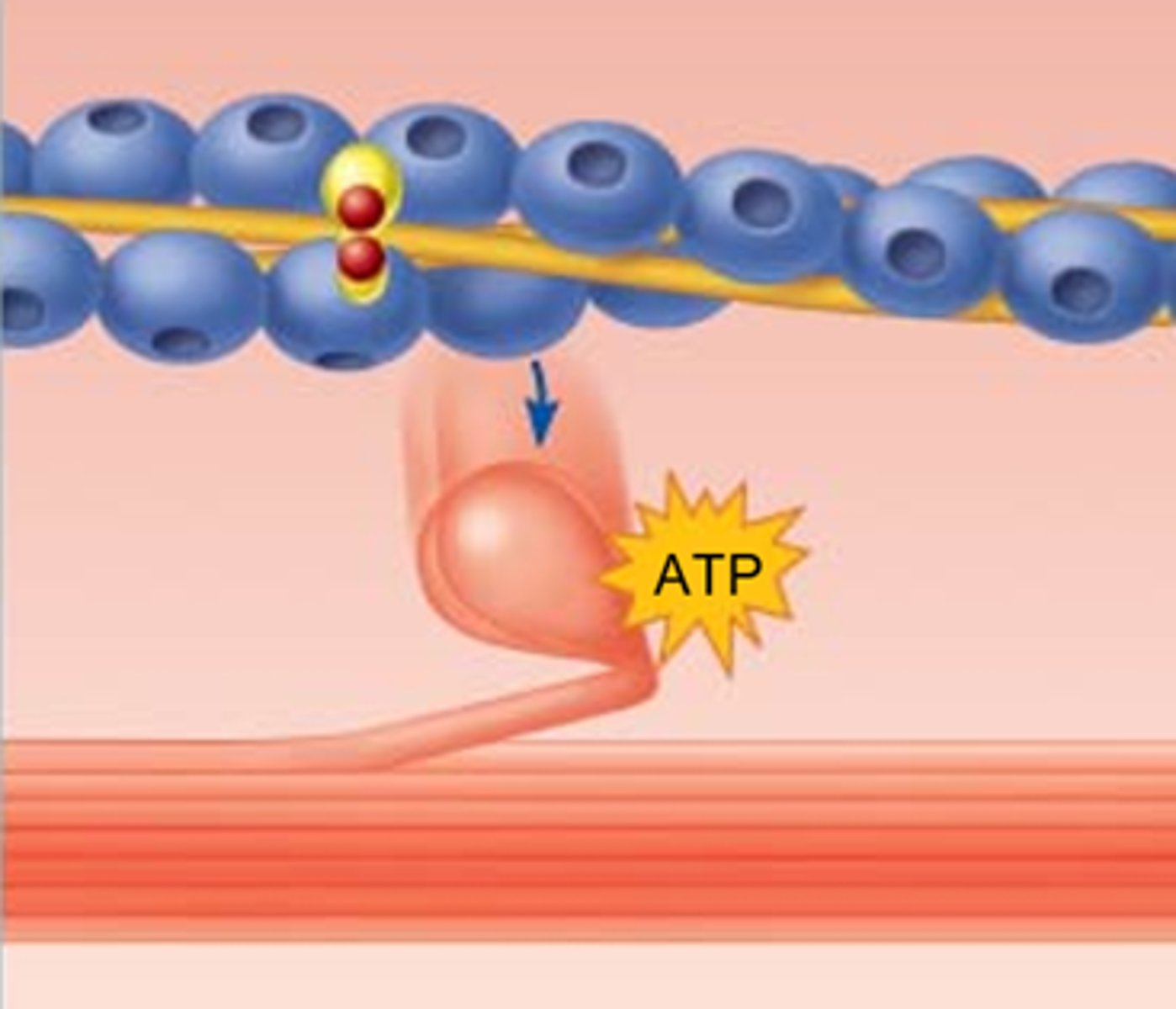
Cross bridge detachment is caused by ________ binding to the myosin head.
ATP
During repolarization ________ rapidly leaves the cell.
K+ potassium
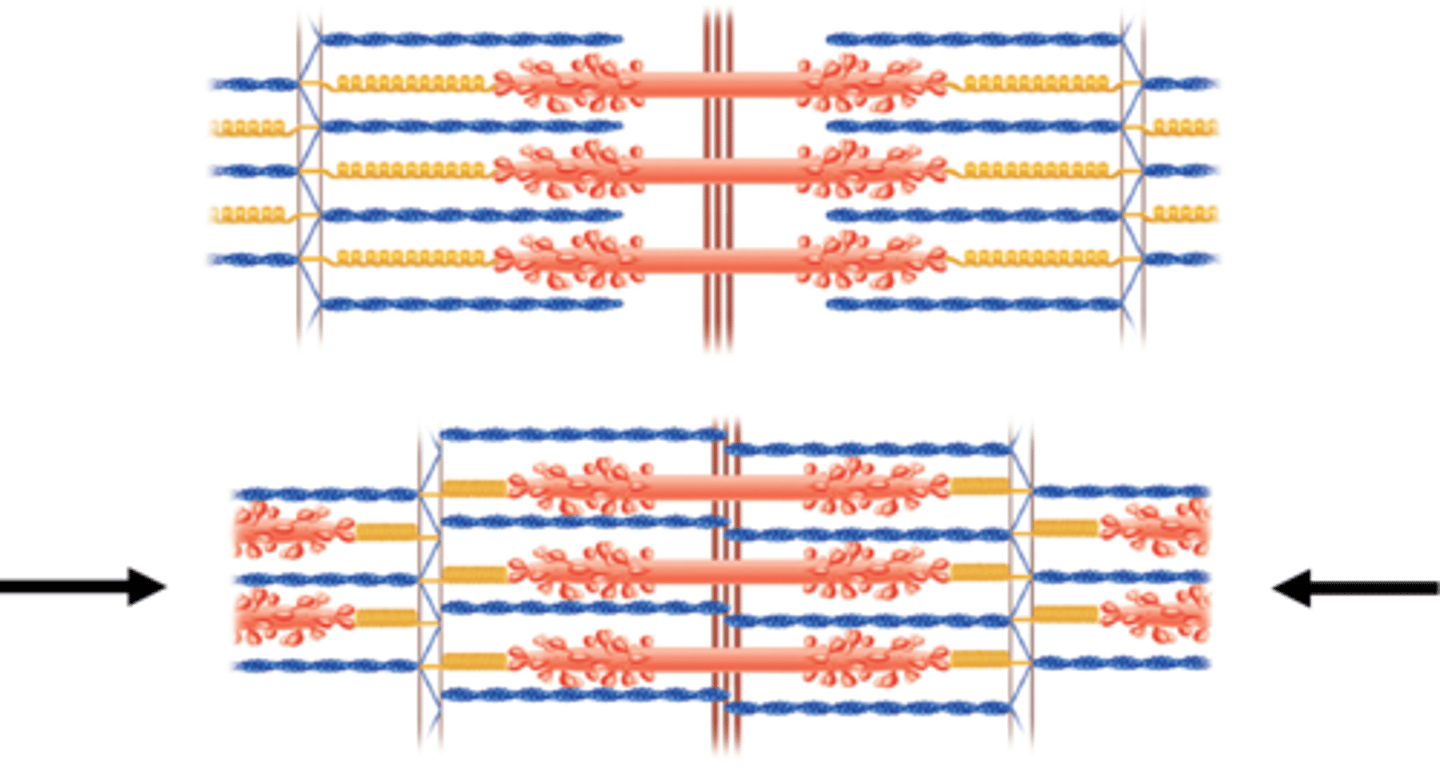
The sliding filament theory states that the shortening of a sarcomere is actually due to....?
shortening of the sarcomere is due to the overlapping of actin and myosin and NOT the shortening of the filaments.
The constant slight contraction of muscles is called?
muscle tone
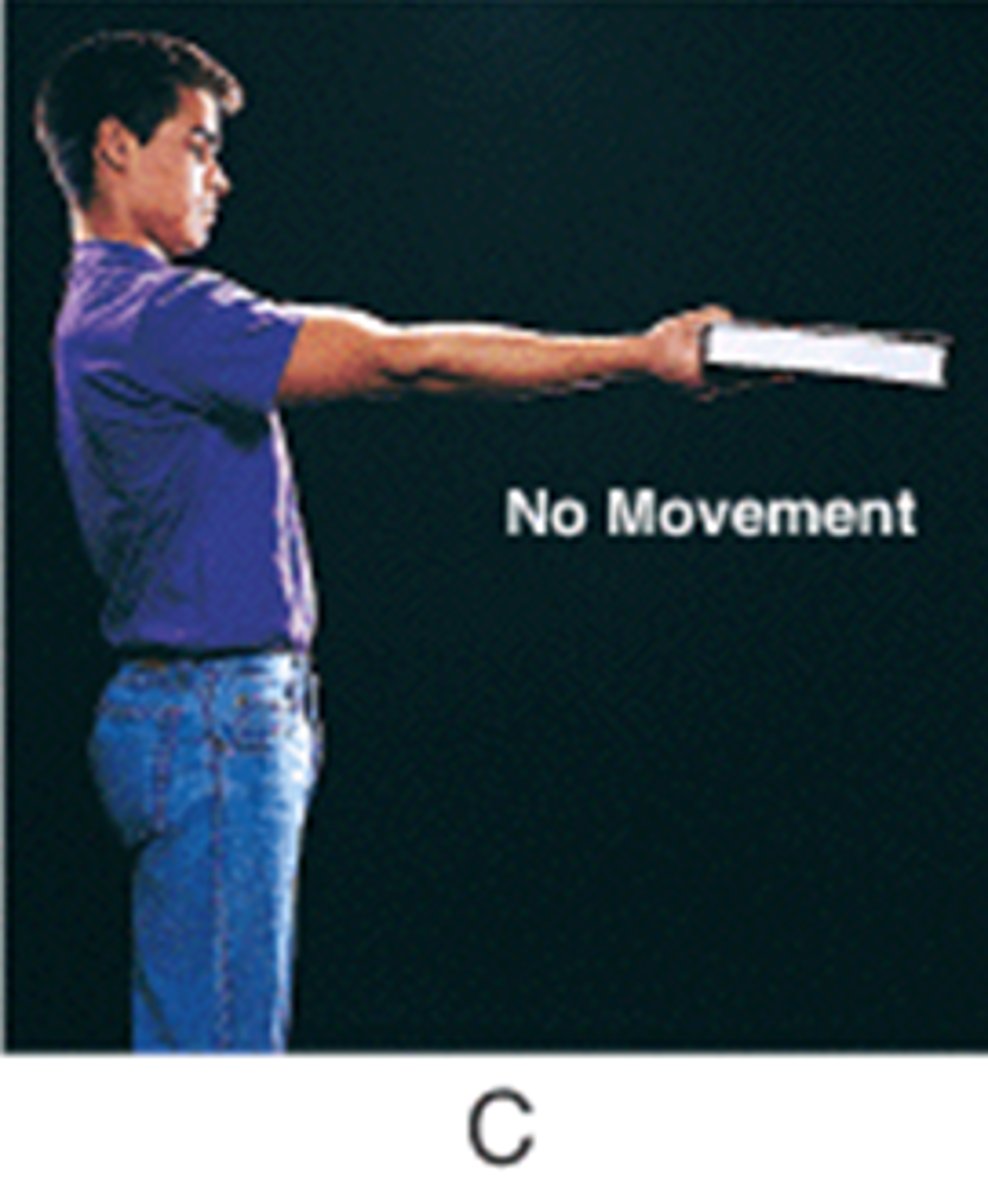
A(n) _____________is a contraction in which the muscle does not shorten, but tension in the muscle is increasing.
isometric contraction; iso=same, metric= measurement, isometric= same measurement
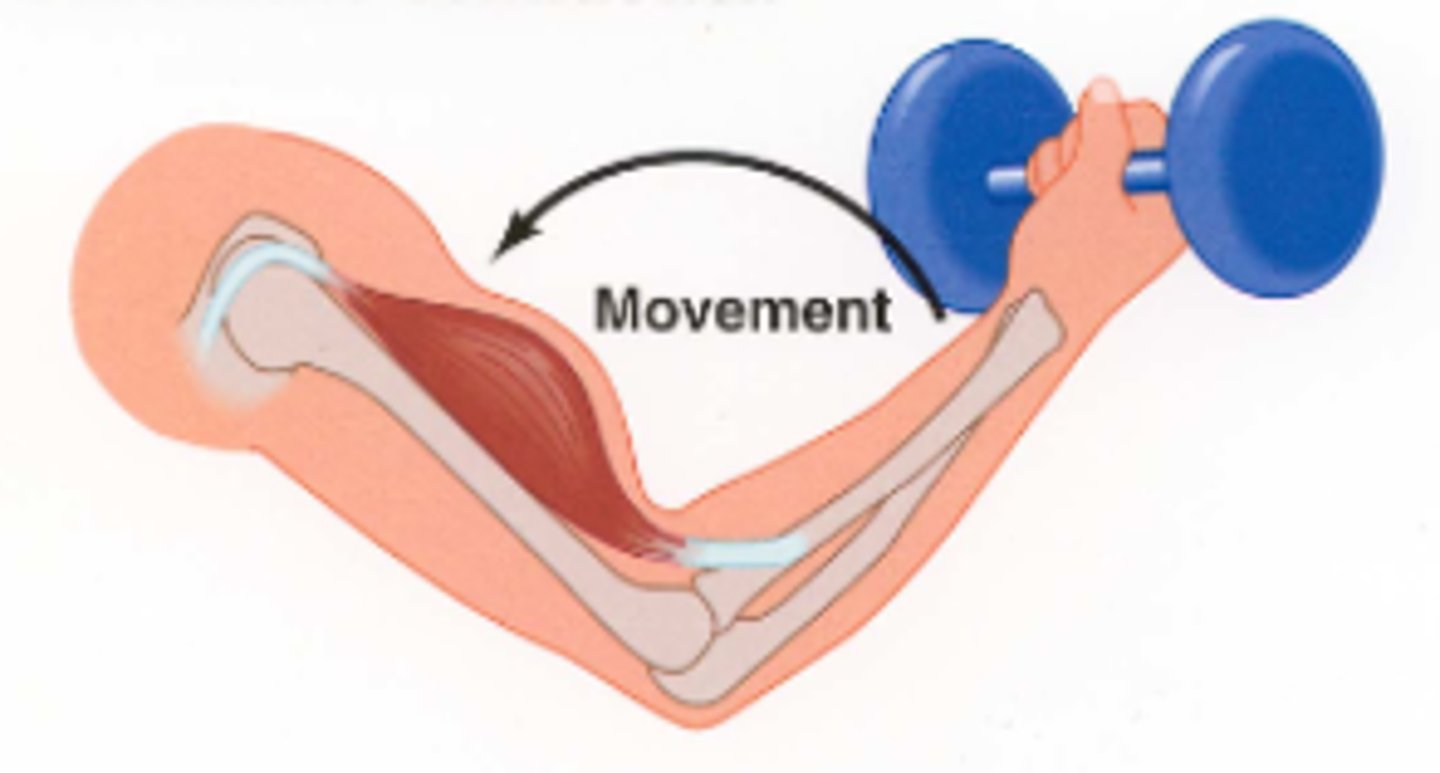
A(n) _____________ is a contraction in which the muscle shortens and work is done.
concentric contraction - lifting and curling a dumbbell
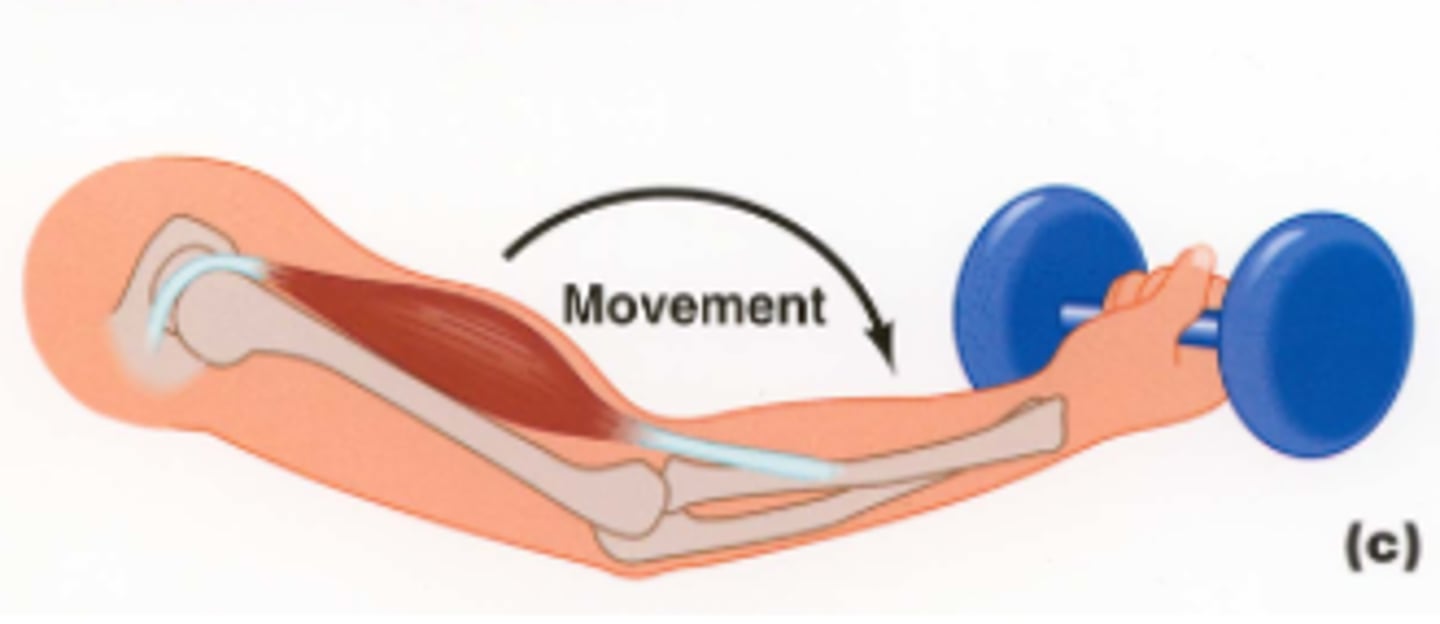
A(n) _____________ is a contraction in which the muscle contracts but lengthens.
eccentric contraction - lowering a dumbbell after curling
What is a muscle twitch?
the response of 1 muscle cell to 1 action potential
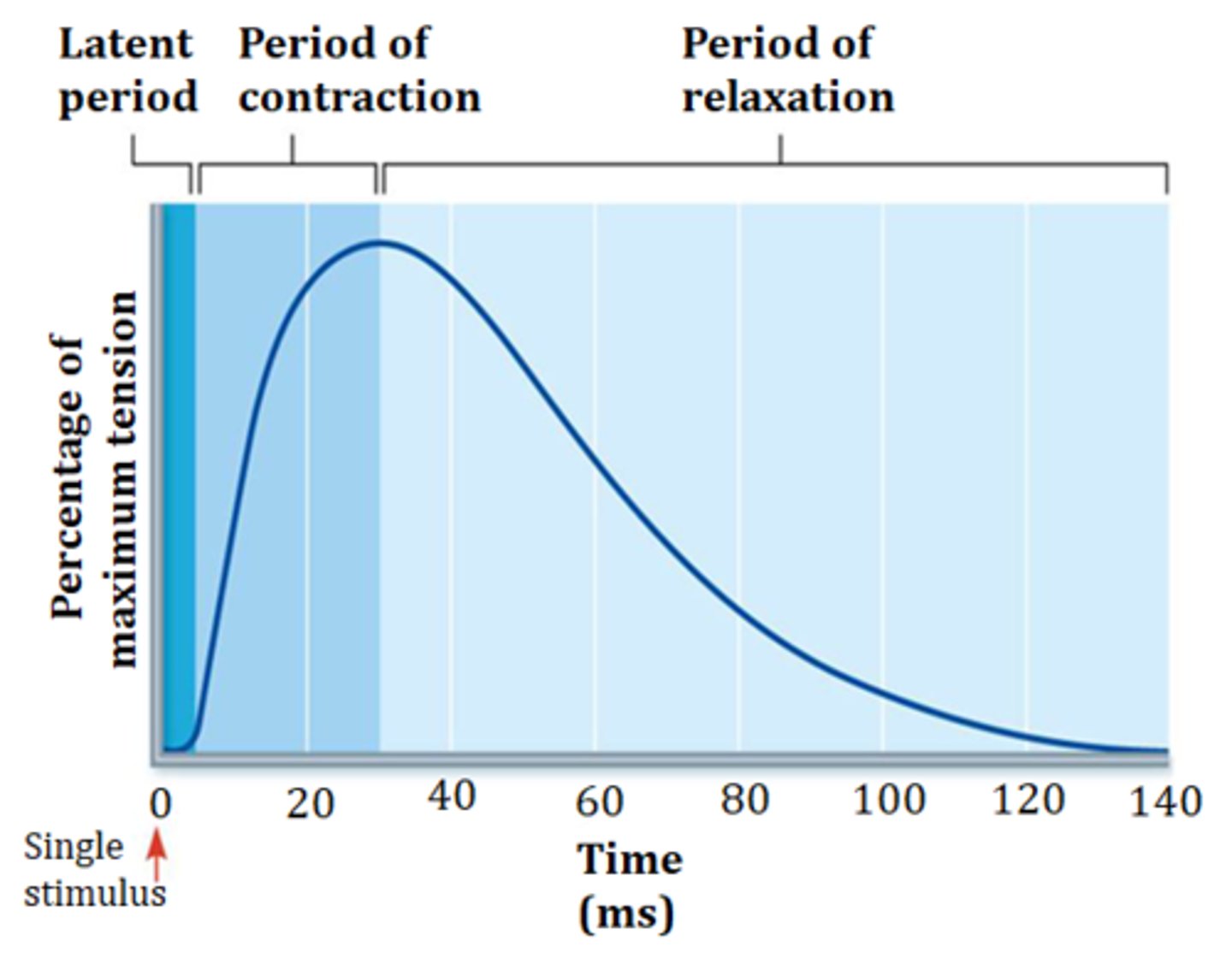
Describe the latent period of a muscle twitch.
few milliseconds delay between electrical stimulation and excitation-contraction coupling
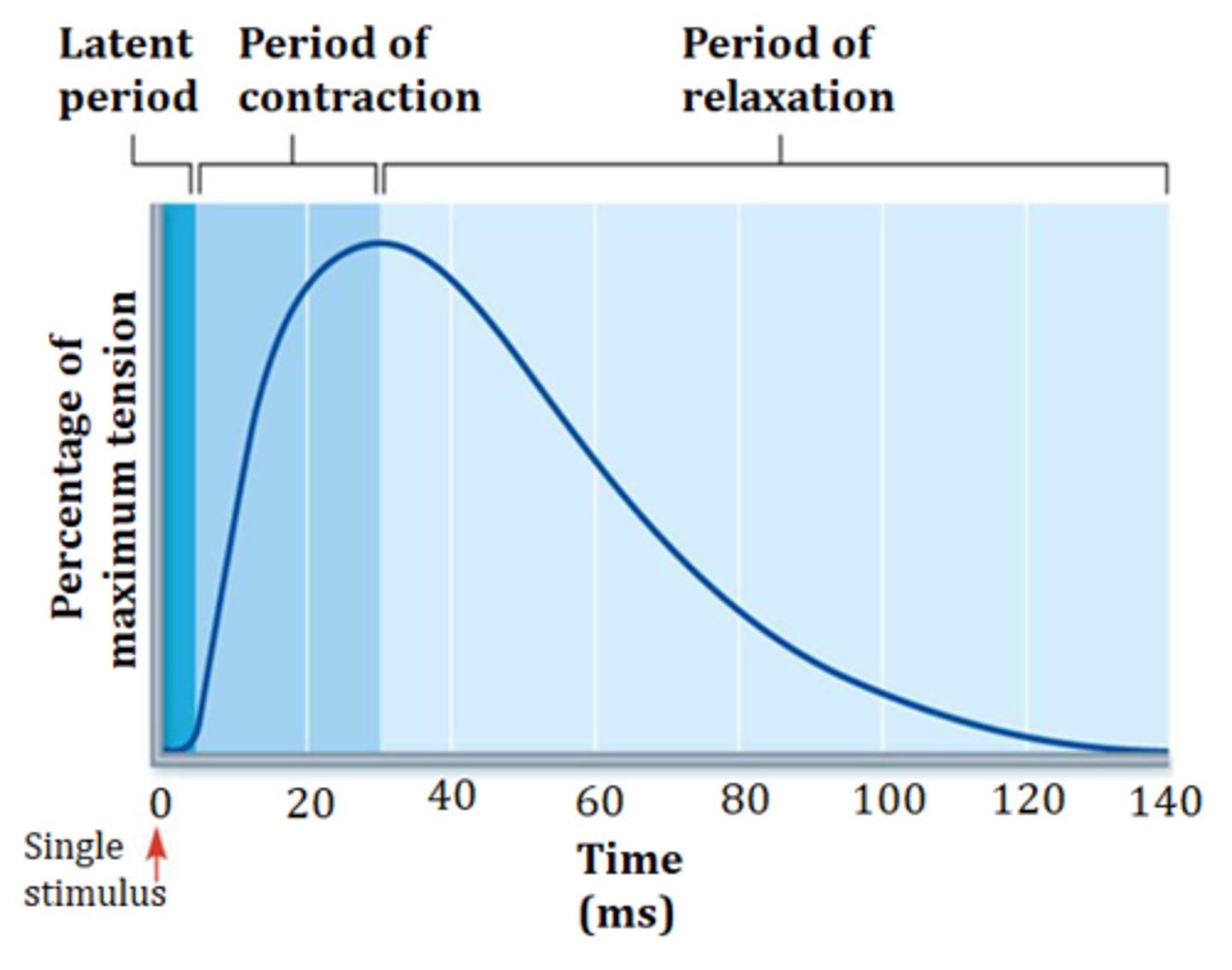
What occurs during the period of contraction of a muscle twitch?
cross bridge between myosin and actin forms and the muscle shortens
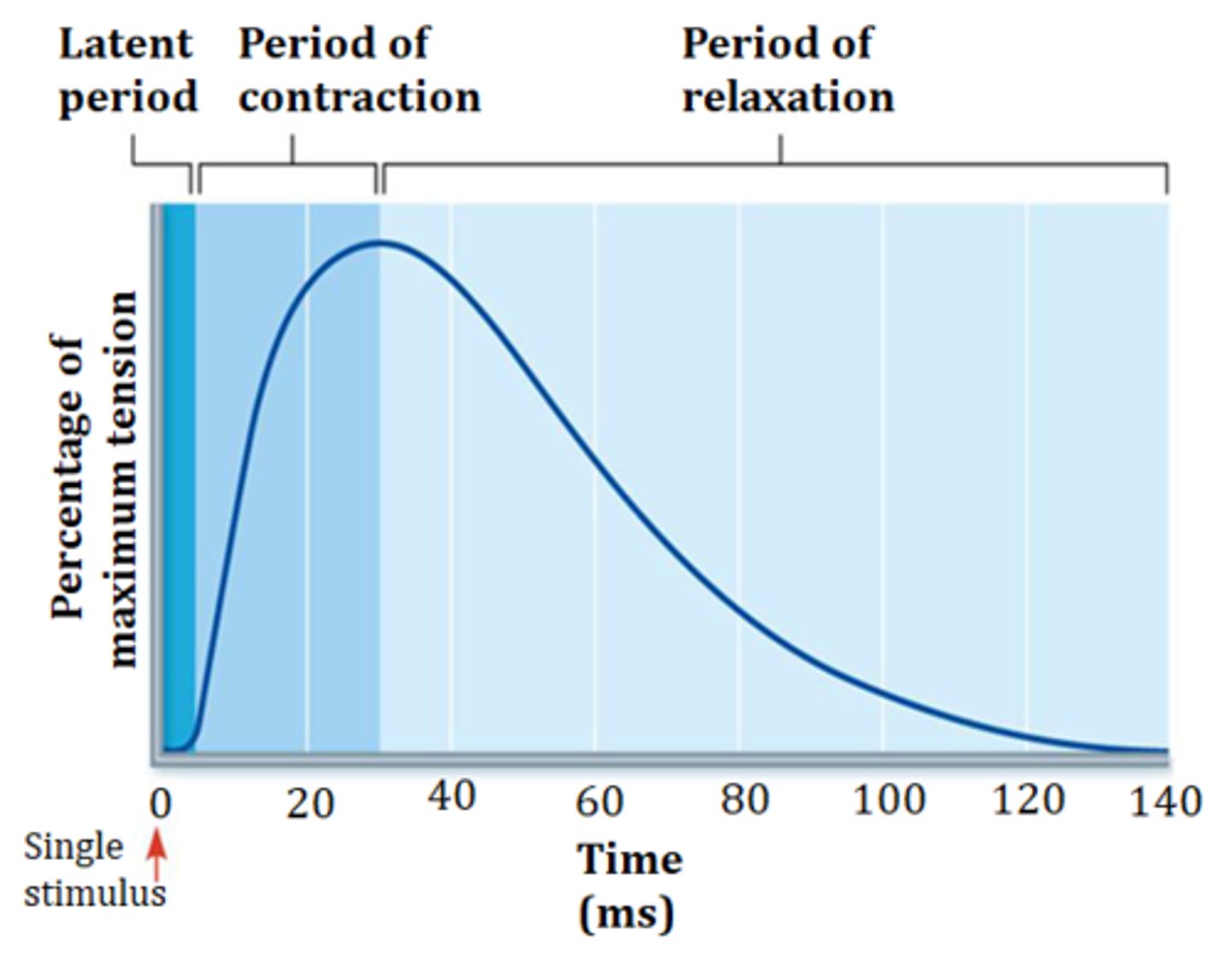
What occurs during the period of relaxation of a muscle twitch?
calcium is reabsorbed back into the sarcoplasmic reticulum and the muscle goes back to its resting state
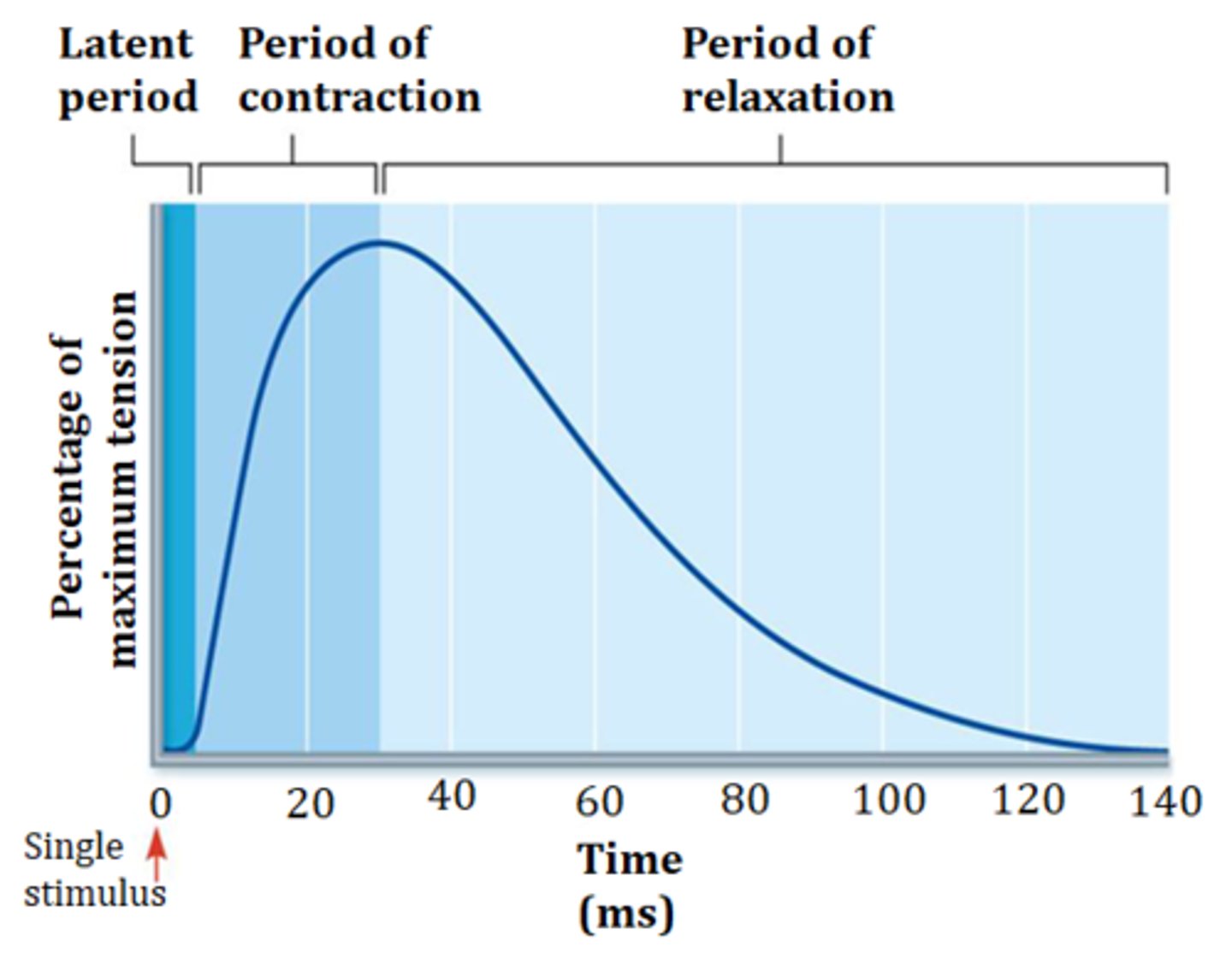
What are factors that affect twitch strength?
frequency and strength of stimulation
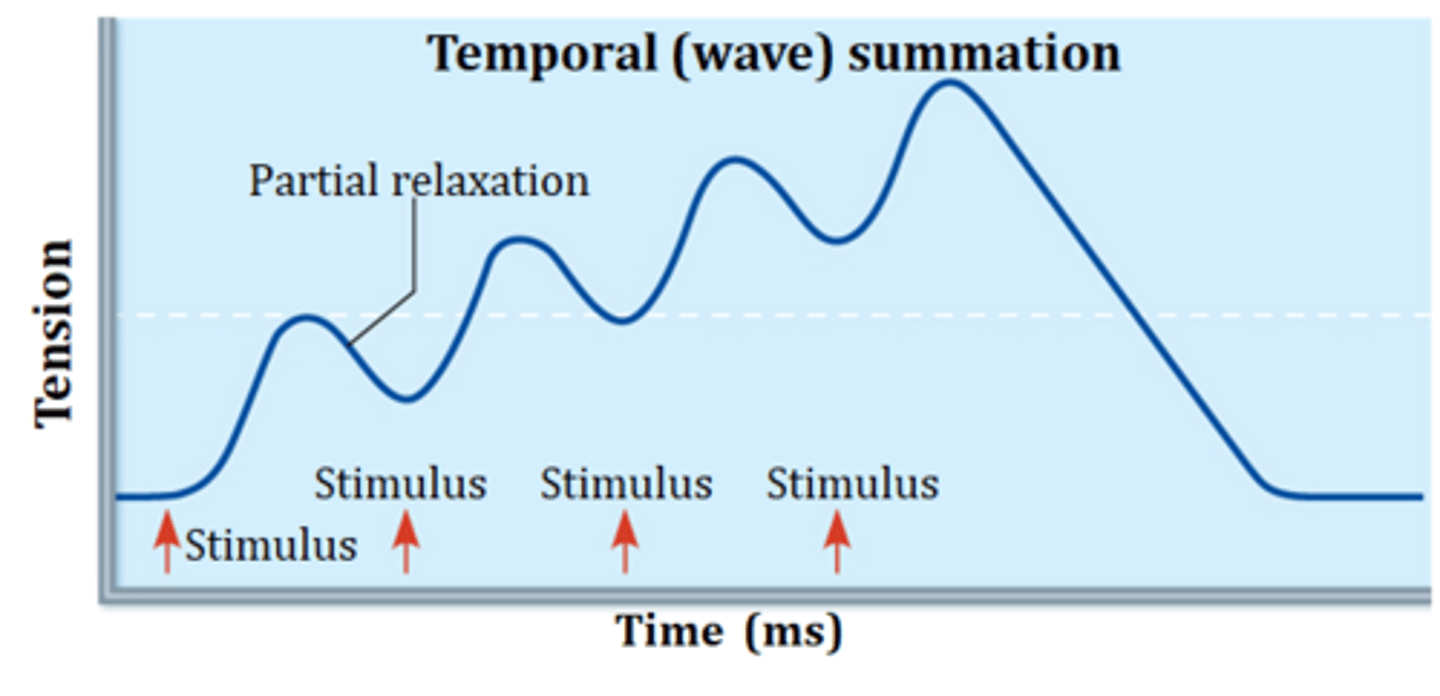
__________ summation results in stronger contractions at the same stimulus strength because the muscle does no have time to completely relax between successive stimuli.
temporal (wave)
_________ molecules are the only source used directly for contractile activity of muscles.
ATP
After ATP stores are consumed, ________________ donates a phosphate to convert ADP (adenosine diphosphate = 2 phosphates) to ATP (adenosine triphosphate = 3 phosphates).
creatine phosphate
What type of ATP pathway does NOT involve oxygen?
anaerobic pathways - used for short-term energy needs - produces enough ATP for about 30-40 seconds
Glycolysis splits glucose into...
2 pyruvic acid molecules
Glycolysis provides a cell with a net gain of how many ATP molecules?
2
What's the end product of anaerobic pathways?
lactic acid
Long term/prolonged energy needs require what type of ATP pathway?
aerobic respiration - requires oxygen
Aerobic respiration takes place in what organelle?
mitochondria
Aerobic respiration yields a net gain of how many ATP per glucose molecule?
32
Differentiate between muscle hypertrophy and atrophy.
hypertrophy = enlargement of muscle cell
atrophy = reduction of muscle cell size
True or false: when we exercise and lift weights we gain more muscle cells.
FALSE - muscle cells just enlarge
Slow oxidative fibers are...
fatigue resistant - used for most activities of daily life - walking, maintaining posture; red in color
Fast glycolytic fibers...
fatigue easily - used for very short intense bursts of energy; white in color
List the important characteristics of cardiac muscle.
found in the heart - short, branched uni-nucleated cells that are striated, involuntary, intercalated discs between myocytes (cells), 25% of its volume is occupied by mitochondria, relies entirely on aerobic respiration, fatigue resistant
List the important characteristics of smooth muscle.
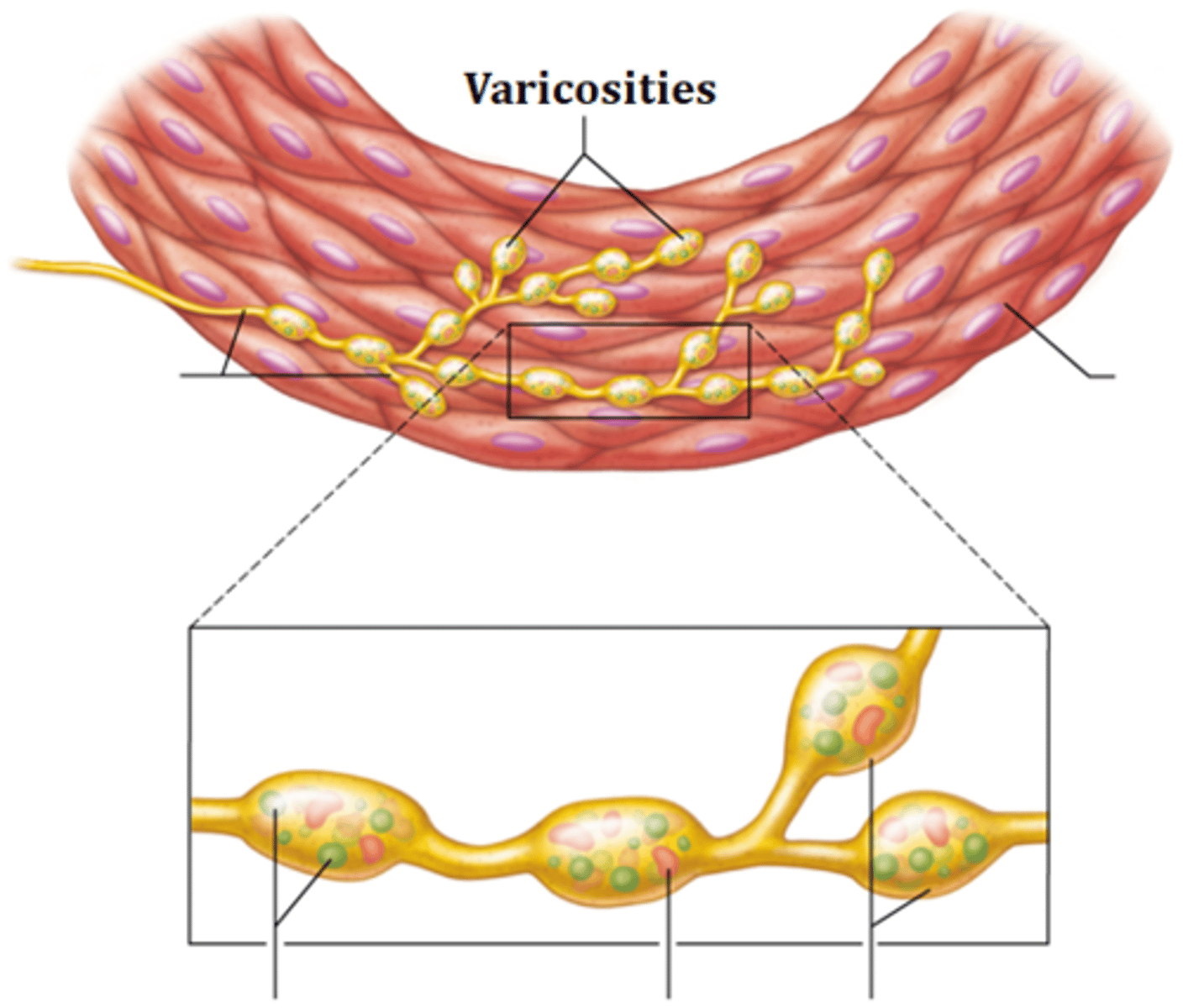
found in the walls of hollow visceral organs, tapered, non-striated, uni-nucleated cells; lacks neuromuscular junctions - innervated by varicosities that release neurotransmitters for communication; lacks troponin, calcium binds calmodulin instead
___________ are bulbous swellings that innervate smooth muscle.
varicosities
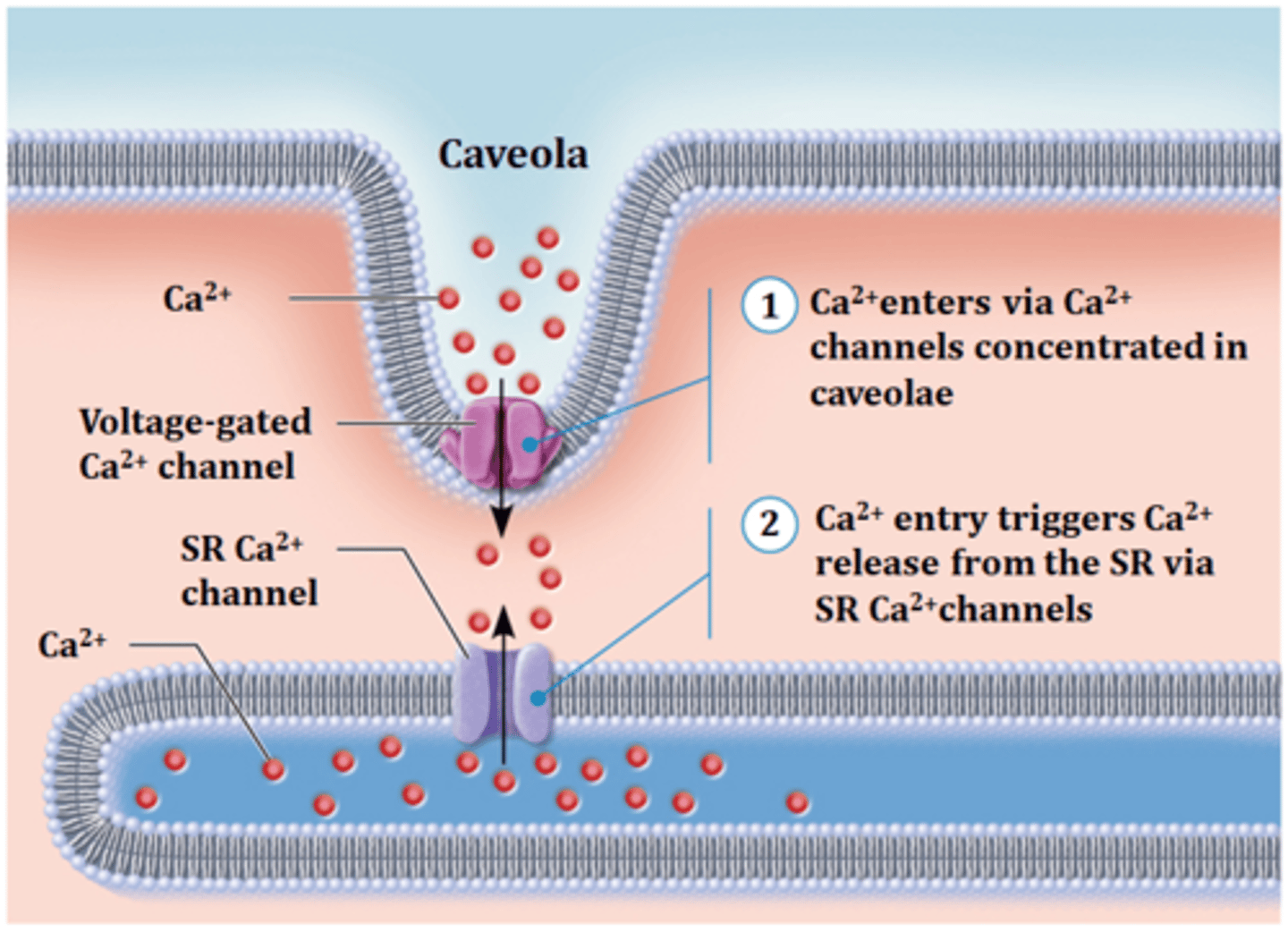
_______________ are infoldings of smooth muscles sarcolemma that contain a high density of calcium channels.
caveola
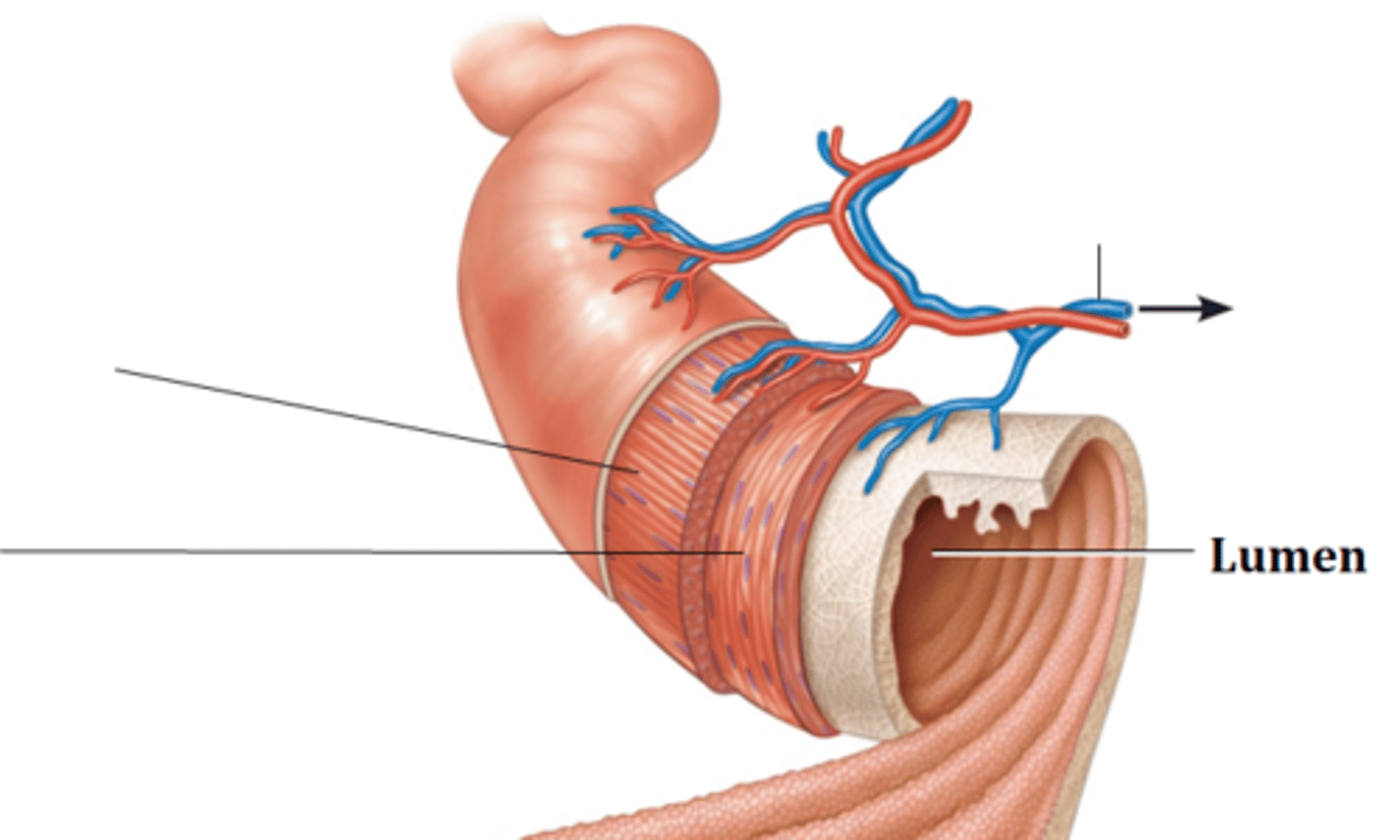
The tube of a hollow organ is referred to as the
lumen
In smooth muscle calcium binds to ___________to initiate contraction.
calmodulin
In smooth muscle, calmodulin activates myosin kinase which transfers a phosphate to ___________ activating it and initiating contraction.
myosin
Define peristalsis.
wave of contractions that occurs in smooth muscle
What structures meet at the neuromuscular junction?
An axon terminal and the sarcolemma
Interaction between actin and myosin filaments of the sarcomere are responsible for
muscle contraction
A type of muscle tissue that is both striated and involuntary
cardiac muscle
Sarcomeres are separated from each other by
Z discs
The function of calcium ions in skeletal muscle contraction is to
bind to troponin on the thin myofilaments so that the myosin binding sites on actin can be exposed
Skeletal muscle fibers differ from typical cells In that these muscle fibers
Have many nuclei