ORDMV Manual
 Call Kai
 Learn
Learn Practice Test
 Spaced Repetition
 Match
Match Flashcards
 Knowt Play
1/192

There's no tags or description
Looks like no tags are added yet.
Name | Mastery | Learn | Test | Matching | Spaced | Call with Kai | Chat |
|---|
No analytics yet
Send a link to your students to track their progress
193 Terms
How many questions are on Oregon’s Class C knowledge test?
35 multiple-choice questions.
How many questions must you answer correctly to pass Oregon’s Class C knowledge test?
28 of 35 questions.
What must you do when a police officer or road worker directs traffic differently from signs or signals?
Follow the officer or road worker’s directions.
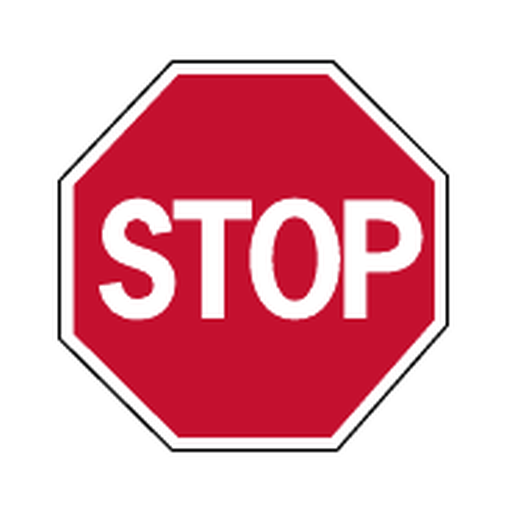
What does this sign mean?
Stop sign. Come to a complete stop and yield before proceeding when safe.
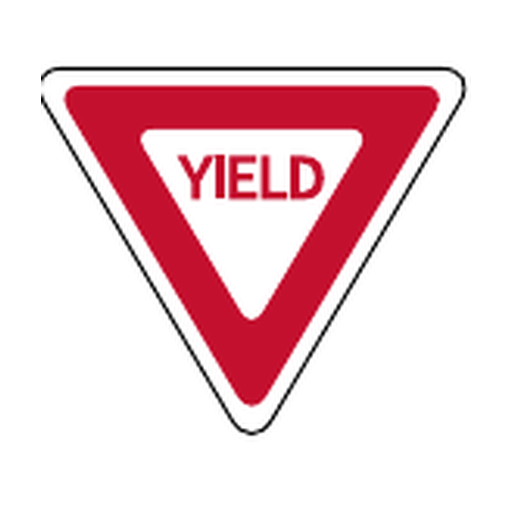
What does this sign mean?
Yield sign. Slow down and give the right of way; stop if necessary.
What do red-and-white regulatory signs generally tell you?
They prohibit certain actions or movements are red in color and increase safety by controlling the flow of traffic through intersections.

What do rectangular black-and-white regulatory signs generally tell you?
They tell you what to do. They are posted at or near where the requirement applies.

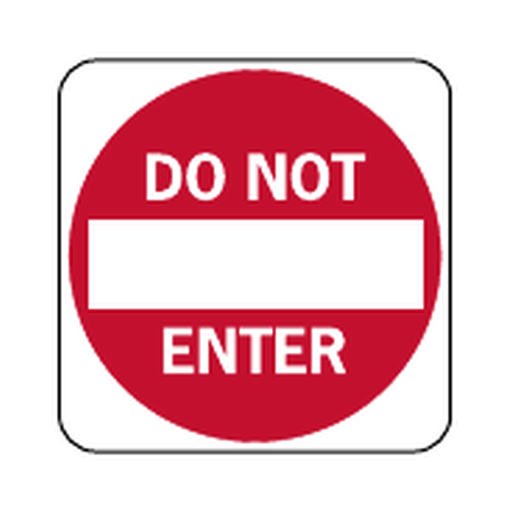
What does a DO NOT ENTER sign mean?
Do not enter that road or freeway.

What does a WRONG WAY sign mean?
You are traveling against traffic and must correct direction safely.

What does a red circle with a slash mean?
The action shown is prohibited.


What does a KEEP RIGHT sign mean?
Keep to the right of the island, median, or obstruction.

What does a CENTER LANE TURN ONLY sign mean?
The center lane is shared by both directions for left turns only.

What does a RIGHT TURN PERMITTED WITHOUT STOPPING sign mean?
Right-turning traffic may turn without stopping but must yield; other traffic must stop.

What does a NO TURN ON RED sign require?
Wait for a green signal before turning.

What does an HOV sign indicate?
The lane is reserved during posted times for vehicles carrying the stated minimum number of people.
What color are most warning signs?
Yellow.
What should you do when you see a warning sign?
Look for the hazard or changed condition and adjust your driving.

What does a pedestrian crossing warning sign mean?
Watch for pedestrians crossing or about to cross.
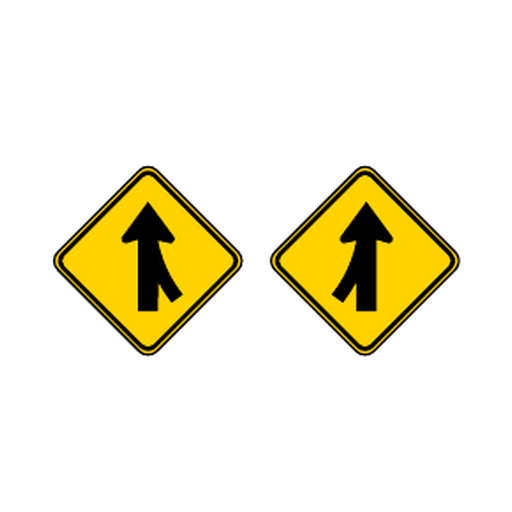
What does a merge sign mean?
Traffic is entering from the side; adjust speed and position to merge safely.
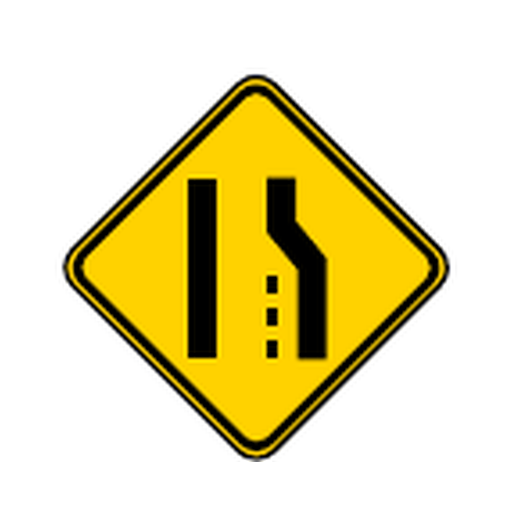
What does a lane reduction sign mean?
A lane ends ahead and traffic in that lane must merge.

What does a divided highway begins sign mean?
A median or barrier will separate opposing traffic; keep right.
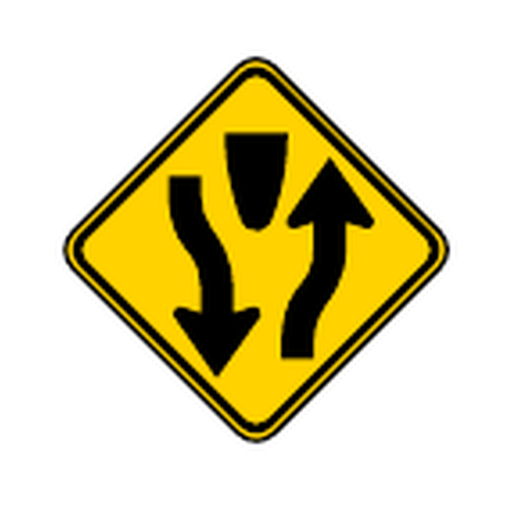
What does a divided highway ends sign mean?
Opposing traffic will no longer be separated by a median or barrier.

What does a signal ahead sign mean?
A traffic signal is ahead; slow down and be ready to stop.

What does a reduced speed limit ahead sign mean?
Prepare to slow to the lower posted speed.

What does a railroad advance sign mean?
A railroad crossing is ahead; look, listen, slow down, and be ready to stop.
What color are guide and information signs?
Green.

What color are motorist service signs?
Blue.

What should you do when a traffic signal is completely dark?
Stop as though the intersection has stop signs in every direction.

What does a flashing red signal mean?
Stop completely, then proceed when safe.

What does a flashing yellow signal mean?
Slow down and proceed with caution.

What does a steady yellow signal mean?
The signal is changing to red; stop if you can do so safely.

What does a steady red signal mean?
Stop and remain stopped until allowed to proceed, except for allowed turns on red.
When may you turn right on red?
After a complete stop and yielding to traffic and pedestrians, unless a sign prohibits it.
You are allowed to make the following turns on red after coming to a complete stop unless a sign or police officer states otherwise.
When entering a two-way road, you may turn right.
When entering a one-way road, you may turn right or left in the direction of the one-way road.

What does a green arrow mean?
You may move in the arrow’s direction after yielding to pedestrians and any traffic still in the intersection.

What does a steady green light allow?
Proceed straight or turn unless prohibited, while yielding as required.
Where must you normally drive on a two-way road?
On the right side.
What must drivers do on a road with no center line?
Give at least half the road to oncoming traffic.
What does yielding mean?
Slow down or stop so another vehicle or pedestrian can continue safely.
What must you do before entering a road from an alley, driveway, or parking lot?
Stop, then yield to approaching vehicles and pedestrians.
What is the Oregon speed limit in alleys unless posted otherwise?
15 mph.
What is the Oregon speed limit in narrow residential areas unless posted otherwise?
15 mph.
What is the Oregon speed limit in a business district unless posted otherwise?
20 mph.
What is the Oregon speed limit in a school speed zone?
20 mph when the sign’s stated condition applies.
What is the Oregon speed limit in residential districts unless posted otherwise?
25 mph.
What is the Oregon speed limit in public parks unless posted otherwise?
25 mph.
What is the Oregon speed limit on ocean shores where vehicles are permitted?
25 mph unless posted otherwise.
What is the Oregon speed limit on roads not covered by another definition?
55 mph unless posted otherwise.
What is Oregon’s Basic Rule?
Drive at a reasonable and cautious speed for existing conditions, never above the speed limit.
Can you violate the Basic Rule while driving below the posted limit?
Yes. A speed unsafe for conditions violates the Basic Rule.
Where should a driver traveling slower than normal traffic drive?
In the right lane or as close as practical to the right edge, unless preparing to turn left.
Is racing legal on an Oregon road?
No. Acceleration contests, speed contests, and attempts to set speed records are illegal.

What do yellow pavement markings separate?
Traffic moving in opposite directions and the left edge of one-way roads or ramps.
What do white pavement markings separate?
Lanes of traffic moving in the same direction.

What does a broken yellow line on your side mean?
You may pass when the way is clear and it is safe.
What does a solid yellow line on your side mean?
Do not cross the center line to pass.

What do double solid yellow lines mean?
Passing is prohibited in both directions.
May you turn across double solid yellow lines?
Yes, when making a permitted left turn and it is safe, unless markings prohibit crossing.

How should you use a two-way special left-turn lane?
Enter shortly before a left turn and wait there for traffic to clear; do not travel in it.

May you use a painted median as a turn lane?
No.

What do diagonal yellow stripes in a median mean?
Vehicle use is prohibited; do not drive or turn across them.

What does a broken white line mean?
Lane changes are permitted when safe.

What does a solid white line mean?
Lane changes are discouraged; cross only when necessary and safe.
What do double solid white lines mean?
Lane changes are prohibited for the marked distance.


What does a stop line show?
The point where you must stop.
What is Oregon’s recommended safe following distance?
2 to 4 seconds.
What following distance is recommended above 30 mph?
At least 4 seconds.
When should you increase following distance?
In poor weather, darkness, slippery conditions, heavy traffic, behind large vehicles, or when towing.
How should you check your following distance?
Count the seconds from when the vehicle ahead passes a fixed point until you reach it.
What should you do if someone is tailgating you?
Increase space ahead, keep a steady speed, and let the driver pass when safe; do not brake hard.
What is the safest way to back up?
Turn and look through the rear window while checking all sides; do not rely only on mirrors.
What three factors make up total stopping distance?
Perception distance, reaction distance, and braking distance.
Can you exceed the speed limit while passing?
No.
When should you not cross the center line to pass?
Where signs or markings prohibit it or your view of oncoming traffic is limited.
When may you pass another vehicle on the right?
When it is turning left and you can stay on the pavement outside a bike lane, or on a road with two or more lanes in your direction.
What should you do when another vehicle is passing you?
Keep a steady speed and stay in your lane; do not speed up.
Who has the right of way when you enter a freeway?
Traffic already on the freeway.
How should you enter a freeway?
Use the acceleration lane, adjust to traffic speed, check mirrors and blind spots, and merge into a safe gap.
What should you do at a dark ramp meter?
Do not stop; proceed onto the ramp.
How many vehicles may proceed on each green ramp-meter signal?
One vehicle per lane.
What should you do if you miss a freeway exit?
Continue to the next exit; never stop or back up.
What should you do if your vehicle breaks down on a freeway?
Move as far right as possible, use hazard lights, and stay away from traffic.
When must you signal?
Before turning, changing lanes, exiting a roundabout, or pulling away from a curb.
How far before a turn or lane change should you signal?
At least 100 feet.
When are hand signals not sufficient?
At night or when people and vehicles cannot be clearly seen from 1,000 feet; use signal lights.
What is the general lane rule for turning?
Turn from the nearest lawful lane into the nearest lawful lane in the new direction.
May you change lanes while turning?
No. Complete the turn in the proper lane before changing lanes.
May you turn across a bicycle lane?
Yes, when making a legal turn, but first yield to bicycles and pedestrians.
May you turn left from a one-way road onto a one-way road at a red light?
Yes, after stopping and yielding, unless prohibited by a sign.
May you turn left onto a two-way road against a red light?
No.
Where are U-turns prohibited?
At signalized intersections, between intersections in a city, railroad crossings, limited-view locations, and wherever signs or markings prohibit them.
How much visibility is required for a U-turn within city limits?
Your vehicle must be visible from both directions for at least 500 feet.
How much visibility is required for a U-turn outside city limits?
Your vehicle must be visible from both directions for at least 1,000 feet.
Where do you stop at a stop sign or red signal?
Before the stop line or crosswalk; if neither exists, before entering the intersection.
Who yields at an uncontrolled intersection?
Yield to a vehicle already in the intersection and to a vehicle approaching from your right.
At an all-way stop, who should proceed first?
As a common courtesy, the driver who stopped first; when in doubt, yield to the driver on your right.
Who yields at a T-intersection?
The driver on the road that ends yields to traffic on the through road.
Who has priority when one driver turns left and another approaches from the opposite direction?
The left-turning driver yields to oncoming traffic.
Which direction does traffic move in an Oregon roundabout?
Counterclockwise.
Who has the right of way at a roundabout?
Traffic already inside and exiting the roundabout, plus pedestrians in the crosswalk.
Should you stop inside a roundabout for an approaching emergency vehicle?
No. Continue through, exit, then pull right and stop.