CAFS Module 2
 Call Kai
 Learn
Learn Practice Test
 Spaced Repetition
 Match
Match Flashcards
 Knowt Play
1/67

There's no tags or description
Looks like no tags are added yet.
Name | Mastery | Learn | Test | Matching | Spaced | Call with Kai | Chat |
|---|
No analytics yet
Send a link to your students to track their progress
68 Terms
types of groups
cultural
religious
other specific
sporting & leisure
study & work
family & friendship
describe cultural groups & give an example
Based on geographical location
Classification based on self-perceived group identification & sharing of social/cultural characteristics
Lead to groups accessing familiar support structures
E.g. Indigenous
describe the data from ABS census 2021 about cultural groups
Australians came from over:
3.2% Indigenous – up from 2.8% in 2016 & 2.5% in 2011
27.6% born overseas – up from 26% in 2016
describe religious groups
Formed around beliefs, traditions, values held by specific doctrine/faith
Different groups hold differing philosophies, but all share mission to promote spiritual growth & nurture individual & community
describe the ABS 2016 data about religious groups
Australian population religion:
52% Christianity, dropped to 44% in 2021
30% no religion
describe other specific groups & give examples
For wellbeing to be adequately addressed, these groups must be created
E.g.
Support groups for sole parents, bushfire victims
Volunteer groups (Red Cross, St Vincent de Paul)
Gangs & mobs
sporting & leisure groups & give examples
Long term or transitory
Purpose is to provide fun/interactive ways to get fit/healthy to address personal wellbeing
Members rely on each other for motivation
May be:
Age specific (e.g. Little Athletics)
Location specific (e.g. Surf Life Saving clubs)
Competitive (e.g. triathlon clubs)
Creative (e.g. scrapbooking, art, photography clubs)
describe study & work groups & give examples
When individuals feel connected, engaged, included in academic/active work, their degree of personal satisfaction & wellbeing heightens
E.g. study in pairs, service work
describe family & friendship groups
Family
Spend time & engage in activities together
Know each other well
High expectations amongst group
Based on kinship/ancestry, marriage, adoption
Most common
Friendship
More likely to disband after short time
Secondary group type
At times have stronger influence on us
reasons for group formation
culture
locality/geography
other
religion
gender
shared interest/common goal
security
sexuality
specific need
social interaction
describe the cultural reason for group formation & give examples
Opportunity to reflect & celebrate culture or traditional practices are major reasons for formation of groups
Provide social interaction based on shared beliefs
Leads to enhanced wellbeing
E.g. food festivals, cultural dances
describe the locality/geography reason for group formation & give examples
Formed due to living in specific area/region
Tight knit, survive many generations, share hardships
E.g.
Bushwalking group in Blue Mountain
Friendship group among retirees in caravan village
describe other reasons for group formation & give examples
Group involvement allow individuals to achieve self-actualisation & ultimately, self-transcendence (desire to connect to something beyond ego or help others find self-fullfillment)
E.g. volunteers in a group of impoverished regions, teaching English & establishing schools, may achieve self-transcendence
describe religious reasons for group formation & give examples
Australia has large multicultural immigration of which individuals belong to
Individuals & families seek spiritual fulfillment through worship
describe gender reasons for group formation
Gender identification begins when individuals are born
Also beginning of another social group
Despite governing bodies lobbying for equality, it remains the most common factor in formation of specific groups
Needs of LGBTQI often overlooked
describe shared interest/common goals reasons for group formation & give examples
Individuals seek out others with common goal, value, interest
E.g. interests in bike riding or cooking create group formation, weight loss groups
describe security reasons for group formation & give examples
Individuals form groups by living in close proximity to others to realise need for safety & security
Community health, emergency, welfare services enhance this need
E.g.
Minority groups access support to heighten sense of security
Cultural groups live close to others of same culture (e.g. Sudanese migrants in Blacktown)
describe sexuality reasons for group formation
LGBTQI orm groups in response to shared beliefs & experiences
Current legislation provides greater acknowledgement of the legal formation of such groups & discrimination against sexuality
describe group formation due to specific needs & give examples
Individuals have specific needs based on economic, physical, cultural, socioemotional, intellectual situations
E.g. communities & welfare groups provide opportunities for reformed alcoholics, gamblers, drug addicts
describe group formation for social interaction & give examples
Groups form to satisfy this need
Share common standards, goals, values, beliefs
Long term or transitory
E.g.
Football on weekend
Sharing responsibility of taking children to sport
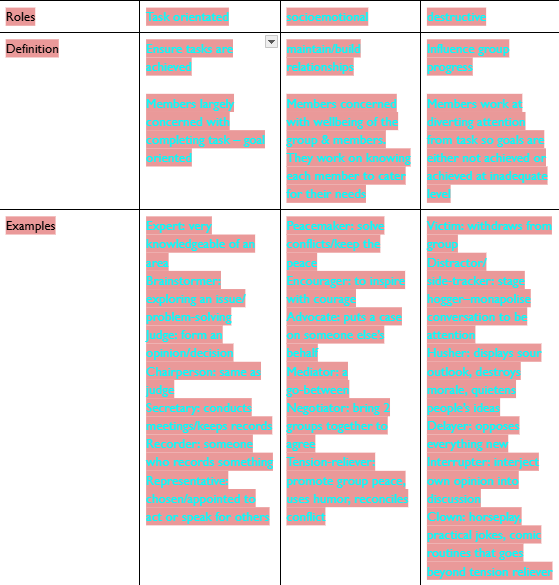
define specific roles individuals adopt in groups & give examples
norms, conformity & cohesiveness: define, describe, give examples
Norm: dictate actions of group members (different to group roles as roles differ members from each other)
Groups benefit from having mutually accepted norms as they bring regularity & control to relationships
All groups have formal/informal norms that develop from interaction between members
E.g. more organised groups (e.g. classes) have formal norms about absence, lateness, completion of work
define & describe conformity & give examples
Conformity: modification of individual behaviour resulting from group influences; actions in accordance with specified standards or authority
Conforming to group norms frequently improves group functioning & have positive impact on individual wellbeing
Members must conform to group norms to remain in group
E.g. when students conform to class norm of providing assistance to other students, both group & individuals benefit
define & describe cohesiveness
Cohesiveness: unity; state of sticking together or having consistency
More conformity in group = greater group cohesiveness
Attracts & motivates members
In highly cohesive groups members interact with/influence each other more effectively than less cohesive groups
Group performs better, achieves goals, which in turn leads to greater cohesion
Highly cohesive groups may make bad decisions as they become so concerned with keeping harmony & making everyone happy that critical thinking is inhibited
identify personal factors that contribute to roles
culture
heredity
education
self-confidence
self-esteem
previous experience
sense of belonging
describe the personal factor cultural
Culturally determined behaviour within groups misunderstood if not discussed
Cultural immersion programs are valuable; enable understanding of norms, values, social cues within group
describe the personal factor heredity & give an example
Physical appearance, intelligence, illness, physical disabilities passed down generations
May negatively impact development
Temperament can be inherited & negatively impact ability to interact
E.g. if goal is physical activity, those physically blessed will be more involved, experience & achieve more success
describe the personal factor education & give an example
Academic qualification & work history shape role of individual in a group
Members look to ‘more educated’ member for direction
Assumed that higher level of education = better decision-making
Life experience may be more beneficial than qualifications
E.g. school camp → outdoor skills not learned in education is valuable for survival
describe the personal factor self confidence & give an example
More confidence = more likely to take on challenges
Success boosts SC, failure lowers SC
Changes based on context of group
E.g. increase for someone with experience/prior knowledge of how to achieve goal will change behaviour in group
describe the personal factor self esteem
Individual’s self-perception, self-value, self-worth
Lacking self-worth, suffer from low self-image leads to low self-esteem
Contribution likely minimal & more withdrawn
High self-esteem individuals are more outgoing & self-assured & will project confidence
describe the personal factor previous experience & give an example
Shape the way individual acts/interacts with groups
Positive or negative
E.g. ineffective boss causes individuals to have difficulty respecting authority
How we look at future opportunities & potential for change impacts most on roles
describe the personal factor sense of belonging
When individuals feel they are ‘fitting in’ they feel they belong & their input is valued
More actively engaged & work well with peers to achieve goals
If individual does not feel belonging, they may feel excluded & suffer from anxiety, depression, anger
May act to destroy group progress as defence mechanism
identify social factors that contribute to roles
gender expectations
relationship with group members
attitudes of group members
media
describe how gender expectations contribute to roles
Individuals employ strategies that reinforce perceptions of masculinity/femininity
Expectation that males will play leader & females will observe
Changing stereotypes may cause conflict & group disharmony
Critical to notes: this change is acknowledged
describe how relationship with group members contribute to roles
Group-cohesion: members connected by relationships with each other
Strong ties = heightened solidarity, trust, support
Once subgroups form, relationships may become strained
May encourage group members to take on roles in an effort to bring back group focus
describe how attitudes of group members contribute to roles
Acceptance greatly modified by age groups
Maslow’s hierarchy for acceptance: love & belonging
If individual does not accept this, self-esteem/self-confidence will be negatively affected (due to differing values & standards)
describe how media contribute to roles
Motivates & influences thoughts & actions
Used constructively to educate or destructively to mislead
Information is filtered quickly & available to great numbers of people
Alternate POV’s cause conflict & fractured relationships in groups due to observations in media
what are the types of observers in observation as a primary research method?
Observers are either:
Participants: accepted as fully interactive member)
Non-participants: researcher watches & records dynamics of group without joining)
how to conduct & record observations
To ensure full preparation, consider:
When & where observation will take place
How observation will take place
What evidence to collect
Observation methods require researcher to collect non-verbal indicators of feelings, determine interaction patterns, check time given to specific tasks
Observation is open to bias; wise for researcher to be diligent when recording data
Recording sheets to be used (technology is invaluable)
Recorded on:
Recording sheets to demonstrate graphic record (called sociogram), or observation/tally
Video recording/device (prior permission must be given)
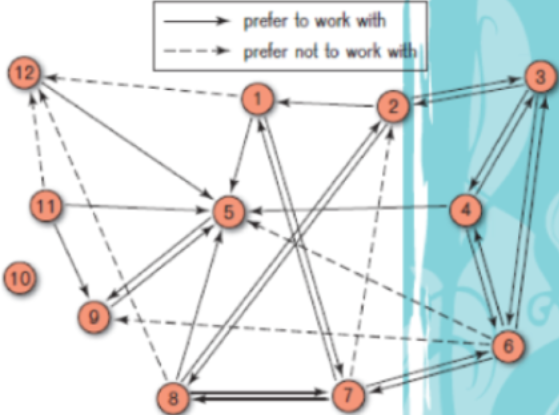
describe sociograms
In group situations (peers, workplace, family), observations allow researchers to collect information about group dynamics (e.g. characteristics & behaviour of people in circumstances)
Useful for recording interrelationships between individuals as they allow researcher to summarise & analyse types of interactions within group
Displays conflict, power, friendship, social isolation through diagram that maps communication using circles to represent individuals & arrowed lines to indicate flow of communication/contact
advantages & disadvantages of observation as a primary research method
advantages
Provides opportunity for viewing or participating in unscheduled events
Allows for richly detailed description
Provides direct access to social phenomena under consideration
Provides permanent record
disadvantages
Bias in recording of events viewed – requires conscious effort at objectivity as method is inherently subjective
Gender may restrict access to certain information
Lack of trust in observer by those being observed
Time consuming
Presence of observer may influence behaviour of those being observed
how to present research findings
Make use of ‘field book’ to present findings & avoid bias
Less structured approach requires discipline by observer to make time to write notes immediately following observation session while memories are fresh
Use of photographic observation with supporting comments adds validity
Notes should include date, time, environment presented in tables, graphs, summary items
Analyse by reviewing observed data & looking for patterns related to research question or hypothesis
Report findings
Qualitative observations reported by showing ideas (supported by examples) that lead to major themes that subsequently lead to conclusions & implications
Quantitative observations used to represent statistical data from observation in graphic form
Researcher must discuss practical/theoretical suggestions identified from findings & recognise major weaknesses/limitations of research methodology used & how to avoid in future research
power bases within groups
coercive
expert
reward
referent/personal power/charismatic power/power of personality
legitimate
describe the power base coercive & give an example
Leader pressures/intimidates members to complete tasks
Group is characteristic by element of fear & feeling of being threatened
Leaders will punish members for not following instructions/completing tasks
Members dislike leaders using this power
E.g. in peer groups, members fear being kicked out of group/disliked if not completing tasks delegated to them
describe the power base expert & give examples
Power due to knowledge & capabilities
Leader influences members by passing knowledge & experience to less knowledgeable/practised members
E.g. teacher → student, doctor → patient (trust information passed to them)
describe the power base reward & give examples
Leader in position of power give/take away individuals’ desires
Rewards in forms of gifts, incentives, compensation
Leaders are well-liked by members
E.g. teacher allows early mark, employee getting bonus/raise if work is completed to standard
describe the power base referent/personal power/charismatic power/power of personality & give examples
Leader tries to connect & build relationships with members, strives to be liked & earn respect
Members have sense of familiarity with referent leader & will compete tasks to please leader
Very influential as members want leaders to accept & praise them for actions & followers admire/copy behaviour, dress, etc.
E.g. John F. Kennedy, Martin Luther King
describe the power base legitimate & give examples
Comes with designated position voted on by community or governing body
Higher position = higher power
E.g. CEO, principals are held in high esteem due to position
characteristics & tasks of self-leadership
Characteristics: intelligence, achievement orientation, flexibility
Leadership tasks: monitor group processes, change leadership style according to situation
define & describe leadership styles
Autocratic (hierarchical): leader makes all decisions
Characteristics: being direct, firm, demanding
Democratic (collaborative/shared): leader consults with members before making decision
Characteristics: being encouraging, encourage participation
laissez faire (autonomous): non-direct leader allows members to decide on processes
Characteristics: minimal to no effort in group process, avoid decision-making & have chaotic workplace, groups more likely to fall apart, low levels of productivity
Transformational: inspirational leader who encourages teamwork through re-thinking & convincing members
Characteristics: praise members for efforts, encourage greater responsibility
define & describe leadership adaptability & flexibility
Level of one’s experience determines their effectiveness & flexibility
Most important factor is ability to communicate (not limited to verbal communication)
Leader should be knowledgeable of their brief, approachable, flexible
Effective reader should be able to ‘read’ a group
factors influencing leadership
type of task
Task-oriented leaders adopt autocratic style for giving instructions in emergency
Ranges from high level/urgent to typical (e.g. leadership during crisis as opposed to leadership during social meeting)
knowledge & skills within group
Internal factors, large teams have members of varying skills
Leader may adopt directive style of leadership
attitudes of individuals within group
Leader’s personal attitudes derived from personal view of themselves (self-concept)
Huge impact in individual’s self-esteem & will impact culture, environment, mood of group
relationship between members
Leader who believes in strong teamwork adopt democratic leadership style
Allows for group harmony but requires consistent feedback to ensure all members’ needs are met
Groups with transformational leader: members are encouraged to self-manage & thus work towards own goals & goals of whole group
If not managed well, this leadership style allows members to become competitive
define & describe case study
Case study: written summary of real-life case
Using case study as a secondary research method helps collect primary data
how to collect & record data from case studies
Data collected from case study cannot be interpreted in relation to personal stance or bias on situation
Aspects of privacy & ethics must be strictly adhered to; sociograms, interviews, analysis of secondary data should be used to support case study findings
advantages & disadvantages of using case studies as a primary research method
advantages
A lot of detail collected
Researcher controls the situation
Hypothesis can be developed then tested
disadvantages
Vital information missed
Time consuming & difficult to analyse
Hard to draw definite cause/effect from one case study
causes of conflict & give examples
multiple role expectations
individual differences/personality
limited resources
varying values
ineffective communication
incompatible goals
how does multiple role expectations cause conflict? give an example
Individuals who have several tasks & functions with conflicting responsibilities
If individual takes on multiple roles, they may have series of contradictory of incompatible tasks to perform
E.g. working parent may experience conflict in juggling many roles & responsibilities at work & home
how do individual differences/personality cause conflict? give an example
Differentiation in individuals’ characters which causes conflict
Individuals clash due to personality traits & behaviours & may not understand what the individual means or why they are acting that way
E.g. exuberant & loud individual may cause shy, withdrawn person to feel threatened
how does limited resouces cause conflict? give an example
Lack of resources or supplies for group/individual to access
If group cannot access required resources, conflict may arise out of frustration or aggravation
E.g. a young single-income family may experience conflict when deciding on resource allocation
how do varying values cause conflict? give an example
Different principles & standards individuals have
Values are highly important to individuals, thus conflict may arise when values differ or vary, or alternatively when an individual’s values are challenged or questioned
E.g. teenagers who value company of friends will experience conflict when grounded or have phone taken away
how does ineffective communication cause conflict? give an example
Unproductive or damaging communication between individuals/groups
Practices like avoiding eye contact, inappropriate body language, lack of encouragement can cause conflict
E.g. person who sits & watches TV instead of communicating with partner may feel isolated
how do incompatable goals cause conflict? give an example
Occurs when individuals in group are provided with a situation where they have differences; goals/aspirations collide
E.g. individual may experience indecision relating to prioritising short- or long-term goals e.g. saving for new car vs going on family holiday
process of conflict resolution & give an example
1. negotiation
Involved parties discuss conflict & cooperate to come to agreement or settlement regarding conflict
Used to identify most effective alternatives to conflict & to implement within group
Occurs between individuals/groups on personal & working lives
E.g. child may negotiate computer time to spend on social media accounts
agreement
Settlement of conflict/arrangement/deal the involved parties agreed upon to manage/minimise conflict
Through negotiation & mediation, agreements made should be implemented to effectively deal with/eradicate conflict
Mediation process helps the disputing design solution or positive agreement
resolution
Outcome of implemented agreement
If conflict has been managed/eradicated, then conflict has been resolved
If conflict still apparent, alternative agreements need to be made, implemented, assessed
what is the role of support people
Aim: work with individual/group to support/encourage to ensure rights are upheld
Listen
Ask questions to gain clarity
Provide strategies to resolve problems
Discuss consequences
support/act as advocate
Provide information & referrals to other agencies until matter is resolved
what are the outcomes of conflict resolution?
win-win
win-lose
lose-lose
describe the win-win outcome of conflict resolution
Results in all members winning/having needs satisfied
One person does not dominate or achieve at the expense of others
Result of using strategy of compromise & collaboration
Mutually acceptable solution is found through problem solving that relies on open communication
Most desirable form of conflict resolution
For this to be the outcome, both parties must agree on solution & solution must be acceptable by everyone, relying on both parties to make small sacrifices
describe the win-lose outcome of conflict resolution
Least desirable outcome
Some members’ needs are met at the expense of others’
Resulted by competition & accommodation strategies by members
Competitors (with power) take advantage of others’ weaknesses, accommodators cooperate for the sake of group harmony & lose
describe the lose-lose outcome of conflict resolution
Result when both parties cannot resolve conflict or external factors influence conflict
May come about due to varying values & lack of compromise/resources & neither side can create solution
All members lose or do not have needs met
Caused by avoiding/ignoring conflict, competition, accommodation
One member may benefit, but group will be fragmented & further problems will arise