macromolecules 2
 Call Kai
 Learn
Learn Practice Test
 Spaced Repetition
 Match
Match Flashcards
 Knowt Play
1/31

There's no tags or description
Looks like no tags are added yet.
Name | Mastery | Learn | Test | Matching | Spaced | Call with Kai | Chat |
|---|
No analytics yet
Send a link to your students to track their progress
32 Terms
aldose
carbohydrate with aldehyde group
ketose
carbohydrate with ketone group
D-sugars and L-sugars
mirror images
D sugar = OH of 2nd carbon on the right
L sugar = OH of 2nd carbon on the left
list 4 monosaccharides
glucose
fructose
ribose
glyceraldehyde
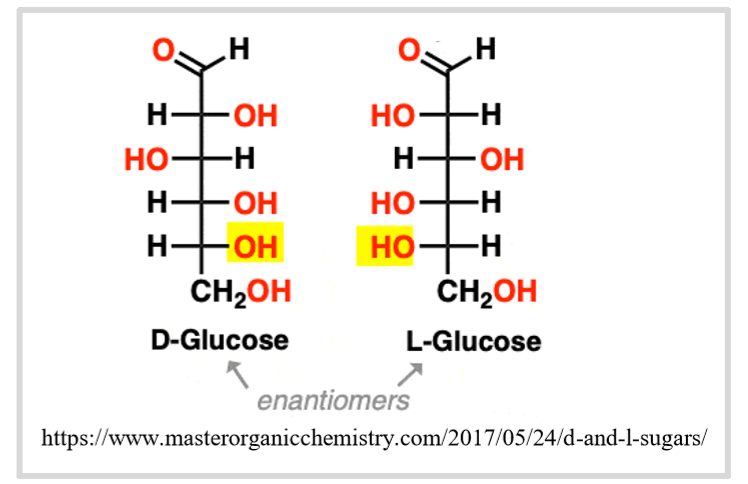
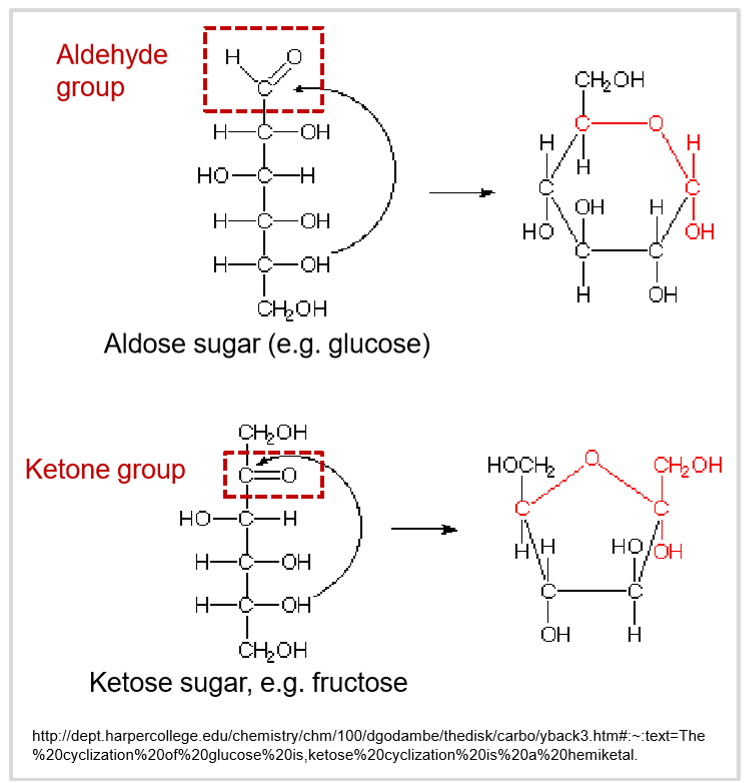
ring formation (aldose vs ketose)
the OH group on the second to last carbon reacts with the aldehyde group/ketone group
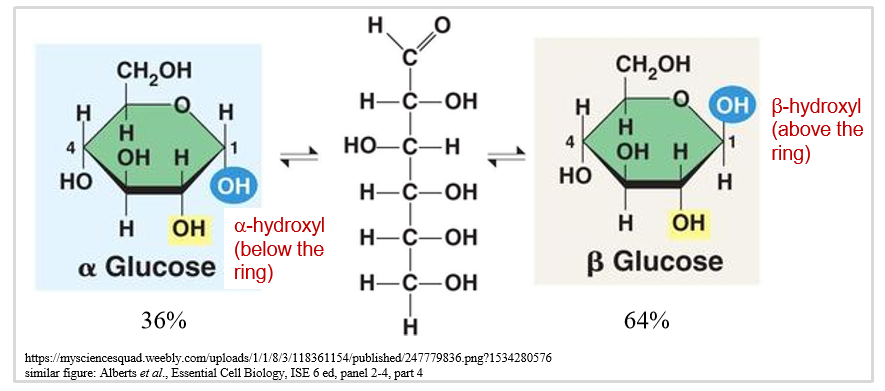
alpha and beta monosaccharide forms
alpha = OH on carbon 1 (ring formation) below the glucose ring (opposite CH2OH)
beta = OH on carbon 1 (ring formation) above the glucose ring (same side as CH2OH)
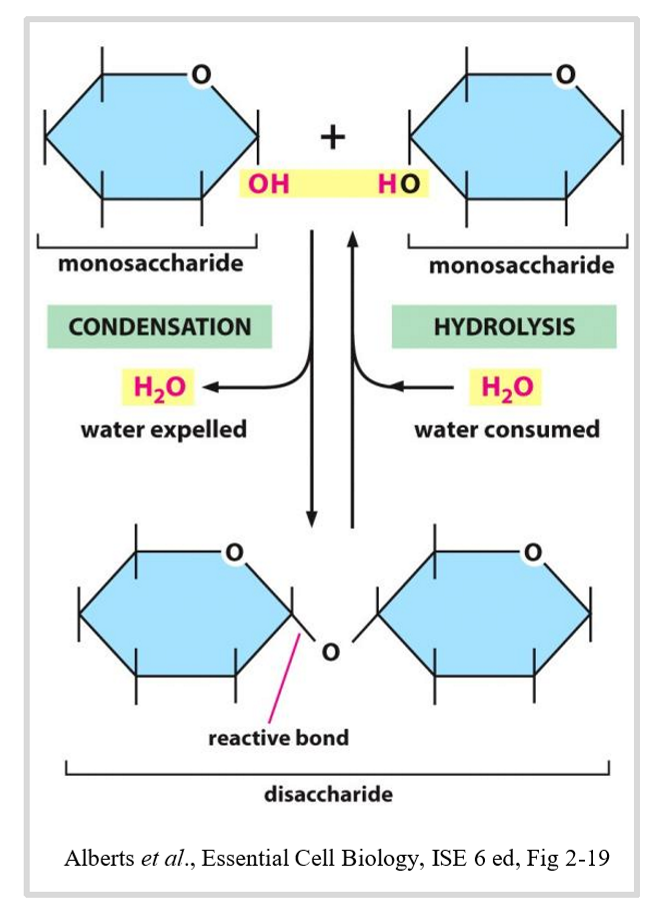
formation of polysaccharides
condensation reaction
enzymes catalyse the formation of a covalent bond between monosaccharides (or subunits)
formation of water molecule
breakdown of polysaccharides
hydrolysis reaction
enzymes catalyse the breakdown of a covalent bond between monosaccharides
requires energy and water
linking two monosaccharides freezes the (?) form
alpha or beta
glycosidic linkage
formed by the linkage of two monosaccharide units (via a condensation reaction)
carbon-oxygen-carbon linkage
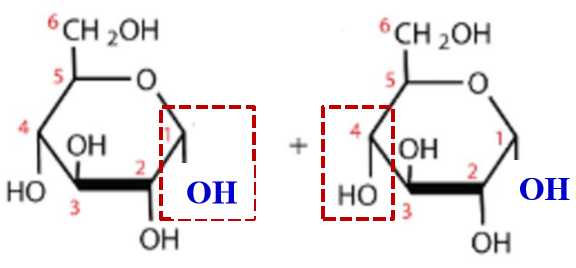
name the two monosaccharide subunits
disaccharide formation
a1-D-glucoses
between the OH on carbon one of the first D-glucose and the OH on carbon 4 of the second D-glucose
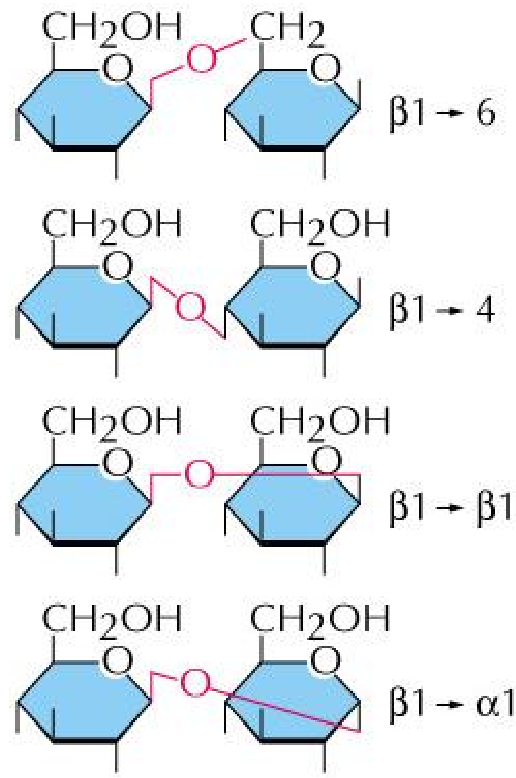
what do the following beta linkages look like?
b1 - 6
b1 - 4
b1 - b1
b1 - a1
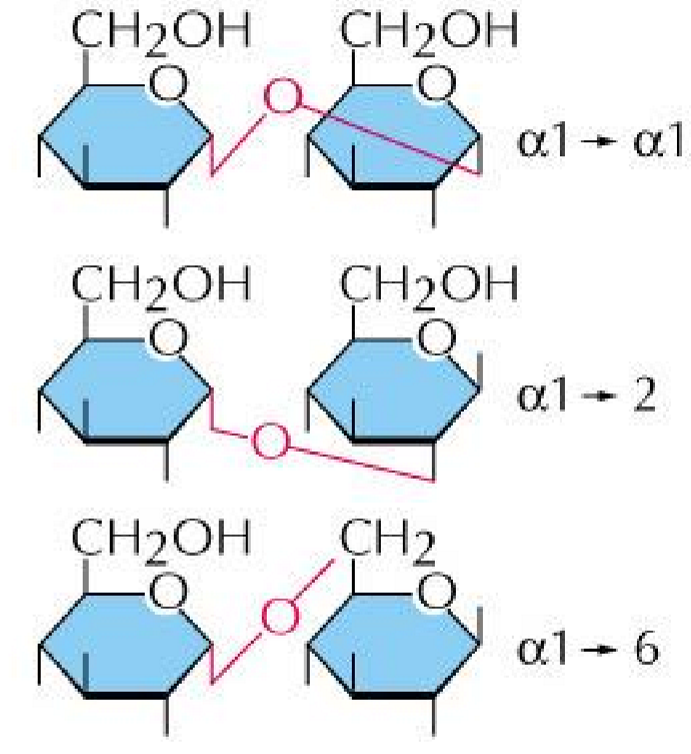
what do the following alpha linkages look like?
a1 - a1
a1 - 2
a1 - 6
cellulose
polysaccharide
structural function: forms cell walls of plants
b1 - 4 linked D-glucose units
glycogen and starch
polysaccharides
glycogen: glucose (energy) store in animal cells
starch: glucose (energy) store in plant cells
glycogen and starch have similar structure
fatty acids are amphipathic
hydrophilic polar head
hydrophobic tail
unsaturated fatty acids
double bond(s) in hydrophobic tail
kinks formed
do not allow close packing
liquid at room temperature
saturated fatty acids
no double bonds in hydrophobic tail
tight packing
solid at room temperature
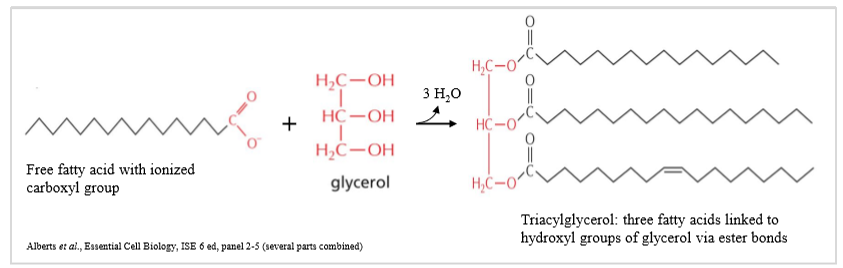
triacylglycerides
formed by condensation reaction between glycerol and three fatty acids
triacylglycerides are not amphipathic
saturated and unsaturated fatty acids determine structure and packaging of triacylglycerides
name three lipids that make up cell membranes
phospholipids: OH in glycerol reacts with phosphate group
glycolipids: OH in glycerol reacts with sugar group
cholesterol: creates rigid regions in membranes
DNA vs RNA function
DNA: long-term storage of hereditary material
RNA: transient carrier of information
nucleotide composition
nitrogenous base
5 carbon sugar
phosphate group
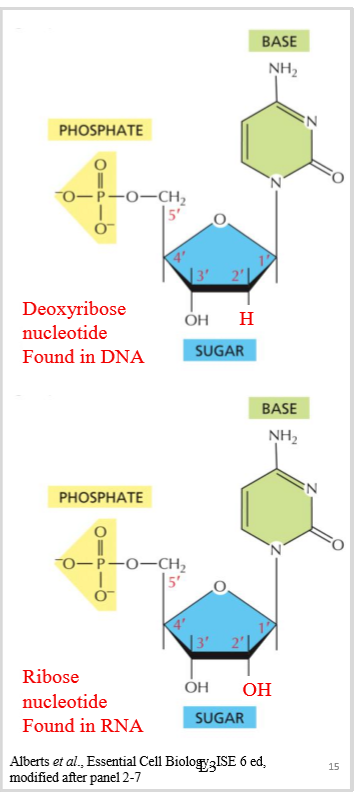
ribose vs deoxyribose
deoxyribose lacks an OH on the second carbon
purines
adenine
guanine
pyrimidines
cytosine
thymine
uracil
synthesis of sugar phosphate backbone
nucleotides are joined together via phosphodiester bonds
link the OH group on 3’ carbon of one sugar covalently to the phosphate group on the 5’ carbon of the next sugar
condensation reaction
synthesis occurs in what direction?
5’ to 3’
how many hydrogen bonds between each complementary bases?
G pairs with C (3 H bonds)
A pairs with T (2 H bonds)
nucleotide function (list 3)
carriers of chemical energy
high energy conserved in the phosphodiester bond
cleavage releases energy used by cells
signaling molecules
activate enzymes and turns on genes
combined with other groups as co-enzymes
amino acid composition (list 4)
alpha carbon
carboxylic acid
amino group
side chain group
amino acid chain synthesis
condensation reaction forming peptide bonds
OH of carboxylic acid group reacts with H of amino acid group
water is formed
protein synthesis occurs in what direction?
from the amino (N-) terminal end towards the carboxylic (C-) terminal end