Section 2.3 flashcards
 Call Kai
 Learn
Learn Practice Test
 Spaced Repetition
 Match
Match Flashcards
 Knowt Play
1/25

There's no tags or description
Looks like no tags are added yet.
Name | Mastery | Learn | Test | Matching | Spaced | Call with Kai | Chat |
|---|
No analytics yet
Send a link to your students to track their progress
26 Terms
What is the power rule?
x^n = nx^n-1. Multiply by the exponent, then subtract 1. Ex: f(x) = x^5 = f’(x) = 5x^4.
What is the constant multiple rule.
cf(x) = cf’(x). Leave the constant alone and differentiate everything else. Ex: 7x^4 = 28x³
What is the Sum/Difference Rule?
Differentiate each term separately. Ex: 4x³ - 2x + 8 = 12x² - 2
What should you ALWAYS do before taking a derivative?
Rewrite first, derive second. 1. rewrite radicals, rewrite fractions, simplify exponents, then differentiate.
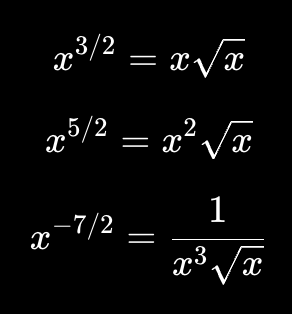
How do you rewrite radicals?
xn/2 = x^n-1/2. Ex: sqrtx = x^1/2, 4xsqrtx = 4x^3/2, 7x²sqrtx = 7x. (If same base, add exponents)
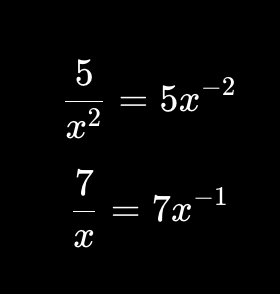
How do I rewrite fractions?
Move the denominator to the numerator using a negative exponent.
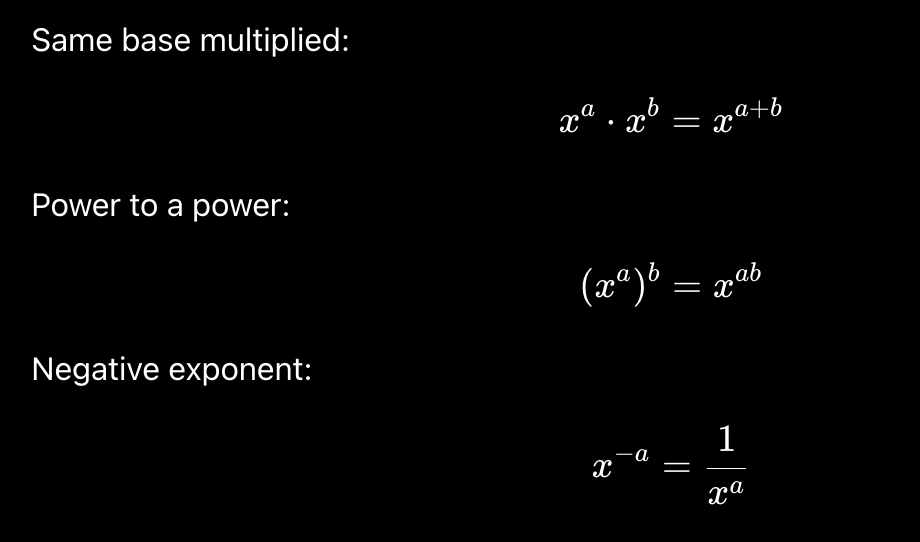
What exponent rules should I remember before differentiating?
If my final answer cannot have negative or fractional exponents, what do I do?
Convert back to radicals and fractions.
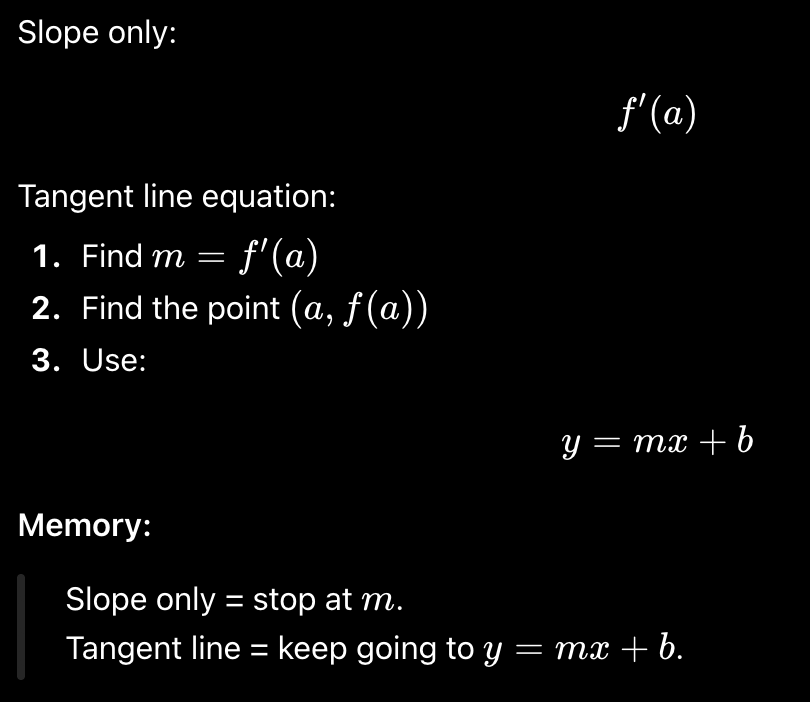
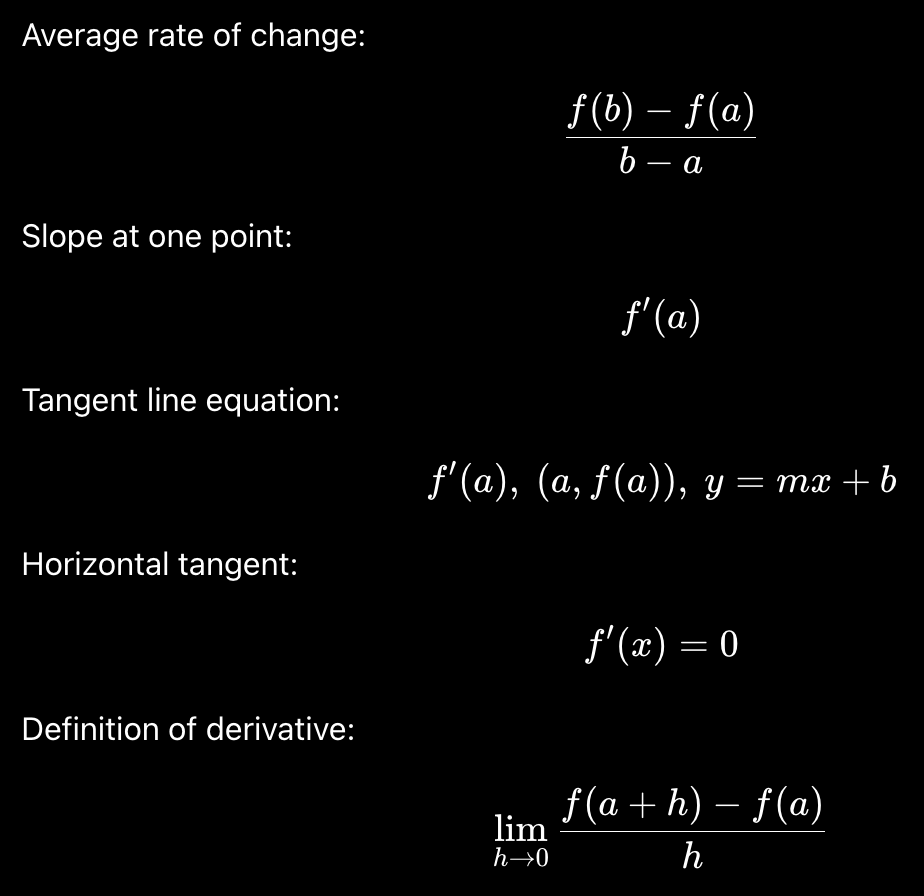
How do I solve a tangent line problem?
1. Find the derivative, Plug the given x-value into the derivative to find the slope m, 3. Use the given point (x, y), 4. Plug into y = mx+b, 5. Solve for b. Memory: Derivative —> Slope —> Tangent Line.
How do I solve horizontal tangent problems?
1. Fine the derivative, Factor if possible, Set f’(x) = 0, 4. Solve for the x-values. Memory: Horizontal tangent = slope = 0.
What does “marginal” mean?
Marginal = Derivative
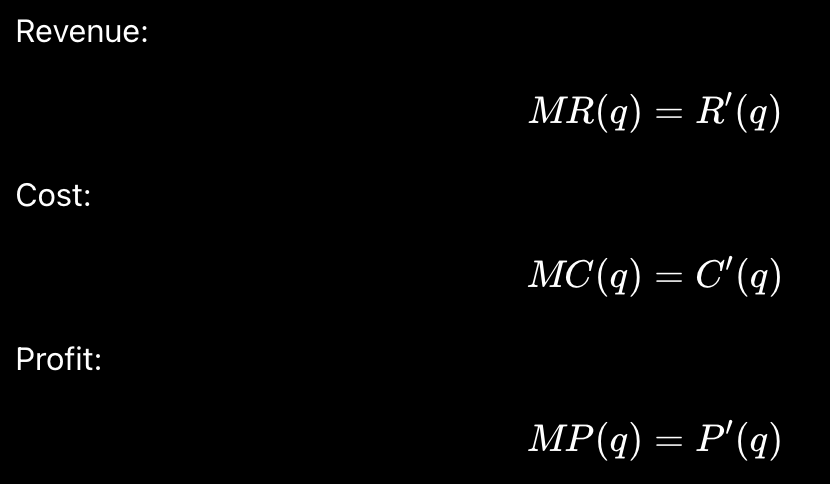
What is the Profit Function?
P(q) = R(q) − C(q)
What is the Marginal Profit Function?
MP(q) = P′(q) = R′(q)−C′(q)
Which keywords tell me I should take the derivative?
Marginal revenue
Marginal cost
Marginal profit
Growth rate
Instantaneous rate of change
Velocity
Acceleration
Rate of change
Slope of the tangent line
Tangent line
Horizontal tangent
Memory: If it says rate, marginal, velocity, acceleration, tangent line, or horizontal tangent, think: "Derivative first."
How do I find the average rate of change from x = a to x = b?
Use the original function: f(b) - f(a)/b-a
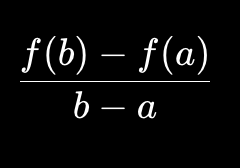
Tip: DO NOT take the derivative for average rate of change. Memory: Avg rate = two x-values = use the original function.
How do I know whether to use the original function or derivative?
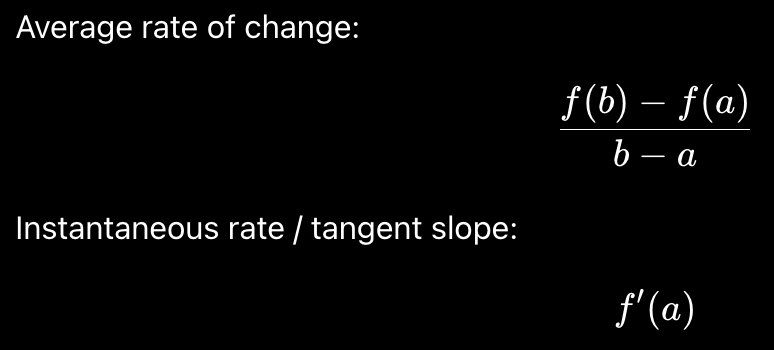
Memory: Average = between two points
Instantaneous = at one point.
How do I find a tangent line using the definition of derivative?
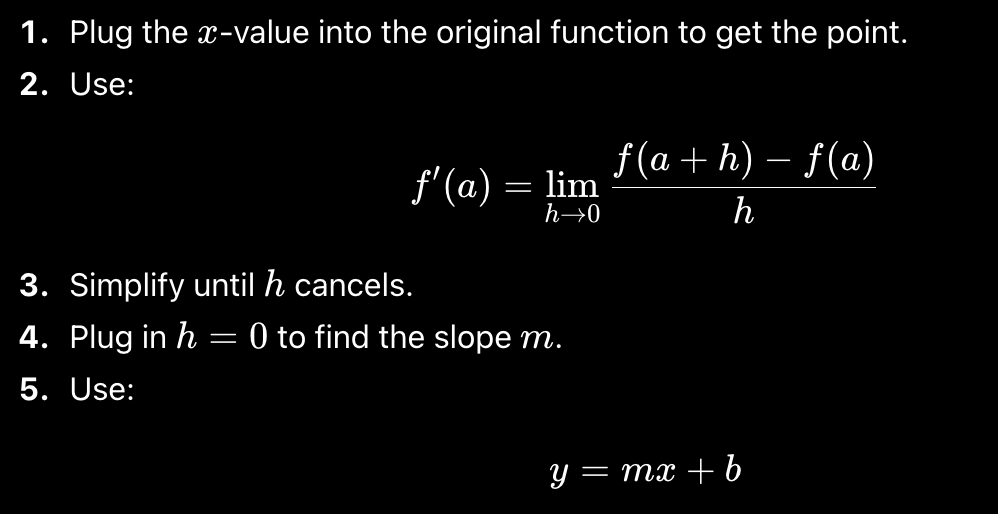
Memory: Point from original, Slope from definition. Line from y = mx + b.
What Does h→0 Mean?
It means plug in h = 0 after simplifying and canceling h. Ex:

How do I find the slope of the tangent line at x = a?
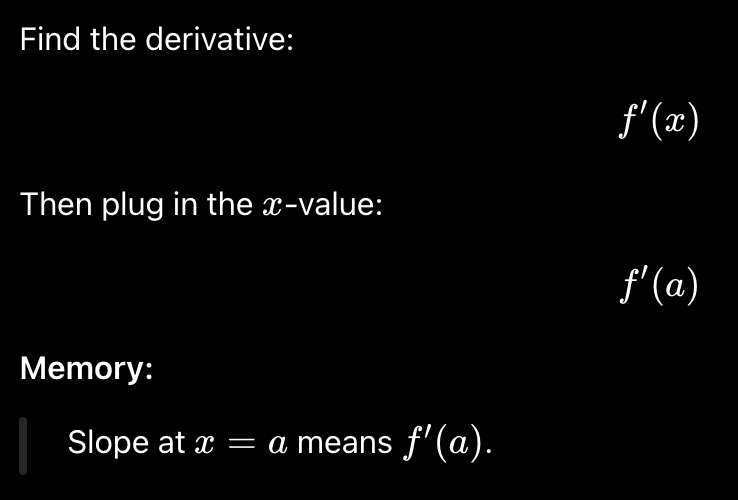
What is the difference between “find the slope” and “find the tangent line equation”?
How do I find where the tangent line is horizontal?
Horizontal tangent means slope is 0: f′(x) = 0
Steps:
Find f′(x)
Set f′(x)=0
Factor if possible
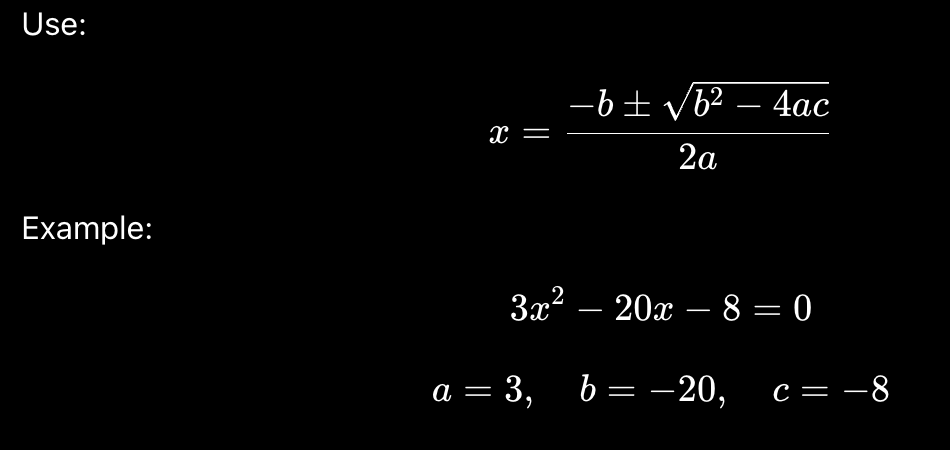
If it does not factor nicely, use the quadratic formula
Memory: Horizontal tangent = deriviative ewuals o.
What do I do if f′(x)=0 gives a quadratic that does not factor nicely?
Use the quadratic formula:
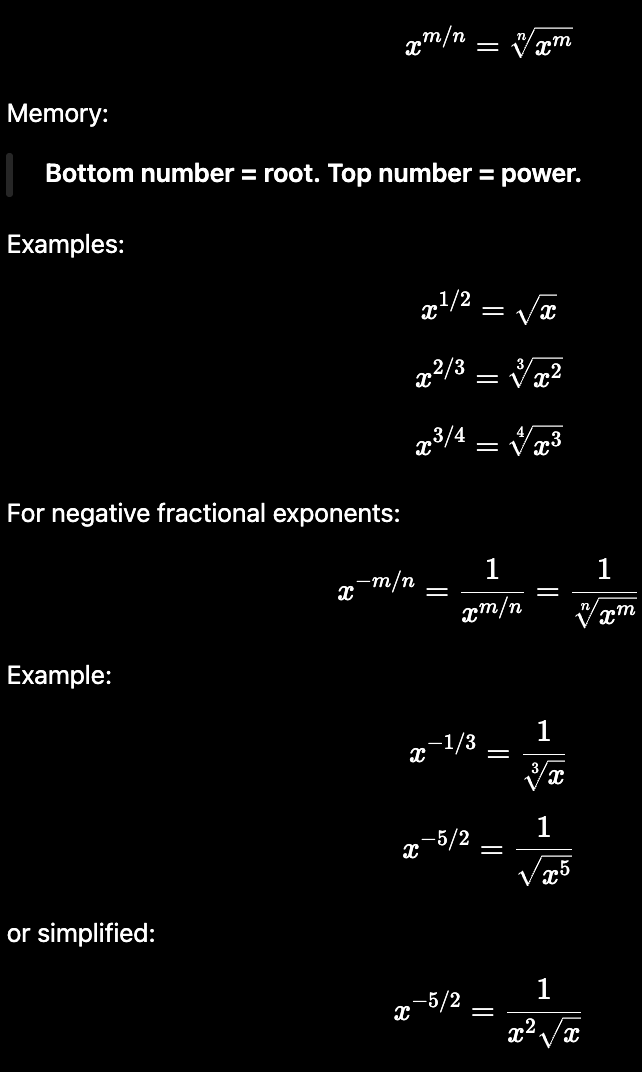
How do I rewrite radicals as exponents?
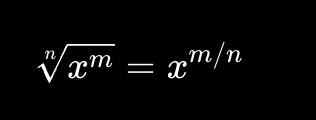
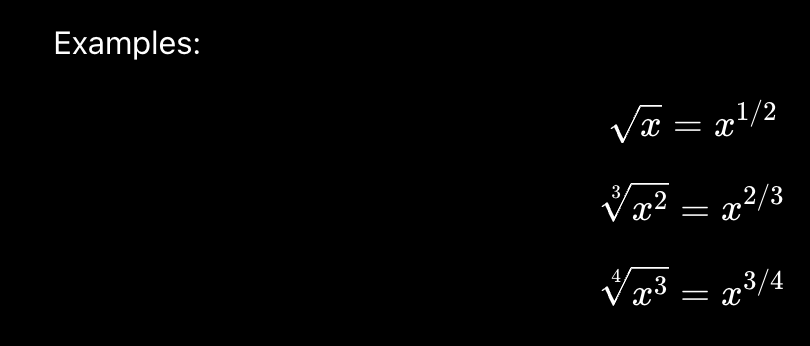
Memory: Power on top, root on bottom.
Classwork Decision Chart: How do I know what method to use?
What does (a, f(a)) mean in a tangent line problem?
means the point on the graph: a = the given x-value, f(a) = the y-value from the original function. Example: If: f(x) = 2x² and x = 4, then f(4) = 2(4)² = 32, so: (a, f(a)) = (4, 32).
How do you turn exponents into radicals?
Formula: