Digestive System Overview: Functions, Anatomy, and Neural Control
 Call Kai
 Learn
Learn Practice Test
 Spaced Repetition
 Match
Match Flashcards
 Knowt Play
1/19

There's no tags or description
Looks like no tags are added yet.
Name | Mastery | Learn | Test | Matching | Spaced | Call with Kai |
|---|
No analytics yet
Send a link to your students to track their progress
20 Terms
What are the five general functions of the digestive system?
Ingestion, propulsion, mechanical digestion, chemical digestion, absorption.
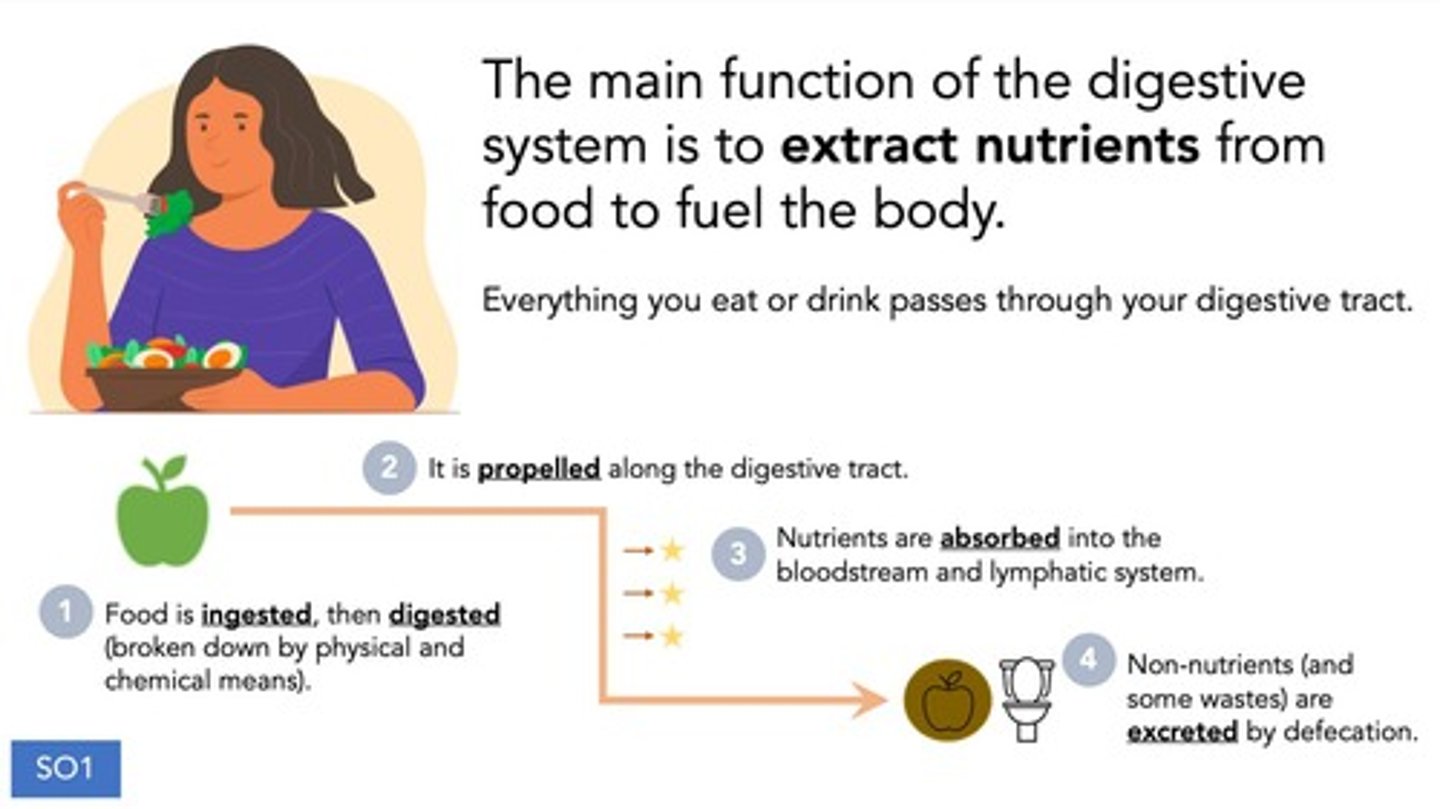
What is the primary role of the digestive system?
To process ingested substances and extract and absorb nutrients and water.
How many principal organs are in the digestive system?
Seven distinct principal organs.
What are the four tissue layers of the digestive tract?
Mucosa, submucosa, muscularis, and serosa.
What is the function of the muscularis layer in the digestive tract?
It generates propulsive and digestive movements of food.
What type of muscle primarily composes the muscularis layer in most of the digestive tract?
Smooth muscle.
What are accessory structures in the digestive system?
Structures that assist in physical digestion (e.g., teeth), chemical digestion (e.g., salivary glands), and propulsion (e.g., tongue).
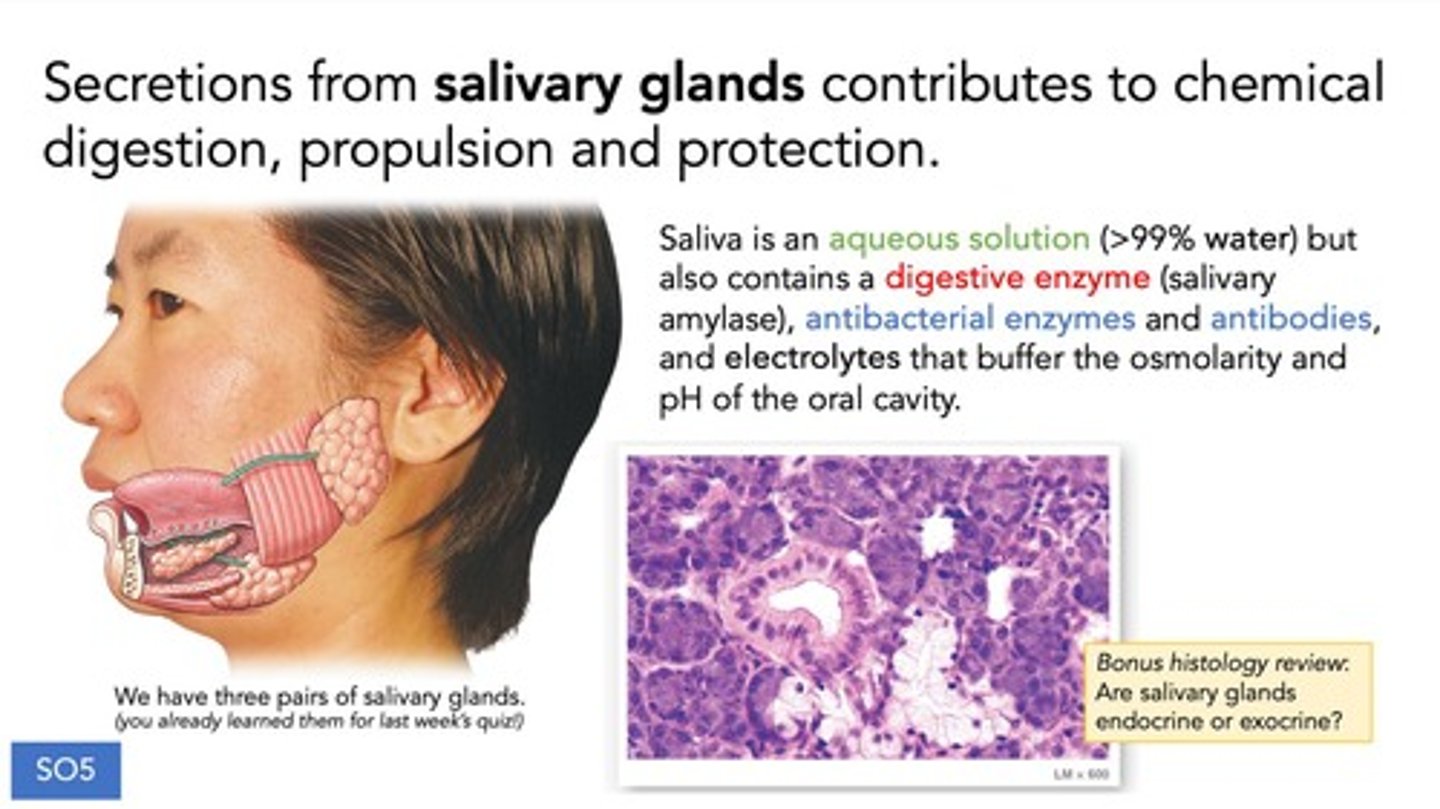
How much saliva is secreted into the oral cavity per day?
Approximately 1.5 liters.
What are the phases of swallowing?
Oral phase, pharyngeal phase, and esophageal phase.
What types of muscle are involved in swallowing?
Both skeletal and smooth muscle.
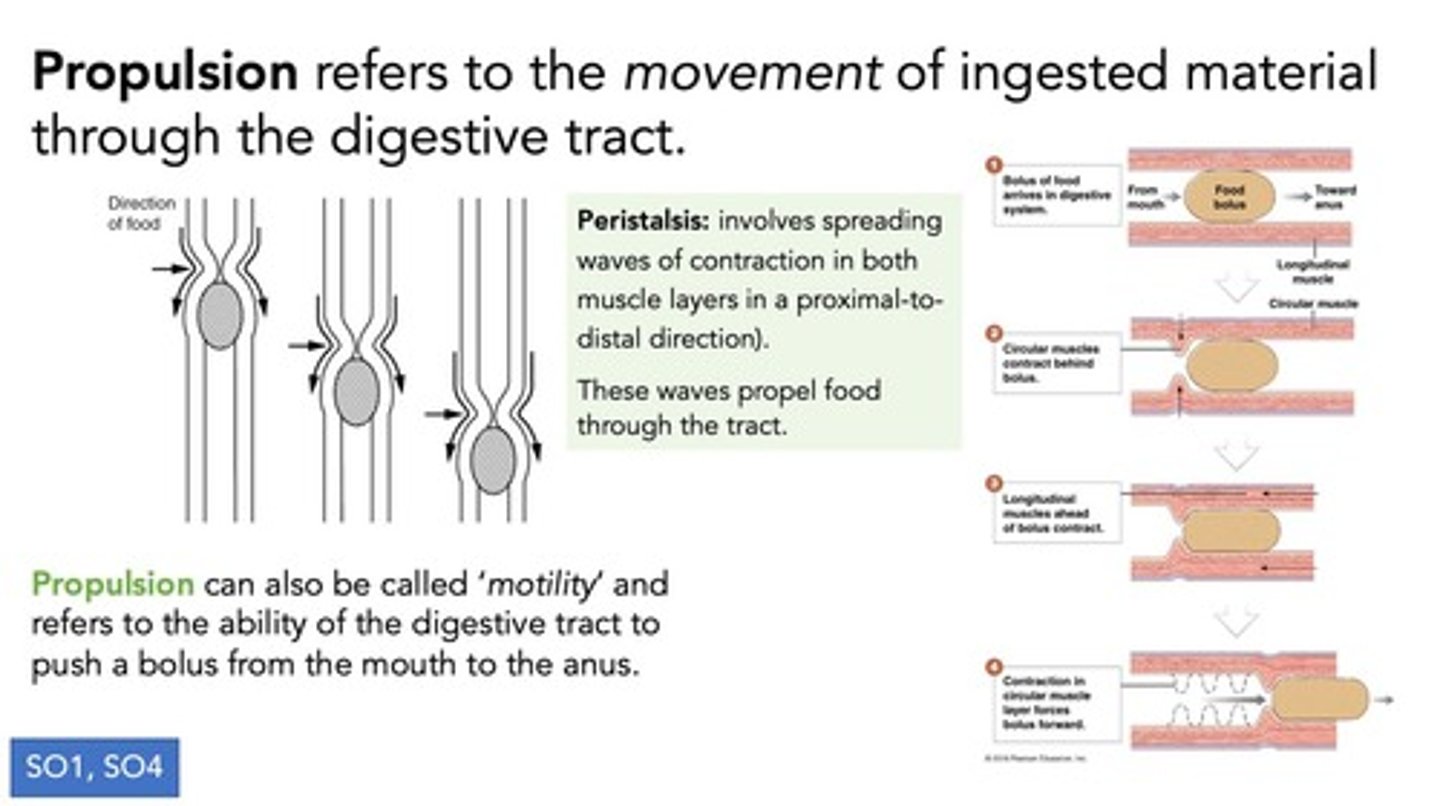
What is peristalsis?
A series of wave-like muscle contractions that move food through the digestive tract.
What is segmentation in the digestive system?
A process that mixes food with digestive juices and increases absorption.
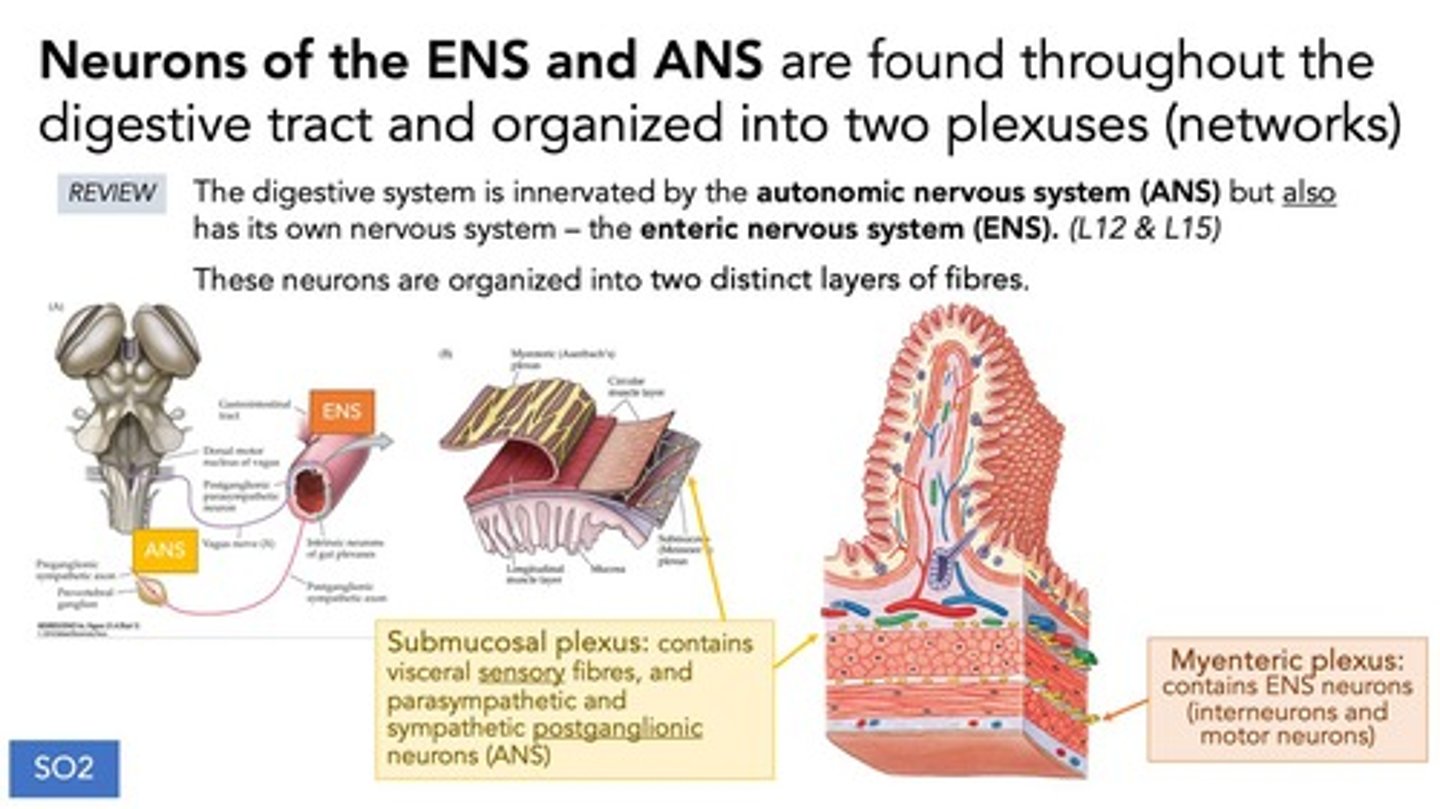
What is the role of the autonomic nervous system (ANS) in digestion?
It regulates smooth muscle activities in the digestive tract.
What are the neural controls involved in salivation?
Involves both the sympathetic and parasympathetic divisions of the ANS.
What is the significance of saliva in digestion?
It lubricates food, contributes to chemical digestion, and provides immune defenses.
What is a key aspect to remember for the exam regarding the digestive tract?
Know the tissue layers, explain peristalsis, phases of swallowing, and control of salivation.
What is the primary function of the mucosa layer?
To protect, secrete, and absorb substances in the digestive tract.
What is the submucosa layer responsible for?
It contains blood vessels, nerves, and glands that support the mucosa.
What is the serosa layer?
The outermost layer that provides a protective covering for the digestive organs.
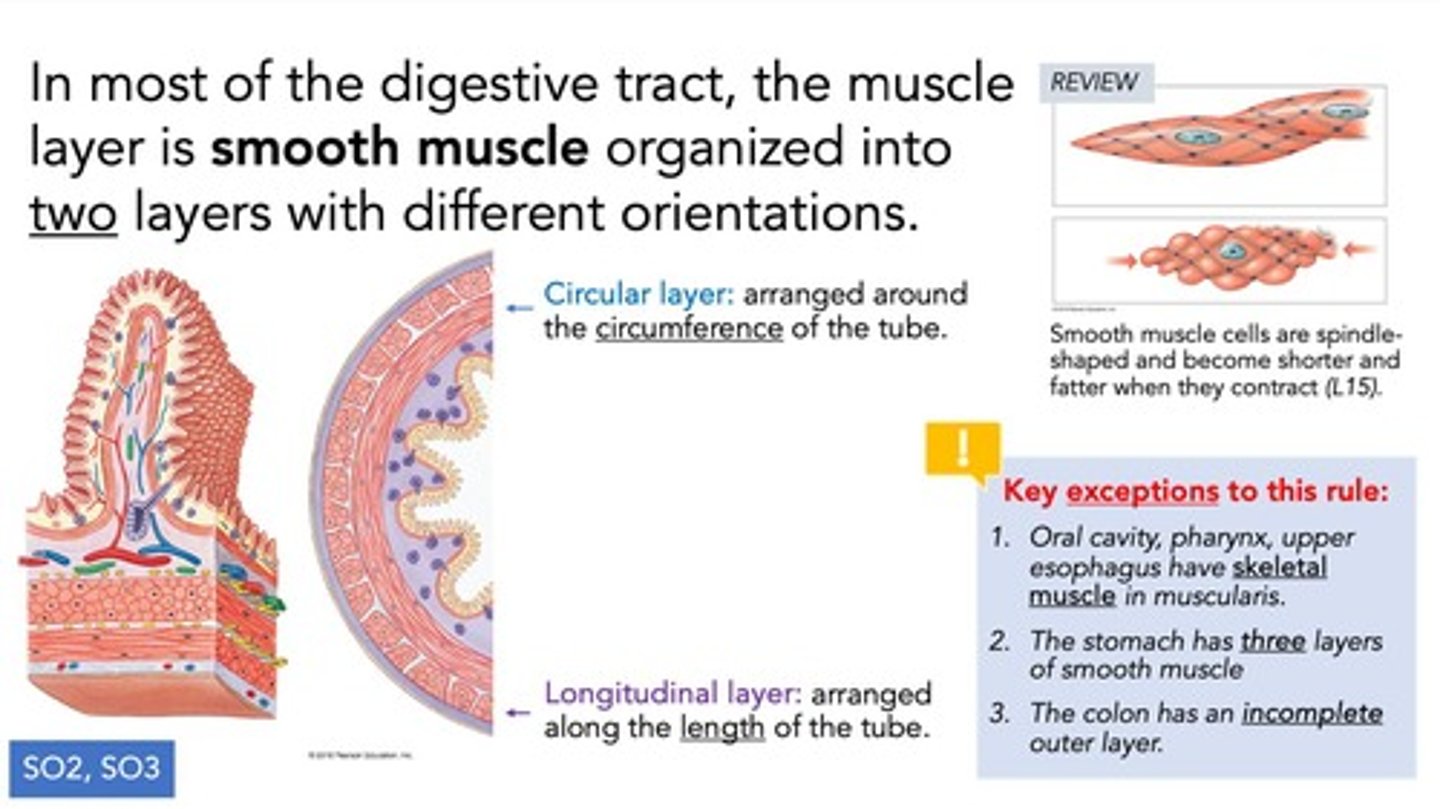
What are the exceptions to the standard organization of muscle layers in the digestive tract?
Pharynx, stomach, and colon.

