POS
0.0(0)
Studied by 3 people View linked note
 Call Kai
 Learn
Learn Practice Test
 Spaced Repetition
 Match
Match Flashcards
 Knowt Play
Card Sorting
1/54

There's no tags or description
Looks like no tags are added yet.
Last updated 8:13 AM on 5/28/23
Name | Mastery | Learn | Test | Matching | Spaced | Call with Kai | Chat |
|---|
No analytics yet
Send a link to your students to track their progress
55 Terms
1
New cards
what are the 3 ways of knowing?
* natural sciences:
* the oldest
* sees the universe as being uniform.
* believes in laws and regularities.
* believes that laws are their paradigm.
* allows complex knowledge to turn into more concise ones.
* examples: maths, the different sciences.
* humanities
* emphasis on historical particularity.
* believes human actors in history were creative and unique.
* huge mistrust of generalisation and idealisations.
* knowledge comes from interpretations.
* examples: history, art, linguistics, film.
* social sciences
* the youngest of the bunch.
* focus on societies; trying to understand and explain human behaviour
* research, surveys, experiments, interviews, and observations, to gather data and analyze social phenomena.
* seeks to identify patterns.
* kind of a mix of the other two; there are some generalisations but also a lot is particular and unique to context.
* examples: psychology, economics, sociology, political science.
* the oldest
* sees the universe as being uniform.
* believes in laws and regularities.
* believes that laws are their paradigm.
* allows complex knowledge to turn into more concise ones.
* examples: maths, the different sciences.
* humanities
* emphasis on historical particularity.
* believes human actors in history were creative and unique.
* huge mistrust of generalisation and idealisations.
* knowledge comes from interpretations.
* examples: history, art, linguistics, film.
* social sciences
* the youngest of the bunch.
* focus on societies; trying to understand and explain human behaviour
* research, surveys, experiments, interviews, and observations, to gather data and analyze social phenomena.
* seeks to identify patterns.
* kind of a mix of the other two; there are some generalisations but also a lot is particular and unique to context.
* examples: psychology, economics, sociology, political science.
2
New cards
what is nomothetic approach and its strengths and weaknesses?
* proposed by Windelband.
* identifies regularities in the world and formulates generalisations and laws to describe regularities.
* quite typical in natural sciences.
* __strength__: identifies similarities and yields general knowledge.
* __weakness__: erases the specificity of outcomes (loses sight of the individual case) and can be reductive.
* identifies regularities in the world and formulates generalisations and laws to describe regularities.
* quite typical in natural sciences.
* __strength__: identifies similarities and yields general knowledge.
* __weakness__: erases the specificity of outcomes (loses sight of the individual case) and can be reductive.
3
New cards
what is idiographic approach?
* proposed by windelband.
* aims to have a deep understanding of unique events.
* typical of humanities.
* __strengths__: reveals differences between similar cases and yields detailed, context-specific knowledge.
* __weaknesses__: blind to general factors; can lead to a large collection of insights rather than knowledge.
* aims to have a deep understanding of unique events.
* typical of humanities.
* __strengths__: reveals differences between similar cases and yields detailed, context-specific knowledge.
* __weaknesses__: blind to general factors; can lead to a large collection of insights rather than knowledge.
4
New cards
how can you know things?
* by acquaintance: “i know him“
* through “how-to/skills:“ “i know how to ride a bike“
* propositional: knowledge of facts
* through “how-to/skills:“ “i know how to ride a bike“
* propositional: knowledge of facts
5
New cards
how to make propositional knowledge/what makes knowledge knowledge?
JTB
* for a knowledge to be knowledge, the knowledge has to be **true**.
* it has to be **justified**, with good reasons and evidence, that are correct.
* i have to **believe** in it.
* it has to follow the following: P is true. A believes P is true. A is justified in believing that P is true.
\
example:
* no medieval king was able to control his people.
* victor was a medieval king.
* victor was not able to control his people.
* for a knowledge to be knowledge, the knowledge has to be **true**.
* it has to be **justified**, with good reasons and evidence, that are correct.
* i have to **believe** in it.
* it has to follow the following: P is true. A believes P is true. A is justified in believing that P is true.
\
example:
* no medieval king was able to control his people.
* victor was a medieval king.
* victor was not able to control his people.
6
New cards
what is the correspondence theory of truth?
a proposition is true if, and only if, there is a fact corresponding to it.
7
New cards
what is the problem with JTB?
* while it doesn’t happen very often, there are instances where the justified true belief doesn’t seem to be knowledge.
* there is the Gettier problem.
* Gettier presented cases where someone has a justified true belief, but it did not seem to qualify as knowledge.
* these cases typically involve situations where the belief is true by luck or coincidence rather than being grounded in a solid, reliable justification.
* these examples raised doubts about whether JTB alone is sufficient for knowledge.
* there is the Gettier problem.
* Gettier presented cases where someone has a justified true belief, but it did not seem to qualify as knowledge.
* these cases typically involve situations where the belief is true by luck or coincidence rather than being grounded in a solid, reliable justification.
* these examples raised doubts about whether JTB alone is sufficient for knowledge.
8
New cards
how can anything we believe ever be justified, if justification always requires more justification?
* there are no infinite reasons.
* and it is also not a circle.
* instead, at some point, the chain of justification stops because we arrive at something that is so clear, that it does not require any further justification.
* this is called “foundationalism.“
* there are things that are just good enough reasons and do not need to be justified, for instance, observations/seeing things.
* and it is also not a circle.
* instead, at some point, the chain of justification stops because we arrive at something that is so clear, that it does not require any further justification.
* this is called “foundationalism.“
* there are things that are just good enough reasons and do not need to be justified, for instance, observations/seeing things.
9
New cards
why are observations/seeing things problematic?
* observations are not always certain.
* scientific observations are much more complex than ust seeing things.
* very few things we believe, especially in science, are things that we have observed ourselves, and therefore we rely on other people.
* this is the second kind of foundationalism: trust.
* scientific observations are much more complex than ust seeing things.
* very few things we believe, especially in science, are things that we have observed ourselves, and therefore we rely on other people.
* this is the second kind of foundationalism: trust.
10
New cards
what is the relation with trust and scientific knowledge?
* without trust, scientific knowledge could not get off the ground.
* therefore, trust plays an important role in the way that knowledge is justified.
* if we start asking “why do we trust scientists“ this already shows that you do not trust them.
* in science, we just accept that people are usually honest.
* therefore, trust plays an important role in the way that knowledge is justified.
* if we start asking “why do we trust scientists“ this already shows that you do not trust them.
* in science, we just accept that people are usually honest.
11
New cards
what is quantitative methodology? + strengths & weaknesses
* approach to research that emphasizes numerical data and statistical analysis across many instances for objective measurement and generalizable findings.
* __forward causal inference__: cause to effects.
* researchers can establish causal relationships.
* **strengths**: hypothesis testing (justification).
* **weakness**: usually not great as a base to generate hypotheses.
* usually, __externally valid__.
* __forward causal inference__: cause to effects.
* researchers can establish causal relationships.
* **strengths**: hypothesis testing (justification).
* **weakness**: usually not great as a base to generate hypotheses.
* usually, __externally valid__.
12
New cards
what is qualitative methodology? + strengths & weaknesses
* approach to research that focuses on understanding and interpreting subjective experiences and meanings.
* involves in-depth analysis of specific cases.
* __reverse causal inference__: effect to causes.
* researchers can examine specific cases to understand the causes that led to this outcome.
* **strengths**: generating hypotheses and ideas (discovery).
* **weakness**: bias; difficult to generalise findings.
* usually, __internally valid__.
* involves in-depth analysis of specific cases.
* __reverse causal inference__: effect to causes.
* researchers can examine specific cases to understand the causes that led to this outcome.
* **strengths**: generating hypotheses and ideas (discovery).
* **weakness**: bias; difficult to generalise findings.
* usually, __internally valid__.
13
New cards
what is forward causal inference vs. reverse causal inference?
* forward
* from causes to effects
* IN QUANTITATIVE METHODOLOGY.
* example:
* cause: amount of rainfall
* effect: plant growth
* question: how does the amount of rainfall affect plant growth?
* reverse
* from effects to causes
* IN QUALITATIVE METHODOLOGY.
* example:
* effect: number of hours of study
* cause: exam performance
* question: how does the hours of study affect the exam performance?
* from causes to effects
* IN QUANTITATIVE METHODOLOGY.
* example:
* cause: amount of rainfall
* effect: plant growth
* question: how does the amount of rainfall affect plant growth?
* reverse
* from effects to causes
* IN QUALITATIVE METHODOLOGY.
* example:
* effect: number of hours of study
* cause: exam performance
* question: how does the hours of study affect the exam performance?
14
New cards
what is internal and external validity?
* __internal validity__: accuracy and reliability of the cause-and-effect relationship
* __external validit__y: generalizability of the study's findings to different contexts.
* __external validit__y: generalizability of the study's findings to different contexts.
15
New cards
where can rationality be applied?
rationality can be applied to:
* beliefs: theoretical rationality
* actions: practical rationality
* beliefs: theoretical rationality
* actions: practical rationality
16
New cards
what is theoretical rationality?
* a belief is rational if i have __a good reason for the belief__*.*
* after taking evidence into account, we have arrived at this reasoning.
* after taking evidence into account, we have arrived at this reasoning.
17
New cards
what is practical rationality?
* an action is rational if is it a good __means/way to get to the goal__ (means-ends rationality).
18
New cards
what is objective vs subjective rationality?
* objective: action leads to goal, so it’s good.
* subjective: i believe that my action leads to goal (i think this bus is going to amsterdam, so i get on, but it’s going to rotterdam).
* subjective: i believe that my action leads to goal (i think this bus is going to amsterdam, so i get on, but it’s going to rotterdam).
19
New cards
what is the “rational choice theory“ model?
* it is a model of rationality; explanation of how individuals make decisions.
* it assumes that:
* people are rational and have complete information about their goals, and the outcomes and probabilities.
* people aim to maximize their own self-interest.
* people will weigh the pros & cons and do this without any limitations/people have unlimited computing power.
* then they will take the option that gives them the most advantage/utility.
* this theory therefore assumes that **“agents choose action that provides maximum expected utility.“**
* each agent/actor/person has perfect information about the goals of other actors.
* utility function: representation of preferences.
* a number is assigned to each possible option.
* preference can be calculated.
* it assumes that:
* people are rational and have complete information about their goals, and the outcomes and probabilities.
* people aim to maximize their own self-interest.
* people will weigh the pros & cons and do this without any limitations/people have unlimited computing power.
* then they will take the option that gives them the most advantage/utility.
* this theory therefore assumes that **“agents choose action that provides maximum expected utility.“**
* each agent/actor/person has perfect information about the goals of other actors.
* utility function: representation of preferences.
* a number is assigned to each possible option.
* preference can be calculated.
20
New cards
what is the “bounded rationality“ model?
* a model of rationality that looks at decision making.
* it recognizes the limitations of human cognition and information processing; such as limited time and attention.
* they assume that:
* instead of aiming for the most perfect and optimal decision, **individuals are fine in satisficing, and going for the “good enough“ option to meet their needs and goals.**
* for this, they use heuristics (context-dependent rules of thumb), rather than conducting an exhaustive analysis of all info.
* example: instead of researching and considering all the restaurants, you may use a heuristic; maybe you remember a friend’s recommendation, or the closest one, or one you liked the most.
* by using this mental shortcut, you save time and effort in decision-making, although it may not guarantee finding the absolute best restaurant option available.
* it recognizes the limitations of human cognition and information processing; such as limited time and attention.
* they assume that:
* instead of aiming for the most perfect and optimal decision, **individuals are fine in satisficing, and going for the “good enough“ option to meet their needs and goals.**
* for this, they use heuristics (context-dependent rules of thumb), rather than conducting an exhaustive analysis of all info.
* example: instead of researching and considering all the restaurants, you may use a heuristic; maybe you remember a friend’s recommendation, or the closest one, or one you liked the most.
* by using this mental shortcut, you save time and effort in decision-making, although it may not guarantee finding the absolute best restaurant option available.
21
New cards
what is Dilthey’s “Verstehen”?
* “Verstehen“ means “understand“ in german.
* Dilthey uses this term to refer to how we can understand human behaviour and experiences by putting ourselves in someone else’s shoes.
* this means emphasizing and trying to grasp the meaning behind their actions.
* if your friend is feeling say, we would try to understand their emotions by putting ourselves in their shoes.
* this empathetic understanding is *verstehen.*
* verstehen looks at mental phenomena.
* usually for the humanities (and some social sciences).
* Dilthey uses this term to refer to how we can understand human behaviour and experiences by putting ourselves in someone else’s shoes.
* this means emphasizing and trying to grasp the meaning behind their actions.
* if your friend is feeling say, we would try to understand their emotions by putting ourselves in their shoes.
* this empathetic understanding is *verstehen.*
* verstehen looks at mental phenomena.
* usually for the humanities (and some social sciences).
22
New cards
what is Dilthey’s “Erklären“?
* “Erklären“ means “explain“ in german.
* Dilthey uses this term to refer to explaining phenomena through objective observations and general laws.
* if my plant is not growing well, instead of trying to understand what the plant is feeling and experiencing (Verstehen), i might look at it’s environment, check its soil, how much water and sunlight is it receiving?
* by identifying the objective factors as to what is affecting the plant’s growth, we can explain why it is not growing.
* erklaren looks at natural phenomena.
* usually for the natural sciences.
* Dilthey uses this term to refer to explaining phenomena through objective observations and general laws.
* if my plant is not growing well, instead of trying to understand what the plant is feeling and experiencing (Verstehen), i might look at it’s environment, check its soil, how much water and sunlight is it receiving?
* by identifying the objective factors as to what is affecting the plant’s growth, we can explain why it is not growing.
* erklaren looks at natural phenomena.
* usually for the natural sciences.
23
New cards
what is “hermeneutics“?
the study of interpretation.
24
New cards
what is the “hermeneutic circle“?
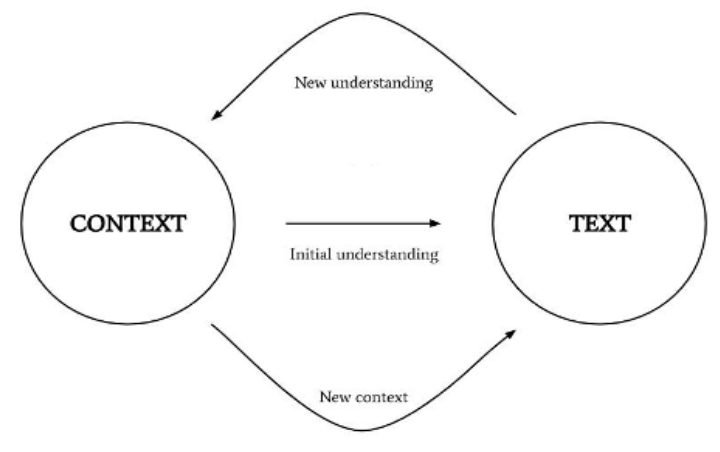
* a process of interpretation, which makes us continuously move between smaller and larger units of meaning, in order to determine the meaning of both.
* to understand a word, we need to look at the sentence, then we need to look at paragraph → page → essay → chapter → book → author’s other works etc.
* why is it called a circle?
* because we move back and forth between smaller and bigger units; improving our interpretation everytime we make the circular movement.
* to understand a word, we need to look at the sentence, then we need to look at paragraph → page → essay → chapter → book → author’s other works etc.
* why is it called a circle?
* because we move back and forth between smaller and bigger units; improving our interpretation everytime we make the circular movement.
25
New cards
what does “meaning is holistic“ mean?
* it means that the different parts don’t have a meaning if they are not a part of a whole.
* the taste of a dish is not the sum of the tastiness of the individual ingredients.
* the taste of a dish is not the sum of the tastiness of the individual ingredients.
26
New cards
is there a perfect interpretation, does the circle ever stop?
* different hermeneutisists would answer it differently.
* classical hermeneutisists would say: yes, there is a perfect interpretation; it is what the original author intended and thought.
* but; you can never know that you have reached the perfect interpretation, because there is always more context to consider, and there is possibility to go through the circle once again.
* classical hermeneutisists would say: yes, there is a perfect interpretation; it is what the original author intended and thought.
* but; you can never know that you have reached the perfect interpretation, because there is always more context to consider, and there is possibility to go through the circle once again.
27
New cards
what is “double hermeneutics“? + what did giddens say about it?
* double hermeneutics is 1. __the intended interpretation and 2. the societal interpretation of the particular phenomenon__.
* anthony giddens says that “a scholar’s understanding of the meaning of a certain phenomena contributes to the meaning of the phenomena“ just like a society’s interpretation has on the phenomenon.
* anthony giddens says that “a scholar’s understanding of the meaning of a certain phenomena contributes to the meaning of the phenomena“ just like a society’s interpretation has on the phenomenon.
28
New cards
which science only has one single hermeneutic.
* the natural sciences.
* they understand and explain natural phenomena in a one way process.
* they understand and explain natural phenomena in a one way process.
29
New cards
what is absolutism and relativism?
* **absolutism** is a perspective that believes that __entities have or lack F, naturally__.
* external factors do not influence or determine it.
* example: a triangle has three sides, and this is an absolute truth. it doesn't matter which perspective you have, a triangle will always have three sides.
\---
* relativism is another perspective that believes that __entities do not have or lack F, naturally__, instead, entities have or lack F, relative to a standpoint S.
* basically, it depends on how you look at it, it depends on the perspective.
* example: what is considered ethical in one country, may be considered unethical in another.
\
\---
F = truth or rationality.
S = standpoints, cultures, world views, styles etc.
* external factors do not influence or determine it.
* example: a triangle has three sides, and this is an absolute truth. it doesn't matter which perspective you have, a triangle will always have three sides.
\---
* relativism is another perspective that believes that __entities do not have or lack F, naturally__, instead, entities have or lack F, relative to a standpoint S.
* basically, it depends on how you look at it, it depends on the perspective.
* example: what is considered ethical in one country, may be considered unethical in another.
\
\---
F = truth or rationality.
S = standpoints, cultures, world views, styles etc.
30
New cards
an argument consists of two parts…
* premises: what we presuppose
* conclusion; what we conclude from the premises.
* conclusion; what we conclude from the premises.
31
New cards
what is a valid argument?
an argument where it makes sense to draw this specific conclusion from these specific premises.
* the conclusion logically follows from the premises
* the conclusion logically follows from the premises
32
New cards
what is an invalid argument?
* an argument that is not valid; an argument that is valid is deductive. therefore, an invalid argument is inductive.
\
* there is also a “false premises but valid argument“
* premise 1: all cats have tails
* premise 2: this animal has a tail
* conclusion: therefore this is a cat
* here, premise 1 and 2 is correct, but the conclusion is not.
\
* there is also a “false premises but valid argument“
* premise 1: all cats have tails
* premise 2: this animal has a tail
* conclusion: therefore this is a cat
* here, premise 1 and 2 is correct, but the conclusion is not.
33
New cards
what is a deductive argument?
when the premises and the conclusion are both true.
34
New cards
what is an inductive argument?
the truth of the premises gives good reason to believe the conclusion, but doesn’t absolutely guarantee the truth of the conclusion.
* “likely but not guaranteed” –– very common in science.
* “likely but not guaranteed” –– very common in science.
35
New cards
what is confirmation bias?
the tendency to only collect evidence that supports and confirms our beliefs; while disregarding evidence that conflicts with our beliefs.
36
New cards
what is correlation and causation?
* correlation: the tendency of two things to occur together.
* causation: the actual relation between causes and effects.
* causation: the actual relation between causes and effects.
37
New cards
what are probabilities?
the fact that a hypothesis is unlikely, doesn’t mean that it is false.
38
New cards
what is the nomological model of explanation?
* by carl hempel
* attempts to give us an answer to *what does a good explanation look like?*
\
* so deductive:
* Premises is true
* Conclusion is true
* P guarantees C
* nomological:
* hempel believes that explanations use laws.
\
so according to hempel’s model:
* an explanation is a **deductive argument** that uses at least **one law**.
* attempts to give us an answer to *what does a good explanation look like?*
\
* so deductive:
* Premises is true
* Conclusion is true
* P guarantees C
* nomological:
* hempel believes that explanations use laws.
\
so according to hempel’s model:
* an explanation is a **deductive argument** that uses at least **one law**.
39
New cards
what is an explanation?
answer to why questions.
40
New cards
what is the explanandum and the explanans?
* explanandum: the thing that has to be explained.
* explanans: the actual explanation.
* explanans: the actual explanation.
41
New cards
disadvantages of the DN model ?
* there isn’t much depth.
* we don’t have a lot of laws in many parts of science.
* doesn’t always give the correct answer.
* it explains the causes in terms of their effect but not vice versa.
* we don’t have a lot of laws in many parts of science.
* doesn’t always give the correct answer.
* it explains the causes in terms of their effect but not vice versa.
42
New cards
what is conditio sine qua non?
* conditions without which not.
* a necessary condition without which the conclusion would not be possible.
* something can be the cause without being what made the different.
* if i didn’t water the plant, you would have done it; so it would have thrived.
* in this case, you are a backup cause.
* backup cause: thing that would have caused it if the real cause hadn’t done it.
* a necessary condition without which the conclusion would not be possible.
* something can be the cause without being what made the different.
* if i didn’t water the plant, you would have done it; so it would have thrived.
* in this case, you are a backup cause.
* backup cause: thing that would have caused it if the real cause hadn’t done it.
43
New cards
what does karl popper say about deduction?
* that scientists only use deduction.
* he claims that this is because it seems that falsification only requires deduction.
* he claims that this is because it seems that falsification only requires deduction.
44
New cards
what is falsificationism by popper?
* popper says that:
* scientists never claim that a theory is true because they know that there could be a new observation.
* instead scientists are only interested in testing theories to show that they are false.
* so popper’s conclusion was that: scientific knowledge is only scientific knowledge if it can be falsified.
* scientists never claim that a theory is true because they know that there could be a new observation.
* instead scientists are only interested in testing theories to show that they are false.
* so popper’s conclusion was that: scientific knowledge is only scientific knowledge if it can be falsified.
45
New cards
was popper wrong about falsificationism and about deduction?
* yes. he was wrong about both.
* turns out we cannot live without induction in science.
* and we should stop focusing on falsifying theories but rather increasing our confidence in them.
* turns out we cannot live without induction in science.
* and we should stop focusing on falsifying theories but rather increasing our confidence in them.
46
New cards
popper and kuhn’s conversation about scientific knowledge?
* __popper__: scientists are always busy trying to prove their own theories wrong and therefore they are very critical.
* __kuhn__: actually, the idea that science is critical is false and most of the time an illusion. i argue that actually, science isn’t critical most of the time; only at specific times and moments in history.
* and i will show you this, through my 4 phases of science!
* __kuhn__: actually, the idea that science is critical is false and most of the time an illusion. i argue that actually, science isn’t critical most of the time; only at specific times and moments in history.
* and i will show you this, through my 4 phases of science!
47
New cards
what are kuhn’s 4 phases of science?
* **↓ pre-paradigmatic phase:**
* the phase before there is a paradigm.
* people do not and cannot agree on a set of shared concepts.
* therefore very hard for them to communicate bc they don’t have shared vocab.
* an unproductive phase bc scientists do not work let alone communicate together.
* doesn’t look like science as we know it: unified.
* **↓normal science (the rule):**
* that phase where there is a functioning paradigm that scientists are confident about, trust and don’t need to be critical about it.
* in this phase:
* 1. scientists take the paradigm for granted, and don’t even want to be critical about it bc they think it would be a waste of time.
* 2. but this is a good thing; it is only because they take it for granted that they can get any detailed work done and dive deep into something.
* but we now come to an anomaly!
* a problem within the paradigm that the scientists are currently unable to solve.
* kuhn believes that every scientific discipline always has anomalies.
* **⇕ crisis:**
* when scientists start doubting their own paradigm: this is when we come to a crisis.
* here they are critical of their paradigm.
* there are two ways to end a crisis:
* 1. solve anomaly → go back UP to NORMAL SCIENCE PHASE.
* 2. new paradigm emerges and the other one is abandoned, and we have a SCIENTIFIC REVOLUTION
* **↑scientific revolution (the exception):** we have a scientific revolution here. and we go up to normal science until the next anomaly.
* the phase before there is a paradigm.
* people do not and cannot agree on a set of shared concepts.
* therefore very hard for them to communicate bc they don’t have shared vocab.
* an unproductive phase bc scientists do not work let alone communicate together.
* doesn’t look like science as we know it: unified.
* **↓normal science (the rule):**
* that phase where there is a functioning paradigm that scientists are confident about, trust and don’t need to be critical about it.
* in this phase:
* 1. scientists take the paradigm for granted, and don’t even want to be critical about it bc they think it would be a waste of time.
* 2. but this is a good thing; it is only because they take it for granted that they can get any detailed work done and dive deep into something.
* but we now come to an anomaly!
* a problem within the paradigm that the scientists are currently unable to solve.
* kuhn believes that every scientific discipline always has anomalies.
* **⇕ crisis:**
* when scientists start doubting their own paradigm: this is when we come to a crisis.
* here they are critical of their paradigm.
* there are two ways to end a crisis:
* 1. solve anomaly → go back UP to NORMAL SCIENCE PHASE.
* 2. new paradigm emerges and the other one is abandoned, and we have a SCIENTIFIC REVOLUTION
* **↑scientific revolution (the exception):** we have a scientific revolution here. and we go up to normal science until the next anomaly.
48
New cards
what is a paradigm?
* all the theories, concepts, models, methods, that a scientific discipline takes for granted.
49
New cards
what is incommensurability?
* lack of comparability using a neutral standard.
* we cannot determine if the new paradigm is better than the old one bc we do not have have a neutral standards.
* we cannot determine if the new paradigm is better than the old one bc we do not have have a neutral standards.
50
New cards
what is a fact?
* things that are actually the case.
51
New cards
what is a hypothesis?
* an idea that we want to test.
52
New cards
what is an analogy?
* a relation of similarity between two domains.
53
New cards
why are analogies beneficial?
* analogies help researchers:
* discover similarities between domains.
* generalises and unifies diff domains.
* creates and extends scientific concepts.
* discover similarities between domains.
* generalises and unifies diff domains.
* creates and extends scientific concepts.
54
New cards
what are the different components of an analogy?
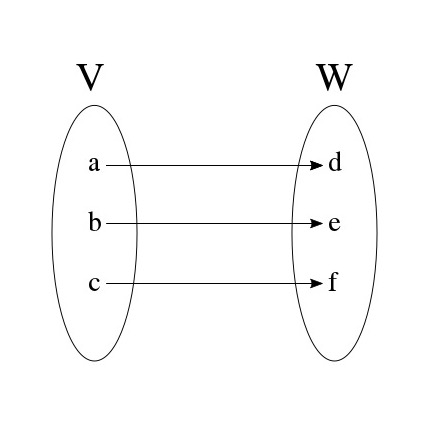
* **source domain:** the concept that we are using as a comparison to help explain the target.
* **target domain:** the concept that we are trying to explain.
* **relation**: the shared similarity/characteristic.
* **mapping**: the process of identifying how the similarities between the target and source relate to each other.
* **target domain:** the concept that we are trying to explain.
* **relation**: the shared similarity/characteristic.
* **mapping**: the process of identifying how the similarities between the target and source relate to each other.
55
New cards
what is a model and its types?
* a simplified and idealised representation of a phenomena, that facilitates access to this phenomena.
* **physical model**: building a smaller version of the thing.
* **computer model:** equation based simulation of a real mode.
* **idealised model**: removing a lot of confusing details (that may be relevant) to create an idealised model; to make things simpler.
* after testing, if this is a successful model: great we found a good way to illustrate it.
* after testing, if it is not a successful model: which details should we add back to the model?
* **physical model**: building a smaller version of the thing.
* **computer model:** equation based simulation of a real mode.
* **idealised model**: removing a lot of confusing details (that may be relevant) to create an idealised model; to make things simpler.
* after testing, if this is a successful model: great we found a good way to illustrate it.
* after testing, if it is not a successful model: which details should we add back to the model?