Psychological explanations for obesity
 Call Kai
 Learn
Learn Practice Test
 Spaced Repetition
 Match
Match Flashcards
 Knowt Play
1/13

There's no tags or description
Looks like no tags are added yet.
Name | Mastery | Learn | Test | Matching | Spaced | Call with Kai | Chat |
|---|
No analytics yet
Send a link to your students to track their progress
14 Terms
Key terms
restraint theory
disinhibition
boundary model
Restraint theory
A cognitive explanation which argues that obesity is the paradoxical outcome of attempts to restrain eating (e.g. dieting)
Herman and Polivy (1975)
developed restraint theory
argued that restrained eating is counterproductive and self defeating
majority of people who restrain their eating fail to lose any weight
can lead to an obsession with food
Cognitive control
Cognitive control = where restrained eaters set strict limits on their food intake
they categorise food into groups: ‘good’ and ‘bad’ and create rules about which foods are forbidden
a restrained diet is a very organised way of imposing control which individuals believe is the way to lose weight
Paradoxical outcome
result of restrained eating is that it causes the individual to become more preoccupied with the food rather than less
no longer eat when they are hungry and stop when they feel full
eating behaviour is no longer under physiological control - now they actively attempt to ignore the physiological indicators that signal hunger and satiety
this leads to disinhibition of eating behaviour
Non-physiological food cues
mood - feeling depressed
media images
smells
sights
there are external and internal cues
these cues are called disinhibitors
Disinhibition
period of restrained eating is followed by disinhibited eating/binge eating
caused by disinhibitors (food related cues)
restrained eaters are vulnerable to these cues and the loss of control leads to unrestrained eating
disinhibition is controlled by cognitive factors - distorted thinking - all or nothing thinking

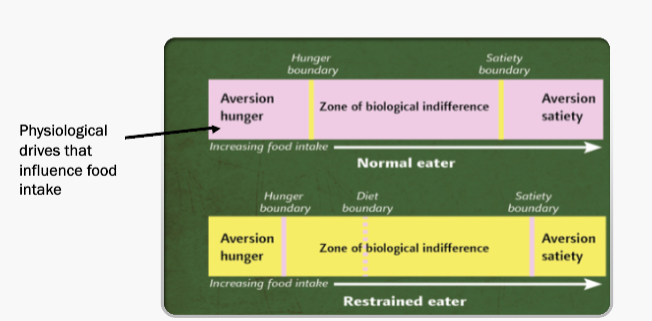
The boundary model
Herman and Polivy (1984)
explained how restrained eating can lead to unsuccessful dieting and potentially obesity
Explanation
when energy levels dip, we feel an aversive state of hunger so we are motivated to eat
eating to fullness creates an aversive state of discomfort so we stop eating
the zone of biological indifference is where cognitive and social factors have their greatest influence on food intake
Explanation if you are a restrained eater
have a lower hunger boundary so are less responsive to physiological feelings of hunger - cognitvely pre-occupied with food
have a higher satiety boundary so need more food before they consider themselves full
more of their eating comes under cognitive rather than physiological control
it is claimed that dieters set themselves a cognitive diet boundary which limits what they can eat. if they ever cross this boundary the ‘what the hell effect’ kicks in and they will then continue to eat until they are full and reach their physiological boundary which is higher than for non-restrained eaters
AO3 points
supporting research
disinhibiting effects of the media
contradictory research
restraint is multifaceted
practical applications
AO3 - supporting research
EV = Wardles and Beales (1988) - 27 obese women randomly allocated to 3 groups. 1 = restrained, 2 = exercise regime/no restraint, 3 = control. findings = restrained ate sig. more and consumed more calories than the 2 other groups
EX = suggests a restrained diet causes overeating which leads to weight gain and obesity
C = Savage et al (2009) - longitudinal study into restrained eating - measured dietary restraint and disinhibition in 163 women at the start of the study and every 2 years afterwards over a 6 year period - found restrained eating while dieting leads to weight loss rather than weight gain
Boyce and Kuijer (2014) - restrained eaters consumed a higher quantity of unhealthy snacks
LB = results suggest that teaching restrained eaters how to pay less attention to the media body ideal images might be an
Restraint is multifaceted
P = restraint is a more complex phenomenon than the boundary model indicates
EV = research identified 2 diff. forms:
rigid restraint - all-or-nothing approach to limiting food intake
flexible restraint - allows restrained eater to eat limited amounts of some