Personality Psychology chapter 15
 Studied by 0 people
 Call with Kai
 Learn
Learn Practice Test
 Spaced Repetition
 Match
Match Flashcards
 Knowt Play
1/24

There's no tags or description
Looks like no tags are added yet.
Name | Mastery | Learn | Test | Matching | Spaced | Call with Kai |
|---|
No study sessions yet.
25 Terms
Conscientiousness
best personality predicter of longevity
Less likely: drinking, smoking, drugs
More likely: seat belts, smaller waist
self regulation
ability to control impulses, make good choices and think before acting
leads to better grades, better interpersonal skills
Impulsivity
acting without thinking, opposite of self regulation
linked to obesity
Neuroticism
use words like depressed and lonely
tendency toward hostility and anger
more negative emotions
Neuroticism and health
worry more
heart disease, blood pressure, obesity
faster aging
addictions
Social inhibition
reluctance to express emotions that risk other disapproval
low extraversion
Type D (distressed) personality
combination of high neuroticism and high social inhibition
linked to health issues
Type A personality
hardworking, scheduled and impatient
predicts heart disease (heart attacks)
Type B personality
laid back and less scheduled
higher agreeableness, higher conscientiousness
Type T (thrill seeking) personality
seeks out exciting experiences
higher chance of accidents and reckless driving
high extraversion (sensation seeking)
high impulsivity
Agreeableness
inconsistent link between agreeableness and longevity
more social support
openness to experience
not related to self-reported health or longevity (only big 5 with no association)
linked to some health benefits
Honesty and humility
captures people's sincerity, honesty, faithfulness, modesty, and fair-mindedness
H-H and associations
No direct link to physical health in finding (more indirect)
Workplace delinquency negatively associated
Low H-H
power driven, take risks, danger
may be low on some health related measures
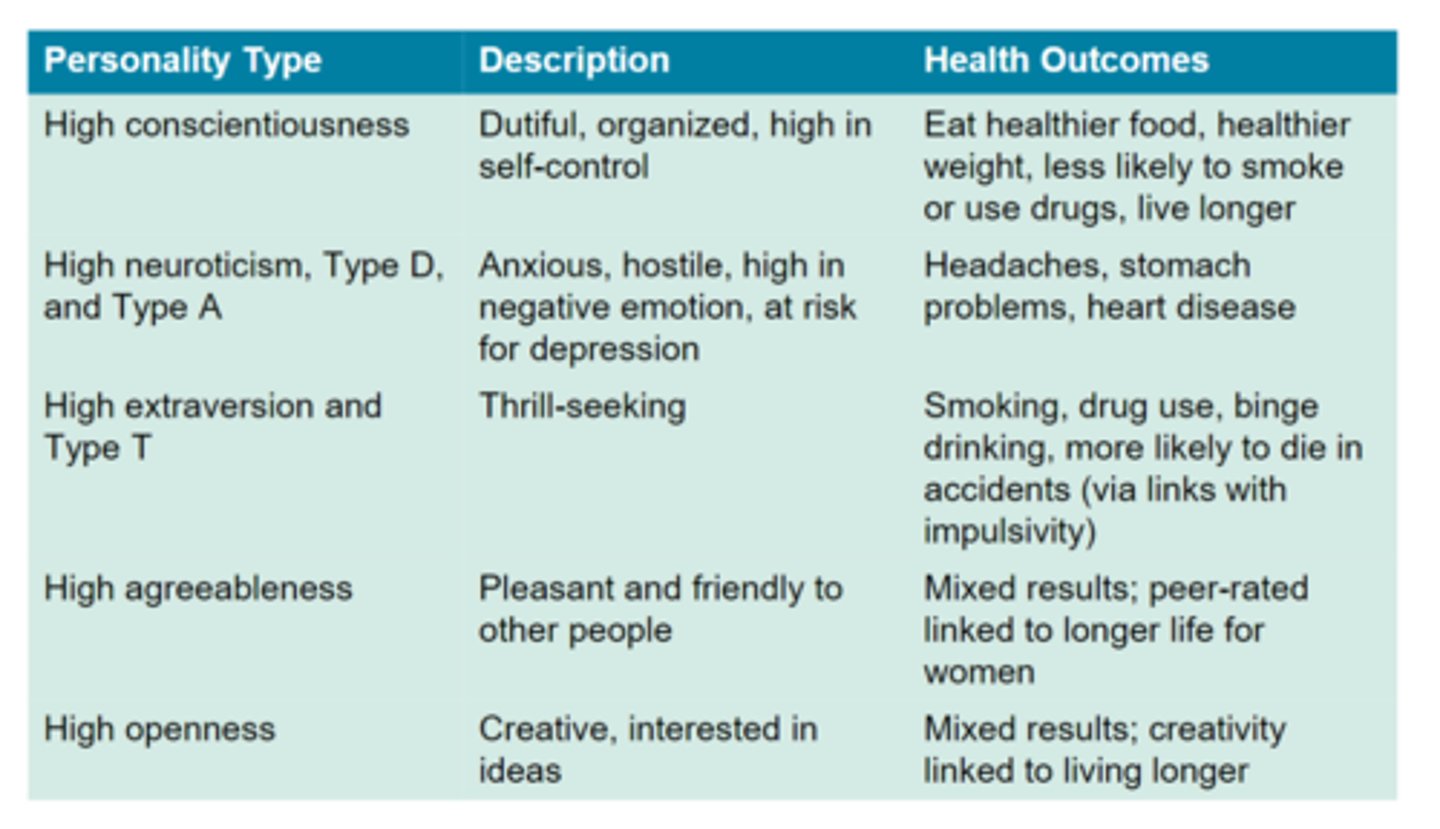
Big 5 and physical health
high power motive
feel controlled by others and become distressed (chronic high blood pressure, immune system problems)
unable to archive desired personality
high affiliation motive
focus on relationships
better immune system
increased progesterone
high achievement motive
participate in sports
better BMI's
channel their drives into behaviors that lead to better physical health
optimistic explanatory style
believe negative events are temporary and specific
pessimistic explanatory style
seeing bad events as all encompassing
opposite for good events
catasrophizing
optimistic people
better immune system
recover more quickly
live longer
adjust better
pessimistic people
more likely to die from accidents/violence
attracted to hazardous situations
take risks, nothing to lose
defensive pessimism
try to prepare in case worst happens
Depressed people
often not pessimists but realists