Structure and function of Plasma Membranes: Chapter 5
 Studied by 49 people
 Call Kai
 Learn
Learn Practice Test
 Spaced Repetition
 Match
Match Flashcards
 Knowt Play
1/43

There's no tags or description
Looks like no tags are added yet.
Name | Mastery | Learn | Test | Matching | Spaced |
|---|
No study sessions yet.
44 Terms
What is the quote of the author from our book that describes the plasma membrane?
“A cells plasma membrane defines the cell, outlines its borders, and determines the nature of its interaction with its environment”
What are the foundation of the cell membrane?
Lipids and proteins
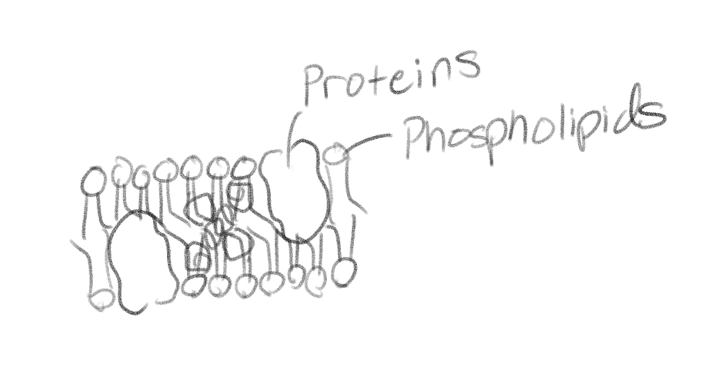
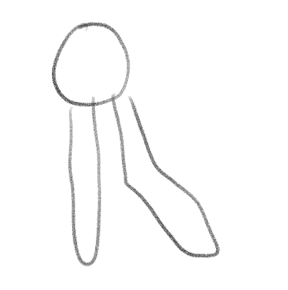
Most lipids in the membrane are what?
Phospholipids
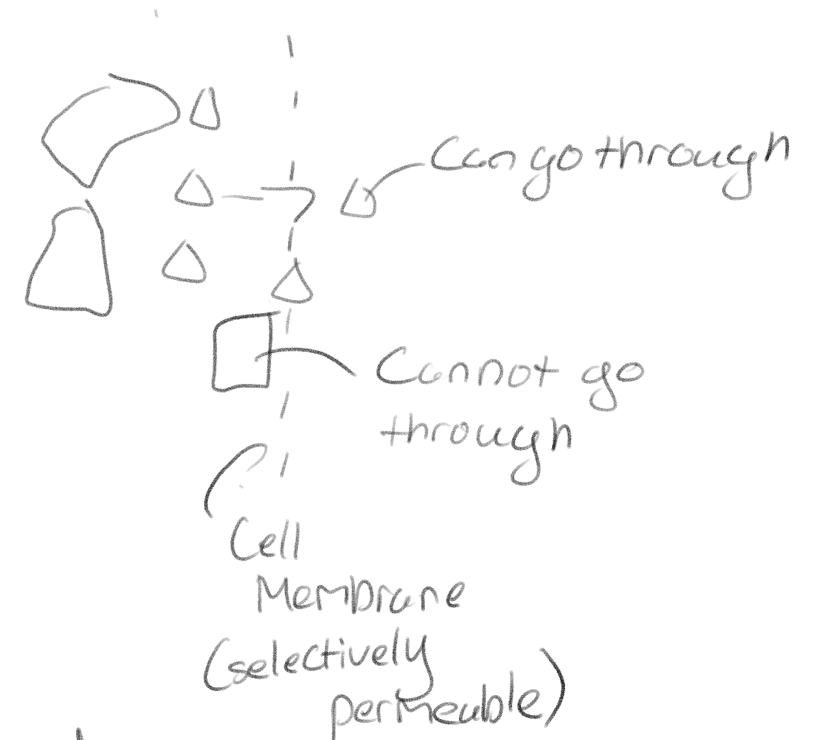
The plasma membrane is _ permeable. What does that mean?
Selectively; It allows some things in and out the cell but not all things.
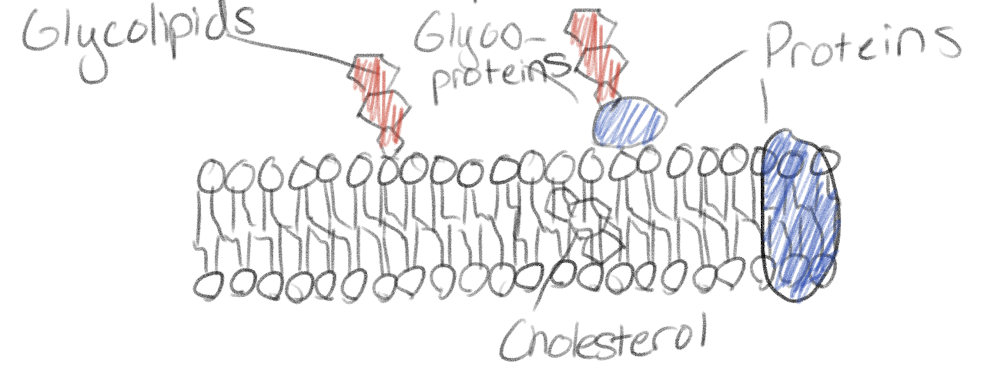
What is the fluid mosaic model of cell membranes?
That the cell membrane is a flexible sea of phospholipids and all the other molecules floating in it
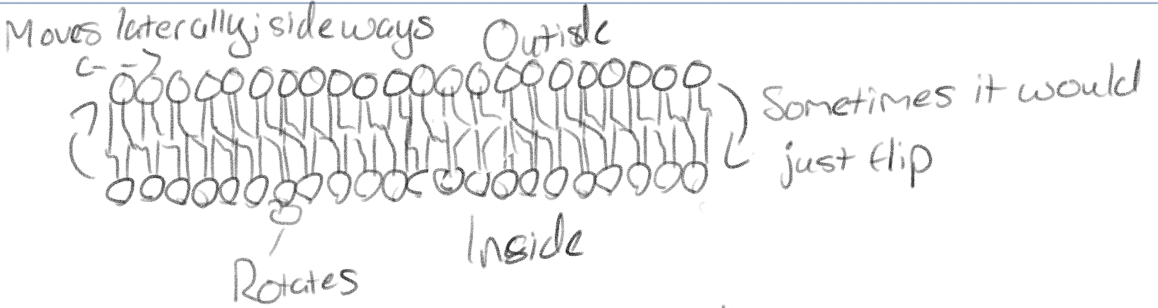
Membranes are dynamic. What does that mean?
They move a lot
They often move laterally, or rotate, but they rarely move transversely (flip from one phase of a membrane to another
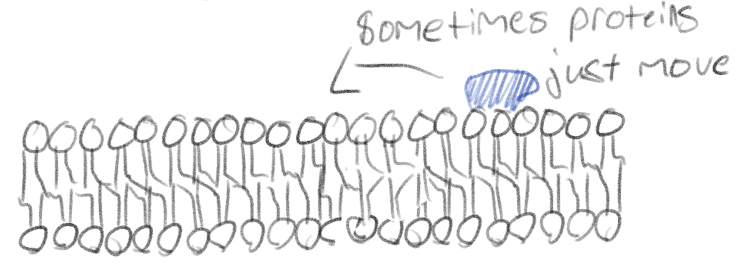
Do proteins move in the plane of the membrane?
Yes
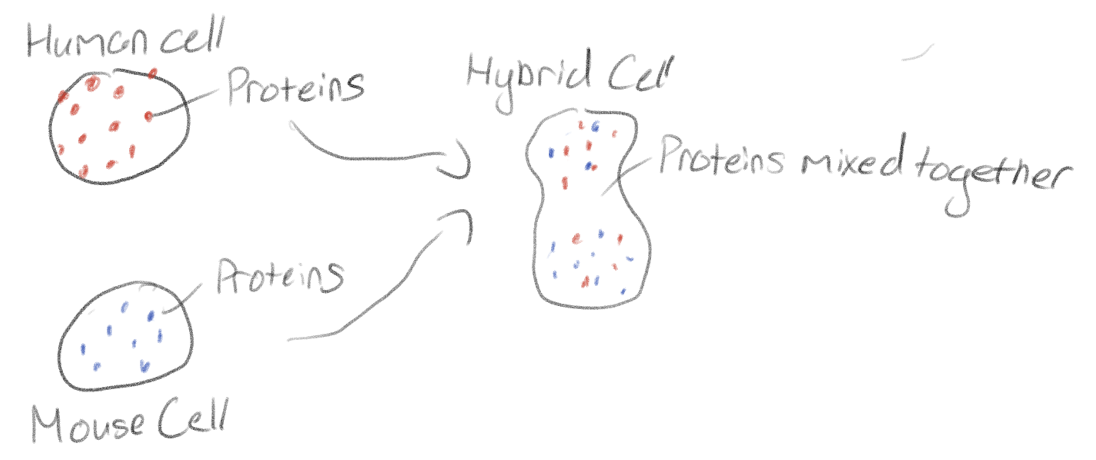
What famous experiment helped show that proteins actually do move in the plane of the membrane?
Frye and Edidin
They fused a mouse and human cell and made a hybrid cell.
They saw that the proteins on the cell membrane of the two cells spreaded out and got mixed. Showing that proteins do actually move
What is another experiment that helps show that proteins do actually move?
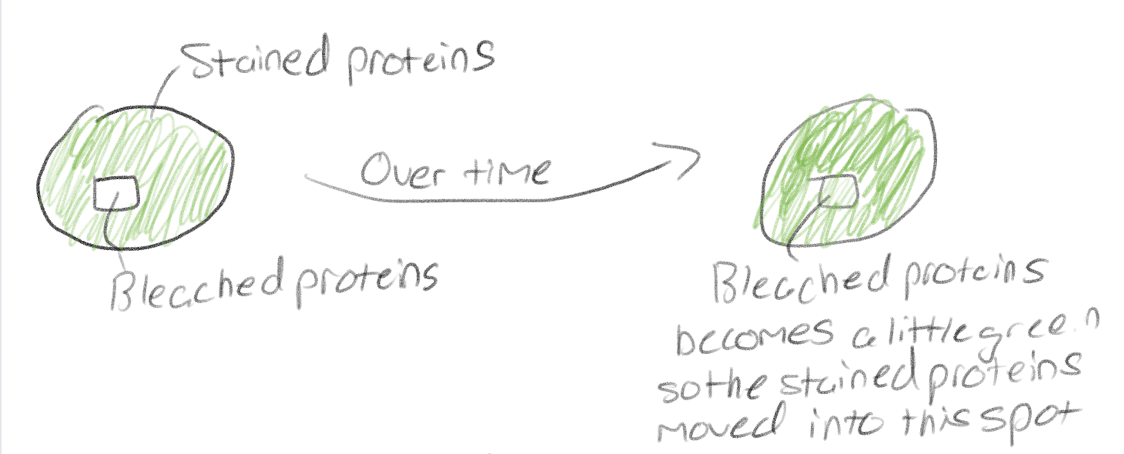
There were stained proteins with green dye on a cell membrane and they bleached a square on the cell membrane making all proteins white
The white square started to turn a little bit green after a while meaning that the stained proteins with green dye moved it the bleached square
Membrane fluidity is affected by what?
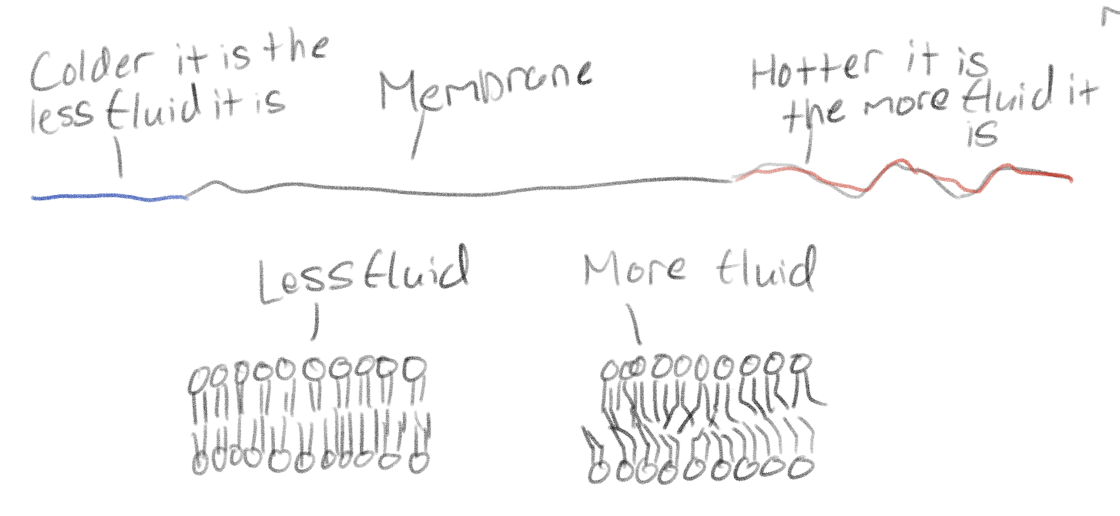
Temperature (The hotter it is the more fluidity) (The colder it is the less fluidity)
Lipid Content
Unsaturated fatty acids make membrane more fluid
While the saturated fatty acids makes the membrane less fluid (viscous)
Cholesterol: Makes membranes more fluid at low temperatures and less fluid at high temperatures; “fluidity buffer” (not found in bacterial membranes). Homeostasis
The fluidity of the membrane affects what?
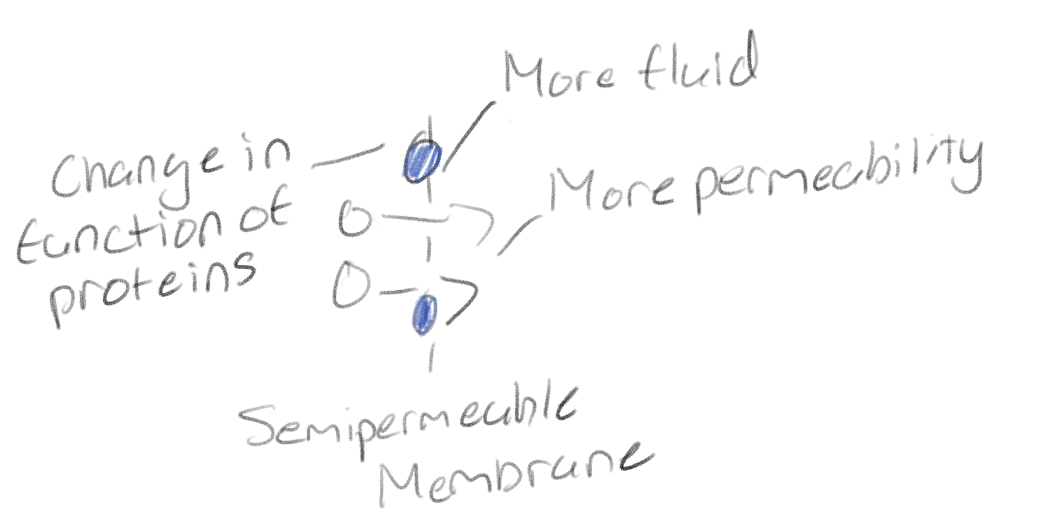
The permeability the more fluid the more permeability
And the functions of membrane proteins
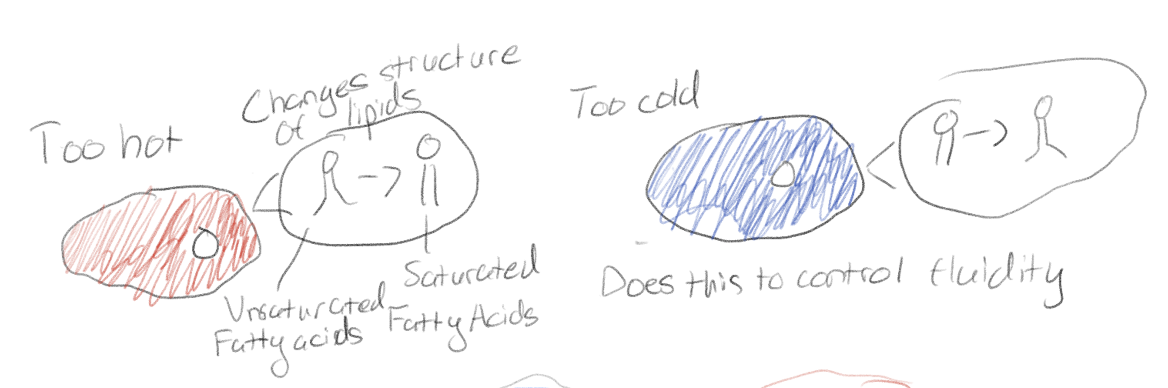
Some organisms can change the lipid component in membranes in response to temperature
When it gets cold, they add more what?
If they get hot, they add more?
Unsaturated fatty acids; Saturated fatty acids
There are differences in lipid concentration of membranes. What are they?
Between different sides (faces of the same membrane
Between different membranes in the same cell
Between different cells in the same organism
Between different organisms
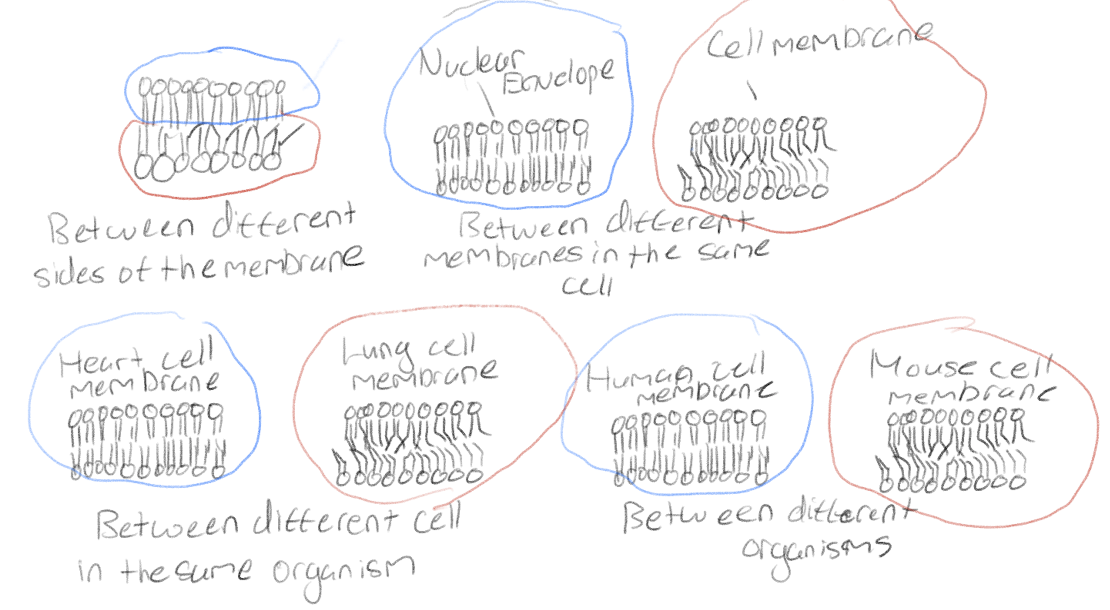
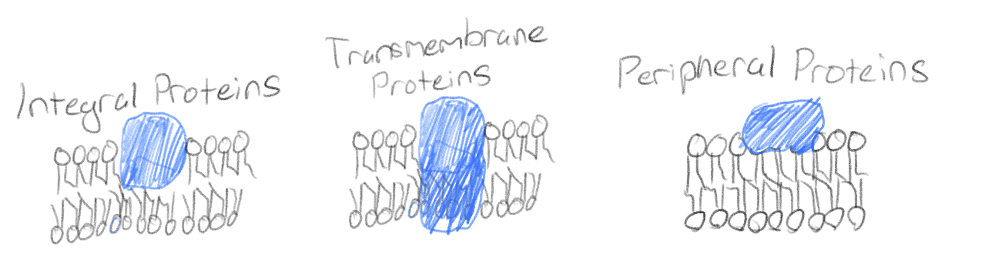
There are membrane protein locations. Name them and describe them.
Integral proteins: penetrate hydrophobic core of lipid bilayer
Transmembrane proteins: completely span the membrane (is a integral protein)
Peripheral proteins: loosely bound to surface
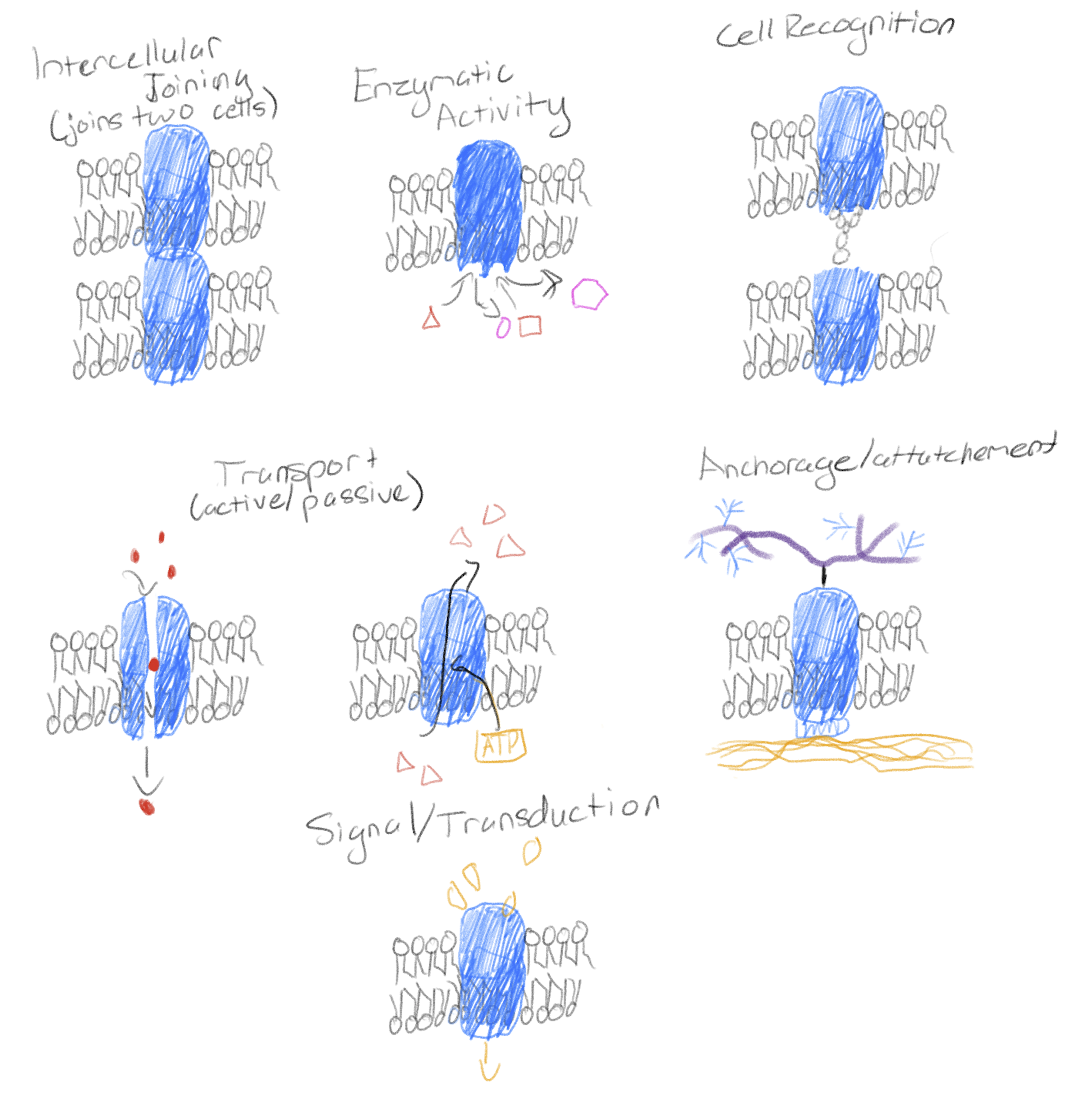
What are the different functions of membrane proteins?
Intercellular joining
Enzymatic activity
Transport (active / passive)
Cell-cell recognition
Anchorage / attachment
Signal transduction
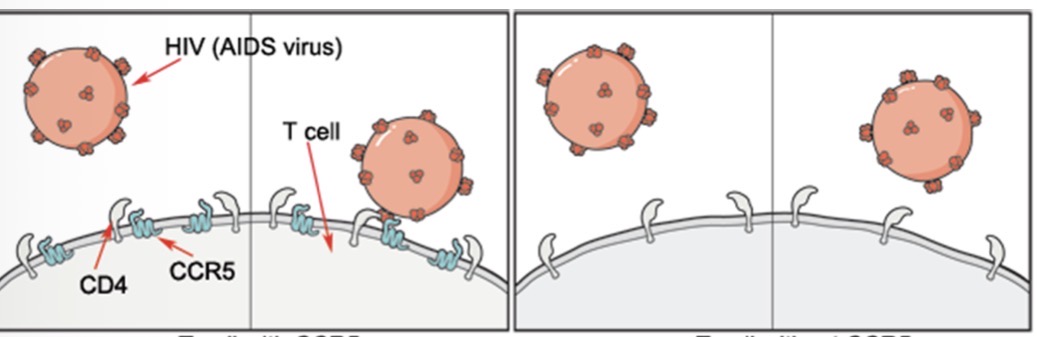
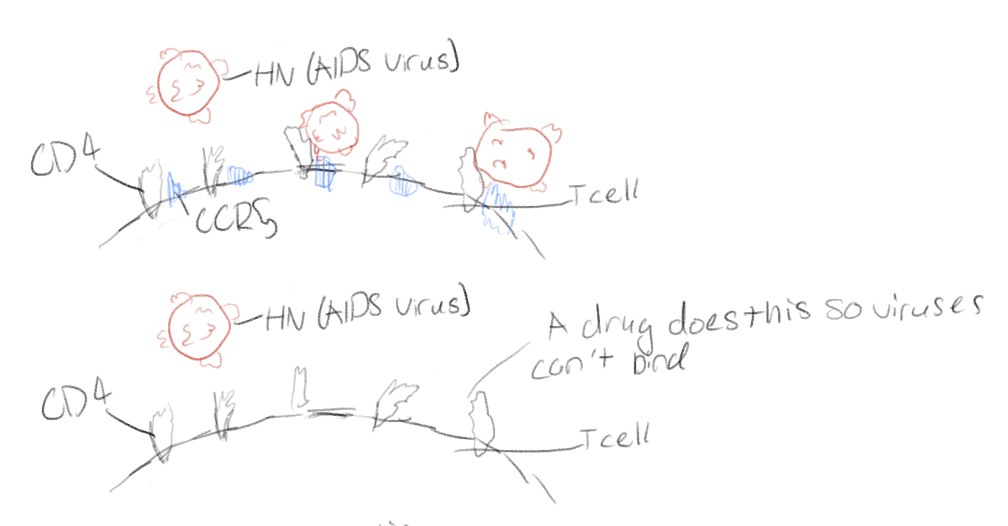
What would you predict about CCR5 that would allow HIV to bind to it? And how could a drug interfere with this binding?
They have to be complementary in shape
A drug can change the shape of the receptor so HIV cannot bind anymore removing the CCR5
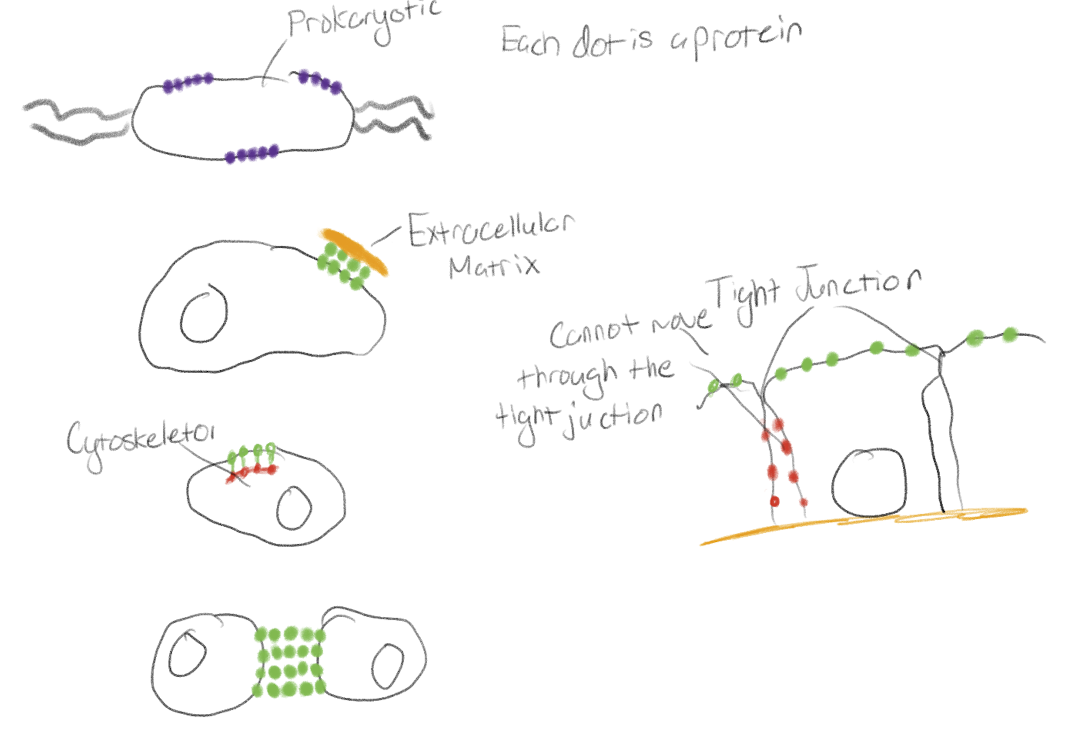
Some proteins cannot move freely within the membrane. Give a few examples.
In prokaryotes when the proteins are attached to one another if one protein wants to move than all of them would have to move
In Eukaryotes
What it is attached to the extracellular matrix, cytoskeleton or attached to proteins on another cell
Proteins can also not move through tight junctions
Membrane carbohydrates
They are usually attached to something else (like they are going to be a glycolipids [attached to lipids] or glycoproteins [attached to proteins])
They are also involved in cell-cell recognition
Sorting of cells in embryos
Immune recognitiion
![<p>They are usually attached to something else (like they are going to be a glycolipids [attached to lipids] or glycoproteins [attached to proteins])</p><p>They are also involved in cell-cell recognition</p><ul><li><p>Sorting of cells in embryos</p></li><li><p>Immune recognitiion</p></li></ul><p></p>](https://knowt-user-attachments.s3.amazonaws.com/0f4d2e6d-ad43-4ac1-b46d-f7b2cfc3f45b.png)
The plasma membrane is _ permeable.
Selectively
What is the real barrier of the cell membrane during diffusion?
The hydrophobic tails (or hydrophobic core)
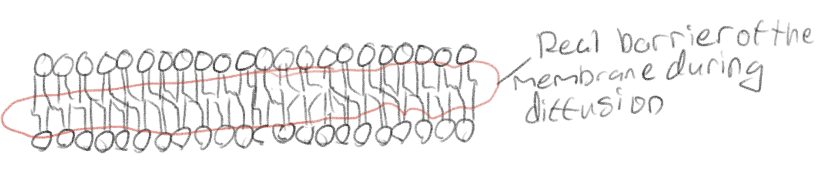
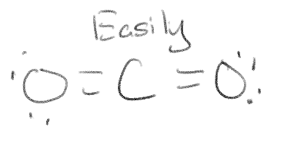
What can quickly pass through the lipid bylayer?
Hydrophobic/ nonpolar molecules
What can pass slowly through the lipid bilayer?
Hydrophillic/ Polar
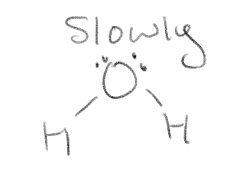
What can pass very slowly through the liquid bilayer?
Ions

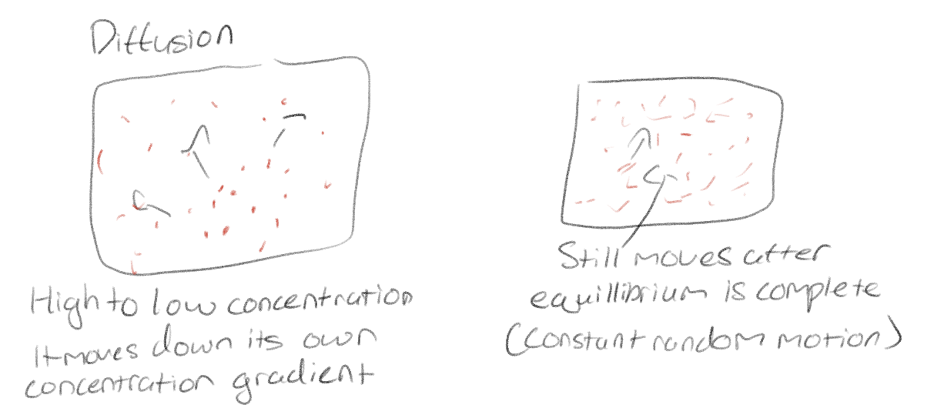
What is diffusion?
The tendency of molecules to spread out evenly over available space; molecules move down their own concentration gradient
NOTE: molecules keep moving, even after equilibrium is reached ( molecules are in constant, random motion
Also remember that each substance is diffusing down its own concentration gradient
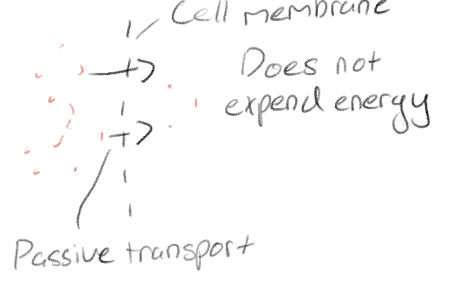
What is passive transport?
Diffusion across cell membrane; cell does not expend energy
Simple diffusion across a membrane
Facilitated diffusion
Passive transport through protein channels or carrier proteins
Allows water and other hydrophilic substances to move across membrane
These are specific they only allow one thing to cross
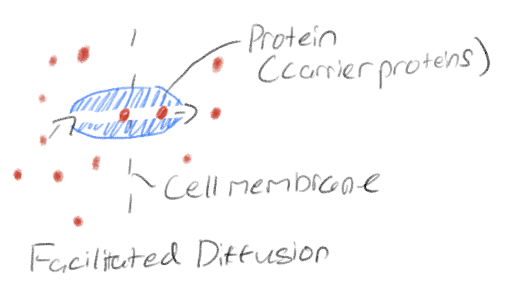
What are the proteins that are involved in facilitated diffusion?
Chanel proteins: provide corridors for specific molecule/ion
Aquaporins: channel proteins for water molecules
Ion channels: Channel proteins for specific ions
Gated channels: chemical or electrical signal causes ion channels to open or close
Carrier proteins: change shape to translocate substances across membrane
What are some factors that can affect diffusion?
Concentration gradient
Mass of molecules diffusing
Temperature
Solvent density
Solubility (hydrophobic or hydrophilic)
Surface area and thickness of membrane
Distance travelled
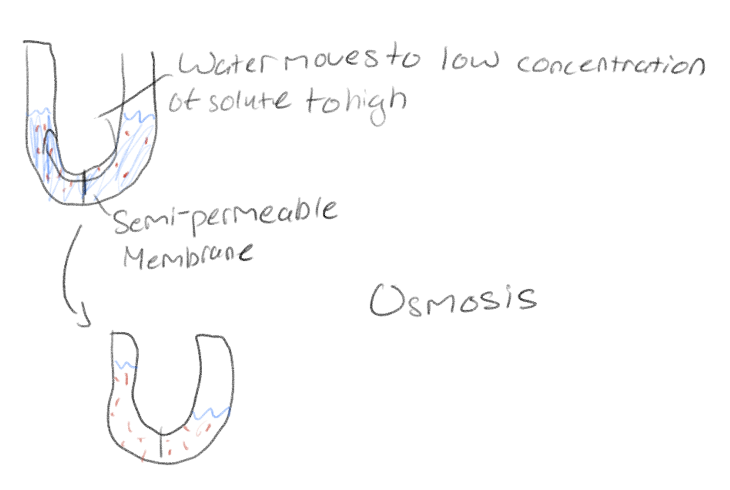
Osmosis
Diffusion of water across a membrane
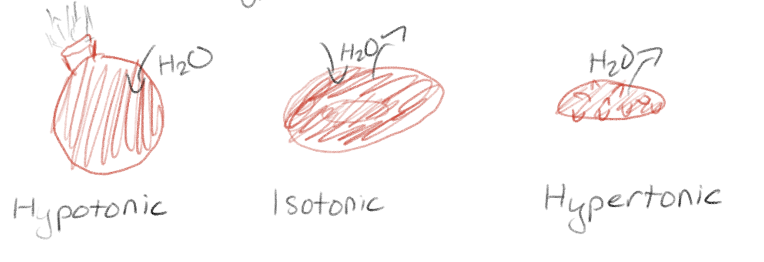
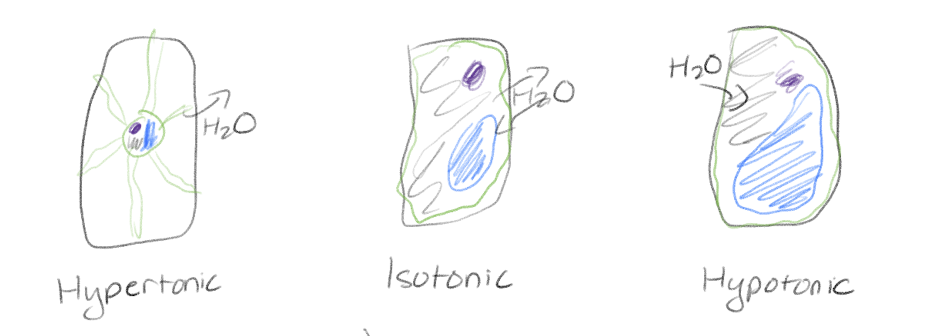
What are the 3 types of tonicity?
Isotonic solution
Hypertonic solution
Hypotonic solution
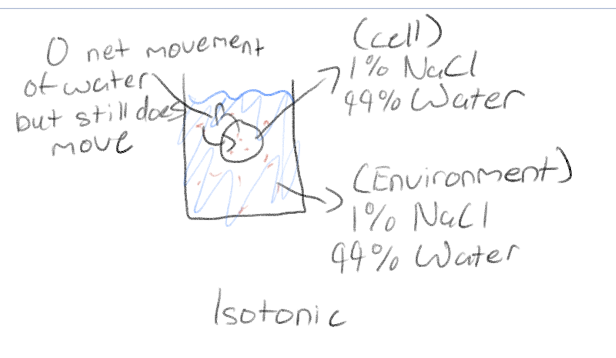
Isotonic solution
Same solute concentration as inside cell
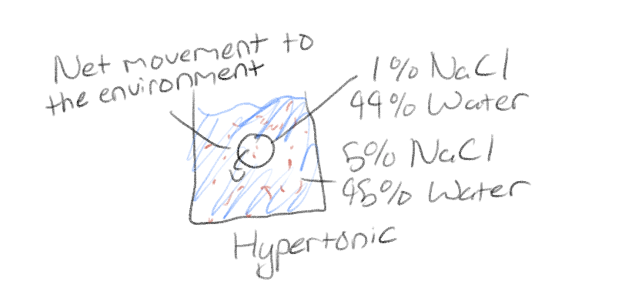
Hypertonic solution
Higher solute concentration than inside cell
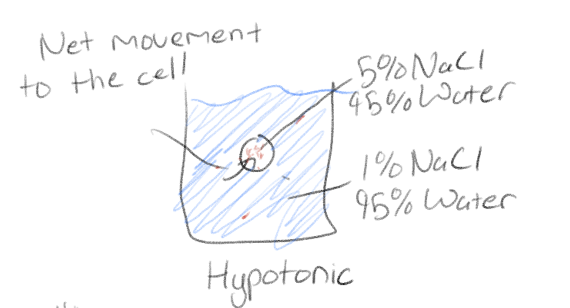
Hypotonic solution
Lower solute conentration than inside cell
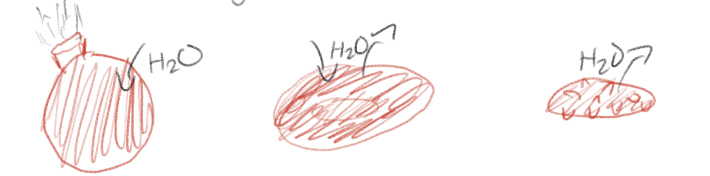
Label the tonicities
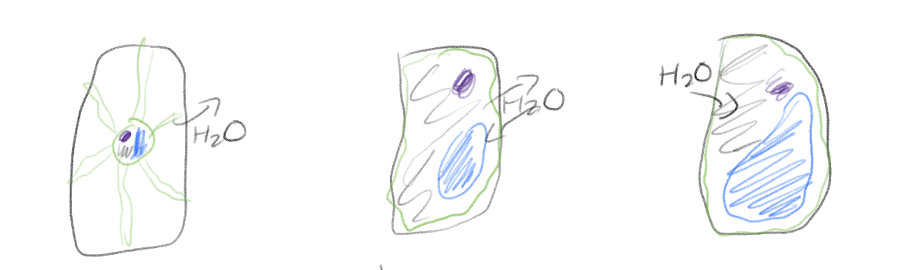
Label the toxicities
What is osmoregulation?
Contractile vesicles that controls aquaporins for allowing water in or out
Active transport
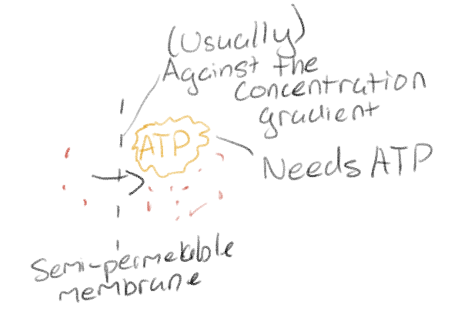
Substances pumped across membrane against concentration gradient
Requires cellular energy
Carrier proteins
Specific
Allows cells to maintain/establish concentrations of substanses
Usually against the concentration gradient
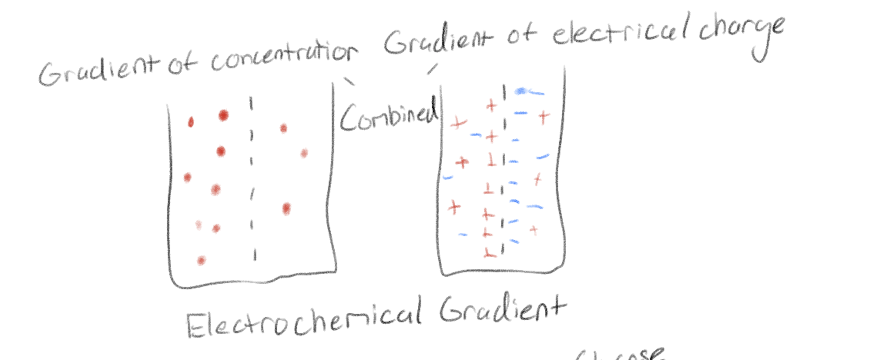
Electrochemical gradient
Combined gradient of concentration and electrical charge (ions)
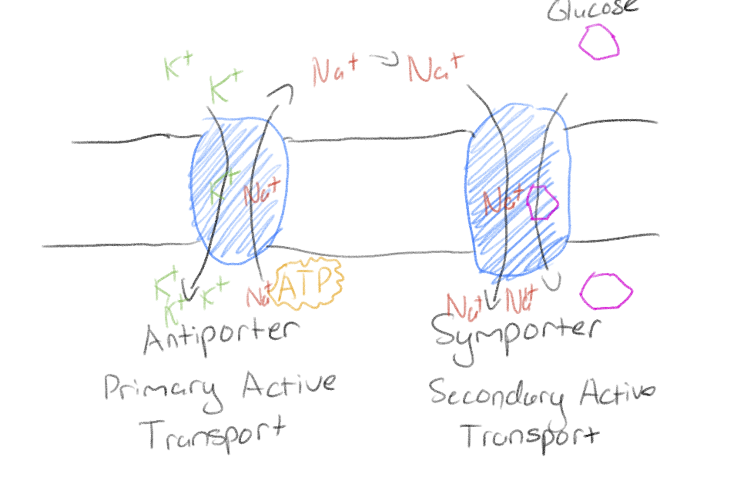
What is primary active transport and secondary active transport?
Primary active transport - Moves ions across a membrane and creates a difference in charge cross the membrane (electrochemical pump)
Secondary active transport - moves material by an electrochemical gradient established by primary active transport
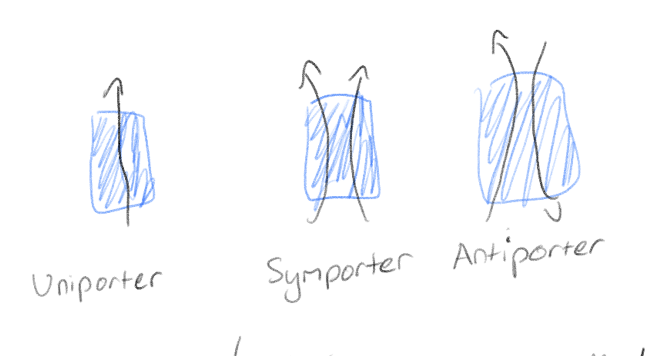
What are the three types of transporters? Describe them.
Uniporter - only goes in one direction and one compound
Symporter - only goes in one direction and two compounds
Antiporter - goes in opposite directions and two compounds
What are two types of bulk transport?
Endocytosis and exocytosis
Endocytosis
Transport of large molecule into cell
Plasma membrane invaginates to form vesicles
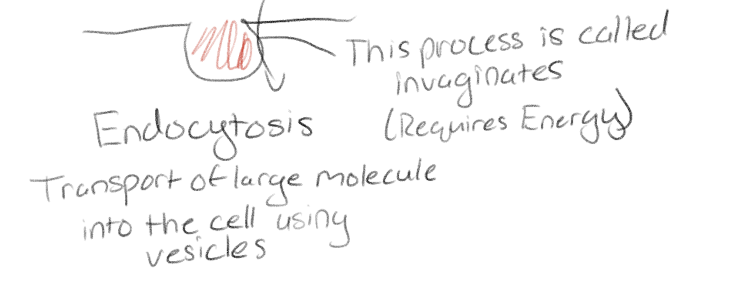
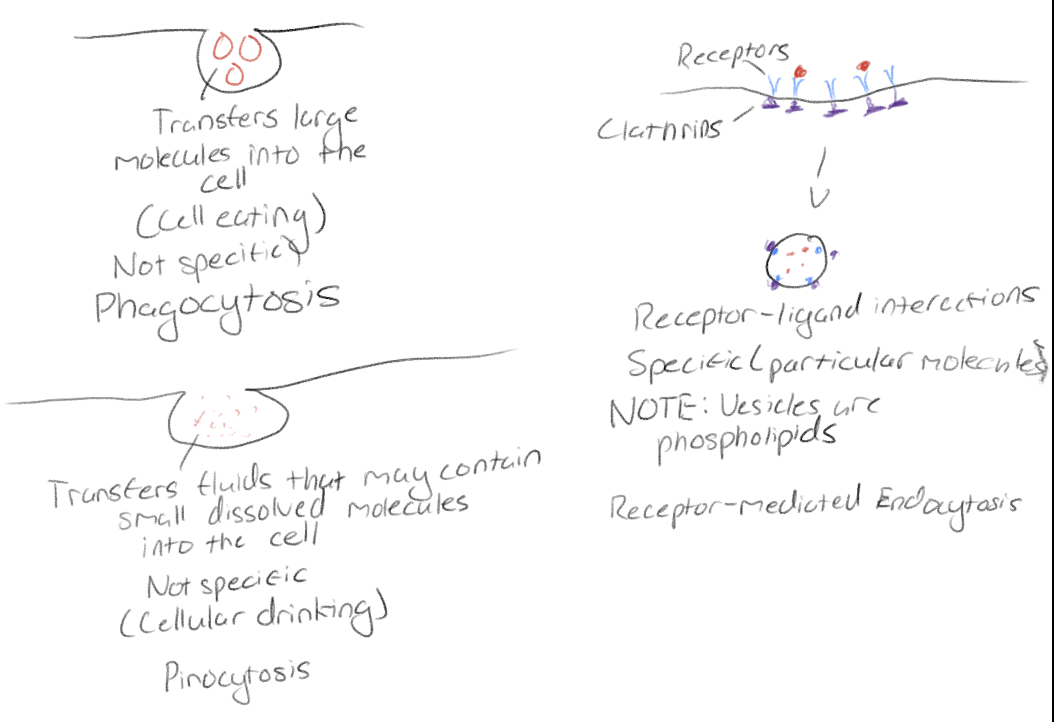
What are the three types of endocytosis?
Phagocytosis (cell eating) Not specific
Examples consist of lysosomes and immune cells
Pinocytosis (cellular drinking) Not specific
Bring in fluid inside the cell
Receptor-mediated endocytosis: Specific
Receptor ligand interactions
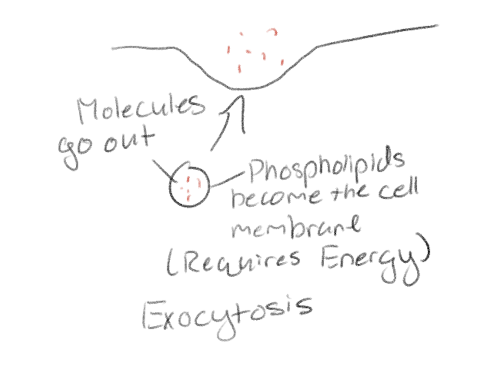
Exocytosis
Transport of large substances out of cell
Vesicles fuses with plasma membrane