Microb 201-- Exam 1
 Call Kai
 Learn
Learn Practice Test
 Spaced Repetition
 Match
Match Flashcards
 Knowt Play
1/45

There's no tags or description
Looks like no tags are added yet.
Name | Mastery | Learn | Test | Matching | Spaced | Call with Kai | Chat |
|---|
No analytics yet
Send a link to your students to track their progress
46 Terms
characteristics of prokaryotes
unicellular (1microM)
lack a nucleus and other membrane bound organelles
archaea or bacteria
DNA is circular or linear
Prokaryotic cell structure
nucleoid region, cytoplasm, cell membrane, cell wall, capsule, flagella
Nucleiod Region
region containing DNA
cytoplasm
contains ribosomes for protein makeup
cell membrane
separates cell from environment
cell wall
rigid structure which protects the cell from bursting
capsule
protective barrier which helps cells adhere to surfaces
immune system response
flagella
tail-like projection, helps with mobility
cytoplasmic membrane
“fluid mosaic model”
composed of phosopholipids, glycolipids, glycoproteins, and proteins
phospholipid bilayer characteristics
amphipathic — contains both hydrophobic (fatty acid) and hydrophilic (phosphate) domains
bilayer makes up most of the cytoplasmic membrane
Impermeable bilayer, only allows small, uncharged molecule
proteins functions in membrane
increases rigidity — cell structure is more stable
involved cell signaling and recognition — enables communication between cells
involved in adhesion — enables cells to “stick” to things in enviro
involved in transport — forms pores to allow transportation through bilayer membrane (selective permeability)
membrane proteins — receptor
binds to chemical messenger sent by other cells (ex. hormones)
membrane proteins — enzyme
breaks down chemical messenger and terminates its effects
membrane proteins — channel
constantly open and allows solute to pass into and iut of cell
membrane proteins — gated channel
opens and closes to allow solutes through only at certain times
membrane proteins — cell-identity marker
glycoprotein acting as a cell-identity marker distinguishing the body’s own cells from forgein ones
membrane proteins — cell-adhesion molecule (CAM)
binds one cell to another
diffusion (passive transport)
Movement of high concentration to low concentration without the use of energy
CHAOS!!! = no atp needed
active transport
movement of low concentration to high concentration with using ATP
NO chaos = atp needed
group translocation
movement of ions/molecules across a cell membrane via being chemically transformed
simple diffusion
doesnt require a membrane protein
only small molecules can diffuse
ex. oxygen
facilitated diffusion
requires a membrane channel protein
only large or charged ions
non-specific and specific facilitated diffusion
specific facilitated diffusion
membrane protein is specific for a particular substance
nonspecific facilitated diffusion
multiple substances can use the same channel
osmosis
molecules of solvent pass through semipermeable membrane from low to high solute concentration
solvent goes from high to low concentration
semipermeable membrane
permeable to solvent, NOT solute
solvent
the liquid the solute is dissolved in (usually water)
solute
a substance dissolved in a solvent (Na+, K+, Cl-)
isotonic solution
external solution has same concentration as the cell
no change to cell
hypertonic solution
external solution has a higher solute concentration than cell
cell shrinks as it loses water
hypotonic solution
external solution has lower concentration than the cell
cells will lyse without a cell wall as they take in H2O
salt
ability of cell to grow depends on toleration of environments salt concentration
salt used to preserve food
salt favors the growth of microorganisms
halotolerant and halophilic salt
halotolerant — adapts to salt
halophilic — requires salt
both adapted to high salt concentrations
species thrive at low/moderate salt concentrations
some require salt to grow
habitats where halophilic/halotolerant live
ocean/salt lakes
animal skin (staphylococcus epidermidis)
food (staphylococcus aureus)
bacterial cell walls functions
provide structure and shape to cells
prevents damage from osmosis (lysis)
used in adherence in environments
prevents chemicals from penetrating the cell
components of cell wall
peptidoglycan (most prominent) attached to phospholipid bilayer
sticky protein sugar layer used to makeup cell wall
reason for difference in staining for gram neg and gram pos bacteria
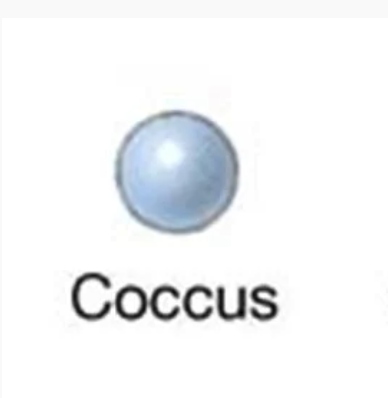
shapes of bacteria — cocci
circle shaped
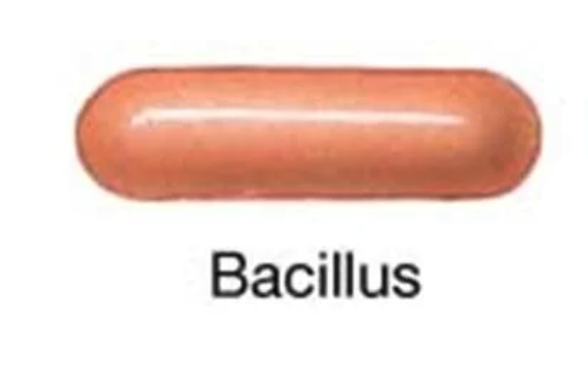
shapes of bacteria — rod
rod shaped
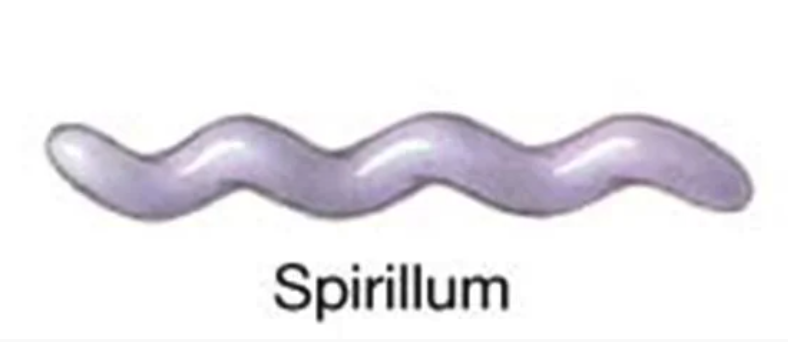
shapes of bacteria — spirillum
“s-shaped”
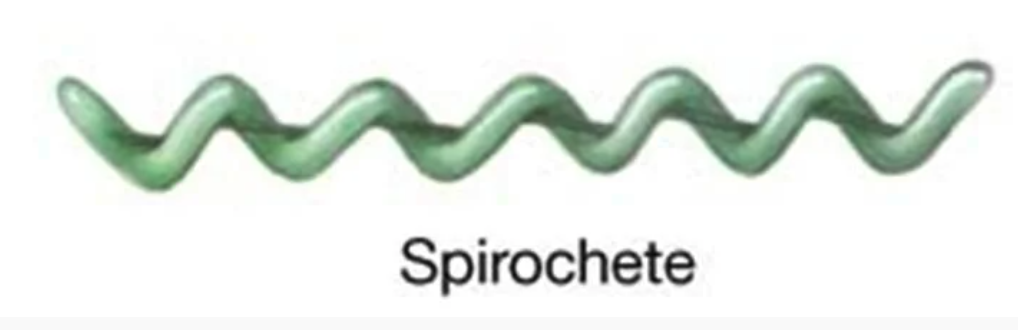
shapes of bacteria — spriochete
spiral staircase
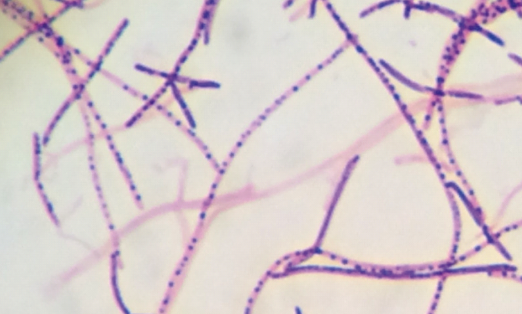
shapes of bacteria — filamentous
“fungi” /// “filaments”
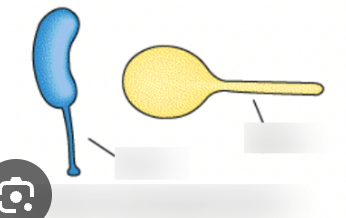
shapes of bacteria — budding and appendaged
“golf clubs” /// “tadpoles”
“stalk” /// “hypha”
microbes
prokaryotes:
bacteria
archaea
Non-living:
virsues
eukaryotes:
fungi
protists
algae
prokaryotes vs eukaryotes characteristics
Prokaryotes:
unicellular organism
lack cell membrane
simple structure
no separation between DNA, RNA, and proteins
DNA is circular or linear, NOT stored in nucleus
all bacteria and archaea
Eukaryotes:
unicellular or multicellular
DNA stored within nucleus
complex structure
various compartments segregating cellular functions
plants, fungi, and animals
viruses characteristics
nonliving