Non Malignant Neoplasms and Congenital Lung Disease
 Call Kai
 Learn
Learn Practice Test
 Spaced Repetition
 Match
Match Flashcards
 Knowt Play
1/11

There's no tags or description
Looks like no tags are added yet.
Name | Mastery | Learn | Test | Matching | Spaced | Call with Kai | Chat |
|---|
No analytics yet
Send a link to your students to track their progress
12 Terms
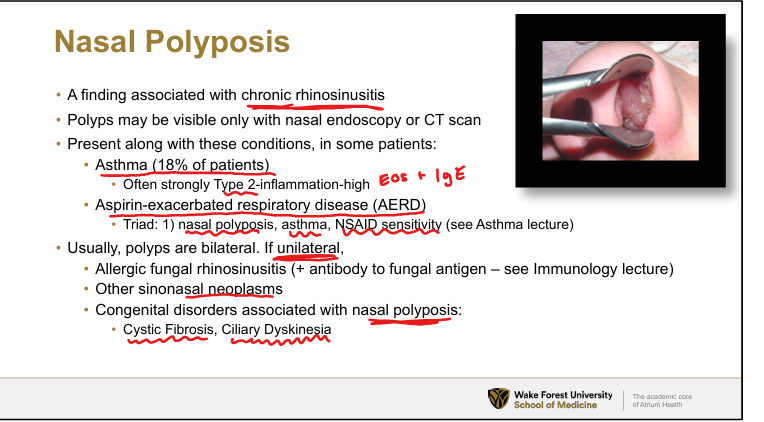
Clinical features of nasal polyposis
Nasal polyps associated with chronic rhinosinusitis often bilateral; present alongside asthma and aspirin exacerbated respiratory disease
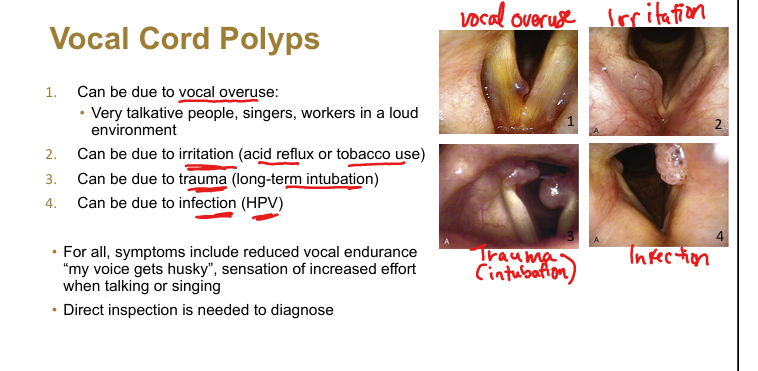
Clinical features of vocal cord polyposis
Polyps from vocal overuse, irritation (GERD, tobacco), trauma (intubation), or HPV. Symptoms include hoarseness, reduced vocal endurance, increased effort with speech
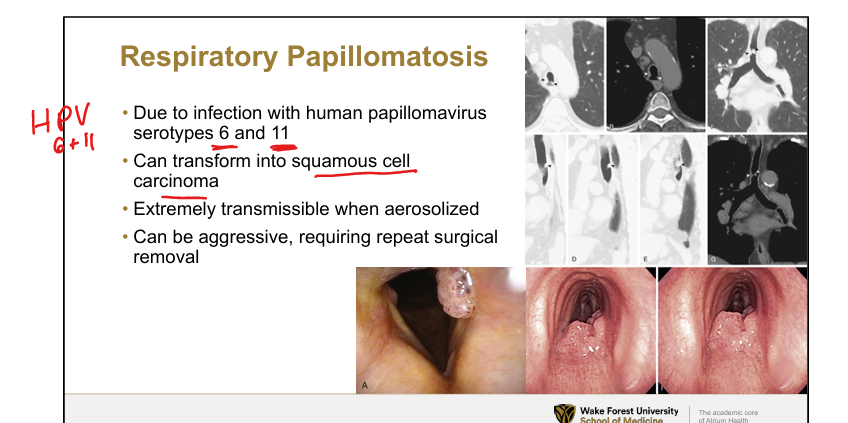
Clinical features of respiratory papillomatosis
HPV 6 & 11 infection causing recurrent respiratory papillomas, highly transmissible when aerosolized
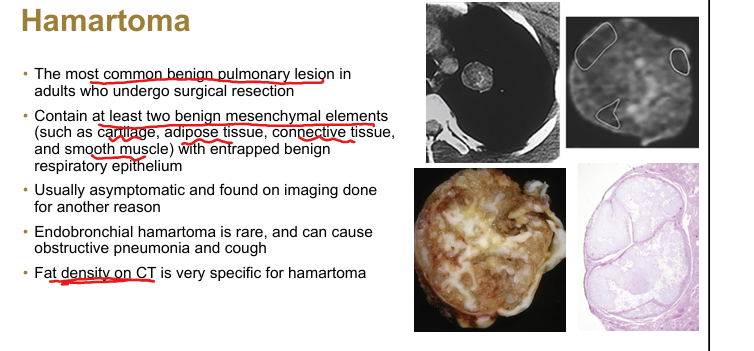
Clinical features of pulmonary hamartoma
Most common benign lung tumor composed of cartilage, fat, connective tissue, smooth muscle with entrapped epithelium
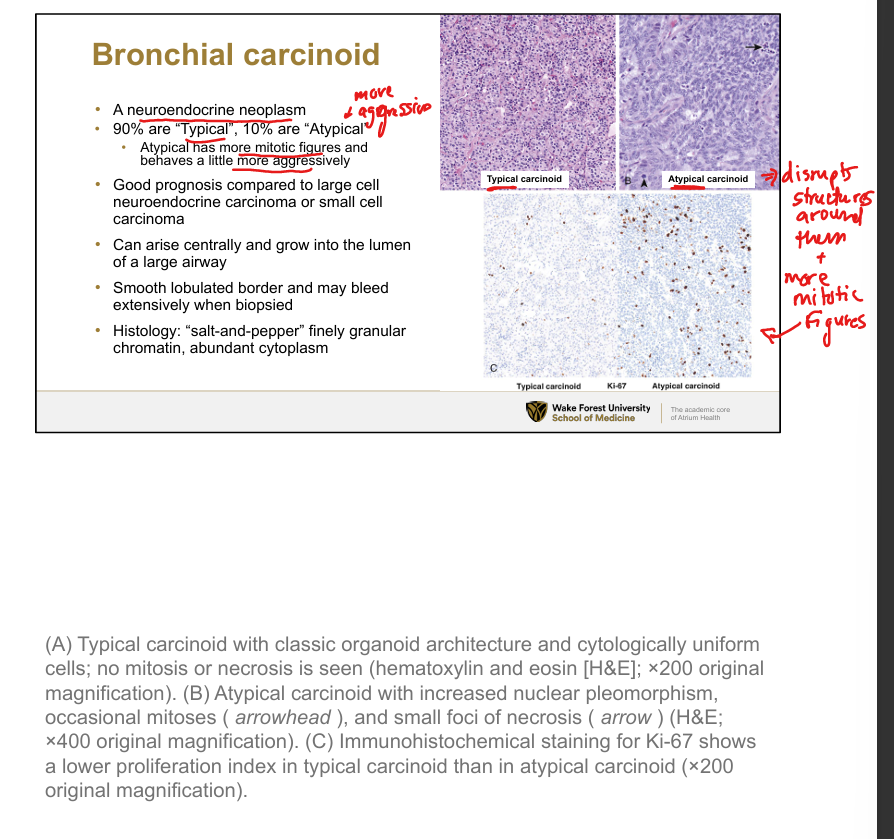
Clinical features of bronchial carcinoid tumors
Neuroendocrine tumors 90% typical, 10% atypical(have more mitotic figures and are more aggressive)
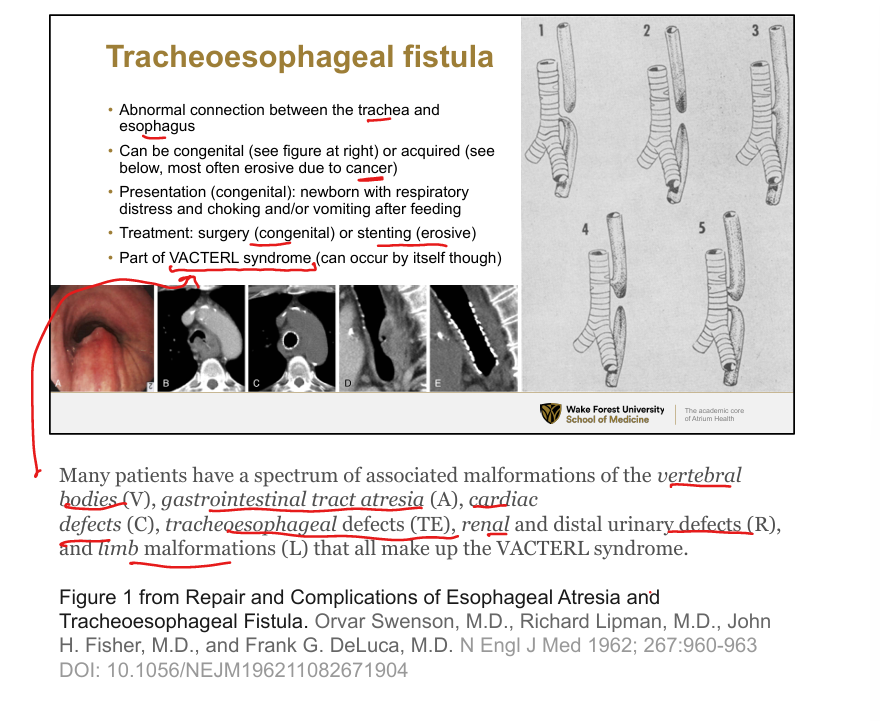
Tracheoesophageal fistula: clinical features
Newborn with choking, coughing, cyanosis during feeds inability to pass NG tube
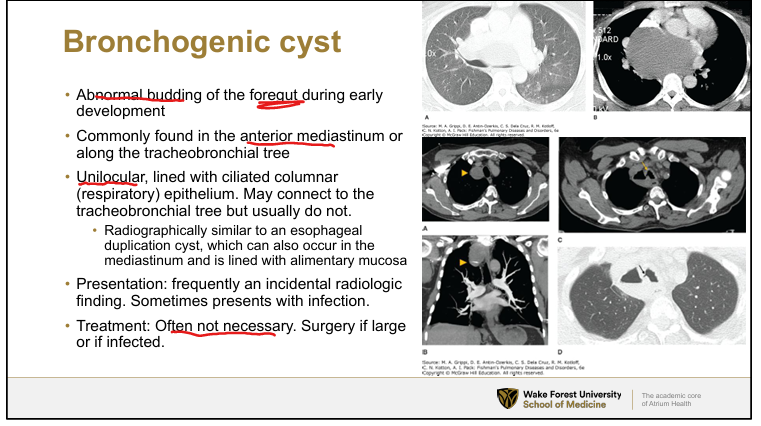
Bronchogenic cyst:
Abnormal budding of foregut, unilocular cyst lined by ciliated respiratory epithelium
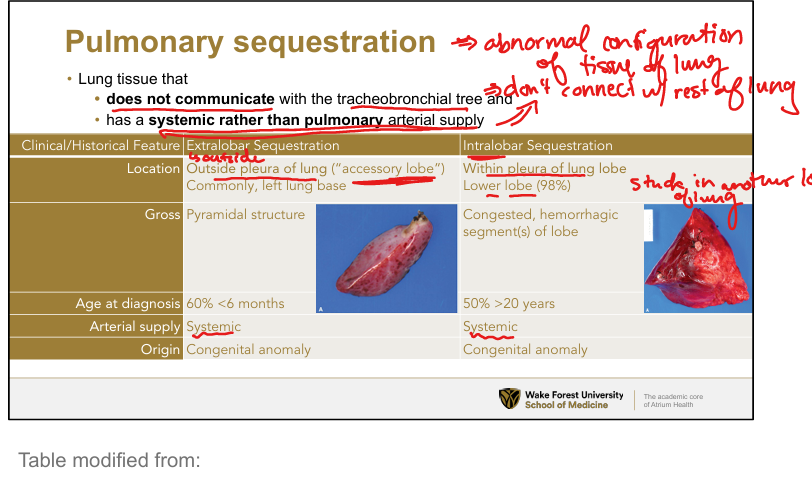
Pulmonary sequestration:
Non‑functional lung tissue with systemic arterial supply and no communication with tracheobronchial tree.
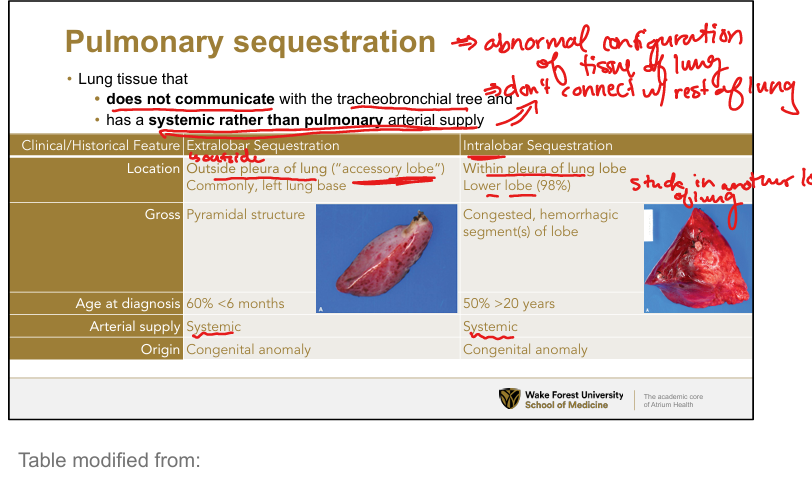
Extralobar sequestration: clinical features
Outside pleura (“accessory lobe”), pyramidal shape, <6mo at diagnosis
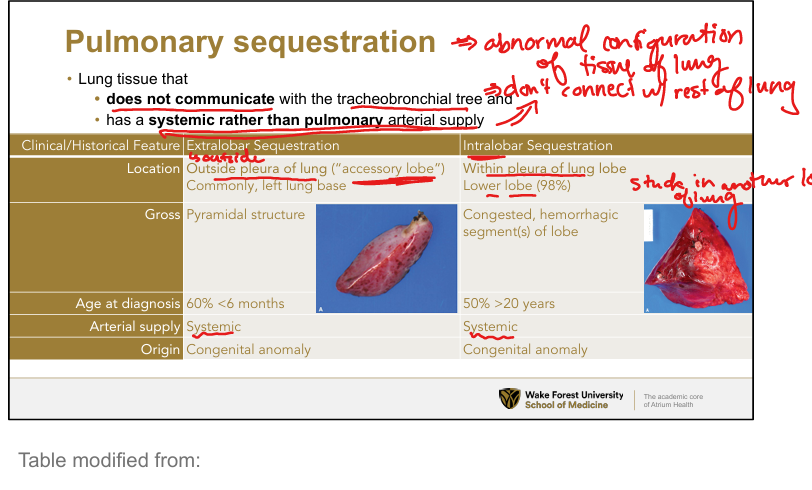
Intralobar sequestration: clinical features
Within normal pleura, presents later (often adulthood)
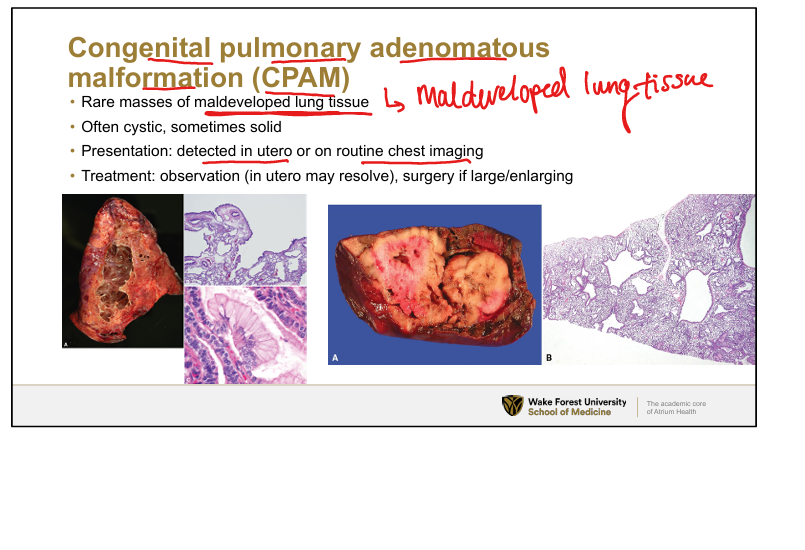
Congenital Pulmonary Adenomatous Malformation (CPAM)
Congenital maldevelopment of terminal bronchioles, cystic or solid masses replacing lung tissue.
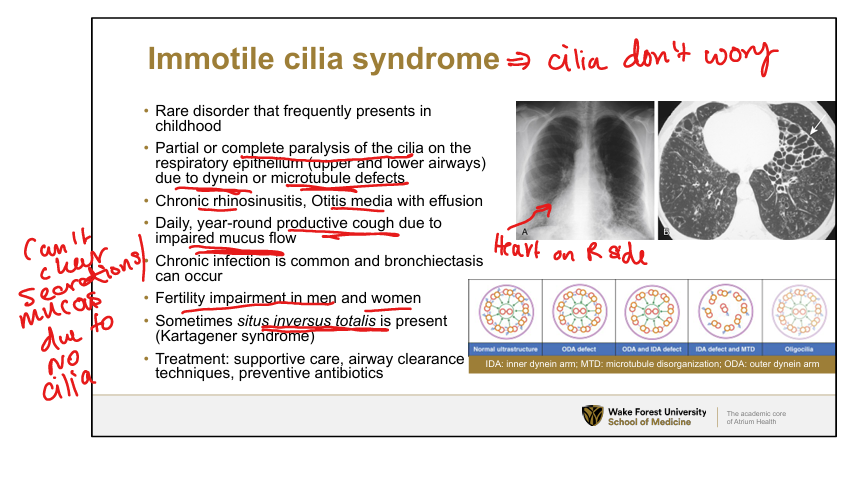
Immotile cilia syndrome:
Dynein arm or microtubule structural defects causing impaired ciliary motion, part of primary ciliary dyskinesia. Sx: Chronic sinusitis, otitis media, daily productive cough, bronchiectasis, infertility