Gluteals and Deep Rotators

0.0(0)
Studied by 0 people
call kaiCall Kai
Locked
learnLearn
examPractice Test
spaced repetitionSpaced Repetition
heart puzzleMatch
flashcardsFlashcards
GameKnowt Play
Card Sorting

1/10

flashcard set

Earn XP

Description and Tags

shake what yo mama gave ya

Last updated 12:53 PM on 6/21/26
Name
Mastery
Learn
Test
Matching
Spaced
Call with Kai
Chat

No analytics yet

Send a link to your students to track their progress

11 Terms
1
New cards
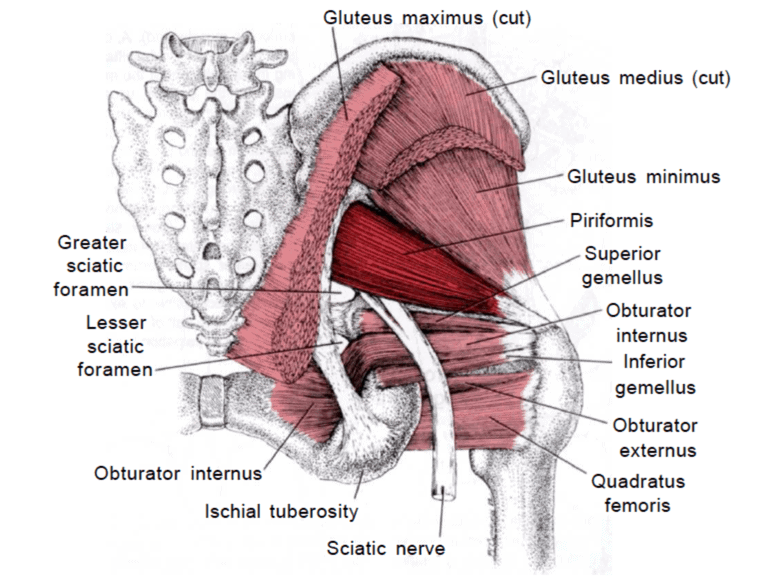
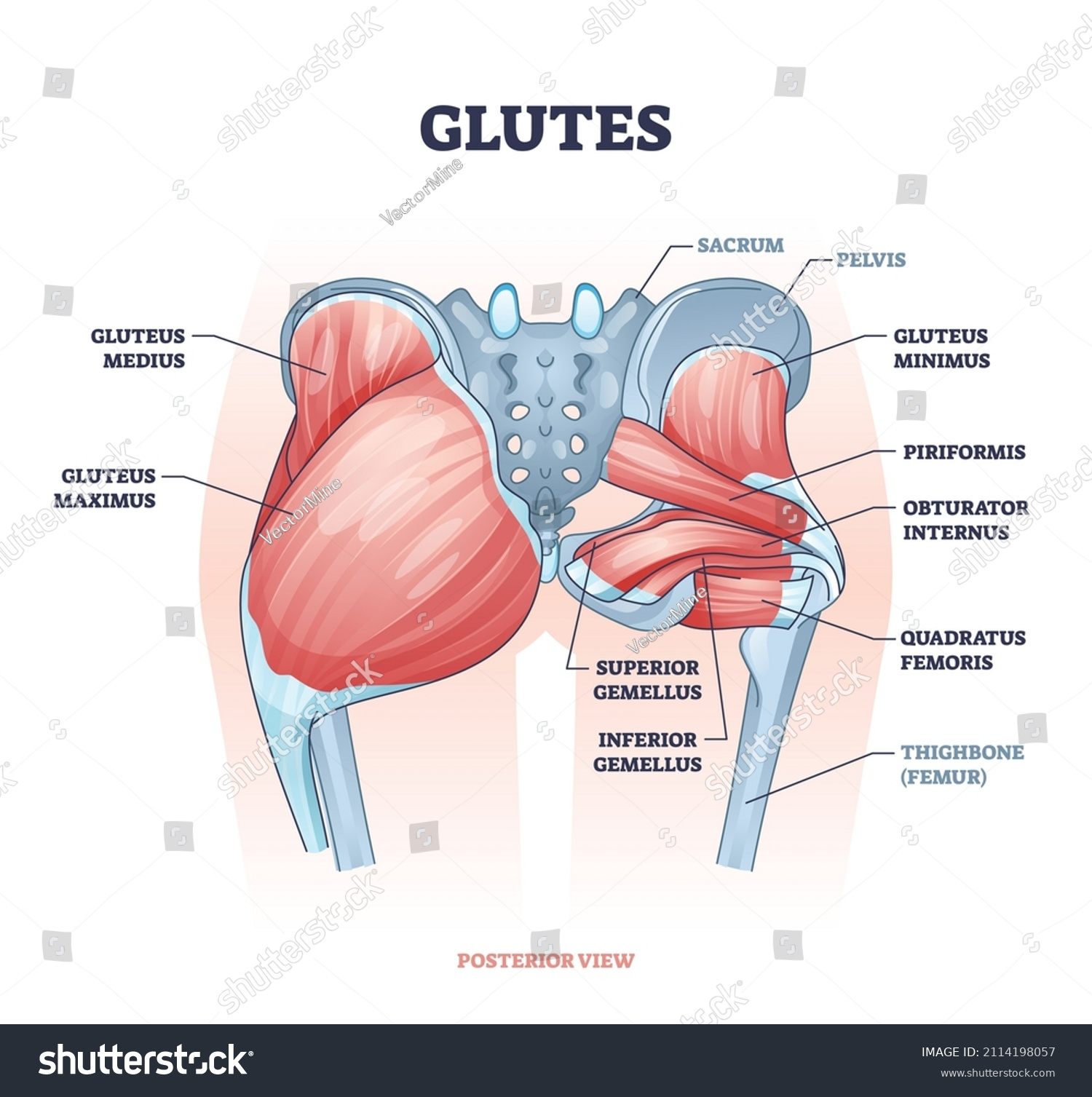
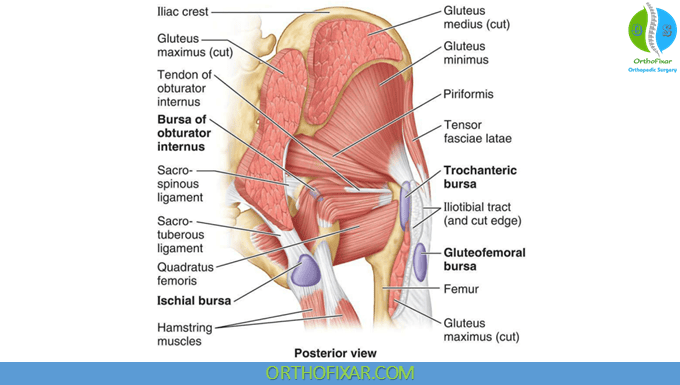
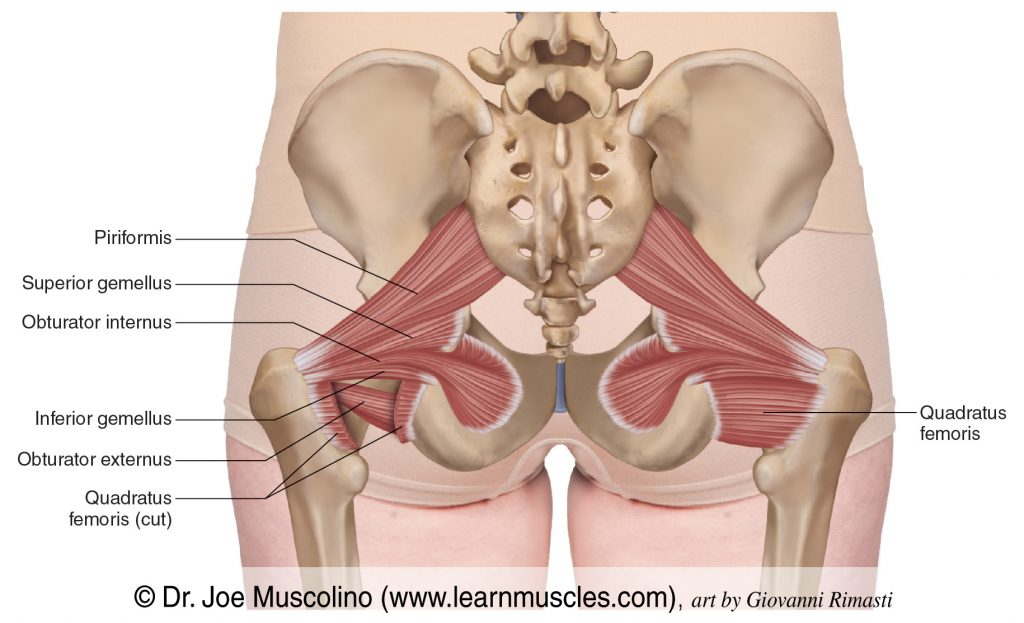
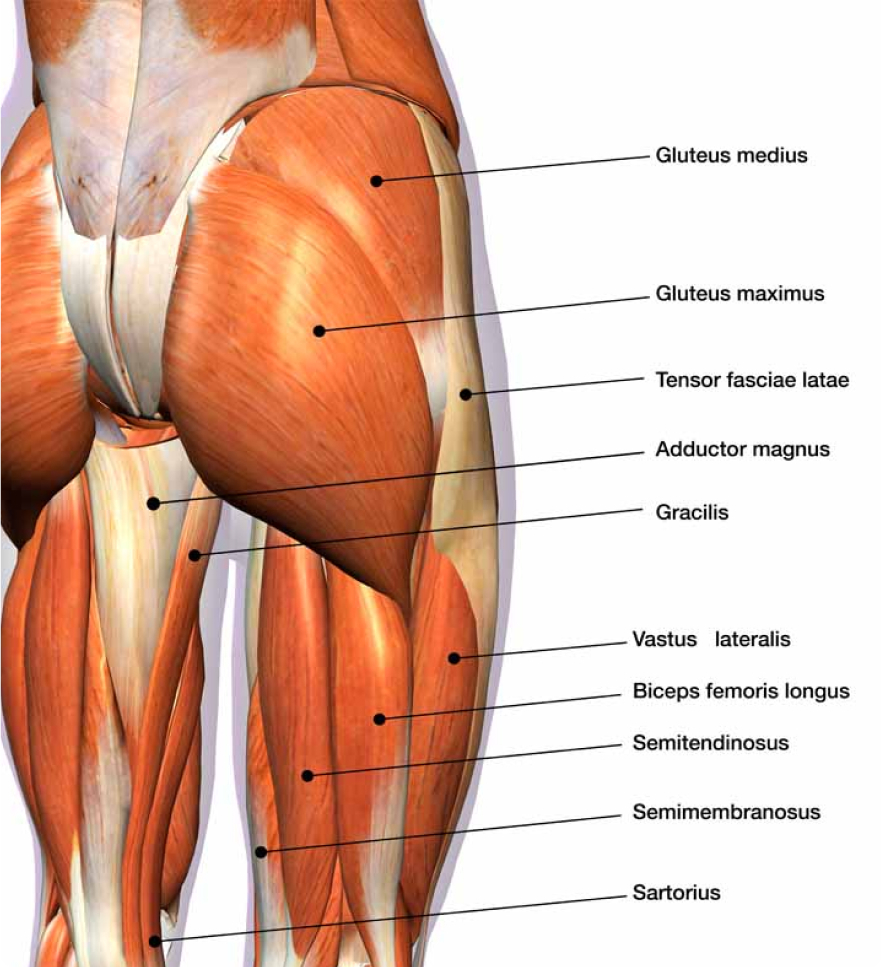
<p>Overview of Gluteals and Deep Rotators</p>

Overview of Gluteals and Deep Rotators

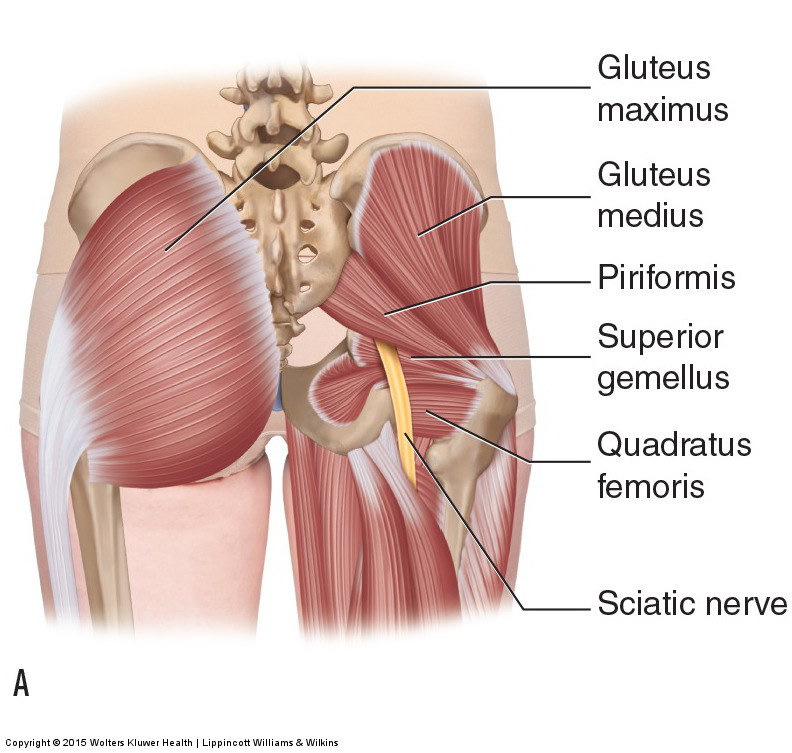
Gluteal Superficial Group

  • gluteus maximus

  • gluteus medius

  • gluteus minimus

  • tensor fascia latae

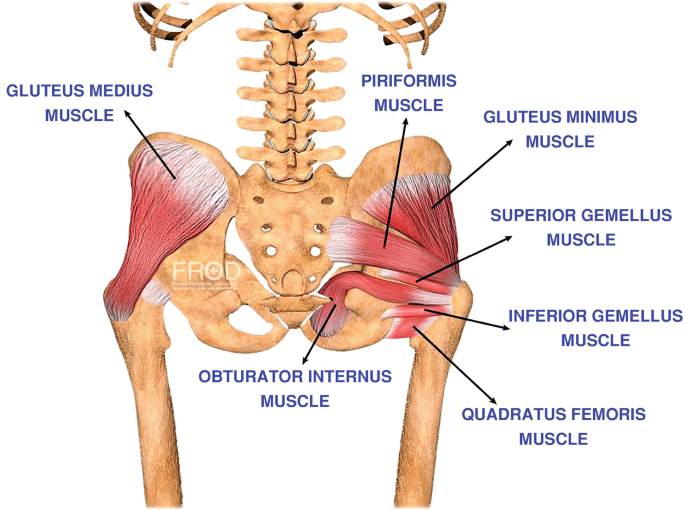
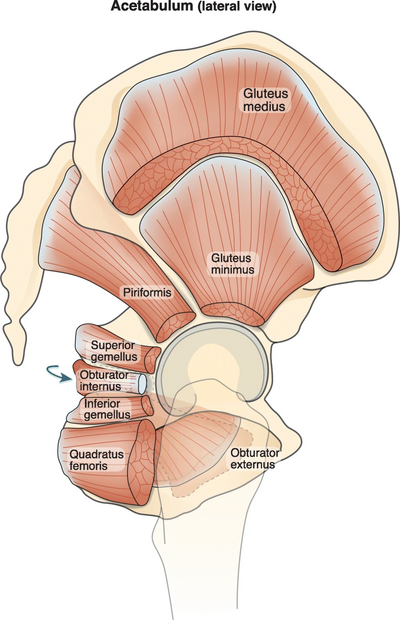
Gluteal Deep Rotators

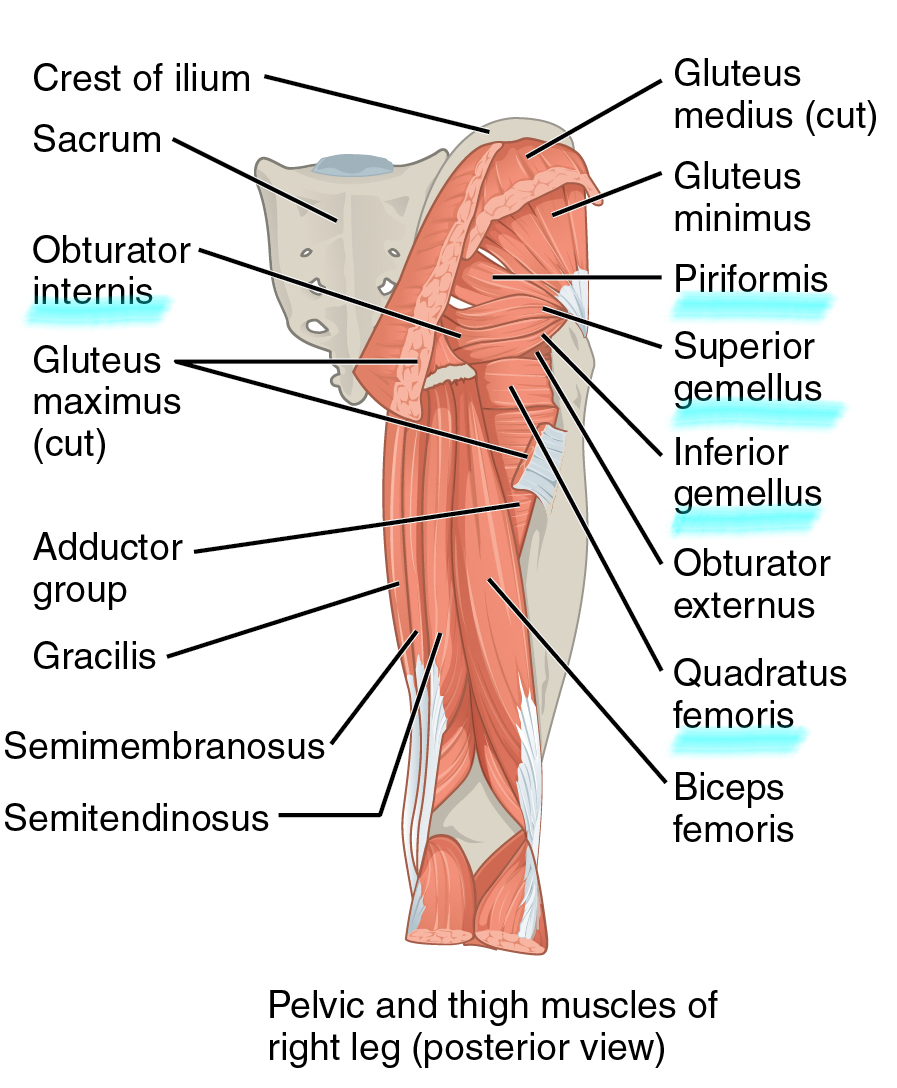
  • piriformis

  • obturator internus

  • superior gemellus

  • inferior gemellus

  • quadratus femoris

  • obturator externis

<p>Gluteal Superficial Group</p><ul><li><p>gluteus maximus</p></li><li><p>gluteus medius</p></li><li><p>gluteus minimus</p></li><li><p>tensor fascia latae</p></li></ul><p></p><p>Gluteal Deep Rotators</p><ul><li><p>piriformis</p></li><li><p>obturator internus</p></li><li><p>superior gemellus</p></li><li><p>inferior gemellus</p></li><li><p>quadratus femoris </p></li><li><p>obturator externis</p></li></ul><p></p>
2
New cards
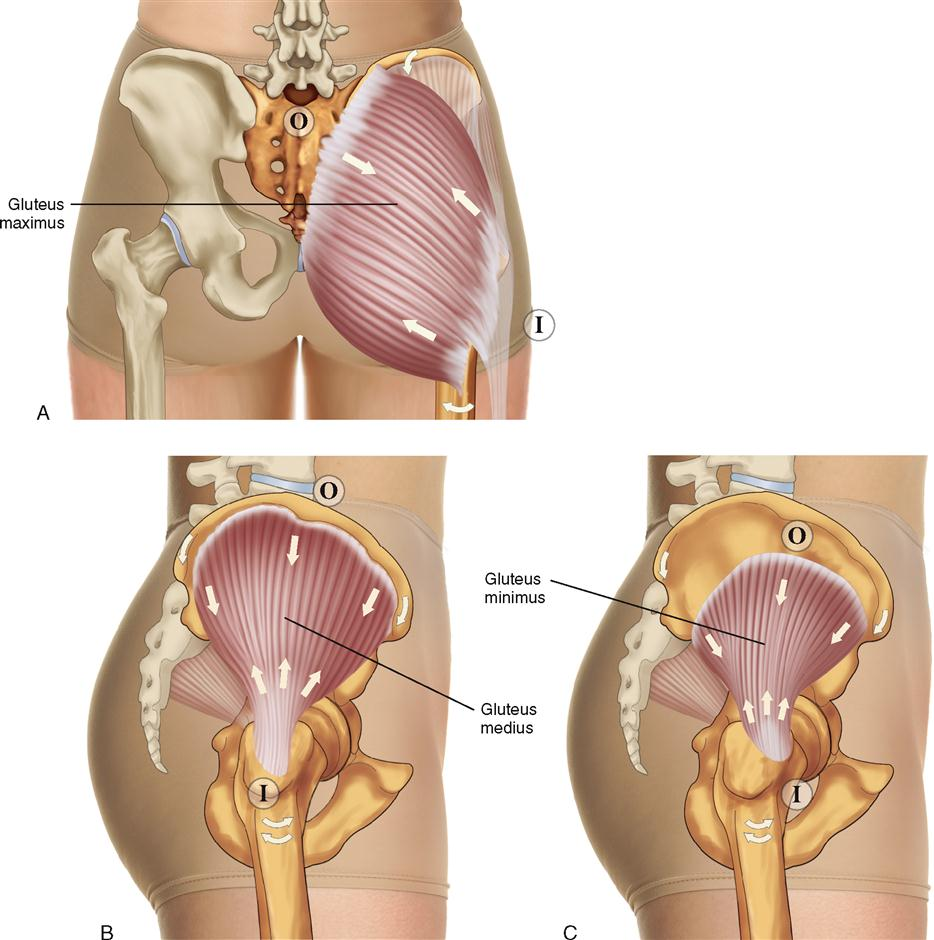
<p>gluteus maximus</p>

gluteus maximus

  • the most superficial of the gluteals the forms the prominence of the gluteal region

  • extends from the pelvis to the gluteal tuberosity of the femur

  • extends and externally rotates the thigh at the hip joint, its superior part can produce thigh abduction and its inferior part can produce thigh adduction

origin → lateroposterior surface of sacrum and coccyx, gluteal surface of ilium (behind posterior gluteal line), thoracolumbar fascia, sacrotuberous ligament

insertion → iliotibial tract, gluteal tuberosity of the femur

action → thigh extension and external rotation at the hip joint, superior part abducts thigh, inferior part adducts thigh

innervation → inferior gluteal nerve (L5, S1, S2)

blood supply → inferior gluteal and superior gluteal arteries
<ul><li><p>the most superficial of the gluteals the forms the prominence of the gluteal region</p></li><li><p>extends from the pelvis to the gluteal tuberosity of the femur</p></li><li><p>extends and externally rotates the thigh at the hip joint, its superior part can produce thigh abduction and its inferior part can produce thigh adduction</p></li></ul><p></p><p>origin → lateroposterior surface of sacrum and coccyx, gluteal surface of ilium (behind posterior gluteal line), thoracolumbar fascia, sacrotuberous ligament</p><p>insertion → iliotibial tract, gluteal tuberosity of the femur</p><p>action → thigh extension and external rotation at the hip joint, superior part abducts thigh, inferior part adducts thigh</p><p>innervation → inferior gluteal nerve (L5, S1, S2)</p><p>blood supply → inferior gluteal and superior gluteal arteries</p>
3
New cards
<p>gluteus medius</p>

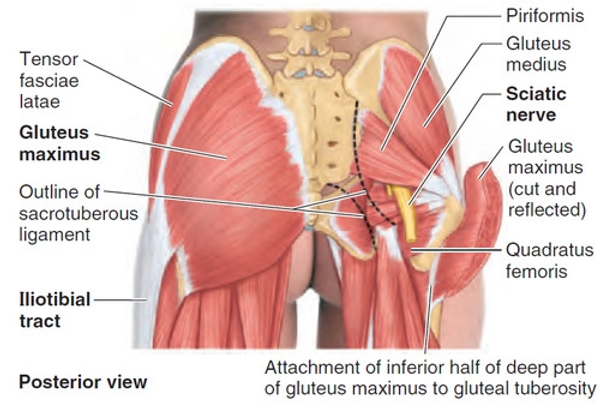
gluteus medius

  • a large, fan shaped muscle in the posterior hip extending from the ilium to the proximal femur

  • acts on the hip joint to produce internal rotation of the thigh with its anterior part, and abduction of the thigh with the whole muscle

  • stabilizes the pelvis while standing or walking

origin → gluteal surface of ilium (between anterior and posterior gluteal lines)

insertion → lateral aspect of greater trochanter of femur

action → thigh abduction at the hip joint, thigh internal rotation at the hip joint (anterior part), pelvis stabilization

innervation → superior gluteal nerve (L4-S1)

blood supply → deep branch of superior gluteal artery, trochanteric anastomosis
<ul><li><p>a large, fan shaped muscle in the posterior hip extending from the ilium to the proximal femur</p></li><li><p>acts on the hip joint to produce internal rotation of the thigh with its anterior part, and abduction of the thigh with the whole muscle</p></li><li><p>stabilizes the pelvis while standing or walking</p></li></ul><p></p><p>origin → gluteal surface of ilium (between anterior and posterior gluteal lines)</p><p>insertion → lateral aspect of greater trochanter of femur</p><p>action → thigh abduction at the hip joint, thigh internal rotation at the hip joint (anterior part), pelvis stabilization</p><p>innervation → superior gluteal nerve (L4-S1)</p><p>blood supply → deep branch of superior gluteal artery, trochanteric anastomosis </p>
4
New cards
<p>gluteus minimus</p>

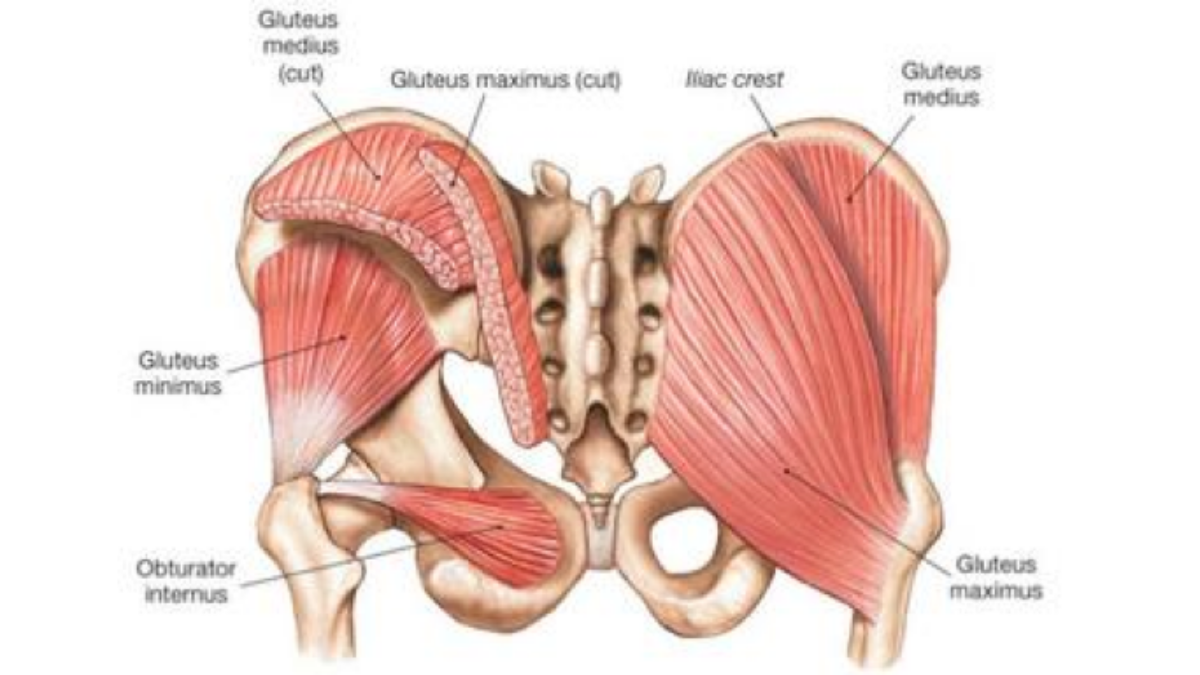
gluteus minimus

  • a small, triangular muscle in the deep posterior region of the hip extending from the gluteal surface of the ilium to the proximal end of the femur

  • acts in synergy with the gluteus medius to produce internal rotation and abduction of the thigh at the hip joint

  • stabilizes the pelvis in the gait cycle

origin → gluteal surface of the ilium (between the anterior and inferior gluteal lines)

insertion → anterior aspect of greater trochanter of femur

action → thigh abduction at the hip joint, thigh internal rotation at the hip joint (anterior part), pelvis stabilization

innervation → superior gluteal nerve (L4-S1)

blood supply → superior gluteal artery, trochanteric anastomosis
<ul><li><p>a small, triangular muscle in the deep posterior region of the hip extending from the gluteal surface of the ilium to the proximal end of the femur</p></li><li><p>acts in synergy with the gluteus medius to produce  internal rotation and abduction of the thigh at the hip joint</p></li><li><p>stabilizes the pelvis in the gait cycle</p></li></ul><p></p><p>origin → gluteal surface of the ilium (between the anterior and inferior gluteal lines)</p><p>insertion → anterior aspect of greater trochanter of femur</p><p>action → thigh abduction at the hip joint, thigh internal rotation at the hip joint (anterior part), pelvis stabilization</p><p>innervation → superior gluteal nerve (L4-S1)</p><p>blood supply → superior gluteal artery, trochanteric anastomosis</p>
5
New cards
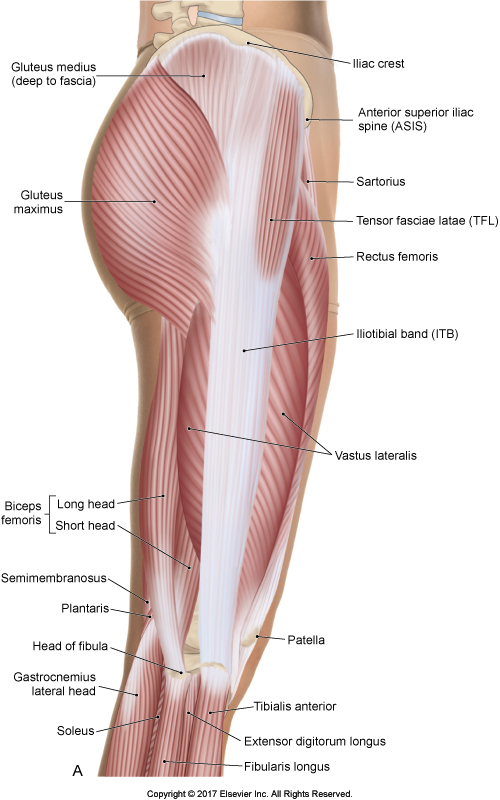
<p>tensor fasciae latae</p>

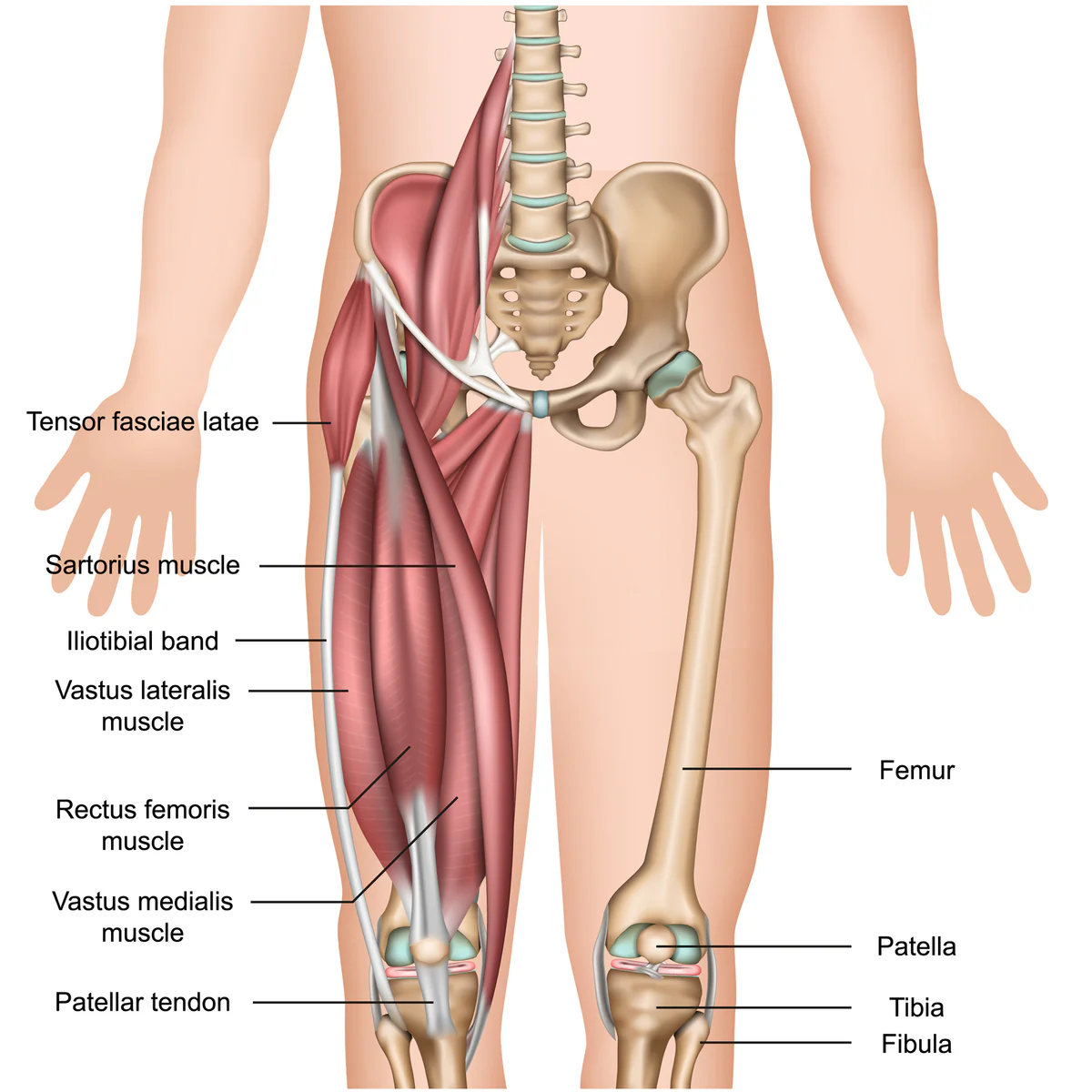
tensor fasciae latae

  • a fusiform muscle in the lateral aspect of the thigh

  • found in the superficial anterolateral aspect of the thigh spanning from the anterior portion of the iliac crest to the superior portion of the tibia, onto which it inserts via the iliotibial tract

  • main function is to produce extension and lateral rotation of the leg on the knee joint

  • contributes to movements of the thigh as a weak abductor and medial rotator on the hip joint

origin → outer lip of iliac crest, anterior superior iliac spine (ASIS)

insertion → lateral condyle of tibia (via iliotibial tract)

action → thigh internal rotation and weak abduction at the hip joint, leg external rotation, stabilizes hip and knee joints

innervation → superior gluteal nerve (L4-S1)

blood supply → ascending branch of lateral circumflex femoral artery
<ul><li><p>a fusiform muscle in the lateral aspect of the thigh</p></li><li><p>found in the superficial anterolateral aspect of the thigh spanning from the anterior portion of the iliac crest to the superior portion of the tibia, onto which it inserts via the iliotibial tract</p></li><li><p>main function is to produce extension and lateral rotation of the leg on the knee joint</p></li><li><p>contributes to movements of the thigh as a weak abductor and medial rotator on the hip joint</p></li></ul><p></p><p>origin → outer lip of iliac crest, anterior superior iliac spine (ASIS)</p><p>insertion → lateral condyle of tibia (via iliotibial tract)</p><p>action → thigh internal rotation and weak abduction at the hip joint, leg external rotation, stabilizes hip and knee joints</p><p>innervation → superior gluteal nerve (L4-S1)</p><p>blood supply → ascending branch of lateral circumflex femoral artery</p>
6
New cards
<p>piriformis</p>

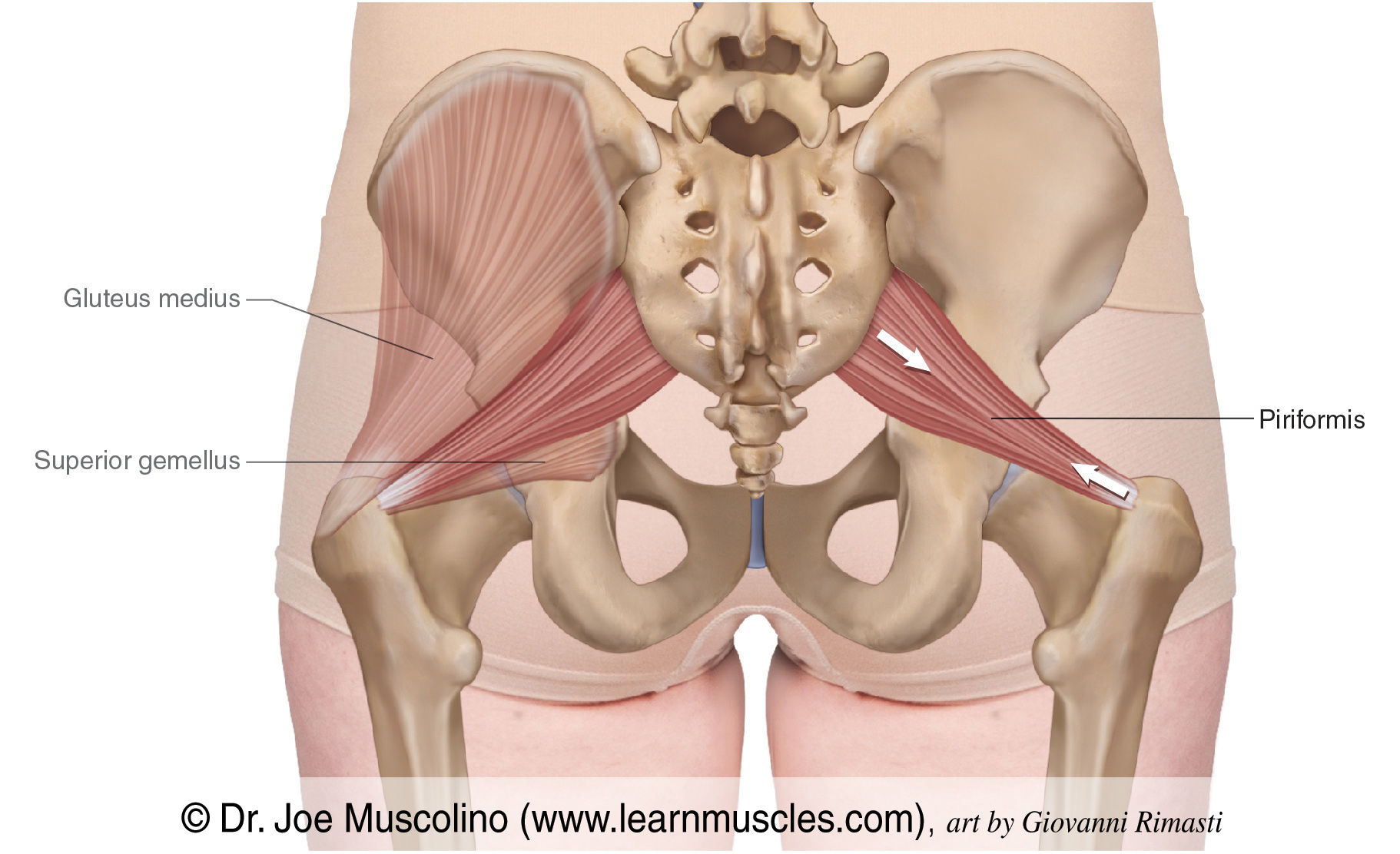
piriformis

  • a muscle of the gluteal region that lies deep to glute max

  • belongs to the short external rotators of the hip

  • spans between the sacrum and the greater trochanter of the femur, stabilizing the hip joint and moving the thigh

origin → anterior surface of the sacrum (between S2 & S4), gluteal surface of ilium (near posterior inferior iliac spine), sacrotuberous ligament

insertion → apex of greater trochanter of the femur

action → external rotation and abduction of the thigh at the hip joint; stabilizes head of femur in acetabulum

innervation → nerve to piriformis (S1-S2)

blood supply → superior gluteal artery, inferior gluteal artery, gemellar branches of internal pudendal artery

mnemonic:

Structures passing through the greater sciatic foramen inferior to piriformis muscle: PIN PINS
(standing for: Posterior cutaneous nerve of thigh, Inferior gluteal vessels and nerves, Nerve to quadratus femoris, Pudendal nerve, Internal pudendal vessels, Nerve to obturator internus, Sciatic nerve)
<ul><li><p>a muscle of the gluteal region that lies deep to glute max</p></li><li><p>belongs to the short external rotators of the hip</p></li><li><p>spans between the sacrum and the greater trochanter of the femur, stabilizing the hip joint and moving the thigh</p></li></ul><p></p><p>origin → anterior surface of the sacrum (between S2 &amp; S4), gluteal surface of ilium (near posterior inferior iliac spine), sacrotuberous ligament</p><p>insertion → apex of greater trochanter of the femur</p><p>action → external rotation and abduction of the thigh at the hip joint; stabilizes head of femur in acetabulum</p><p>innervation → nerve to piriformis (S1-S2)</p><p>blood supply → superior gluteal artery, inferior gluteal artery, gemellar branches of internal pudendal artery</p><p></p><p>mnemonic:</p><p><span>Structures passing through the greater sciatic foramen inferior to piriformis muscle:&nbsp;</span><strong>PIN&nbsp;</strong><span>&amp;&nbsp;</span><strong>PINS</strong><br><span>(standing for:&nbsp;</span><strong>P</strong><span>osterior cutaneous nerve of thigh, </span><strong>I</strong><span>nferior gluteal vessels and nerves, </span><strong>N</strong><span>erve to quadratus femoris, </span><strong>P</strong><span>udendal nerve,&nbsp;</span><strong>I</strong><span>nternal pudendal vessels, </span><strong>N</strong><span>erve to obturator internus, </span><strong>S</strong><span>ciatic nerve)</span></p>
7
New cards
<p>obturator internus</p>

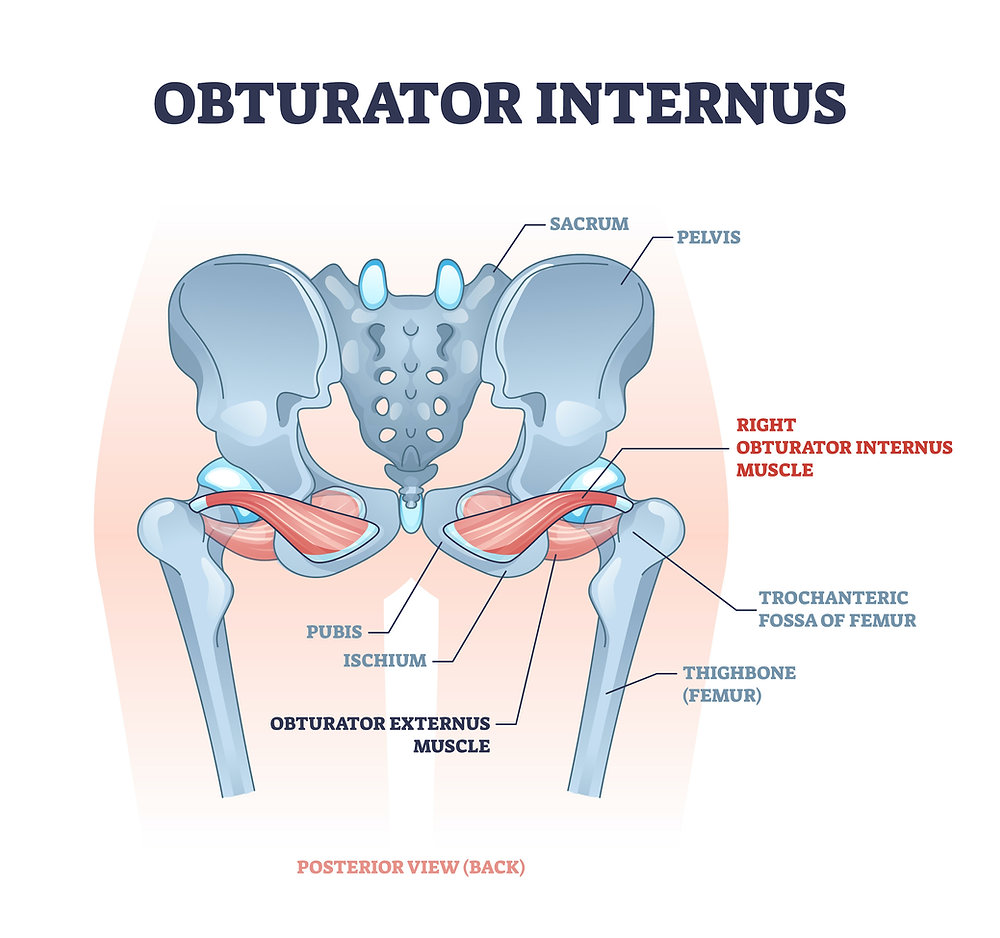
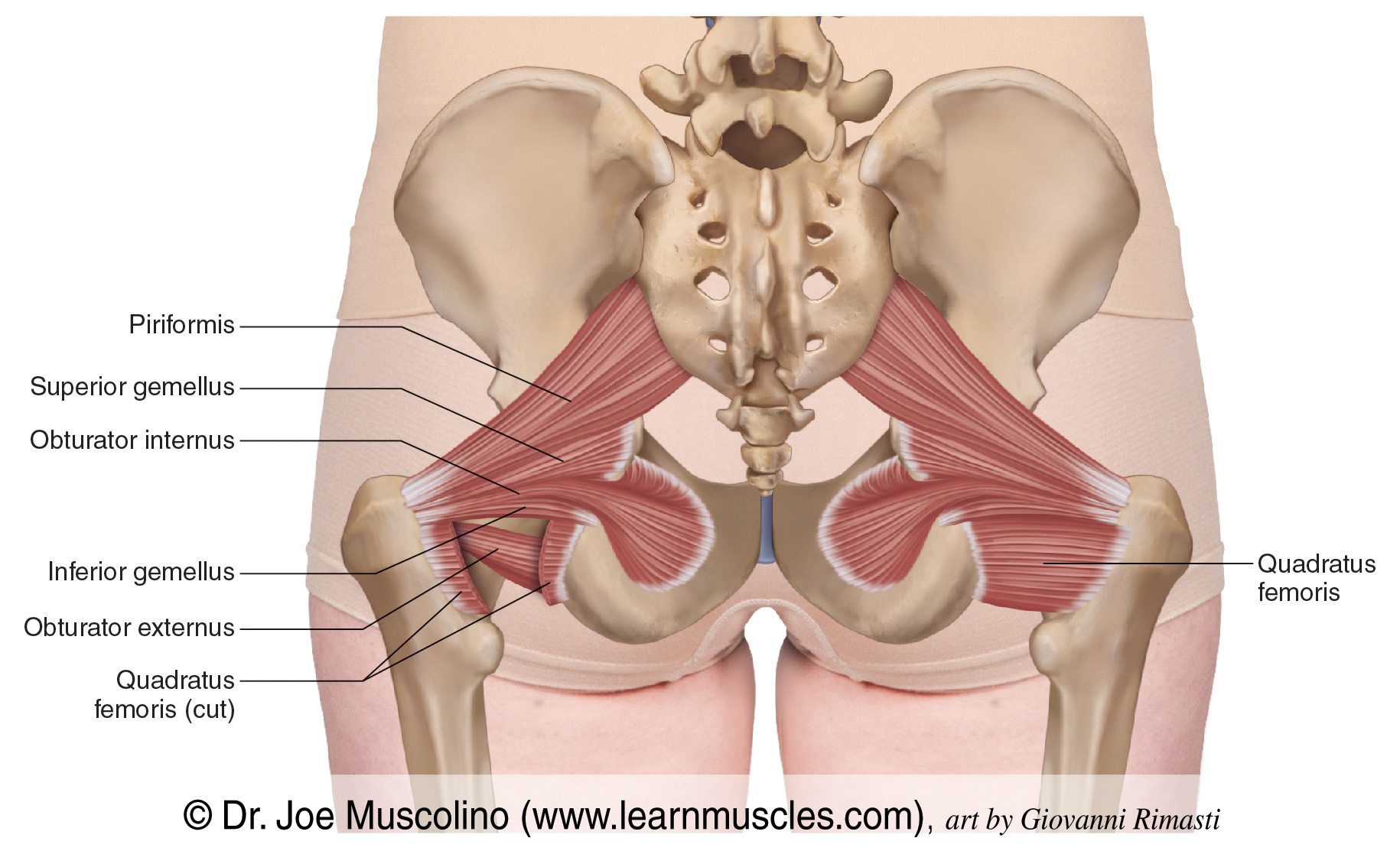
obturator internus

  • a bilateral, triangular shaped muscle situated deep within both the pelvic and gluteal regions

  • primarily considered a muscle of the lower limb (gluteal region)

  • referred to as the triceps coxae muscles along with the superior and inferior gemelli, which share a common tendon and insert at the greater trochanter of the femur

origin → posterior surface of obturator membrane; bony boundaries of obturator foramen

insertion → medial surface of the greater trochanter of the femur

action → external rotation of extended thigh; abduction of flexed thigh; stabilization of hip joint

innervation → nerve to obturator internus (L5 & S1)

blood supply → obturator artery, internal pudendal artery
<ul><li><p>a bilateral, triangular shaped muscle situated deep within both the pelvic and gluteal regions</p></li><li><p>primarily considered a muscle of the lower limb (gluteal region)</p></li><li><p>referred to as the triceps coxae muscles along with the superior and inferior gemelli, which share a common tendon and insert at the greater trochanter of the femur</p></li></ul><p></p><p>origin → posterior surface of obturator membrane; bony boundaries of obturator foramen</p><p>insertion → medial surface of the greater trochanter of the femur</p><p>action → external rotation of extended thigh; abduction of flexed thigh; stabilization of hip joint</p><p>innervation → nerve to obturator internus (L5 &amp; S1)</p><p>blood supply → obturator artery, internal pudendal artery</p>
8
New cards
<p>superior gemellus</p>

superior gemellus

  • a small muscle located deep in the posterior pelvis deep to glute max

  • joins together with the inferior gemellus and obturator internus to comprise the triceps cocxae

origin → ischial spine

insertion → medial surface of greater trochanter of femur (via tendon of obturator internus)

action → thigh external rotation, and thigh abduction (from flexed hip) at the hip joint; stabilizes the head of the femur in the acetabulum

innervation → nerve to obturator internus (L5-S1)

blood supply → internal pudendal artery, inferior gluteal artery
<ul><li><p>a small muscle located deep in the posterior pelvis deep to glute max</p></li><li><p>joins together with the inferior gemellus and obturator internus to comprise the triceps cocxae</p></li></ul><p></p><p>origin → ischial spine</p><p>insertion → medial surface of greater trochanter of femur (via tendon of obturator internus)</p><p>action → thigh external rotation, and thigh abduction (from flexed hip) at the hip joint; stabilizes the head of the femur in the acetabulum</p><p>innervation → nerve to obturator internus (L5-S1)</p><p>blood supply → internal pudendal artery, inferior gluteal artery</p>
9
New cards
<p>inferior gemellus</p>

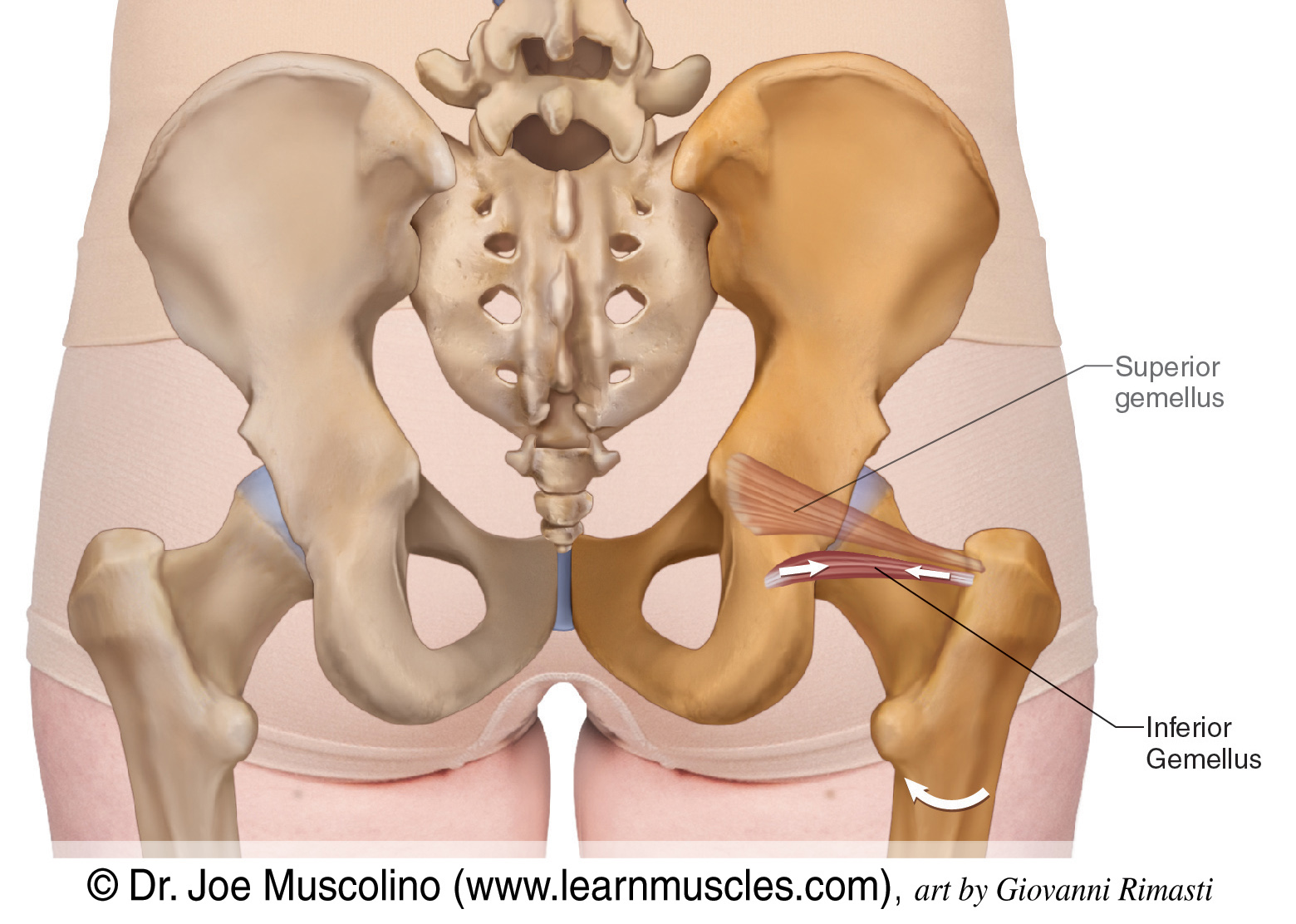
inferior gemellus

  • a small, paired muscle in the deep gluteal region, part of the triceps coxae

  • extends from the ischium of the coxal bone to the greater trochanter of the femur

  • aids with external rotation and abduction of the thigh

origin → ischial tuberosity

insertion → medial surface of greater trochanter of femur (via tendon of obturator internus)

action → thigh external rotation and thigh abduction (from flexed hip) at the hip joint; stabilizes head of femur in acetabulum

innervation → nerve to quadratis femoris (L4/5, S1)

blood supply → medial circumflex femoral artery
<ul><li><p>a small, paired muscle in the deep gluteal region, part of the triceps coxae</p></li><li><p>extends from the ischium of the coxal bone to the greater trochanter of the femur</p></li><li><p>aids with external rotation and abduction of the thigh</p></li></ul><p></p><p>origin → ischial tuberosity</p><p>insertion → medial surface of greater trochanter of femur (via tendon of obturator internus)</p><p>action → thigh external rotation and thigh abduction (from flexed hip) at the hip joint; stabilizes head of femur in acetabulum</p><p>innervation → nerve to quadratis femoris (L4/5, S1)</p><p>blood supply → medial circumflex femoral artery</p>
10
New cards
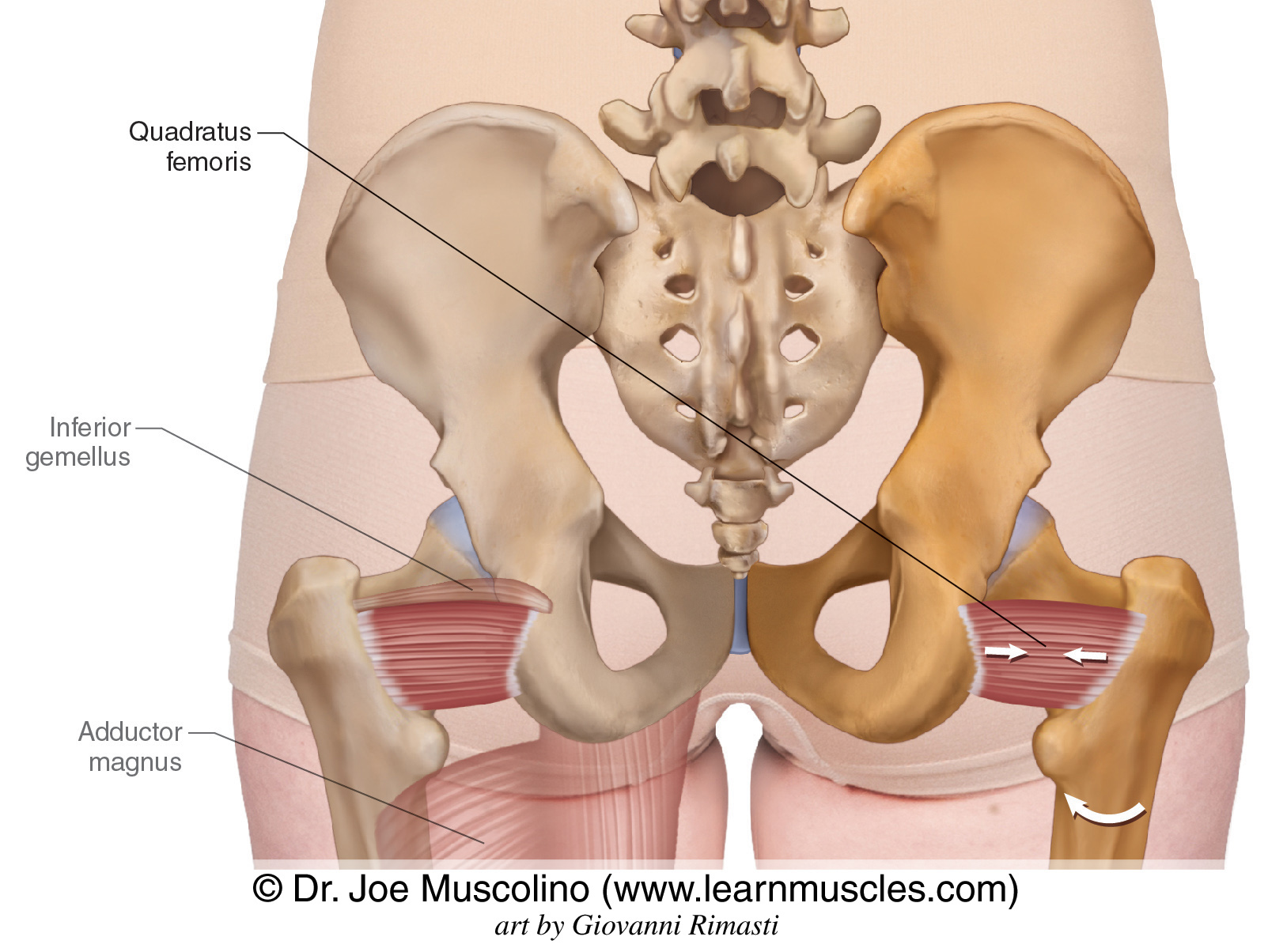
<p>quadratus femoris</p>

quadratus femoris

  • a paired, rectangular muscle of the gluteal region

  • stabilizes the hip joint by keeping the head of the femur in place

  • produces external rotation of the thigh in the hip joint when the lower limb is in the anatomical position

  • can assist in adduction and abduction when the lower limb is in certain positions

origin → ischial tuberosity

insertion → intertrochanteric crest of femur

action → thigh internal rotation at the hip joint, stabilizes head of femur in acetabulum

innervation → nerve to quadratus femoris (L4-S1)

blood supply → inferior gluteal artery
<ul><li><p>a paired, rectangular muscle of the gluteal region</p></li><li><p>stabilizes the hip joint by keeping the head of the femur in place</p></li><li><p>produces external rotation of the thigh in the hip joint when the lower limb is in the anatomical position</p></li><li><p>can assist in adduction and abduction when the lower limb is in certain positions</p></li></ul><p></p><p>origin → ischial tuberosity</p><p>insertion → intertrochanteric crest of femur</p><p>action → thigh internal rotation at the hip joint, stabilizes head of femur in acetabulum</p><p>innervation → nerve to quadratus femoris (L4-S1)</p><p>blood supply → inferior gluteal artery</p>
11
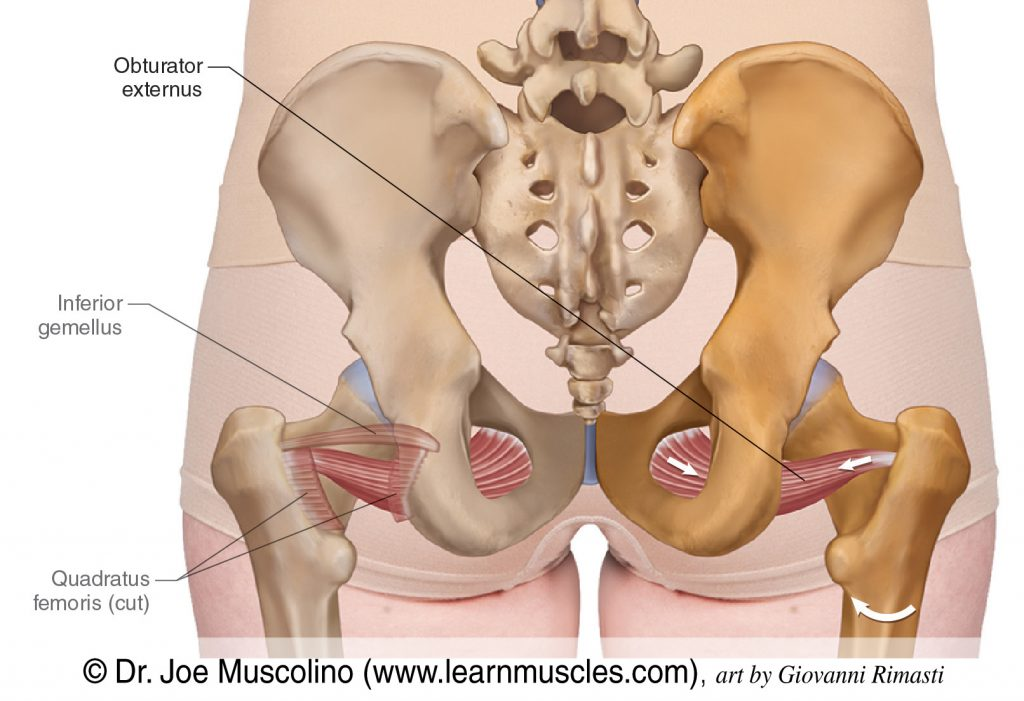
New cards
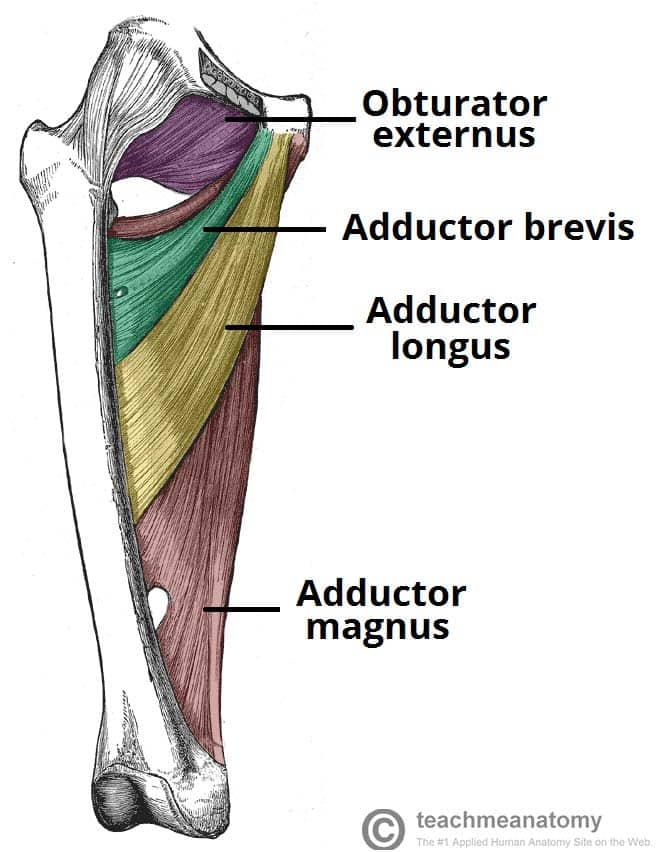
<p>obturator externus</p>

obturator externus

  • a flat, triangular, paired muscle of the gluteal region found on the anterior aspect of the obturator foramen, attached to the obturator membrane and the adjacent margin of the obturator foramen

  • externally rotates the femur when the hip is extended

  • abducts the thigh when the hip is flexed

origin → anterior surface of obturator membrane, bony boundaries of obturator foramen

insertion → trochanteric fossa of femur

action → thigh external rotation and thigh abduction (from a flexed hip) at the hip joint; stabilizes the head of the femur in the acetabulum

innervation → obturator nerve (L3, L4)

blood supply → obturator and medial circumflex fermoral arteries
<ul><li><p>a flat, triangular, paired muscle of the gluteal region found on the anterior aspect of the obturator foramen, attached to the obturator membrane and the adjacent margin of the obturator foramen</p></li><li><p>externally rotates the femur when the hip is extended</p></li><li><p>abducts the thigh when the hip is flexed</p></li></ul><p></p><p>origin → anterior surface of obturator membrane, bony boundaries of obturator foramen</p><p>insertion → trochanteric fossa of femur</p><p>action → thigh external rotation and thigh abduction (from a flexed hip) at the hip joint; stabilizes the head of the femur in the acetabulum</p><p>innervation → obturator nerve (L3, L4)</p><p>blood supply → obturator and medial circumflex fermoral arteries</p>