Physio 8: Neurotransmitters
 Call Kai
 Learn
Learn Practice Test
 Spaced Repetition
 Match
Match Flashcards
 Knowt Play
1/64

There's no tags or description
Looks like no tags are added yet.
Name | Mastery | Learn | Test | Matching | Spaced | Call with Kai | Chat |
|---|
No analytics yet
Send a link to your students to track their progress
65 Terms
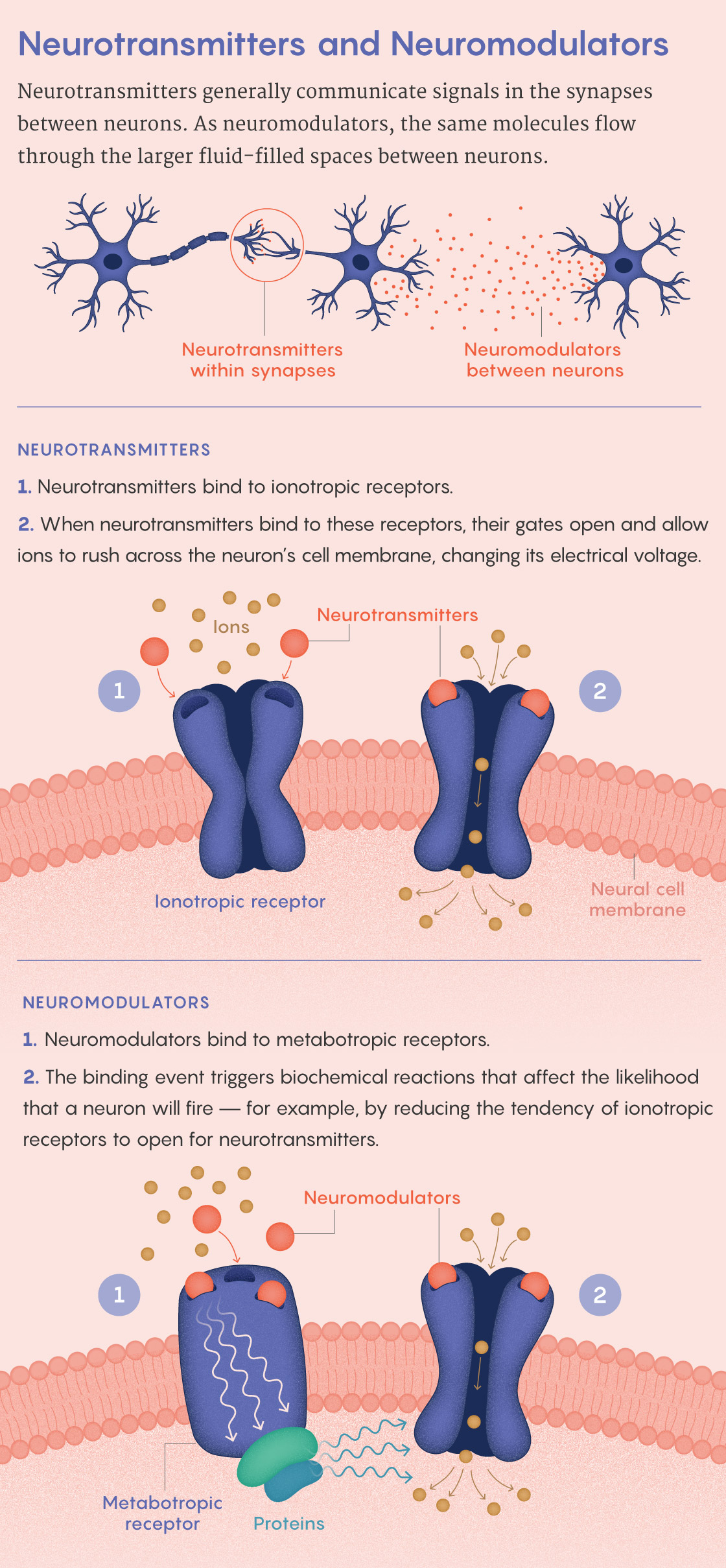
what is the action of neurotransmitters
excitatory
inhibitory
what is the action of neuromodulators
they regulate and modify the activities of synaptic transmissions
act on presynaptic cell to alter synthesis, release, reuptake, or metabolism of neurotransmitter
what is acetylcholine
major neurotransmitter in the brain and peripheral nervous system
acetylcholine is formed from ___ and ___ by ___
acetylcholine is formed from choline and acetyl CoA by ChAT

what are examples of neurons that release ACh
some in CNS
the first neuron that exists the central nervous system
motor neurons on spinal cords
all preganglionic neurons of autonomic nervous system
all postganglionic parasympathetic neurons
what degrades acetylcholine
broken down quickly by acetylcholinesterase on the postsynaptic membrane in synaptic cleft
what are the types of acetylcholine receptors
nicotinic receptor
M receptor
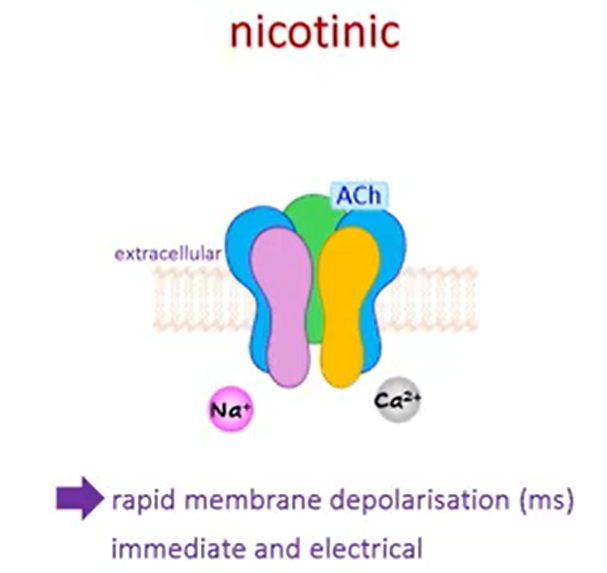
describe the nicotinic receptor
ionotropic channel
ligand gated channel
immediate flux of ions and action potential
response is fast and short-lived
mnemonic for nicotinic receptor
Nicotinic NOW
describe where nicotinic receptors are found
on motor end plates
tell skeletal muscles to contract and move
brain
regulate memory, attention, and mood
describe muscarinic receptors
metabotropic receptor
G-protein enzyme receptors
not direct and slow
response will last longer

where are muscarinic receptors founds
synapse of neuroeffector cells in autonomic division to non-neuronal cells targeting tissues (smooth muscle, cardi

what are the antagonists of muscarinic receptors
atropine
In the PNS, ___ is always released by the first neuron that exits the central nervous sytem
acetylcholine
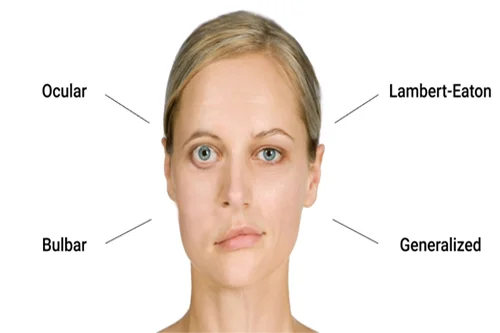
what is myasthenic gravis
autoimmune attack at nicotinic receptors
muscle weaknesses
treated with acetylcholinesterase inhibitors
describe neurotransmitters that are biogenic amines
end in -ine or -in
contain an amino group
what are examples of amine neurotransmitters
catecholamines
dopamine, norepinephrine, and epinephrine
serotonin
histamine

what are catecholamines
dopamine
norepinephrine
epinephrine

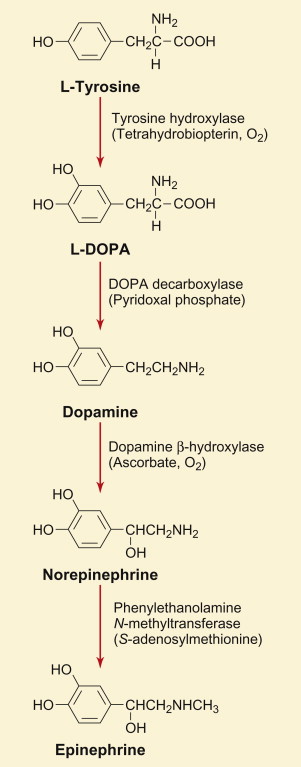
what are catecholamine made up of
tyrosine
what is serotonin made up of
tryptophan
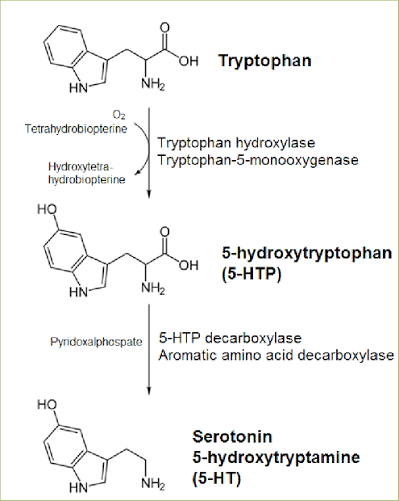
what are histamines made up of
histidine
how many enzymes involved in synthesis of catecholamines from….
tyrosine
3 enzyme

how is synthesis of catecholamines stopped
reuptake and degradation by
COMT
MAO
Mnemonic for things that reuptake catecholamines
Mao (MAO) Zedong was communist (COMT)

what are dopamine receptors
G-protein
activators (D1)
inhibitors (D2)
where is dopamine found
found in heart, lung, and kidney
in brain
important for reward, attention, and addiction
what do cocaine and methamphetamines do in terms of dopamine
block dopamine reuptake
enhance dopamine release
parkinson’s disease is a result of…
loss of dopamine receptors in substantia nigra leads to…
what releases norepinephrine
released by sympathetic postganglionic neurons
what releases epinephrine
adrenal medulla
what are the receptors for epinephrine and norepinephrine
adrenergic receptors


describe what is going on here
somatic nervous system
motor nerve
nicotinic receptor
autonomic nervous system
peripheral nervous stem
post synaptic membrane
nicotinic receptor
non-neuronal effector cell (smooth/cardiac muscle)
muscarinic receptor
sympathetic nervous system
adrenergic receptors

what is serotonin inhibited by
reuptake
monoamine oxidase (MAO)
where is serotonin found
throughout the CNS
sleep/waking and mood centers in CNS and
import in peripheral motor and sensory pathways
what is the most excitatory neurotransmitter in the CNS
glutamate
what are the two glutamate receptors on postsynaptic membranes
AMPA receptors
NMDA
the majority of glutamate receptors are… ionotropic/metabotropic
ionotropic

what kind of receptor is AMPA receptor
ligand-gated ion channel

what kind of receptor is NMDA receptor
G-protein coupled ionotropic glutamate receptor
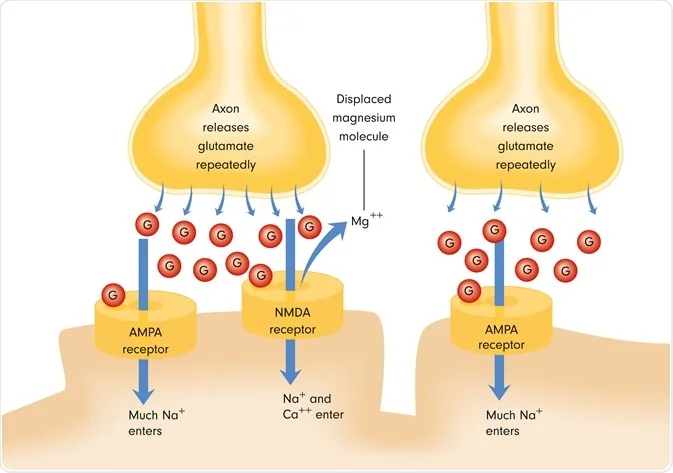
while NMDA is an ionotropic receptor, what 2 things does it need to function?
removal of Mg+2 plug via depolarization
at resting state
Mg+2 is attracted to intracellular negativity
electrostatic attraction pulled it into the pore and holds it there
depolarization
intracellular positivity weakened Mg+2 plug
removal of Mg+2 increases permeability of Ca+
Ca+ acts as secondary messenger
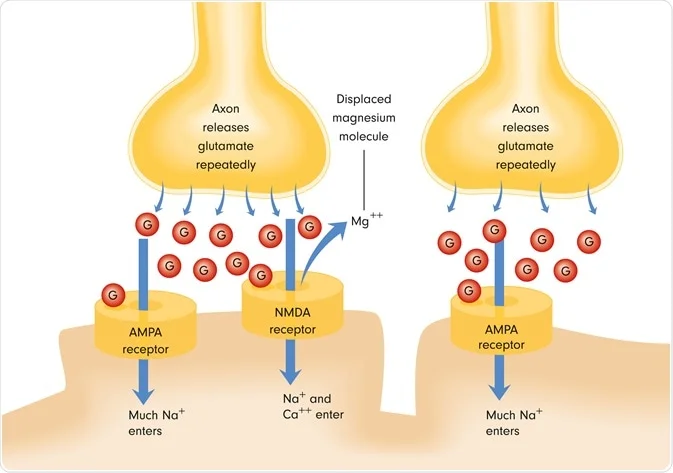
activation of NMDA receptor is linked to…
long term potentiation
long lasting strengthening connections between neurons
underlies learning and memory
describe excitotoxicity in NMDA receptors
too much Ca+2 influx during excessive activation
results in neuronal death
associated with epilepsy, stroke, and brain trauma
what are the 8 steps of long term potentiation
high frequency AP in presynaptic cells
secretion of glutamate
glutamate binds to both AMPA and NMDA
Na+ entry via AMPA receptors depolarizes postsynaptic membrane
Depolarization unclogs Mg+2 ions out of NMDA
Influx of more Na+ and Ca+2 entry activates second messenger system
increase in glutamate receptors and sensitivity of postsynaptic cells
increase in glutamate synthesis in presynaptic cells

when does long term potentiation happen
after a high frequency train of action potentials at the axon terminal
recruitment of glutamate receptors results in extends excitation over prolonged time periods
what is the main inhibitor of the brain
GABA
what is GABA synthesized from
glutamate
what are the two GABA receptor subtypes
GABAa
hyperpolarization via chloride
GABAb
hyperpolarization via potassium
how do GABAa receptors function
inhibitory neurotransmitter
opens chloride channels to hyperpolarize membrane
how do GABAb receptors functions
open potassium channels and hyperpolarize the membrane
what is the main inhibitor in the spinal cord and brain stem
glycine
how does glycine work
inhibition
opens chloride channels and hyperpolarizes membrane
what is an antagonist of the glycine receptor
strychnine
describe neuropeptide hormones
short chain of amino acids linked by peptide bonds that act as signaling molecules
how are neuropeptides formed
cell makes longer, inactive protein chain precursor in the cell body
cell physically ships precurser down axon via axonal transport to the terminal
how are neuropeptides activated
upon arrival in the terminal, enzyme proteases cut it into the final neuropeptide

neuropeptides are ___(speed)___ because…
slow because they must be transported down the axon
how are neuropeptide actions terminated
terminated by
proteolysis
diffusion out of synaptic cleft
what is an agonist of opioid receptors
morphine
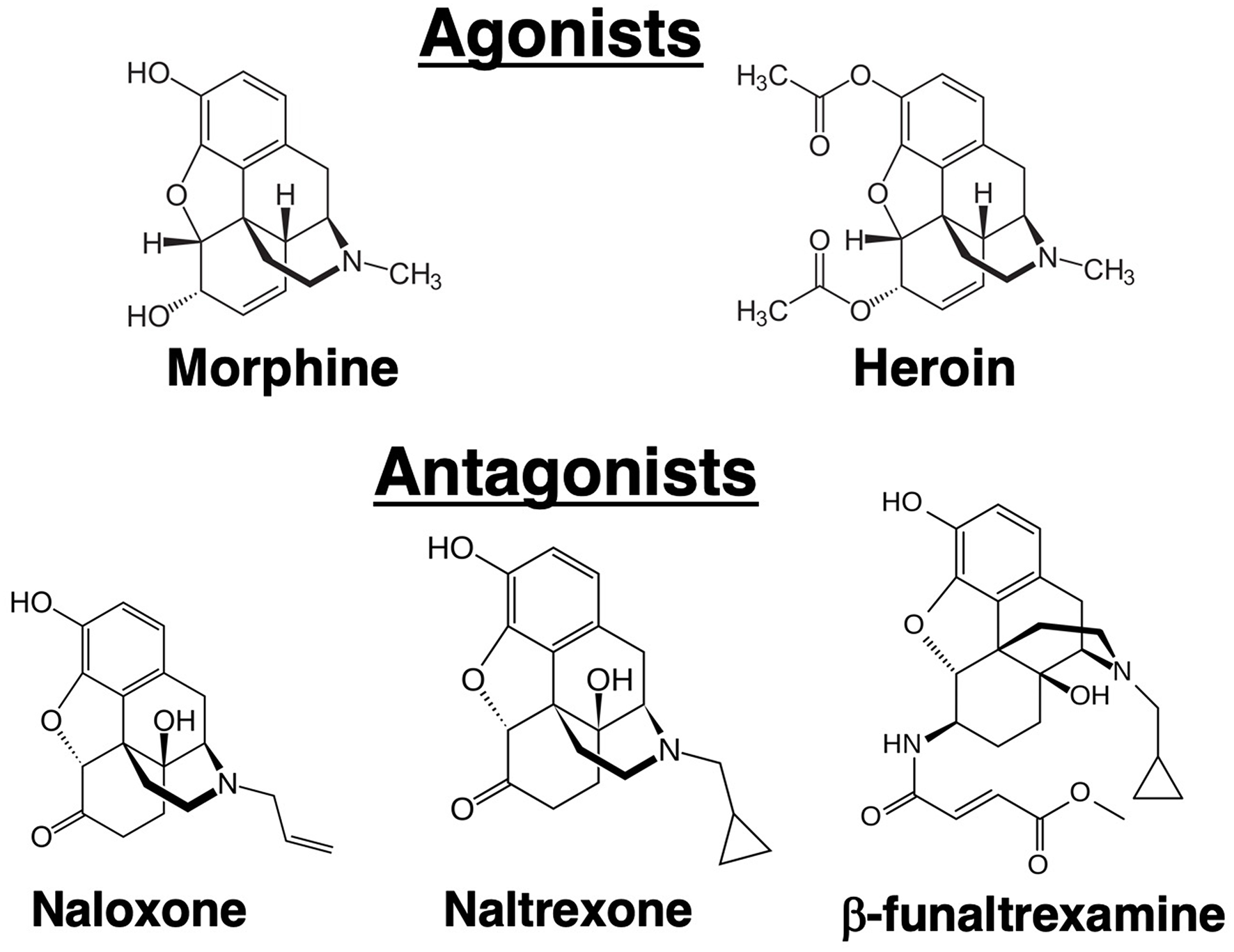
what is an antagonist of opioid receptors
naloxone

describe gaseous neurotransmitters
act as neuromodulators
diffusible across all cell membranes
what are examples of gaseous neurotransmitters
nitric oxide
carbon monoxide
hydrogen sulfate
what type of receptors do gaseous neurotransmitters use
none
freely diffusible across cell membranes
nitric oxides and carbon monoxide are hypothesized to be…
retrograde messengers
postsynaptic cell impacts presynaptic cell
what are purinergic receptors
receptors that respond to purines
adenosine and ATP
What are the two main classes of purinergic receptors
P1
respond to adenosine
excitatory
P2
excitatory
respond to ATP