The Cell (CH1 SEG1)
 Call Kai
 Learn
Learn Practice Test
 Spaced Repetition
 Match
Match Flashcards
 Knowt Play
1/22

There's no tags or description
Looks like no tags are added yet.
Name | Mastery | Learn | Test | Matching | Spaced | Call with Kai | Chat |
|---|
No analytics yet
Send a link to your students to track their progress
23 Terms
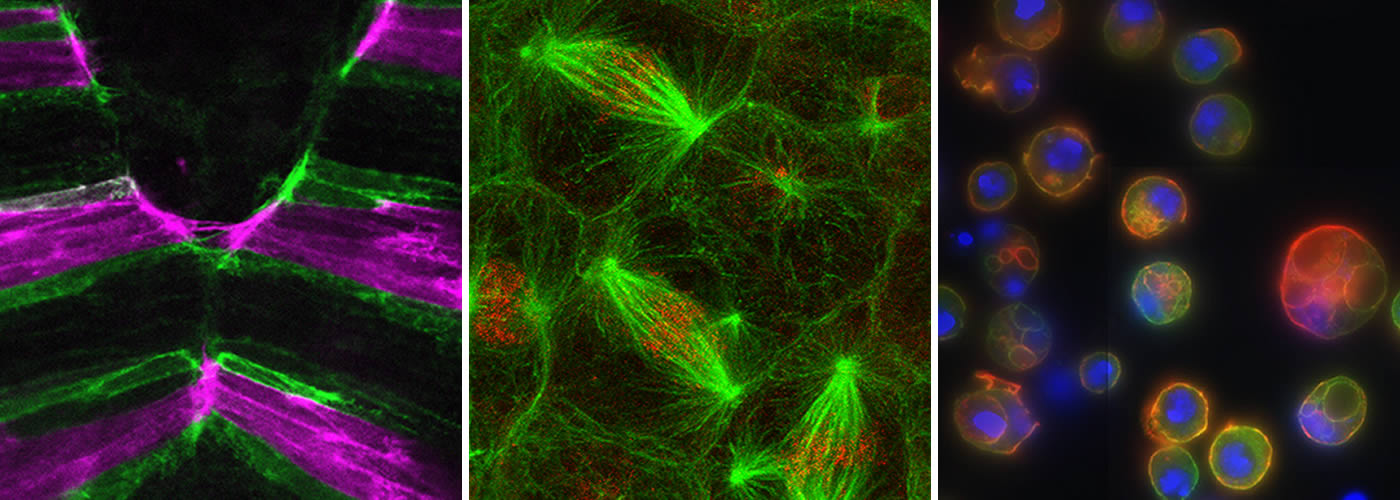
Cell
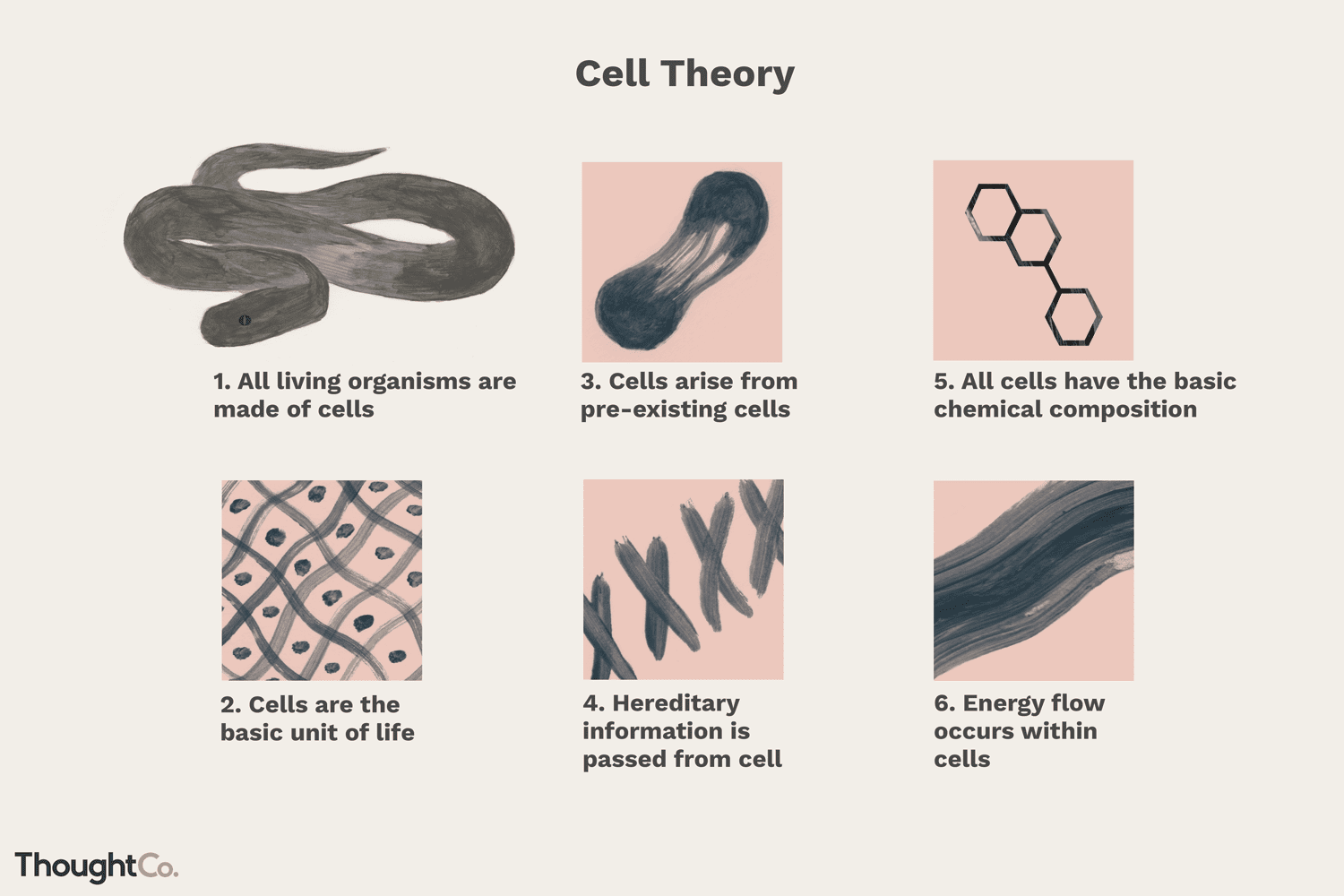
it's considered the basic unit of all organisms.
All living things are made up of a cell or cells.
It is the structural and functional unit of organisms.
It has the ability to self-reproduction from previously existing cells.
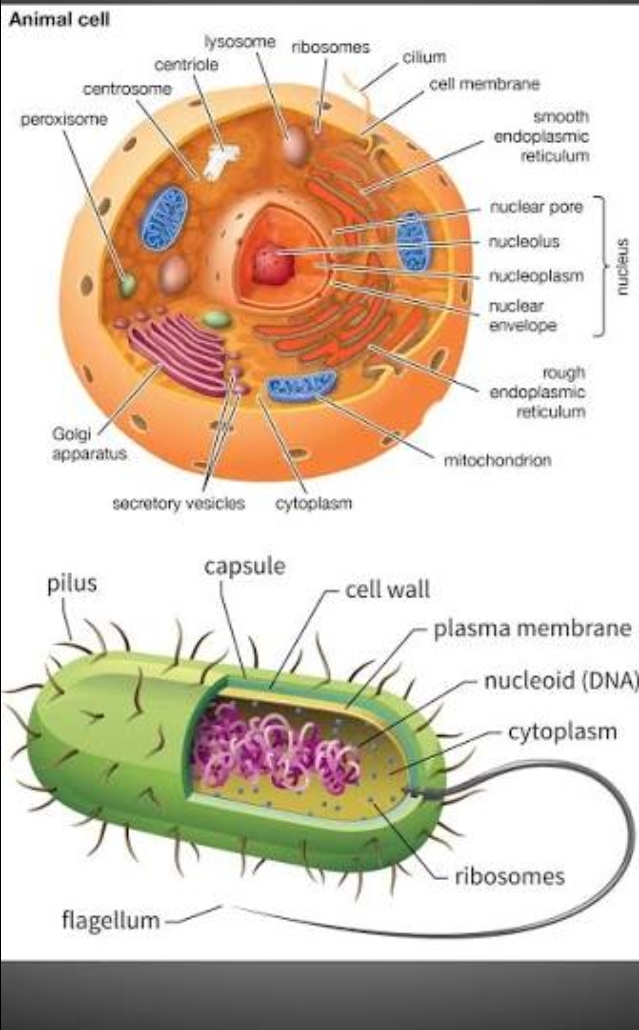
What are the two types of cells?
prokaryotic cell: such as bacteria. lacks nuclear membrane and membranous organelles
eukaryotic cell: larger than the prokaryotic cell, has nuclear nycleus and is surrounded by a nuclear membrane and cell organelles
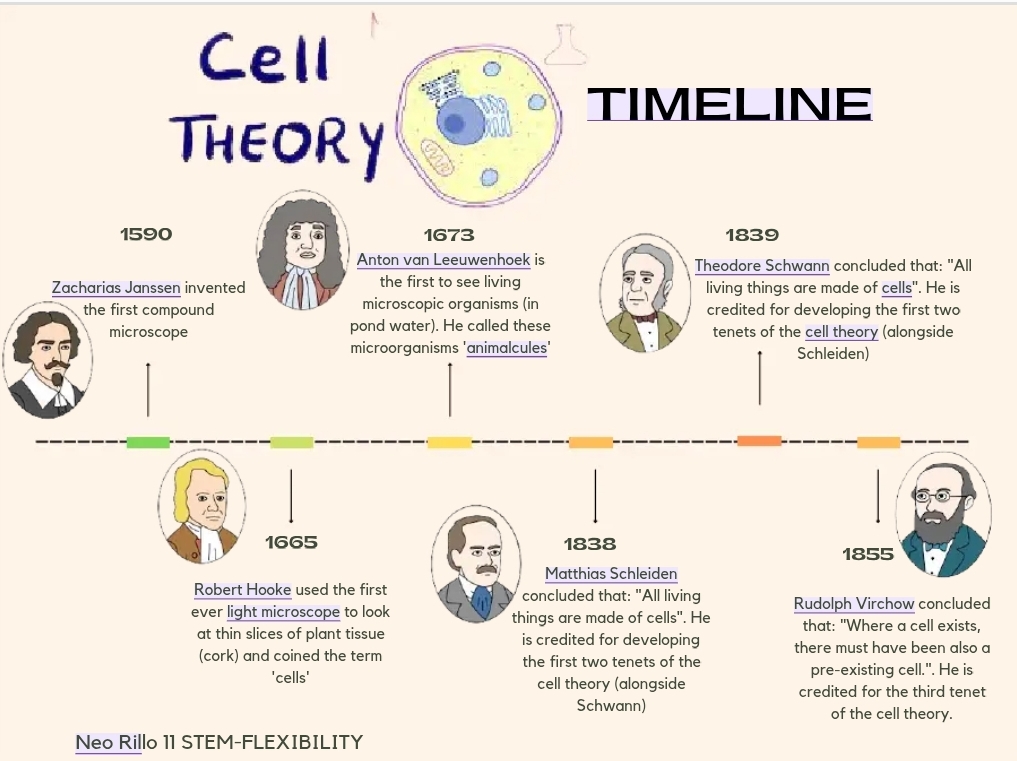
Explain what you know about developments in cell study
The cell was not known when the
 German scientist Antoine Van Leeuwenhoek (1632 - 1723) invented the microscope. He could be the first who saw the cell
The 🏴 English scientist Robert Hooke (1635 - 1703) had the same observations of Leeuwenhook, and was the first to use the word “cell” when he examined the structure of an oak tree cortex. He described corky units and defined the cell as an aerobic chambers similar to a bee hive.
The 🏴 Scottish scientist Robert Brown discovered the nucleus of the cell in 1831 and decribed it.
The 🇩🇪 German scientist Mathias Schleiden concluded that all plants consist of cells in 1838
The 🇩🇪 German scientist Theodor Schwann concluded that all animals consist of cells in 1839
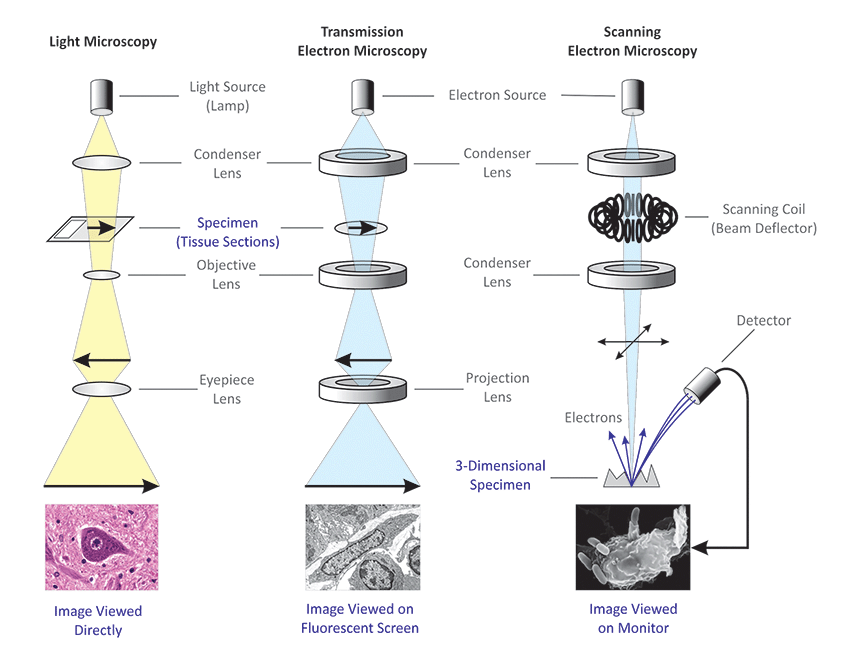
Studies and researched into cytology have increased, particularly after advances in … and the invention of …
The study has become a major branch called …
the light microscope, the electron microscope, cytology
Cytology
It's one of the branches of biology concerned in the study of cells.
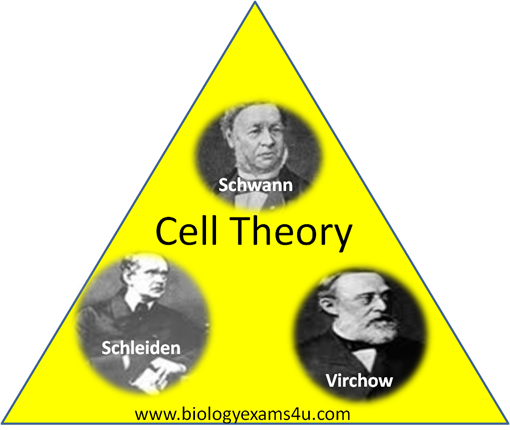
What is cell theory based on/are the bases of cell theory? Define Cell theory
It's one of the branches of biology concerned in the study of cells.
The scientists … and … are the ones who described the cell theory.
Matthias Schleiden, Thomas Schwann
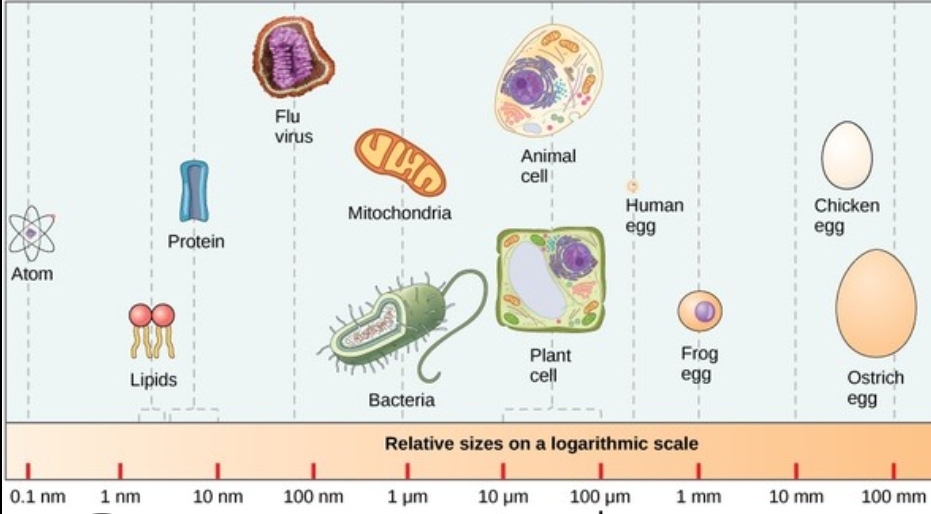
How does cell vary in size? explain
some cells can be seen with the naked eye, such as a frog's egg (1 mm)
small cells that are not visible to the naked eye, such as a human's egg (100 μm or less)
most cells are smaller than 1 mm, and there are cells less than 100 μm
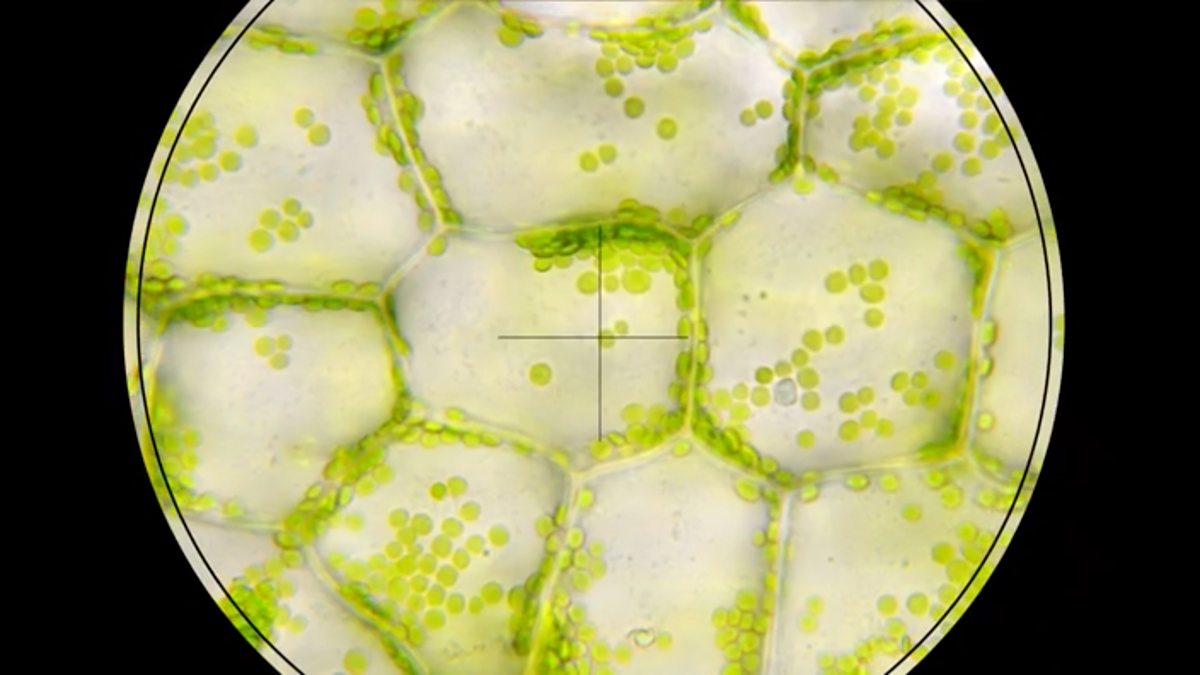
Do cells have specific specialties?
Cells have specific specialties to increase the efficiency of various functions.
We need a microscope to see cells and microorganisms. Cells can be seen with light microscope, but inner components of the cell like organelles, viruses and organic particles can only be seen with a light microscope.
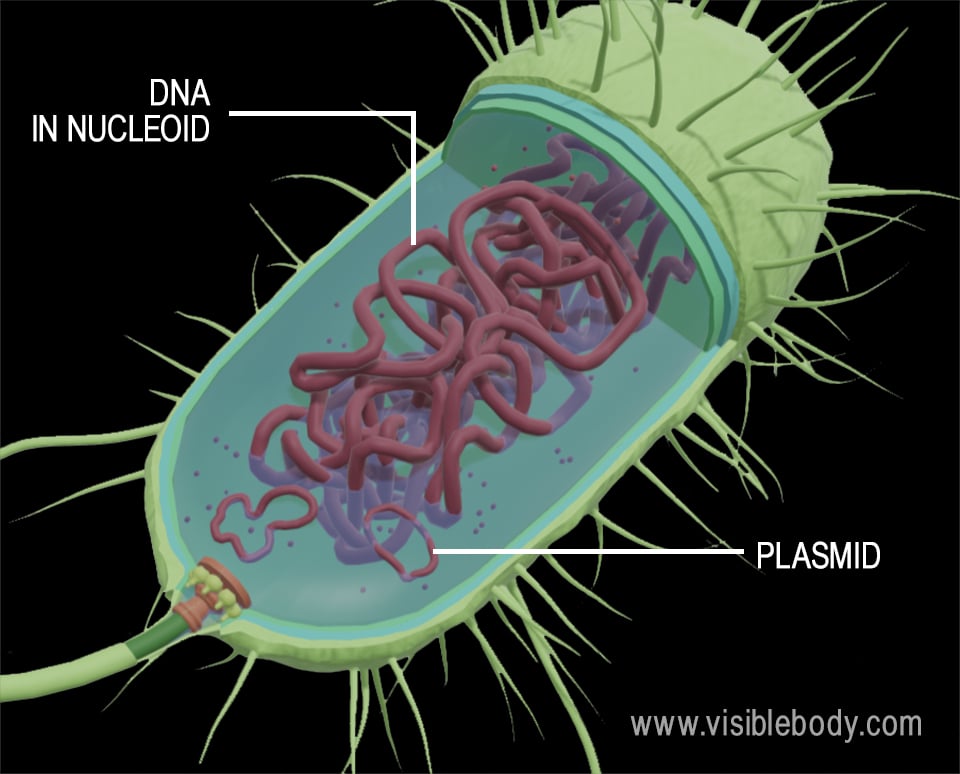
Explain the Prokaryotic cell
it is an undeveloped cell; it is more primitive in shape and structure.
it has a genetic material without a membrane caled the nuclear zone or nucleoid
its cytoplasm has no membranous organelles like Golgi bodies or mitochondria. it has ribosomes in the form of numerous small grains, which build proteins
it's represented by blue-green algae, bacteria and mycoplasma which all belong to the Monera kingdom
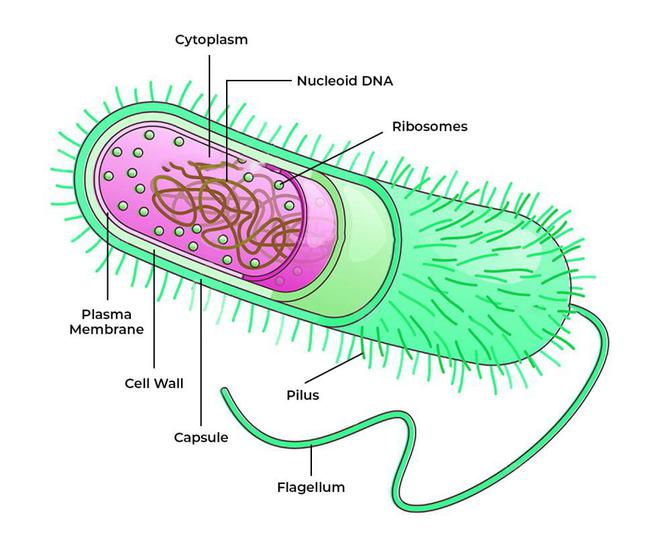
What does the bacterial cell consist of? or explain the structure of the bacterial cell
each bacterial cell represents a prokaryotic organim. it is surrounded by a solid wall consisting of chemical compounds (protein, lipids, and polysaccharides)
behind that wall, there is a plasma membrane (semi-fluid membrane) that surrouds the cytoplasm
the cyctoplasm contains the nucleoid. there are no nuclei or nuclear envelope, unlike eukaryotic cells and ribosomes
some typesbof moving bacteria have flagella, pili or both
Draw the structure of bacteria
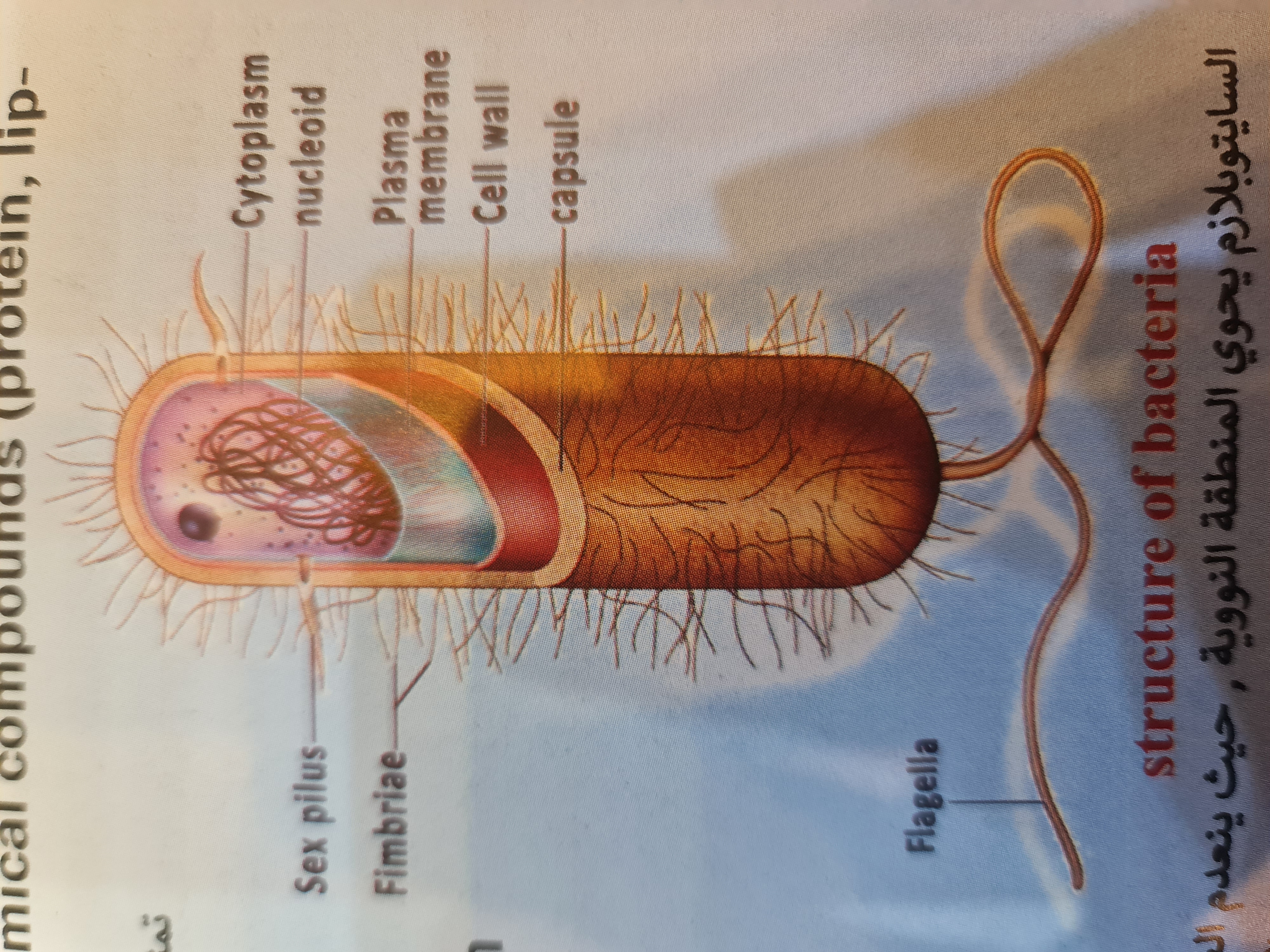
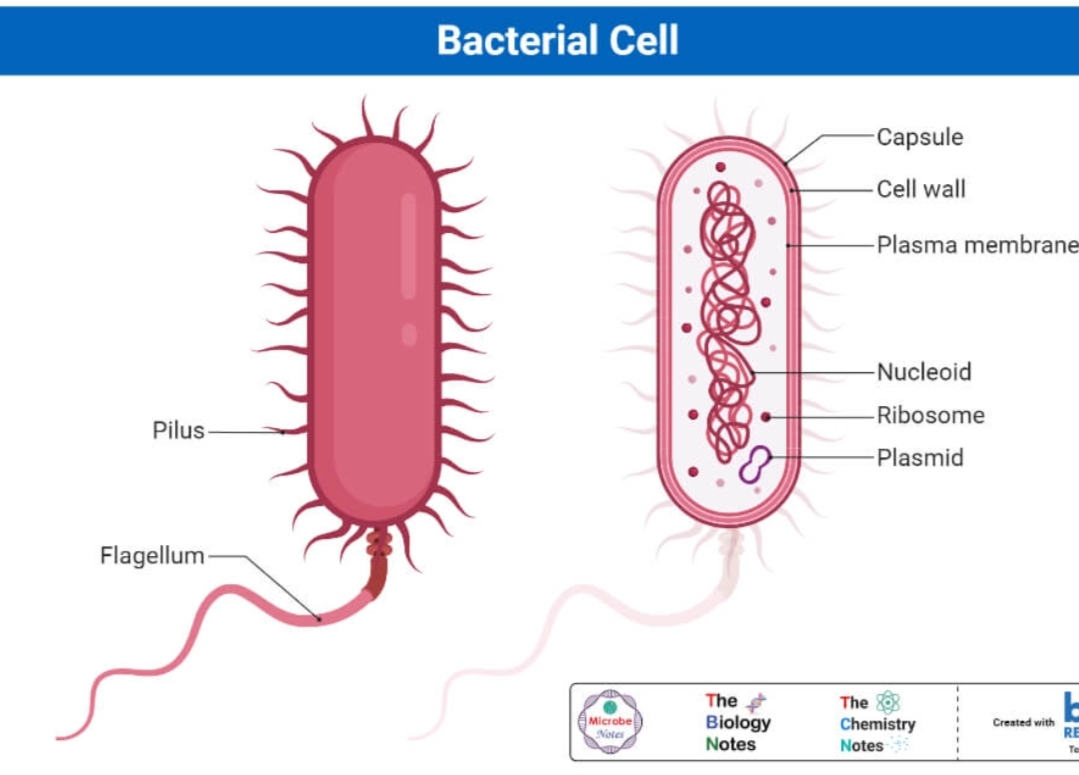
List the general appearance of bacteria cell
Cell covering: (1) cell wall (2) plasma membrane
Cytoplasm: (1) nucleoid (2) ribosome
Suffixes: (1) flagella (2) fimbriae (3) sex pili
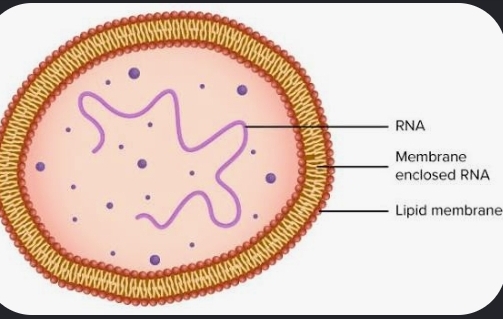
Why are prokaryotic cells considered undeveloped?
It is an undeveloped cell that is more primitive in shape and structure

Why can bacteria and blue-green algae build protein?
because it contains a large number of ribosomes in the cytoplasm that builds proteins in the cell
![<p>Why does bacteria (blue-green algae) have a nuclear zone? [image unrelated]</p>](https://assets.knowt.com/user-attachments/7627d8dc-58f9-44ba-bb44-08e861f4b206.jpg)
Why does bacteria (blue-green algae) have a nuclear zone? [image unrelated]
Because it has a nucleus without a nuclear envelope/membrane
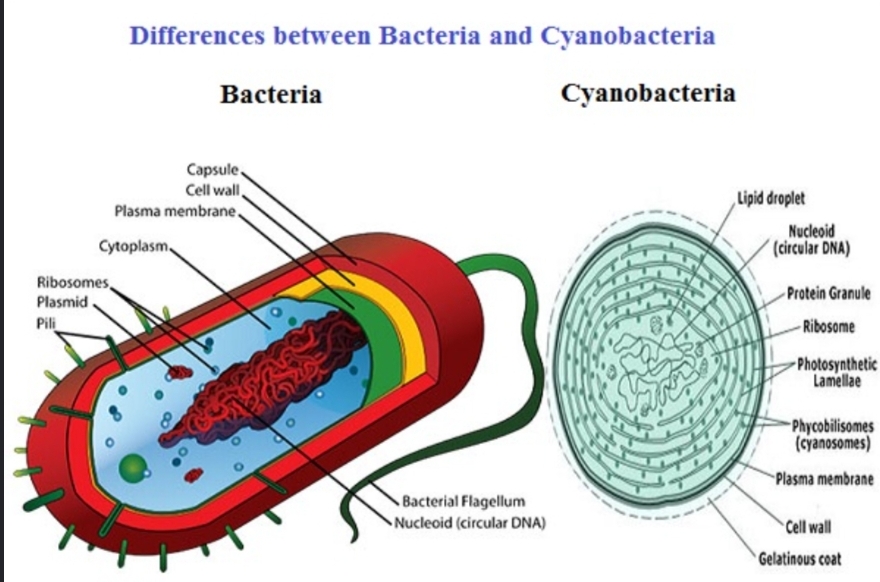
Why does bacteria differ from blue-green algae?
bacteria has no chlorophyll pigment
bacteria cell wall is surrounded by a capsule, while blue green algae cell wall is surrounded by a gelatin membrane
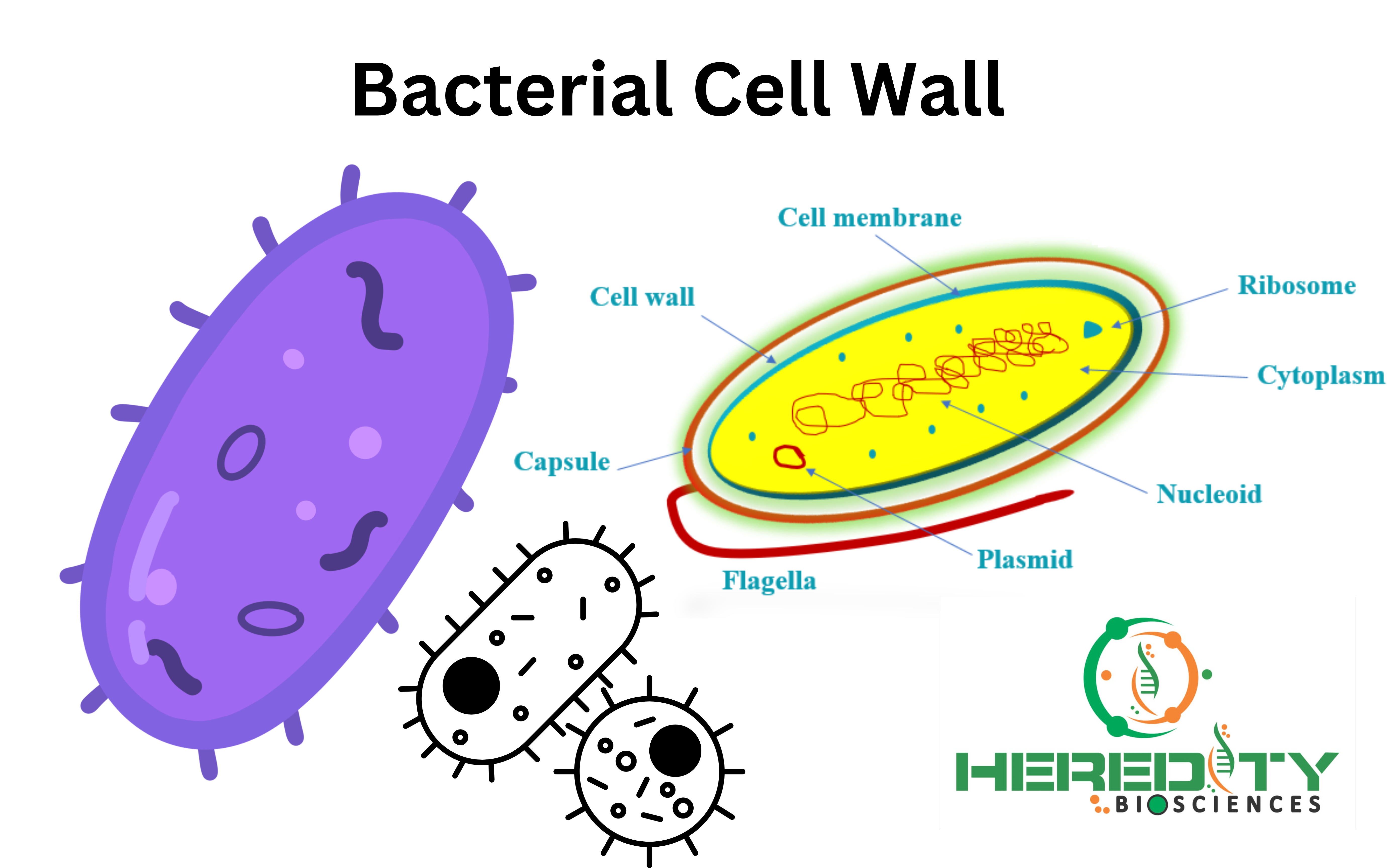
What is the chemical structure of prokaryotic/bacterial cell wall?
The cell is surrounded by a solid wall consisting of the following chemical compounds:
Protein
Lipids
Polysaccharides [poly + nerdy term for sugar in arabic]
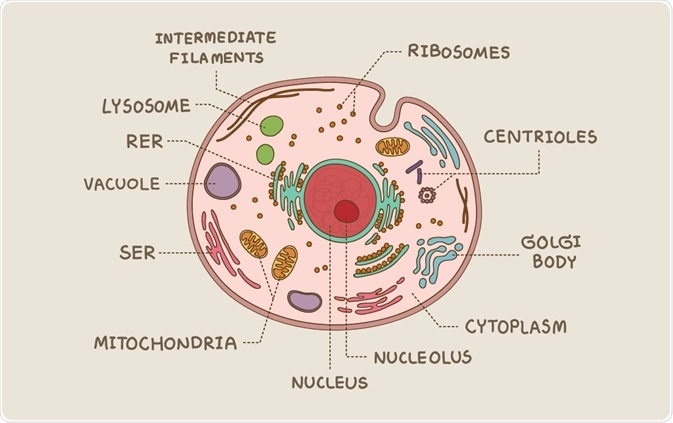
Explain eukaryotic cell
This cell has true nucleus and is found in Protists, Fungi, Plants and Animals.
Some of these cells have varying shapes; they change from time to time (like amoeba), while some are sphereical, pyramidal, oval, tubular, cubic, flat, astral, fusiform, etc. (in a fixed shape)
They're small and csn only be seen by microscope, but they are larger than prokaryotic cells.
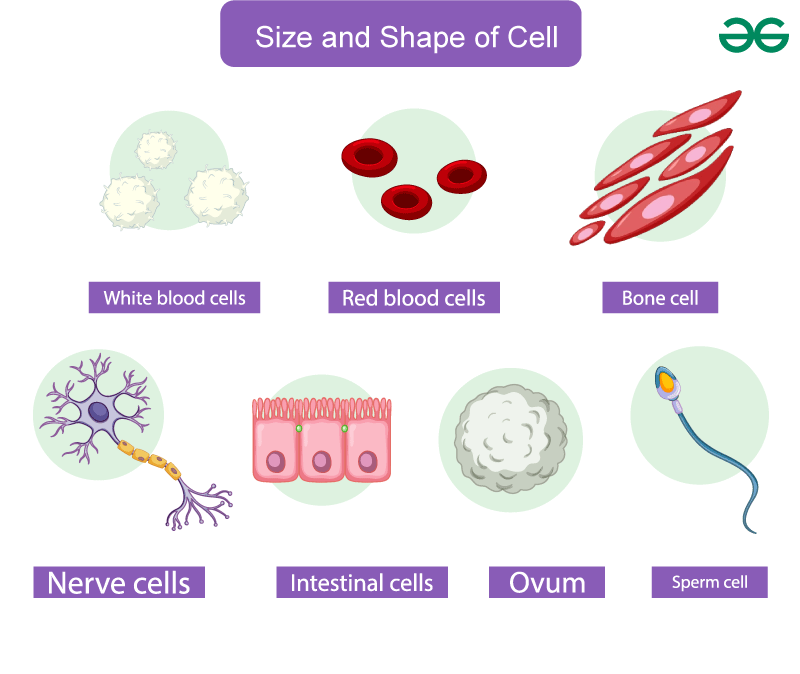
Why is there a difference in the shape of eukaryotic cells?
Such change in shape is due to function of these cells, because cells often have shapes that adapt their function.
Generally, cells need a surface area (plasma membrane)
To exchange materials with the surrounding environment appropriately
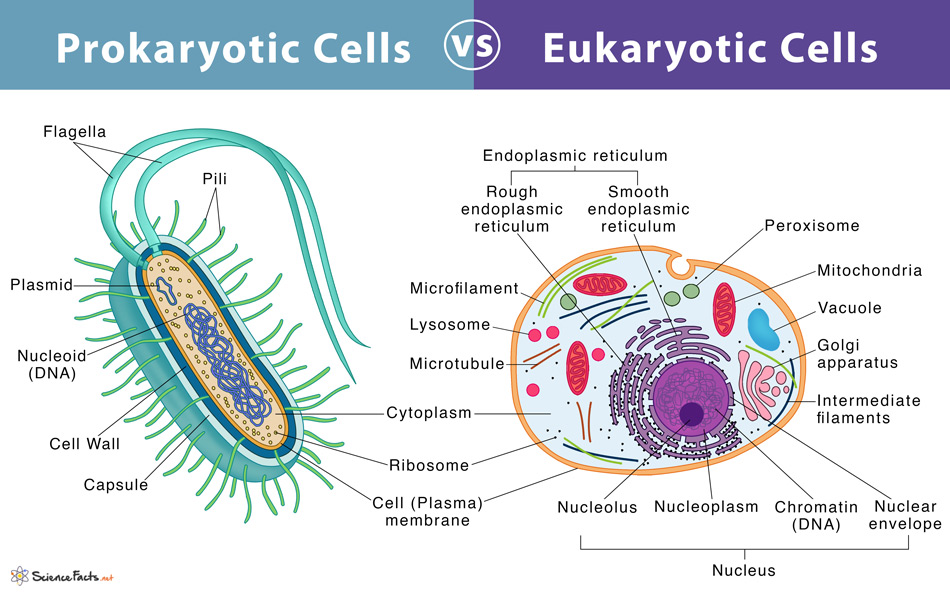
Compare between Prokaryotic and Eukaryotic cells
They are represented by bacteria, blue-green algae and mycoplasma which all belong in the Monera kingdom. They are found in fungi, protist, plants and animals.
They have a nucleus without a nuclear membrane called the nuclear zone. They have a true nucleus surrounded by a nuclear membrane
The cytoplasm doesnt contsin membranous organelles, like mitochondria and others. The cytoplasm contains membranous organelles such as mitochondria and others
Undeveloped. More developed than prokaryotic cells
Smaller than eukaryotic. Larger than prokaryotic
They have a cell wall and plasma membrane. The plant cell has a cell wall and plasma membrane, and the animal only has a plasma membrane.