Alcohols, Ethers, Epoxides - DAT
 Call Kai
 Learn
Learn Practice Test
 Spaced Repetition
 Match
Match Flashcards
 Knowt Play
1/26

There's no tags or description
Looks like no tags are added yet.
Name | Mastery | Learn | Test | Matching | Spaced | Call with Kai | Chat |
|---|
No analytics yet
Send a link to your students to track their progress
27 Terms
R—OH + HX ————>
R—X + H2O (alkyl halide formation)

PBr3 / Pyridine ————>
R—Br + HPR (alkyl bromide formation)

Can alkyl bromide/chloride formation occur on a 3* alcohol?
No, 1* and 2* only

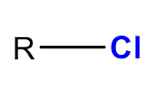
SOCl2 / Pyridine ————>
Alkyl chloride formation with R—Cl

TsCl/pyridine ————>
Alkyl tosylate formation with R—OTs —— OTs is a better leaving group than OH


H2SO4 or H3PO4 ————>
Alcohol dehydration to form alkenes or ethers
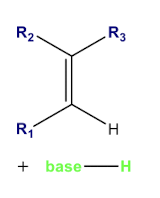
What mechanism is used in alcohol dehydration of 1* alcohols
E2
What mechanism of dehydration is used for 2* or 3* alcohols
E1 (favors most substituted product)
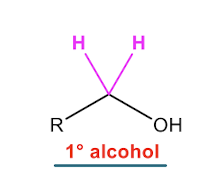
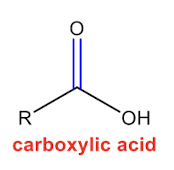
NaCr2O7/H2SO4 or H2CrO4/ or CrO3/H2SO4 ————>
Carboxylic acid formation (oxidizing alcohol)
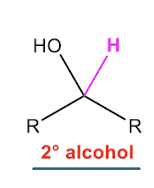
NaCr2O7/H2SO4 or H2CrO4/ or CrO3/H2SO4 ————>
Ketone formation (oxidizing alcohol)

Does chromium alchohol oxidation work on 3* alcohols and phenols?
No!
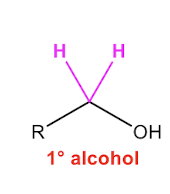
PCC / or periodinane ————>
Aldehyde formation (PCC oxidation)
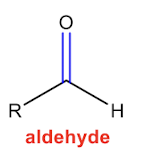

PCC / or periodinane ————>
Ketone formation (PCC oxidation)

Does PCC/periodinane work on 3* alcohols or phenols?
NO

DMSO, (COCl)2 / 2. NEt3 ————>
aldehyde formation (Swern oxidation)


DMSO, (COCl)2 / 2. NEt3 ————>
Ketone formation (Swern oxidation)


Alcohol + NaH, Na, or K (base) ——> Alkoxide + alkyl halide ———> ?
Formation of an ether (williamson ether synthesis)

What is the primary way that an ether will split up?
it will split up to make the alkyl halide as close to a 1* carbon as possible → encourages SN2
Can eliminations occur in williamson ether synthesis
Yes, if the alkyl halide is 2* or 3*

ether + H—X ————>
alkyl halide + alcohol (xs H-X gives 2 alkyl halides)
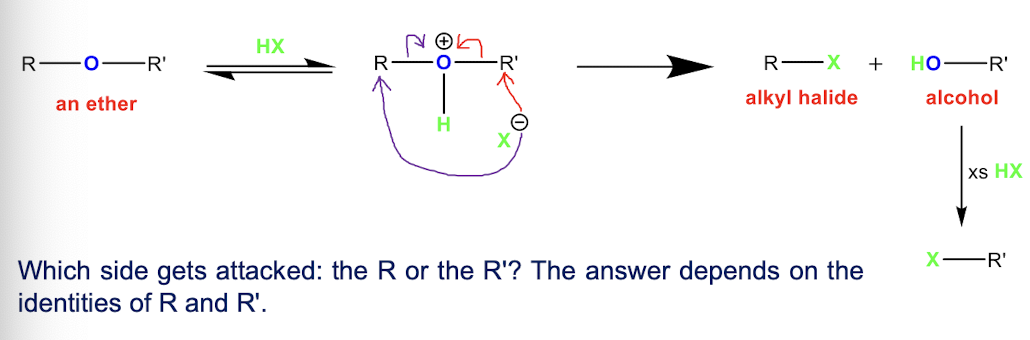
if R or R’ on an ether is 2* or 3*, what mechanism will the rxn do?
SN1

Alkene + peroxy acid (mCPBA) ————>
epoxide


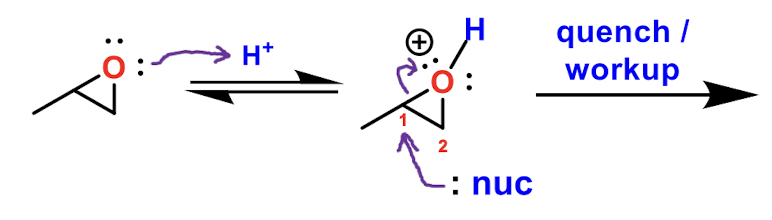
Under acidic conditions, what carbon will the nucleophile attach to in a nuc/epoxide addition
Carbon 1 (more substituted)
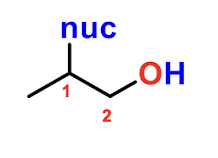

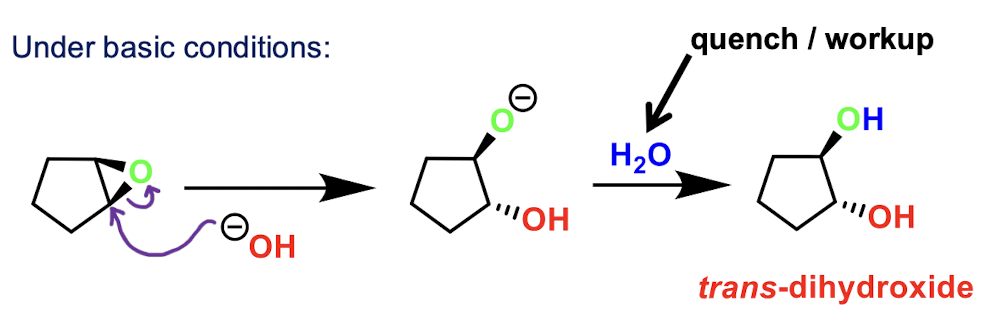
Under basic conditions, what carbon will the nucleophile attach to in a nuc/epoxide addition
Carbon 2 (less substituted)

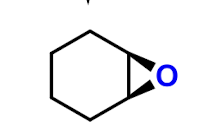
what would the stereochemistry be of the dihydroxide? (in acidic and basic conditions)
Trans