Structure 3.2 - Functional groups: Classification of organic compounds
 Call Kai
 Learn
Learn Practice Test
 Spaced Repetition
 Match
Match Flashcards
 Knowt Play
1/23

There's no tags or description
Looks like no tags are added yet.
Name | Mastery | Learn | Test | Matching | Spaced | Call with Kai | Chat |
|---|
No analytics yet
Send a link to your students to track their progress
24 Terms
Define homologous series.
(1) share the same general formula
(2) successive members differ by a -CH2- group
(3) show similar chemical properties
(4) show a gradual change in physical properties
Define functional group.
The atom or group of atoms in a molecule that gives its characteristic chemical properties - this is the reactive part of a molecule
Define molecular formula.
A molecular formula shows the actual numbers of all the atoms in a molecule of the compound.
Define empirical formula.
An empirical formula is the simplest whole number ratio of elements in a compound.
Define structural formula
A structural formula is one that shows unambiguously how the atoms are arranged together.
Define full structural formula.
A full structural formula (sometimes called a graphic formula/ displayed formula) shows every atom and bond.
Define condensed structural formula.
In a condensed structural formula, single bonds are usually omitted (except those joining substituents to a carbon skeleton). However, carbon-carbon multiple bonds (i.e. C=C and C≡C) must be written.
Define skeletal formula.
Skeletal formula is another simplified form of structural formula. In a skeletal formula, only the ‘carbon skeleton’ and the functional group(s) attached to it are shown. The carbon atoms in the carbon skeleton and the hydrogen atoms that are directly attached to them are omitted.

Identify types of formula.
Reminders:
Full structural formula: DON’T DRAW LONE PAIRS.
Condensed structural formula: BONDS MUST LINK TO BONDED ATOM (i.e. C instead of H)
Skeletal formula: one line = one C-C bond = 2 C atoms, one at each end

Define alkane.
Alkanes are family of hydrocarbons.
Define hydrocarbon.
Hydrocarbon is a compound containing only carbon and hydrogen.
General formula of alkane.
CnH2n+2
Define saturated hydrocarbons.
All C-C bonds are single bonds.
Define unsaturated hydrocarbons.
At least one bonds between carbon atoms is double or triple bond.
Are alkanes saturated or unsaturated hydrocarbons?
Saturated hydrocarbons.
Suffix for alkanes
Ending with the suffix -ane
What do each part of the name of a branched-chain alkane mean?
Prefix: the alkyl group substituents
Root: main carbon chain
Suffix: -ane (= belonging to family of alkane)

Match the number of carbon atoms with name of alkanes.
Answer:
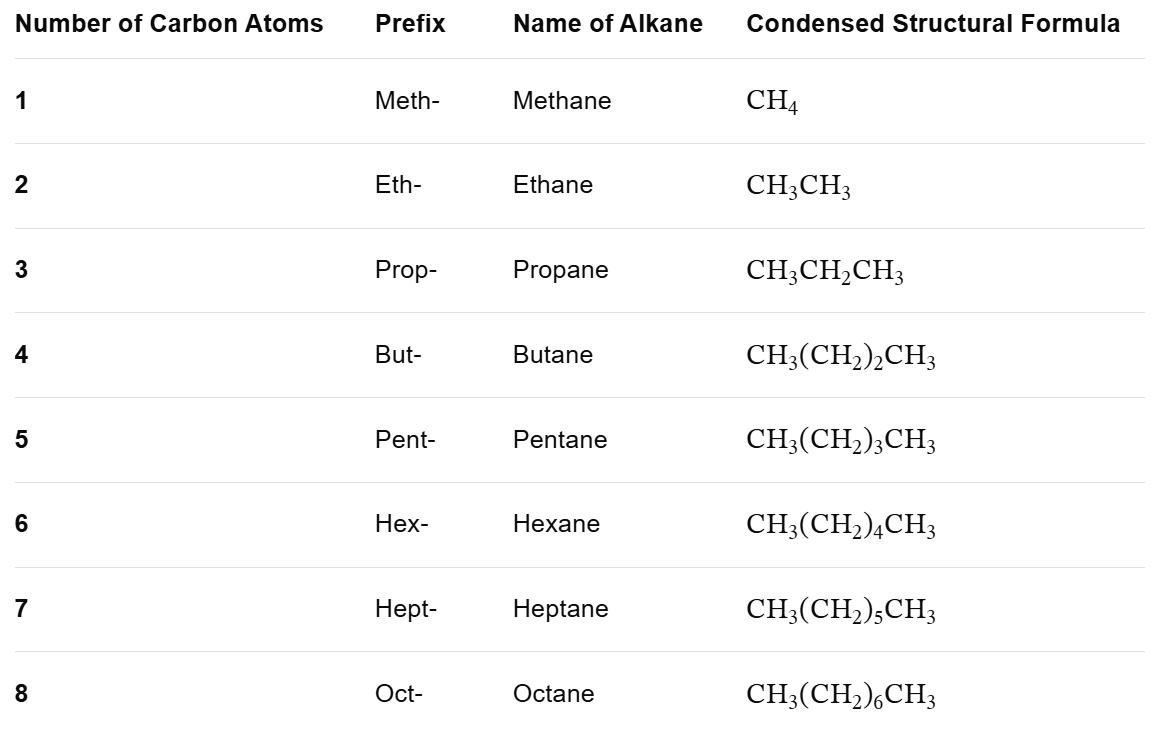

Match the number of carbon atoms in alkyl group with the name of alkyl groups.
Answer:
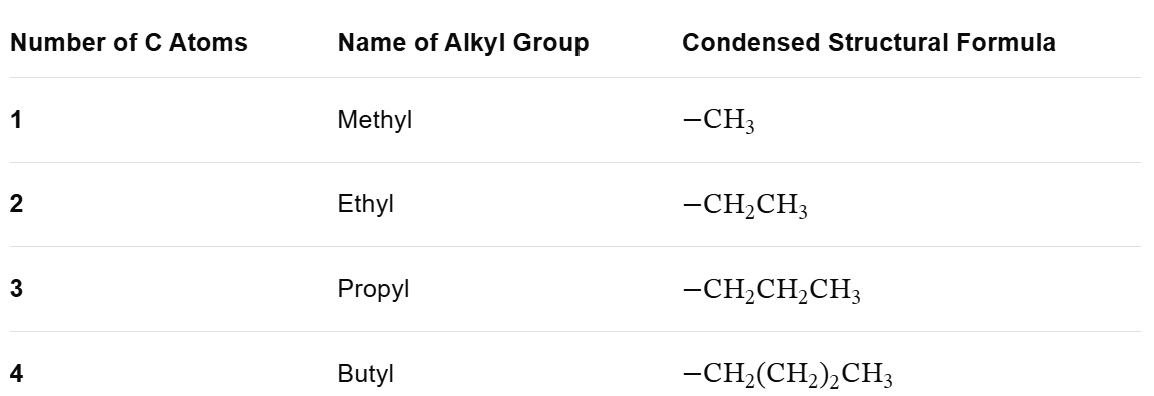

Match the number of identical substituent with the prefix.
Answer:
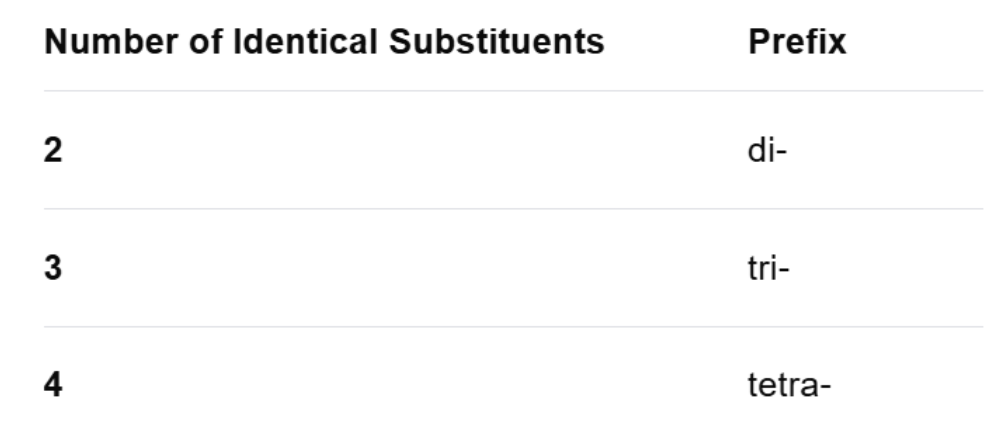
Steps to name alkanes:
Find the longest continuous carbon chain, match with the root name
Number the C atoms such that the smallest numeral is given to the substituent
Name the substituent. indicate its position by adding a numeral followed by a hyphen in front of the name
If two or more of the same substituent are present, name them with a multiplying prefix
Arrange different substituents in alphabetical order. (Always place a hyphen between a numeral and a letter). Then join the substituents as prefixes to the root
NOTE: dimethyl, trimethyl and tetramethyl are all regarded to start with m.
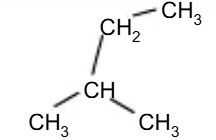
Name it.
2,methylbutane
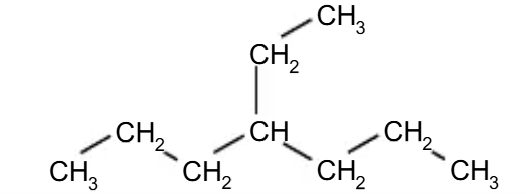
Name it.
4-ethylheptane

Name it.
3-ethyl, 2,2,5-trimethylhexane
*Note: remember if one atom has the same substituent twice, repeat the number twice.