species and evolution? bi102
 Call Kai
 Learn
Learn Practice Test
 Spaced Repetition
 Match
Match Flashcards
 Knowt Play
1/91

There's no tags or description
Looks like no tags are added yet.
Name | Mastery | Learn | Test | Matching | Spaced | Call with Kai | Chat |
|---|
No analytics yet
Send a link to your students to track their progress
92 Terms
Species
group of related organisms that share a distinctive set of attributes
Challenges to defining a species
Morphology is useful but not always
Reproductive isolation often difficult to assess in nature
Humans can move species outside of their normal geographical ranges
Why are species definitions important?
for ecological interactions and conservation efforts
Taxonomy
science of naming and grouping organisms
What does taxonomy make easier?
To identify organisms using universally accepted names
To classify or group organisms
To show evolutionary relationships
Taxon/ taxa
taxonomic group
What do we call new species?
Genus name always capitalised
Species epithet never capitalised
Both names either italicised or underlined
Rules for naming established and regulated by international associations
Carl Linnaeus introduced hierarchical classification system, which is now widely used to classify living organisms
Each level is included in the level above eg members of order carnivora belong to class Mammalia
Based originally on physical characteristics
Taxonomic hierarchy
Domain -> supergroup -> kingdom -> phylum -> class -> order -> family -> genera -> species
Speciation and macroevolution
) tible
- Speciation is the process by which new species are formed
- Macroevolution refers to the evolutionary changes that produce new species and groups of species
- Underlying cause of speciation is the accumulation of genetic changes (microevolution) that ultimately promote enough differences so that we judge a population to constitute a unique species
Genetic changes underline speciation
Reproductive isolation results in two distinct genetic groups due to the uild up of genetic changes over time
Most mutations are neutral, detrimental mutations are quickly eliminated
If neutral mutations occur at a constant rate they can be used to measure evolutionary time
Small number of mutations have big effect and drive speciation
Genetic changes with a big speciation effect
Polyploidy drives reproductive isolation in plants (diploid-> tetraploid)
Variations in certain genes are more likely to result in reproduction isolation eg variations in protein sequences, regulation or gene copy number
Developmental genes are very important to the body plan and physical phenotypes of individuals
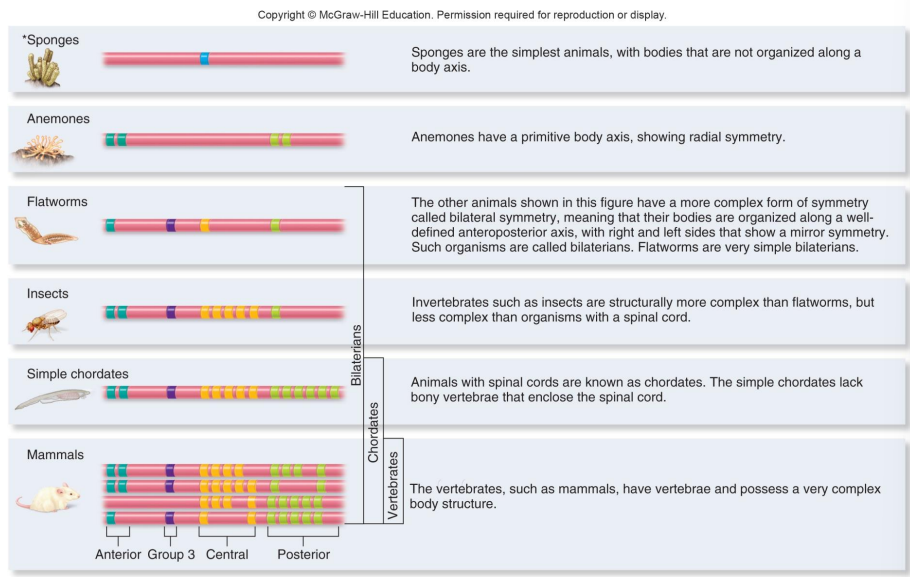
Example- Hox
Homeobox- containing (hox) genes are transcription factors regulating body plans ( a developmental gene)
Variation in the hox genes spawned the formation of many new body plans
Number and arrangement of hox genes varies among different types of animals
Increases in the number of hox genes led to greater complexity in body structure
Hox genes 9-13 work together to specify limb formation from proximal to the distal direction, meaning from close to the point of attachment to the body to the terminal end of the limb
Mutations in the genes HoxA-11 and HoxD-11 resulted in the loss of radius, ulna and some of the carpals
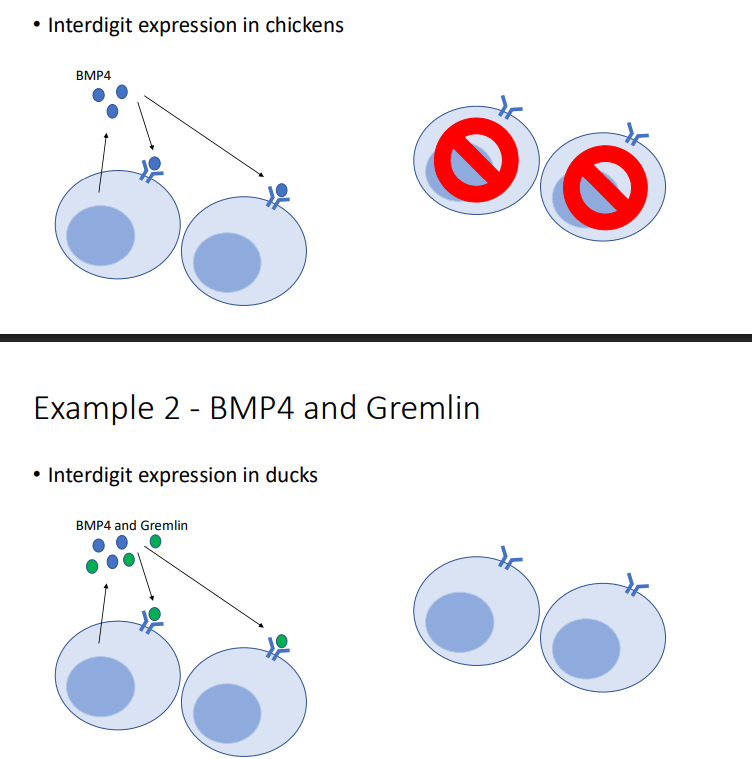
Example- BMP4 and gremlin
Differences in expression of two cell signaling proteins ○ BMP4- cells undergo apoptosis and die ○ Gremlin- inhibits the function of BMP4 and allows cell to survive
Interdigit expression in chicken and ducks
classifies species based on defined characteristics,
not linked to an evolutionary time scale but aims to describe the evolutionary history of a set of species arising from a shared ancestor-- generates a cladogram
evolutionary history of a species or group of species,
phylogenetic trees usually based on morphological/ genetic data,
drawn to include evolutionary time scale
defines a common ancestor,
evolutionary time scale is calculated via the accumulation of neutral mutations or via dating of fossil records
both prokaryotic, 1- 5 μm in diameter,
smallest and most abundant life form,
occupy almost every conceivable habitat
first prokaryotic life encountered and atmosphere devoid of oxygen,
anaerobic,
certain photoautotrophic cyanobacteria form stromatolites-- layered structure of calcium carbonate,
cyanobacteria produce organic molecules from CO2
photosynthetic bacteria abundant in fresh water, oceans and wetlands and on surfaces of arid soils,
named for their colour ( phycobilins),
only prokaryotes that generate oxygen as product of photosynthesis,
gave rise to plastids of eukaryotic algae and plants,
greatest structural diversity among bacterial phyla (filaments),
essential ecological roles in producing organic carbon and fixing nitrogen ( phosphorus rich water-- toxins harmful to eukaryotes)
share common features with archaea, suggesting common ancestry,
closely related to ancestral Lokiarchaeota phylum of archaea,
endosymbiosis of proteobacteria-- mitochondria,
endosymbiosis of cyanobacteria-- chloroplasts
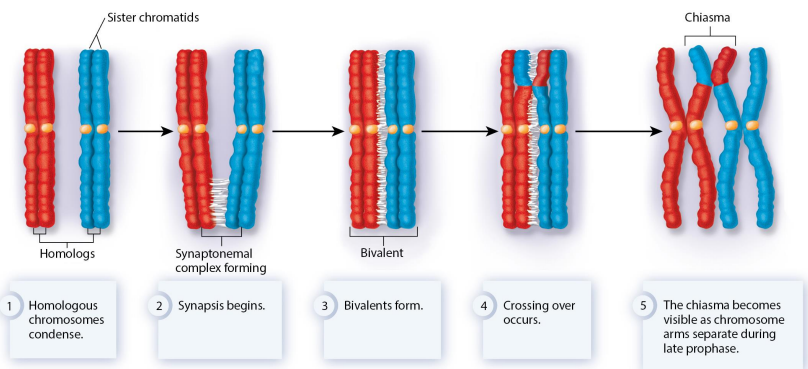
- Meiosis enables shuffling of genetic alleles creating diverse combinations in daughter cells
- This genetic diversity can lead to more evolutionarily 'fit' individuals
- Sexual reproduction with gametes and zygotes is a key feature of eukaryotes
- Wide array of single celled eukaryotic organisms
- Two common characteristics-- most abundant in moist habitats, oceans and lakes and most of them are microscopic in size
- Often classified by terms such as plankton, periphyton, algae, protozoa or fungal like but these terms lacks evolutionary meaning
- Many multicellular green and brown seaweeds display a life cycle involving alternation between haploid and diploid forms
- Two types of multicellular organisms-- haploid gametophyte produces gametes and diploid sporophyte produces spores by meiosis
- Arise from a single cell that divides to produce two daughter cells that stick together
- The daughter cells can follow different developmental fates producing different cell types (specialisation) - As organisms get larger, a higher percent of their cells are somatic
- Approx 500 million years ago, diversity of plant and animal species increased hugely
- Earth was warm and wet, with no ice caps
- Abundance of O2 (approx 20%) and high CO2 (approx 20%)
- Ozone layer first develops, reducing amount of UV radiation reaching earths surface
- The bare land surface provided unique niches for new species to exploit
- Plants initially colonised land-- allowed development of soils, caused CO2 levels to drop, stabilising high O2
- Photosynthesis uses CO2 from atmosphere to produce carbon containing organic molecules and oxygen as a by product
- Within 200 million years CO2 dropped <5%
- Eukaryote supergroup Opisthokonta-- includes certain protists, kingdom animalia and fungi
- Fungi originated in aquatic habitats-- arose from protists related to Nuclearia, an amoeba that feeds by engulfing cells
- Most have a mycelium composed of hyphae, mycelium is diffuse and inconspicuous, haploid
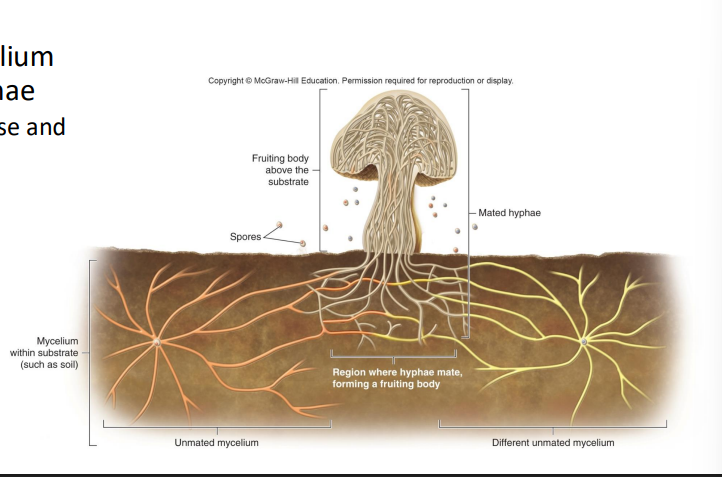
- A mated mycelium (diploid) may produce a fleshy fruiting body under certain conditions eg mushroom
- Emerge from substrate and produce haploid spores
○ Spores have tough chitin wall for protection against drying and other stresses
○ Dispersed by wind, rain or animals
○ Spores grow into haploid mycelia
- Eukaryote supergroup opisthokonta-- includes certain protists, kingdom animalia and fungi
- Fungi originated in aquatic habitats-- arose from protists related to Nuclearia, an amoeba that feeds by engulfing cells
- Heterotrophic-- cannot produce their own food-- fungi feed on diverse substrates (vital decomposers)
- Use absorption nutrition-- secrete enzymes and absorb organic molecules
- Store surplus food as glycogen
Cells enclosed by tough cell walls composed of chitin
- Prevents phagocytosis
- Enables resistance of high osmotic pressure resulting from osmotrophy
- Osmotrophy is a form of nutrition that relies on osmotic pressure
Mycelia can grow quickly when food is plentiful
- Hyphae extend tips through substrate
- Narrow dimensions/ extensive branching provide high surface area for absorption Mycelia grow via of osmosis and cytoplasmic streaming
- Entry of water provides force for tip extension
- Enzymes and cell wall materials are carried to tip by vesicles
- Eukaryotes evolved in the presence of bacteria and archaea
- First prokaryotes- 3.8-3.5 bya
- First eukaryotes- 1.8 bya
- First animals- 632 mya
represents collocations of thousands of different microbial species
- Diverse species of bacteria, archaea, fungi and protists
- Communicate with each other chemically and/ or electrically
- Can play key ecological roles eg nitrogen and carbon cycles
- Biologists typically use genetic differences to distinguish and identify microbial species and genes present in a complex microbiome
- Two main methods-- ribosomal RNA or metagenomic
- All living things use ribosomes (RNA structures) to produce proteins
- Conserved ribosomal RNA sequences
- Metagenomic approaches aim to obtain base sequences of all the DNA present in a sample
- A metagenome is defined as the genomes of all the organisms present in a sample
- This approach is known as "shotgun sequencing" since the process generates many tiny pieces of DNA
- We can use these sequences to classify protein encoding genes that indicate specialised microbial functions
- Host associated microbiomes form mutualism relationships
- Microbiomes function as complex biological networks
- Microbiomes contribute many additional metabolic pathways to their hosts
- Microbiomes contribute to immunity by excluding disease causing microbes
- certain fungal hyphae are important components of plant microbiomes because they absorb minerals from the soil and transport them to plant roots
- More than 80% of terrestrial plants form mycorrhizae
- Experiments show mycorrhizae greatly enhance plant growth
- Most animals possess a gut microbiome
- Mammals acquire their microbiome during birth and nursing-- passed down between generations
- Herbivores utilise cellulose
- digesting bacteria to consume plants
- Butyrate is a short chain fatty acid that cant be produced by mammalian cells
- A wide variety commensal bacteria can produce butyrate In the gut including Firmicutes and Bacteroides phyla-- produced via the breakdown fibre and starches in our diet
- Microbiome derived butyrate is absorbed and used by us-- energy source by epithelial cells in our gut, binds to cell receptors and has an anti inflammatory effect, regulates sleep cycles
- Undernutrition is leading cause of infant and childhood mortality worldwide
- A large body of research aims to treat various diseases In humans through modification of the host microbiome
- Pre biotics or pro biotics
- Faecal transplant-- for recurrent Clostridioides difficile infection
- Multicellular animals emerged at the end of the Proterozoic eon (over 590 mya)
- First animals were invertebrates
- A sudden increase in animal diversity occurred during the Cambrian explosion (533-525 MYA)
- Three possible explanations
○ Favourable conditions
○ Evolution of the Hox gene complex
○ An evolutionary "arms race"
- Closest living relative of animals are choanoflagellates, single celled protists that have a single flagellum surrounded by a collar of cytoplasmic tentacles
- Some are colonial
- Some cells may have taken on specialised functions
- Choanoflagellates bear a striking similarity to sponge choanocytes
- Sponges - Range in size from a few millimetres to more than 2m in diameter
- Loosely organised and lack true tissues
- Multicellular with several types of cells
- 8,000 species, mostly marine
- No apparent symmetry
- Adults sessile, larvae free swimming
- Somatic cells perform specialised functions unrelated to reproduction
- The different germ layers develop into different tissues/ organs
- Porifera (sponges) have specialised cells-- choanocytes/ epithelial cells/ amoebocytes
- Not all cell types are involved in gaining nutrition
- Suspension feeding-- filtering particles from surrounding water
- Bulk feeding-- eating large food pieces
- Fluid feeding-- sucking sap or animal body fluids
- Rely on internal absorptive nutrition
- Most have muscle and nerve cells organised into tissues
- Most animals are capable of some kind of locomotion
- Specialised sensory structures and nervous system to coordinate movement
- Sessile species such as barnacles have moving appendages or a swimming larval stage
- Movement requires organised body structure
- Radiata (radially symmetric)-- can be divided equally along any longitudinal plane through the central axis, often circular or tubular in shape with a mouth at one end, diploblastic (2 layers-- endoderm and ectoderm)
- Bilateria (bilaterally symmetric)-- can be added along a vertical plane to produce two halves, have cephalisation ( sensory structures at head) and dorsal and ventral sides, have anterior and posterior ends, triploblastic (3 layers-- endoderm, ectoderm and mesoderm)
- Jellyfish, box jellies, hydra, sea anemonies, corals
- Radial body symmetry
- Gastrovascular cavity for extracellular digestion
- Most have tentacles surrounding the mouth for food detection and capture
- True nerve cells arranged in nerve net-- interconnected neurons with no central control organ
- Hox genes are involved in pattern formation in animal embryos
- Organised into 4 clusters of 12 genes, designated 1-13
- Relatively simple changes in the expression patterns of these genes can account for the large variation in appendage types
- Different animal species show diverse body plans
- Level of segmentation and associated body structures is directly linked to genetic changes in Hox gene family
- Gene duplication means the newly duplicated Hox genes can accumulate mutations and evolve to control new body structures
- Evolution is not creating something new from scratch-- Hox genes exist and they are duplication allows them to undergo modification
- Notochord
- Dorsal hollow nerve cord
- Pharyngeal slits
- Postanal tail
- Subphylum cephalochordata
- All marine filter feeders-- gill slits
- Have 4 hallmarks
- Gas exchange across body surface
- Usually sessile but can leave burrow and swim
- Flexible rod between digestive tube and nerve cord
- Composed of fluid filled cells encased in fibrous tissue
- Provides skeletal support and stiff structure against which muscles act during swimming
- In humans is reduced to gelatinous discs between vertebrae
- Dorsal to the notochord and develops from ectoderm that rolls into a tube
- This hollow nerve cord is unique to chordates
- Nerve cord of chordate embryo develops into central nervous system and brain
- Connect the pharynx to the outside
- Filter device for suspension feeding in invertebrate chordates
- Modified in higher vertebrates for gas exchange, jaw support, hearing
- Only evident in humans during embryo development
- Propulsive force in aquatic species
- Lost in many species during embryonic development
- Contains chevron shaped muscle
- Jawless vertebrates are capable of filter feeding, scavenging food and parasitism
- Gnathostomes-- jawed vertebrates
- Earliest diverging gnathostomes were fishes
- Jaws allowed more efficient prey capture
- Ability to ingest large chunks of food
- Hinged jaws developed from gill arches
- Two pairs of gill arches were lost, others were modified
- Descent with modification
- Jaws and teeth
- Efficient movement-- fast and controlled (two pairs of appendages-- pelvic and pectoral fins)
- Enhanced sensory systems
- (lamprey-- sense light and dark via pineal eye
Predators-- sight, smell, pressure sensors, electrical sensors)
- Sharks, skates and rays - Skeleton of flexible cartilage
- Derived character within the chondrichthyes (not ancestral)
- Developmental change prevented ossification of cartilage
- Sharks among earliest fish to develop teeth
- Powerful sense of smell
- Bony fishes are most numerous of all fishes
- Two living clades
Actinopterygii-- ray finned fishes
Sarcopterygii-- lobe finned fishes
- Bony skeleton and scale covered skin
- Operculum covers gills
- Swim bladder for buoyancy
- Ancestors gave rise to tetrapods
- Fins supported by skeletal extensions of the pectoral and pelvic areas and moved by muscles
- Eg dipnoi-- lungfish
Live in oxygen poor freshwater
Can survive periods of drought
Both gills and lungs, can drown if unable to breathe air
Muscular lobe fins allow them to traverse land
- Driven by shallow aquatic environments-- lots of plants, low oxygen
- Land offered less competition for food sources, an availability of unexploited food sources and changing environments
- Following the colonisation of land by plants, animals began venturing out of the aquatic environment
- Required adaptations
Resistance to desiccation
Ability to move on land
Ability to reproduce on land
Ability to breath air
Refinement of ear to allow hearing
- Earliest tetrapods likely shared characteristics of modern fish, amphibians and reptiles
- Tetrapods but still linked to semi aquatic environments
- Require water for parts of their lifestyle
- Successfully live on land but reproduce in water
- External fertilisation (mostly)-- larval stages aquatic
- Undergo metamorphosis-- tadpoles rely on gills and tail, adults possess lungs and limbs
- Adults has well developed limbs enabling movement on land
- Lungs are adapted to a semiterrestrial lifestyle-- buccal pumping forces air into lungs, skin can also absorb oxygen-- require high levels of moisture
- Order anura-- frog and toads (90% of amphibians, carnivorous adults, herbivores tadpoles)
- Order apoda-- caecilians (nearly blind tropical burrowers, secondarily legless)
- Order urodela-- salamanders (often have colourful skin patterns, advertising toxicity)
- Critical innovation
- Broke tie to water
- Shell is permeable to oxygen and carbon dioxide
- Birds-- hard and calcareous
- Reptiles-- soft and leathery
- Amnion-- innermost membrane that protects the developing embryo and forms the amniotic cavity
- Yolk sac-- encloses a stockpile of nutrients
- Allantois-- functions as a disposal sac for wastes
- Chorion-- provides gas exchange
- Albumin-- egg white, acts as a nutrient store
- Shell-- water impermeable but gas permeable
- Traditional classification has three living amniotes-- reptiles, birds and mammals
- Five extinct clades-- ornithischian and saurischian dinosaurs
- Flying reptiles (pterosaurs)
- Ancient aquatic reptiles ( icthyosaurs and plesiosaurs)
- Desiccation resistant skin-- contains keratin, dry and scaley in comparison to amphibians
- Thoracic breathing-- negative pressure sucks air in
- Water conserving kidneys-- concentrate waste prior to elimination
- Internal fertilisation-- fertilisation occurs in the females body as sperm cant cross a shell
- Evolved from amniote ancestors about 225 mya-- earlier than birds
- Evolved from small mammal like reptiles
- After dinosaur extinction mammals flourished
- Mammary gland secreting milk
- Hair
- Enlarged skull
- Specialised teeth
- Means 'single opening' referring to the single duct for their urinary, defecatory and reproductive systems-- the cloaca
- Only found in australia and PNG
- Subclass prototheria-- order monotremata
Platypus and echidna lay eggs (oviparous)
Lack placenta
Poorly developed nipples-- milk secreted from their skin
Platypus have venomous claw
- Clade metatheria
- 7 orders
- Once widespread and now confined to australia
- Opossum found in north america
- Give birth to immature offspring
- Young nursed and develop within a maternal pouch, the marsupium
- Placental mammals-- well developed young
- Four clades diverged in the Cretaceous
- Afrotheria-- elephant shrews, manatees, elephants
- Xenartha-- armadillos, anteaters and sloths - Euarchontroglires-- primates, lagomorphs and rodents
- Laurasiatheria-- whales, bats, arthiodactyla, and carnivores
- Developing embryo joined to mother by the placenta, which has a maternal and foetal portion, foetal and maternal blood don’t mix
- Embryonic development is completed within the uterus
- Tree dwelling
- 85 mya
- Opposbale thumbs
- Large brain
- No claws
- Binocular vision
- Complesx social behaviour and well developed parental care
- Hominoids-- gibbons, gorillas, oragutans, chimpanzees and humans ( no tails, brachiation, long limbs and short legs
- Monkeys-- tails, no brachiation, usually smaller