base knowledge for chapt 4, 5, 6 (in preparation for WA3)
 Call Kai
 Learn
Learn Practice Test
 Spaced Repetition
 Match
Match Flashcards
 Knowt Play
1/38

Earn XP
Description and Tags
RAHHHHHHHHHHHHHHHHHHHHHH
Name | Mastery | Learn | Test | Matching | Spaced | Call with Kai | Chat |
|---|
No analytics yet
Send a link to your students to track their progress
39 Terms
How to decide which separation technique to go with?
-substances to be obtained from the mixture
-physical properties of the substances present in the mixture
Magnetic attraction
-used to separate magnetic materials from non-magnetic materials
-make uses of the fact that only some materials are attracted to magnets
Filtration
-separate insoluble solid from the liquid in a solid-liquid mixture
^filter paper has tiny pores, trapped solid particles that remain on filter paper is called the residue, liquid that passes through the filter paper is called the filtrate
Distillation
-separate a pure liquid from a solid-liquid or liquid-liquid mixture
-involves both evaporation and condensation
Distillation process
1.mixture is heated in distilling flask until it boils
2.the vapor formed is allowed to escape into the condenser where it condenses
3.The pure liquid collected from distillation is called the distillate, collected in a conical flask
Thermometer procedure
-bulb of thermometer positioned at the exit side arm of the distillation flask
“ensures that the thermometer measures the boiling point of the substance being distilled”
Condenser procedure
condenser should slope downwards, water input at the bottom, water output at the top
“the flow of water maximises the cooling effect”
Boiling chips procedure
-add to solution in the distilling flask
“ensure smooth boiling by having the sharp edges to burst air bubbles
Conical flask procedure
-position at end of condenser and used to collect distillate
“small opening to reduce evaporation of distillate”
Paper chromatography
-separate small amounts of substances
-different substances dissolve to different extents in a mixture
-different substances move at different rate \s up the chromatography paper
-substances that are more soluble in a solvent will move faster than substances that are less soluble
-Identify the contents of a mixture
-test the purity of a substance
Solvent front
maximum height reached by solvent before the chromatogram is removed
Rf value (how to find)
distance travelled by the substance over the distance travelled by the solvent
-allows us to compare chromatograms which have been run for different durations using the same solvent, under the same temperature
-crucial for identifying components in mixtures
microfiltration
-removes small particles from the treated sewage water
Reverse Osmosis
-water obtained from microfiltration is pumped at high pressures through a partially permeable membranes
-only water molecules can pass through
properties of image formed by plane mirror
-upright
-virtual (cannot be captured on a screen, light rays do not meet at the image position)
-laterally inverted
-of the same size as the object
-same distance away from the mirror as object
concave mirrors
-surface that bends inwards
-magnified image
convex mirrors
-surface that bends outwards
-wider field of vision
regular and irregular reflection
smooth surface - regular reflection, each ray reflected in the same direction
rough surface-irregular reflection, each ray reflected in a different direction
how do u see a green apple on the table
Green Light is reflected from the apple into our eyes
apple is green , apple only absorb all the white light which is lowk Red, orange, yellow, blue, and violet. and only reflects green light cause thats the freaking apple colour
Refraction
-bending of light at the boundary between two mediums of different optical densities
At what angle of incidence in air will light pass through a transparent medium without being refracted
angle of incidence is 0
-from the normal, the light ray passes straight through without refraction or bending
PRISM - a prism is optically denser than air
when a beam of light travels through a prism, it is split into different colors
-white light bend towards the normal through different angles when entering and leaving the prism
-splitting of white light is called dispersion
-red light travels the fastest through the prism and bends the least
-violet light travels the slowest through the prism and bends the most
what is the most basic form of life?
Cells
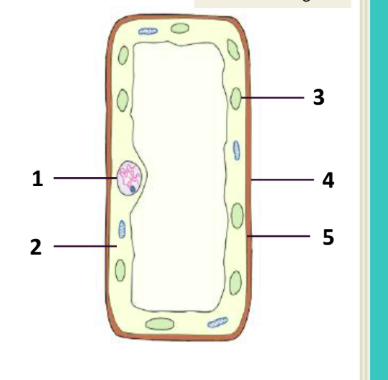
Parts of a cell
1- nucleus
2-cytoplasm
3-chloroplast
4-cell wall
5-cell surface membrane
6-vacuole
7-mitochondrion
Nucleus
-controls all cell activities including cell division
-contains genetic material in the form of DNA that is passed down to offspring
Cell surface membrane
-partially permeable membrane and controls the movement of substances in and out of the cell
Cell wall
-protects and supports the cell
-provides the cell with a fixed and regular shape
-fully permeable
Cytoplasm
-jelly like substance which contains organelles and is the site of chemical and cellular activities
Chloroplast
-use light energy to make glucose
Vacuole
-large and central
-stores the cell sap(in plants) which is made up of water and dissolved substances such as mineral ions and waste
Mitochondrion
-releases energy for the cell through respiration
-plural- mitochondria
difference between plant and animal cell
plant cell - cell wall present»»»animal cell wall absent
plant cell-large central vacuole"»» numerous small vacuoles
plant cell-chloroplasts present»»chloroplasts absent
cell
each cell has a specific functiom
Tissues
cells of the same type performing the same function are grouped into tissues
Organ
different types of tissues performing different functions work together to perform a specific function in an organ
system
-different organs with related functions work together to perform a specific function as an organ system
organism
-different organ systems work together to enable an organism to function properly
Division of labor
-happen in both mutlicellular and unicellular organisms NEED ORGANELLES- nucleus , mitochondrian,cell membrane ,chloroplast, cytoplasm.
Magnification
1mm=1,000 micrometers
10mm=10c
how to find magnification?
image size= actual size x magnification