GEO 303 Exam 1 Shanahan
 Call Kai
 Learn
Learn Practice Test
 Spaced Repetition
 Match
Match Flashcards
 Knowt Play
1/60

There's no tags or description
Looks like no tags are added yet.
Name | Mastery | Learn | Test | Matching | Spaced | Call with Kai | Chat |
|---|
No analytics yet
Send a link to your students to track their progress
61 Terms
meteorites
hypothesized to represent the leftover "bits" from the time of formation of the solar system. They are likely pieces of planetismals and eartly Earth bodies - oldest ones date to 4.567 Ga
dating meteorites
done by radiometric techniques. the natural decay of small amounts of radioactive elements in these bodies occurs at a constant rate - and can be used to estimate the time since formation.
age of the universe
~13.8 Ga
the doppler effect
an observed change in the frequency of a wave when the source or observer is moving
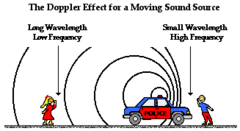
redshift
shift of light to a longer wavelength as it moves AWAY
blueshift
the displacement of the spectrum to shorter wavelengths in the light coming from distant celestial objects moving toward the observer.
earth's interior
inner core, outercore, menosphere, aesthenosphere, lithosphere
core = Fe/Ni
mantle = ultramafic
crust = felsic and mafic
aesthenosphere
a layer of softer, weaker rock beneath Earth's lithosphere, which can flow slowly
lithosphere
the rigid outer part of the earth, consisting of the crust and upper mantle
divergent plate boundary
an area beneath the ocean where tectonic plates move away from each other, new lithosphere created (used to date oceanic crust)
Mid-Ocean Ridge or coninental rifting
convergent plate boundary
an area where plates move toward one another and collide, lithosphere consumed
subduction and continental collision
volcanic arc
a curved line of volcanoes that forms parallel to a plate boundary
Wadati-Benioff zone
a sloping band of seismicity defined by intermediate- and deep-focus earthquakes that occur in the down-going slab of a convergent plate boundary.
transform plate boundary
the boundary between two plates that slide past each other (oceanic and continental)
hot spot volcanism
the creation of volcanoes on a planet's surface caused by a reservoir of hot magma in the planet's mantle under a thin part of the crust
Wegener's hypothesis
all the continents were once joined together in a single landmass and have since drifted apart
1. fit of the continents
2. distribution of climate belts
3. matching geologic units
4. fossils
paleomagnetism
the study of changes in Earth's magnetic field, as shown by patterns of magnetism in rocks that have formed over time
true polar wander
actual movement of magnetic poles through time, relative to poles of rotation. can be dramatic in short time but less important over longer term.
inorganic
not consisting of or deriving from living matter.
organic
of, relating to, or derived from living matter. contains carbon.
precipitates
the solid materials left behind after a liquid evaporates.
form as solubility of dissolved ions in solution changes (pH or pressure change)
EX) Calcite (CaCO3) stalactites, Quartz geode
minerals
a solid inorganic substance of natural occurrence. ordered atomic structure
rock
any naturally occurring solid. most but not all contain minerals
olivine
highest temperature mineral. sugary and green. most likely to weather. 0 tetrahedra bonded by covalent bonds.
quartz
SiO2. lowest temperature mineral, least likely to weather
igneous rock
a type of rock that forms from the cooling of molten rock at or below the surface
The most important chemical variation is changes in the amount of silica
mafic low silica
felsic high silica
sedimentary rock
a rock that forms from compressed or cemented layers of sediment
metamorphic rock
a rock that forms from an existing rock that is changed by heat, pressure, or chemical reactions
crystal habit
the shape in which a mineral's individual crystals or aggregates of crystals grow.
cleavage
a mineral's ability to split easily along flat surfaces.
unit cell
the smallest group of particles within a crystal that retains the geometric shape of the crystal
mineral polymorphism
ability for minerals with the same composition to crystalize with more than on structure
ionic bond
formed when one or more electrons are transferred from one atom to another
strength of the bond will depend on distance between cations and anions
packing and bond strength are thus related to sizes of anions
generally low hardness and sometimes water soluble
if it's made from a metal and a non-metal...
covalent bond
a chemical bond that involves sharing a pair of electrons between atoms in a molecule
no electrons are acquired or given up
strong bond
tend to be hard minerals
if it's made from two non-metals..
metallic bond
a bond formed by the attraction between positively charged metal ions and the electrons around them
strong bonding
tend to be soft and conductive
van der waals
atom are tied together by 'residual electronic charges'
very weak bonding/attractive forces
tend to be very soft
graphite is an example
pyroxenes
single-chain silicate minerals
family of minerals
often with iron, makes them dense, hard, and dark
augite
framework silicates
all of the oxygens are shared between adjacent tetrahedra
no need for any cations
very strong material
quartz, feldspar
Bowen's Reaction Series
sequential, predictable, dual-branched pattern in which minerals crystallize from cooling magma
Olivine->Pyroxene->Amphibole->Biotite->K-Feldspar->Muscovite->Quartz
silicate
SiO4 4- anion as a building block in its crystal structure
magma
liquid rock (usually mostly silicate)-temperatures from 700 degrees C to 1300 degrees C - inside the Earth
intrusive rocks
plutonic. magma cools beneath the earth's surface
extrusive rocks
volcanic. lava cools on Earth's surface
no crystals
quenched, above ground, under water, ice
small crystals
cooled quickly, above ground
large crystals
cooled slowly, below ground
large AND small crystals
cooled slowly, then quickly. below then above ground
mafic
describes magma or igneous rock that is rich in magnesium and iron and that is generally dark in color
low viscosity
high melting temp
oceanic crust
low gas content
felsic
describes magma or igneous rock that is rich in feldspars and silica and that is generally light in color.
high viscosity
low melting temp
high gas content
continental crust
xenolith
a piece of rock within an igneous rock that is not derived from the original magma but has been introduced from elsewhere, especially the surrounding country rock.
dike
a slab of volcanic rock formed when magma forces itself across rock layers VERTICAL
sill
a slab of volcanic rock formed when magma squeezes between layers of rock HORIZONTAL
laccolith
a mass of igneous rock, typically lens-shaped, that has been intruded between rock strata causing uplift in the shape of a dome.
batholith
a mass of rock formed when a large body of magma cools inside the crust
shield volcano
a wide, gently sloping mountain made of layers of lava and formed by quiet eruptions

stratovolcano
a composite volcanic cone built of interlayered lava flows and pyroclastic materials
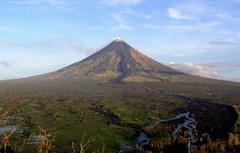
cinder cone volcano
a small, steeply sloped volcano that forms from moderately explosive eruptions of pyroclastic material

andesitic lava flows
type of lava flow; higher silica content, greater viscosity, forms a large mound above the vent out of a volcano.
crater
a bowl-shaped area that forms around a volcano's central opening
caldera
gigantic volcanic depression (Crater Lake)
pyroclastic flow
the flow of ash, cinders, bombs, and gases down the side of a volcano during an explosive eruption