5 - Assessment of Nutritional Status
 Call Kai
 Learn
Learn Practice Test
 Spaced Repetition
 Match
Match Flashcards
 Knowt Play
1/28

Earn XP
Description and Tags
Important terms only
Name | Mastery | Learn | Test | Matching | Spaced | Call with Kai | Chat |
|---|
No analytics yet
Send a link to your students to track their progress
29 Terms
a. Body Mass Index (BMI)
This is the clinical standard for judging excessive weight and obesity
a. Body Mass Index (BMI)
b. Body Surface Area (BSA)
c. Body Weight
d. Lean Body Mass
HTN
Stroke
Diabetes Mellitus (DM)
Osteoarthritis (OA)
Cancer
Sleep apnea
[Body Mass Index]
Increased BMI increases the risk for these comorbidities
a. UTI, nephrolithiasis, hemolytic uremic syndrome
b. HTN, stroke, DM, OA, cancer, sleep apnea
c. Pneumonia, bacteremia, sepsis, meningitis
d. Pseudomembranous colitis, dysentery, traveller's diarrhea
d. Underweight
[Body Mass Index]
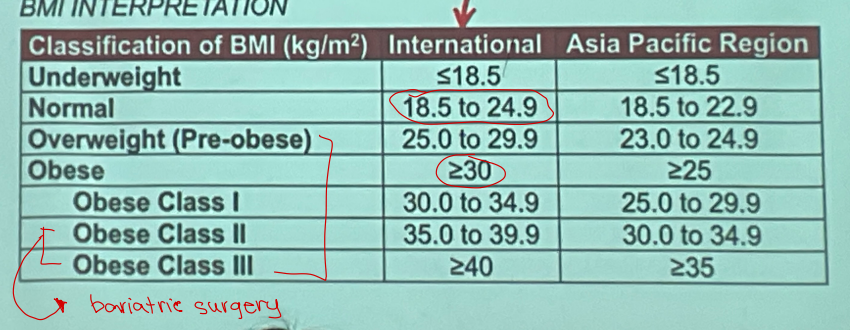
BMI classification of ≤18.5 based on International standard
a. Obese
b. Normal
c. Overweight
d. Underweight
d. Normal
[Body Mass Index]
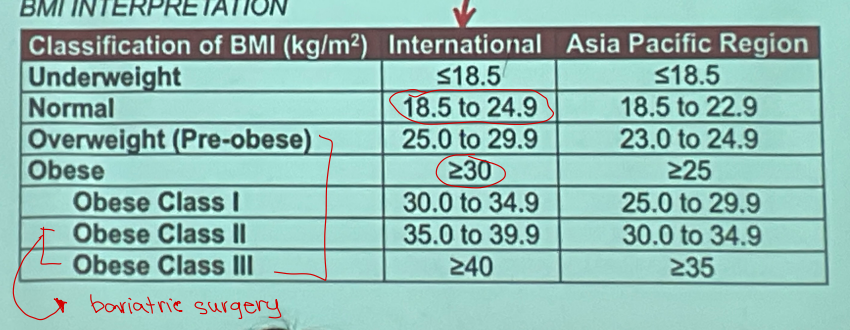
BMI classification of 18.5 to 24.9 based on International standard
a. Underweight
b. Overweight
c. Obese
d. Normal
d. Overweight (Pre-obese)
[Body Mass Index]
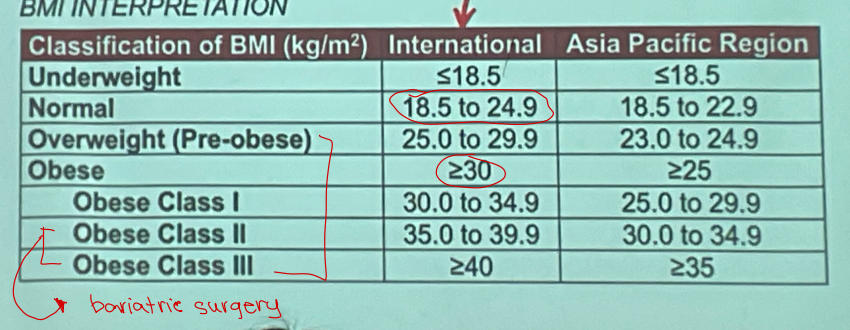
BMI classification of 25.0 to 29.9 based on International standard
a. Normal
b. Obese Class I
c. Underweight
d. Overweight (Pre-obese)
c. Obese
[Body Mass Index]
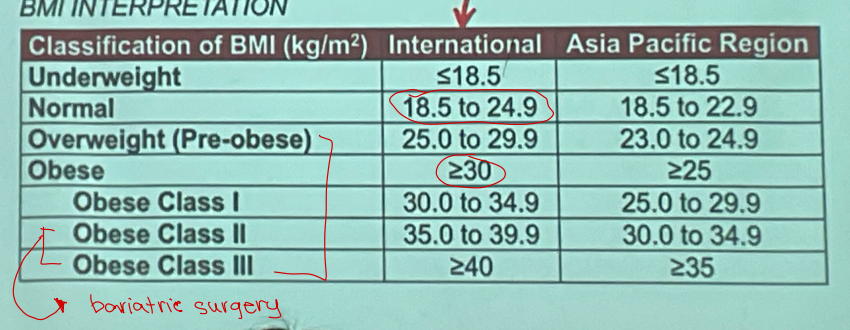
BMI classification of ≥30 based on International standard
a. Overweight
b. Normal
c. Obese
d. Underweight
c. Obese Class I
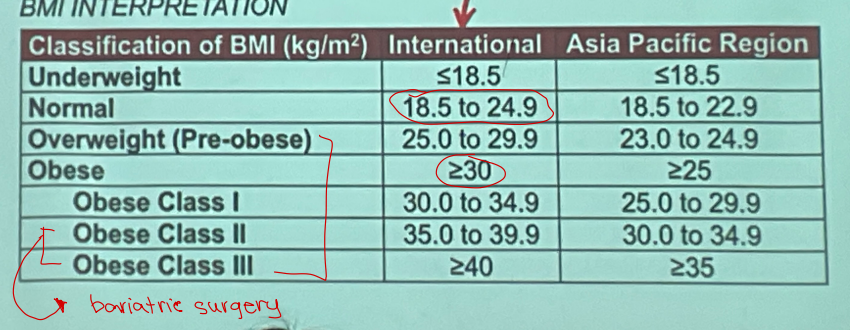
[Body Mass Index]
BMI classification of 30.0 to 34.9 based on International standard
a. Obese Class III
b. Obese Class II
c. Obese Class I
d. Overweight
d. Obese Class II
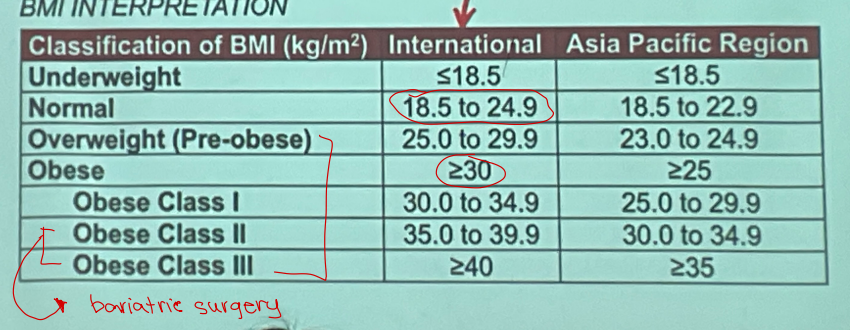
[Body Mass Index]
BMI classification of 35.0 to 39.9 based on International standard
a. Obese Class I
b. Obese Class III
c. Overweight
d. Obese Class II
d. Obese Class III
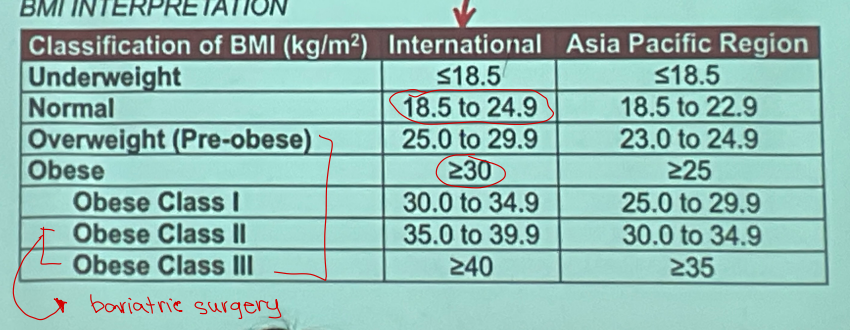
[Body Mass Index]
BMI classification of ≥40 based on International standard
a. Obese Class I
b. Obese Class II
c. Overweight
d. Obese Class III
d. Underweight
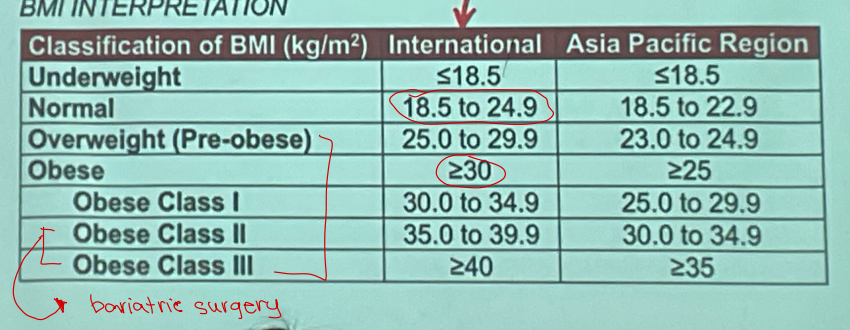
[Body Mass Index]
BMI classification of ≤18.5 based on Asia Pacific Region standard
a. Obese
b. Normal
c. Overweight
d. Underweight
d. Normal
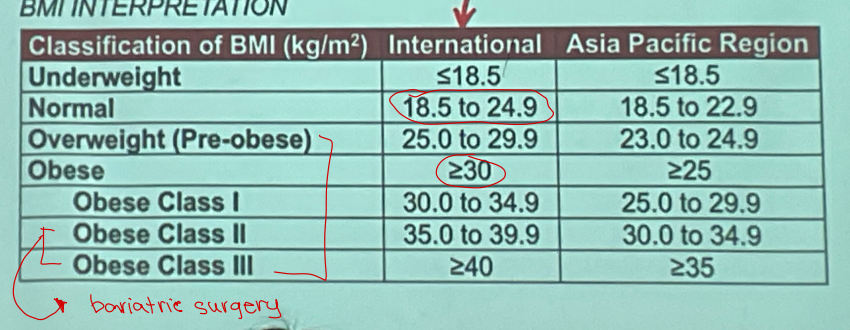
[Body Mass Index]
BMI classification of 18.5 to 22.9 based on Asia Pacific Region standard
a. Underweight
b. Obese
c. Overweight
d. Normal
d. Overweight (Pre-obese)
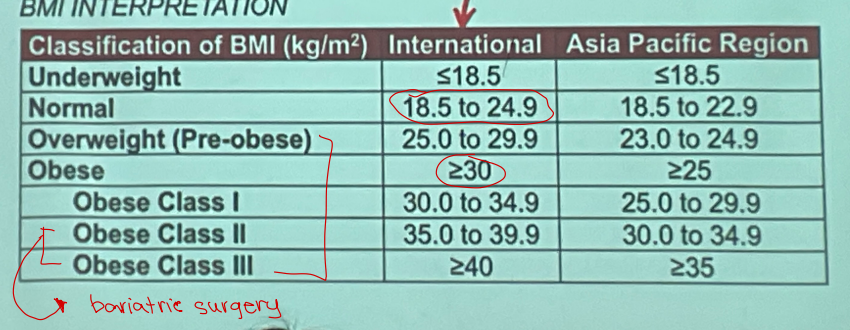
[Body Mass Index]
BMI classification of 23.0 to 24.9 based on Asia Pacific Region standard
a. Normal
b. Obese Class I
c. Underweight
d. Overweight (Pre-obese)
d. Obese
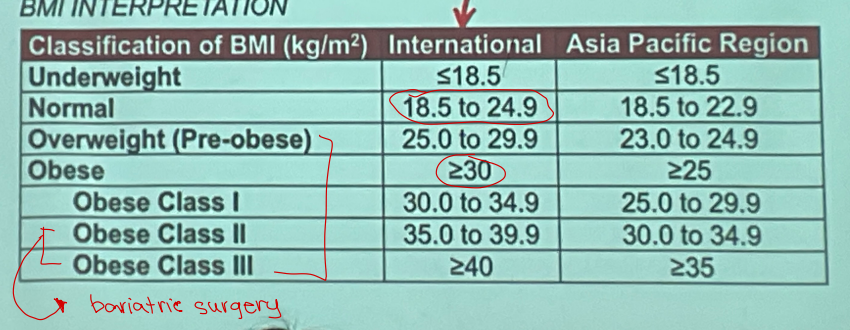
[Body Mass Index]
BMI classification of ≥25 based on Asia Pacific Region standard
a. Overweight
b. Normal
c. Underweight
d. Obese
d. Obese Class I
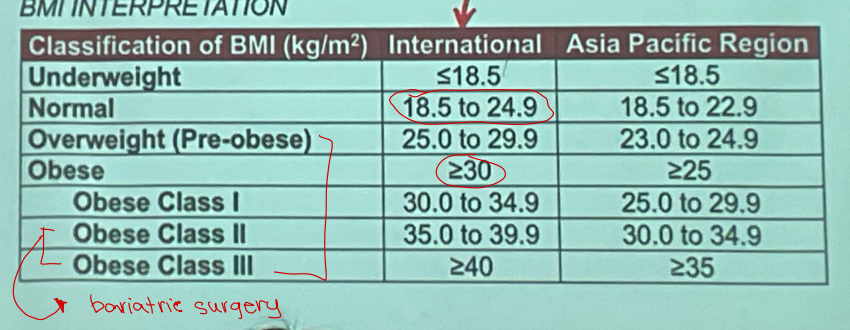
[Body Mass Index]
BMI classification of 25.0 to 29.9 based on Asia Pacific Region standard
a. Obese Class III
b. Obese Class II
c. Overweight
d. Obese Class I
d. Obese Class II
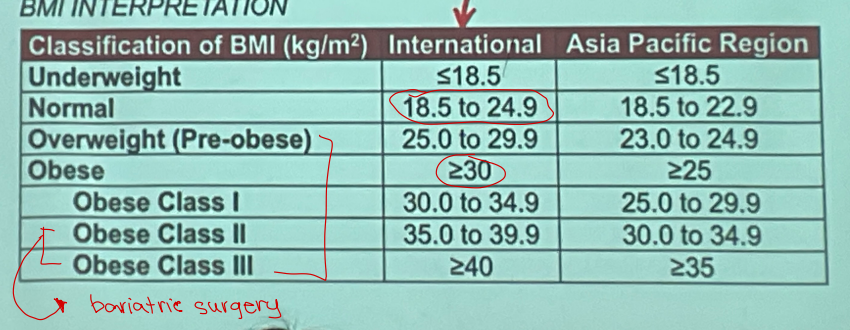
[Body Mass Index]
BMI classification of 35.0 to 39.9 based on International standard
a. Obese Class I
b. Obese Class III
c. Overweight
d. Obese Class II
d. Obese Class II
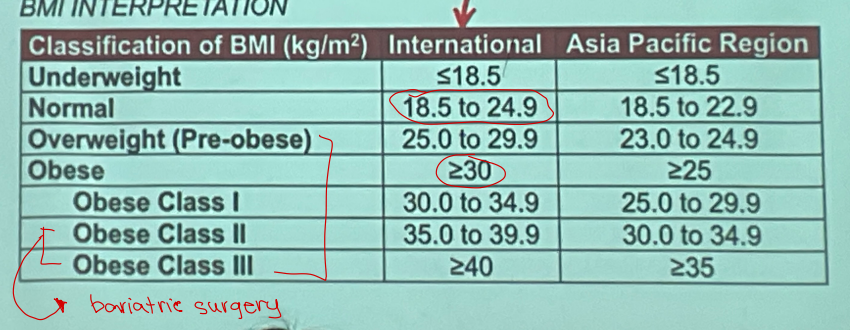
[Body Mass Index]
BMI classification of 30.0 to 34.9 based on Asia Pacific Region standard
a. Obese Class I
b. Obese Class III
c. Overweight
d. Obese Class II
d. Obese Class III
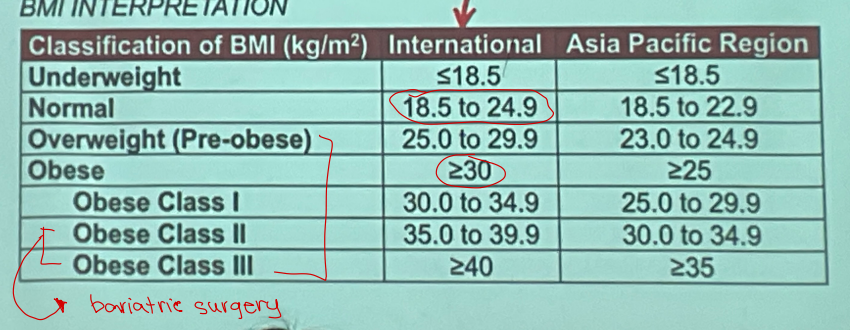
[Body Mass Index]
BMI classification of ≥35 based on Asia Pacific Region standard
a. Obese Class I
b. Obese Class II
c. Overweight
d. Obese Class III
c. Bariatric surgery
[Body Mass Index]
Obese Class II and Obese Class III are associated with this surgical intervention
a. Appendectomy
b. Cholecystectomy
c. Bariatric surgery
d. Colostomy
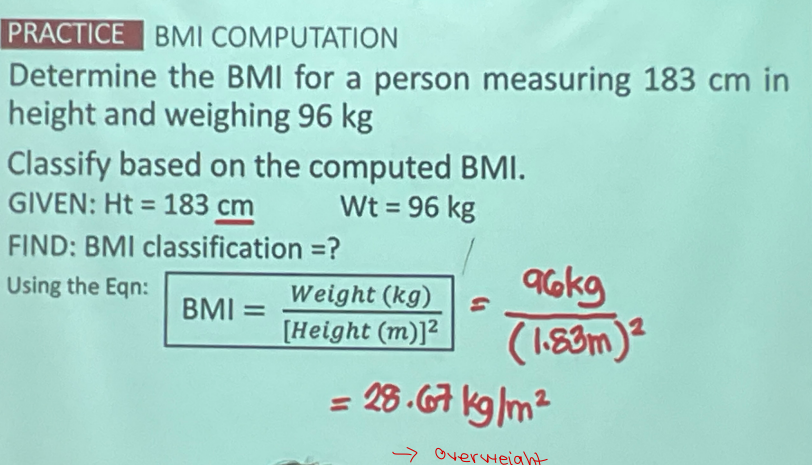
d. 28.67 kg/m² (Overweight)
[Body Mass Index]
Determine the BMI for a person measuring 183 cm in height and weighing 96 kg
a. 26.50 kg/m²
b. 27.20 kg/m²
c. 28.00 kg/m²
d. 28.67 kg/m²
c. Nutritional status
[Ideal Body Weight]
Patient Actual Body Weight can be compared with his/her IBW to assess this
a. Renal function
b. Drug clearance
c. Nutritional status
d. Metabolic rate
d. Underweight
[Ideal Body Weight]
ABW ≤89% IBW is classified as this nutritional status
a. Normal
b. Obese
c. Overweight
d. Underweight
c. Normal
[Ideal Body Weight]
ABW 90 to 120% IBW is classified as this nutritional status
a. Underweight
b. Overweight
c. Normal
d. Obese
d. Overweight
[Ideal Body Weight]
ABW >120 to <150% IBW is classified as this nutritional status
a. Normal
b. Extremely obese
c. Underweight
d. Overweight
d. Obese
[Ideal Body Weight]
ABW ≥150 to <200% IBW is classified as this nutritional status
a. Overweight
b. Extremely obese
c. Normal
d. Obese
d. Extremely obese
[Ideal Body Weight]
ABW ≥200% IBW is classified as this nutritional status
a. Obese
b. Overweight
c. Normal
d. Extremely obese