#10 Conservation of Matter Vocabulary Practice
 Call Kai
 Learn
Learn Practice Test
 Spaced Repetition
 Match
Match Flashcards
1/11

There's no tags or description
Looks like no tags are added yet.
Name | Mastery | Learn | Test | Matching | Spaced | Call with Kai | Chat |
|---|
No analytics yet
Send a link to your students to track their progress
12 Terms
atom
the smallest particle of an element; made of electrons, protons, and neutrons

chemical reaction
the process by which one or more substances change to produce one or more different substances

molecule
the simplest unit of a chemical compound that can exist; formed when two or more atoms join together chemically
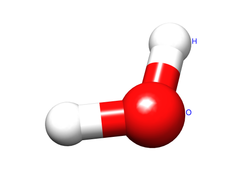
reactant
a substance that takes part in and undergoes change during a reaction; the part before the arrow.

compound
a new substance with unique chemical and physical properties formed when two or more elements are chemically bonded during a chemical reaction

product
a substance produced or created during a chemical reaction; where the arrow leads

coefficent
Tells you how many molecule are a part of that chemical equation.

Subscript
A number written slightly below and to the right of a chemical symbol that shows how many atoms of an element are in a compound.

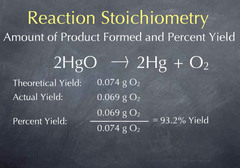
Yield
The arrow in a chemical equation showing how the reactants have changed into the products
Properties
characteristics used to describe an object
Conservation
the principle that properties such as mass, volume, and number remain the same despite changes in the forms of objects
Law of Conservation of Mass
Matter cannot be created nor destroyed, it can only be transformed.