Mod-01 Introduction to Biology: Themes, Cell Structure, Evolution, and Scientific Method
 Call Kai
 Learn
Learn Practice Test
 Spaced Repetition
 Match
Match Flashcards
 Knowt Play
1/77

There's no tags or description
Looks like no tags are added yet.
Name | Mastery | Learn | Test | Matching | Spaced | Call with Kai | Chat |
|---|
No analytics yet
Send a link to your students to track their progress
78 Terms
What is biology?
The study of life, encompassing a broad scope from sub-microscopic to global biosphere.
What are the two levels of organization in living organisms?
Cellular level and entire organismal level.
What are the two types of reproduction?
Sexual reproduction (involving DNA from two or more parents) and asexual reproduction (involving genetic material from one parent).
What is the difference between growth and development?
Growth is the increase in mass and accumulation of new substances, while development refers to changes in body form or proportions over time.
What is energy utilization in biological systems?
The use of ATP as the universal molecule of energy for cellular and organismal activities.
Define homeostasis.
The maintenance of stable internal conditions while environmental conditions fluctuate.
What is evolutionary adaptation?
The process by which living organisms undergo evolution over time.
What is the structural hierarchy of life?
A system where each level builds into the next, from sub-atomic particles to the biosphere.
What are the major categories of cells?
Prokaryotic cells (small, lacking organelles) and eukaryotic cells (larger, with organelles).
Who coined the term 'cell'?
Robert Hooke, who viewed cork microscopically and likened it to the cells of monks.
What are the three points of the Cell Theory?
1. All living things are composed of cells. 2. The cell is the basic unit of life. 3. All cells come from pre-existing cells.

What is DNA?
The molecule that provides biological instructions for the complex structure of an organism.
What are the components of a nucleotide?
A nucleotide consists of a pentose sugar, a phosphate group, and nitrogen bases.
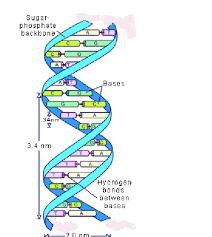
What year did Watson and Crick discover the structure of DNA?
1953.

What is the significance of the year 1962 in genetics?
Watson and Crick won the Nobel Prize in Medicine for their discovery of DNA.
What is a biome?
A broad geographical area characterized by a particular vegetation type.
Give an example of a biome.
Tundra, desert, tropical rainforest, or Eastern Deciduous Forest.
What is the role of ATP in living organisms?
ATP serves as the universal energy molecule for cellular activities.
What is irritability in biological terms?
The ability of an organism to respond to external and internal stimuli.
What is the controversy surrounding viruses?
Viruses only show characteristics of life when parasitizing living cells, raising questions about whether they are truly alive.

What are the domains of life?
Bacteria, Archaebacteria (Archaea), and Eukarya.
What is the significance of the year 1987 in forensics?
The first use of DNA in forensics occurred in England.
What are the two major types of stimuli that organisms respond to?
External stimuli (like temperature and light) and internal stimuli (like hunger and thirst).
What is the relationship between structure and function in biology?
There is a correlation where the structure of biological components relates directly to their function.
What is the concept of 'unity vs. diversity' in biology?
It refers to the common characteristics shared by all living organisms despite their diversity.
What is the scientific process?
A systematic approach to understanding the natural world through observation, experimentation, and analysis.
What structure in DNA is compared to a staircase?
The hydrogen bonds linking nitrogen bases.
What forms the backbone of the DNA structure?
Alternating pentose sugar and phosphate groups.
How is DNA described in terms of its shape?
As a double helix.
What is the genetic code?
The description of DNA structure as presented in various organisms.
What are the four nitrogen bases found in DNA?
Adenine, Thymine, Cytosine, and Guanine.
What do inter-specific differences refer to?
Differences between different species.
What do intra-specific differences refer to?
Differences within a species.
What does the phrase 'form fits function' imply?
Biological structure offers clues as to how a structure works.
What is an example of a structure-function correlation in birds?
Wings with feathers and musculature enable bird flight.
What is the role of producers in an ecosystem?
They convert radiant energy to chemical energy (glucose).
What are primary consumers?
Herbivores or omnivores that consume producers.
What are secondary consumers?
Carnivores or omnivores that consume primary consumers.
What is the role of decomposers in an ecosystem?
They break down organic molecules, carried out by bacteria and fungi.
What does species diversity refer to?
The variety of species within an ecosystem.
What is taxonomy?
The naming and classifying of species based on phylogenetic similarity.
What is the mnemonic device for the taxonomic hierarchy?
'Did King Phillip Came Over From Greater Spain.'
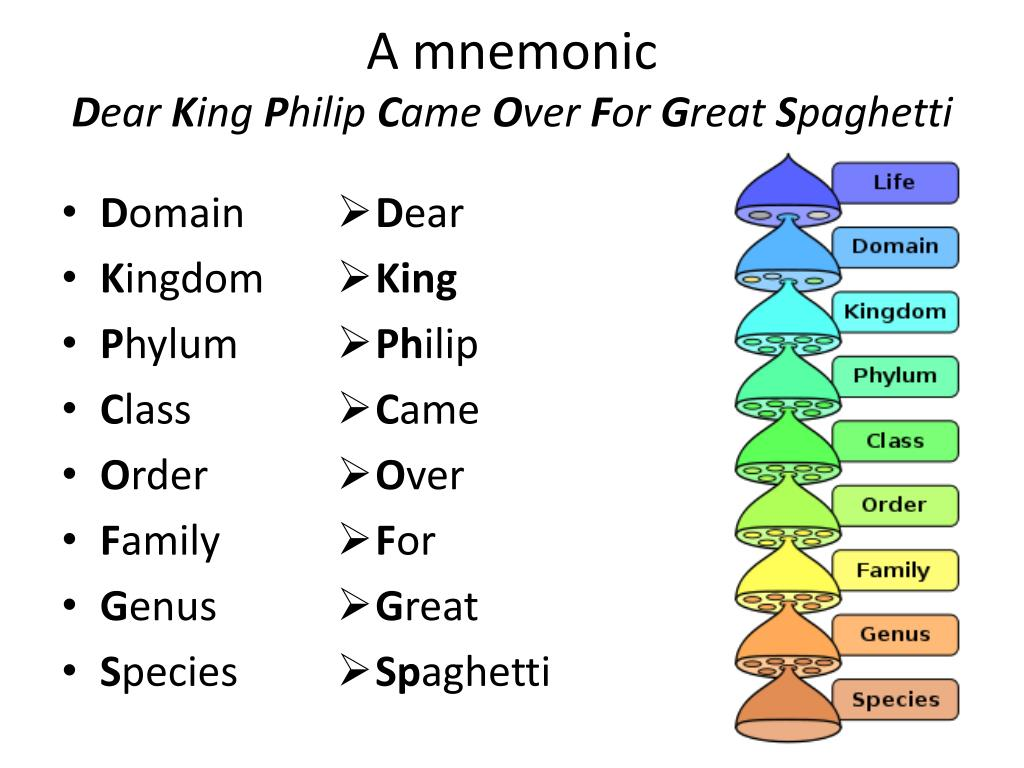
What are the three domains of life?
Bacteria, Archaea, and Eukarya.
What is binomial nomenclature?
The system of naming organisms with a genus and species.
What is the nutritional mode of Kingdom Plantae?
Autotrophic (photosynthesis).
What is the nutritional mode of Kingdom Animalia?
Heterotrophic (consumers).
What is the significance of the '9 + 2' arrangement?
It describes the arrangement of microtubules in eukaryotic flagella and cilia.

Who proposed the modern principles of evolution?
Charles Darwin.
What was the role of Charles Darwin on the H.M.S. Beagle?
He was the ship's naturalist, collecting specimens during the voyage.
What did Darwin observe about Galapagos finches?
Their beaks varied depending on the island's food supply.

What is the evolutionary significance of similar species?
They share a recent common ancestor.
What is the role of energy flow in an ecosystem?
It describes how energy is transferred through producers and consumers.
What is the function of the human appendix?
Its function is unclear, possibly a vestige of an earlier diet.
What are the three types of beak adaptations?
Seed eaters, cactus eaters, insect eaters.

What is the title of Darwin's 1859 publication?
"On The Origin of Species".
What mechanism did Darwin propose for evolution?
Natural Selection.
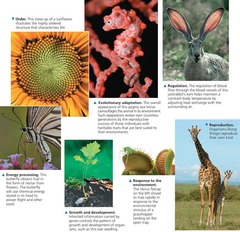
What does 'descent with modification' refer to?
The concept that species evolve from a common ancestor in response to environmental pressures.
What is the first step of Natural Selection?
Struggle for existence in a natural population.
What happens when more offspring are produced than can survive?
There is competition for limited resources.
What are the three varieties of variations in a population?
Cosmetic variations, negative variations, and positive variations.
What are the two sources of variations in a population?
Sexual/genetic recombination and mutation.
What is meant by 'fitness' in the context of evolution?
Traits that are best suited to current environmental conditions.
What must individuals with advantageous traits achieve for those traits to be passed on?
They must reach reproductive maturity.
What is the outcome of differential reproductive rates?
Separation into populations based on fitness.
What is environmental/selective pressure?
An environmental condition that brings about evolution.
What does 'survival of the fittest' imply?
It emphasizes the necessity of reproduction in passing advantageous traits.
What is artificial selection?
Selection by humans for desired traits that may not enhance survival.
What is the scientific method?
A systematic procedure used to answer questions about the natural world.

What is the first step in the scientific method?
Observations of a particular natural phenomenon.
What defines a good hypothesis?
It must be testable, indicate a possible solution, and reflect past experience.
What is the purpose of a control group in an experiment?
To provide a baseline for comparison with the experimental group.
What are the two forms of data collected in experiments?
Quantitative (numerical) and qualitative (verbal descriptions).
What is the preferred form of data in scientific research?
Quantitative data.
What does statistical analysis in experiments help determine?
It helps analyze data to draw conclusions.
What is a theory in scientific terms?
A broad explanation based on significant evidence and wide acceptance.
How does science relate to technology?
Science generates information that leads to technological advancements.
What are some consequences of technological advancements?
Population growth, environmental issues like acid rain, and nuclear accidents.
What is the ultimate role of scientists?
To improve understanding of nature and educate the public about technology.