BIOL 130 Chapter 5 - CELL
 Call Kai
 Learn
Learn Practice Test
 Spaced Repetition
 Match
Match Flashcards
 Knowt Play
1/45

There's no tags or description
Looks like no tags are added yet.
Name | Mastery | Learn | Test | Matching | Spaced | Call with Kai | Chat |
|---|
No analytics yet
Send a link to your students to track their progress
46 Terms
Cell theory
The cell is the basic unit of life.
All living things are made up of cells. New cells arise from pre existing cells.
About how most cells are small
Small cells have a larger amount of surface area compared to the volume. An increase in surface area allows for more nutrients to pass into the cell and wastes to exit the cell more efficiently. There is a limit to how large a cell can be and be an efficient and metabolically active cell.

Diffusion times v volume in a cell
Time it takes the “average” molecule to diffuse a given distance.

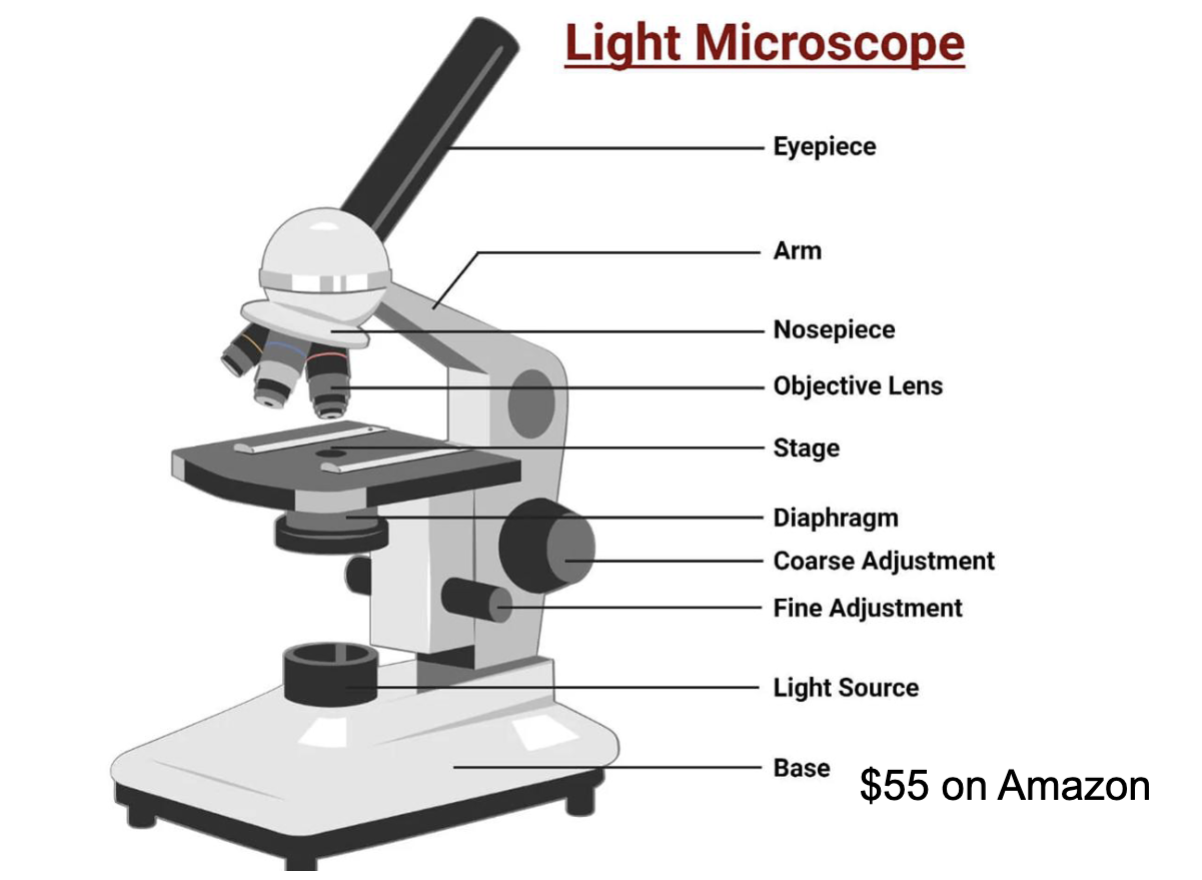
Compound light microscope
lower magnification
uses light beams to view images
can view live specimens
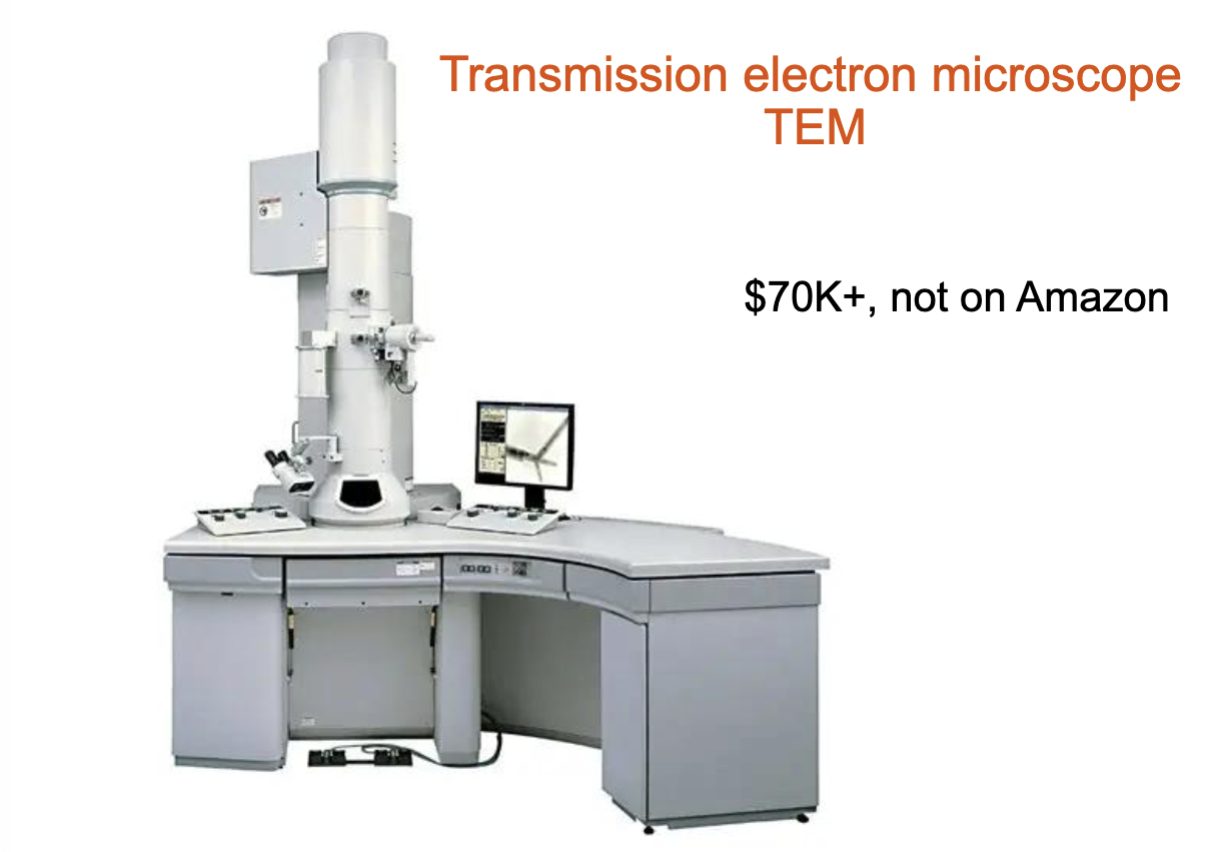
Transmission electron microscope, TEM
2-D image
uses electrons to view internal structure
high magnification, no live specimens
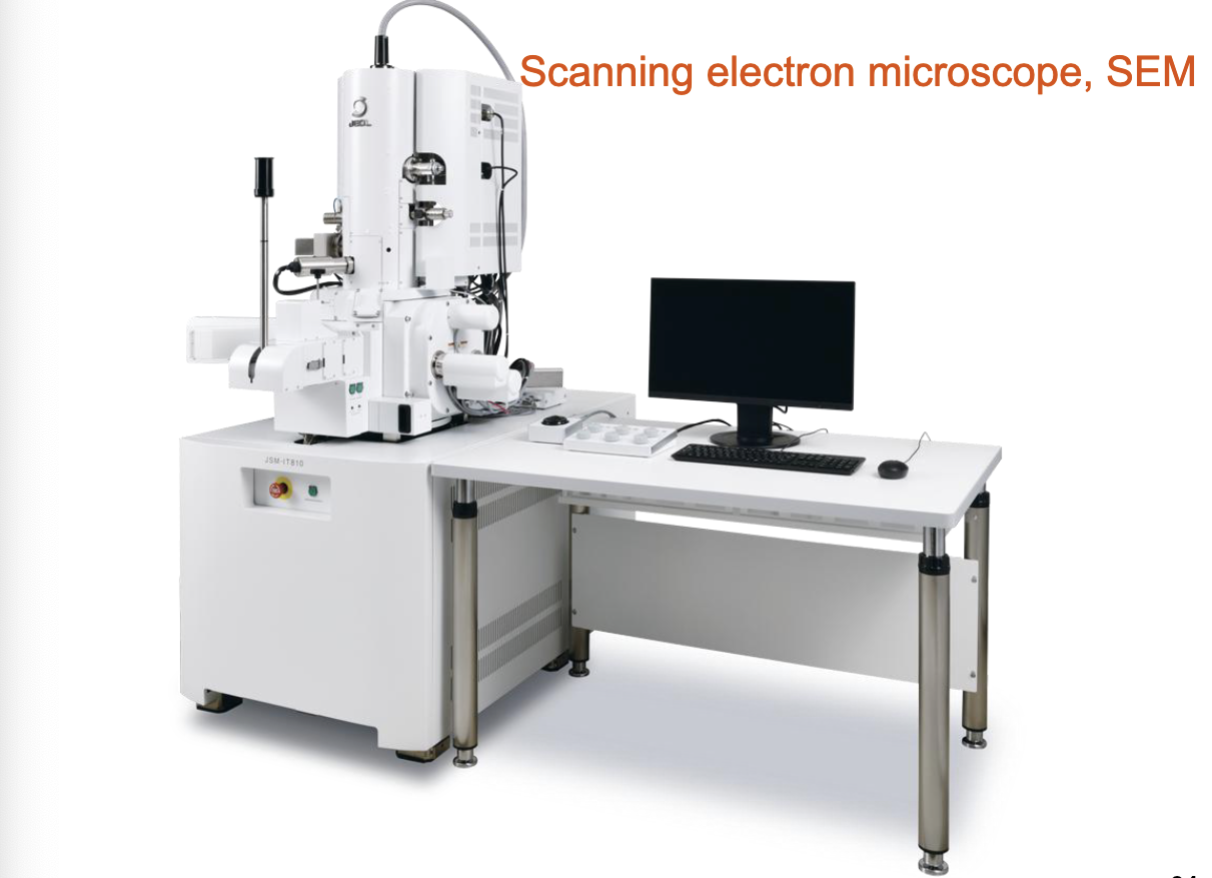
Scanning electron microscope, SEM
3-D image
Uses electrons to view surface structures
High magnification, no live specimens
Prokaryotic cells
Thought to be the first cells to evolve
Lack a nucleus
Represented by bacteria and archaea
Eukaryotic cells
Have a nucleus that houses DNA
Many membrane-bound organelles
Represented by most organisms larger than bacteria
What are the similarities between prokaryotic and eukaryotic cells?
Similarities:
A plasma membrane that surrounds and delineates the cell (phospholipid bilayer)
Cytoplasm: the semi fluid substance inside the cell that contains organelles
DNA
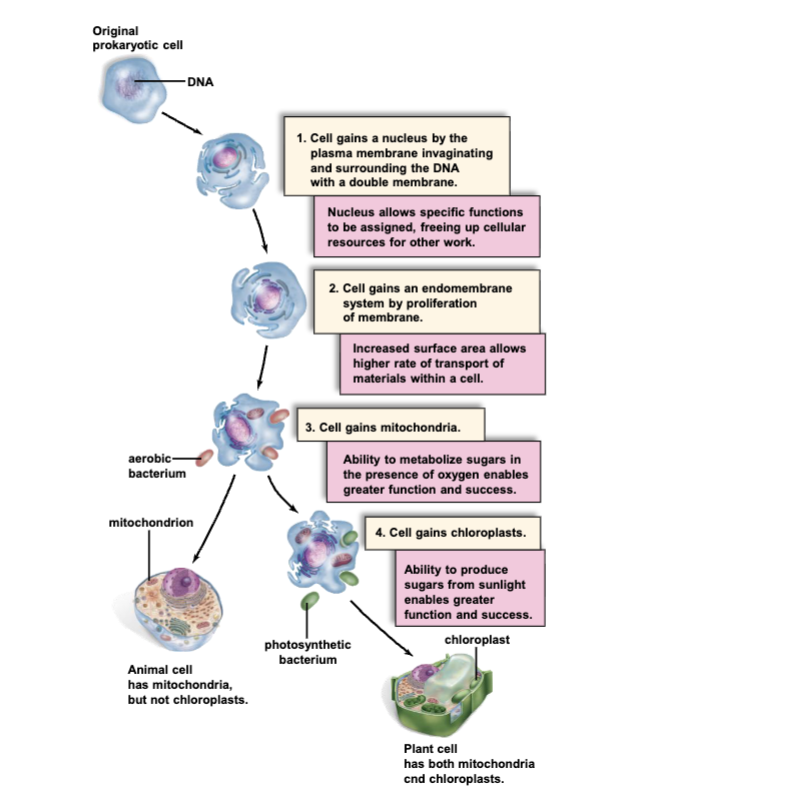
Where did eukaryotic cells come from?
Cel gains a nucleus by the plasma membrane invaginating and surrounding the DNA with a double membrane. Nucleus allows specific functions to be assigned, freeing up cellular resources for other work.
Cell gains an endomembrane system by proliferation of membrane,
Cell gains mitochondria. Ability to metabolize sugars in the presence of oxygen enables greater function and success.
Cell gains chloroplasts. Ability to produce sugars from sunlight enables greater function and success.
Characteristics of the plasma membrane
it is a phospholipid bilayer
it is embedded with proteins that move in space
it contains cholesterol for support
it contains carbohydrates on proteins and lipids
it is selectively permeable

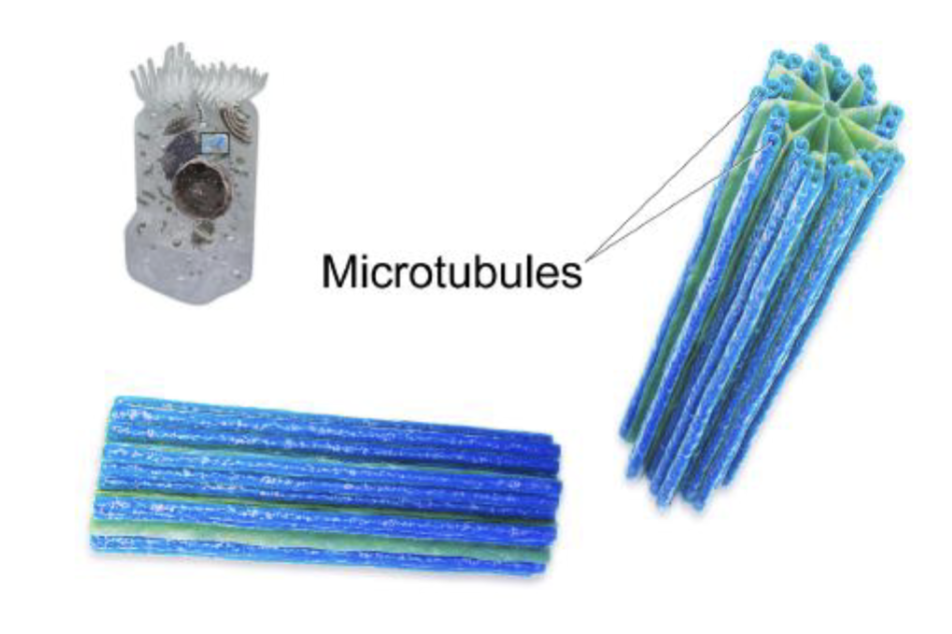
Cytoskeleton
A series of proteins that maintain cell shapes as well as anchors and/or moves organelles in the cell.
Made of 3 types of fibers: large microtubules, thin actin filaments, and medium sized intermediate filaments.
Cell organelles
Nucleus
Mitochondria
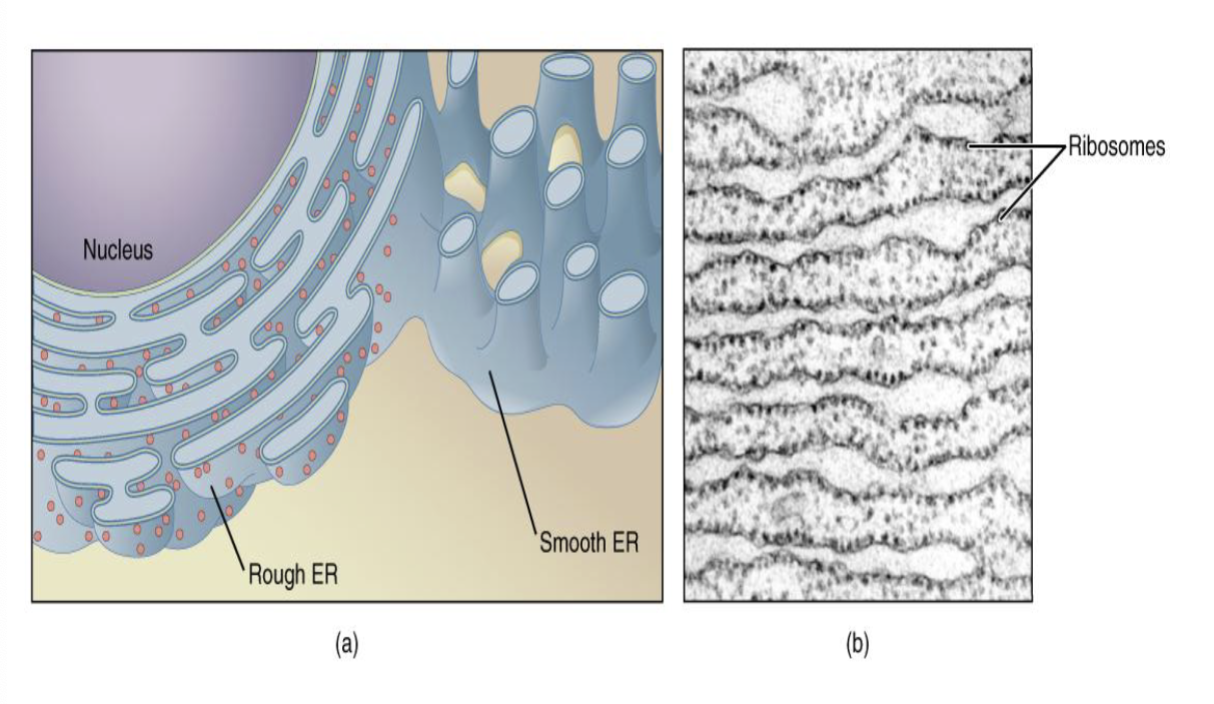
Endoplasmic reticulum (ER)
Rough ER - smooth ER
Golgi apparatus
Vesicles and vacuoles
Centrioles
Ribosomes
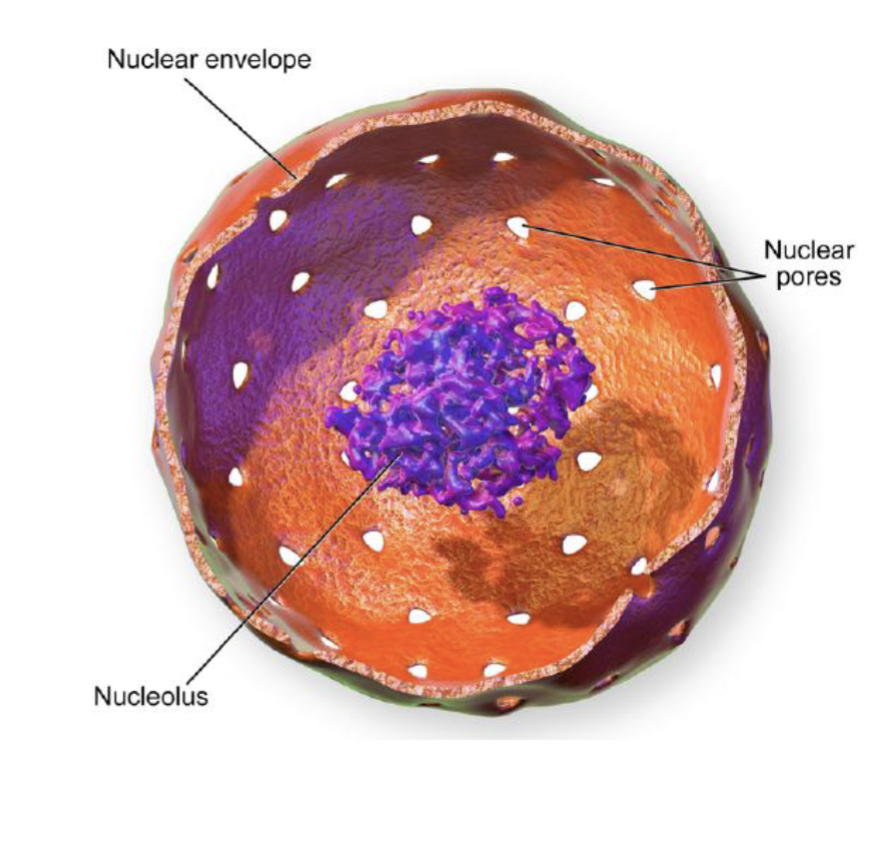
Nucleus
largest organelle in the eukaryotic cell
the cell’s control center
contains most of the cell’s DNA as chromatin and chromosomes
regulates gene expression - controlling which proteins the cell makes
most eukaryotic cells contain just a single nucleus (some types of cells, such as red bod celll, contain no nucleus)
a few other types of cells such as muscle cells contain multiple nuclei
Mitochondria
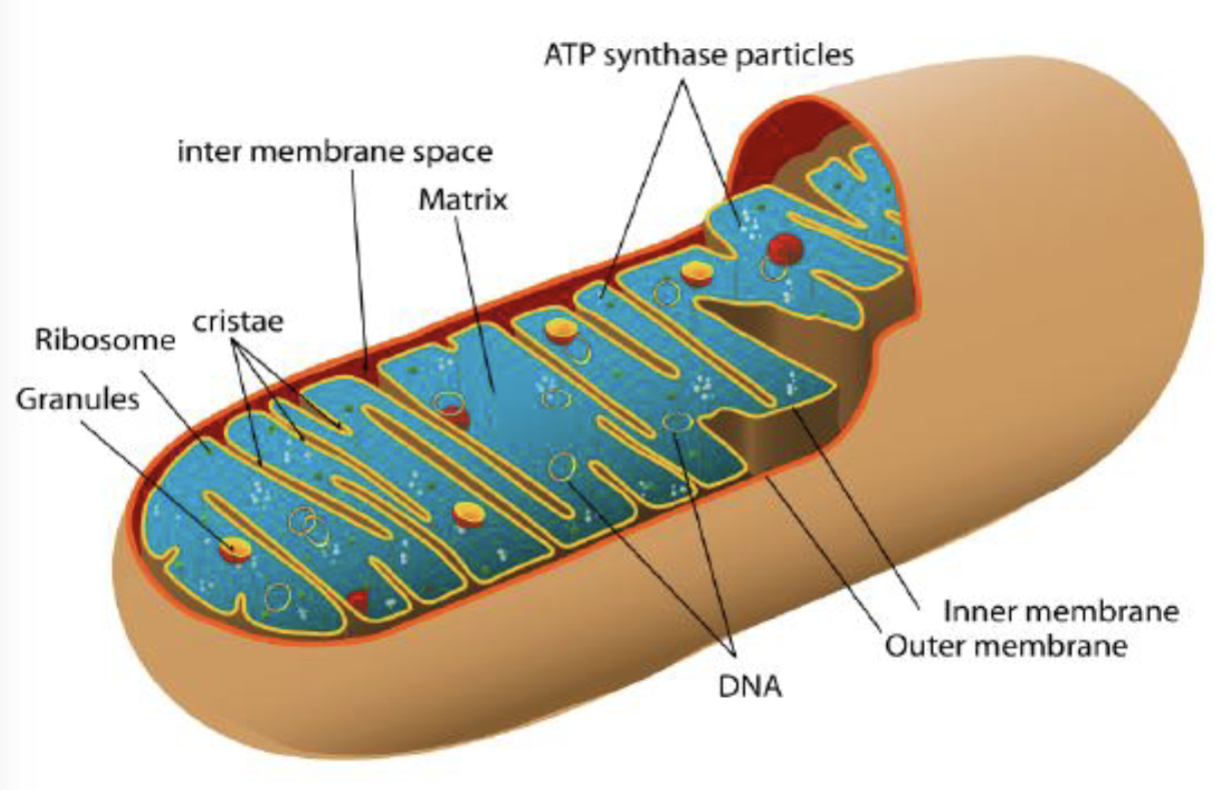
organelle that makes energy
sometimes referred to as the power plants of the cell
use energy from organic compounds such as glucose to make molecules of ATP (adenosine triphosphate), an energy carrying molecule that is used almost universally inside cells for energy
were likely once free living organisms because they contain their own DNA. were taken into other cells to form a symbiotic relationship
Endoplasmic reticulum (ER) rough - smooth
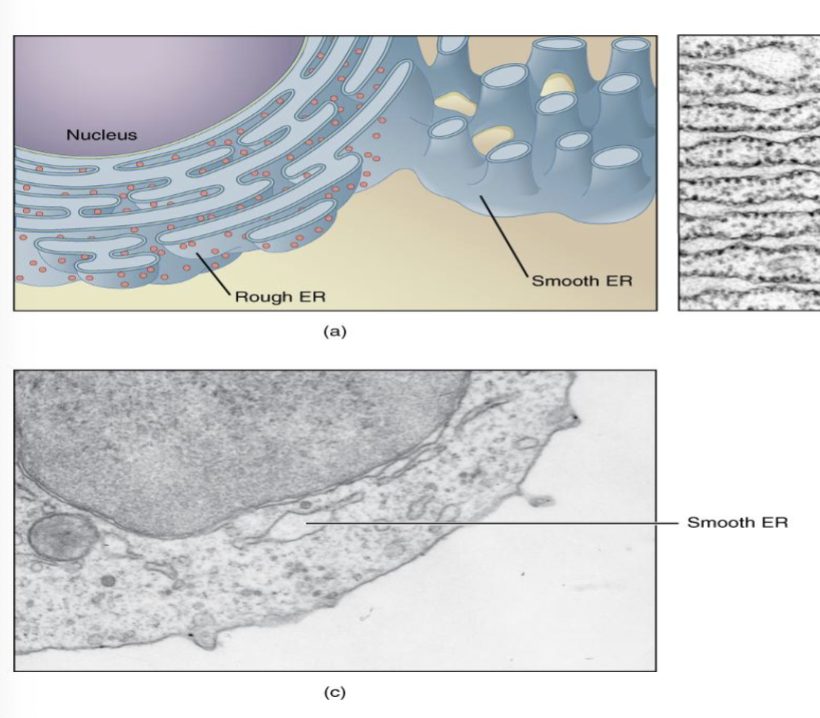
network of phospholipid membranes that form hollow tubes, flattened sheets, and round sacs
flattened hollow folds and sacs are called cisternae
two major functions: transport and synthesis
transport (ER)
molecules such as proteins can move from place to place inside the ER much like on an intracellular highway
synthesis (ER)
ribosomes that are attached to the ER, similar to unattached ribosomes, make proteins. Lipids are also produced in the ER.
Golgi apparatus
large organelle that processes proteins and prepares them for use both inside and outside the cell
modifies, sorts, and packages different substances for secretion out of the cell, or for use within the cell

Vesicles and vacuoles
both vesicles and vacuoles are sac like organelle that store and transport materials in the cell. vesicles are much smaller than vacuoles.

Endomembrane system
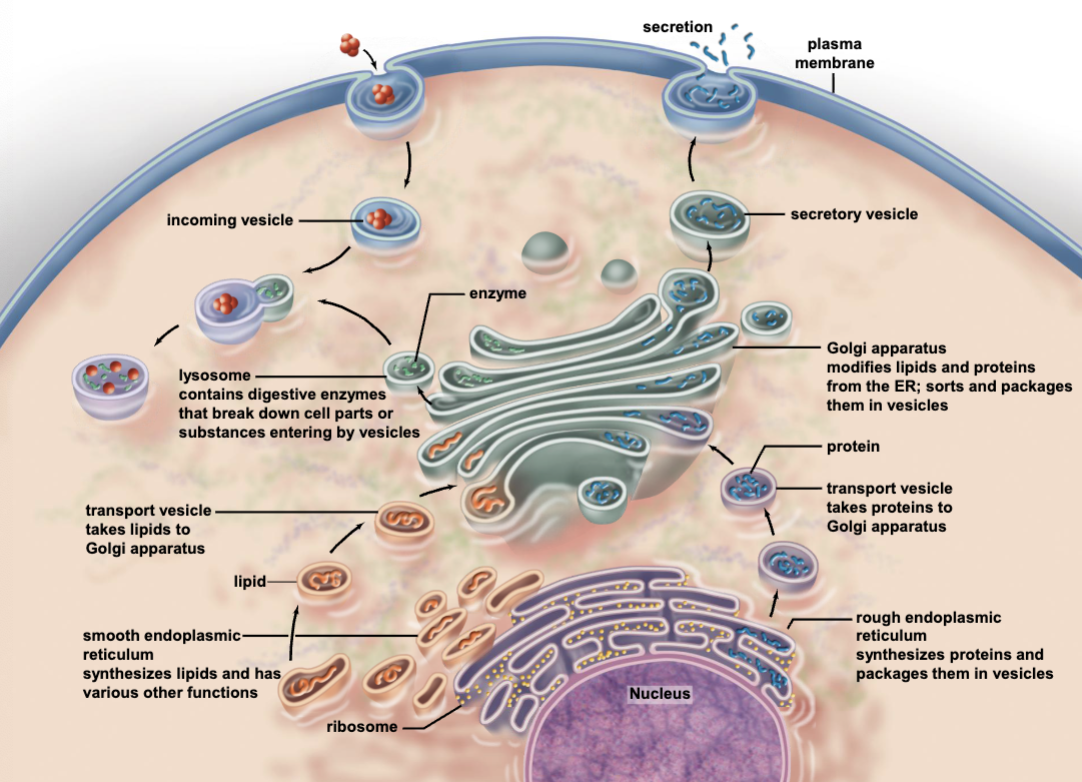
a series of membranes in which molecules are transported in the cell
consists of the nuclear envelope, endoplasmic reticulum, golgi apparatus, lysosomes, vacuoles, and vesicles.
Endoplasmic reticulum, nucleus, and golgi apparatus work together:
nucleus produces RNA, moves it to the ER where proteins are made then moves the protein to the golgi where it is modified and used or released.
Parts of the endomembrane system
rough endoplasmic reticulum - studded with ribosomes used to make proteins
smooth endoplasmic reticulum - lacks ribosomes but aids in making carbohydrates and lipids
golgi apparatus - flattened stacks that process package and deliver proteins and lipids from the ER
lysosomes - membranous vesicles made by the golgi that contain digestive enzymes
vesicles - small membranous sacs used for transport
centrioles
organelles involved in cell division. help organize the chromosomes before cell division occurs so that each daughter cell has the correct number of chromosomes after the cell divides.
ribosomes
small structures which build proteins from subunit AA’s. Red dots above left, dark dots above right
Why is a cell “selectively permeable”
the membrane allows some things in while keeping other substances out

cell membrane transport

five ways things move across the plasma membrane
diffusion
osmosis
facilitated diffusion
active transport
endocytosis and exocytosis
diffusion
random movement of molecules from a higher concentration to a lower solute concentration. in image, molecules move across the membrane until equilibrium is reached

osmosis
diffusion of water molecules from an area of higher water concentration to lower across a membrane

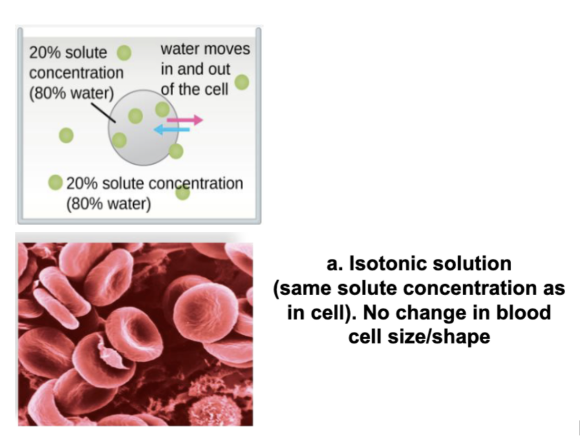
isotonic solutions (osmosis and tonicity)
these solutions have equal amounts of solute inside and outside the cell thus do not affect the cell
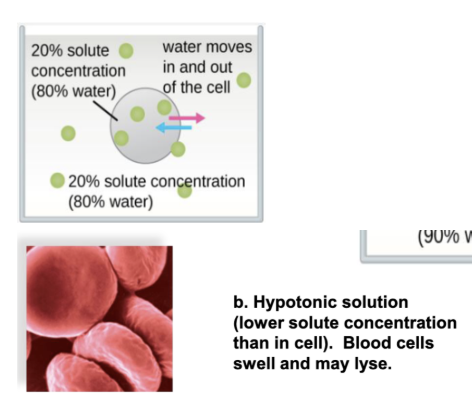
hypotonic solutions (osmosis and tonicity)
these types of solutions have less solute than the inside of the cell and lead to swelling and possible lysis (bursting)
hypertonic solutions (osmosis and tonicity)
these types of solutions have more solute than the inside of the cell and lead to crenation (shriveling)

isotonic, hypotonic, and hypertonic solutions in human body
all three conditions happen to a human body throughout itself
isotonic conditions: most of the time, water intake matches water loss through sweat and urination
hypertonic: go for a long run on a hot day and get dehydrated, water will leave cells to enter the blood
hypotonic: less common, drink too much water quickly, water will leave the blood and enter cells until the kidneys can catch up
facilitated diffusion
movement of molecules from a higher to a lower concentration using a protein channel or carrier but using no energy

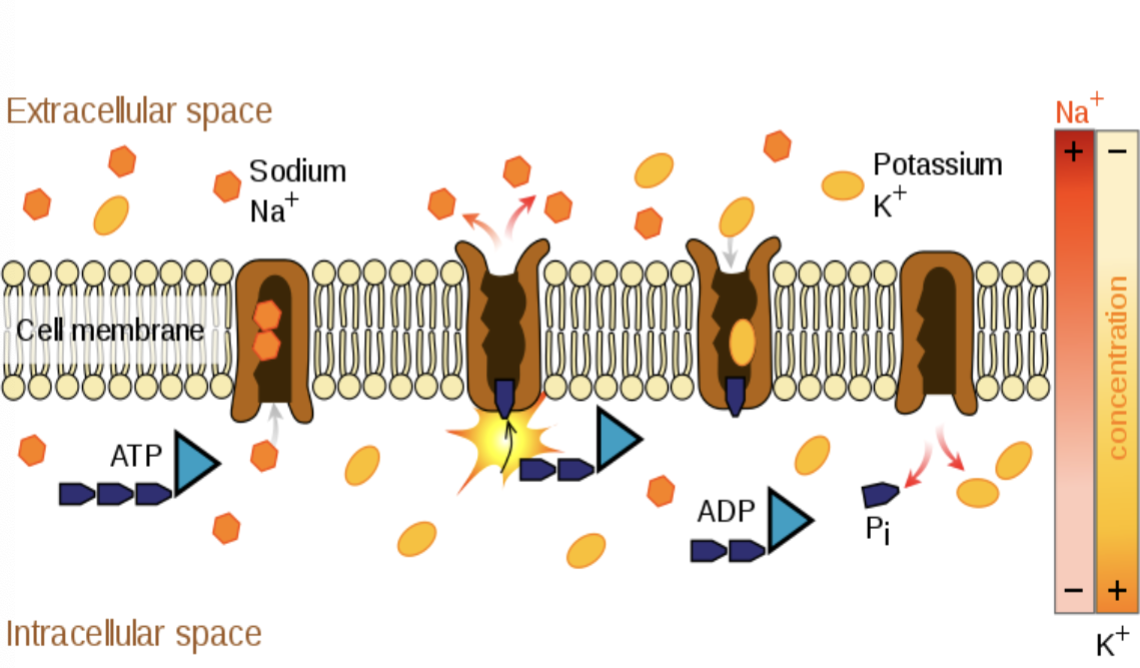
active transport
movement of molecules from a lower to a higher concentration using ATP as energy; it requires a protein carrier
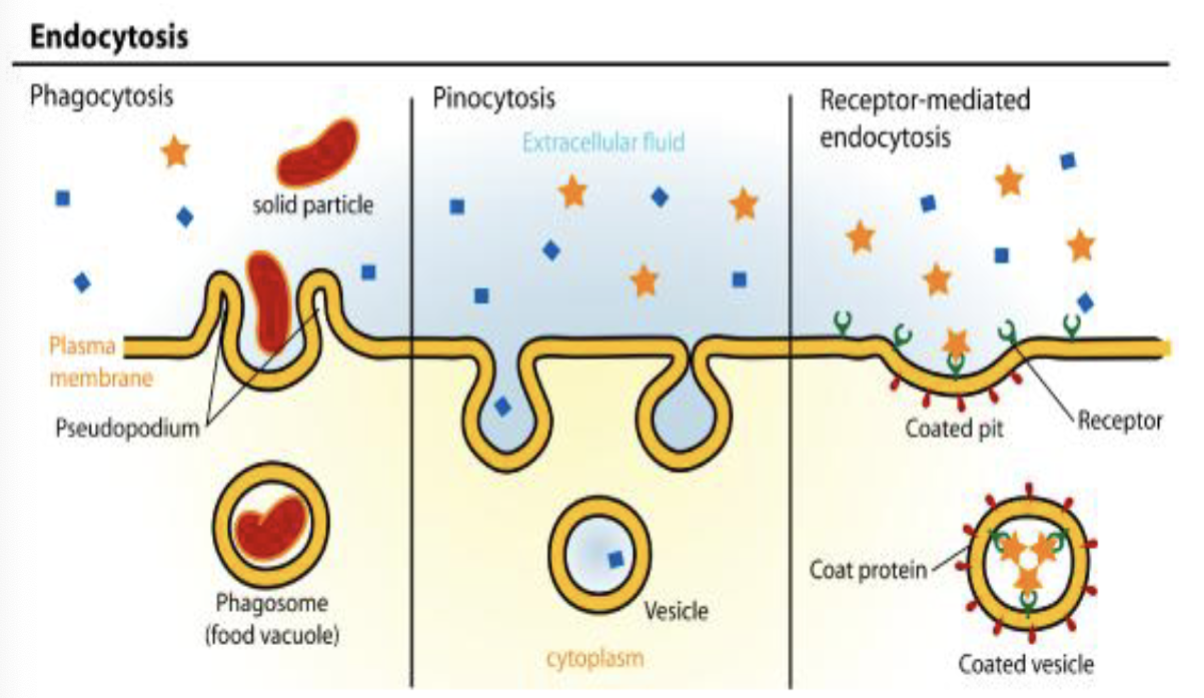
endocytosis
transports molecules or cells into the cell via invagination of the plasma membrane to form a vesicle.
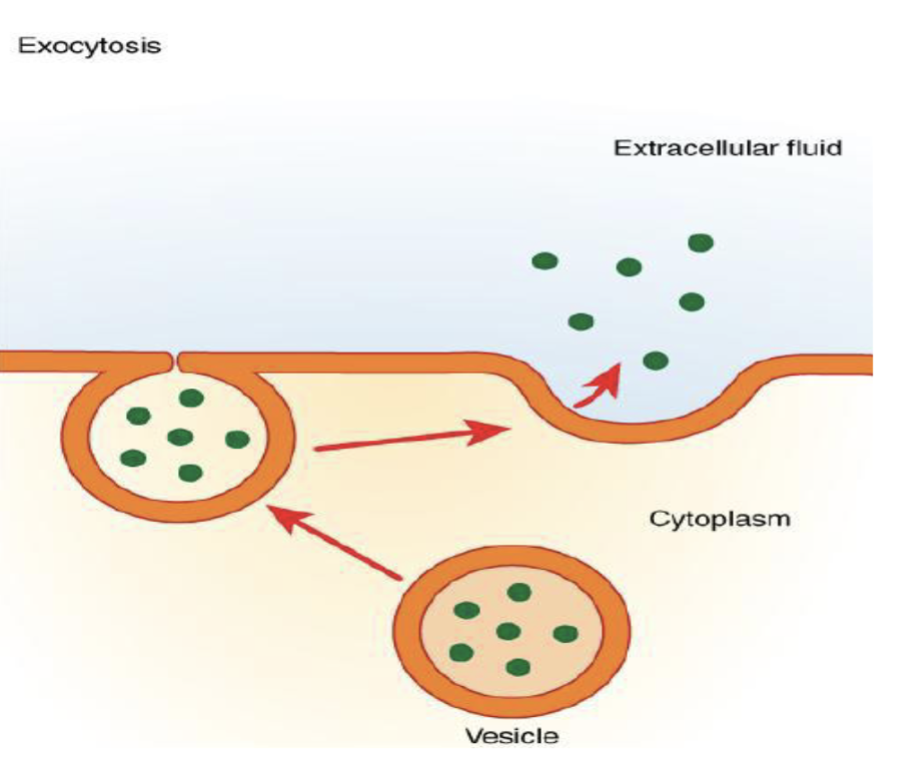
exocytosis
transports molecules outside the cell via the fusion of a vesicle with the plasma membrane
cellular respiration
production of adenosine triphosphate (ATP)
includes:
glycolysis
citric acid cycle (krebs cycle)
electron transport chain

glycolysis
occurs in the cytoplasm
breaks one 6 c glucose into two 3 C pyruvate molecules
NADH and 2 ATP molecules are made
does not require oxygen

citric acid cycle (krebs cycle)
a cyclical pathway that occurs in the mitochondria matrix
produces NADH and 2 ATP
releases carbon dioxide, CO2

Electron transport chain to do oxidative phosphorylation
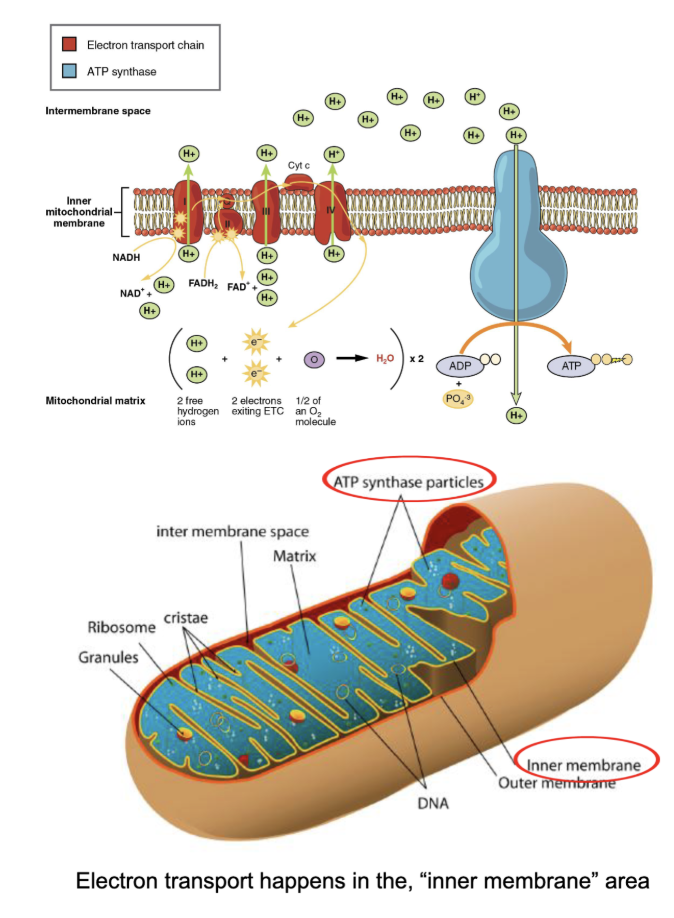
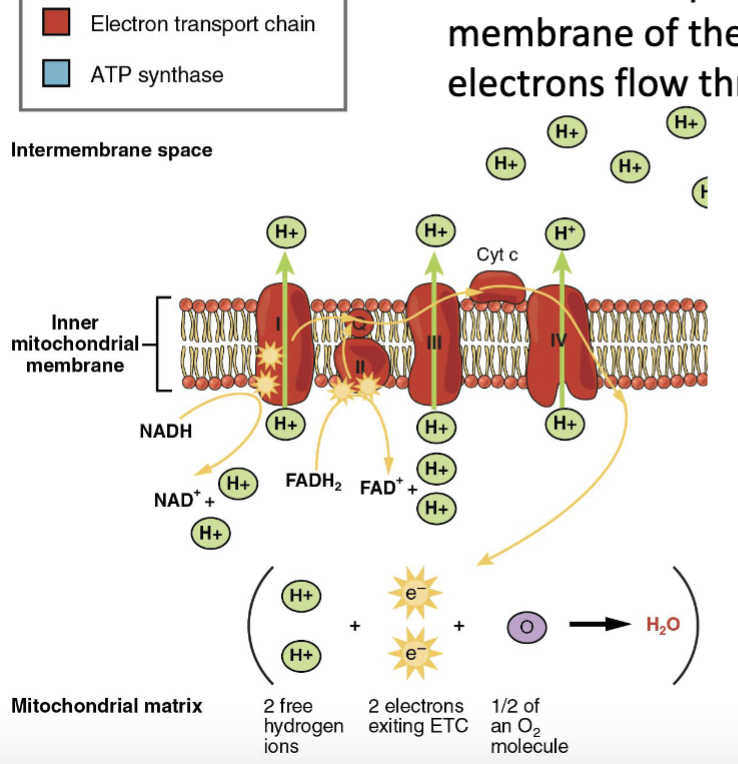
series of molecules embedded in the inner mitochondrial membrane
NADH and FADH2 made in steps 1 and 2 carry electrons here
32-34 ATP are made depending on the cell
requires oxygen as the final electron acceptor in the chain
ETC
NADH and FADH₂ release high-energy electrons into the electron transport chain (ETC) in the inner mitochondrial membrane.
As electrons move through the ETC, their energy is used to pump H⁺ (hydrogen ions) from the matrix → intermembrane space.
This creates a H⁺ concentration gradient across the inner membrane.
At the end of the ETC, oxygen (O₂) accepts the electrons and is reduced to water (H₂O) in the mitochondrial matrix.
Key flow:
NADH/FADH₂ → electrons → ETC → H⁺ pumped to intermembrane space → O₂ accepts electrons → H₂O
ATP synthase
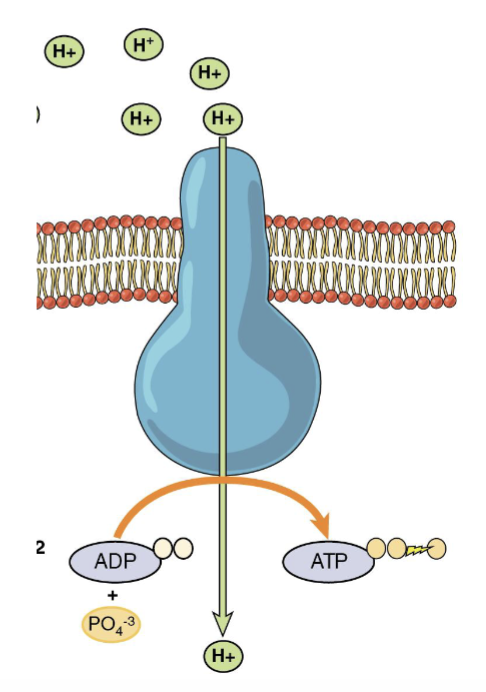
Pumping H⁺ (hydrogen ion) into the intermembrane space creates an electrochemical (H⁺) gradient.
H⁺ flows back into the matrix through ATP synthase — this is chemiosmosis.
ATP synthase acts as a channel and uses the energy from H⁺ flow to make ATP from ADP + inorganic phosphate (Pi).
Key flow:
H⁺ gradient → H⁺ through ATP synthase → chemiosmosis → ATP production
other molecules in cellular respiration
other carbohydrates - fructose, galactose
proteins - remove n portion - enter in various parts of the citric acid cycle
lipids- FA’s broken down into ketones - enter as acetyl-coA
how can cells make ATP without oxygen?
fermentation
occurs in the cytoplasm
does not require oxygen
involves glycolysis only - no mitochondria
makes 2 ATP and 2 pyruvates which convert into lactates in human cells (lactic acid)
faster but less ATP
can give humans a bust of energy for a short time - think sprinters, and lactic acid buildup
how much is ATP produced in all three stages combined?
glycolysis produces 2 atp molecules
krebs cycle produces 2 more
electron transport from the molecules of NADH and FADH made from glycolsis, the tranformation of pyruvate, and the krebs cycle creates as many as 32 more ATP molecules
therefore a total of up to 36 molecules of ATP can be made from just one molecule of glucose in the process of cellular respiration