Radiation Physics
 Call Kai
 Learn
Learn Practice Test
 Spaced Repetition
 Match
Match Flashcards
 Knowt Play
1/34

There's no tags or description
Looks like no tags are added yet.
Name | Mastery | Learn | Test | Matching | Spaced | Call with Kai | Chat |
|---|
No analytics yet
Send a link to your students to track their progress
35 Terms
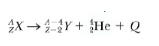
what is alpha decay?
the loss of a helium nucleus (2 protons, 2 neutrons)
occurs in elements with high Z
example: decay of radium to radon
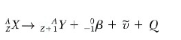
What is B- decay?
high neutron to proton ratio
nuclei wants to reduce this ratio to be stable
the average energy of B- particles is about 1/3 of the max energy
ex: Cobalt-60 to Ni-60
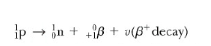
What is B+ decay?
low neutron to proton ratio
nuclei wants to increase ratio to achieve stability
ex: PET
Are beta particles emitted with a spectrum of energies?
yes, ranging from 0 to a maximum
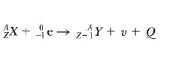
What is electron capture?
unstable nuclei with neutron deficit captures an orbital electron to make a proton into a neutron
ex: Na-22: 10% of atoms decay by electron capture
What is internal conversion?
nucleus has extra energy after nuclear transformation
transfers excess energy to an orbital electron, which is ejected from the atom
what is isomeric transition?
nucleus stays excited for a period of time
daughter nucleus loses energy in the form of gamma rays
ex: Tc-99m produced by decay of Mo-99
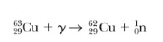
What is photodisintegration?
interaction of high energy photon with a nucleus
neutrons are emitted by the nuclei
ex: Cu bombarded with a photon beam
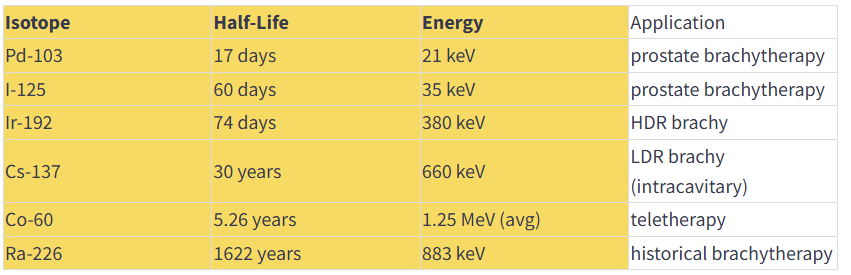
Half-lives
what factors determine the probability of a photon interacting with matter?
photon energy
atomic number and density of the material
what is coherent scattering?
A photon interacts with the entire atom, causing the atom's electrons to oscillate together. The atom then re-emits a photon in a different direction.
no energy change
depends on high atomic number and photons of low energy
What is photoelectric effect?
responsible for bony contrast in imaging
photon is absorbed by an inner shell electron
electron is ejected leaves vacancy → characteristic x-ray or Auger electron
Probability: Z3/E3
What is the compton effect?
independent of Z
incident photon transfers energy to outer shell free electron
photon loses energy, transfers to electron, changes direction
useful n therapy, undesirable in diagnostic imaging
main way MV photons deposit dose
what is pair production?
photon interacts w/ electromagnetic field of nucleus, give sup all its energy in the process creating a negative electron & positive electron
energy is at least 1.02 MeV (twice the rest mass of an electron, which is 0.511 MeV)
probability increases with higher photon energies and high atomic number materials
How do charged particles interact?
excitation
ionization
what are the 2 modes of x-ray production?
bremsstrahlung
characteristic
what is Bremsstrahlung radiation?
the result of radiative “collision” between a high-speed electron and a nucleus
electrons coming toward the nucleus are deflected, losing part of their energy, which is emitted as radiation
in Bremsstrahlung radiation, what determines the direction of emission?
depends on the energy of the incident electrons
below 100 keV, x-rays are emitted equally in all directions
as energy of incident electrons increase, direction of x-ray emission becomes increasingly forward
does Bremsstrahlung produce continuous or discrete energy?
produces a spectrum of energies (continuous)
How are characteristic x-rays produced?
when an incoming electron collides with an electron in a shell, knocking it out and leaving a “hole”
an outer shell electron will fill the hole, with the energy difference released as characteristic radiation
can eject Auger electron
Are characteristic x-rays discrete or continuous?
energy is always equal to the difference between electron shell energies
discrete
what is the critical absorption energy?
threshold energy that an incident electron must possess to remove an electron from an atom
for characteristic x-rays
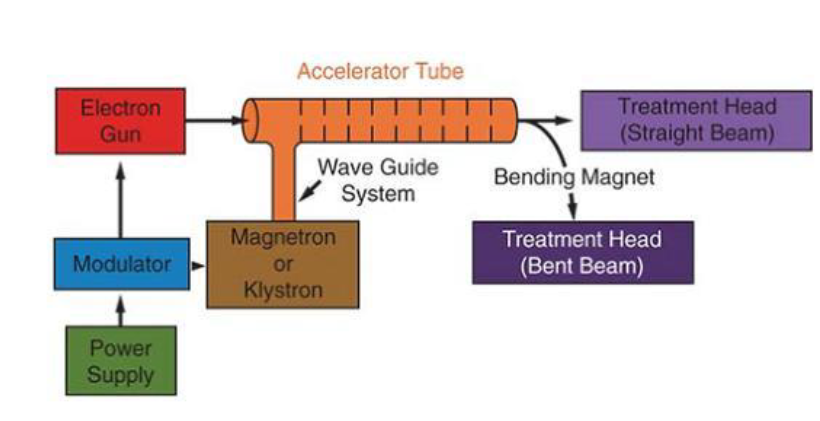
What does each part of the LINAC do?
magnetron or klystron: generate or amplify microwaves for the accelerator tube
modulator: generates control pulses to electron gun and magnetron is that timing is maintained between electron pulses and electric accelerating field
electron gun: source of electrons
what is the journey of a photon through the linac?
target → primary collimator → flattening filter → ion chamber → secondary collimator → patient
what is the journey of an electron through the linac?
no target → primary collimator → scattering foil → ion chamber → secondary collimator → accessory mount → electron applicator
What are the major differences between x-rays (photons, gamma rays) and particle beams (electrons, protons, alpha particles)?
x-rays have no mass, no charge, no finite range, no Bragg peak
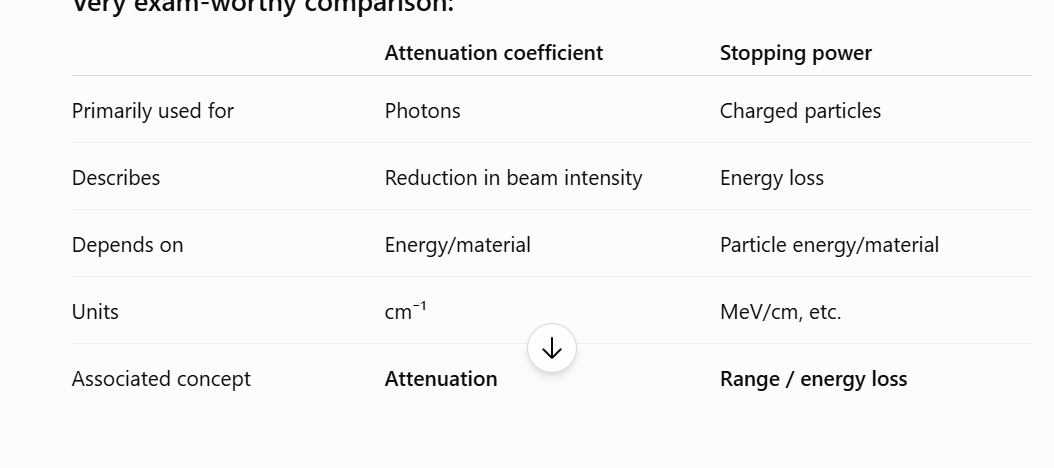
what is the difference between attenuation and stopping power?
what is the purpose of flattening filters?
flatten a beam at 10cm depth
w/ flattening filter, dose rate is lower, but average energy and penetration are higher
causes horns in dose
What are examples of treatment machines historically used?
Cobalt-60 unit: like a 4 MV linac, depth of dmax is 0.5cm, treated at 80cm SSD
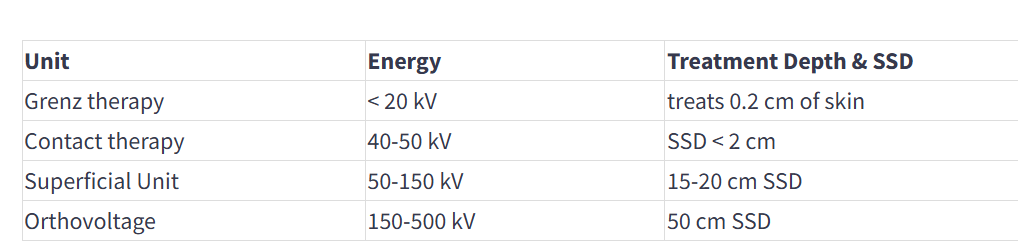
what is the purpose of the ion chamber?
to monitor beam symmetry, NOT beam flatness