countertops-brands
 Call Kai
 Learn
Learn Practice Test
 Spaced Repetition
 Match
Match Flashcards
 Knowt Play
1/20

There's no tags or description
Looks like no tags are added yet.
Name | Mastery | Learn | Test | Matching | Spaced | Call with Kai |
|---|
No analytics yet
Send a link to your students to track their progress
21 Terms
DEKTON: what is is made of? What are some features? How is it better than the other options?
an ultra-compact surface made from a blend of raw materials including glass, porcelain, and quartz. It is known for its durability, resistance to scratches and stains, and non-porous nature, making it a superior choice compared to other countertop materials. will not fade in UV light, will not absorb water. Can do a lineal match and a book match. Highest cost of the 7 due to the at or above premium quartz pricing because of the advanced manufacturing.
Silestone: what’s it made of? what are some features? How is it better than the other options?
a quartz-based Low-silica (a dust that causes air pollution) surface made from about 90% recycled crushed natural quartz, combined with resins and pigments. making it more sustainable than others. It offers excellent durability, a wide range of colors, and is non-porous, making it resistant to staining and easy to maintain, providing a competitive edge over other countertop materials. third on the price list due to being a “high-end” quartz along with Cambria.
Sensa: What is it made of? What are some features? How is it better than the other options?
a natural granite surface that features a unique protective treatment, enhancing its resistance to stains and scratches. It offers a wide variety of colors and patterns, along with ease of maintenance, making it a strong alternative to other materials. It shouldn’t need to be resealed after installation due to the long lasting sealant, even after the warranty. Cheapest on list due to “not being real quartz brand”. ranked above a basic quartz but below most premium engineered quartz options.
Viatera: what is it made of? What are some features? How is it better than the other options?
made of 93% quartz. It’s low maintenance, non-porous does not require a regular application of sealants or waxes, Stain and scratch resistant, sustainability by using sustainable material and an eco-friendly manufacturing process that’s NSF (national Sanitation Foundation) and Greengard certified. 7 on the chart with it being a good quality for a “mid-range’ quartz.
Corian Quartz: what is it made of? What are some features? How is it better than the other options?
is quartz that is durable that can withstand nicks and cuts, no sealing once installed, easy to maintain, non-porous. 6 on the chart moderately priced.
Hanstone Quartz: What is it made of? What are some features? How is it better than the other options?
is made up of 93% natural Quartz with a hardness scale of 7, non-porous; scratch, stain, etch resistant, durable, no sealant or waxes needed after installation, Sustainable with a Greengard certification. 5 on the chart that sits below Cambria and Silestone but more costly than the other brands.
Cambria: what is it made of? what are some features? How is it better than the other options?
is quartz with pigments and binders to make strong long-lasting slabs. It’s durable resists chips, scratches, and stains. Does not have to be sealed once installed making it maintenance free. non-porous. 2 most expensive on the chart with it being premium quartz.
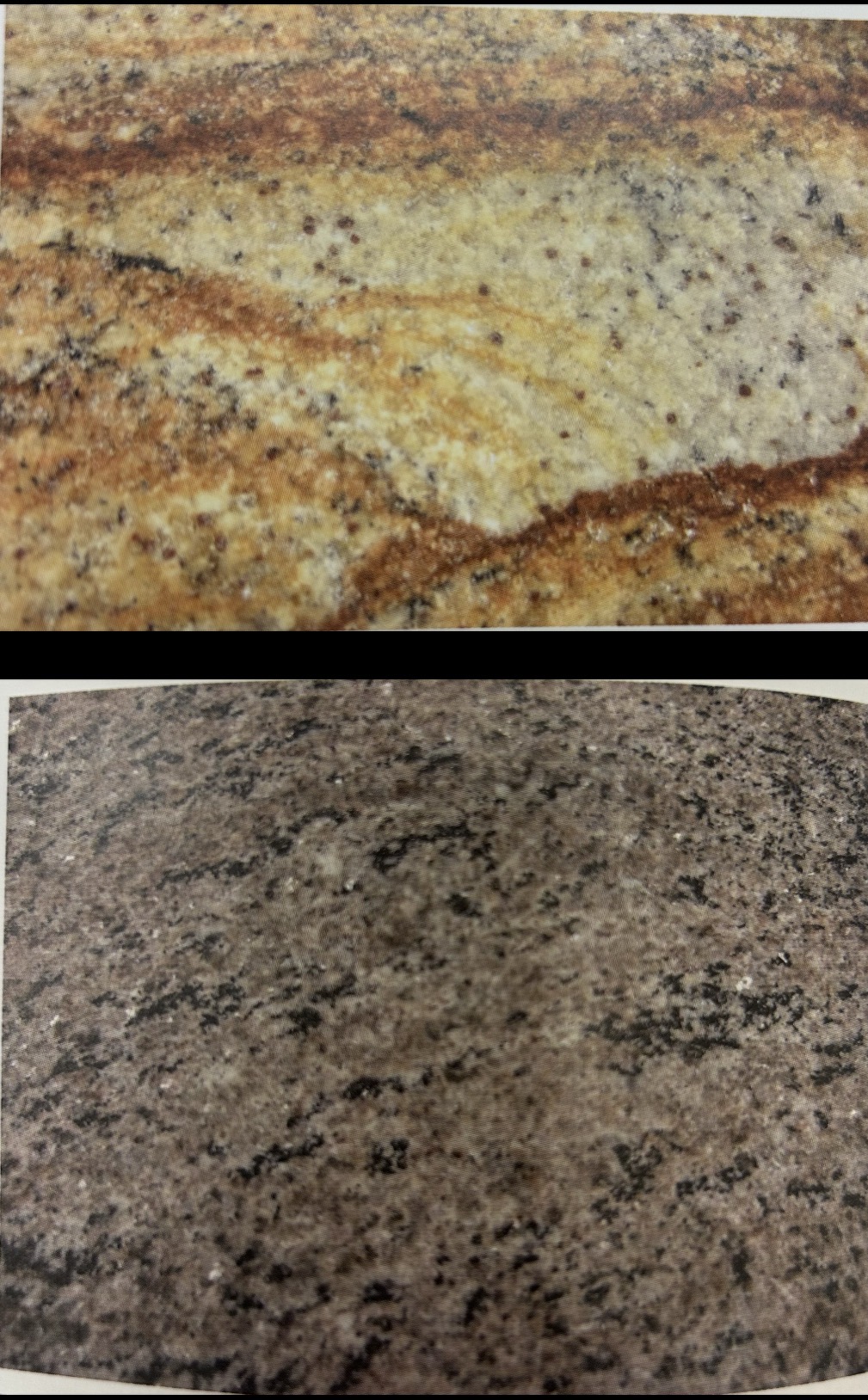
What stone? what are some characteristics? what styles best suits this stone?
Granite: pronounced speckled texture, some very consistent with very little visual “movement” while others have more of a swirl and streams like the milky way. Best styles are Modern, traditional, rustic, eclectic, Nordic, Vintage country, and French/Mediterranean. with it’s wide range of colors and patterns it goes well with almost any style.
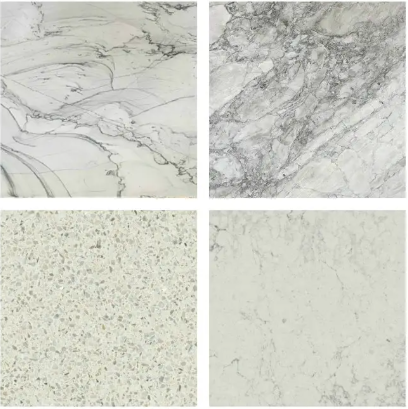
what stone? what are some characteristics? what style best suits this stone?
quartzite vs quartz. is the 100% natural stone with more harsh lines, crystalline appearance, and many colors. this is man-made with a less vain detail but more speckled. Best styles for Modern, Minimalist, contemporary, farmhouse, industrial chic, traditional, Biophilic, and maximalist. Due to it’s range of colors, patterns, textures make it very flexible with almost any style.
Marble: what are the characteristics? what styles suits it best?
crystalline and veined with a smooth soft appearance. would need sealing every 6 to 12 months due to it being a very porous stone which makes it stain easily. styles best for modern Minimalism, classic elegance, earthy/natural, glam, or eclectic/art deco. Gives luxury, warmth, clean, or depth to a space.
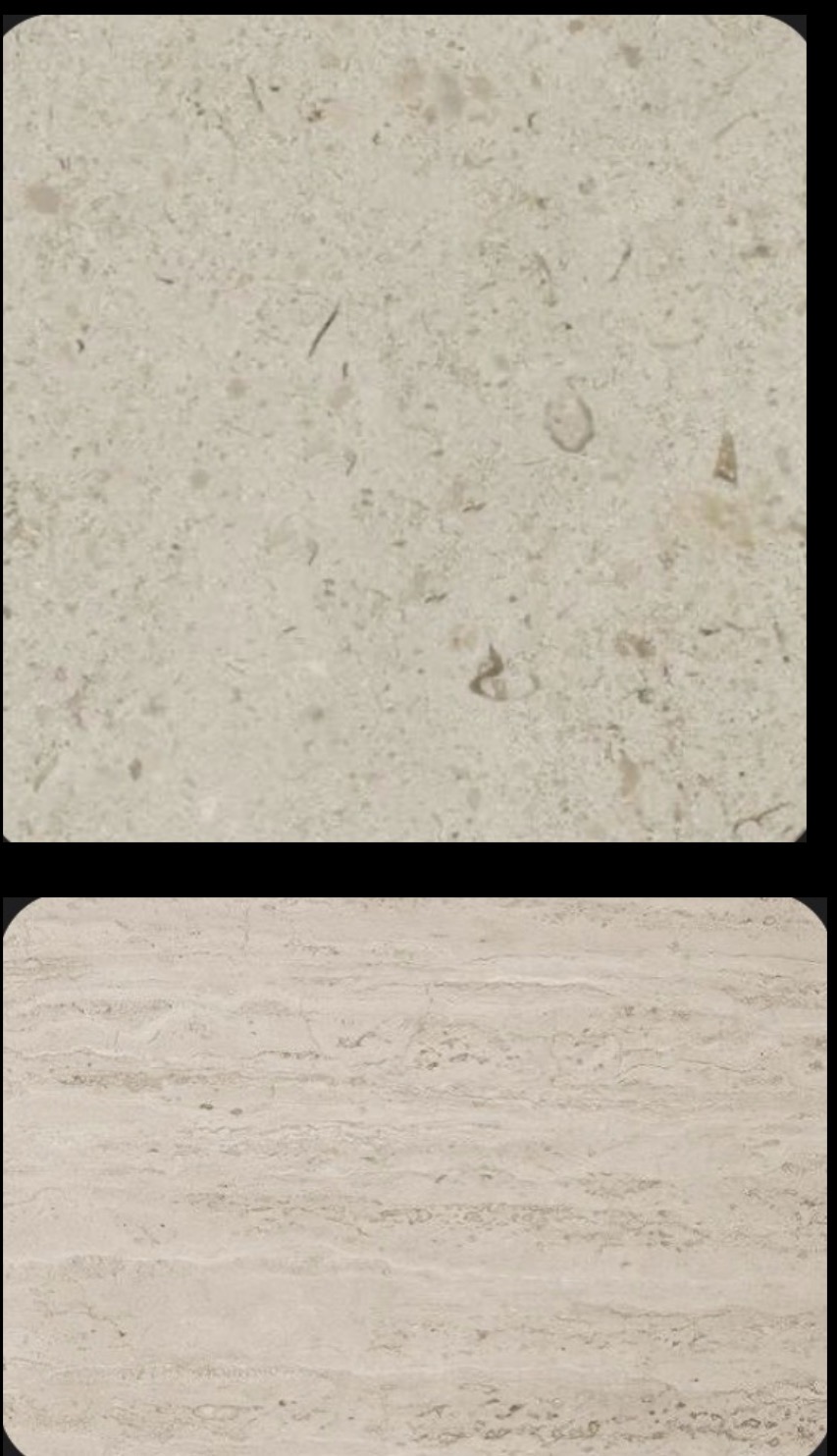
what stone? what are the characteristics? What styles suits it best?
Limestone: Generally it is a soft stone but some can be hard enough to do a low polish like marble. soft, earthy colors, visible fossil details or shell fragments, porous yet smooth or matte texture, and a granular look with subtle veining. styles best for this stone are rustic, bohemian, modern, minimalist, japandi, classic, traditional, Mediterranean, Tuscan, and quiet luxury. can create a timeless, elegant, or stricking contemporary look that feel grounded and sophisticated.
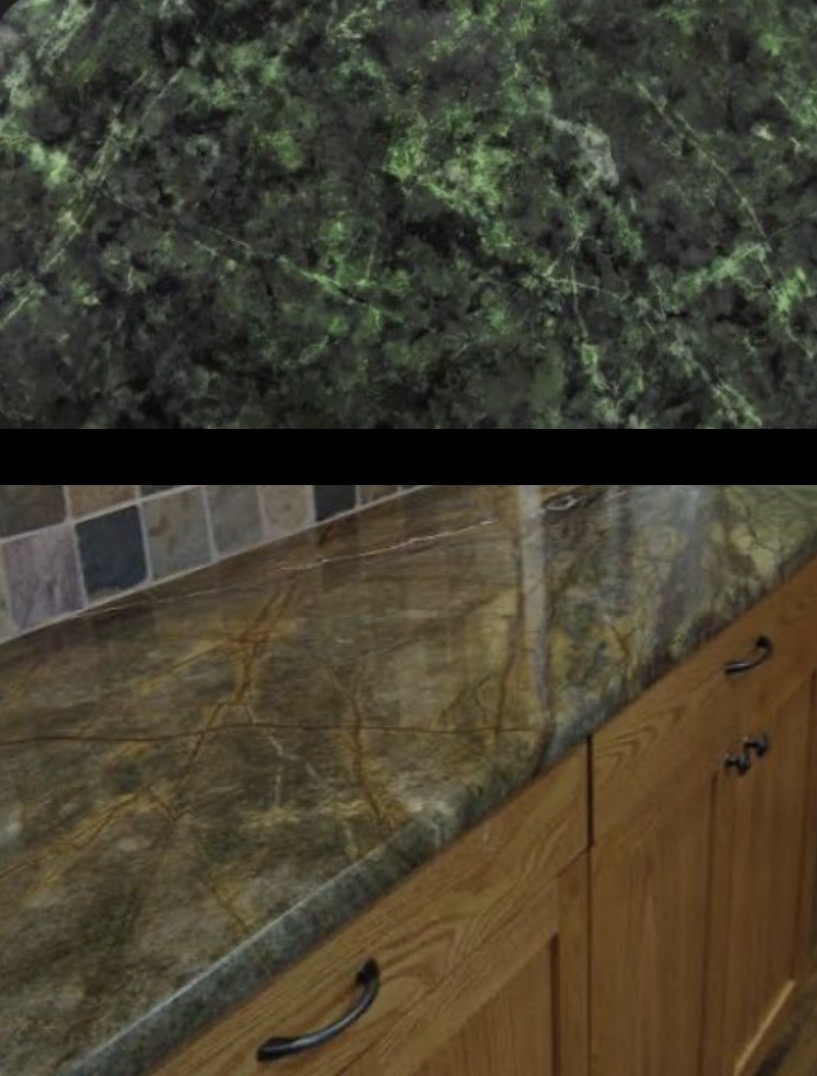
what stone? what are the characteristics? what styles suits it best?
Serpentine: referred to as “green marble” but is a completely different stone. common textures are polished and honed evoking organic luxury, free-flowing, inviting shapes, rich green stone with brown, white, or black veining. Styles to use in are contemporary, modern, rustic, traditional.
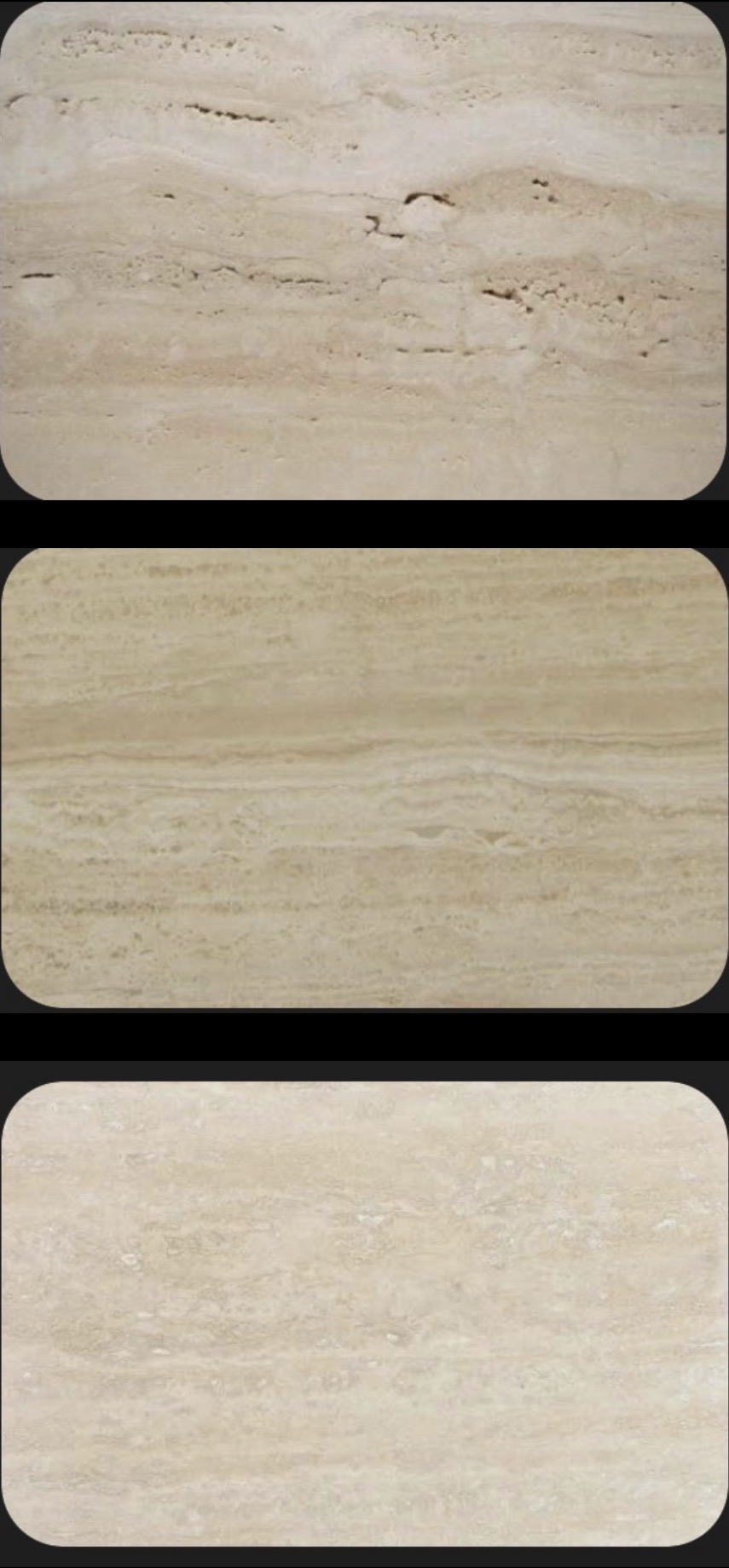
what stone? Vein cut vs. Cross cut. what are the characteristics? what style best suits?
Travertine: middle: vein cut bottom: cross cut. dense limestone, has holes, warm, subtle hues like beige, cream, gold, or walnut, when cut along its natural grain (vein-cut) it shows linear parallel lines: when cut against the grain (cross-cut), it reveals more swirling patterns. styles like modern, minimalist, Mediterranean, rustic, coastal, transitional, elegant, and Scandinavian.
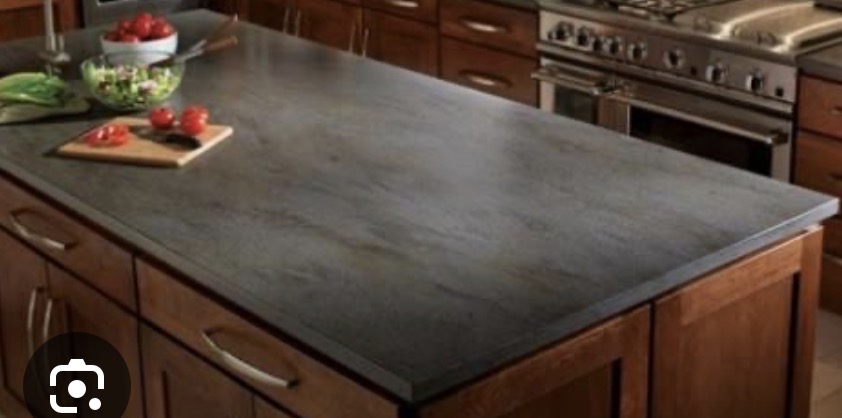
what stone? what are the characteristics? what styles suits best?
Slate: distinctive layered or clefted texture, subtle and uniform colors like grays, blacks, greens, reds, purples, fine-grained look, hard smooth (honed) or slightly textured feel. modern and minimalist to rustic and traditional, sleek contemporary.
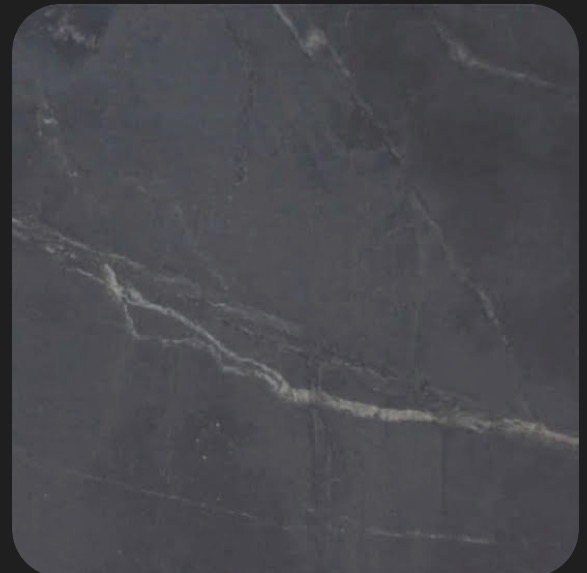
what stone? what are characteristics? what style best suits?
soapstone: cool, smooth, slightly waxy feel, typically in gray, green, or charcoal colors with white veining. farmhouse, rustic, arts and crafts, industrial chic, modern and contemporary, historical, eclectic.
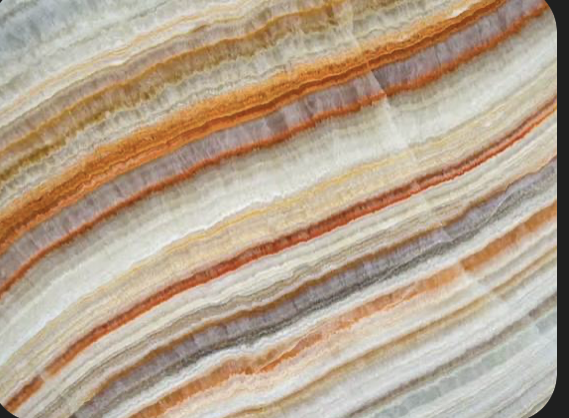
what stone? what are characteristics? what style best suits?
Onyx: distinct often parallel, wavy bands and layers of color. true onyx is very translucent and is often designed with a backlight behind it. luxury, modern, contemporary, minimalist, transitional, spa-like, dramatic, high-contrast.
Terrazzo: what are characteristics? what styles best suite?
composed of two materials aggregate (stone or glass chips) and the matrix or binder that holds the aggregate together (cement or epoxy). the stones or glass comes in all different sizes for 4in stones to sand bits. modern w/ monochrome neutral bases with subtle designs, traditional w/ warm, neutral tones and classic marble chips, rustic, contemporary, eclectic w/ bold colors and patterns.
Pentalquartz: what is is made of? What are some features? How is it better than the other options?
depending on color approximately 90-93% natural quartz crystals, along with resins and polymer binders. non-porous and scratch-resistant. low maintenance and long-lasting. four on the scale with it being a “higher-end” quartz; “mid-premium” segment.
eastern surfaces: what is is made of? What are some features? How is it better than the other options?
we sell mainly granite from them and it’s all done with state of the art machinery and from the natural stone sealed and non-porous so it is low maintenance. 8 on the chart.
countertek: what is is made of? What are some features? How is it better than the other options?
man-made composite material, created by blending crushed natural marble dust with resins and pigments, then pouring it into molds to form smooth, custom shapes. non-porous, seamless, and low maintained. we sell for bathroom vanities only. 9 on the chart “private-label quartz options more budget-oriented than national premium lines.
wilsonart: what is is made of? What are some features? How is it better than the other options?
solid surface, that is stain resistant, repairable, seamless, Eco-friendly meeting the Greengard standards. styles in travertine, quartzite, and soft muted looks. 10 on the chart budget-to-mid range brand; less expensive than the national premium brands.