Chemistry 20
 Call Kai
 Learn
Learn Practice Test
 Spaced Repetition
 Match
Match Flashcards
 Knowt Play
1/124

Earn XP
Description and Tags
grade 11
Name | Mastery | Learn | Test | Matching | Spaced | Call with Kai | Chat |
|---|
No analytics yet
Send a link to your students to track their progress
125 Terms
chemistry
is the study of matter: its properties, composition, and behaviour
atom
is the smallest building blocks of an element that still has the properties of that element.
electrically neutral
proton: charge and location
positive charge, located within the nucluleous
neutron: charge and location
neutral charge, located within the nucleus
electron: charge and location
negative charge, and located outside the nucleous surrounding it in energy shells/levels (EL)
atoms charge is…
they are electrically neutral
what is always equal to the atomic number?
protons
list the energy levels and how much maximum electrons can go in each
EL 1: 2 electrons
EL 2: 8 electrons
EL 3: 8 electrons
EL 4: 2 electrons
how to determines how many valence electrons there will be
in the Group numbers, use the second number. so:
group 1 = 1 valence electron
group 2 = 2 valence electron
group 13 = 3 valence electron
group 14= 4 valence electron
….and so on
how to determine the number of energy levels?
look at the Period number,
period 1 = 1 EL
period 2 = 2 EL
period 3 = 3 EL
….and so on
bohr diagrams
-find the elemts info: atomic number for protons, number of EL via periods, number of valence electrons via groups, the number of electrons in each EL, as well as neutrons and atomic mass.
-draw the nucleus and fill it with the proton number which is just the atomic number
-then under that, inside the circle, write the neutron number. this is done by finding the rounded atomic mass and subtracting the atomic number from that.
-then draw the EL, then fill it up with the number of electrons. check ur correct by looking at the group to verify the valence electrons.

atom representation
another method to represent an atom besides a bohr diagram. where you write the element then write the mass number as a supersubscript and the atomic number as a subscript.
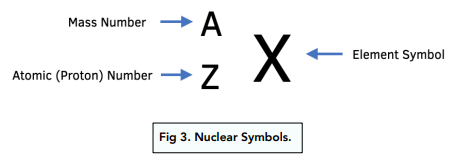
how to calaculate atomic mass
add protons and neutrons
how to calculate neutrons
mass number - atomic number
isotopes
atoms of the same element that have different numbers of neutrons.
each element exists in nature in different forms; mass numbers found on the periodic table are decimal values because it is an average of each elements isotopes. bacially protons remain the same with the neutrons that are different and bc of this, the resulting mass number will also be different.
mass numbers found on the periodic table are decimal values because it is an —— of each elements isotopes.
average
period
-horizontal row of the periodic table
-atomic number increases by one from left to right
-tells you the number of ELs
group/family
-vertical column of the periodic table
-have similar properties as they go down the column
-same charges so react with the same elemnts in the similar way. execpt transition metalss
-tells us number of electrons on the valence shell, (2nd number only)
metals
-location
-state at RT
-lustre
-conductivity
-malleability and ductility
-located left of the staircase
-solids at room temp except mercury
-shiny
-good conductors of heat and electricity
-very malleable and ductile
non metals
-location
-state at RT
-lustre
-conductivity
-malleability and ductility
-right of the staircase
-mainly gas at room temp except Bromine and 5 solids, but theyre dull and brittle)
-dull
-poor conductors of heat and electricity
-brittle and not ductile
meatalloids/semi metals
-location
-state at RT
-lustre
-conductivity
-malleability and ductility
-is the siarcase
-solids at room temp
-shiny or dull
-some conduct electricity but all are poor conductors of heat
-brittle but not ductile
the closer an element is to the bottom of a group, the more ___ it is
reactive
Alkali metals
-group number
-reactivity/stability
-physical appearence
-reaction with water
-ionionization
-form in natura
-group 1 (EXCEPT Hydrogen, it is its own group)
-so reactive because of unpaired, lone electron in its valence shell. Electrons are in odd numbers, so they’re very unstable.
-They are soft, silver-coloured white metals
-react violently with water to form flammable H gas.
-will give away one electron to become an ion of 1+.
-cannot be found in nature as a pure state.
Alkaline Earth Metals
-group number
-reactivity/stability
-physical appearence
-reaction with water
-ionionization
-form in nature
-group 2
-have 2 electrons in valence, so electrons are even in number and ELs are full, so they are unstable, but less than allkali
-Less soft, soluable, and reactive than alkali. silvery, ususally white.
-reacts with water to create basic solutions.
-will give up 2 electrons, so 2+ charge
-can be purely found in nature
Halogens
-group number
-reactivity/stability
-chemical properties
-reaction with water
-ionionization
-form in nature
-group 17
-highly reactive bc of 1 unpaired electron they wanna get rid of, so odd and not full EL= unstable
-extremely corrosive, harmful, and poisonous
-reaction with water to produce acidic solutions
-gaim 1 electron to form 1- chargee
-form compounds in nature bc they react with many elements
Noble Gases
-group number
-reactivity/stability
-physical and chemical appearence
-group 18
-very nonreactive. do not from ions bc EL is full
-odocurless, colourless, tasteless gases
The main group elements
are the elements in Groups 1, 2, and 13 to 18. Of all
the elements, the main group elements best follow the periodic law.
Cation
When there are less electrons than protons, meaning it gave away an electron, the ion is positively charged, AKA a CATION. Cations are always "PAW-sitive." Typically seen in metals
losing negatives (electrons) makes the atom more positive (excess protons)
Process is called oxidation
anion
When there are more electrons than protons, meaning it took an electron, the ion is negatively charged, AKA an ANION. "ON-ions" are disgusting = negative charge. Typically seen in non-metals.
Gaining negatives (electrons) makes the atom more negative
Process is called reduction
ionization
the process of gaining or losing electrons
ion
electrically charged atom
valence electrons
electrons in the outermost energy level.
the numer of valence electrons is equal to the last digit of the group number. they explain reactivity
ion names
a cation retains the same name, but anions change their endings to -ide. EX: nitride ion not nitrogen ion
ionic compounds what forms it
metal and nonmetal
molecular/covalent compounds what form it
non metal and non metal
alloy/inter-metallic compounds and what forms it
metal and metal
naming binary ionic compounds
-name
-formula
-write the name of the cation element first. Then name the anion element second, changeing the edning to -ide.
-write Both symbols in order. We must then add subscript numbers to balance the chares of the nonmetal and metal (should become neutral). you can then either: drop and swap the charges or find the LCM and divide using the answe as the subscripts.
Naming MULTIVALENT Ionic Compounds
-Given the chemical formula
-If given the chemical name
They are compounds with metlas that can form more than one stable ion, located in transition metals. The correct charge is the one that results in a neutral atom.
- the subscripts tell you the ratio of atoms. Find out how many ions of the second element there is, then chose the charge that balances it out.
-, write down the formula by using the roman numeral to find out the ion charge of the first element, then use a subscript on the second to balance out the first if needed.
How should u treat polyatomic ions when balancing equations?
you can and should treat polyatomic ions as single units when balancing equations, provided they remain intact on both the reactant and product sides of the equation. This strategy simplifies the balancing process by allowing you to count the entire polyatomic ion as one item, such as SO₄²⁻ or NO₃⁻, instead of breaking it down into individual atoms.
Naming Polyatomic Ionic compounds
Identify the cation: The first part of the name is the name of the metal ion
Identify the anion: The second part is the name of the polyatomic ion.
Combine the names: Simply write the name of the cation followed by the name of the anion to get the compound's name. Do not use numerical prefixes (like "di-" or "tri-") to describe the number of polyatomic ions in the name.
Use parentheses around a polyatomic ion in the formula if more than one is needed to balance the charges.
polyatomic ions
ons which consist of more than one atom. The atoms in a polyatomic ion are usually covalently bonded to one another, and therefore stay together as a single, charged unit. Several non-metal ions joined together, which remain together during chemical reactions, so they're named as a single entity.
molecular compounds
Given the formula: use prefixes to indicate the number of atoms. change the last element's ending to ide. never use mono for first one.
Given the name: do the same, using the subscripts as indicators to what number to use.
ionic hydrates
Name the ionic compound like normal
Write the prefix followed by the word “hydrate”
EX: CaCO3 • 3H2O = calcium carbonate trihydrate
Hydrates are ionic compounds that have water molecules attached to them. It is represented by a dot at the end of the ionic molecule, followed by a certain number of water molecules.
IE: AB • XH2O
AB = Ionic compund
X = any number of water molecules
AB • XH2O - what do the parts of this mean? What is it?
AB = Ionic compund
X = any number of water molecules
Ionic Hydrates are ionic compounds that have water molecules attached to them. It is represented by a dot at the end of the ionic molecule, followed by a certain number of water molecules.
IUPAC Naming of Acids
The IUPAC (International Union of Pure and Applied Chemistry) reccomends naming acids as aqueous substances contaning the IUPAC name of the compound.
Basically, name the acid as if it were an ionic compound, then place aqueous in front of the name
EX: HCl(aq) is called aqueous hydrogen chloride, not hydrochloric acid
MNEOMIC for naming ACIDS!!
my rIDE has HYDROlICS, i ATE something ICky, sprITE is delicOUS
Naming Binary Acids (Without Oxygen)
Consist of 2 elements: the first always hydrogen and the second a nonmetal ion. Always end in "-ide."
RULE: Hydrogen ____"ide" ----> hydro___ic acid. like how HCl or hydrogen chloride will become hydrochloric acid. HCl is made up of H+ and Cl-. Because Cl is the anion, named as chloride, we know that if the anion end in "-ide" we take it off and stick the stem work "chlor" between "hydro" and "ic", making it hydrochloric acid.
Naming Oxy Acids (with oxygen): Describe
Consist of 2 ions, the first always hydrogen, the second a polyatomic ion containing oxygen which will end in either "-ate" or "-ite" We'll be looking at these 2 endings when we name oxy acids. RULES: Hydrogen ___ate ---> ___ic acid. Hydrogen___ite ---> ___ous acid
1. Polyatomic ion ending with "ate". U drop hydrogen, change "ate" to "ic", and add acid: Hydrogen "ate"-->"ic" acid. EX: HNO3- NO3 is the anion, nitrate. Bc it ends in "ate", we take off the "ate" and add "ic". Nitrate to nitric acid.
2. Polyatomic ion ending with "-ite". Drop hydrogen, change "ite" to "ous", then end with acid. Hydrogen___"ite"--->___"ous" acid. EX: HNO2- NO2, nitrite, is the anion. If it ends in "ite" u remove the "ite" and put "ous" acid. From nitrate to nitrous acid
What is different with naming Phosphur and Sulphur acids (in element and polyatomic form)?
Phosphor and suphur's names are not cut, they are kept whole. EX: use sulfur as the base for sulfate and sulphite, like instead of of sulfic acid it is it is sulfuric acid.
A chemical reaction is a process that occurs when 2 or more molecules interact to form a new ——(s). Compounds that interact to produce new compounds are called —— whereas the newly formed compounds are called __.
product, reactants, products
CHEMICAL REACTION: (Define)
occurs when 1 or more substances react to form products with different chemical properties. A chemical reaction is also known as chemical change, which is when substances react to create different substances. The products have completely different properties from the reactants. Energy either flows in or out.
Communicated by a balnced chemical equation
Atoms often react in order to obtain a more stable electron arrangement (often an octet of electrons like the nearest noble gas). The how and why of chemical reactions can be summarized in a statement such as, “when chemical entities collide, they may exchange or share electrons to obtain a more favourable (stable) electron arrangement.”
Balancing Equations (define)
All equations must end as balanced. Correct amounts of reactants and products due to LOCO mass. Goal is to have the same # of atoms on each side of the equation. Another implication of Laviosier's Law is that u cant hv more of 1 type of atom on 1 side of the reaction compared to the other (must have=amounts of everything on both sides, as matter cannot be created or destroyed.) This is done by adding coefficients infront of compounds to show how many atoms of each is needed for reaction to occur
Due to the LOCO mass, chemical equations must be —— in order to be properly written. This is accomplished by adding——- in front of compounds to indicate how many molecules of each element must be present in order for the reaction to occur.
balanced, coefficients
Law of Conservation of Mass / Laviosier's law (LOCO Mass)
Matter cannot be created nor destroyed. So, during a chemical reaction the total mass of the reacting substances must also equal the total mass of the resulting substances (Lavioseir's Law). Or, the equation must be balanced! This law allows us to predict the mass of reactants required to produce a known quantity of products. You cannot have more than one type of atom on one side of the equation compared to the other. When balancing equations we must add coefficients to follow this law.
What can u NOT add or change when balancing chemical equations?
We do NOT add/change subscripts, as then that would alter the substance. We only are adding more of the same molecule. Now, the equation is balanced as the reactants equal the products.
A + B --> AB
Synthesis/Combination/Composition/Formation Chemical Reaction
Synthesis/Combination/Composition/Formation Chemical Reactions:
A compound is made from simpler materials. What we make is more complex than what we start with. Will always have more reactants than products.
2 reactants that are generally elements that combine to form a product that is a compound.
A + B → AB .....OR.....
element + element → compound.
EX: 2Na(s) + Cl2(g) → 2NaCl(s)
AB --> A + B
Decomposition Chemical Reaction.
Decomposition Chemical Reactions:
Basically the opposite of synthesis. Compound is decomposed into simpler compounds, or all the way to the elements that make it up. Reactant is a compound broken down into products that are simpler compounds/elements. Will always have more products than reactants.
AB → A + B .....OR.....
compound → element + element.
EX: 2H20(l) → 2H2(g) + O2(g)
Watch for diatomics! When seprated, they will have a subscript of 2, like oxygen when H2O is seperated, it becomes O2 not O.
A + BC --> B + AC
Single Replacement Chemical Reaction
Single Replacement Chemical Reaction:
1 element that starts out by itself replaces another element in a compound, kicking it out. Reactants and products are element and compound. Cations switch places in ionic compound. The 1 metal atom trades places with the metal ion in a compound (and vice versa if an isolated nonmetal).
An element and compound react to form a new element and compound.
Essentially, look for the 2 elements with the same type of charged ions and they'll switch places.
element + compound → new element + new compound ..OR..
A + BC → B + AC.
EX: Cu(s)+2AgNO3(aq) → Cu(NO3)2(aq)+2Ag(s)
Hydrocarbon Combustion/ Combustion:
Cx Hy (sometimes 02) + 02 → C02 + H20
Hydrocarbon Combustion/Combustion:
A fuel combines with oxygen to form products that are oxides. All exothermic. Compound containing Carbon and Hydrogen or a hydrocarbon (sometimes has 02) combines/combusts with oxygen gas to always produce CO2 and H20.
Balance it in order of: C, H, then O.
Incomplete burning = byproducts like CO.
Cx Hy (sometimes 02) + 02 → C02 + H20
EX: CH4(g) + 2O2(g) → CO2(g) + 2H2O(g)
*Fractions or decimals may be used to balance combustion reactions!!
AB + CD → AD + CB
Double Replacement Chemical Reaction
Double Replacement Chemical Reaction:
Two ionic compounds react to form two new ionic compounds. Reactants and products are both compounds. The metal from one reactant combines with the nonmetal from the other reactant. So the cations and anions in both compounds switch places. Swap the places of the anions.
Compound + Compound → New Compound + New Compound
AB + CD → AD + CB.
EX: Pb(NO3)2(aq) + 2KI (aq) → Pbl2(s) + 2KNO3(aq)
Neutralisation Reactions
When acids and bases react together, both acidic and basic properties disappear. This is the process of neutralization, the reaction between an acid and a base that produces water and salt. In water, acids release hydrogen ions, H+ and bases release hydroxide ions, OH-. When an acid is mixed with a base, the H+ combines with the OH- to produce H20. H+(aq) + OH-(aq) ---> H20(l). The (-) ion associated with the acid and the (+) ion associated with the base, Cl- and Na+ for example, make a salt.
Energy flow is an essential part of any chemical reaction. All chemical reactions either—— or ———energy. Energy/heat is stored in chemical bonds. To break bonds energy is ——-, and to form them energy is ——-.
release, absorb, required(can be absorbed), released
EXOTHERMIC Chemical Reactions:
Reactions that release/give off heat/energy. Result in the formation of new chemical bonds. Heat exits the chemical reaction. Heat/energy is a product. They can emit light, heat, sound, electricity, or motion. The products require less energy to form than the reactants do. Temperature of surroundings increases. EX: hot packs, fireworks, cellular respiration, corrosion, combustion, glowsticks, condensation, formation of precipitate, nuclear fission/fusion, making ice.
Explain Exothermic Reaction Graphs:
Energy leaves the reaction, so reactants had more stored energy compared to products. DOWNHILL graph, reactants at top with products at bottom.
The energy would be written on the products side as energy is produced for — reactions. Energy would be written in the reactants side because energy is required for the reaction to occur in — reactions
exothermic, endothermic
ENDOTHERMIC Chemical Reactions:
Reactions that absorb energy/heat. Result of breaking chemical bonds. Heat enters the chemical reaction. Needs heat/energy to happen (heat/energy is a reactant). It takes more energy to form the products than the reactants. Temperature of surroundings decreases. EX: cold packs, photsynthesis, cooking food, decomposition of water, melting ice, boiling water, sweating, baking, sublimation, muscle contractions.
Explain Endothermic Reaction Graphs:
Energy enters the reaction, so the reactants have less stored energy compared to the products. UPHILL graph, the reactants below with the products above.
A mole is considered WHOS number?
Avagadro's number! 6.02 × 10²³
What is a MOLE?
Mass of a single atom is so small we can't easily measure it. The mole, n, is a concept that is used so that we can acually measure the mass of elements & compounds. IT'S JUST A NUMBER! 1 mole = 6.02 x 10(to the power of 23) atoms, molecules etc. Scientists can't count individual atoms and molecules, so they place large #'s of them into groups. This group is called a mole. 1 mole is Avagadro's number. The mole is a unit of measurement which is used when writing chemical equations. n= moles (mol)
How would u write the formula triangle for moles?
m (mass) on top, and n (moles) beside M (molar mass) at the bottom.

The molar mass (or __ molar mass, AMU) of pure substances are listed on the _ . The molar mass is the # of grams of a pure substance in _ mole of that substance. Molar mass is the mass of one mole of a substance. Measured in grams/mol.
atomic, period table, one
The total molar mass of a compound is found by adding together the molar masses of all its elements, taking into account the # of —- of each element present
moles
How to calculate molar mass of a compound? (+how many digits after decimal? What is the special case?)
Use the atomic mass of each element in the compound
multiply each by the number of atoms (subscript)
Add the mass of each element together
*When calculating molar mass ALWAYS use 2 digits after the decimal!!
SPECIAL CASE: when calculating the molar mass of ionic hydrates, you calculate the molar mass of the ionic compound, the ADD the weight of how many waters (molar mass = 18.02) are attached. (just a shorter method, more conventient)
EX: (in photo)

What is the molar mass of water?
18.02 g/mol
compounds bond by exchanging or sharing____. Knowing that electrons are not bound to the nucleous means that they are free to be exchanged and shared between atoms, forming more complex molecules. bonding dosen’t happen with all electrons, only the most active and energetic ones (_____ electrons), which are in the valence electrons. So, the structure of an atom is larelgy empty space, and the electons of an atom must be faraway from the nucloeus. Electrons can only exist in certain spots while circling around the nucleous, which makes sense, as we cannot have two cars occupying the same parking spot at the same time.
- electrons
-bonding
Octet rule
states that when bonds form between atoms. the atoms gain, lose, or share electrons in such a way that they create outer energy levels with paired electrons (all orbitals are full). Elements want to like their nearest noble gas, so they lose, gain, or share electrons to become more stable.
Orbital
region of space where an electron may exist in the ELs.
orbital is a specific volume of space in which an electron of certain energy is likely to be found. Each orbital may contain two, one, or no electrons. An orbital may be thought of as a sort of 3-D space that defines where an electron may be. For bonding study, we are only concerned with an atom’s valence orbitals, the volumes of space that can be occupied by electrons in an atom’s highest energy level.
• mass, m, measured in
grams g
n, moles, measured in
mol
molar mass, M, measured in
in grams per mole, g/mol
difference between orbit and orbital
an orbit is when something moves in a circular motion, while and orbital is a region of space where an electron may exist.
for bonding study we are only concerned wuth an atoms valence orbitals, why
bc low ELs are held so strongly by their positively charged nucleus.
Orbital Occupancy
valence electrons are classified in terms of this. 0=empty, 1= half filled, and 2=filled.
Unpaired (Bonding) Electron:
An atom with a valence orbital that has a single valence electron can share or transfer that electron with another atom. The maximum number of bonding electrons determines an atom’s bonding capacity, the maximum number of single covalent bonds formed by an atom.
Lone (non-bonding) pair:
an atom with a full valence orbital, 2 electrons, repels nearby orbitals and wants to be alone. So 2 electrons occupying the same orbital. They do not participate in bonding.
4 rules of bonding theory:
the first energy level has room for only one orbital, with a maximum of two electrons.
outer energy levels have room for four orbitals with a maximum of eight electrons. noble gases have this structure, their lack of reactivity indicates eight electrons filling a valence orbital is very stable.
an orbital can be empty, or it may contain one or two electrons, but never more than two
electrons spread out/fill any empty valence orbitals before forming electron pairs (like seats on a bus, everyone wants to sit alone, but if the bus is getting full, you have to sit beside someone.)
Lewis Dot Diagrams
-named after
-purpose
-symbol
-valence electrons
-Named after Gilbert Lewis (1916) who is responsible for the octet rule. He reasoned that all atoms strive to be like the nearest noble gas, and proposed that atoms could achieve stable electron arrangments by GAINING Or LOSING electrons.
-Purpose: to determine how many bonding electrons are present, and therefore how many bonds can form.
SYMBOL of the element represents the nucleus + all Electrons EXCEPT the valence
VALENCE electrons are shown as dots around the central symbol
How to draw lewis diagrams for main group atoms
Write the element symbol to represent the nucleus and Filled inner energy levels
Determine the number of valence electrons; add a dot to represent each.
Each of the 4 orbitals is represented by the sides of the element Symbol. Place one valence electron per orbital.
If additional electrons are needed after each orbital is HALF FULL, add a second electron until a maximum of 8e is reached. (max of 2 for hydrogen and helium)
it is important to remember that the ____ symbols do not mean that electrons are dots or that they are stationary.
The 4 sides represent the 4 orbitals that may be occupied by electrons, it is a simplistic __ diagram of a complex 3D structure.
Lewis, 2D
*An easy way to determine how many valence electrons there are in an element is to look at the last digit of the group on the periodic table However, this method will only wort on the Main Group elements, which are : ________)
If given a transistion metal, we will need to know the_____ (if not specified use the most common) and use that charge as the number of valence electrons.
1,2,13-18
charge
Electronegatvity:
-define
-scale
Describes the relative ability of an atom to attract a pair of bonding electrons in its valence level (aor just attract electrons)
A measure of the force that an atom exerts on e of other atoms; (the pull"on bondinge"). The ability of an atom to "hold" on to its electrons is refferred to as electronegativety.
Each atom is assigned a value between 0.0-4.0; the higher the numer, the greater the pulling Force
Ex: Flourine has on EN =4.0, meaning it wants to pull on other e- very strongly.
Francium has an EN = 0.7, meaning it dosent want to pull on other electrons
the relative ability of an atom to attract bonding electron toward itself. So its the abillty of an atom to attract a pair of bonding electrons in its valence level. It's assigned on a scale developed by Linus Pauling based on energy changes in chemical reactions, going from 0.8-4.0, based on the largest (cesium) and highest (Flourine). Metals tend to have lower EN, and nom-metals have higher EN.
higher electronegativity means
more likely to gain electrons
lower electronegativity means
more likely to lose electrons
Electronegativity values are based on three values
DISTANCE FROM NUCLEUS (farther away = weaker attraction) The farther away from the nucleus that electrons are, the weaker their attraction to the nucleus.
SHEILDING BY INNER Electrons (weakens the attraction of the nucleous). Inner electrons Shield valence electrons from the attraction of the positive neucles, Ex: Potassium's valence electrons are not attracted to its nucleus as much as Nitrogen's valence electrons because there are more Inner electrons present in potassium, therefore shielding the valence electrons.
NUmBER OF PROTONS IN THE NUCLEUS (more protons = greater atraction). The greater the number of protons in the nucleus, the greater the attraction for more electrons. Ex: Bromine has more protons (+ charge) which attracts the negative charge of electrons more so than silicon's 14 protons.
Dora Said Penguin
The electronegativity scale was develeoped by ___, he based his scale on the most reative (EN=4.0) and non reactive (EN=0.8) elements.
Pauling