✓Audiology Praxis 5343 Study Set #1
 Call Kai
 Learn
Learn Practice Test
 Spaced Repetition
 Match
Match Flashcards
 Knowt Play
1/288

There's no tags or description
Looks like no tags are added yet.
Name | Mastery | Learn | Test | Matching | Spaced | Call with Kai | Chat |
|---|
No analytics yet
Send a link to your students to track their progress
289 Terms
What is the LTASS?
Long-term average speech spectrum.
What is the dynamic range of the LTASS in dB?
30 dB
The LTASS is also known as what other well known audiology tool?
The speech banana. (It is just replotted in dB HL on the audiogram.)
Reverberation is the time it takes for reflected sounds to die down by how many dB from cessation of the source sound?
60 dB
What signal-to-noise (SNR) is needed for satisfactory communication?
+6 SNR
Potential advantage of binaural hearing aid fitting.
Elimination of the head shadow effect (10 to 15 dB attenuation of sound, mostly high frequency, by the head when sound arrives from contralateral side.
What are some advantages of doing a binaural fitting versus a unilateral hearing aid fitting?
1) decreases head shadow effect,
2) loudness summation (2 - 8 dB, depends on many factors),
3) improved sound localization,
4) binaural redundancy,
5) binaural squelch
What are a few advantages of CIC hearing aids?
1) cosmetics,
2) preservation of sound localization,
3) reduce wind noise,
4) natural pinna effects,
5) some high frequency benefit >2000 Hz.
What are some drawbacks to CIC hearing aids?
1) dexterity/vision concerns, 2) size 10 battery (life/size), 3) no directional mics, telecoils
What hearing aid can be placed in the ear for extended periods and how long is the time it can stay in the canal?
The Lyric IIC is an extended wear aid that must be inserted by a professional and can remain in the canal for three to four (3-4) months.
What are potential benefits of bilateral hearing aid fittings?
1) elimination of head shadow effect, 2) loud summation, 3) sound localization, 4) improved speech in noise perception
How much attenuation occurs from the head shadow effect and in what frequency range?
10 - 15 dB attenuation of sound, mainly in high frequencies
What dB of benefit comes from loudness summation?
2 - 8 dB depending on various factors
Why is speech in noise perception improved with a bilateral fitting?
There is a 2 to 3 dB better SNR with bilateral fitting due to binaural redundancy and binaural squelch
What are some potential contraindications to binaural fitting of HA's?
1) degree of hearing loss, 2) cost, 3) convenience, 4) binaural interference, 5) perceived benefit
What are the two primary concerns/considerations when fitting any hearing aid?
1) acoustic feedback, 2) occlusion effect
When one takes measures to decrease feedback, what other problem can then arise?
Occlusion effect (sometimes you have to balance b/t feedback & occlusion effect)
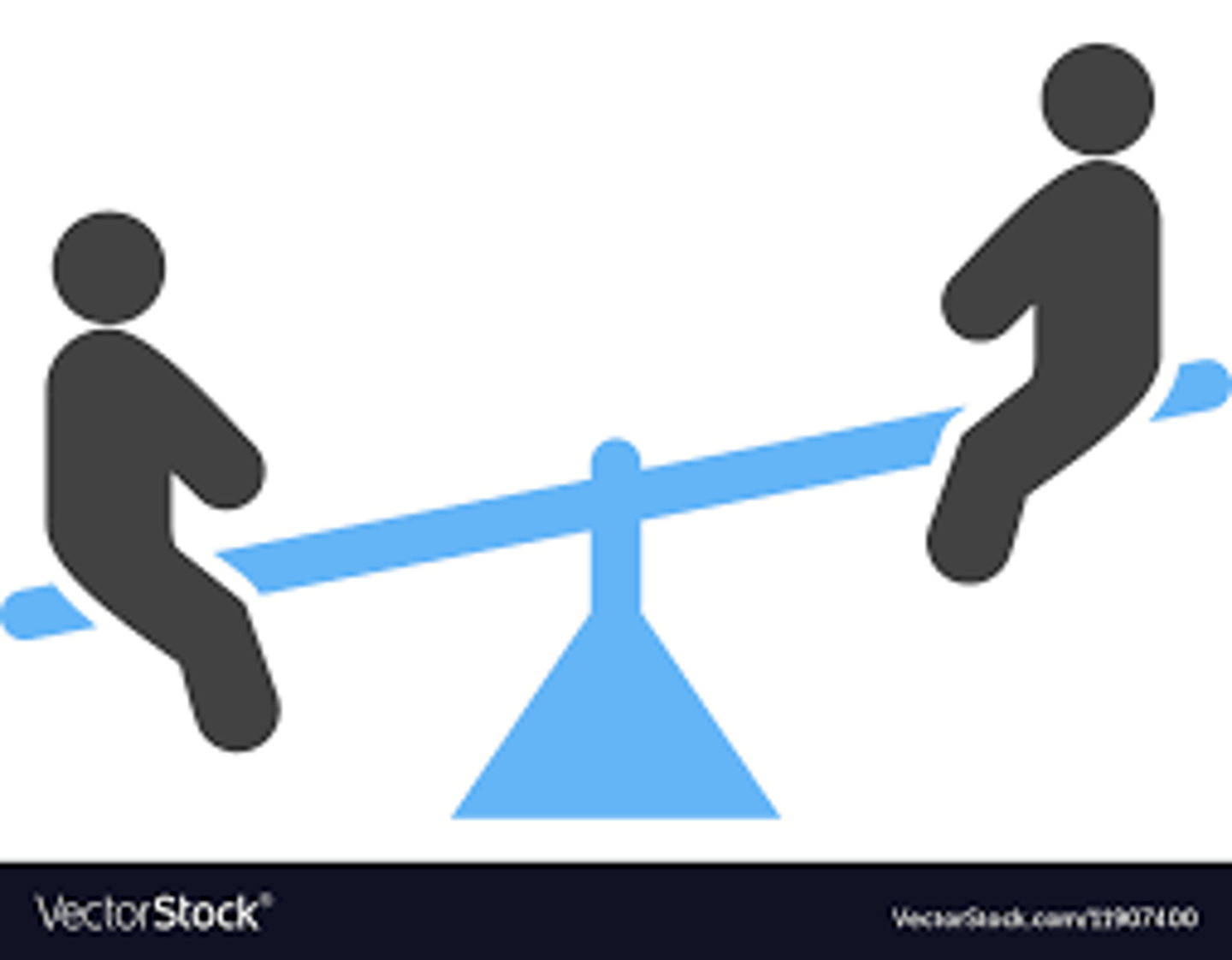
Describe the occlusion effect.
It is an increase in low frequencies (generally <500 Hz.) that occurs when the ear canal is occluded that causes a "hallow" or "booming" sound in the ear when the client talks or chews.
What are strategies for treating the occlusion effect?
1) go to an open style dome, 2) add venting to ear mold (both of these strategies allow the escape of low frequency sounds)
When attempting to decrease the occlusion effect with vents or open style domes, what other problem can arise?
Feedback (with enough amplification open style domes, vents or slits can allow feedback to occur)
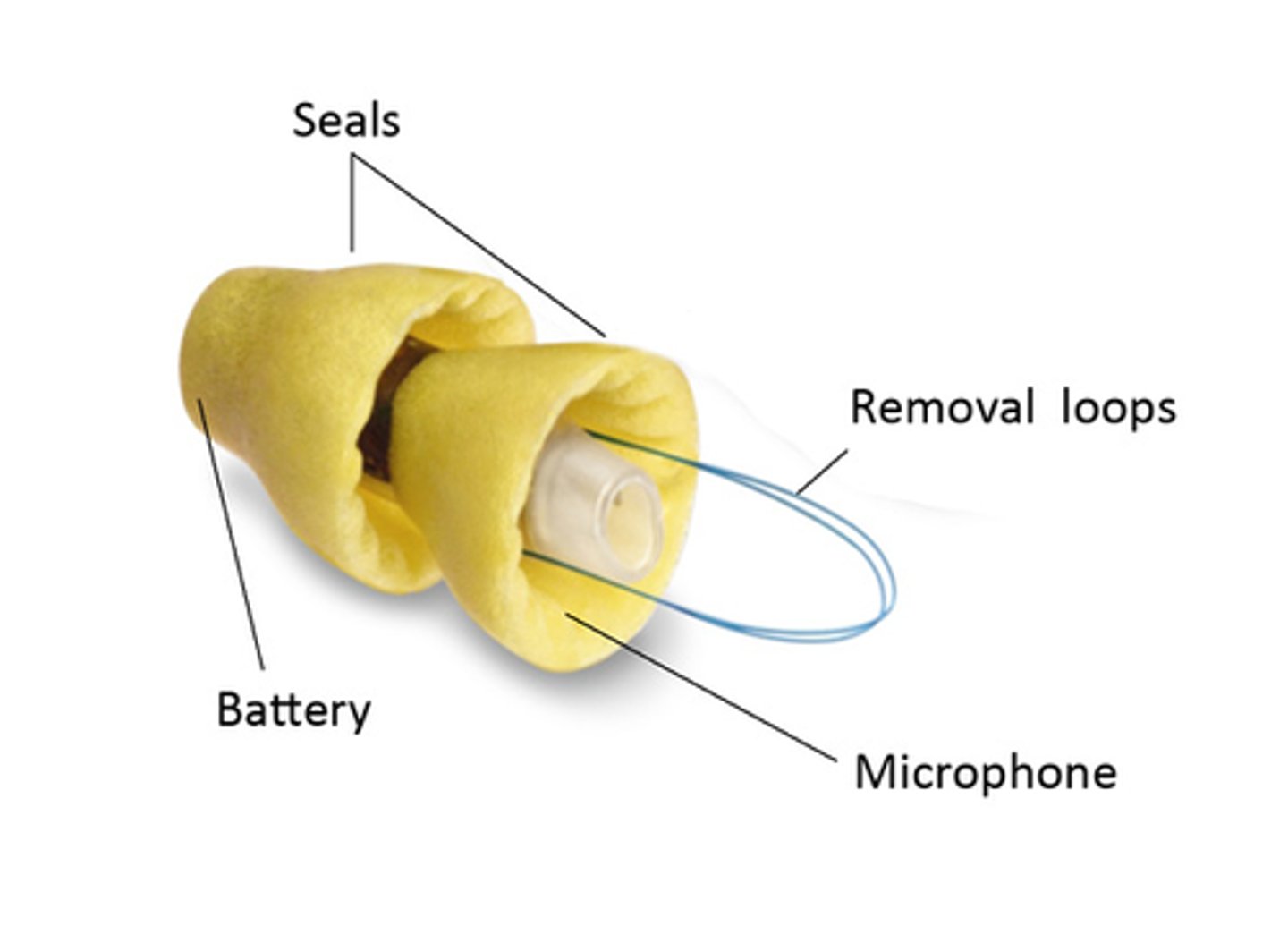
What is the main amplification benefit of deep canal CIC (or IIC)?
4 dB greater output in lows & 8 - 10 dB greater output at 4 KHz.
What are some advantages of open canal fittings?
1) cosmetic,
2) relief from occlusion effect,
3) comfort,
4) preservation of natural ear canal resonance,
5) sound quality,
6) strong client preference for open-fit mini-BTE style HA's
What are some of the factors that affect style selection of HA's?
1) hearing loss, 2) cosmetics, 3) ear canal shape/size, 4) presence of cerumen, 5) dexterity/vision, 6) comfort, 7) communication needs, 8)environment used in
What are the symptoms of Meniere's disease?
1) episodic rotary vertigo,
2) roaring tinnitus,
3) rising (reverse) SNHL,
4) sometimes aural fullness also. [generally starts unilaterally then can become bilateral in @ 2 yrs.]
![<p>1) episodic rotary vertigo,</p><p>2) roaring tinnitus,</p><p>3) rising (reverse) SNHL,</p><p>4) sometimes aural fullness also. [generally starts unilaterally then can become bilateral in @ 2 yrs.]</p>](https://knowt-user-attachments.s3.amazonaws.com/24a15f09-ac66-4c6c-8c54-6fe62a214055.jpg)
What is the popular documented cause of Meniere's disease?
Increase in endolymph or endolymphatic hydrops.
Main electrolytes in endolymph.
Mainly composed of high quantities of potassium (K+) and low quantities of sodium (Na+).
What is the prevalence of Meniere's disease in the US?
100-200 per 100,000 (or 0.2%)
What population is generally affected by Meniere's disease?
Generally occurs in adulthood, but numbers increase rapidly around 60 yrs. of age.
Of the two fluids in the inner ear, which is closer in composition to the fluid of the cerebral spinal fluid (CSF)?
Perilymph.
Perilymph is sodium rich and very similar to what other body fluid?
Cerebral spinal fluid (CSF).
What is the main cause of endolymphatic hydrops in Meniere's disease?
An overabundance of endolymph in the scala media (cochlear duct).
What theories are there about the causes of Meniere's disease?
1) too much secretion of endolymph in the scala media, 2) not enough endolymph absorption by the endolymphatic sac, 3) autoimmune disorder
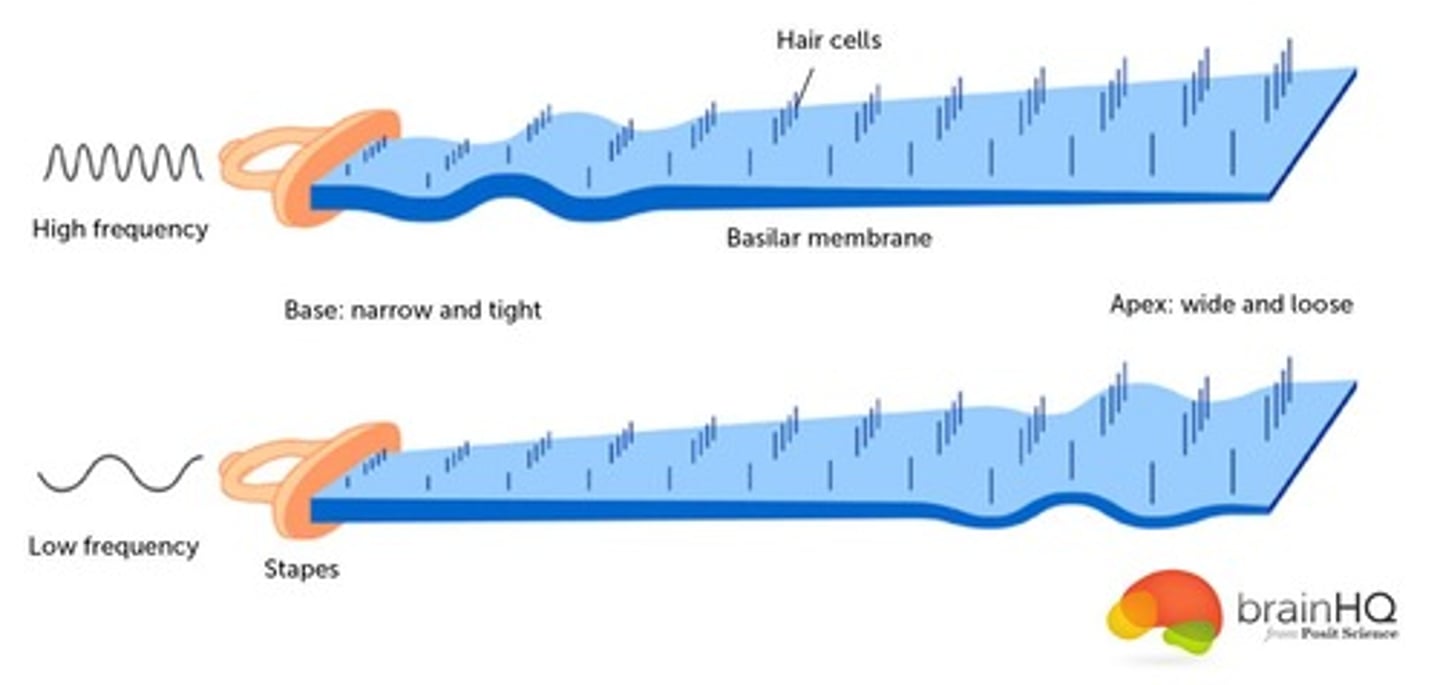
Describe the basilar membrane in reference to its' width at the base and apex.
The high frequency base is narrow (stiff) and the low frequency apex is wider (more mass).
Contrast mass and stiffness in relation to the basilar membrane.
The base is more stiff (less mass) and the apex has more mass (less stiff).
Why does endolymphatic hydrops affect the low frequency portion of the hearing first?
Because the wider apex end is less stiff and will start bulging (and rupture) first before the stiffer basal (high freq.) end of the cochlea.
Describe some treatments for Meniere's disease.
1) low salt diet,
2) oral steroids,
3) endolymphatic shunt,
4) gentamicin injections into scala tympani,
5) vestibular neurectomy or labyrinthectomy.
What classes of drugs are generally considered ototoxic?
1) aminoglycoside antibiotics,
2) loop diuretics,
3) salicylates & NSAIDS,
4) quinine (& derivatives),
5) cytotoxic (chemo) drugs,
6) solvents,
7) anti-malarials
When do patients generally notice tinnitus the most?
When in quiet environments or under stress.
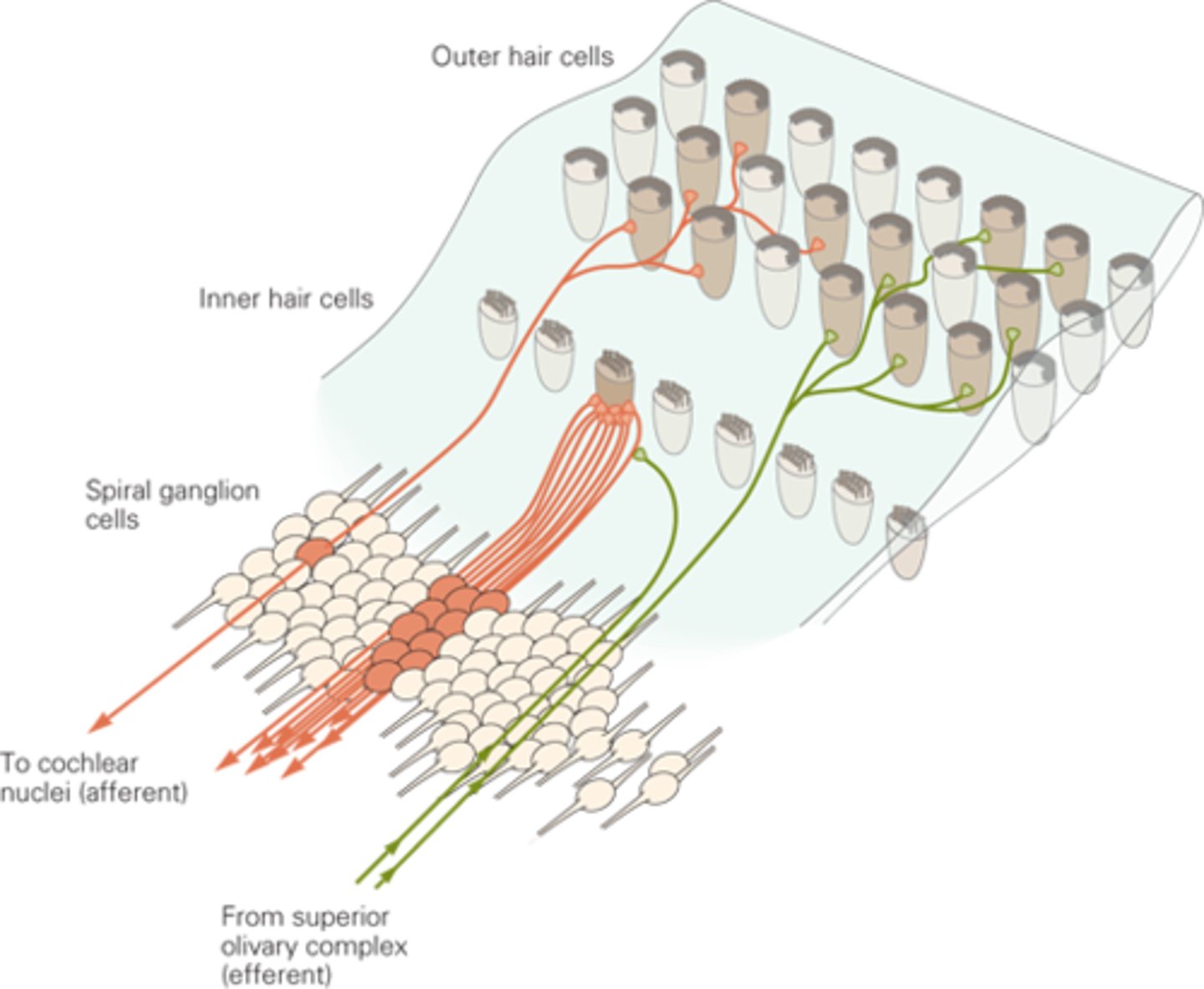
What are the two types of hair cells in the cochlea and their function?
Inner & outer hair cells. IHC's (1 row) of mainly afferent hair cells and OHC's (3 rows) of mainly efferent hair cells.
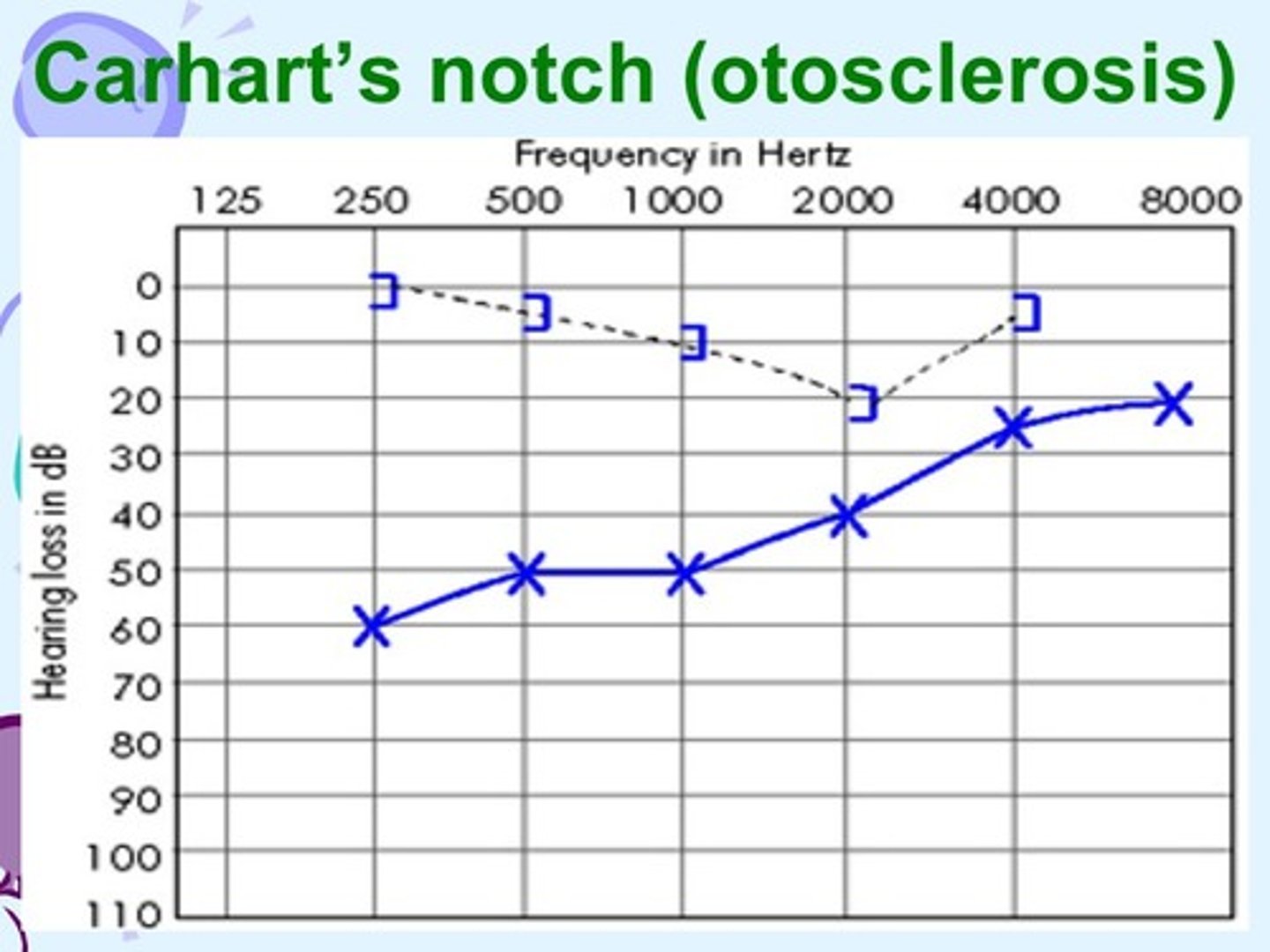
Describe otosclerosis.
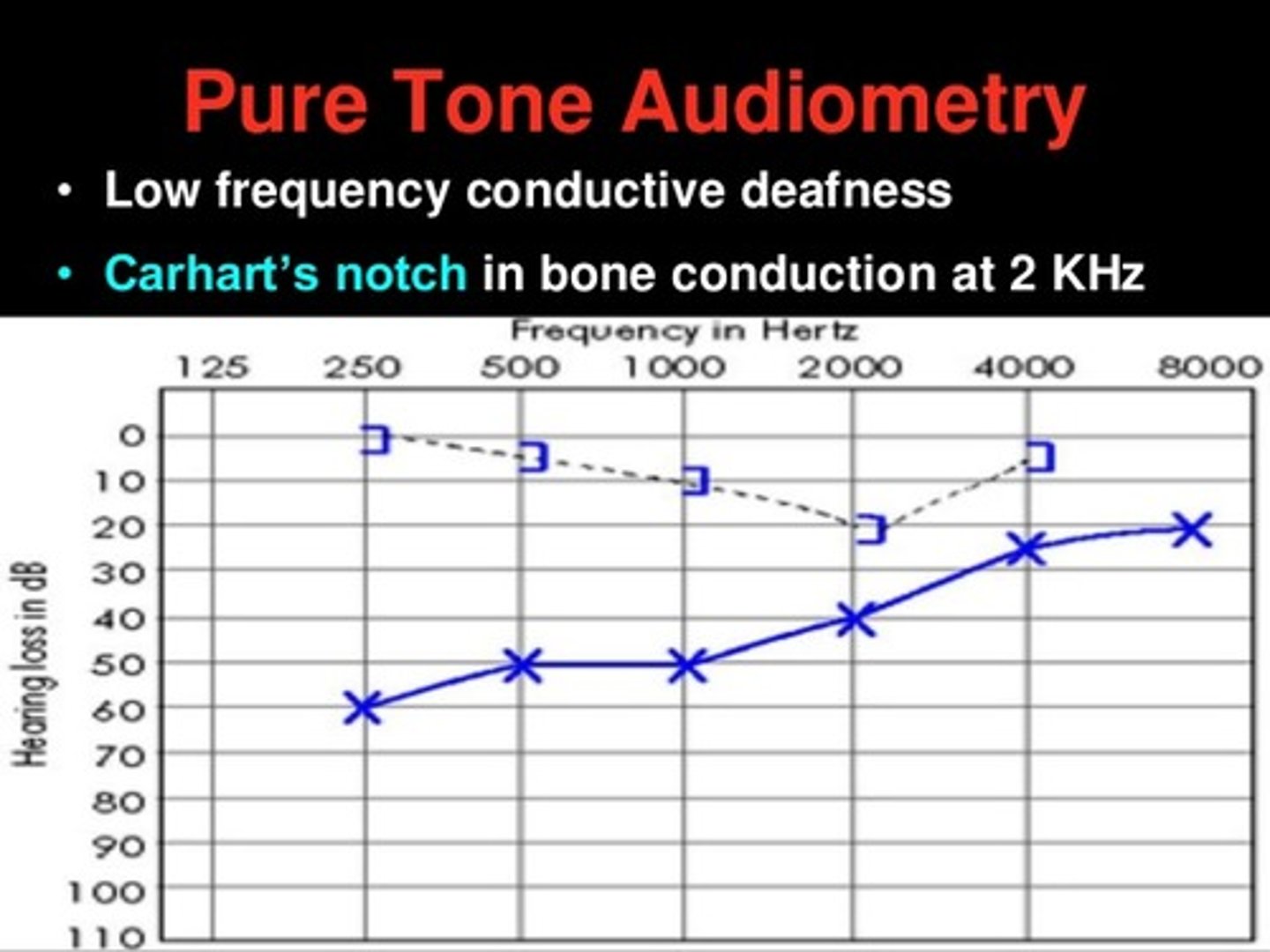
A conductive HL that typically occurs with a notch at around 2 KHz. on the audiogram (the air-bone gap is smallest at 2 KHz.)
What is the basic etiology of otosclerosis?
1) growth around stapes footplate,
2) hereditary (autosomal dominant),
3) more in caucasians,
4) ages 15-45,
5) during puberty & pregnancy,
6) female: male ratio 2:1
Who theorized the traveling wave theory (passive function) in 1940's?
Georg von Bekesy.
Who theorized that cochlear function was more of an active process in 1948?
Thomas Gold.

Who was the first person to record OAE's in 1978?
David Kemp
What are the three (3) types of otoacoustic emissions?
1) spontaneous, 2) stimulus frequency, 3) transient evoked, 4) distorsion product
Distortion product formula?
2f1 - f2
At what age is Visual Reinforcement Audiometry appropriate?
Best for 6 to 24 months.
At what age is Conditioned Play Audiometry appropriate?
Best for 3 yrs. to early school age.
When is traditional audiometry appropriate for children?
Best for 4-5 years forward.
What is BOA?
Behavioral Observation Audiometry (BOA)
Describe difference theory.
Predicts that auditory responsiveness displayed by developmentally delayed children will be varied and unpredictable.
Describe Developmental theory.
Predicts that a child with developmental delays will progress through the same maturation sequence as the normal child, only slower.
ABR: Wave I originates in what part of the auditory pathway?
Cochlea
What are the ABCDs started in the 1990's that are part of the Universal Newborn Hearing Screening's high risk register?
Affected family;
Bilirubin level;
Congenital rubella syndrome;
Defects of the ear, nose and throat;
Small birth weight.
When did Kansas enact legislation for UNHS?
July 1, 1990.
What is the MCL.
most comfortable loudness level.
What does ANSI stand for?
American National Standards Institute.
What is the ANSI standard that has been the defining document for hearing performance since 1977?
ANSI S3.22
A graphical representation of the hearing aid output as a function of frequency is referred to as ?
Frequency response curve
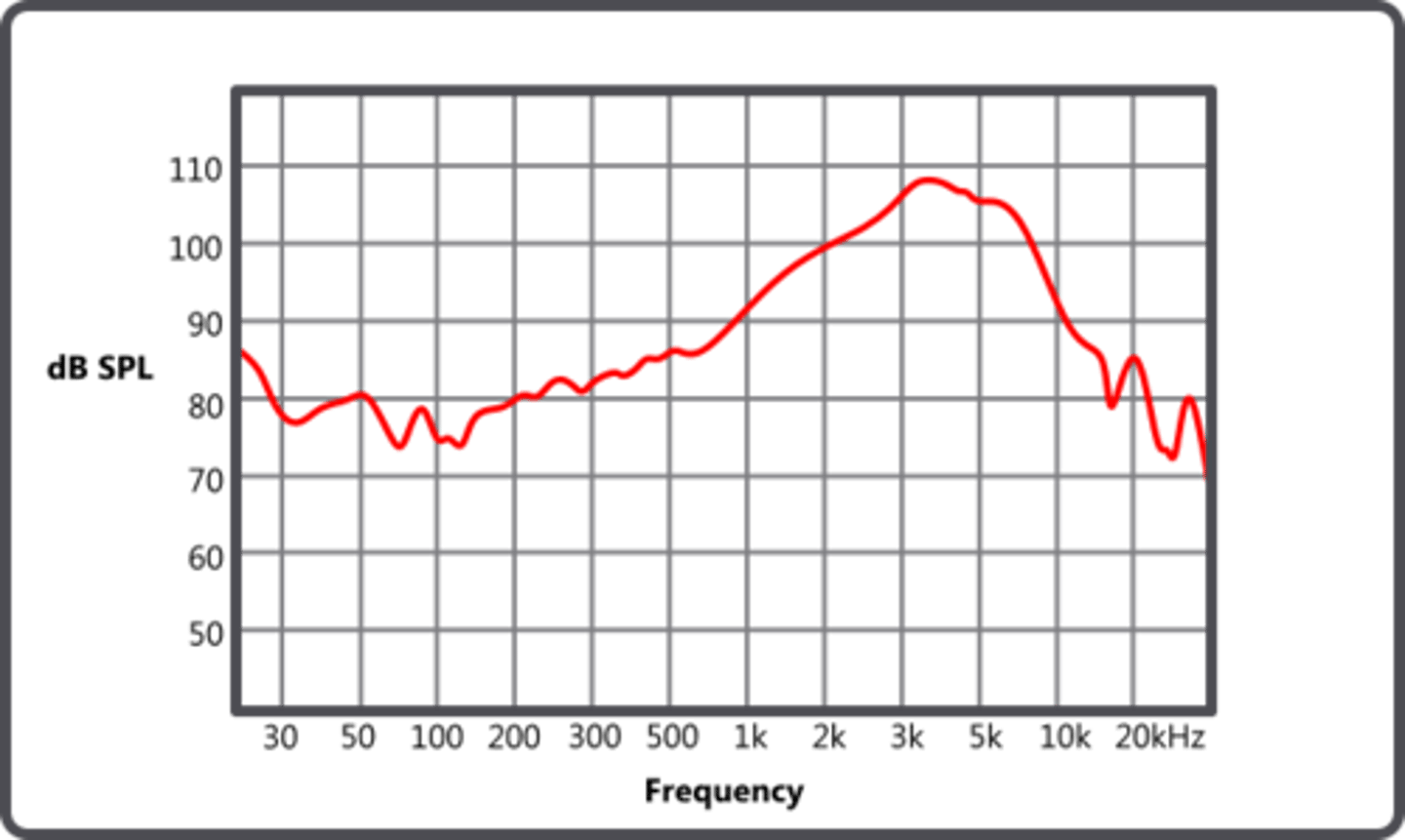
Define MPO.
Maximum Peak Output - is the highest possible signal that a hearing aid is capable of delivering.
What term is used to express when a hearing aids input level and gain exceed the MPO?
saturation
What is peak clipping?
What the output level would exceed the MPO and the hearing aid stops the output at the MPO causing the sound to be clipped. This is one method of controlling the output so that the aid does not exceed safe out levels.
What happens to the sound output when peak clipping occurs?
Sounds are distorted, often described as sounding "scratchy."
Define distortion.
Refers to the presence of frequency components in the output that were not present in the aids input.
What the the two types of distortion?
Harmonic and intermodulation.
Define harmonic distortion.
When a certain frequency of input (ex. 500 Hz.) results in harmonics of that frequency being in the output of the signal such as 1 KHz, 2 KHz, and so on. The distortion frequencies will always be greater than the original and a multiple of that frequency.
Define intermodulation distortion.
Occurs when two frequencies are presented together and the output of the signal contains frequencies that are mathematically related to the sum or/and difference of the two input frequencies. This type of distortion can be either greater or less than the original frequencies unlike harmonic distortion.
(Principle used in DPOAE's.)
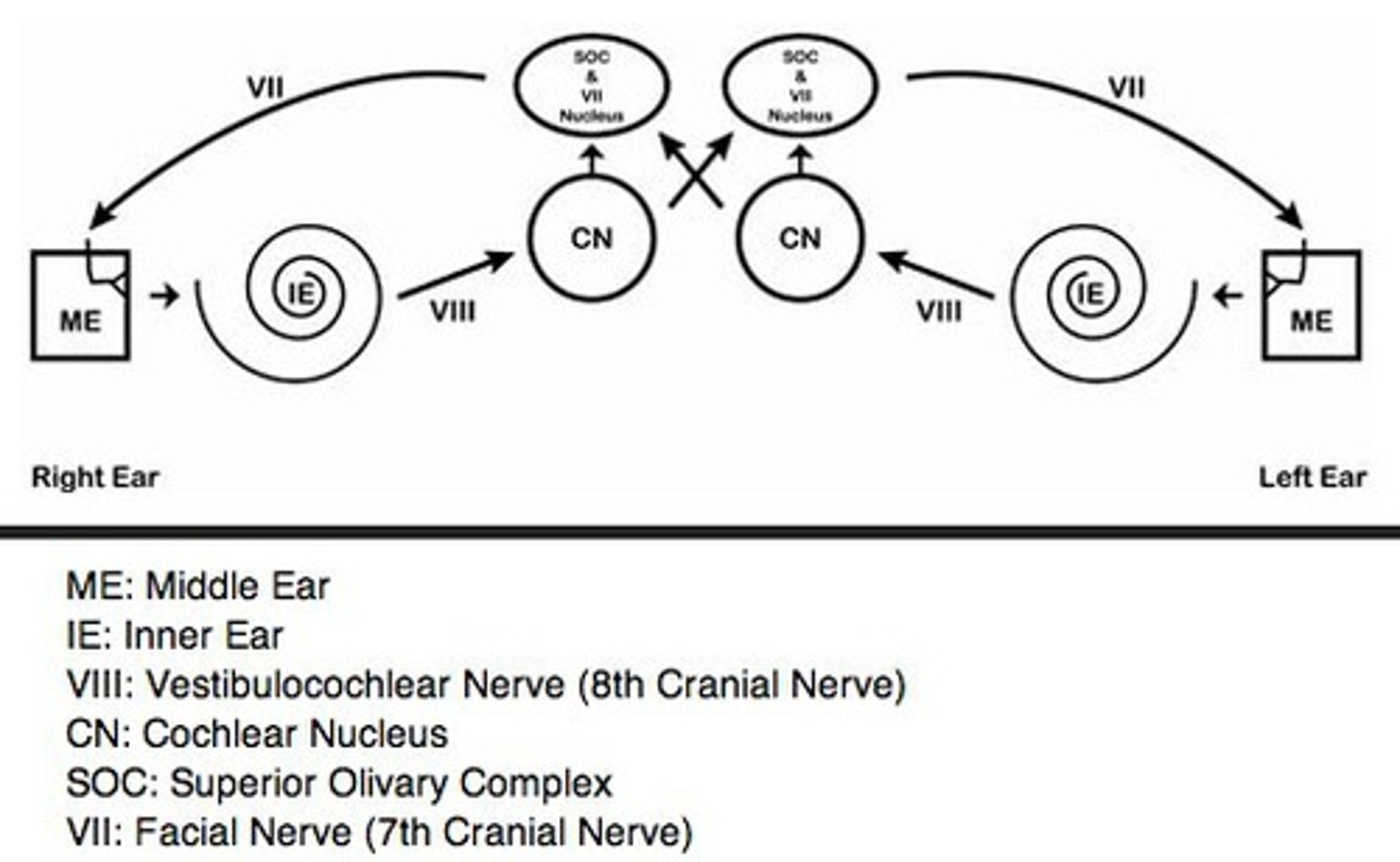
Describe an ipsilateral acoustic reflex pathway.
A loud sound travels from cochlea (to) cochlear nucleus (to) superior olivary complex (to) facial nerve nucleus (to) stapedius muscle causing contraction.
What is the detection criteria for acoustic reflexes?
0.03 (at 500, 1000, and 2000 Hertz)
If patient has an acoustic reflex at 90 dB, what is their estimated acoustic threshold?
0-30 dB HL. (estimated thresholds are 60-90 dB below the patient's reflex threshold).
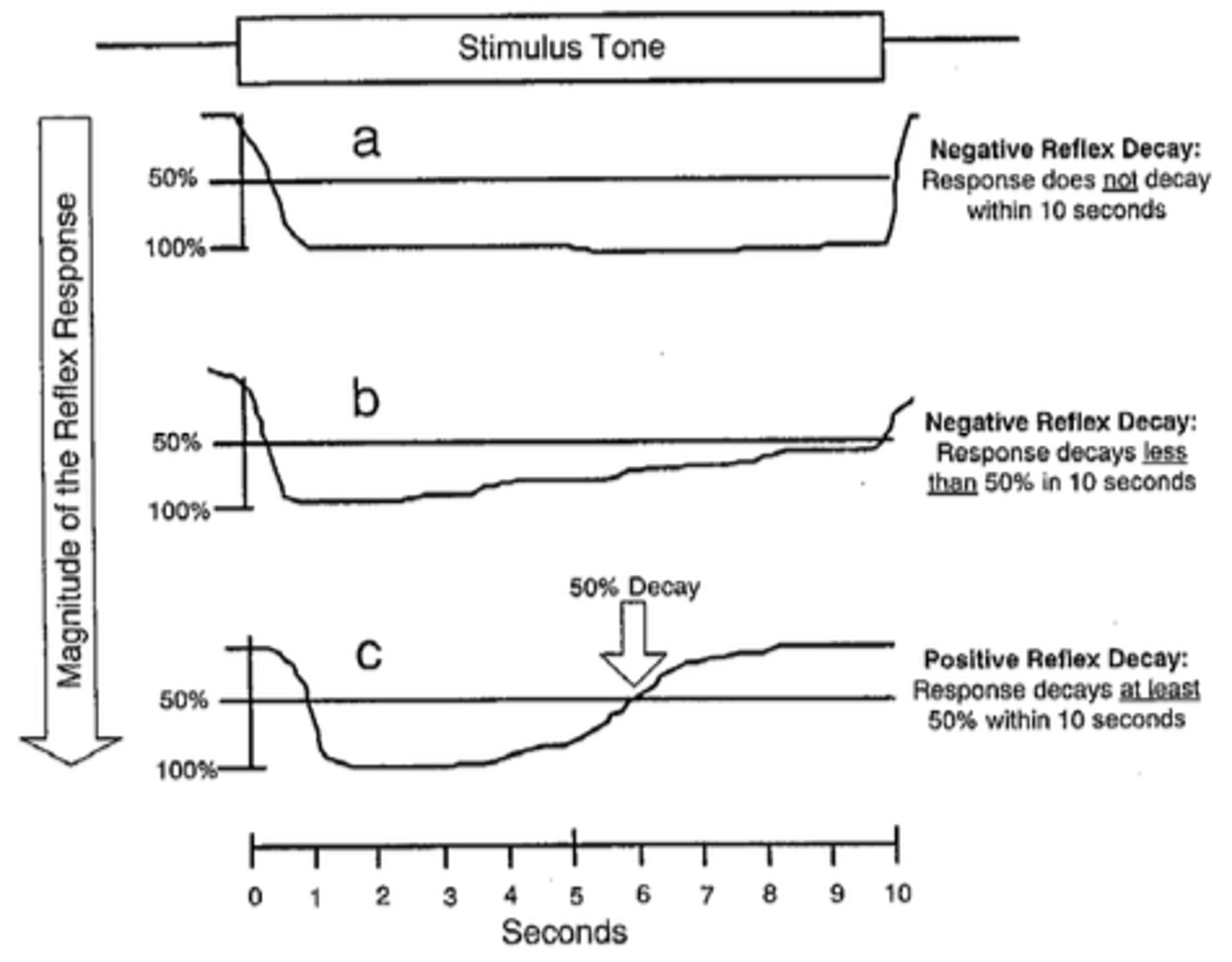
During acoustic reflex decay, how long is the tone presented?
10 seconds
How much acoustic reflex decay indicates a retrocochlear pathology?
>50% (comparison is made b/t the initial reflex and at the end of the 10 sec. window)
What is the purpose of the acoustic reflex?
To block the upward spread of masking of your own voice at low frequencies.
Does the acoustic reflex attenuate sounds at all frequencies equally?
No. It attenuates low sounds and a few high frequencies. Actually, at some frequencies the sounds are actually amplified (esp. at 1 KHz.)
The acoustic reflex is tested using what probe tone?
226 Hz.
What is AIED?
Auto-immune inner ear disease.
Describe normal or abnormal Romberg test.
Normal - patient should not fall or increase sway for 30 seconds.
Abnormal - patient has an increase in sway, stagger.
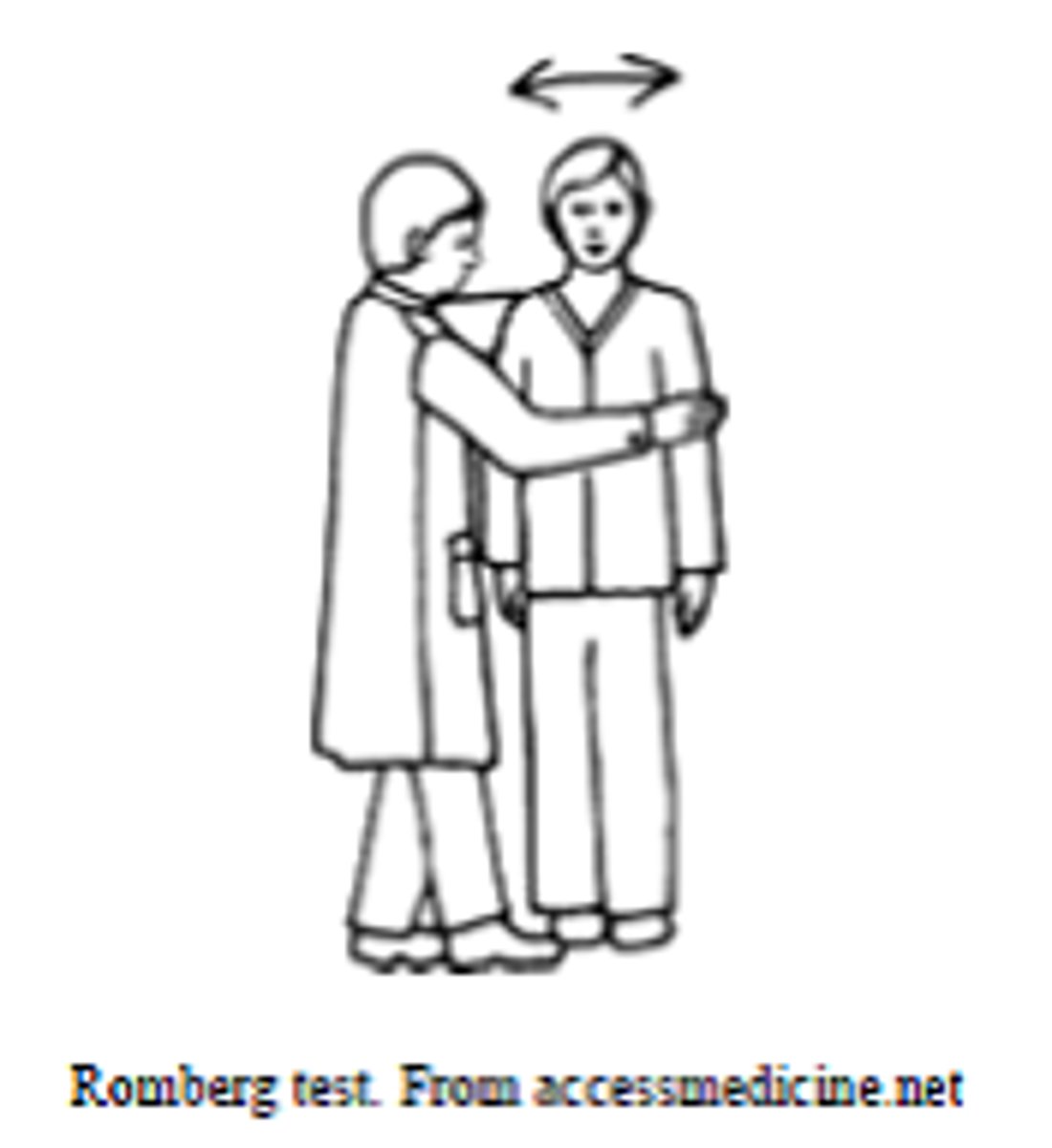
What is the site of lesion for an abnormal Romberg test?
Lower limb proprioceptive spinal reflex arc.
What is the WIPI test?
Word Intelligibility by Picture Identification (WIPI)
What are symptoms of Superior Canal Dehiscence?
1) imbalance,
2) sound-induced vertigo,
3) pulsatile tinnitus,
4) autophony,
5) aural fullness,
6) oscillopsia
What is innervated by the inferior vestibular nerve?
Saccule & posterior SCC. (Just think of the anatomy; inferior nerve innervates inferior parts. The posterior SCC is the most inferior of the canals & the saccule is inferior to the utricle.)
What would be considered an abnormal Fukada stepping test?
When the patient has a rotation of 30 degrees (for 50 steps) in either direction. (direction of rotation generally accepted as being side of weaker labrinth)
What is another name for the Fukada stepping test?
Unterberger test.
What are the 6 types of prebycusis?
1) sensory, 2) neural, 3) strial, 4) cochlear conductive, 5) mixed presbycusis, 5) intermediate presbycusis
What is vasovagal syncope?
When you have a sudden drop in heart rate and blood pressure leading to fainting. This is often the reaction to stressful trigger such as the sight of blood, fear or anxiety.
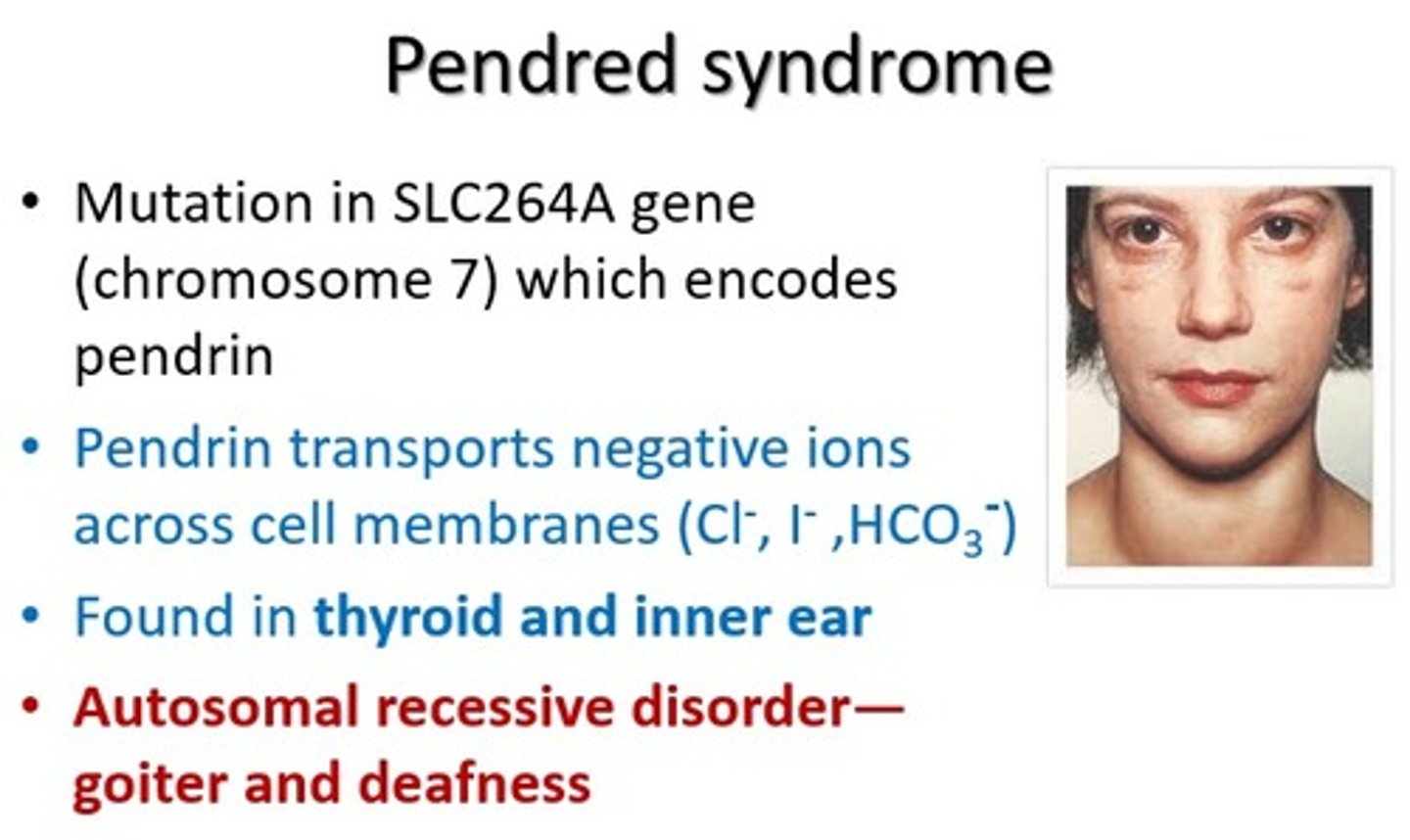
What are some symptoms of Pendred's syndrome?
SNHL
Thyroid problems
Kidney issues
What is Pendred syndrome?
Genetic disorder leading to congenital bilateral SNHL and goiter with euthyroid or mild hypothyroidism. (also known as Goiter-deafness syndrome)
How large of an asymmetry is needed before you can administer the Stenger test?
30 dB
Symptoms of otosclerosis.
Carhart's notch
type As tymp in affected ear
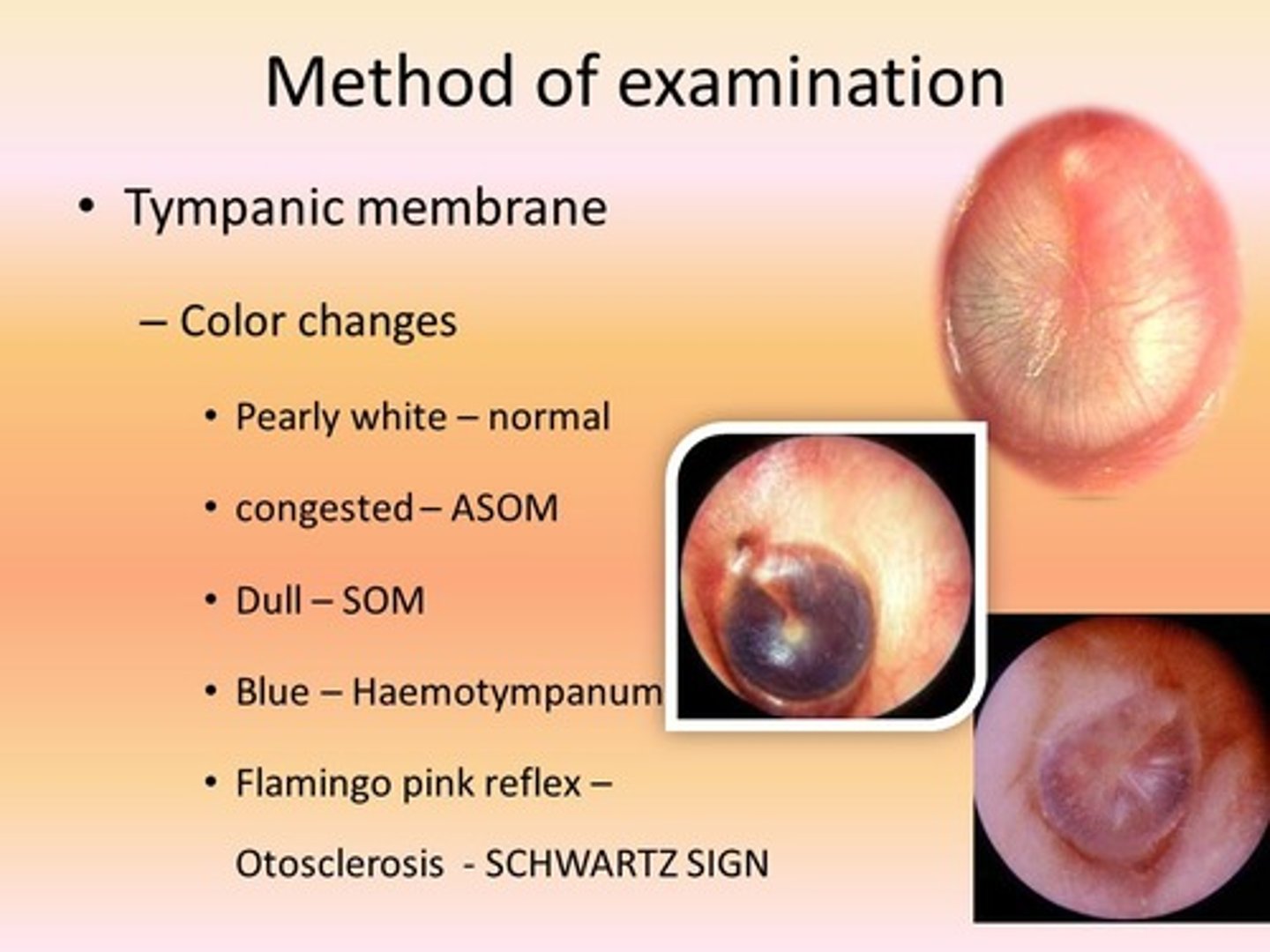
Schwartz sign
What is Schwartz sign in otosclerosis?
A pink color noted through the TM.
What is the COSI?
Client Oriented Scale of Improvement
An open-ended scale in which the client identifies up to 5 areas of listening difficulty (from a list of 16) upon which to focus for improvement
What is the APHAB?
Abbreviated Profile of Hearing Aid Benefit. The APHAB is a more clinical friendly measure of outcome.
What four subscales does the APHAB focus on?
The APHAB uses 24 items that focus on 4 subscales:
ease of communication
reverberation
background noise
aversiveness of sounds
What is the HAPI?
Hearing Aid Performance Inventory
What is the SADL?
Satisfaction with Amplification in Daily Life
What is the HHIA or HHIE?
Hearing Handicap Inventory for Adults (or Elderly). It is a 25 item questionnaire with 2 subscales (emotional consequences & social and situational effects) to measure the perceived effects of hearing loss.
There is a 10 question screener as well.
What is the MarkeTrak Satisfaction Survey?
It is a 48 item questionnaire with several subscales used to obtain the patient's satisfaction as it relates to specific hearing aid features and listening environments.
It is published every four years.
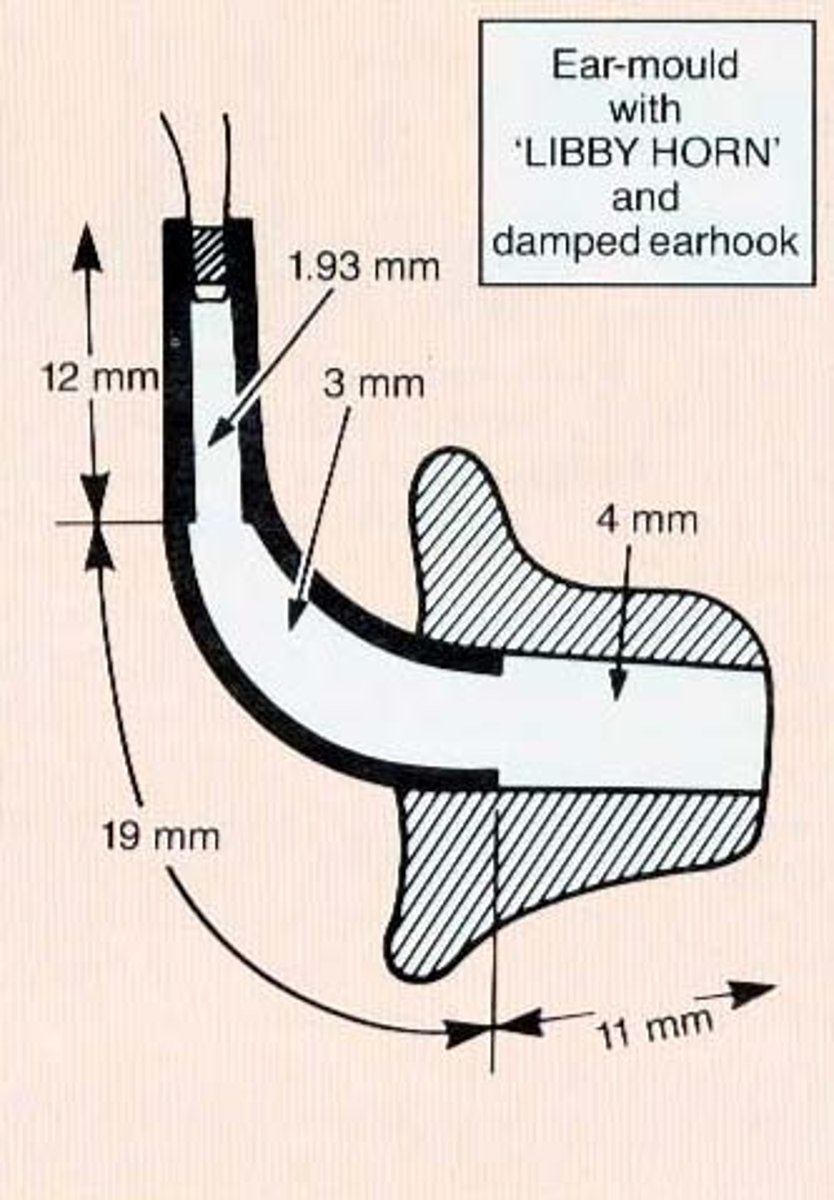
Purpose of a Libby horn.
Increase high frequency response.
How many sweeps should you take when performing an ABR?
800 (minimum) - 2,000
What is the mathematical formula related to fmp in ABR testing?
Fmp ~ (S/N)^2 (signal-to-noise ratio squared)