Genetic Controls
 Call Kai
 Learn
Learn Practice Test
 Spaced Repetition
 Match
Match Flashcards
 Knowt Play
 Podcast
1/6

Name | Mastery | Learn | Test | Matching | Spaced | Call with Kai | Chat |
|---|
No analytics yet
Send a link to your students to track their progress
7 Terms
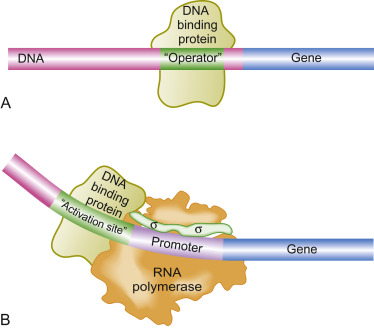
Controlling Gene Expression
Genes can be turned off (repressed) so that the protein is not made.
→ Different cells have different genes turned on.Repressor proteins: bind to a specific DNA sequence called an operator found close to the gene.
→ This prevents binding of RNA polymerase.The repressor needs to be inactivated to turn genes on.
→ Other proteins can prevent repressor proteins from binding or from being made.
→ Chemicals, drugs, and hormones can denature the repressor protein.2 classes of genes:
Structural genes: encode proteins for metabolism and structures.
Regulator genes: encode repressors and other regulating proteins
Mutation
Mutation: a change in the DNA sequence
If you change the gene, you change the RNA, and therefore, change the protein.
Somatic mutation: a mutation occurring in body cells, affects single cells only, and is not inherited by offspring.
Germ-line mutation: a mutation occurring in gametes (sperm and eggs) that affects all the cells of an offspring and can be inherited by future generations.
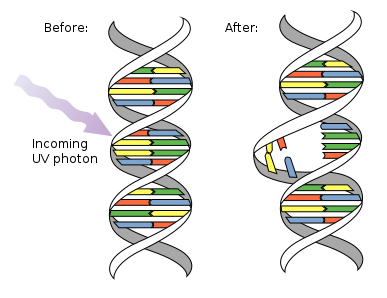
Mutagenic agents
Cause mutations
Radiation: UV, X-rays, gamma rays
Chemicals: benzene, acetone, nicotine
Viruses: insert DNA
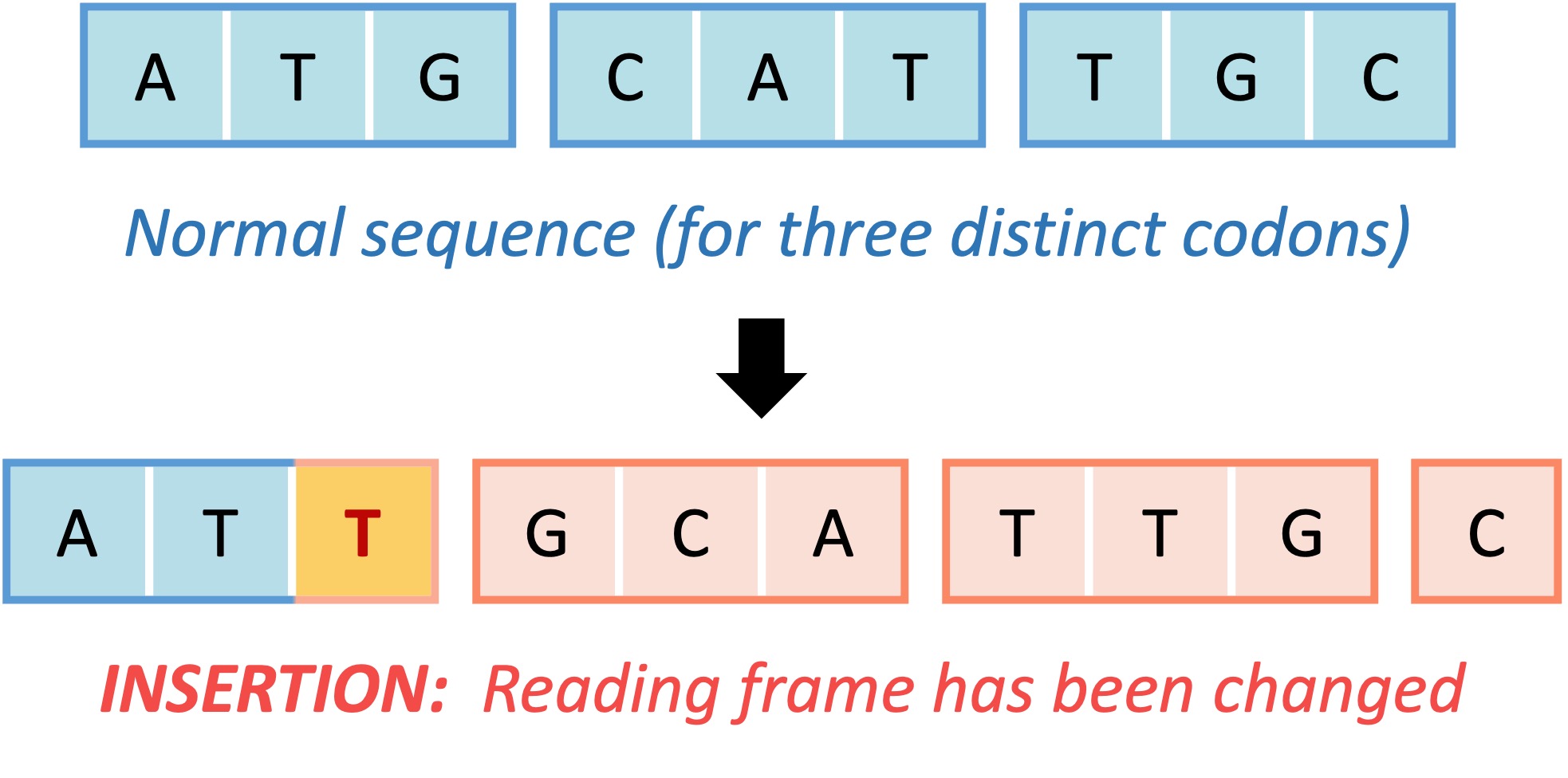
Frameshift mutation
Single bases can be added or deleted.
This alters the ribosomal reading frames, resulting in significant problems in translation.
Substitution mutation
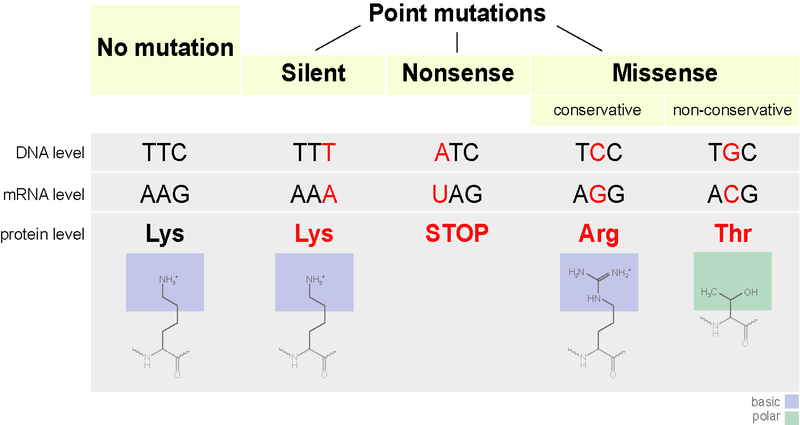
One base pair is replaced by another, potentially altering a single amino acid in the protein.
Lead to silent, missense, or nonsense mutations, depending on the impact on the resulting protein.
Chromosomal mutation
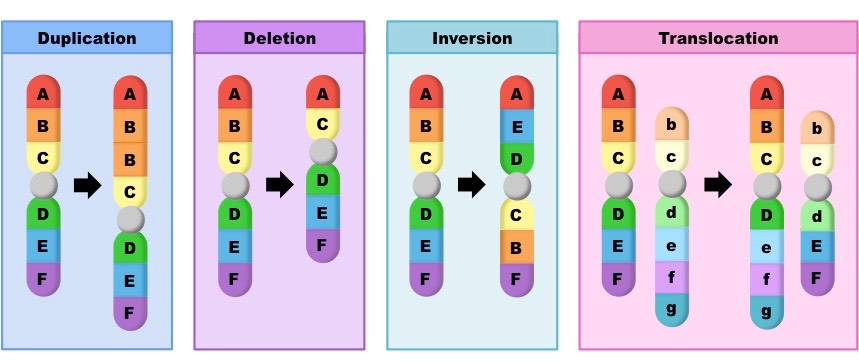
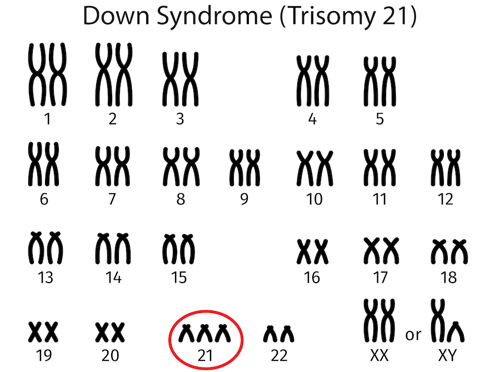
Entire or partial chromosomes can be deleted from or added to the cell, often during cell division.
→ Ex: Down’s Syndrome is caused by an extra chromosome 21.
Effects of Mutations
The good, the bad, and the invisible.
A mutation is positive if the protein works better.
A mutation is negative if the protein works worse.
A mutation is neutral if the protein is unaffected.
→ There is a redundancy in the codons.
→ If a mutation is in the “junk DNA”, it is not expressed.