Research methods
 Studied by 0 people
 Call with Kai
 Learn
Learn Practice Test
 Spaced Repetition
 Match
Match Flashcards
 Knowt Play
1/79

There's no tags or description
Looks like no tags are added yet.
Name | Mastery | Learn | Test | Matching | Spaced | Call with Kai |
|---|
No study sessions yet.
80 Terms
Experimental method
involves the maniplation of an IV to measure the effect on the DV
experiments may be labortary, field, natural or quasi
Aim
the purpose of the study
begins with To investigate…
Hypothesis
a statement that states the relationship between the variables to be investigated
directional hypothesis
states there is a difference and the direction (increase or decrease)
non directional hypothesis
states there is a difference between variables but does not specify the direction of the difference.
independent variable
aspect of the experiment that is manipulated
dependent variable
the variable that is measured
operationalisation
clearly defining variables to make them testable
Extraneous variables
any variable other than the IV that may affect the DV
Confounding variables
a variable that influences both the DV and IV, leading to a false association
demand charactersitsics
clue in a study that give away what the researcher wants to find out
null hypothesis
A null hypothesis says there will be no difference/ relationship found.
primary data
information that has been obtained first hand by the researcher for the purposes of a research project
secondary data
information that has already been collected by someone else and so pre-dates the current research project
quantitative data
data that can be counted, usually reported as numbers
qualitative data
data that is expressed in words and is non-numerical
pilot studies
A pilot study is a small-scale trial of the actual study
This usually involves a small selection of participants
To check the procedure and spot any potential issues
So that the study can be modified before the real study, which saves time and money
randomisation
the use of chance in order to control for the effects of bias (particularly investigator effects) when designing materials and deciding the order of conditions
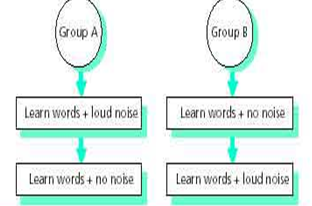
counterbalancing
this is used to reduce order effects in a repeated measure design, where participants complete the conditions in different orders to balance out order effects
controlling variables
random allocation
single blind technique
double blind technique
standardisation
random allocation
means that all participants should have an equal chance of being in one condition as any other
single blind technique
this is used to reduce demand characteristics, and is when participants are not aware of the aim and certain details of the study, such as the condition that they are in
in Milgram’s experiment, the participants were told that the aim of the study was to study memory, but actually it was a study of obedience.
double blind technique
this is used to reduce demand characteristics and investigator effects
Both the participants and the researcher who collects the data are unaware of the aims of the study.
This means that a third party is used to carry out the experiment
standardisation
using exactly the same formalised procedures and instructions for all participants in a research study, so that all individuals have the same experience
laboratory experiment
these are carried out in a controlled environment, such as a lab or a classroom.
The researcher manipulates the IV and measures the DV, whilst controlling EVs.
strengths of lab experiments
+High control of variables, which improves the internal validity of the results. +High levels of control also means lab experiments are generally easier to replicate. |
weaknesses of lab experiments
-Lab experiments often have tasks with low mundane realism as they do not represent real-life experience (e.g. lists of words do not represent memory in the real world). Therefore, this lessens the generalisability of findings and the external validity. -Participants are aware they’re being studied so demand characteristics are more likely. |
field experiment
these are carried out in a more natural, everyday setting (in the field).
The researcher manipulates the IV and measures the DV. E.g. Bickman.
strengths of field experiments
+Higher mundane realism (and therefore higher external validity) as is carried out in a more natural setting. +Participants are often unaware they are taking part in research, which reduces demand characteristics. |
weaknesses of field experiments
-There is less control of EVs in a field experiment as the environment is natural. This reduces the internal validity. |
- If participants are unaware that they’re being studied then this raises ethical issues regarding informed consent.
natural experiments
The research does not need to take place in a natural setting to be a natural experiment, these can be carried out in controlled settings.
However, to be a natural experiment, the IV must be naturally occurring and the researcher takes advantage of this.
E.g. Rutter (he did not manipulate the age of adoption, this happened naturally, and he then uses this as his IV).
strengths of natural experiments
+Natural experiments often have high external validity as they involve the study of real life issues. +These experiments allow us to study issues we would not ethically be able to study otherwise (e.g. the effects of institutionalisation). |
weaknesses of natural experiements
-There is less control of EVs than a lab experiment, and the researcher is not in control of allocation to groups which also reduces control. This reduces the internal validity. -Opportunities for natural experiments arise rarely, limiting opportunities for research and replications. |
quasi experiement
this experiment is often carried out in controlled settings.
The IV is pre-existing and has not been and cannot be easily manipulated or change e.g. age or gender.
E.g. Neto’s study of gender differences in conformity (gender is the pre-existing IV that is difficult to change).
strengths of quasi experiements
+Often carried out in controlled settings, so there is usually high control of variables, which improves the internal validity of the results. +High levels of control also means lab experiments are generally easier to replicate. |
weaknesses of quasi experiments
-There is less control of EVs than a lab experiment, and the researcher is not in control of allocation to groups which also reduces control. This reduces the internal validity. -Research carried out in controlled settings often use tasks with low mundane realism which do not represent real-life experience (e.g. word lists do not represent memory in the real world). This lessens the generalisability and external validity of findings. |
what are observations
you can see what a person does without having to ask them
naturalistic observations
watching and recording behaviour in the setting within which it would normally occur
strengths of naturalistic observations
+Higher external validity as behaviour is studied in its natural setting. |
weaknesses of naturalistic observations
-Less control making it harder to replicate |
-Less control also means there are more likely to be extraneous variables that influence the outcome, reducing the internal validity.
controlled observation
watching and recording behaviour within a structured environment, where some variables can be managed
strengths of controlled observations
+Higher levels of control mean these are easier to replicate. +Higher levels of control can reduce extraneous variables, increasing the internal validity. |
weaknesses of controlled observations
-Lower external validity, as the controlled situation may lead to less natural behaviour and make it harder to apply findings to the real world. |
covert observation
participants’ behaviour is watched and recorded without their knowledge or consent
strengths of covert observations
+Lower demand characteristics/participant reactivity as participants are unaware they are being observed, so higher internal validity.
weaknesses of covert observations
-There are ethical concerns with observing and recording participants behaviours without their knowledge or consent. This can therefore only take place in public places (although this till raises ethical concerns!).
overt observations
Participants’ behaviour is watched and recorded with their knowledge and consent
strengths of overt observations
+More ethical than covert observation as informed consent is gathered.
weaknesses of overt observations
-Participants are aware they are being observed so demand characteristics/participant reactivity is more likely to effect the results, reducing the internal validity. |
participant obeservation
the researcher becomes a member of the group whose behaviour he/she is watching and recording
strengths of participant observation
+By experiencing the same situations as the participants, the experimenter may gain a greater insight and understanding of the behaviours they are studying. |
weaknesses of particpant observation
-Researchers may become too involved with the study/participants and may lose their objectivity. In some cases, they may “go native”, where the line between being a researcher and participant becomes blurred. |
non participant observation
the researcher remains outside of the groups whose behaviour he/she is watching and recording
strengths of non participant observation
+Researchers are more objective as they maintain a safe distance from the participants. There is less risk of them “going native” than during participant observation. |
weaknesses of non participant observation
-Researchers lose the valuable insights they gain from participant observation, as they are observing the behaviour as an outsider and are not experiencing the behaviours themselves. |
what are self report techniques
These involve asking people to state or explain their own feelings, opinions, behaviours and/or experiences related to a given topic.
questionaires
Pre-set list of questions in which participants answer. Can be constructed of open (qualitative data) or closed (quantitative data) questions.
strengths of questionaires
Gather lots of data quickly which is straight forward to analyse if the questions are closed.
Can be completed without the researcher being present which can save time and money.
weaknesses of questionaires
Respondent’s answers may not always be truthful.
Social Desirability Bias: They may answer to make themselves look better/normal.
Yes-saying/Leading Questions: Produce response bias as people are more likely to agree with any statement, regardless of what it says, especially when in doubt.
structured interview
Made up of a pre-determined set of questions that are asked in a fixed order.
strengths of structured interviews
interviewer can clarify misconceptions and can see if participants are telling the truth through observing reactions.
Easy to replicate and large sample can be obtained, resulting in the findings being representative and having the ability to be generalized to a large population.
weaknesses of structured interviews
Not flexible and answers may lack detail.
Yes-saying/Leading Questions: Produce response bias as people are more likely to agree with any statement, regardless of what it says, especially when in doubt.
unstructured interview
No pre-set questions, just topics to consider which allows questions based on interviewees’ responses.
strengths of unstructured interviews
Interviewer can clarify misconceptions and can see if participants are telling the truth through observing reactions.
More flexibility meaning richer, detailed data is gained.
weaknesses of unstructured interviews
Data analysis is complicated.
Risk that the interviewees may lie for reasons of social desirability.
random sampling
obtaining a sample from a population in a way which is the least bias
ever member of the population has an equal chance of being selected
put population in a hat and drawing them one at a time
strengths of random sampling
eliminates researcher bias- no control over who is selected in the sample
fairly representative- findings can be generalised
limitations of random sampling
can be time consuming and impracting- not possible to get access to info on a target population
can result in a non representative sample
systematic sampling
involves selecting every nth person from a list to make a sample
strengths of systematic sampling
Unbiased sampling technique - researcher has no control over where pps are placed on population list- sampling is more representative
weaknesses of systematic sampling
A researcher using systematic sampling has to know the size of the population to generate the optimum sample size
Without this information the sample may lack generalisability
stratified sampling
generates a small scale reproduction of the target population
target population is divided into categorised characteristics required by research:
age, gender, education level
the pop is sampled within each category to the overall total
strengths of stratified sampling
representative- is based on exact proportions of target pop, easy to generalise data from the sample to wider pop
weaknesses of stratified sampling
time consuming, not always possible to get access to all the information on a target population
opportunity sampling
Researcher obtaining their sample from those who are present and available at the time and who are willing to take part in research
Strengths of opportunity sampling
The 'convenience' aspect of opportunity sampling is a strength as it is a quick and easy way of obtaining participants for a study
weaknesses of opportunity sampling
It is not possible to generalise from an opportunity sample as the sample only represents those who were available and willing to participate at the time
volunteer sampling
involves people actively selecting themselves to participate in a study i.e. they volunteer to take part
strengths of volunteer sampling
This technique is quick, easy and cost-effective
It is one of the most used (probably the most popular) sampling techniques by psychologists
Limitations of volunteer sampling
This technique is prone to volunteer bias
The results are not easy to generalise as volunteer participants often have personality traits in common e.g. sociable, outgoing etc