Middle Ages
 Call Kai
 Learn
Learn Practice Test
 Spaced Repetition
 Match
Match Flashcards
 Knowt Play
1/46

There's no tags or description
Looks like no tags are added yet.
Name | Mastery | Learn | Test | Matching | Spaced | Call with Kai | Chat |
|---|
No analytics yet
Send a link to your students to track their progress
47 Terms
Franks
Strongest Germanic people who united Europe after fall of Rome
monastery
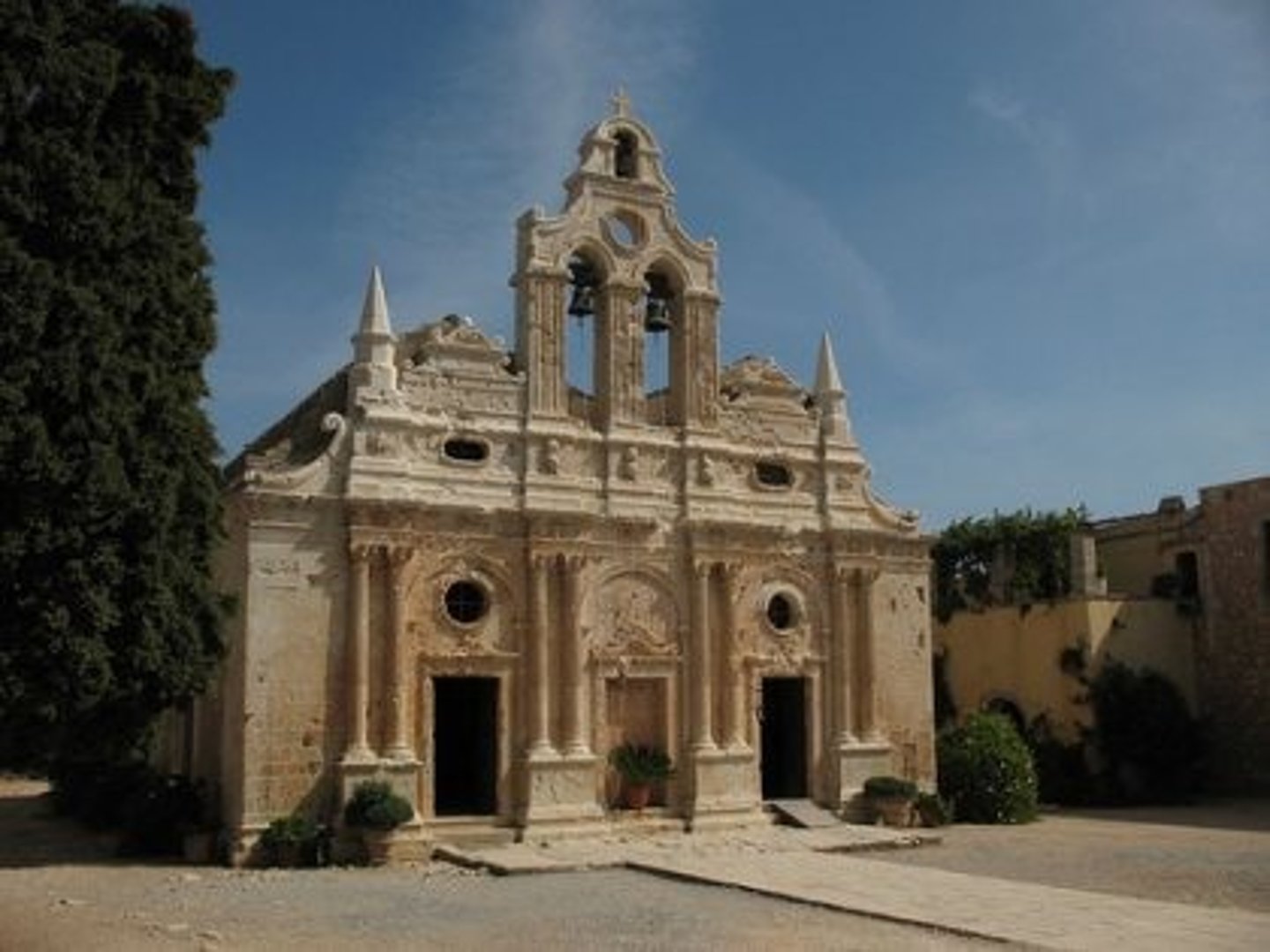
a religious community of men (monks) who have given up their possessions to devote themselves to a life of prayer and worship (convent is equivalent for women/nuns)
Charlemagne
(Charles the Great)
-built an empire greater than any known since ancient Rome in the city of Aachen
-led his armies against enemies that surrounded his kingdom
-fought Muslims in Spain and tribes from other Germanic kingdoms
-conquered new lands to both south and east, spread Christianity
-reunited western Europe, larger than byzantine, most powerful king in western Europe
-strengthened royal power by limiting authority of the nobles
-Pope made him King of the Holy Roman Empire
Fief
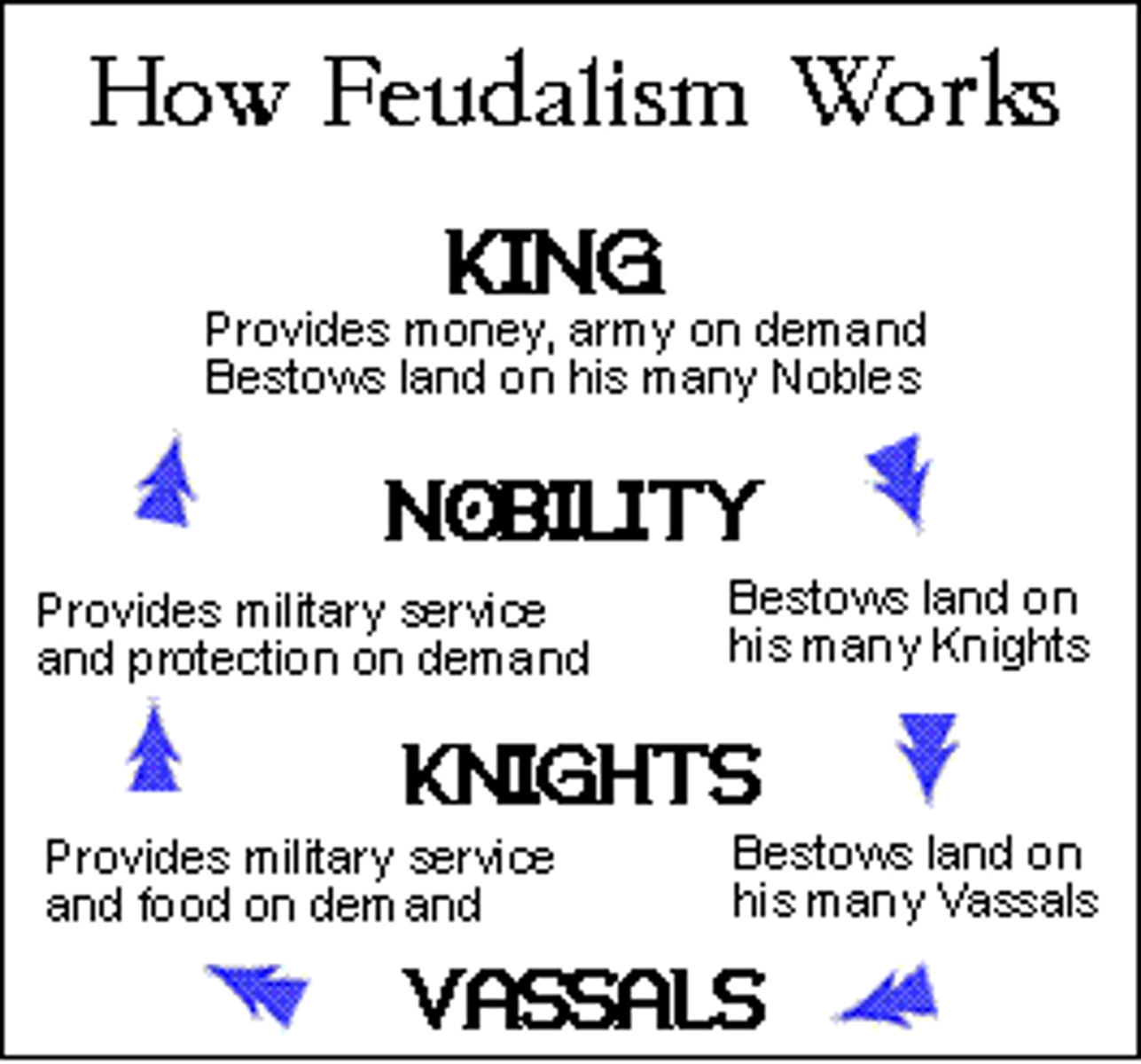
an estate granted to a vassal by a lord under the feudal system in medieval europe
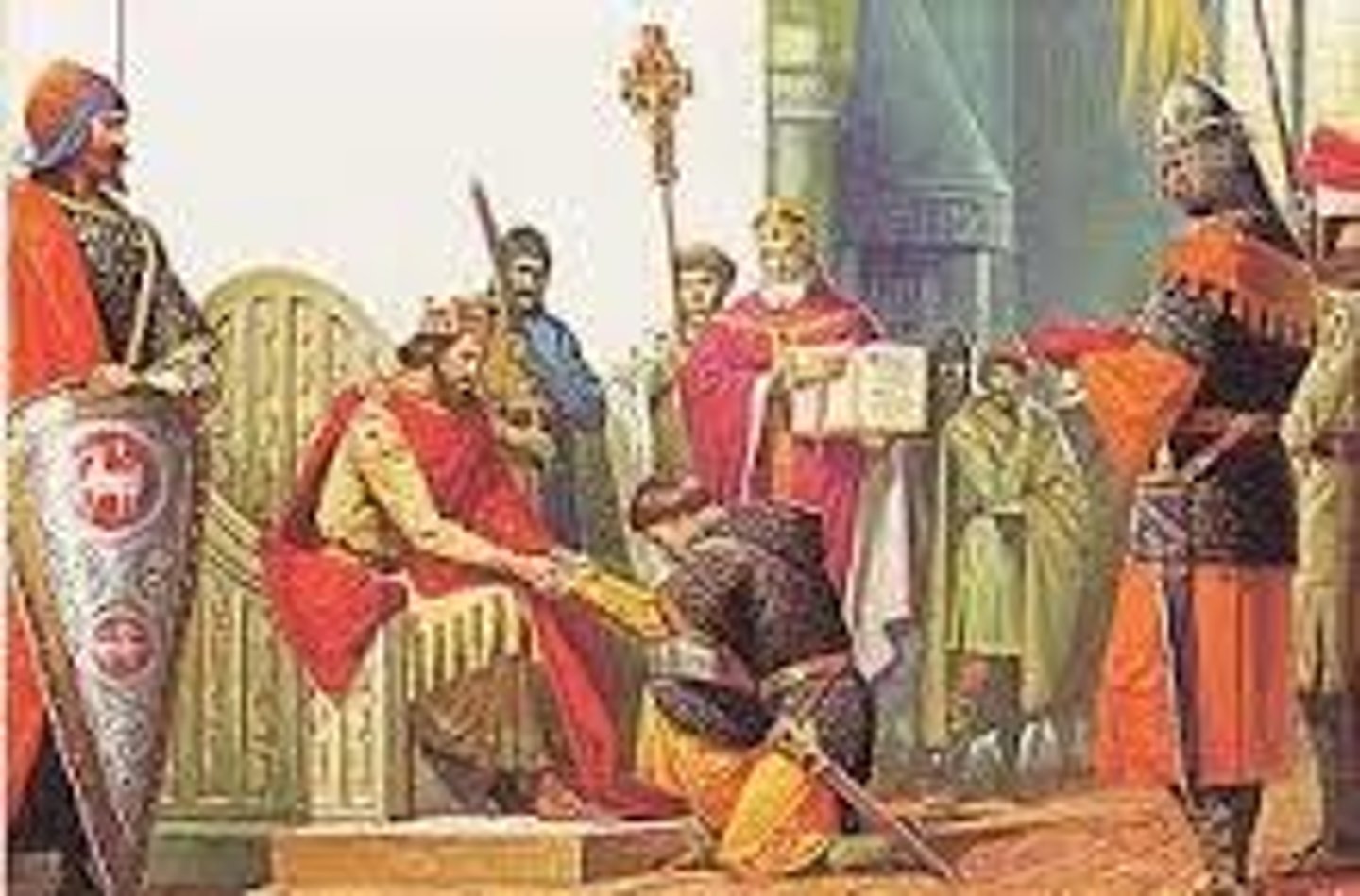
vassal
a person who received a grant from a lord in exchange for a pledge of loyalty and services, right under kings in feudal pyramid (wealthy landowners such as nobles and bishops)
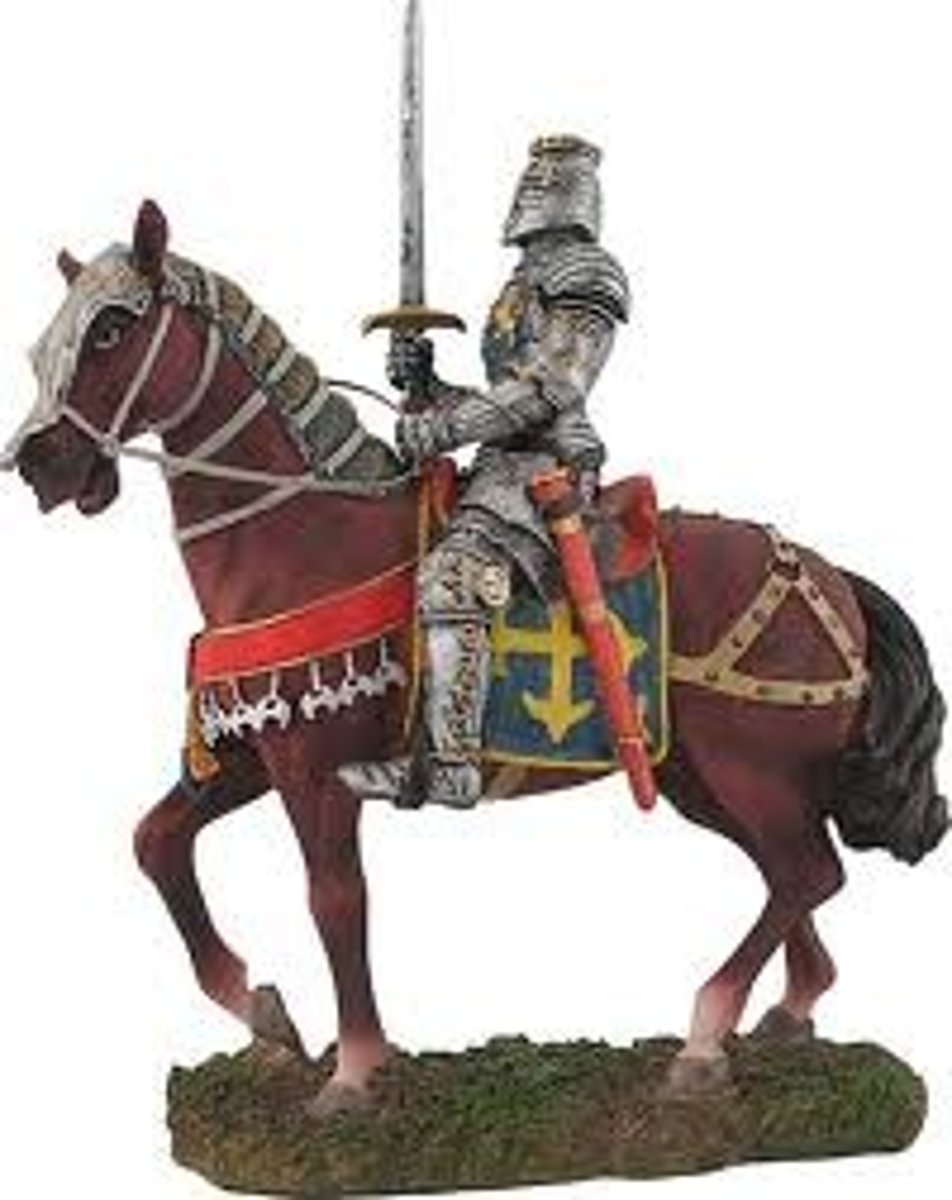
knight
an armored warrior who fought on horseback, served beneath the vassals, pledged to defend their lords' lands in exchange for fiefs
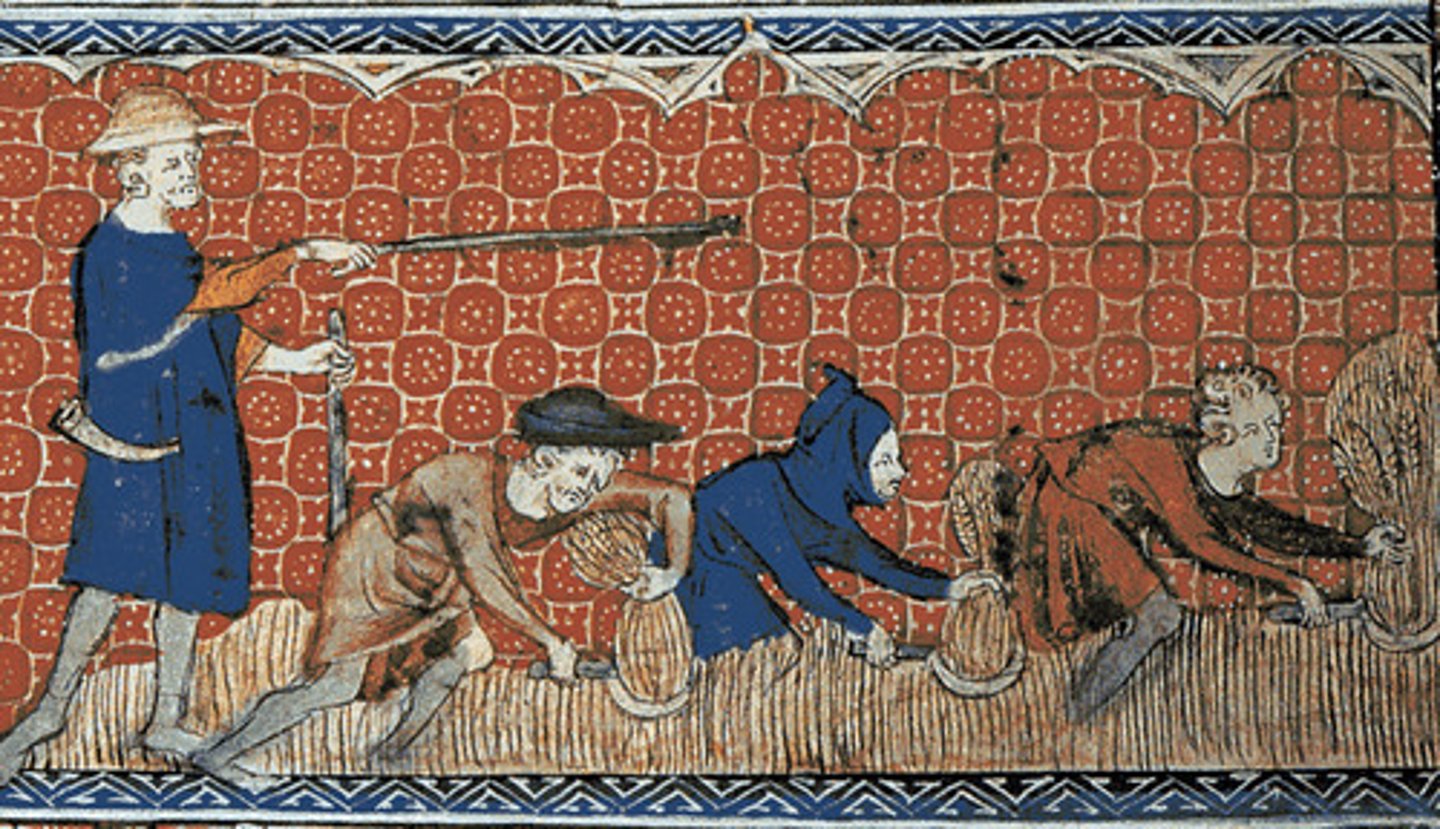
serf
a medieval peasant legally bound to live on a lord's estate, could not lawfully leave the place where they were born, what their labor produced belonged to the lord, peasants, majority of population, owed taxes to the lord and the church
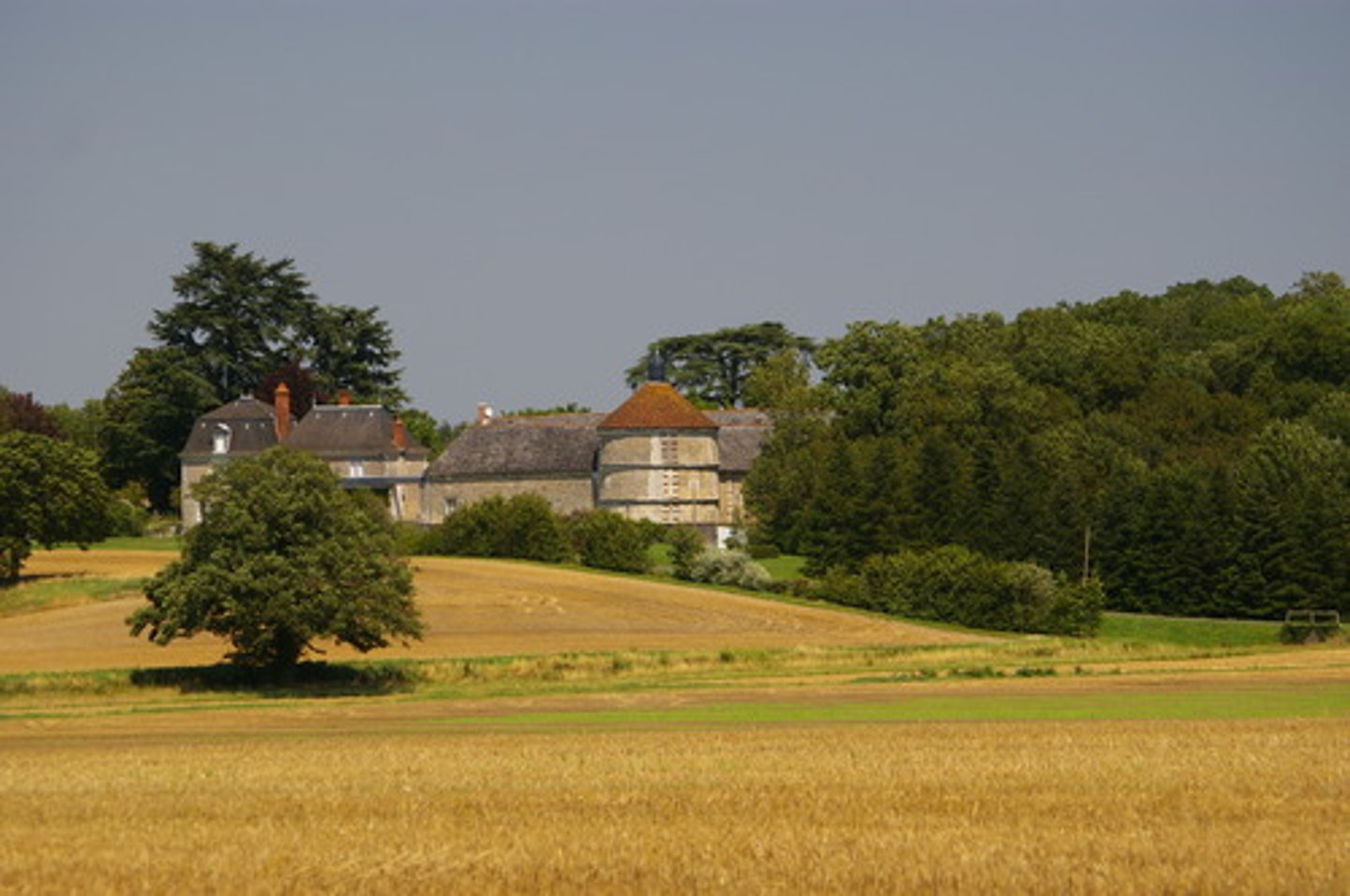
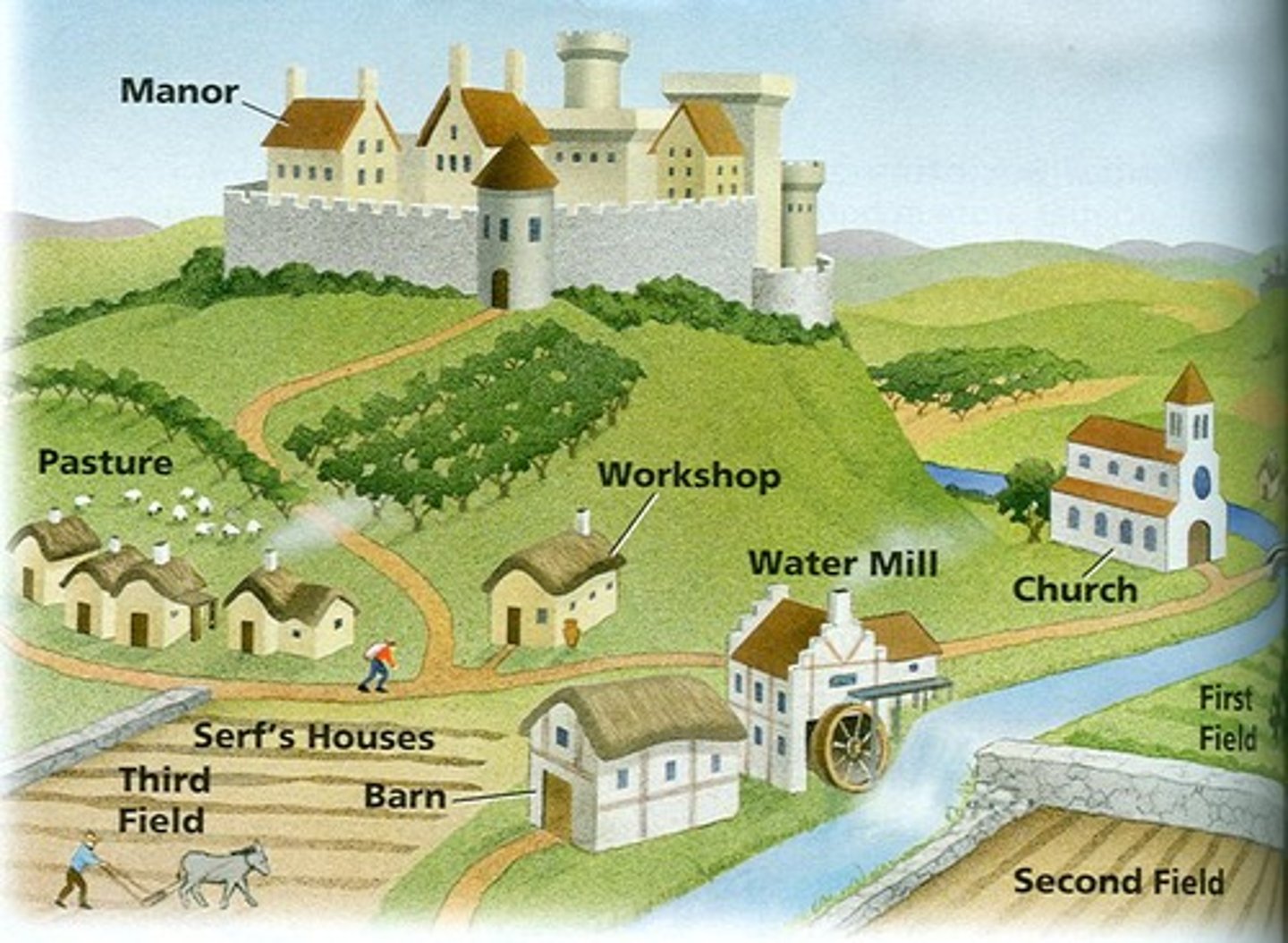
manor
a lord's estate
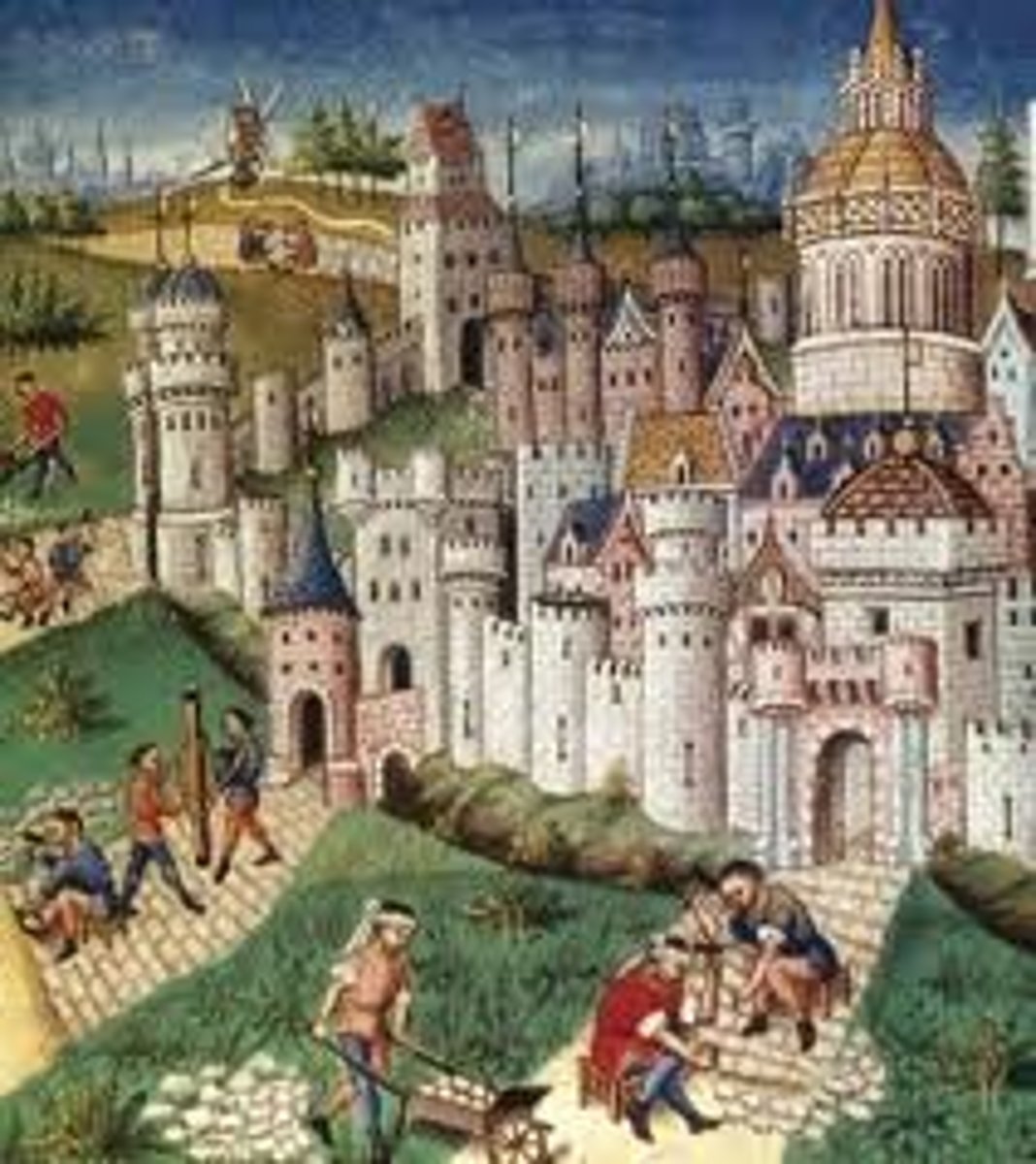
during middle ages, manor system was the basic economic arrangement, rested on a set of rights and obligations between a lord and his serfs, lord provided serfs w/housing, farmland, protection, serfs tended to lord's lands, cared for animals, and performed other tasks to maintain estate
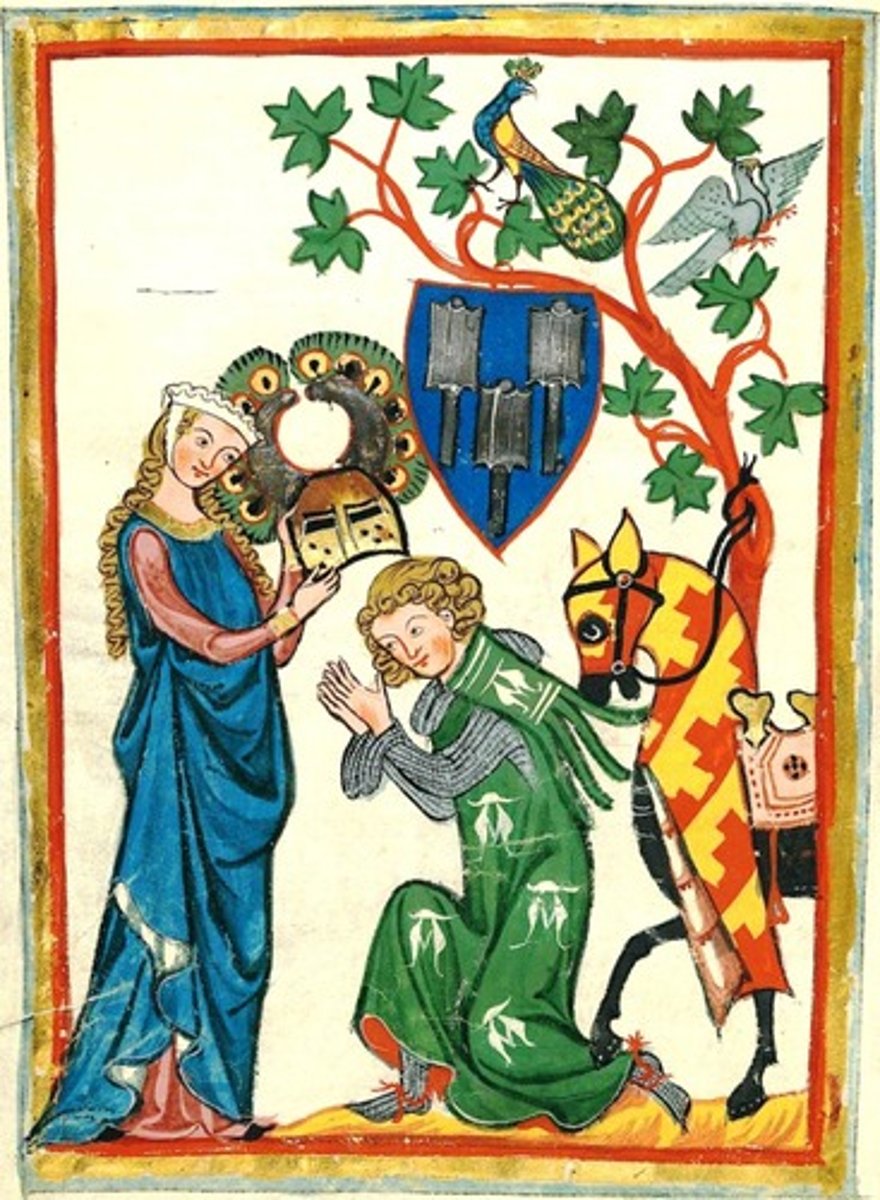
Chivalry
a code of behavior for knights in medieval europe, stressing ideals such as courage, loyalty, and devotion
complex set of ideals demanded that a knight fight bravely in defense of three masters; devoted himself to his earthly feudal lord, his heavenly Lord, and his chosen lady
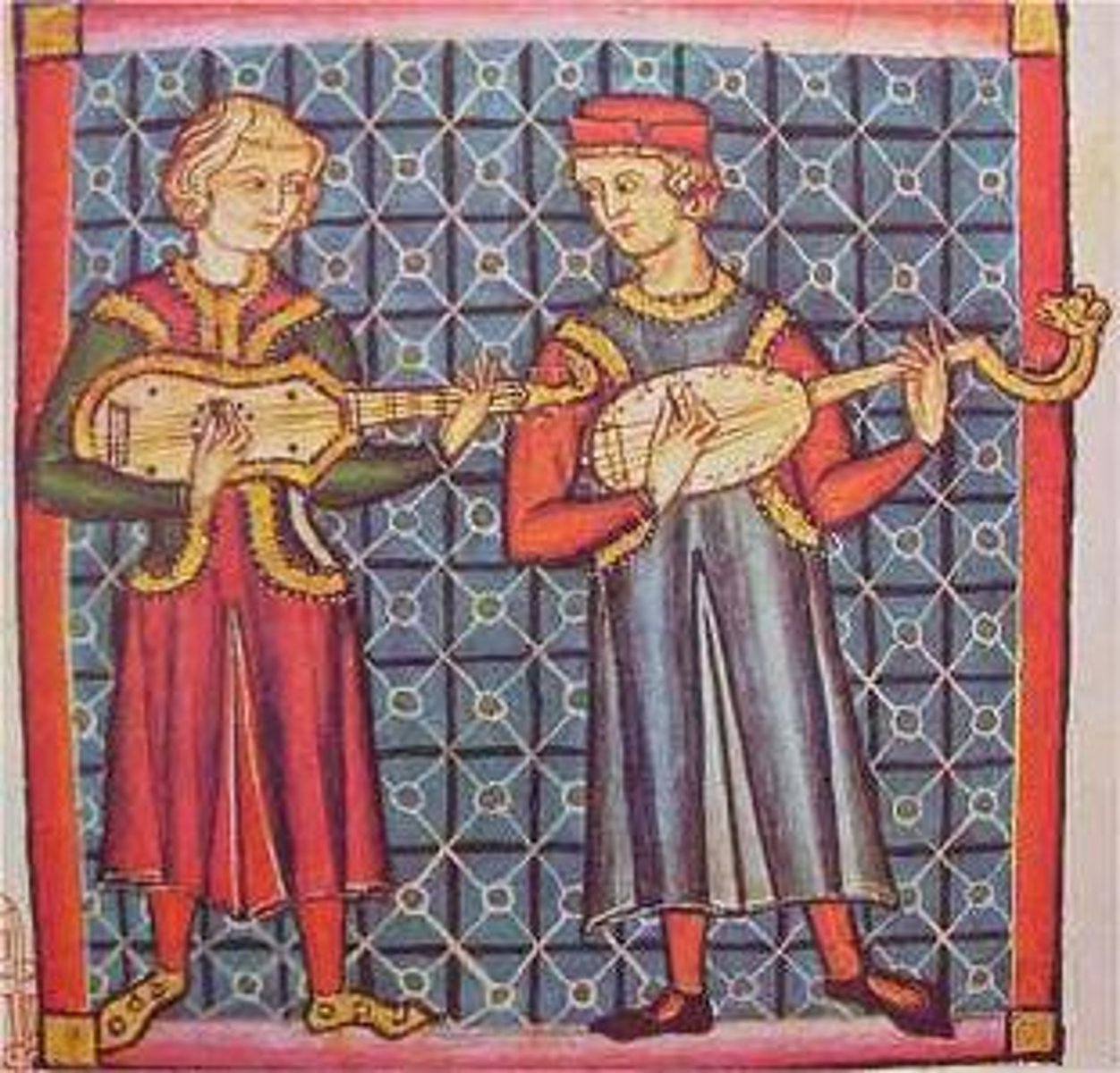
troubadour
a medieval poet and musician who traveled from place to place, entertaining people with songs of courtly love, sometimes sang own verses in the castles of their lady, sent roving minstrels to carry their songs to courts, in troubadour's eyes, noblewomen were always beautiful and pure
clergy
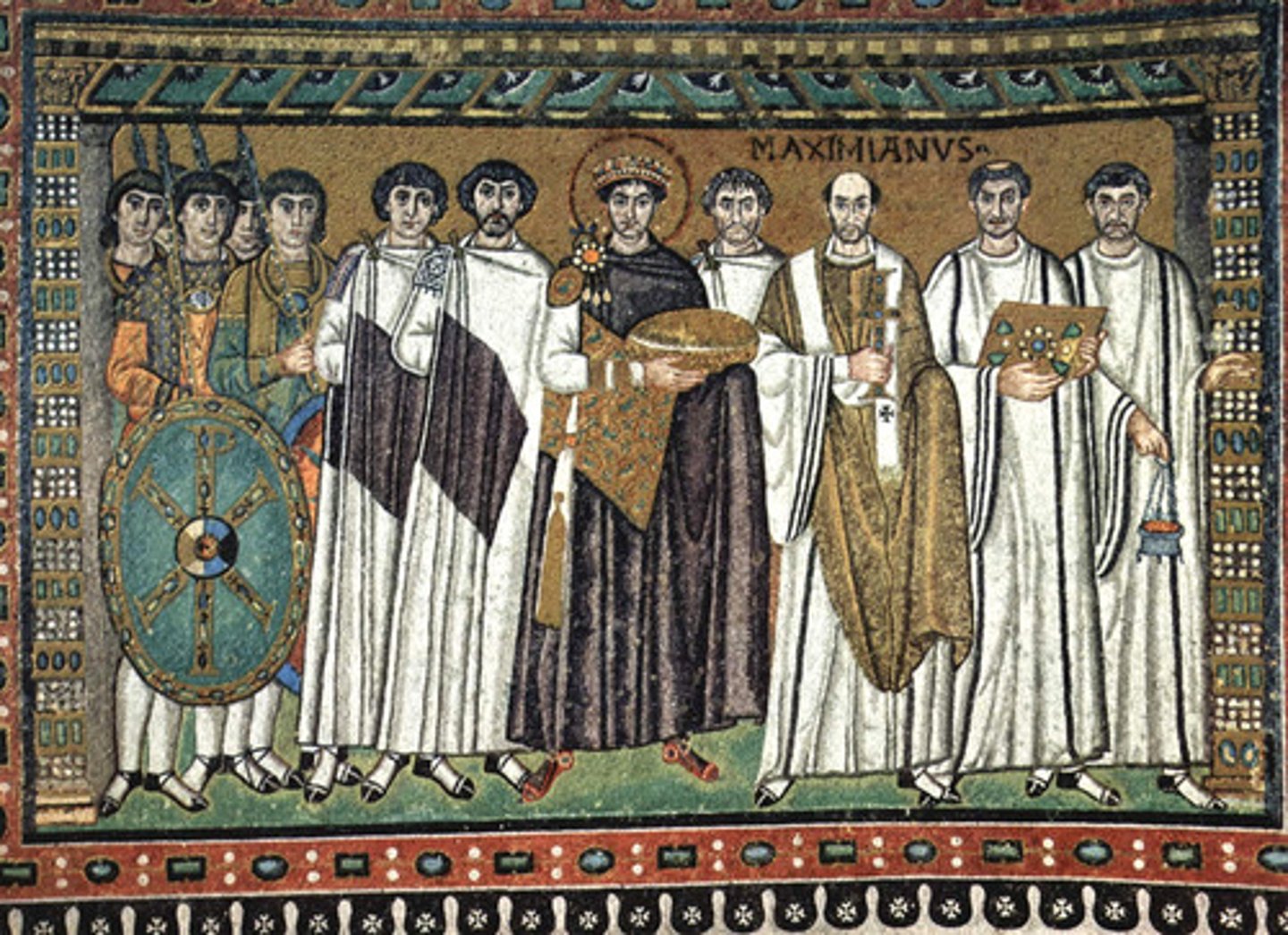
a body of officials who perform religious services--such as priests, ministers, or rabbis, church structure consisted of different ranks of clergy, all clergy fell under the authority of the pope
sacrament
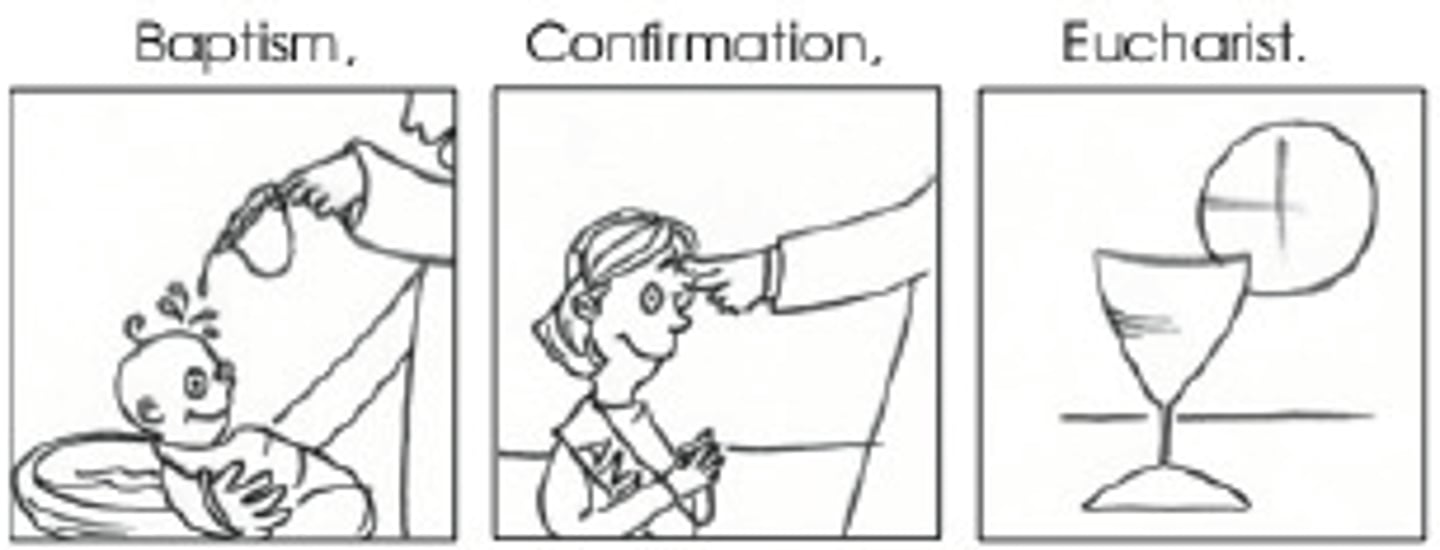
important religious ceremonies administered by the clergy, these rites paved the way for achieving salvation (baptism - ppl became part of the Christian community)
canon law
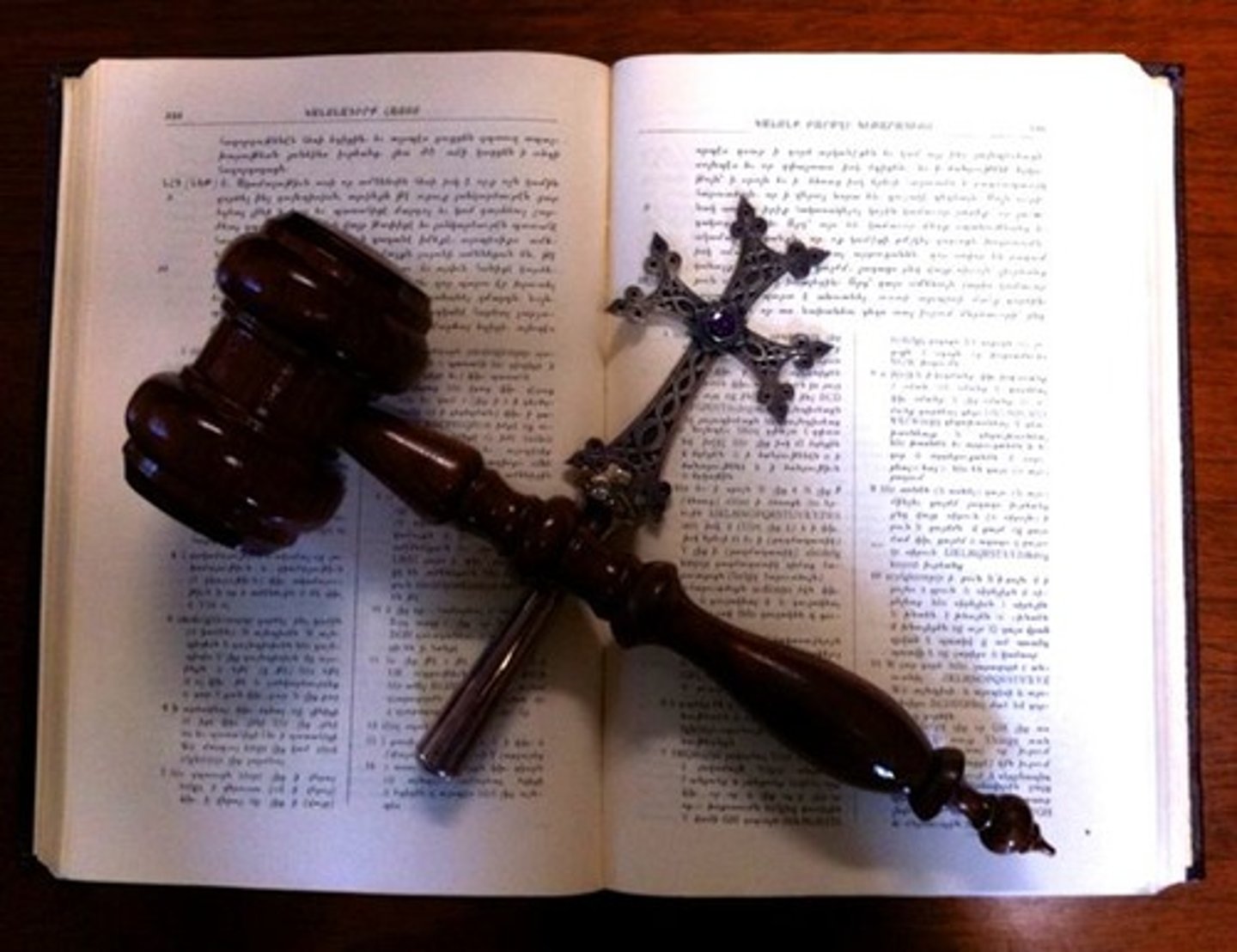
the body of laws governing the religious practices of a christian church (marriages/religious), church established courts to try people accused of violating canon law
Holy Roman Empire
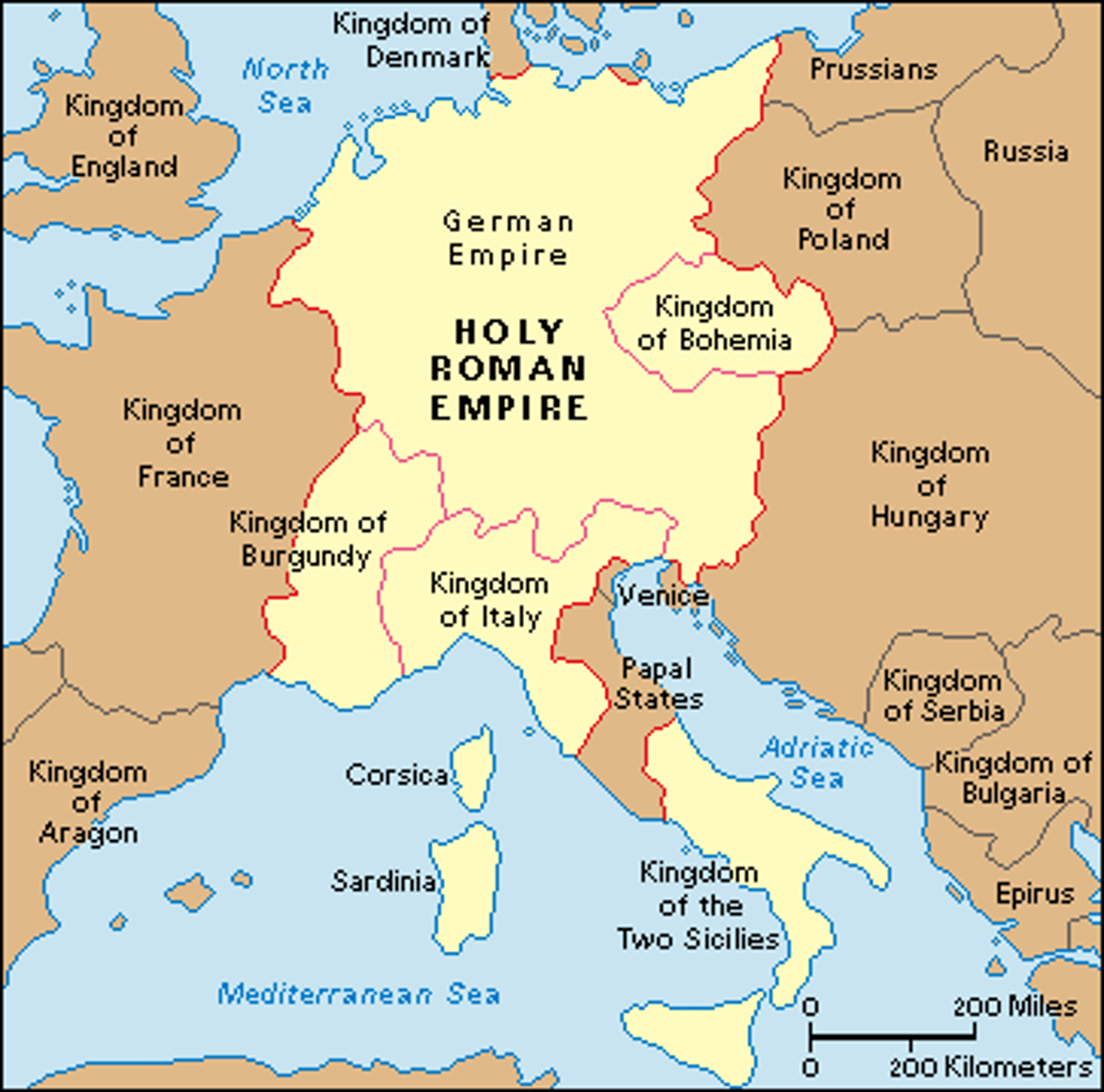
an empire established in Europe in the 10th century A.D., originally consisting mainly of lands in what is now Germany and Italy, created by Otto I, remained strongest state in Europe until about 1100, otto's attempt to revive Charlemagne's empire caused trouble for future German leaders, popes and italian nobles resented German power over italy
lay investiture
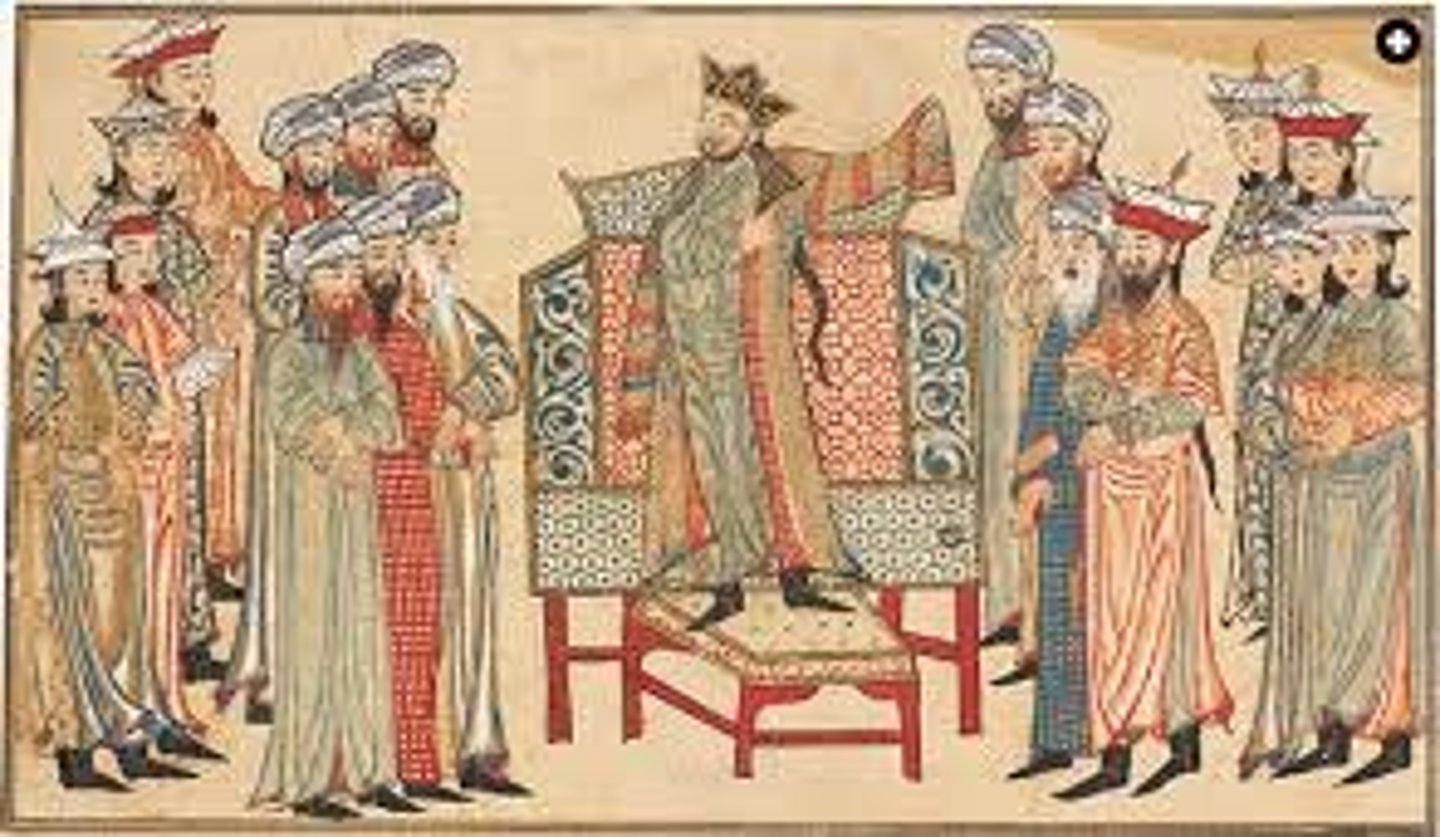
the appointment of religious officials by kings or nobles, whoever controlled lay investiture held the real power in naming bishops, who were very influential clergy that kings sought to control, church reformers felt that kings should not have that power, in 1075 pope gregory vii banned lay investiture
three-field system
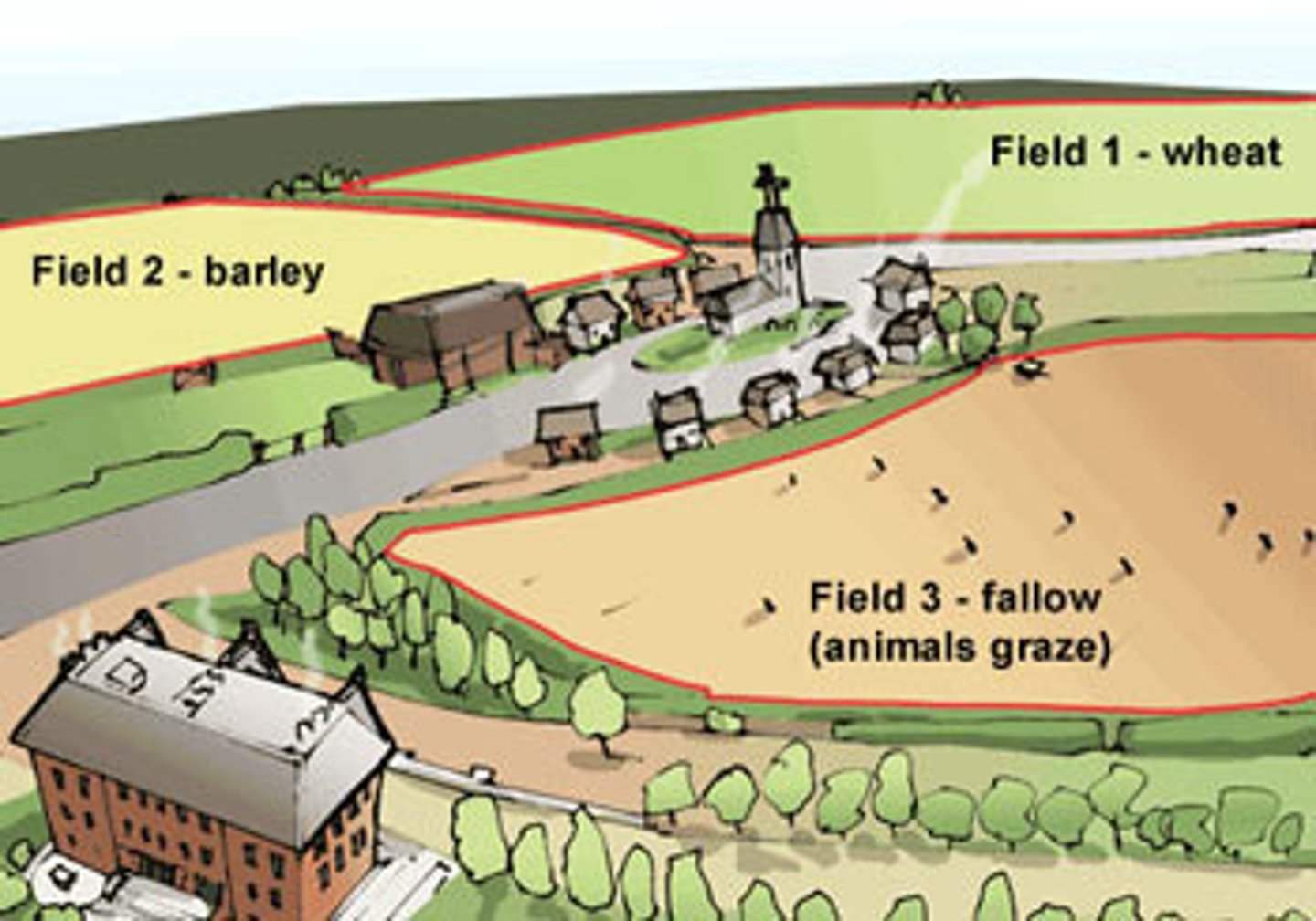
(around A.D. 800) System in which two fields were planted and one lay fallow (resting) for a year. Replaced a system wherein only one field was planted while the other remained fallow. Allowed farmers to grow food on 2/3 of their land at a time, as opposed to just half. Allowed an increase in food production, villagers had more to eat, well-fed people, especially children, could better resist disease and live longer, and therefore in population.
guild
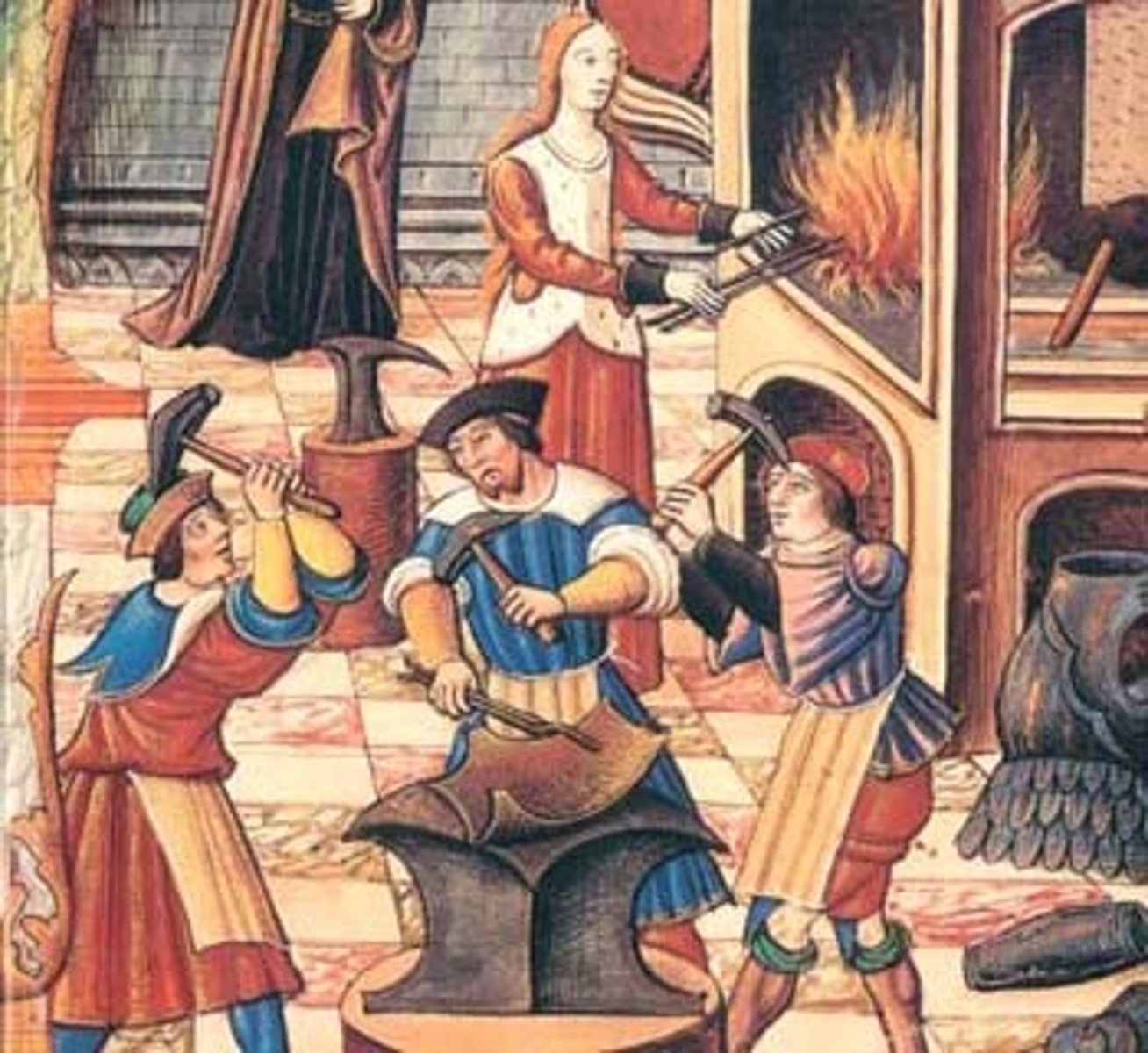
A medieval association of people in the same occupation or business working to improve the economic and social conditions of its members, first guilds were merchant guilds, banded together to control # of goods and keep prices up, provided security in trading and reduced losses
vernacular
everyday language of their homeland, some of the writers who used vernacular wrote masterpieces that are still read today
-since most people couldnt read latin, these works written in the vernacular brought literature to many people,
Feudalism
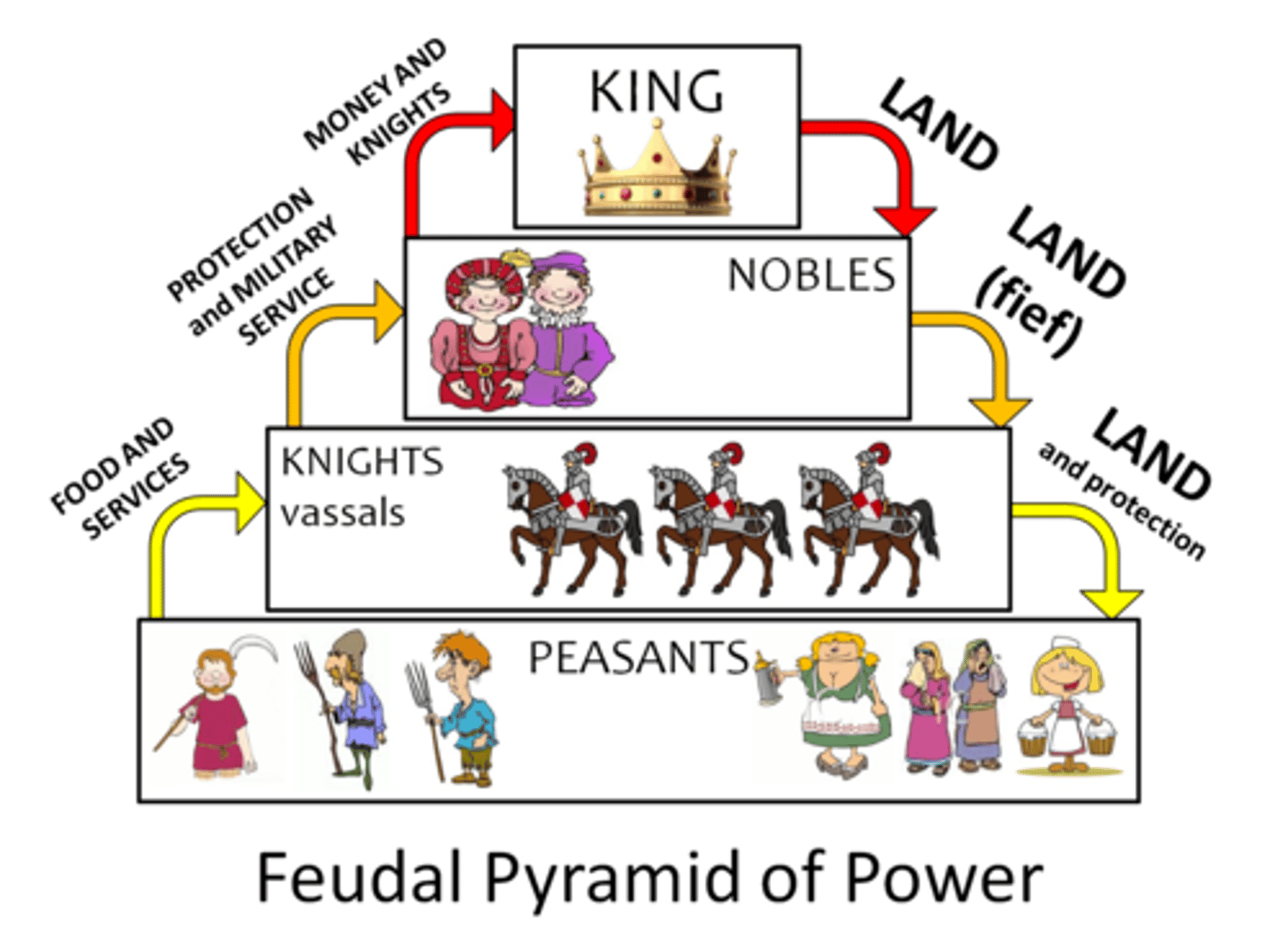
a social system that existed in Europe during the Middle Ages in which people worked and fought for nobles who gave them protection and the use of land in return
Excommunication
Church punishment that refused sacraments to individuals, also freed vassals from service.
Papal Supremacy
The claim of medieval popes that they had authority over all secular rulers.
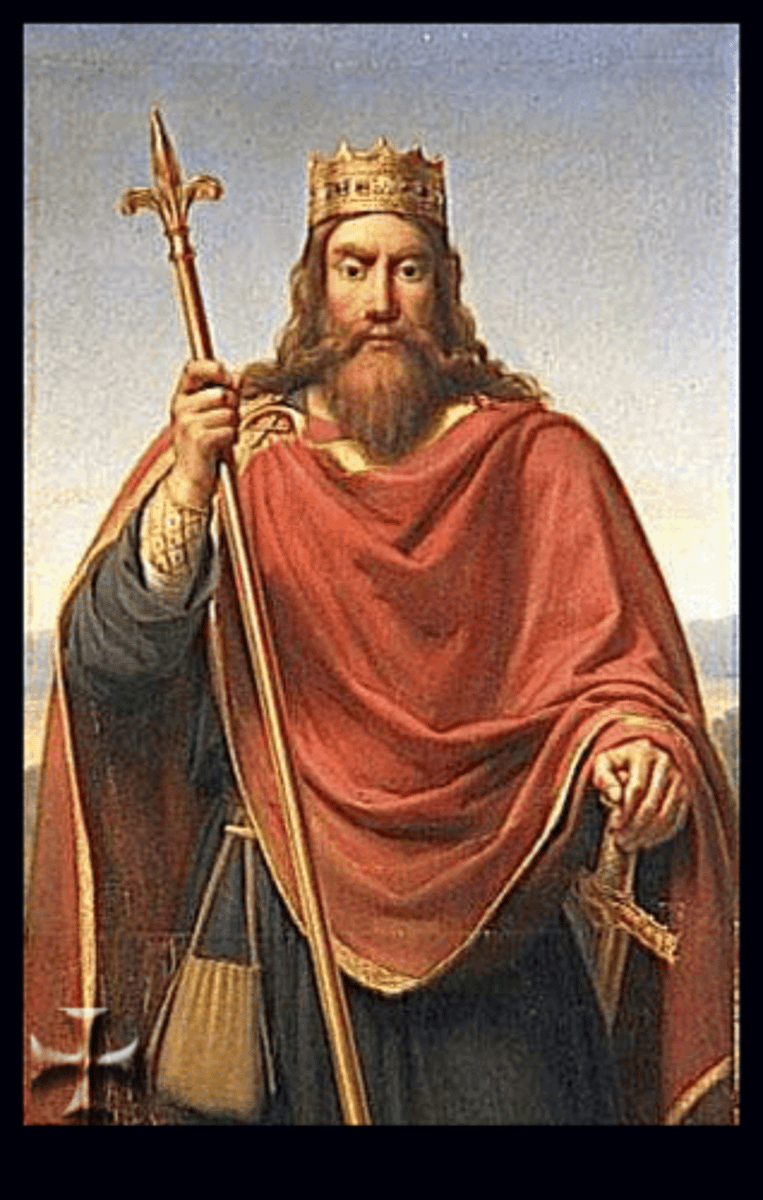
Clovis
The 1st King of the Franks that became a Catholic christian in the 480's AD
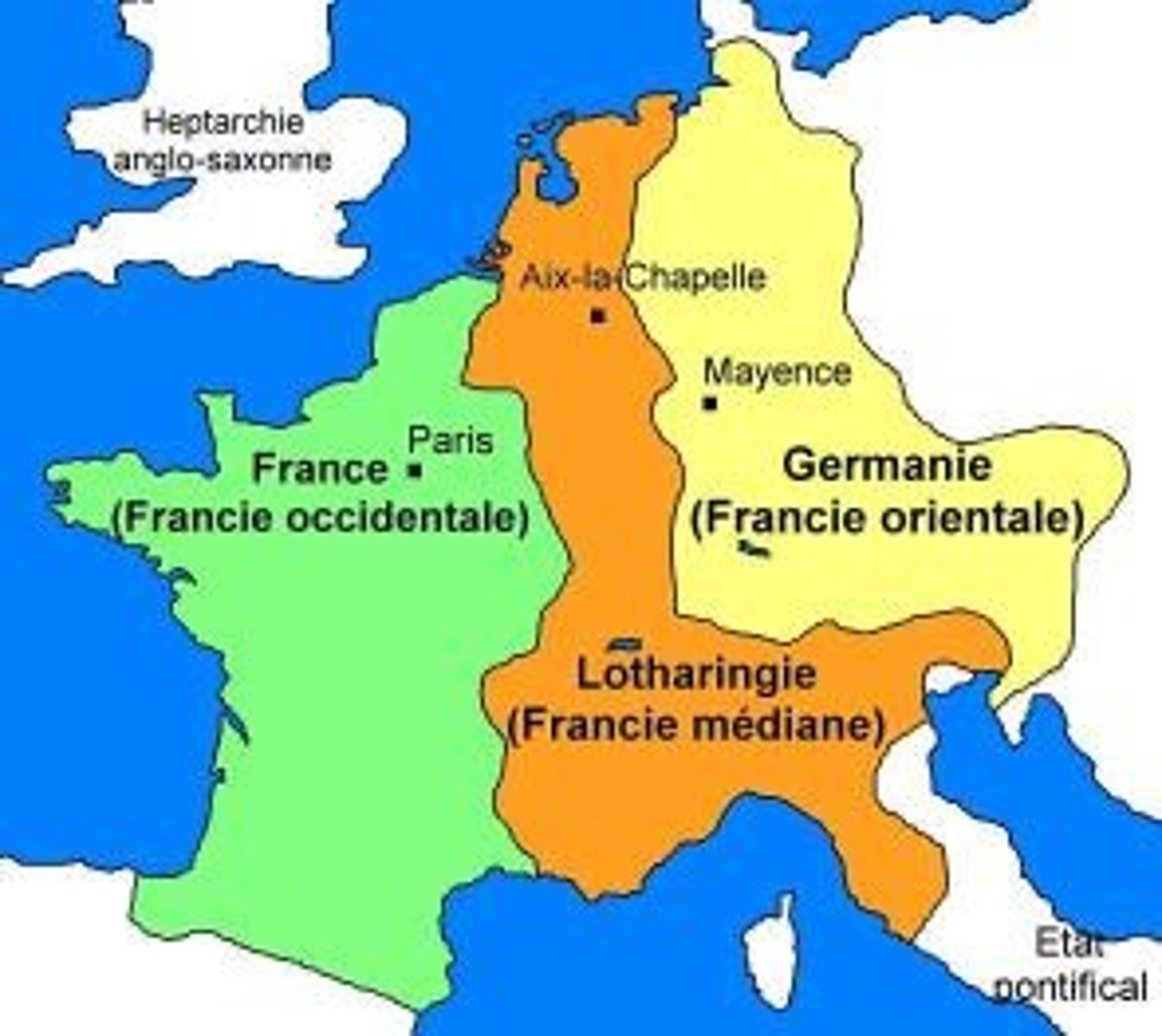
Treaty of Verdun
A treaty that divided up the Holy Roman Empire into 3 regions for Charlemagne grandsons
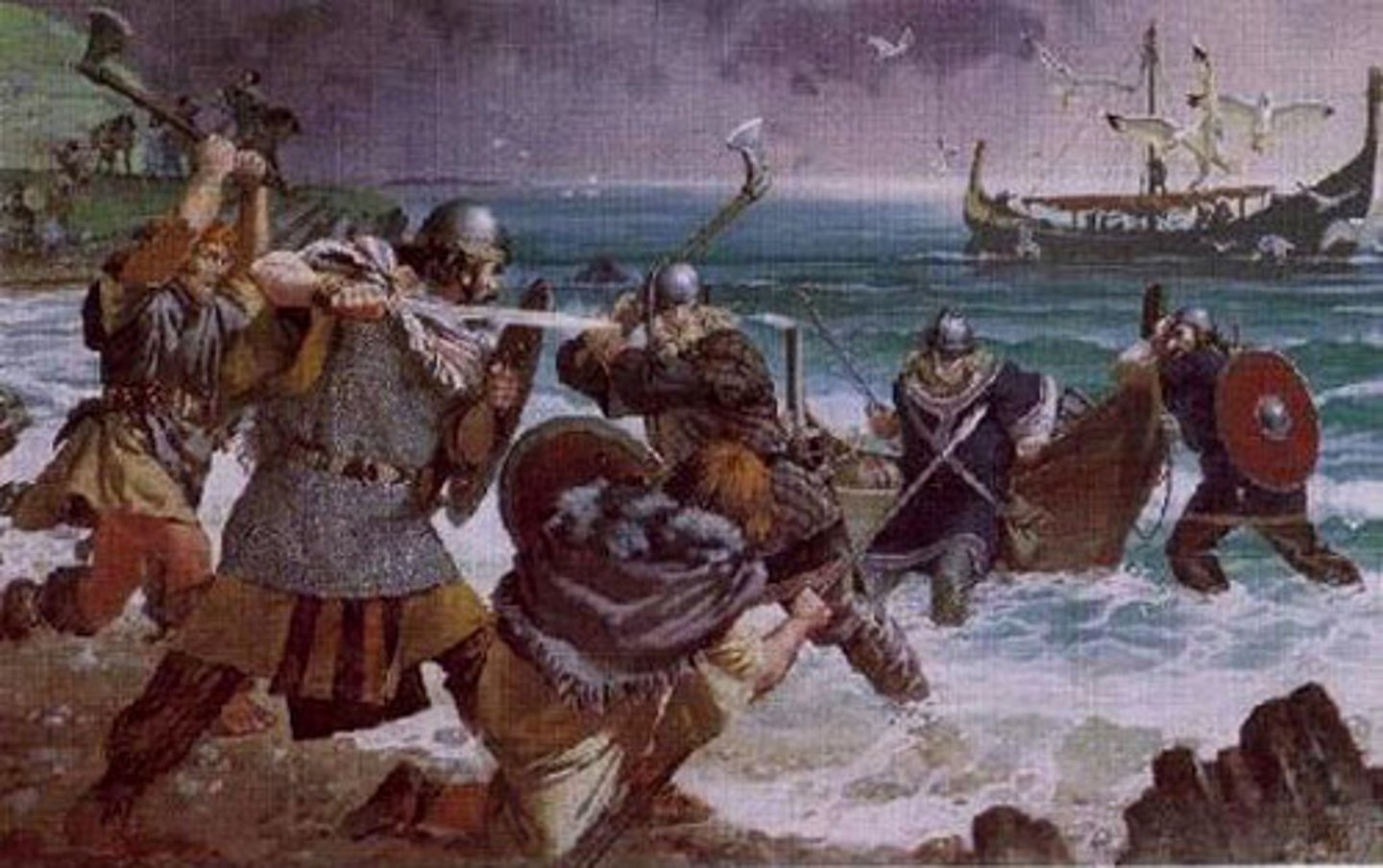
Vikings
Traders, Explorers, and conquerors from Scandinavia that disrupted European rule
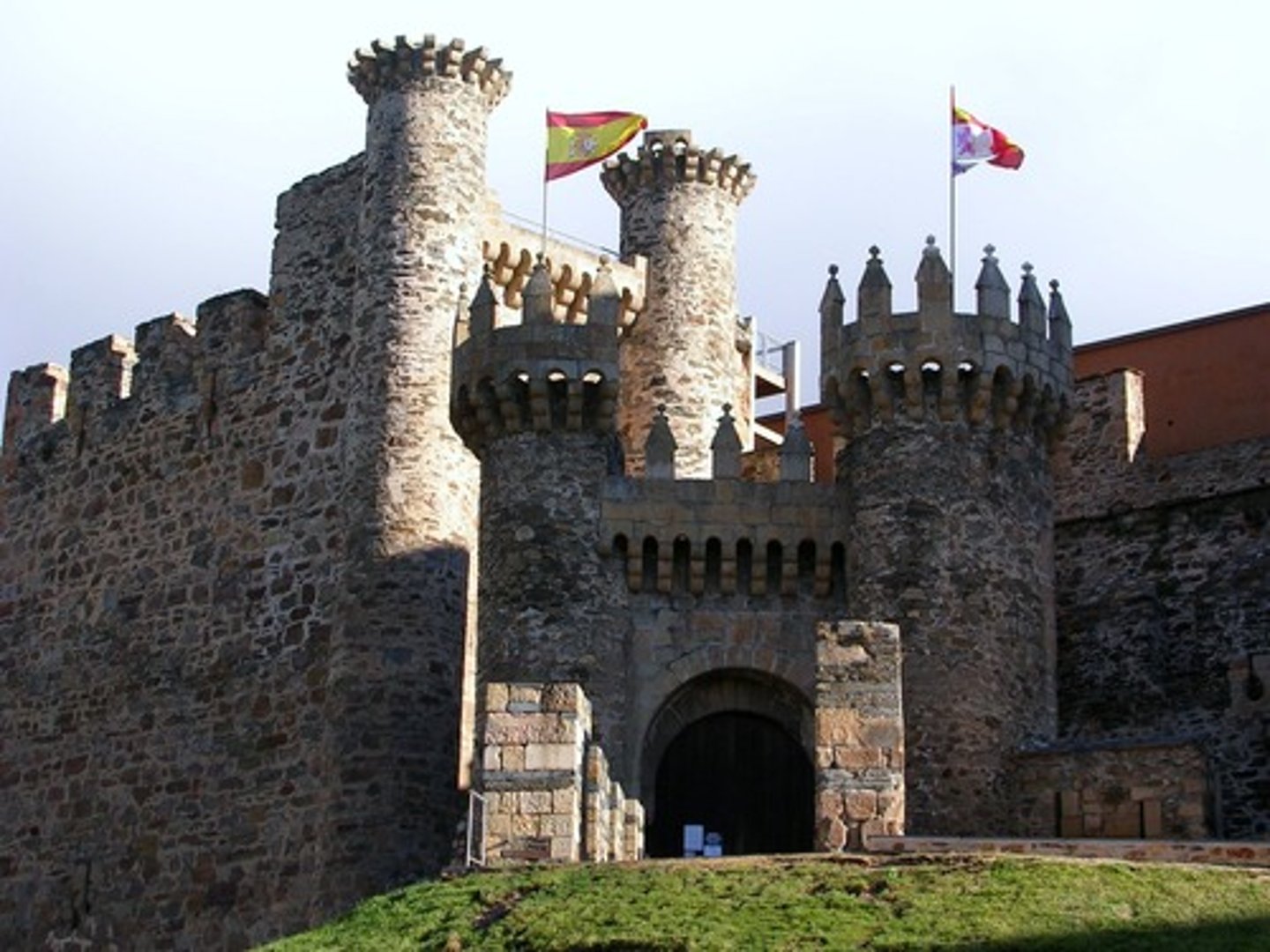
Medieval
Latin for "middle ages"
Charles Martel
A "mayor of the palace" (advisor to the king) of the Franks that defeated the Moors (muslims) at the Battle of Tours.
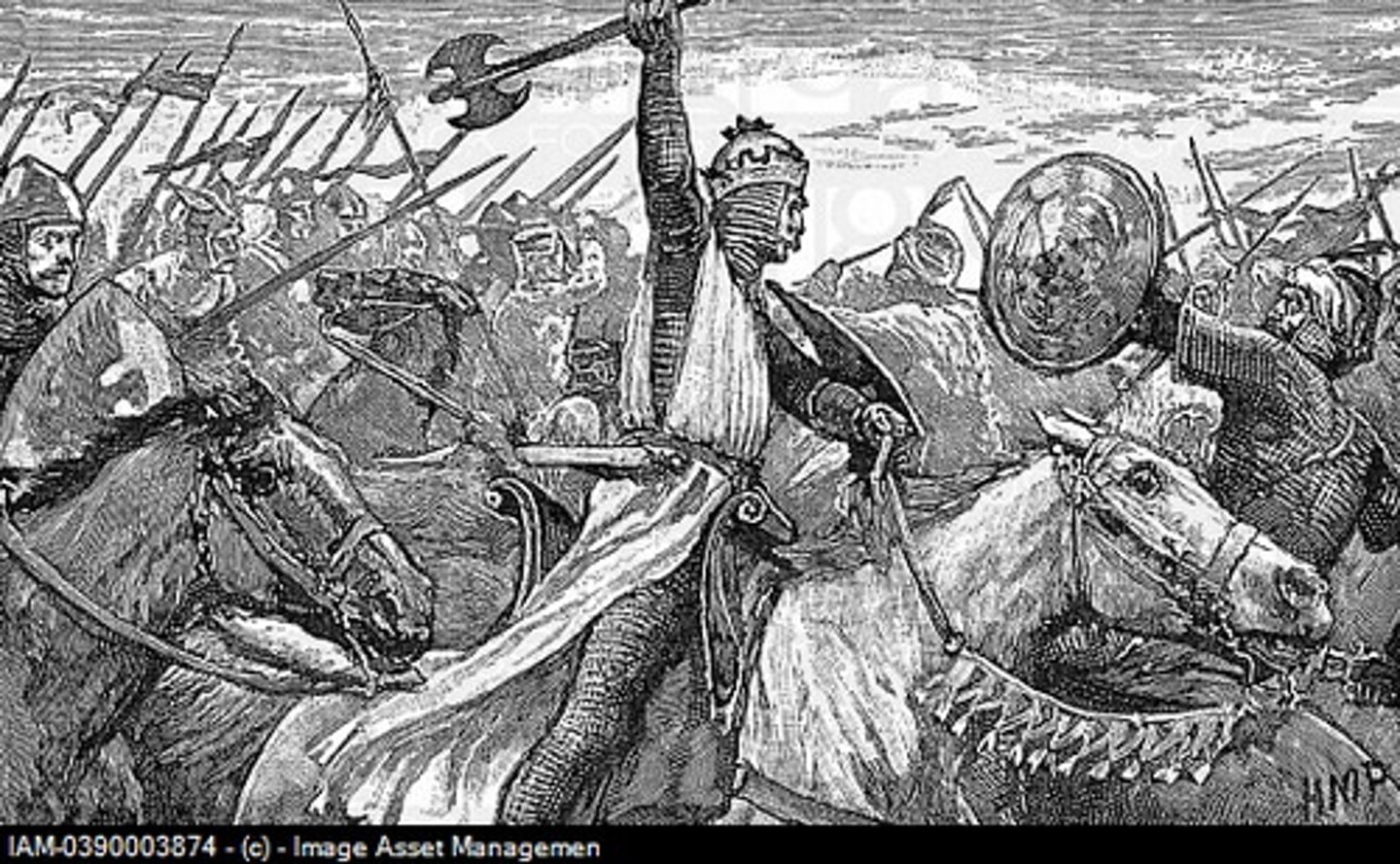
Feudal contract
When a vassal would gain a fief in exchange for his military service to the lord
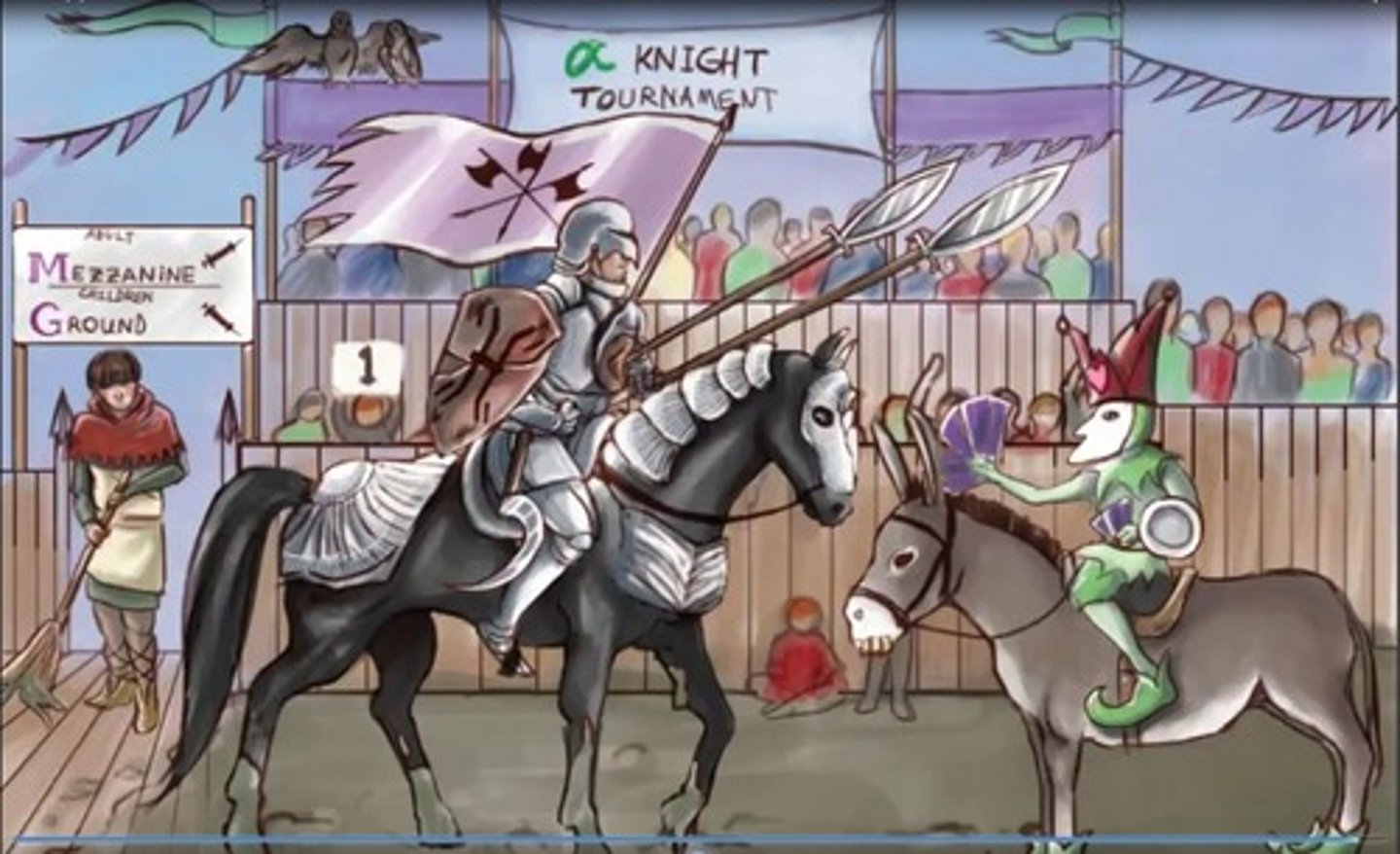
Tournament
festivals where knights could practice their warfare skills
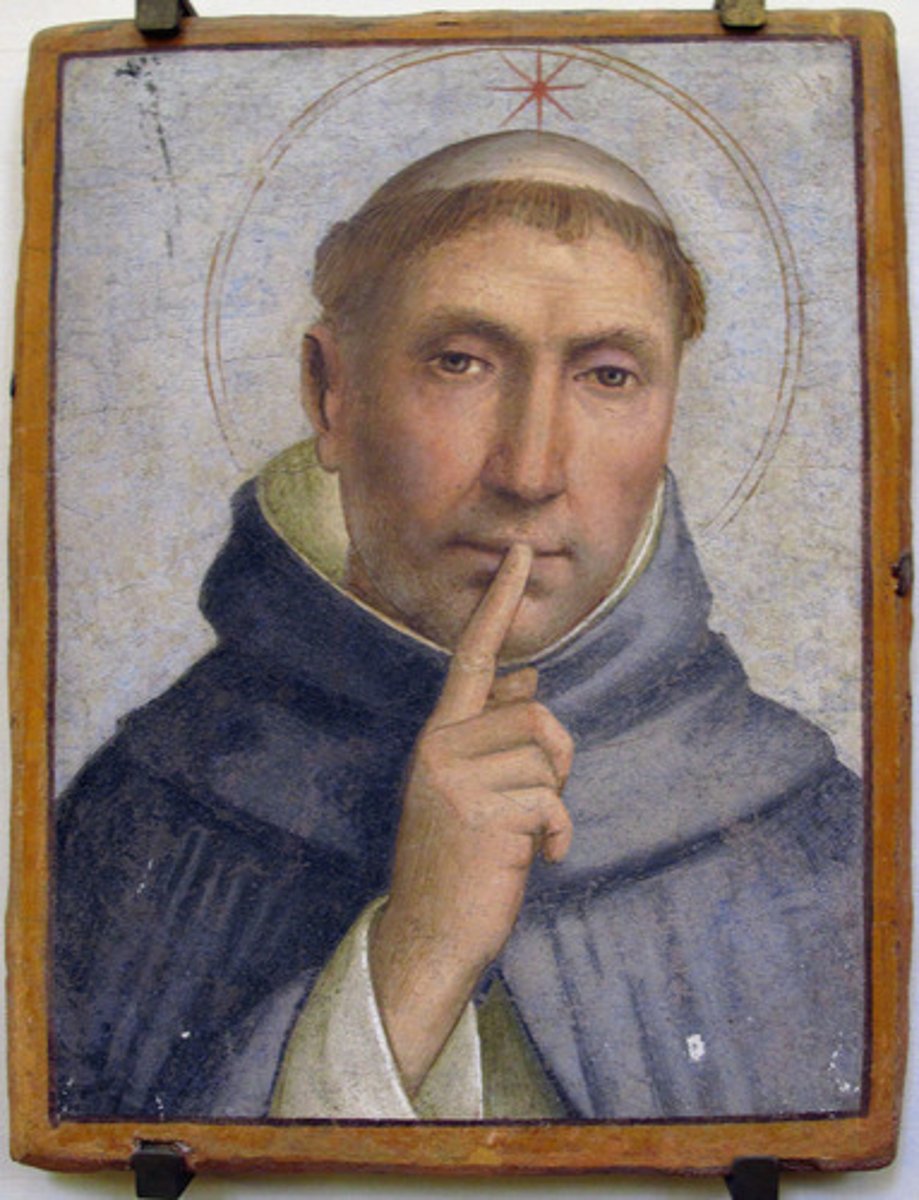
Benedictine Rule
3 basic rules started by a monk called Benedict that organized a monastery that were vows of obedience to the abbot (head of the monastery), poverty, and chastity(purity) .
Tithe
A tax from the church. In the case of the Catholic church it was 10%
Secular
Non-religious matters
Papal supremacy
The pope power over all aspects of society
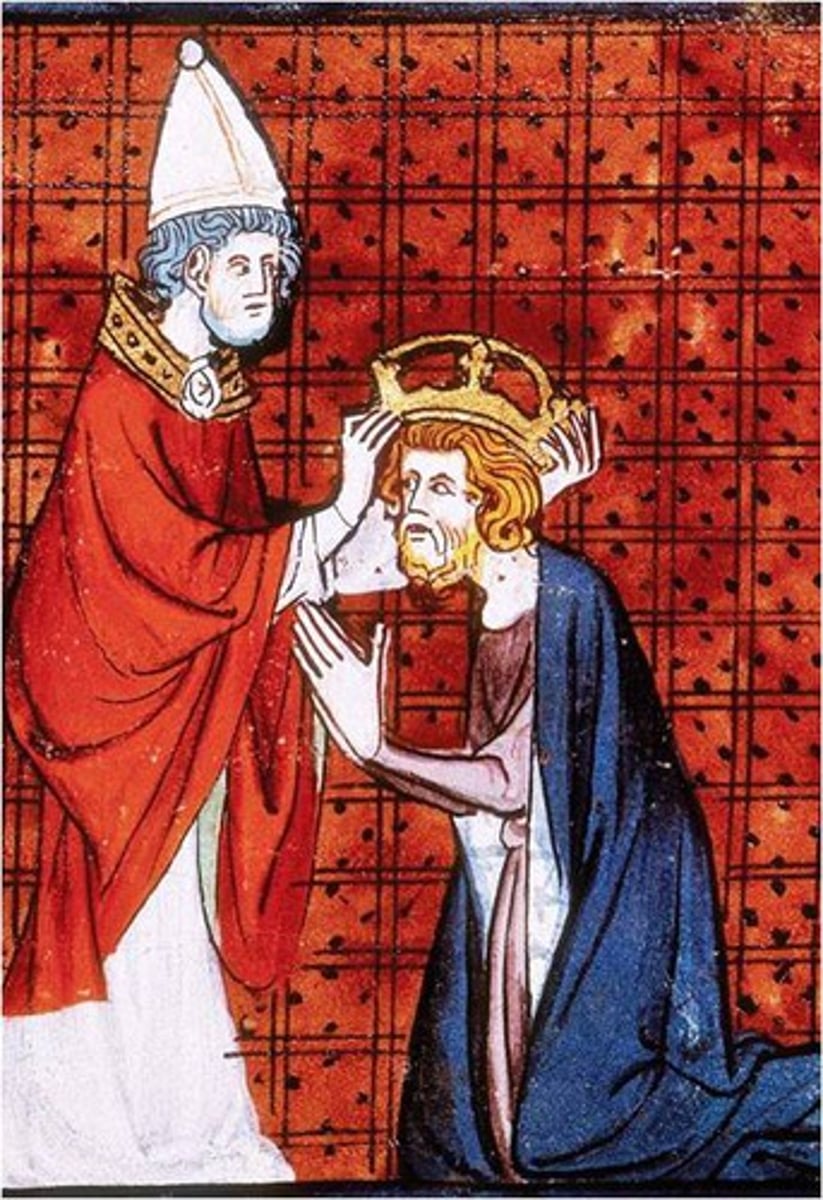
Interdict
When a region is excommunicated by the Church, to try to lead to rebellion
Friar
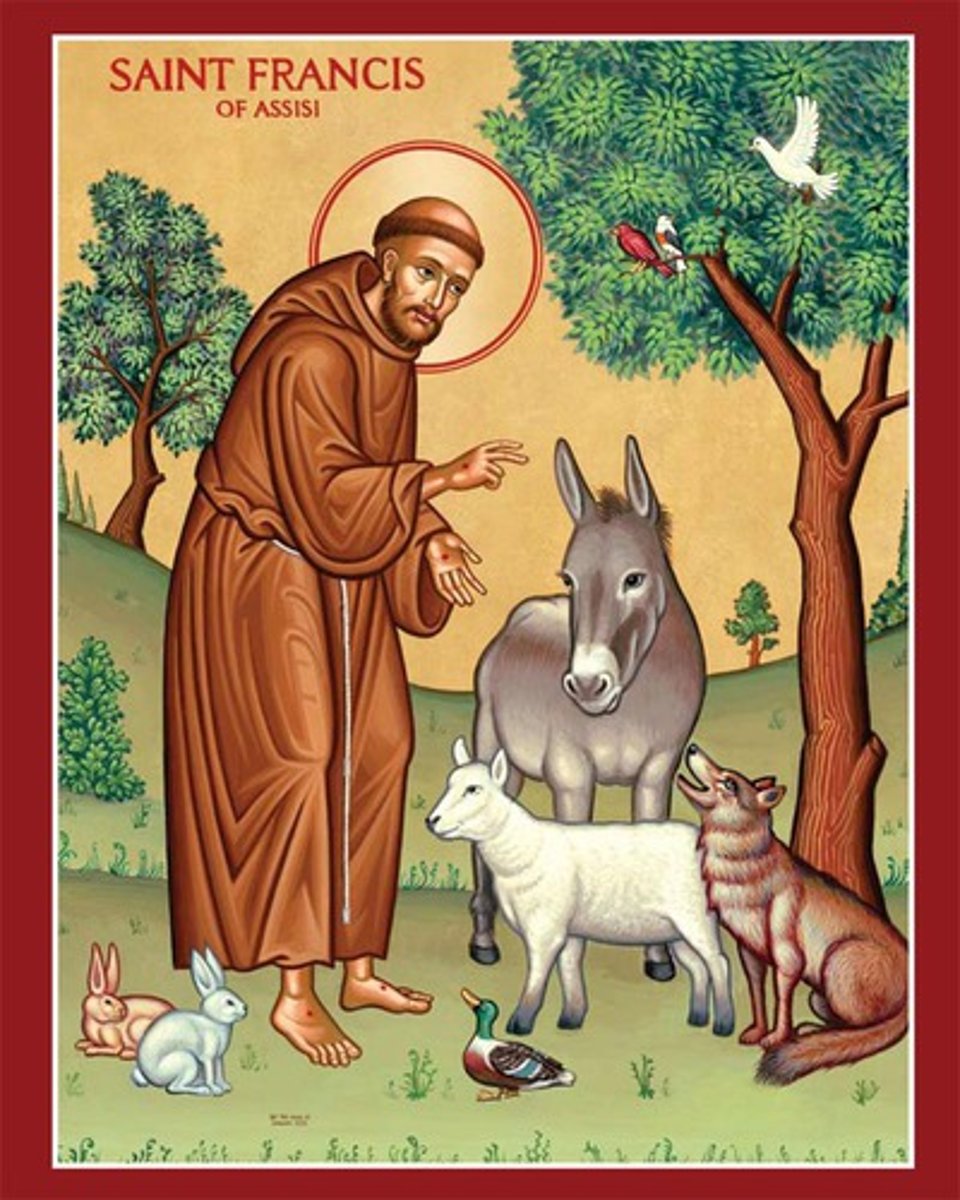
A monk that is not tied to a monastery. Started by Francis of Assisi
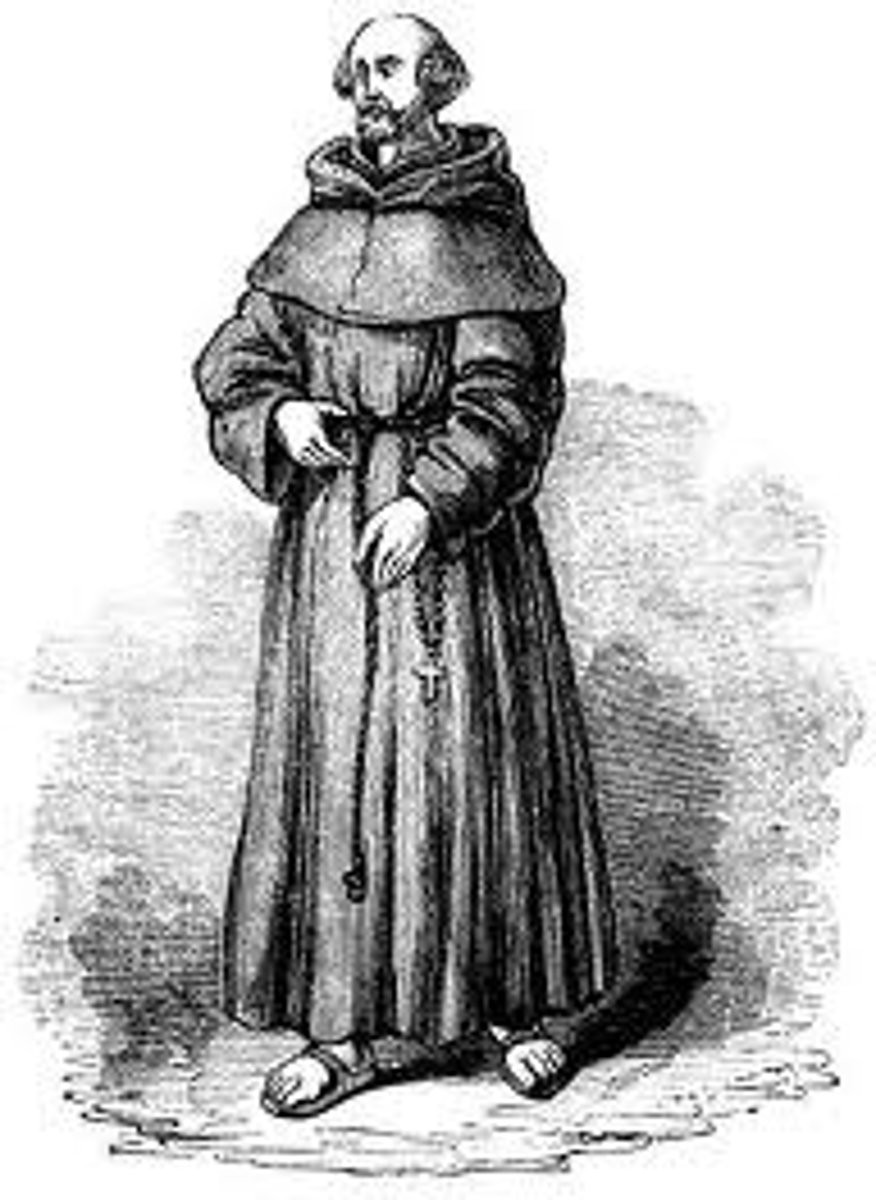
Francis of Assisi
A man of the church that traveled around Italy spreading the belief of poverty, humility and the love of God. He spoke for reform of the Catholic Church. Later started the Franisican order
Charter
The power granted to rule over a territory
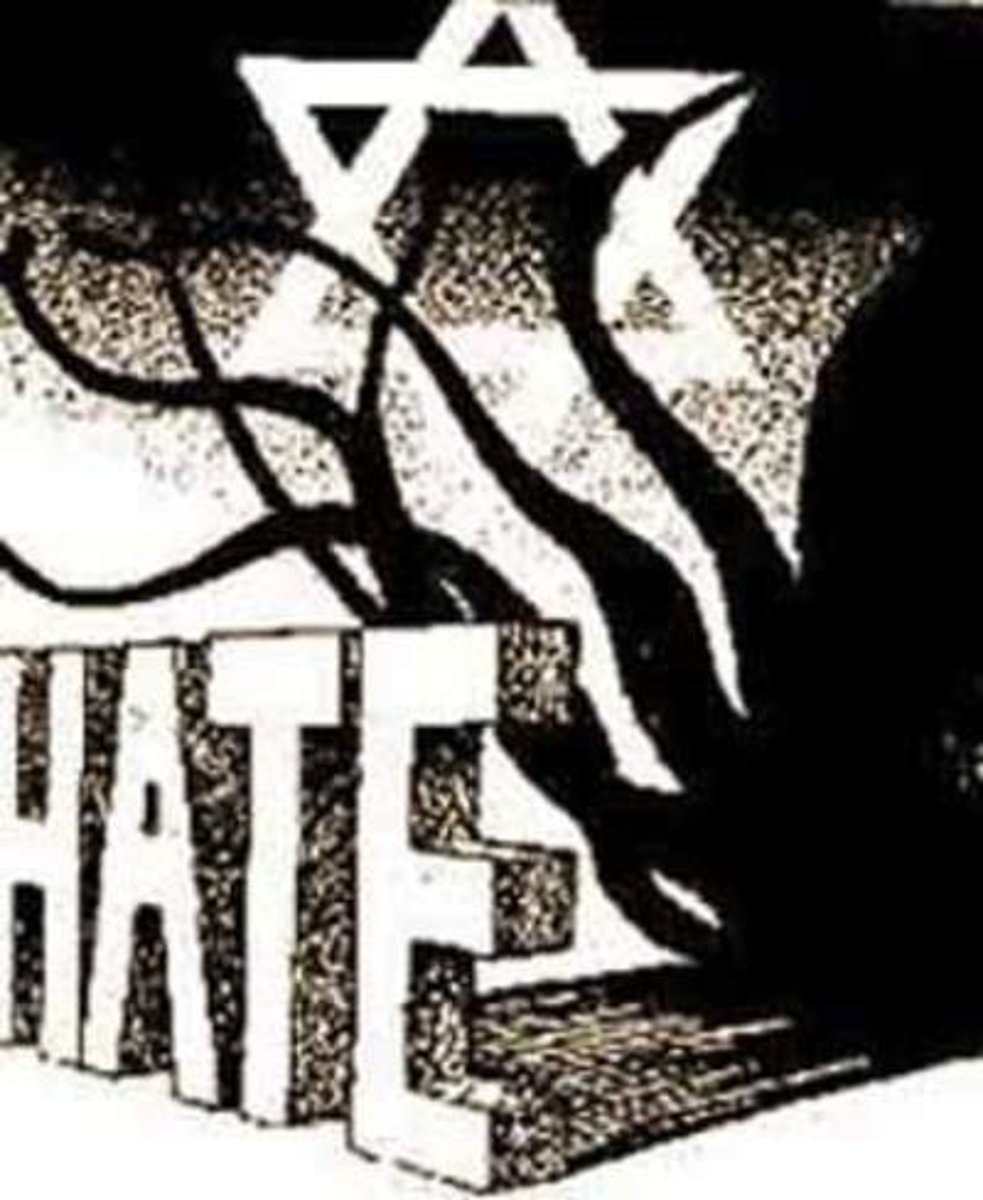
Antisemitism
the prejudice of the Jewish faith
usury
the practice of charging interest on borrowed money

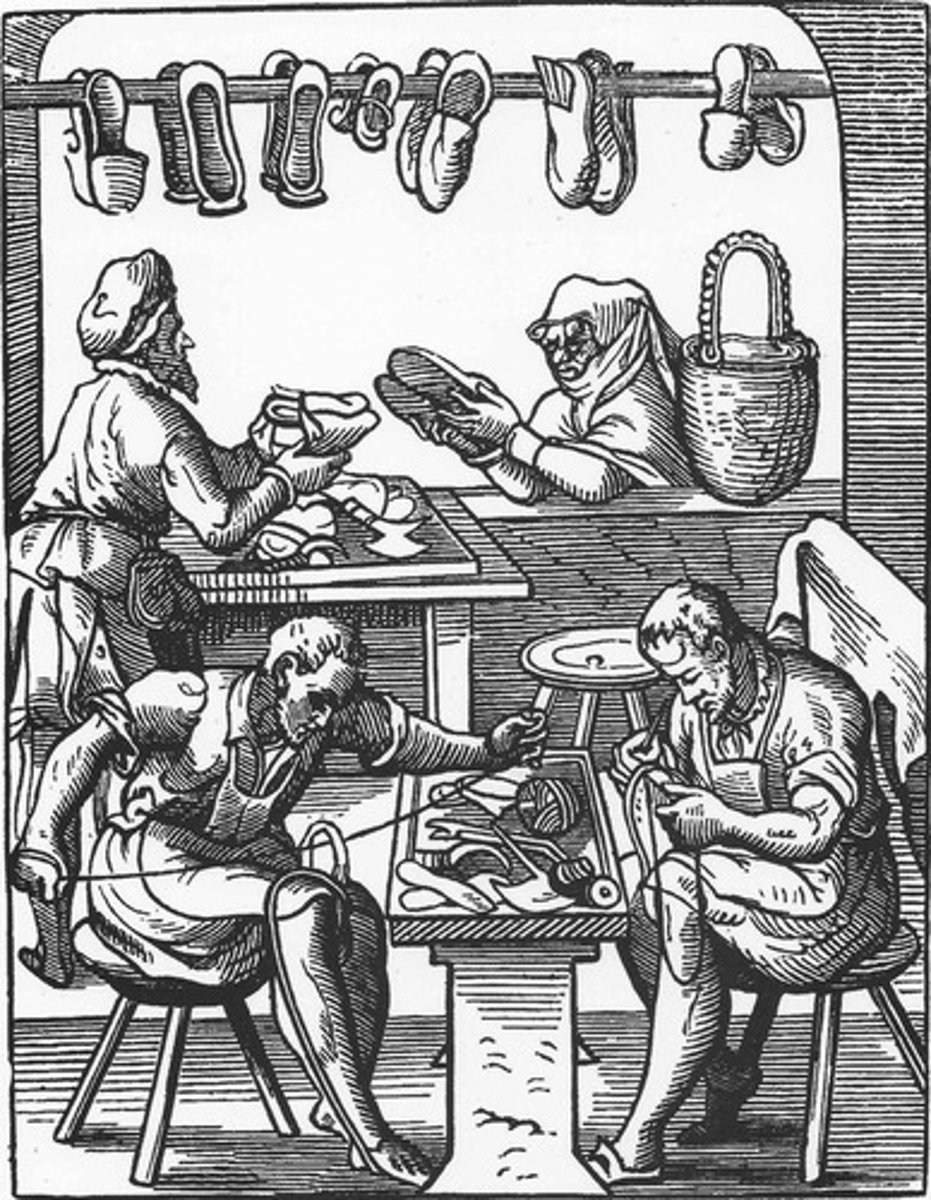
Apprentice
a trainee

Journeyman
salaried worker
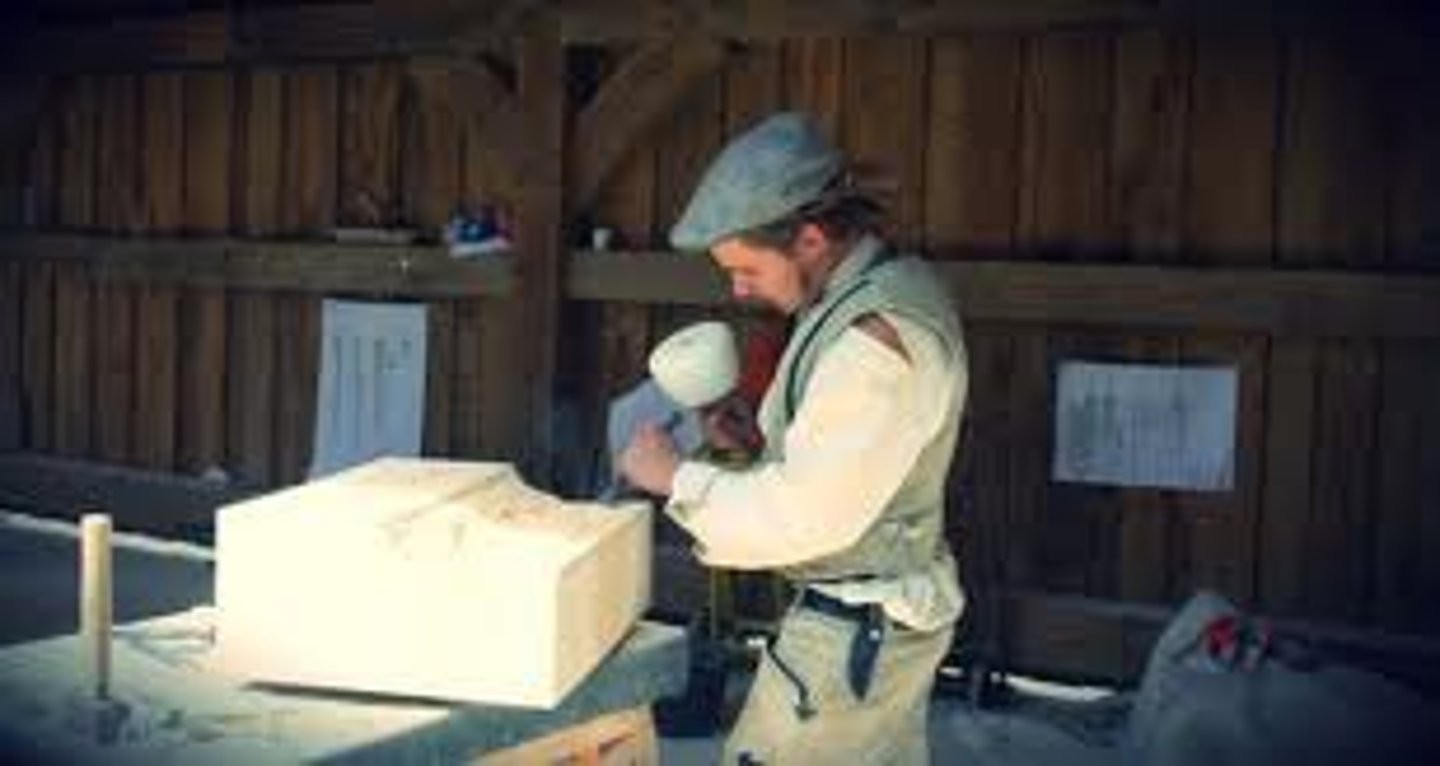
Master Artisan
A person who has mastered their trade and can now teach others
Fallow
the unplanted land in the 3 field system
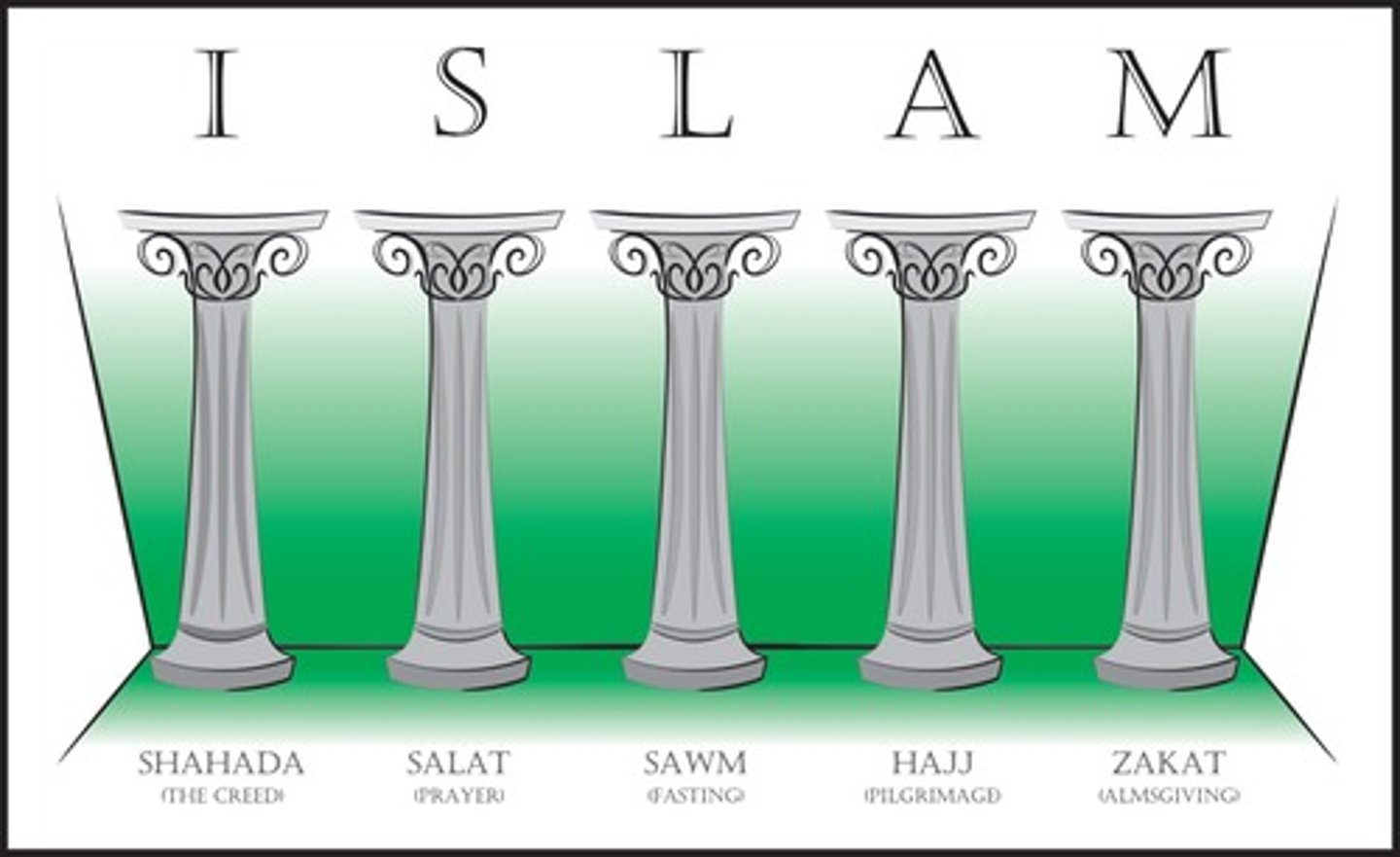
Islam
the religion of the Muslims, a monotheistic faith regarded as revealed through Muhammad as the Prophet of Allah.
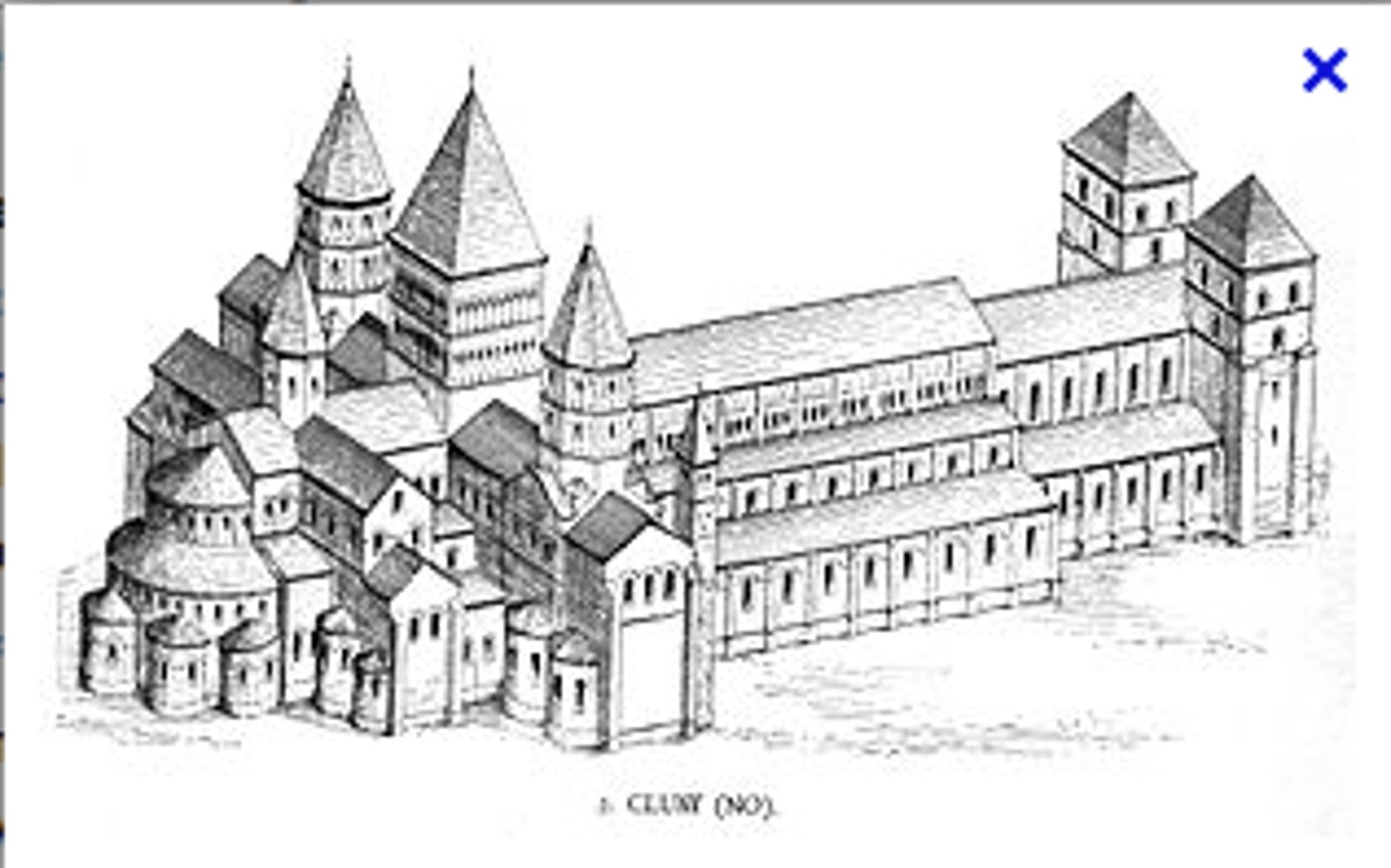
Cluny
The place Church reform movement started by reviving Benedictine Rule
Dominicans
An order of monks that was a Spanish priest, Dominic, to combat heresy.
simony
the buying and selling of church offices
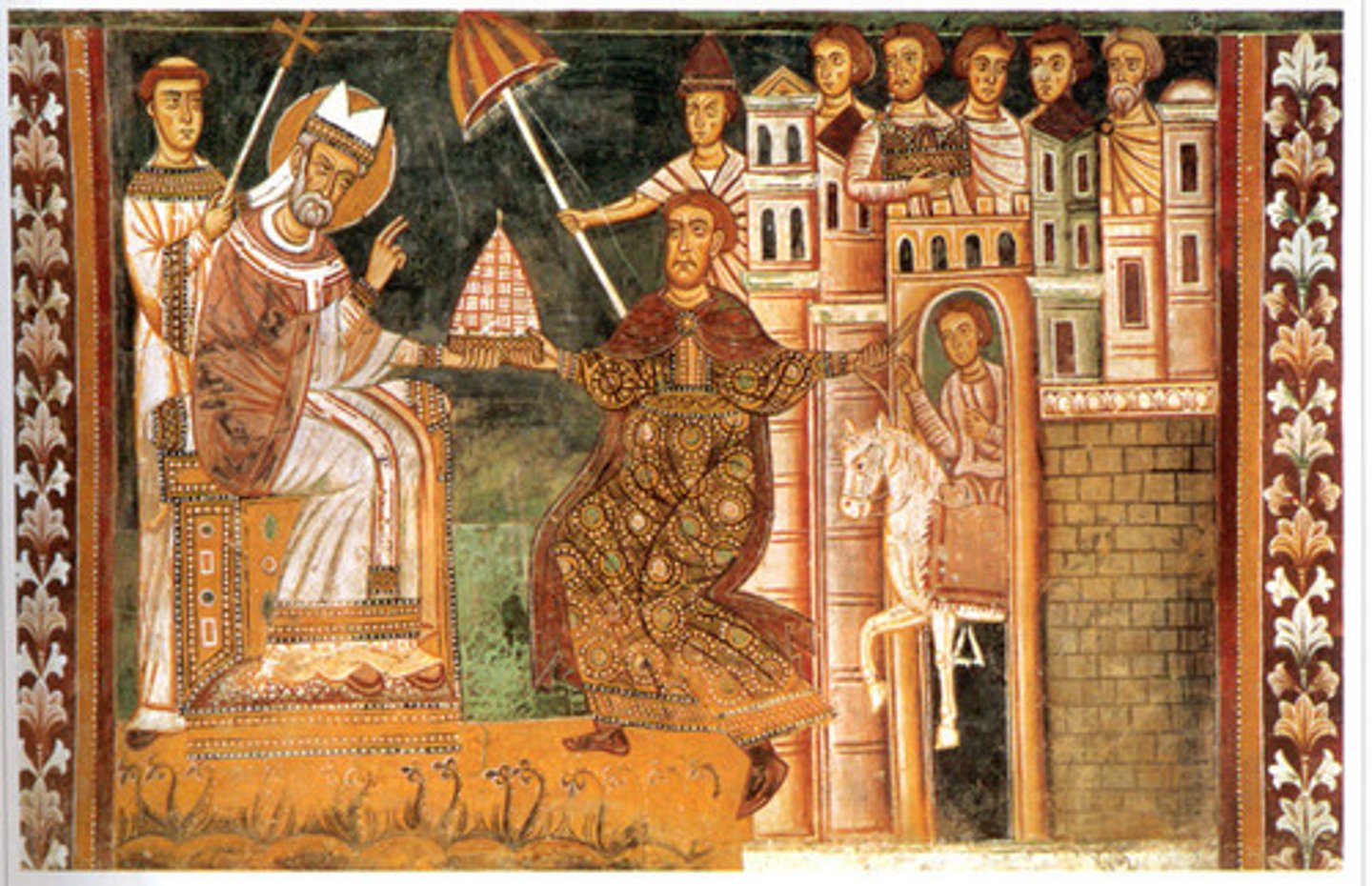
High Middle Ages
1000-1500 CE; Western Europe making a comeback; time of revival and progress; huge increase in population and growth of cities