Monotremata, Didelphimorphia, Diprotodontia, Cingulata, and Pilosa (plus randomy
 Call Kai
 Learn
Learn Practice Test
 Spaced Repetition
 Match
Match Flashcards
 Knowt Play
1/37

There's no tags or description
Looks like no tags are added yet.
Name | Mastery | Learn | Test | Matching | Spaced | Call with Kai | Chat |
|---|
No analytics yet
Send a link to your students to track their progress
38 Terms
characteristics of class mammalia
single dentary
two occipital condyles
secondary hard palate
heterodont dentition
what subclass is the order monotremata in?
prototheria
characteristics of monotremata
epipubic bones present
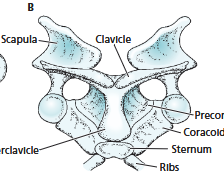
complex pectoral girdle
characteristics of prototheria
lack teeth, lacrimal bone, and auditory bullae
small or absent jugal
complex pectoral girdle (has extra elements) (pictured)
only extant mammals that are oviparous (egg-laying)
mammary glands but no teats
family tachyglossidae
echidnas - includes genus Zaglossus, the long-beaked echidnas, and Tachyglossus, the short-beaked echidnas
premaxillae expanded laterally and fused anteriorly
body covered with spines
feet with large claws, not webbed
family ornithorhynchidae
platypus
semiaquatic, semifossorial mammals
bill is its main sensory organ
premaxillae expanded laterally and separate anteriorly
body covered by pelage of soft hairs
feet webbed and furry
true or false: subclass theria includes monotremes
flase; theria includes the metatherians (marsupials) and the eutherians (placentals)
characteristics of subclass theria
teeth (generally), lacrimal, jugal, and auditory bullae present
simple pectoral girdle
marsupium (pouch) in most species with short intrauterine gestation and prolonged lactation period
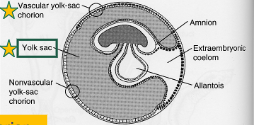
placental differences in marsupials
choriovitelline placenta
enlarged yolk sac
relatively little attachment to developing fetus
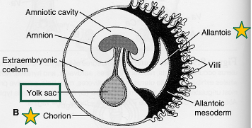
placental differences in placentals
chorioalltoic placenta
chorionic villi extend deeply into the endometrium
form a very tight connection between mother and fetus
infraclass metatheria (or marsupialia) characteristics
jugal forms part of mandibular fossa
inflected angular processes of dentary
fenestrated palate (often)
choriovitelline placenta
epipubic bones present
order didelphimorphia characteristics
the opossums
about 20 geneara and 100 species
diverse omnivores
most are burrowers, some semi-arboreal
one spp. is aquatic with webbed feet and watertight marsupium in females (yapok)
lower incisors subequal in size and procumbent
order diprodontia characteristics
about 155 species
koalas, kangaroos, wombats, possums
two procumbent lower incisors
primarily herbivorous
many arboreal species have schizodactylous feet, meaning they are adapted for grasping

family phalangeridae
phalanger, brush-tailed possum, etc.
3/2 incisors
canines reduced in size in upper jaw and absent in lower jaw
molars bilobed transversely lophodont
large masseteric fossa
which clade are orders pilosa and cingulata a part of?
clade xenarthra
order pilosa
the sloths (two-toed and three-toed) and anteaters
large recurved claws
have anterior caniniform premolar (a premolar that looks like a canine tooth)
incomplete zygomatic arch
coarse hair
long, tapered skull in anteaters
sloth fur has greenish tint due to algae

family bradypodidae
sloths
cheek teeth homodont
jugal bifurcated and projecting posteroventrally
short rostrum
family myrmecophagidae
anteaters
no teeth (edentate)
small jugal
rostrum very long and curving downward
order cingulata
armadillos
has carapace and articulated skeleton
ossified dermal scutes cover the head, body, and tail in most species
nine-banded armadillo can contract leprosy

family dasypodidae
the armadillos
cheek teeth homodont
body covered with keratin scutes overlaying bony plates
true or false: all marsupials have a tribosphenic molar
true
true or false: all marsupials have a tibosphenic molar
false
family didelphidae characteristics
new world opossums
5/4 incisors
canines well-developed in upper and lower jaw
molars tritubercular (tribosphenic)
polyprotodont
tribosphenic
molars with three main cusps (called the trigon) arranged in a triangular pattern; cusp patterns of many modern mammalian groups are derived from this pattern
which of these metatherians is a polyprotodont: phalangeridae, macropodidae, or didelphidae
didelphidae, the opossums
polyprotodont
dentition in several orders of marsupials in which the lower jaw is equal in length to the upper jaw and the lower incisors are small and unspecialized (as opposed to diprotodont)
family macropodidae
kangaroos, wallabies
3/1 incisors; canines reduced or absent in upper jaw and absent in lower jaw
molars bilobed (transversely lophodont)
large diastema between canines and premolars
large masseteric fossa
true or false: a diastema is a useful trait for identifying skulls of macropodidae
true

which family of mammals does this skull belong to?
tachyglossidae, the echidnas
in which families can you observe homodont cheek teeth?
bradypodidae (three-toed sloths); dasypodidae (long-nosed armadillos)

what type of molars are picture here? (kangaroo skull)
bilophodont
lophodont
occlusal pattern in which the cusps of cheek teeth form a series of continuous, transverse ridges, or lophs, as in elephants
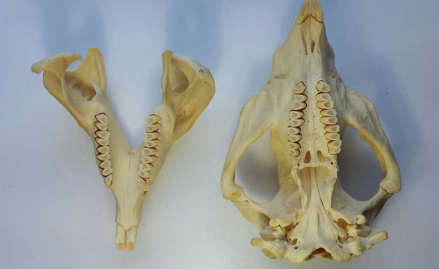
what condition is depicted in the lower incisors of the skull?
diprotodonty - dentition in marsupials, specially the paucituberculata and diprotodontia, in which the lower jaw is shortened and the single pair of lower incisors is elongated to meet the upper incisors (as opposed to polyprotodont)

what family of mammals does this skull belong to?
bradypodidae (the sloths)
which of these are part of infraclass metatheria
didelphidae
bradypdidae
macropodidae
tachyglossidae
didelphidae (possums) and macropodidae (kangaroos etc.)
which of the following traits are useful for identifying infraclass metatheria?
small auditory bullae
inflection of angular process of dentary
large paraoccipital process
jugal as part of mandibular fossa
fenestration of the palate
inflection of angular process of dentary, jugal as part of mandibular fossa, and fenestration of the palate
in which mammalian infraclass do we see an inflected angular process?
metatheria

which of these animals is diprotodont and which is polyprotodont?
A - diprotodont
B - polyprotodont