D) LECTURE CH4 CARDS
 Call Kai
 Learn
Learn Practice Test
 Spaced Repetition
 Match
Match Flashcards
 Knowt Play
1/39

Earn XP
Description and Tags
A set of 60 vocabulary flashcards covering tissues, cellular junctions, epithelial classifications, connective tissues, cartilage types, membranes, and muscle/nervous tissue concepts from Chapter 4.
Name | Mastery | Learn | Test | Matching | Spaced | Call with Kai | Chat |
|---|
No analytics yet
Send a link to your students to track their progress
40 Terms

Four Major Tissue Types
epithelial tissue for covering and lining
connective tissue for support and protection
muscular tissue for movement
nervous tissue for communication and control

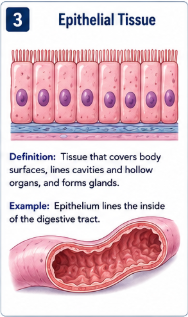
Epithelial Tissue
Tissue that covers body surfaces, lines cavities and hollow organs, and forms glands.


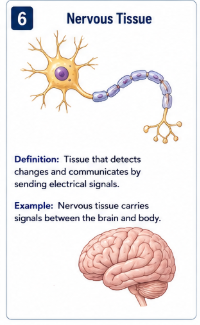
Nervous Tissue
Tissue that detects changes and communicates by sending electrical signals between the brain and body.
Connective Tissue Origin
develop from the mesoderm. Embryonic connective tissue called mesenchyme gives rise to connective tissues.

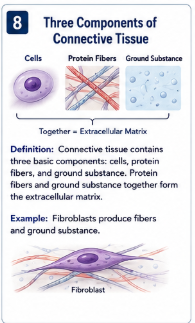
Three Components of Connective Tissue
Connective tissue contains three basic components: cells, protein fibers, and ground substance.
Protein fibers and ground substance together form the extracellular matrix.
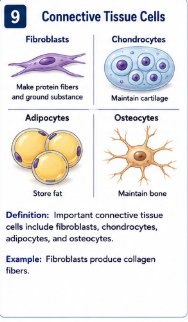
4 examples of Connective Tissue Cells and their functions
include fibroblasts that make fibers and ground substance
chondrocytes that maintain cartilage
adipocytes that store fat
osteocytes that maintain bone
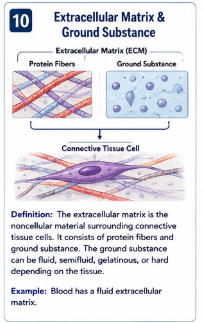
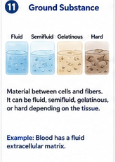
Extracellular Matrix
The noncellular material surrounding connective tissue cells. It consists mainly of protein fibers and ground substance.
what are types of Connective Tissue Protein Fibers and what do they do.
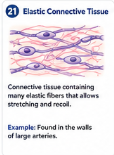
Collagen fibers provide strength,
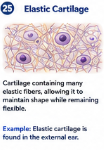
elastic fibers allow stretch and recoil,
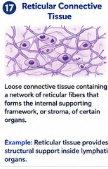
reticular fibers form supportive networks.
Example: Reticular fibers form the internal framework of certain organs.

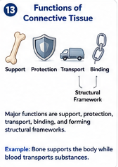
Functions of Connective Tissue
Major connective tissue functions include support, protection, transport, binding, and forming structural frameworks.
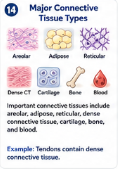
Major Connective Tissue Types
areolar
adipose
reticular
dense connective tissue
cartilage
bone
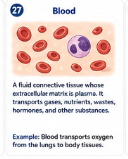
blood
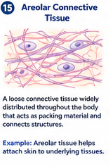
Areolar Connective Tissue
A loose connective tissue distributed throughout the body;
packing material and connects structures
Adipose Tissue
Loose connective tissue made of adipocytes
stores triglycerides
helps cushion and protect structures

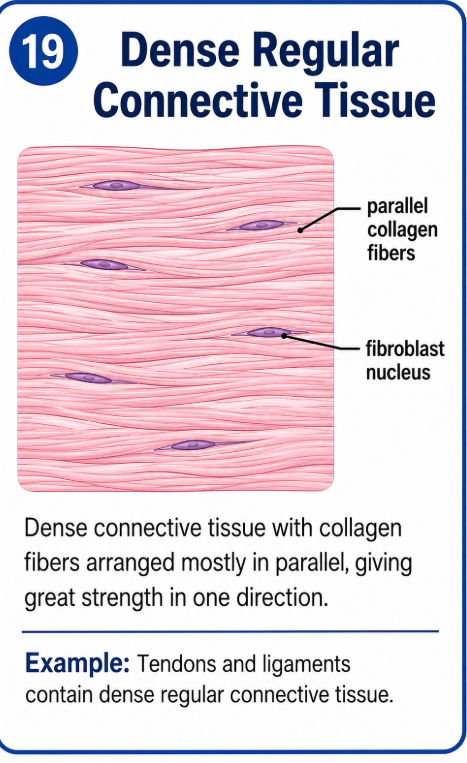
Dense Connective Tissue
Connective tissue containing large amounts of protein fibers that provides strong structural support.
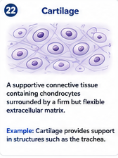
Cartilage
A supportive connective tissue containing chondrocytes surrounded by a firm but flexible extracellular matrix.
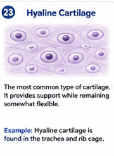
Hyaline Cartilage
The most common type of cartilage. It provides support while remaining somewhat flexible.
Example: Hyaline cartilage is found in the trachea and rib cage.
Fibrocartilage
Very strong cartilage containing thick collagen fibers. It resists compression and pressure in heavy mechanical stress.

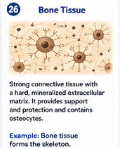
Bone Tissue
Strong connective tissue with a hard mineralized extracellular matrix. It provides support and protection and contains osteocytes.



Cell Adhesion Molecules or CAMs
Membrane proteins that help cells recognize and attach to neighboring cells.

Gap Junctions
Junctions containing protein channels that directly connect the cytoplasm of neighboring cells, allowing ions and small molecules to move between them.

Cell Junction Comparison
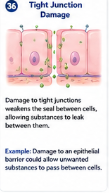
Tight junctions-seal neighboring cells.
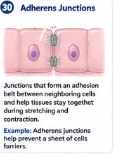
Adherens- junctions form adhesion belts.
Desmosomes -resist mechanical stress.
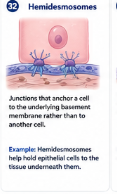
Hemidesmosomes- anchor cells to the basement membrane.
Gap junctions -allow direct cell-to-cell communication.


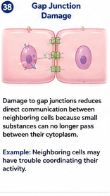
Gap Junction Damage
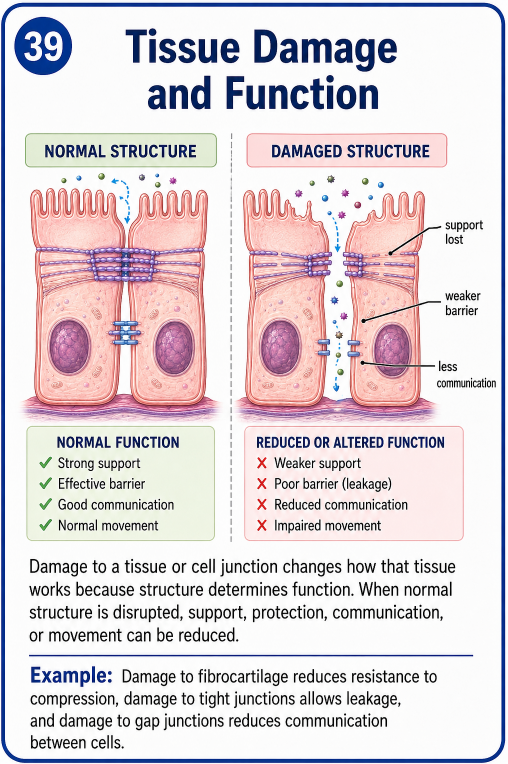
Damage to gap junctions reduces direct communication between neighboring cells because ions and small molecules can no longer pass normally between their cytoplasm.