Patient Assessment - Vital Signs & Breath Sounds
 Call Kai
 Learn
Learn Practice Test
 Spaced Repetition
 Match
Match Flashcards
 Knowt Play
1/28

There's no tags or description
Looks like no tags are added yet.
Name | Mastery | Learn | Test | Matching | Spaced | Call with Kai | Chat |
|---|
No analytics yet
Send a link to your students to track their progress
29 Terms
Four Classic Vital Signs
Body temperature, pulse rate, respiratory rate, and blood pressure.
Pounds to Kilograms Conversion Formula
1 kg = 2.2 lbs.
Ectomorphic Body Type
Linear and delicate physique with sparse muscle development.
Endomorphic Body Type
Soft roundness throughout body, large trunk/thighs, and tapering extremities.
Mesomorphic Body Type
Heavy, hard physique with strong muscular development.
Sensorium
Refers to a patient's level of consciousness, mental status, and tissue perfusion.
Normal Adult Body Temperature
98.6°F (37°C), with a normal range of 96.0°F to 99.5°F.
Fahrenheit to Celsius Formula
C = (F - 32) × 5/9
Celsius to Fahrenheit Formula
F = (C × 9/5) + 32
Normal Adult Pulse Rate Range
60 to 100 beats per minute.
Tachycardia
A resting heart rate greater than 100 beats per minute.
Bradycardia
A resting heart rate less than 60 beats per minute.
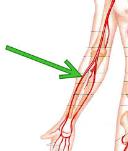
Arterial Sites for Pulse Measurement
Radial, brachial, femoral, and carotid arteries.
Normal Adult Respiratory Rate
12 to 20 breaths per minute.
Systolic Blood Pressure
Peak force exerted against arterial walls during ventricular contraction.
Diastolic Blood Pressure
Force exerted against arterial walls during ventricular relaxation.
Normal Blood Pressure Range in Adults
Systolic 90-140 mmHg; Diastolic 60-90 mmHg.
Hypertension Threshold
Blood pressure reading greater than 140/90 mmHg.
Hypotension Threshold
Blood pressure reading less than 90/60 mmHg.
Blood Pressure Error: Narrow Cuff
Results in a falsely high blood pressure reading.
SaO2 vs. SpO2
SaO2 directly measures arterial oxyhemoglobin via hemoximetry; SpO2 is an oximetry estimate.
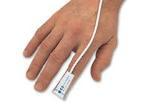
Factors Altering Pulse Oximetry Readings
Nail polish, severe anemia, and poor peripheral tissue perfusion.
Bronchial Breath Sounds
High-pitched, loud breath sounds heard over the trachea.
Bronchovesicular Breath Sounds
Moderate-pitched sounds heard over the sternum and between scapulae.
Vesicular Breath Sounds
Soft, low-pitched sounds heard primarily over peripheral lung fields.
Crackles (Rales)
Discontinuous crackling or bubbling sounds caused by fluid or collapsed airways opening.
Wheezes
High-pitched, continuous sounds caused by air flowing rapidly through narrowed airways.
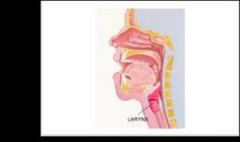
Stridor
High-pitched inspiratory sound heard over the upper airway, indicating obstruction.
Diminished Breath Sounds
Reduced sound intensity caused by decreased air movement or altered sound transmission.