Research Quizlet
 Call Kai
 Learn
Learn Practice Test
 Spaced Repetition
 Match
Match Flashcards
 Knowt Play
1/115

There's no tags or description
Looks like no tags are added yet.
Name | Mastery | Learn | Test | Matching | Spaced | Call with Kai |
|---|
No analytics yet
Send a link to your students to track their progress
116 Terms
Qualitative research
Strives to capture naturally occurring phenomena, following a tradition of social constructivism.
Quantitative research
Based upon a philosophy of logical positivism: human experience is assumed to be based on logical and controlled relationships among defined variables.
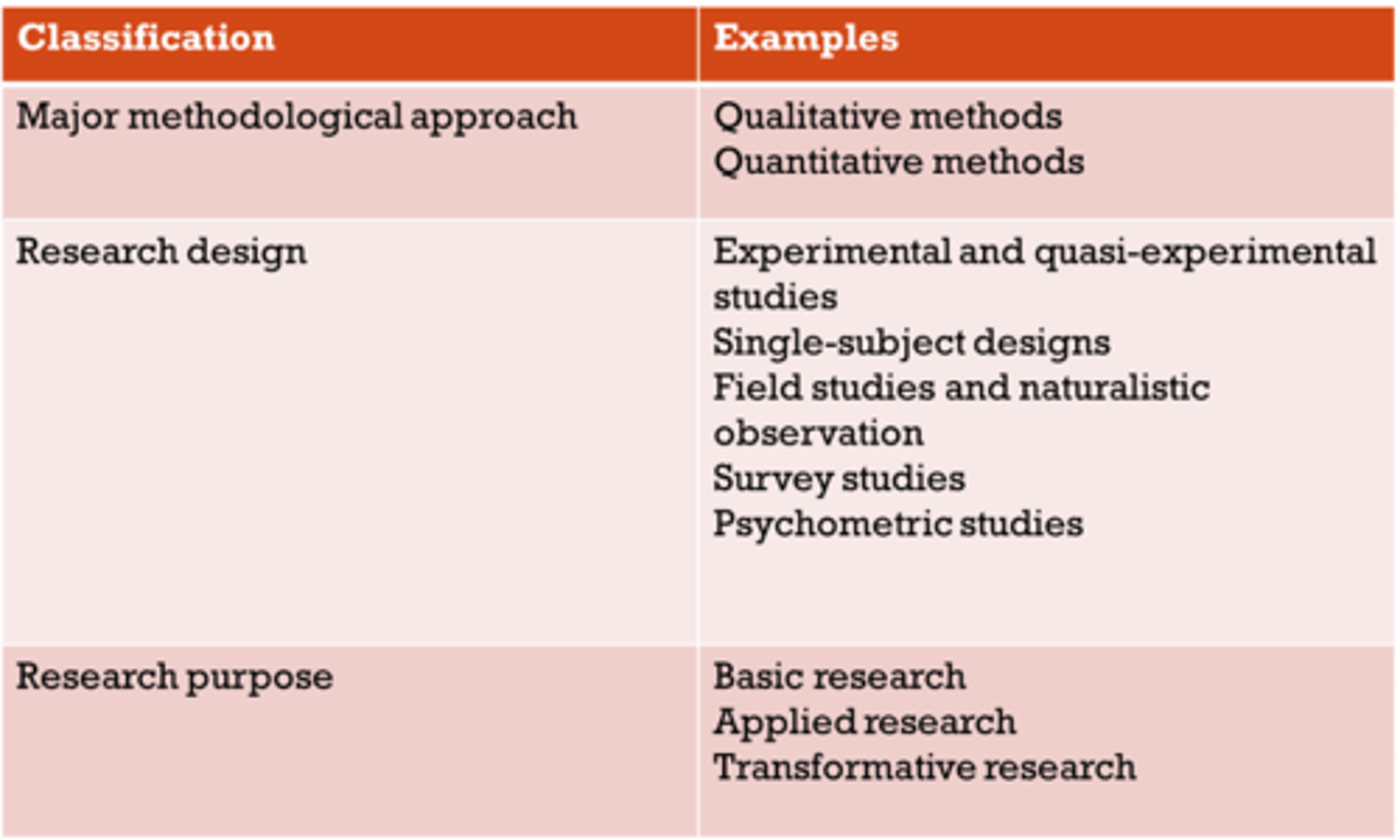
examples of major methodological approach
qualitative methods
quantitative methods
examples of research design
-experimental design
-quasi-experimental design
-single subject design
-observation
-survey studies
-psychometric studies
examples of research purpose
basic research
applied research
transformative reearch
Quantitative Research (image)
- data are structured
- presented via statistical analysis
- conclusions are objective
examples of quantitive research
experiments, standardized assessments
Qualitative Research (image)
- data are unstructured
- presented via summary
- conclusions are subjective
examples of qualitative research
focus groups, interviews, observations
experimental research
efficacy type of question, designs types of RCT, NRCT, and Pretest/Posttest
RCT
At least two groups, participants randomly assigned, groups are manipulated, true experimental
NRCT
At least two groups, participants NOT randomly assigned, groups are manipulated, quasi-experimental
Pretest/Posttest
One group, all participants receive the same intervention or condition, pre-experimental
nonexperimental research
descriptive relationship study with design types of group comparison and incidence/prevalence, correlation and predictive
group comparison
Two or more existing groups, groups compared to identify differences on one or more characteristics, observational
Incidence/
prevalence
Occurrence of one or more characteristics is calculated, observational
correlation
The relationship between two or more constructs is calculated, observational
predictive
Multiple predictors are considered in terms of their impact on a particular outcome, observational
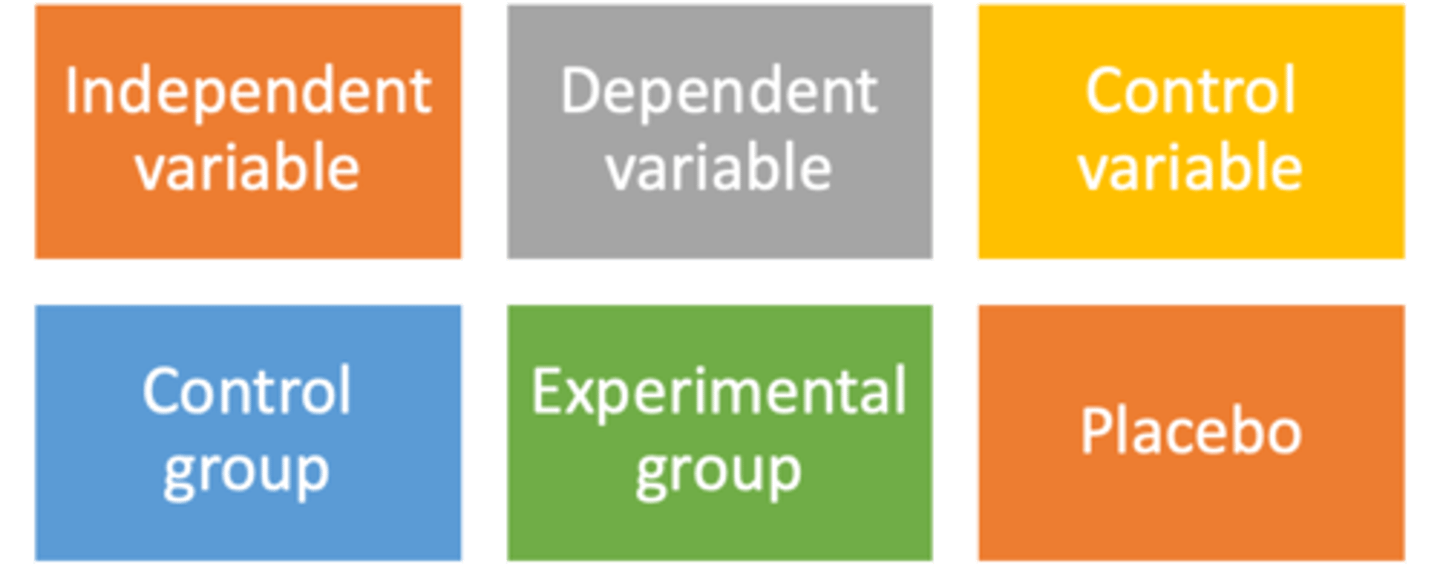
independent variable definition
Variables that are manipulated or compared in a study, a predictor variable.
intervention/control in a study
comparison between two groups
independent variable
Typically the (I) and (C) in PICO
find the independent variable in this sentence:
• Do college students have better learning outcomes if they study in a quiet environment vs a noisy environment?
learning outcomes
Dependent variable (definition)
A response variable that is assumed to depend on or be caused by another
dependent variable
The (O) in PICO
find the dependent variable in this sentence:
Does exercise affect blood sugar levels for those with type II diabetes?
blood sugar levels
MeSH stands for what?
Medical Subject Headings
Clinical research
Structured process of investigating facts and theories of exploring connections, with the purpose of improving individual and public health.
Evaluates the best ways to prevent, diagnose, and treat adverse health issues that adversely affect individuals and families - for example clinical research may look at Multiple Sclerosis and compare the effectiveness of various therapy interventions that increase a patient's quality of life
Population Health Research
Focuses on the health outcomes and the determinants of the health in groups of humans. This looks at treating, wellness, or prevention in populations on all levels (community, regional, national or global)
Patient-oriented research:
a. Studies conducted w/ human subjects to improve our understanding of the mechanisms of diseases/disorders, all of which therapeutic interventions will be most effective in treating them.
b. Improve our understanding of mechanisms of disease & disorders and which therapeutic interventions will be most effective in treating them
Epidemiologic and behavioral studies:
a. Observational studies focused on describing patterns of disease/disability, also identifying preventative risk factors.
b. Observational and focused on describing patterns of disease and disability and identifying preventative and risk factors
Outcomes research and health services research:
a. Studies to determine the impact of research on pop. Health/utilization of evidence-based therapeutic interventions.
b. Determine the impact of research on population health and utilization of evidence-based therapeutic interventions
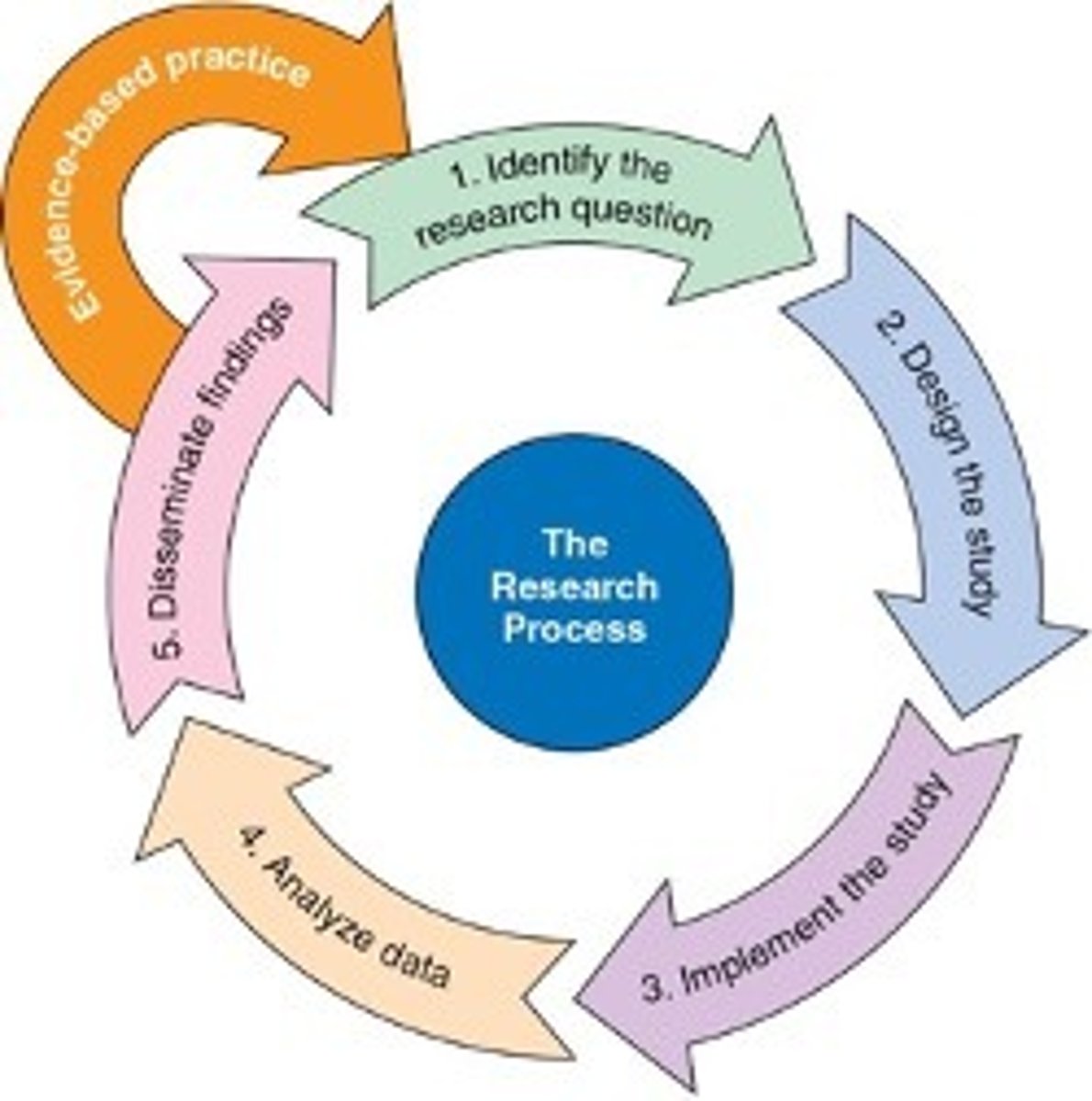
The research process
Step 1: Identify the Research Question
Step 2: Design the Study
Step 3: Implement the Study:
Step 4: Analyze the Data:
Step 5: Disseminate Findings:
step 1: Identify the research question:
· Involves delimiting the area of research and formulating a specific question that provides an opportunity for study
· Descriptive/qualitative studies, guiding questions proposed form the framework for the study
step 2: design the study:
· Researcher designs the study/plans methods of implementation.
o This explains the research aims, sampling methods, and ethical considerations and is submitted to the Institutional Review Board (IRB) for review and approval to assure there are no ethical concerns
Institutional Review Board (IRB) includes:
· potential benefits/risks to participants
· Methods: to show it can be carried out properly
step 3: implement the study:
· Implements the steps in 1 and 2
· Data collecting is the most time consuming part
· May conduct pilot studies before beginning the full study to confirm the measurements methods/procedures worked correctly; usually on a small sample
step 4: analyze the data:
· Reduce/collate the info into a useful form for analysis; ex: tables or spreadsheets to compile "raw data"
step 5: disseminate findings:
· Researchers have the responsibility to share their findings w/ the appropriate people so that others can apply the info to either clinical practice or further research
· Pulls together all the materials relevant to the study and applies them to a generalized/theoretical framework
· Analysis of the result, the researcher interprets impacts on practice/where further study is needed
Evidence based medicine
" The conscientious, explicit, and judicious use of current best evidence in making decisions about the care of individual patients. The practice of evidence based medicine means integrating individual clinical expertise with the best available external clinical evidence from systematic research." (Sackett, 1996)
EBP:
o Defined as the provision of quality of care that will depend on our ability to make choices that are based on the best evidence currently available
o The integration of research evidence with clinical expertise and…patient values (Carter, 2016)
o Requires and active collaboration between researchers and clinicians
Translational Research:
· 1: availability of published research that has applicability to clinical care
· 2: adoption of procedures that have been shown to be effective, so that the highest quality of care is provided
Transitional Research:
· application of basic scientific findings to clinically relevant issues and, simultaneously , the generation of scientific questions based in clinical dilemmas.
Efficacy
the benefit of an intervention as compared to a control, placebo, or standard program tested w. intent of establishing cause/effect relationships
Effectiveness:
· benefits and use of procedures under "real-world" conditions in which circumstances cannot be controlled w/in an experimental setting
· goal of transitional research is to ultimately improve the health of the population
The International Classification of Functioning Disability and Health (ICF):
portrays health and function in 6 components in 2 domains
first domain of ICF: functioning/disability
body structures
body function
Activities
participation
body structures
o anatomical parts of the body
Ex: such as limbs/organs
body functions
o physiological parts of body, or psychological
Ex: such as movement or breathing or such as cognition.
Body systems/anatomical structures will be intact/impaired.
activities
o refers to carrying out tasks/actions
Ex: using utensils, raising from a chair
Described as activity limitations
participation
o involvement in life roles at home, work or recreation
ex: such as managing household finances, going to school or taking care of a child
Contectual Factors:
environmental factors
personal factors
environmental factors
o include physical, social, and attitude aspects of environment w/in which individual functions
Ex: stairs, furniture design, availability of family/friends
personal factors
o eflect the individuals personality, abilities, preferences, and values
Ex: age, gender, pain tolerance, education, family relationships, or physical strength/mobility
Capacity and Performance
What one is able to do vs. what one actually does
Disciplines:
· fields of study or individual sciences
o Ex: biology, chemistry, economics
Profession:
· : disciplined group of individuals who are educated to apply a specialized knowledge base in the interest of society, and who adhere to ethical standards and hold themselves accountable for high standards of behavior
o Ex: PT, OT, SLP, NP
Intraprofessional:
members of one profession work together, sharing information through the lens of their own profession
Multiprofessional:
an additive process whereby members of multiple professions work in parallel alongside each other to provide input, making complementary contributions, each staying within their own professional boundaries, working separately on distinct aspects of the problem
Interprofessional:
members of multiple professions work together, contributing their various skills in an integrative fashion, sharing perspectives to inform decision making
Transprofessional:
a high level of cooperation of professional from multiple fields who understand each other's role and perspective sufficiently to blur boundaries, share skills
Basic Research
aka bench or preclinical: directed toward the acquisition of new knowledge
Applied Research:
aka clinical: advanced the development of new diagnostic, drugs, therapies, and prevention strategies.
Explanatory Research:
utilizes various types of experimental design to compare two/more conditions/interventions
Exploratory Research
observational designs are used to examine a phenomenon of interest and explore its dimensions, often in pop/communities, and to examine how it related to other factors
Descriptive Research:
research attempts to describe a group of individuals on a set of variables to document their characteristics
o May involve the use of questionnaires, interviews, direct observation or database
Systematic Review:
o presents a comprehensive analysis of the full range of literature on a particular topic
§ usually an intervention, diagnostic test/prognostic factor
Meta-Analysis:
o applying a process of statistically combining the findings from several studies to obtain a summary analysis
§ Typically restrict the inclusion of studies based on design criteria to assure a rigorous analysis of evidence
Scoping Reviews:
o incorporating a broader range of study designs/data-gathering methods to comprehensively synthesize evidence
§ Informing practice, programs, and policy and providing direction to future research
Qualitative Research:
considered descriptive bc it involves collection of data through interview/observation.
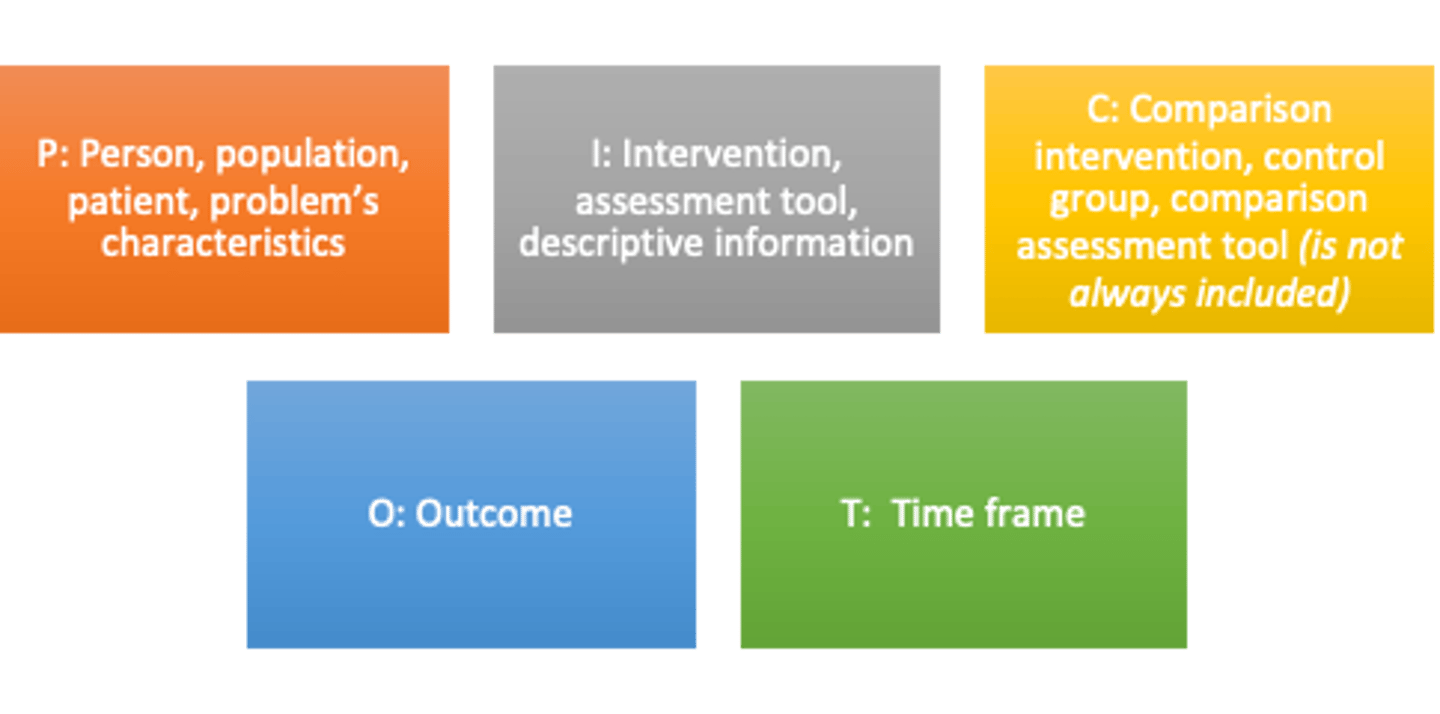
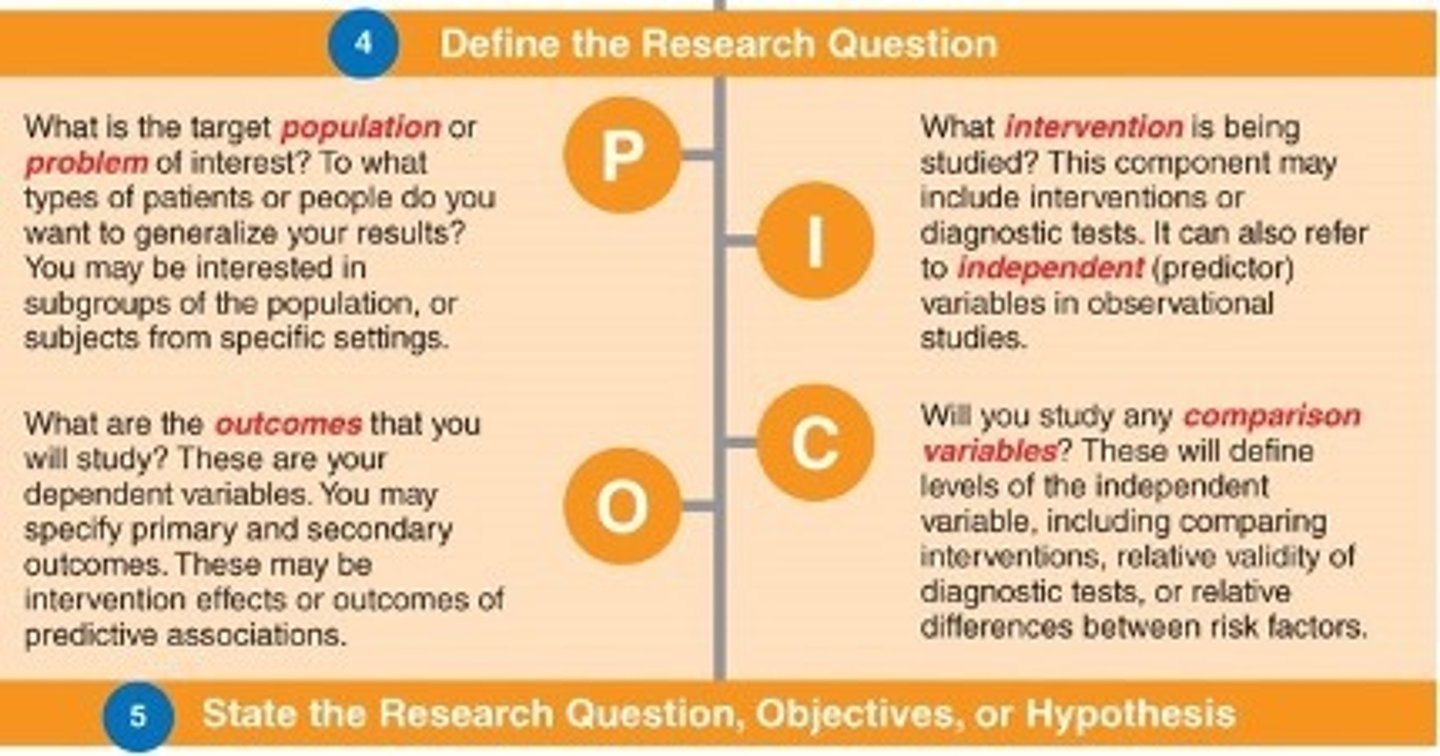
P – I – C – O
· Population or Problem
· Intervention
· Comparison or Control
· Outcomes
Quantitative method
• Characterized by objectivity
• Experimental
• Standardized and predetermined designs, measures, approaches
• Test one hypothesis
• Outcomes translate to numerical data
• Researchers use rigor to limit research bias that may effect reliability of the data
Qualitative
• Aims to describe and explain individuals' subjective experiences, actions, contexts etc
• Provides a more personal and in depth perspective of the person or situation being studied
• Approaches involve interview, note-taking, recordings etc
• Nonexperimental
• Approaches look at ethnography, phenomenology, narrative inquiry
Experimental
· experimental design- participants are randomly assigned to two groups who are subjected to varying degrees of an independent variable
· The control group is a group that is assigned to the “comparison independent variable” to compare the effects of the “experimental group”
· Often the control group will receive a placebo which is a substitute for the condition or treatment that is supposed to have an effect
Quasi-experimental
· Same principles as experimental but lack the degree of rigor
· Subjects often are not assigned into experimental or non-experimental groups randomly
· Subjects may stay in their assigned groups and are studied at various time points (before and after manipulation) or two separate groups as pre-test/post-test design
Applied Research
scientific study that aims to solve practical problems
strength of applied research
applicability to practice, can guide therapy practice and provide info regarding the value of the profession
weakness of applied research
• testing practices are hard to reproduce, reliability may be questioned
Transformative Research
• Designed to bring about change in a practical situation/context, challenges existing beliefs in order to transform traditional thought patterns
strengths of transformative research
Relevant and generalizable to multiple contexts, links theory with practice
weakness for transformative research
• High risk vs high reward, difficult to conduct re-producible research with rigor while maintaining generalizability
Standard levels of evidence hierarchy
LEVEL I: Systematic review of randomized controlled trials
LEVEL II: Randomized control trials
LEVEL III: Nonrandomized controlled trials
LEVEL IV: One group trial with pretest and posttest
LEVEL V: Case reports and expert opinion
Randomized control trials
research designed to determine the effectiveness of a new medication or form of therapy, in which people with a given problem or disorder are randomly assigned to one or more treatment groups or to a control group
Systematic review
summarized findings from multiple studies of a specific clinical practice question or topic that recommend practice changes and future directions for research; one of the strongest sources of evidence for evidence-based practice
Cochrane levels-of-evidence model:
• widely used levels-of-evidence model that considers three major criteria to determine the credibility of quantitative findings for a treatment or intervention:
• Strength of the evidence
• Size of the effect
• Relevance of the evidence
Cochrane Levels-of-Evidence Model
• Strength of the evidence—A broad term that is determined by three criteria:
• The level of evidence of the study design
• The quality of the evidence
• Statistical precision
The Oxford Center for Evidence-Based Medicine (OCEBM)
• A hierarchical model that specifies the various levels of strength for study designs, may be applied
• Level 1: Systematic review
• Provides an overview of all randomized controlled trials relevant to a disorder or treatment
• Synopsis of peer-reviewed publications focusing on a specific problem or question
Level 2: RCT
• A study design where subjects are assigned to one of two or more blinded condition groups (and thereby have controlled exposure to the independent variable) through random assignment
Level 3:
nonRCcohort and follow-up controlled studies
Nonrandomized controlled cohort study
A quasi-experimental design in which data is obtained from subsamples of a given population who differ in terms of the extent to which they have been, are being, or will be exposed to an independent study variable hypothesized to influence their outcome on a given measure
Follow-up study
• A controlled cohort study with a longitudinal element such that the outcomes caused by exposure to an independent variable are measured not only immediately, but also at designated time points that occur thereafter
Level 4
case-series, case-control, and historically controlled studies
Case-series study
A longitudinal study of case-report information from a single group of subjects who were given a similar intervention
Case-control study
A study consisting of observational epidemiological comparison of one group of subjects with a common diagnosis or problem (cases) with another group of subjects without this diagnosis or problem (controls)
Historically controlled study
A study that compares a group that received an intervention (treatment group) with a group that did not receive the intervention (control group) wherein the data for the control group is collected retroactively from records
Level 5:
mechanism-based reasoning case studies
Mechanism-based reasoning
A study involving an inference from findings related to individual mechanisms (i.e., variables stimulating change) to claim that an intervention that utilizes those specific mechanisms leads to a particular outcome
Case-study research
A study that examines the effects of an intervention on a single individual over time with no control