Odontogenic Tumors
 Call Kai
 Learn
Learn Practice Test
 Spaced Repetition
 Match
Match Flashcards
 Knowt Play
1/23

Earn XP
Description and Tags
Lecture given 8/14/2026
Name | Mastery | Learn | Test | Matching | Spaced | Call with Kai | Chat |
|---|
No analytics yet
Send a link to your students to track their progress
24 Terms
odontogenic keratocyst
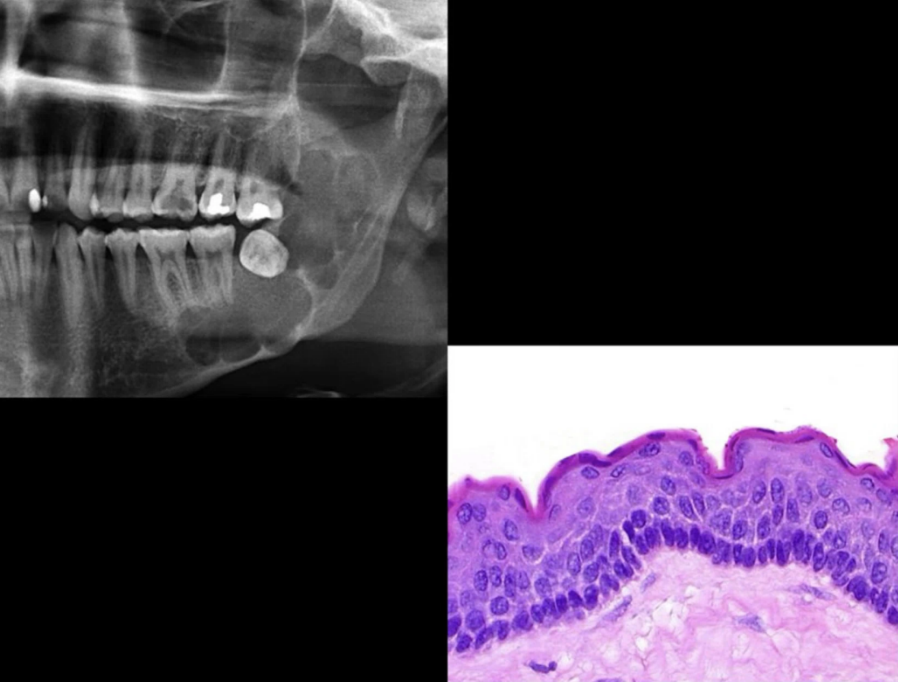
ameloblastoma
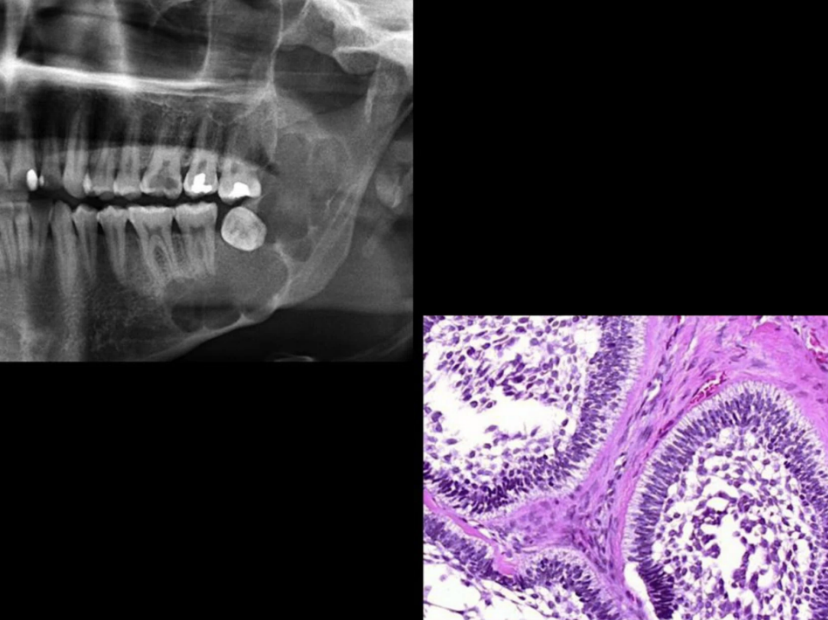
odontogenic myxoma
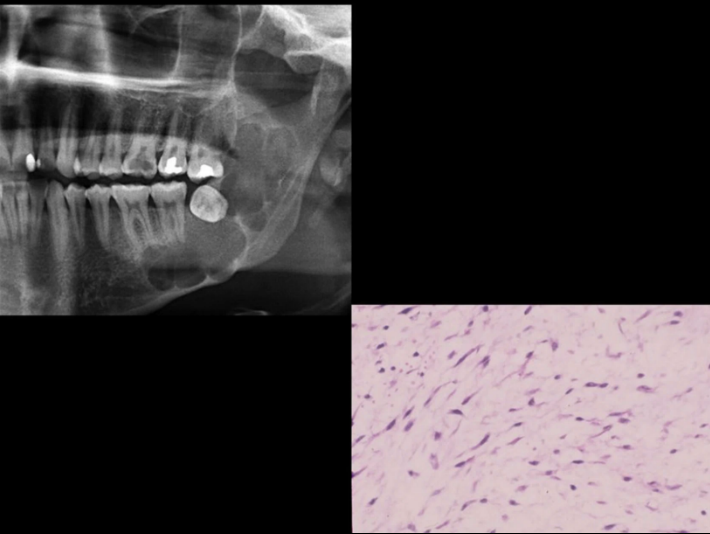
tumors of odontogenic epithelium
ameloblastoma, adenomatoid odontogenic tumor, calcifying epithelial odontogenic tumor, squamous odontogenic tumor, clear cell odontogenic carcinoma
ameloblastoma
most common odontogenic tumor
can arise from rests of dental lamina, developing enamel organ, epithelial lining of the odontogenic cyst, or from basal cells of the oral mucosa
benign, slow growing, locally invasive tumors
age 20-60 yr
mandible > maxilla, posterior > anterior
asymptomatic or painless expansion
often associated with impacted 3rd molars
resorption of adjacent tooth roots common
multilocular/unilocular radiolucent lesion (soap bubble/honeycombed)
tx: margina resection, progressive infiltration to involve vital structures is occasionally seen
ameloblastoma
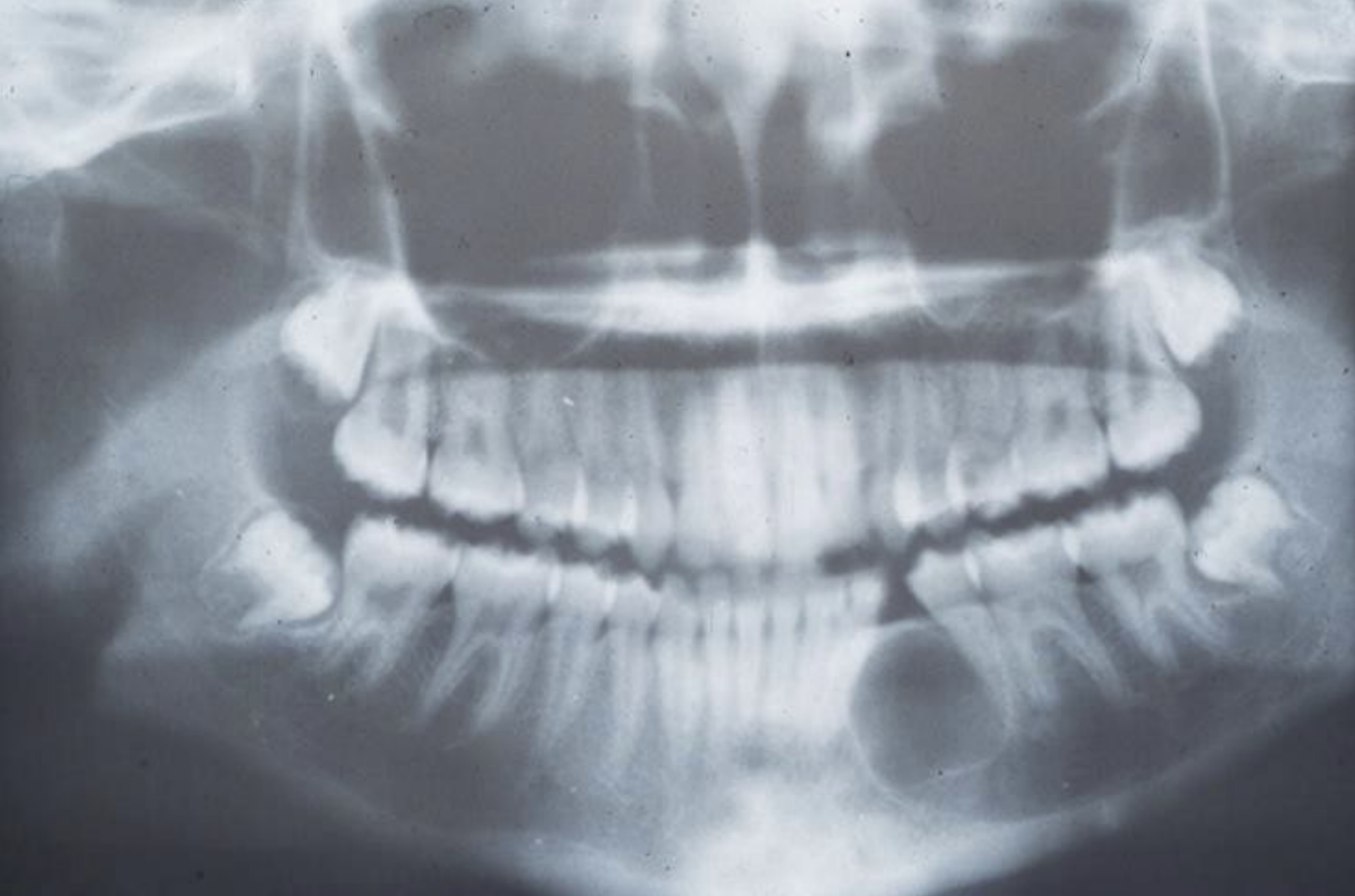
ameloblastoma
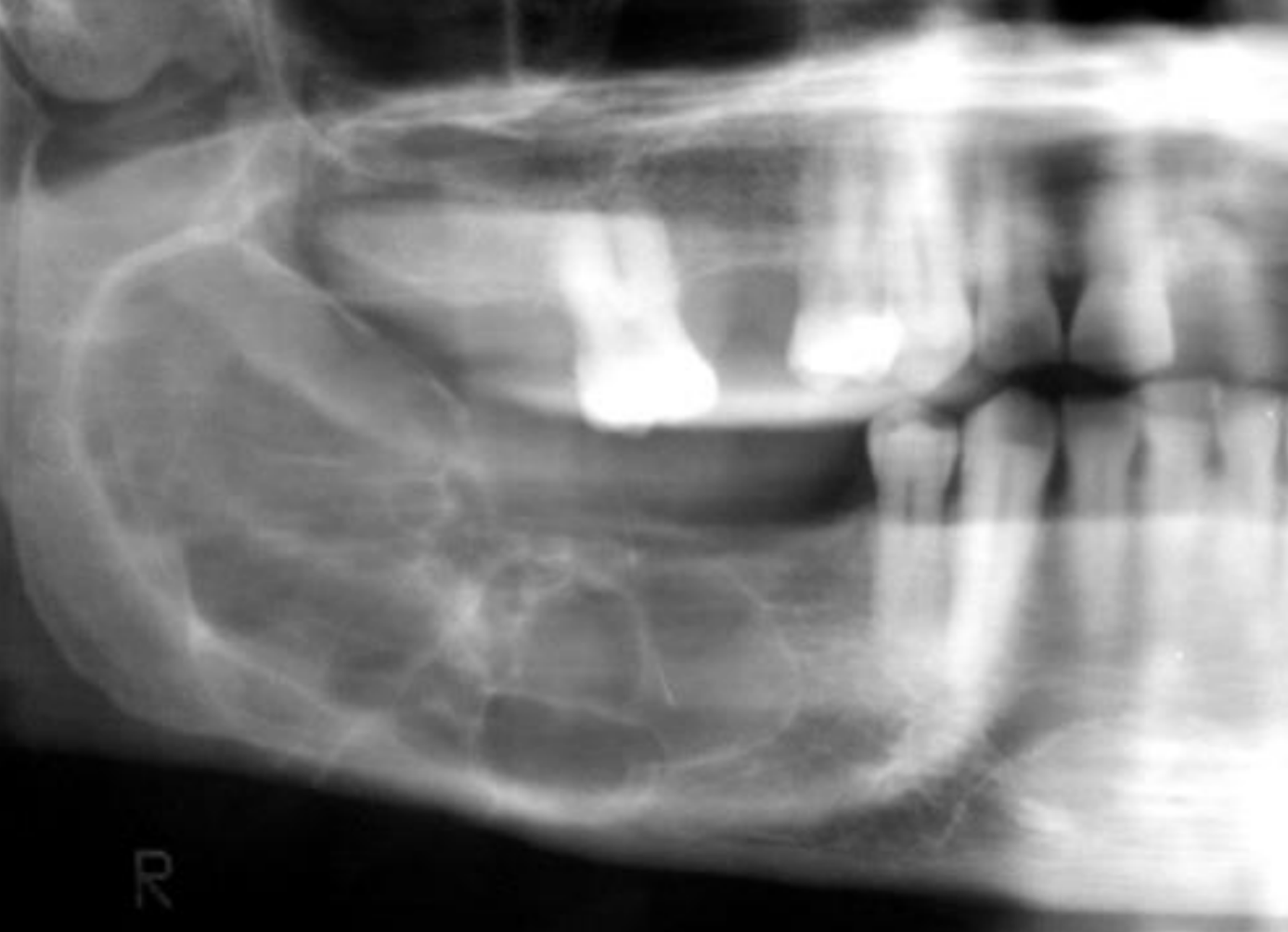
ameloblastoma
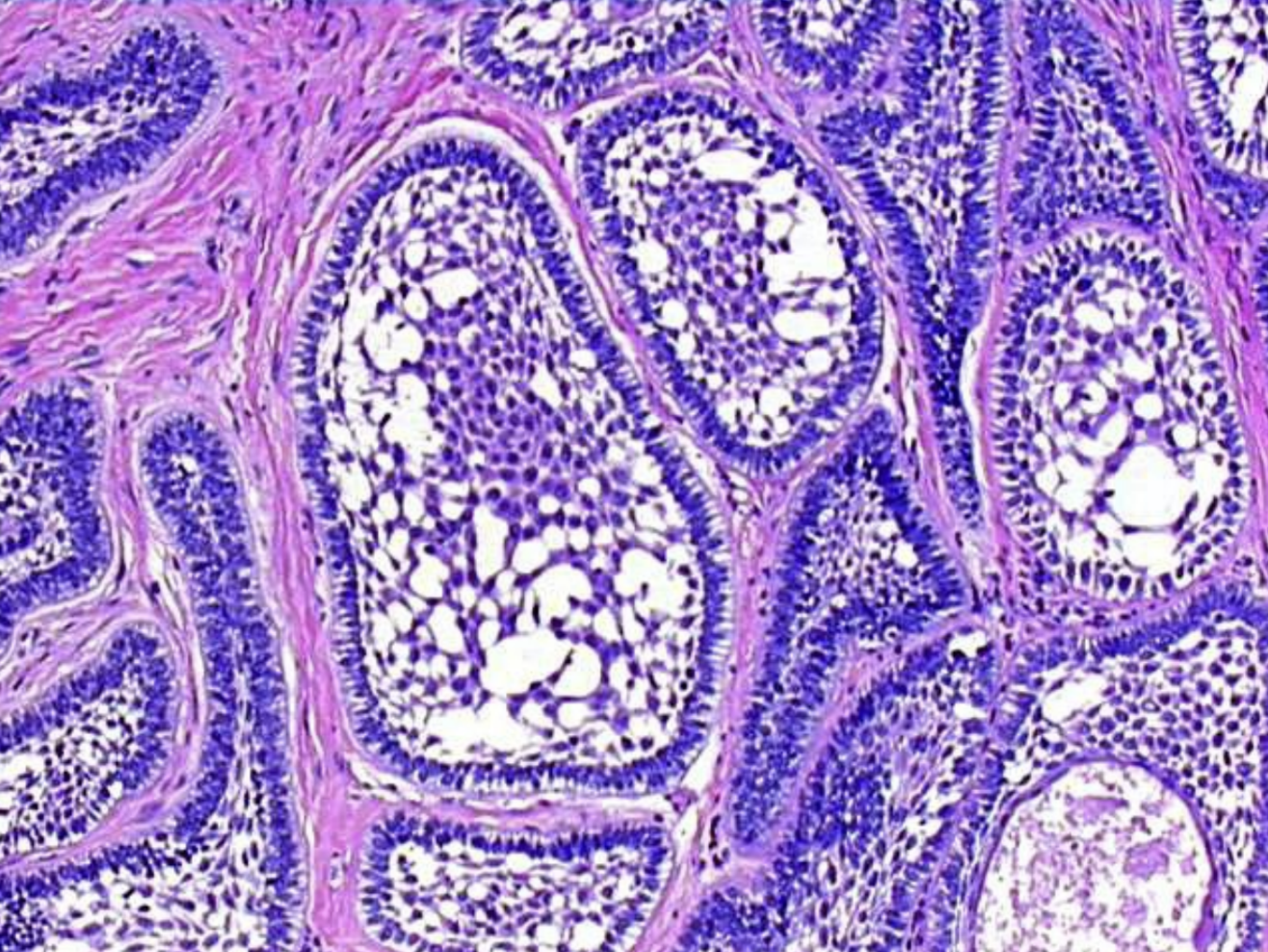
ameloblastoma
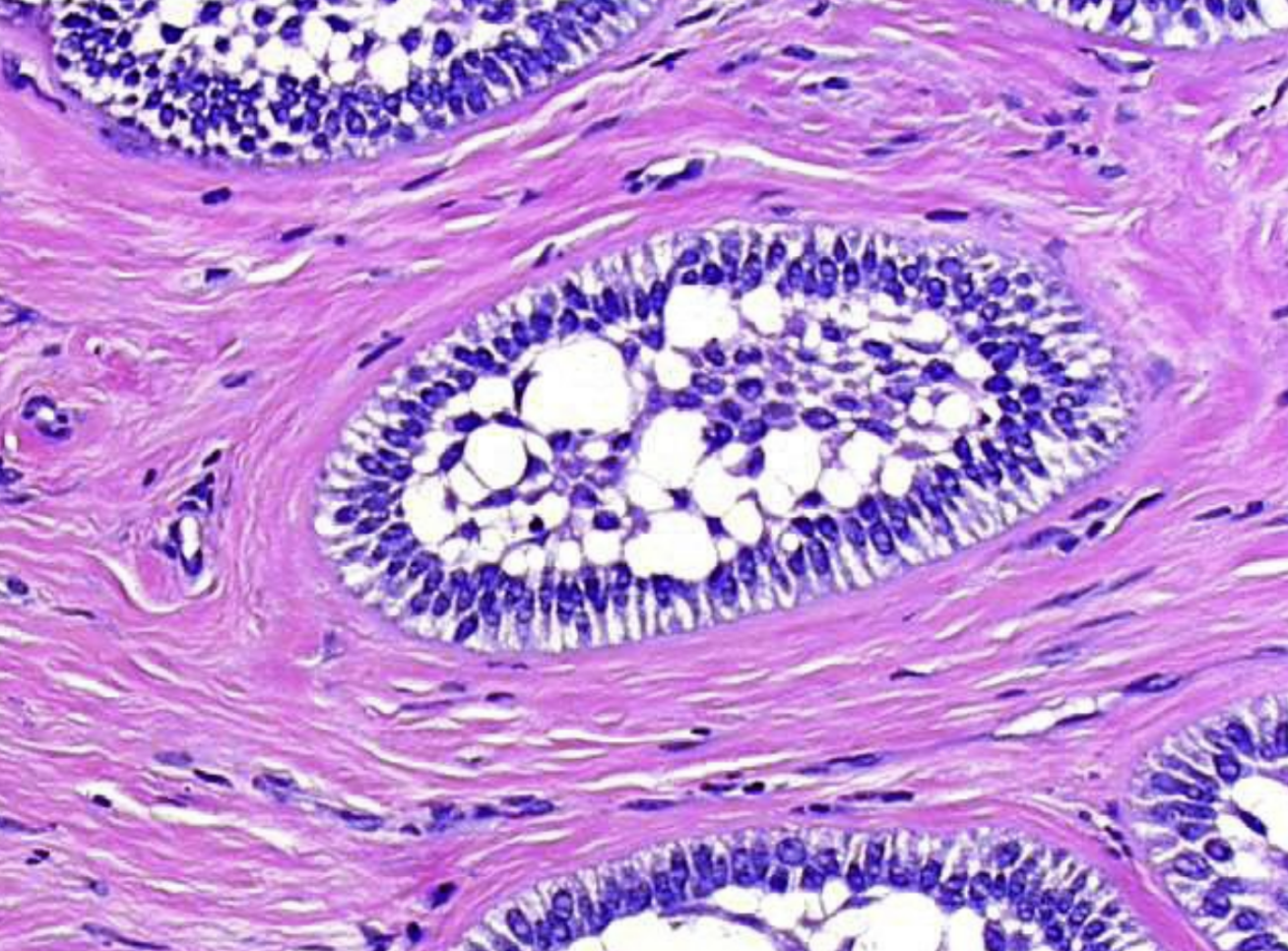
ameloblastoma
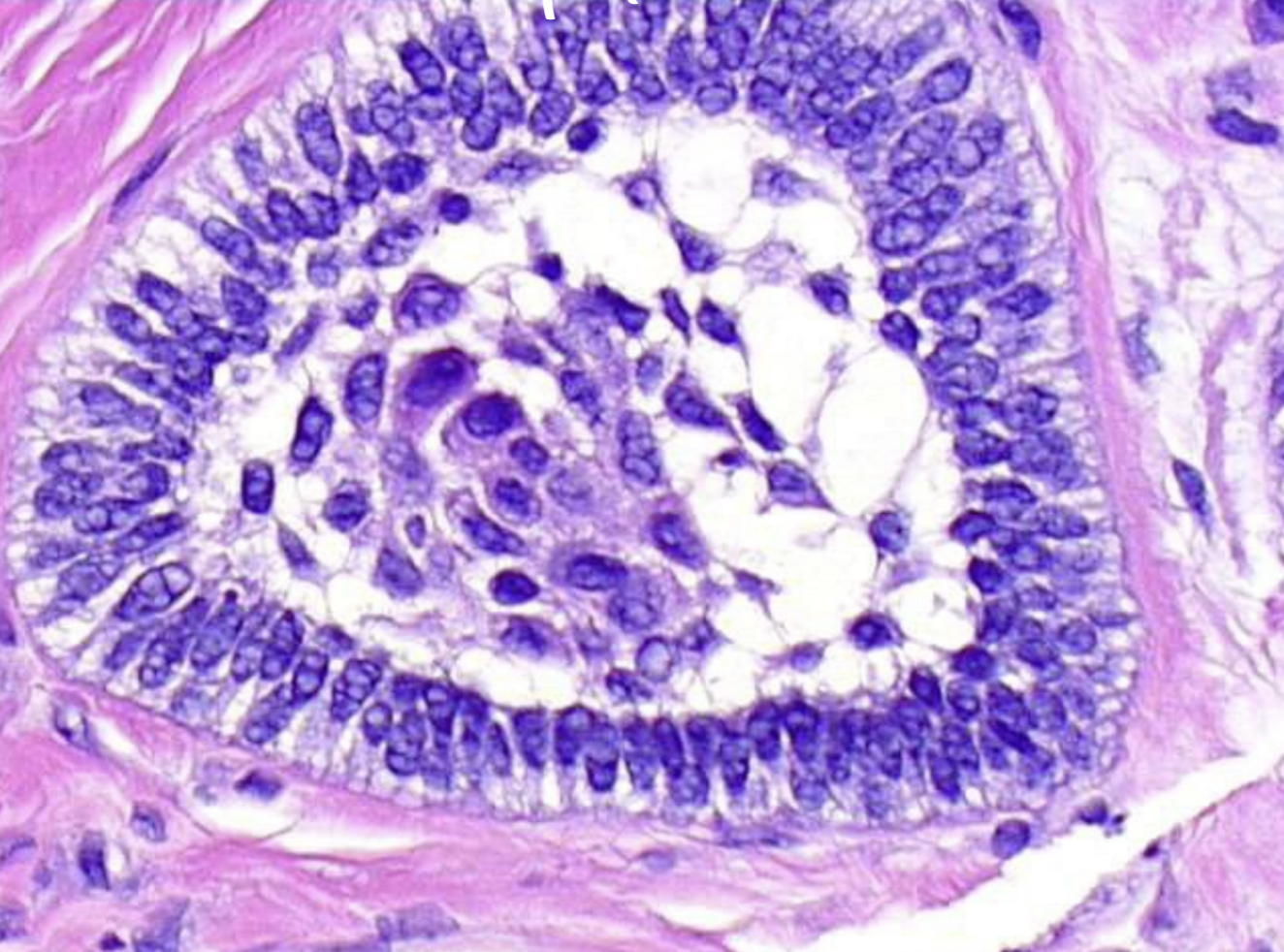
what are the common histopathologic features of an ameloblastoma?
connective tissue (pink) is normal, epithelial tissue is ‘tumor’ aka arranged in islands
epithelial cells are elongated, hyperchromatic, and reverse polarized
center of islands are loosely arranged
when comparing malignant ameloblastoma and ameloblastic carcinoma, what are the common features of malignant ameloblastoma ?
affects any age
metastases to the lung, cervical lymph node, bone
no cytologic atypia
poor prognosis
when comparing malignant ameloblastoma and ameloblastic carcinoma, what are the common features of ameloblastic carcinoma?
affects any age but more common in older age groups
metastases do not necessarily occur
cytological features of malignancy
poor prognosis
adenomatoid odontogenic tumor
3-7% of all odontogenic tumor
arises from epithelial remnants of dental lamina or from the enamel organ epithelium
young pts between 10-19 yrs
anterior maxilla
females > males
asymptomatic/sometimes causes painless expansion
often involves the crown of an unerupted canine
unilocular radiolucency, may show snowflake like calcifications
tx: enucleation, does not recur
adenomatoid odontogenic tumor
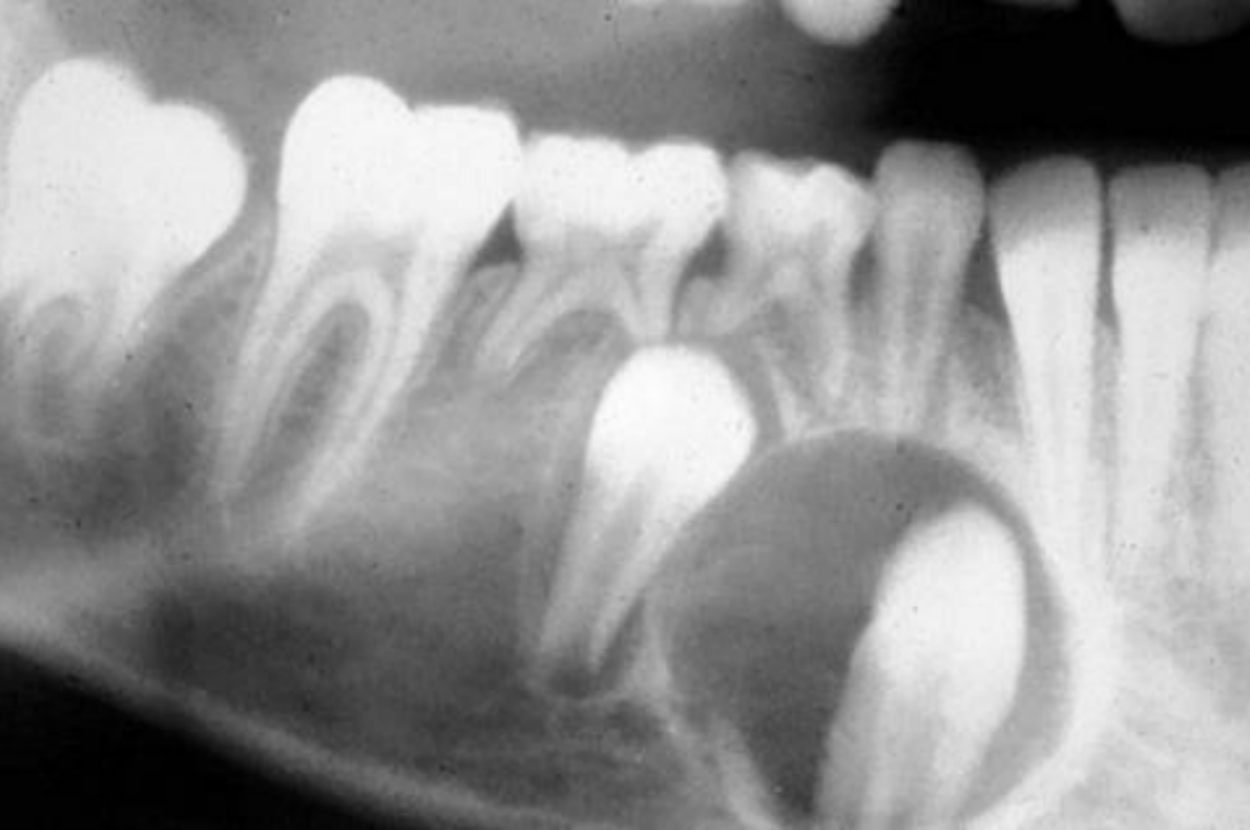
adenomatoid odontogenic tumor
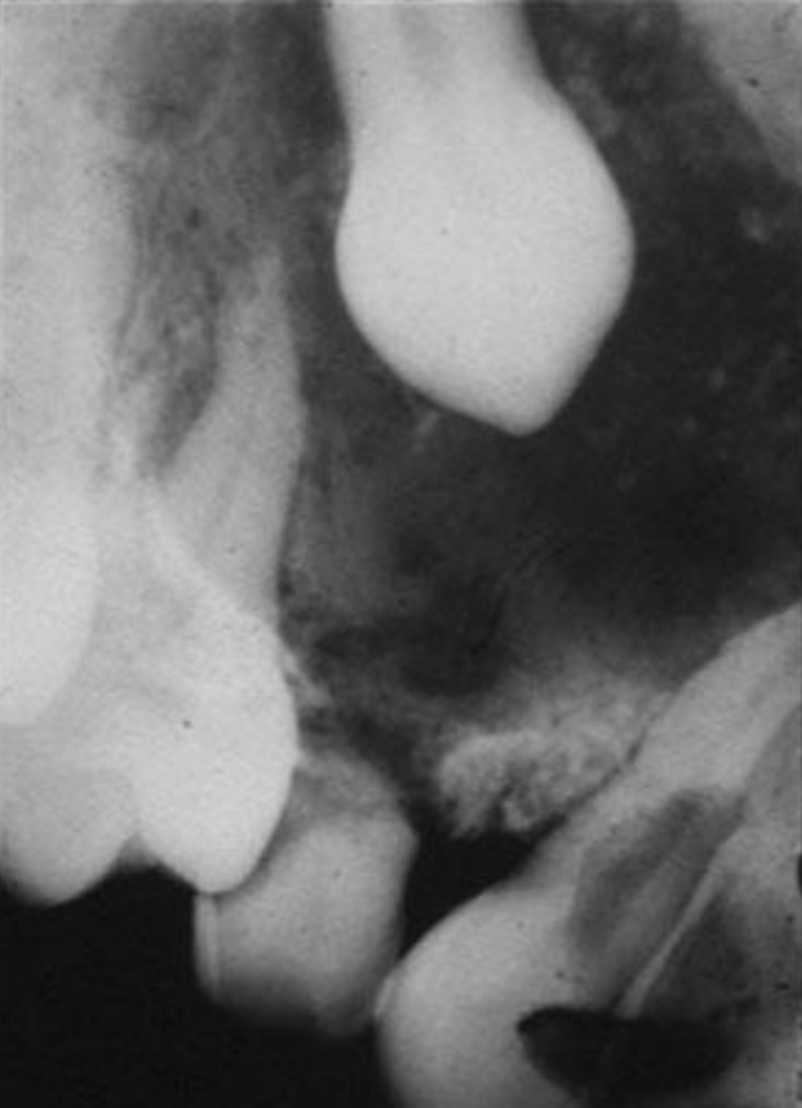
adenomatoid odontogenic tumor
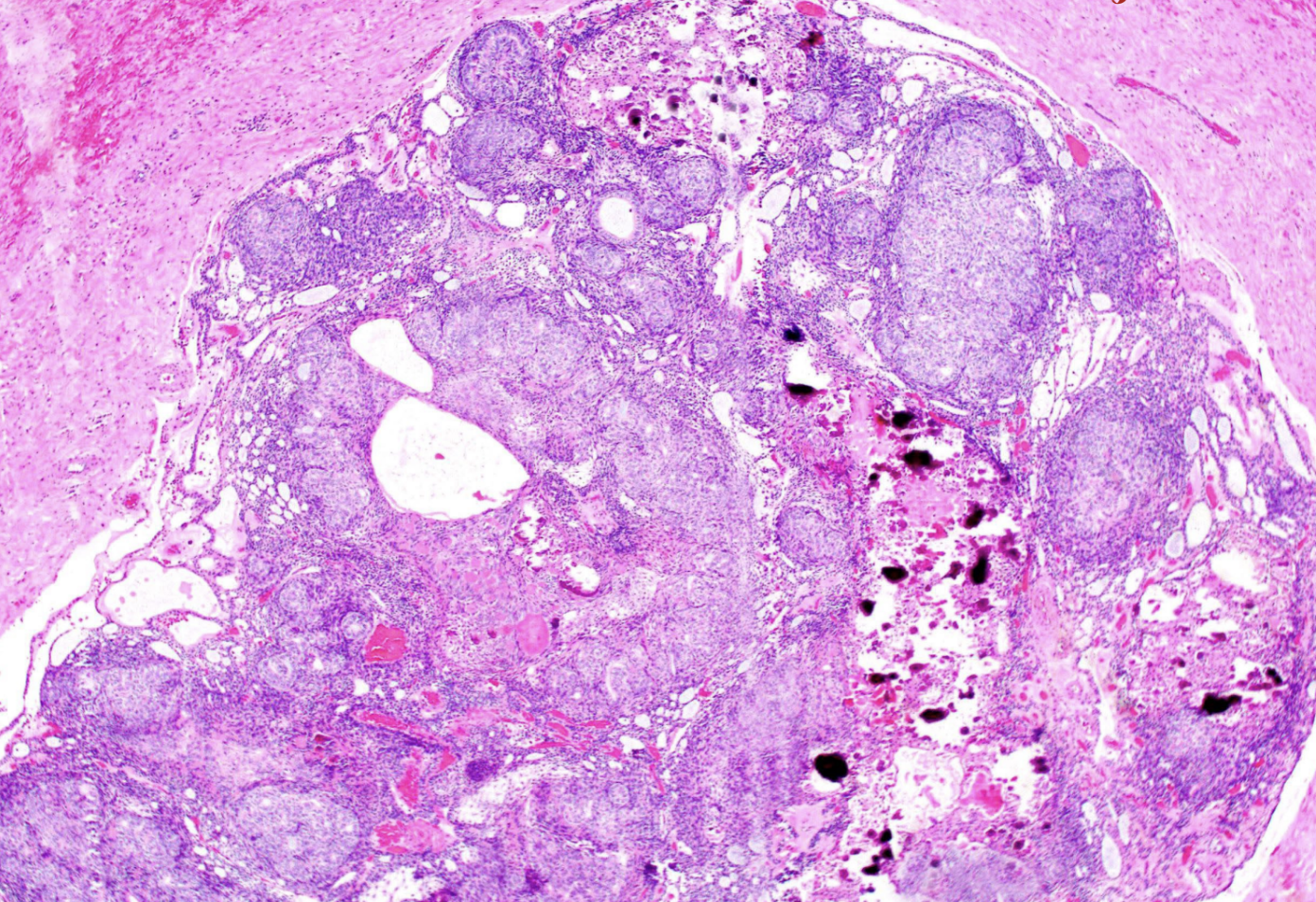
adenomatoid odontogenic tumor
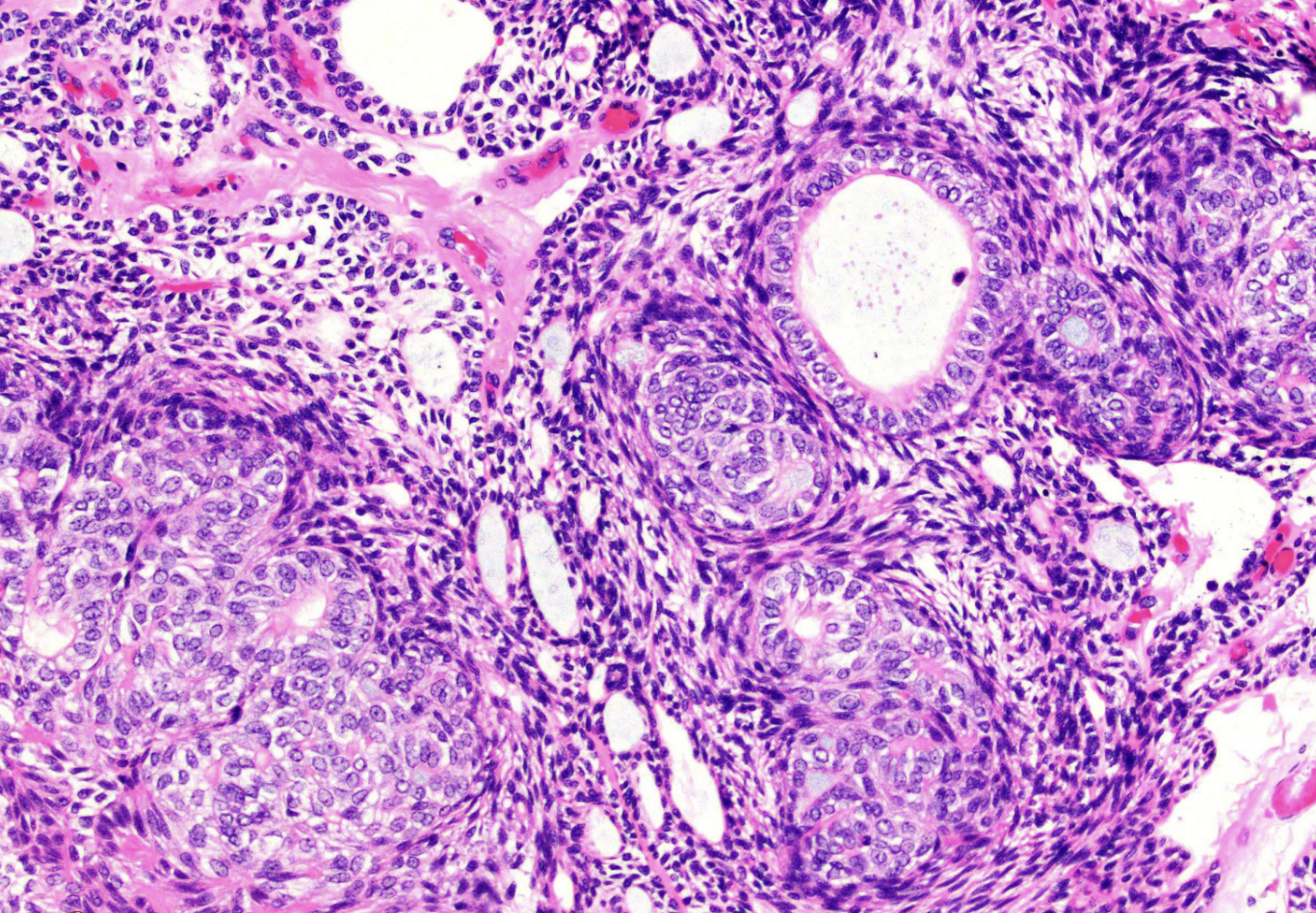
adenomatoid odontogenic tumor
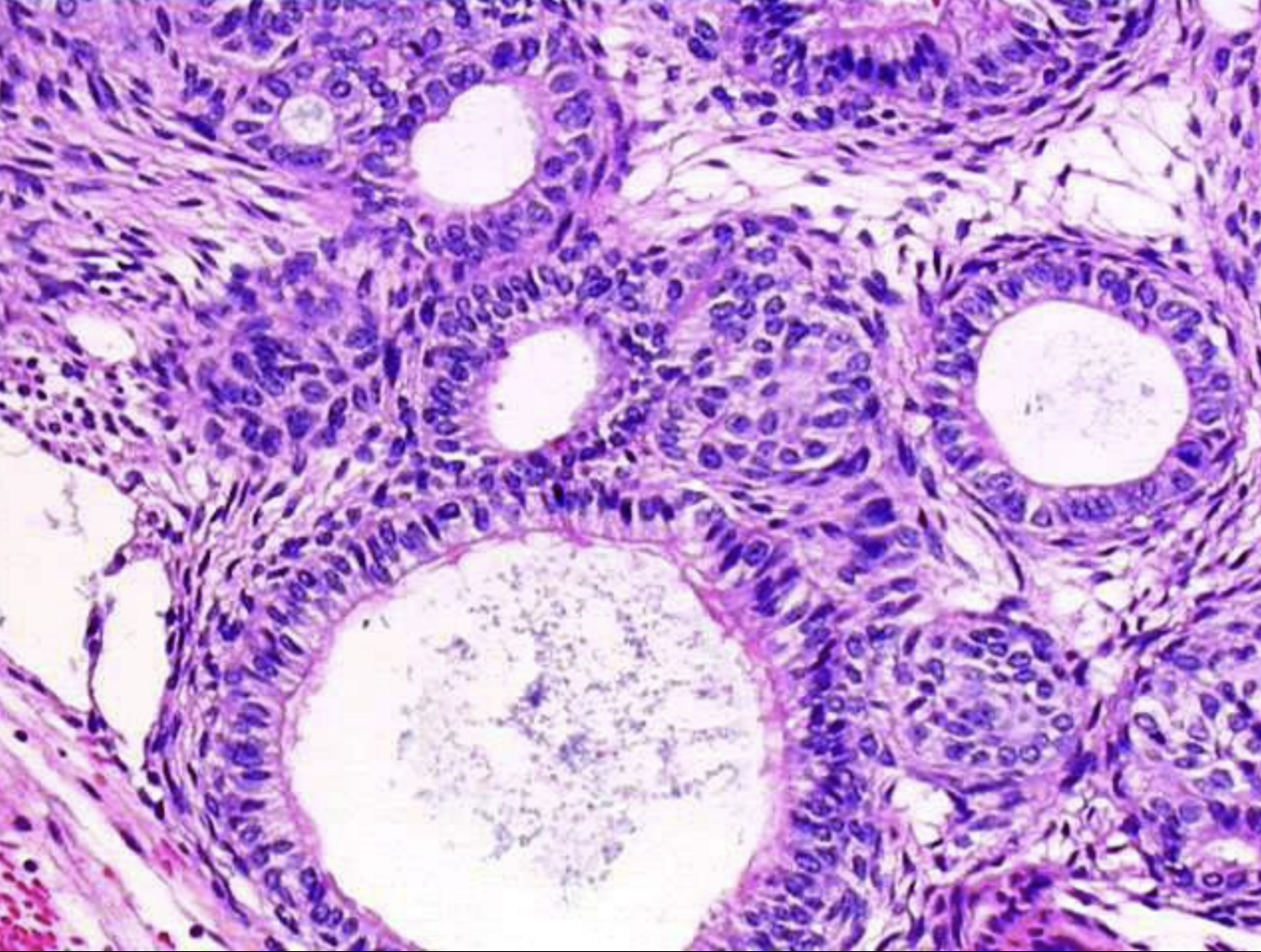
adenomatoid odontogenic tumor
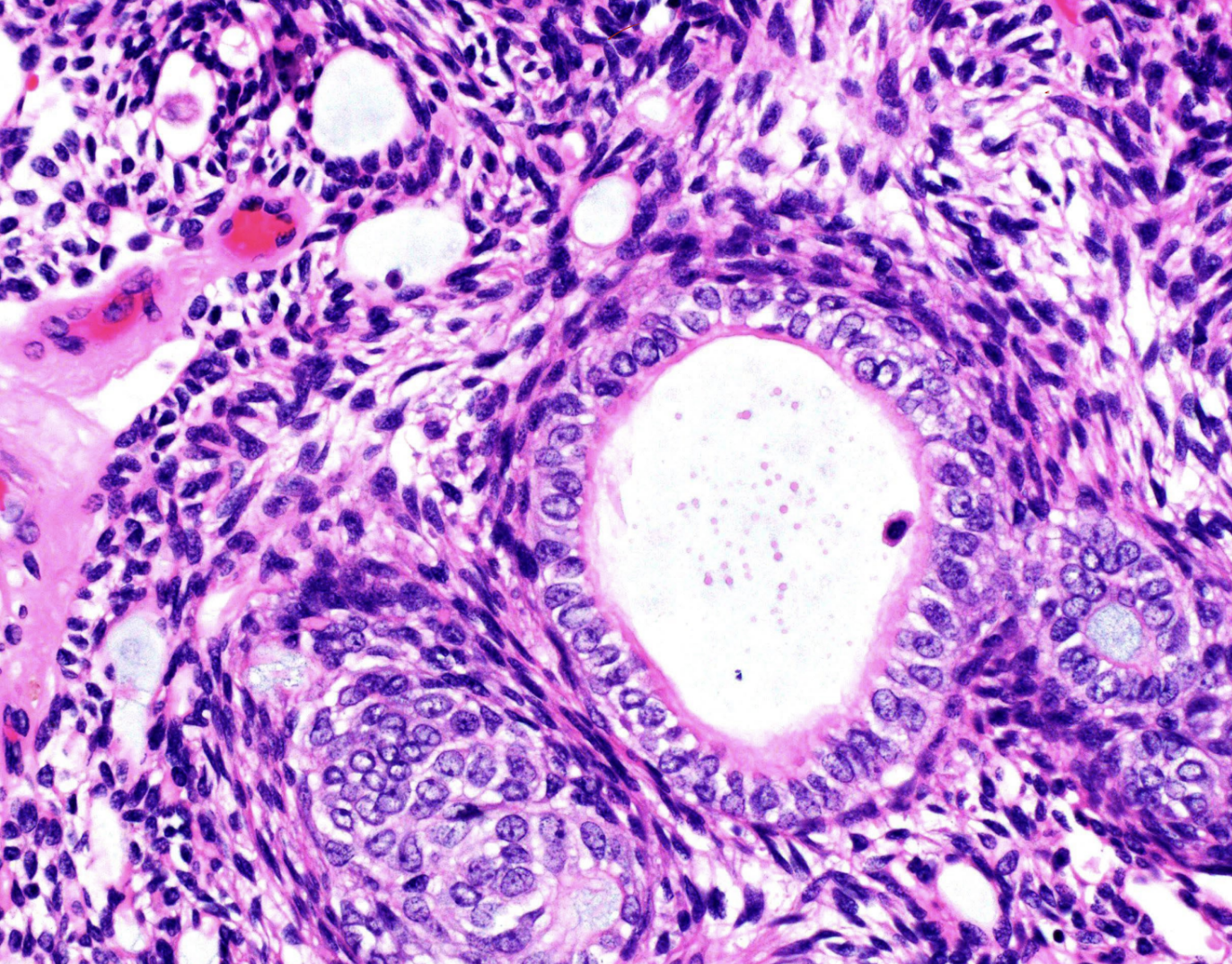
adenomatoid odontogenic tumor
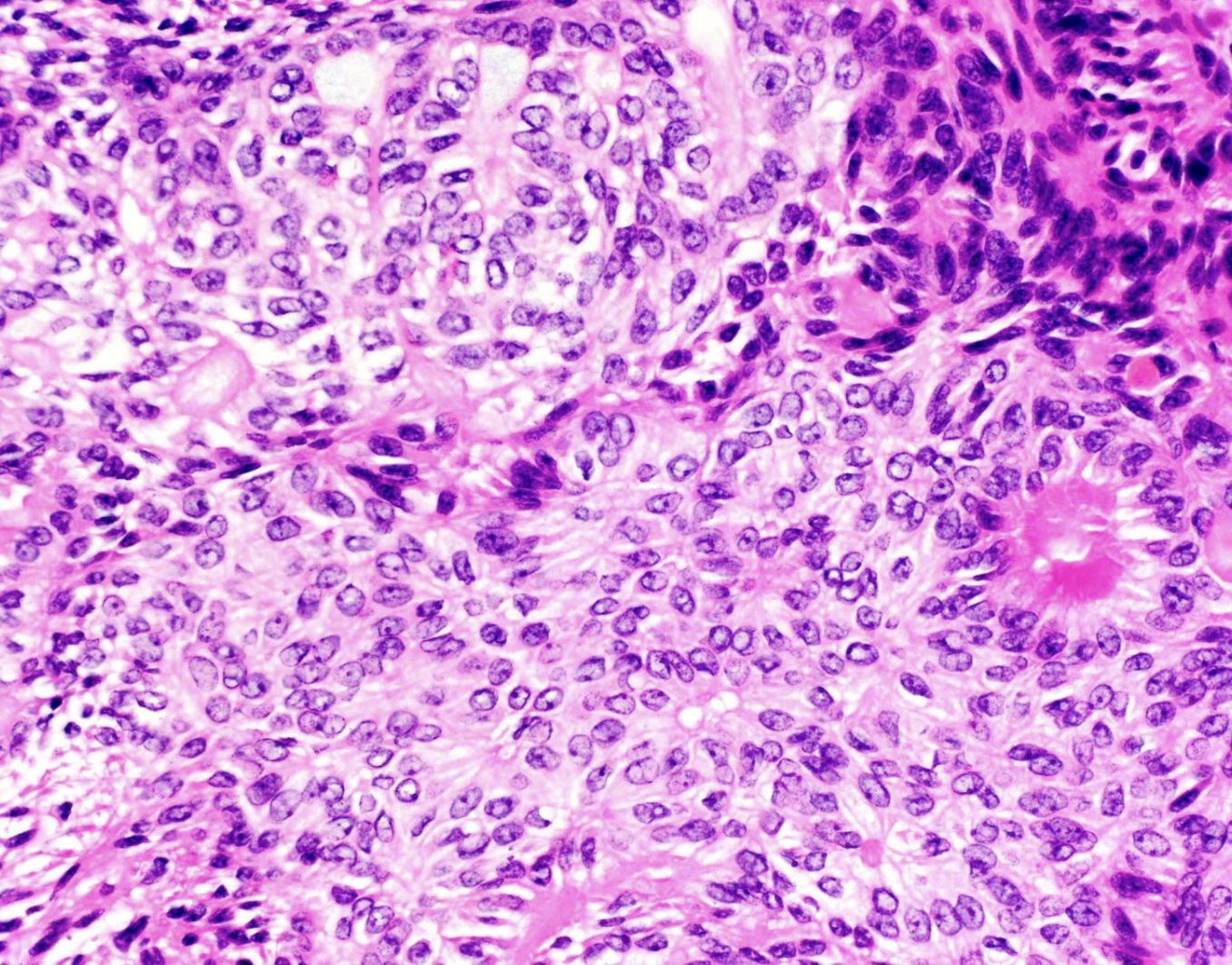
adenomatoid odontogenic tumor, left image
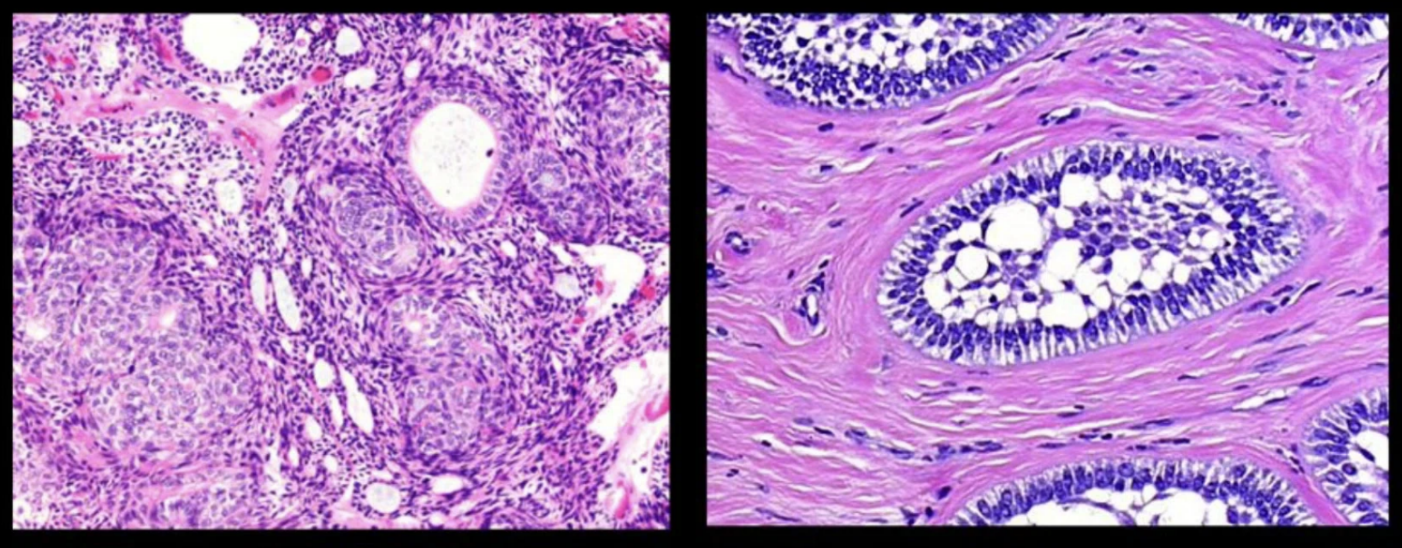
ameloblastoma, left image
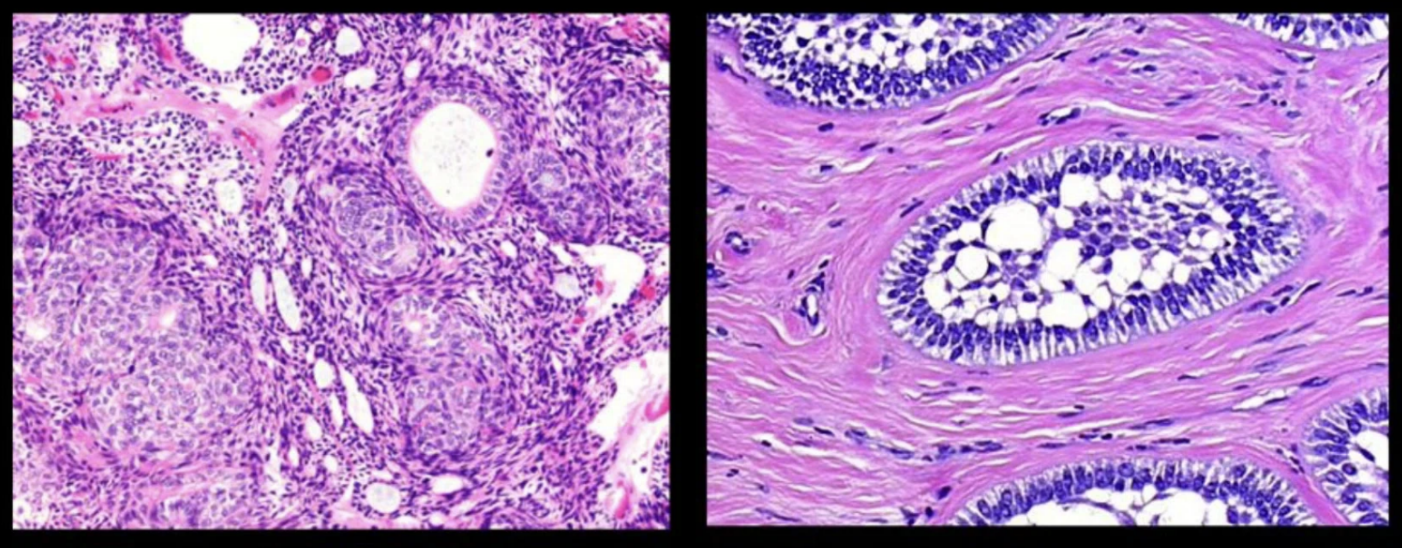
what are the common histopathologic features of an adenomatoid odontogenic tumor?
connective tissue is within normal limits
has duct like structures
forms swirls