Lecture 1 - Intro to Pharm and Med-Math
 Call Kai
 Learn
Learn Practice Test
 Spaced Repetition
 Match
Match Flashcards
 Knowt Play
1/109

There's no tags or description
Looks like no tags are added yet.
Name | Mastery | Learn | Test | Matching | Spaced | Call with Kai | Chat |
|---|
No analytics yet
Send a link to your students to track their progress
110 Terms
Pharmacology
study of drugs (chemicals) that alter functions of living organisms
Pharmacotherapy (drug therapy)
use of drugs to prevent, diagnose, or treat signs, symptoms, and diseases
Local effects act mainly ___________
at the site of application
Systemic effects ___________
are taken into the body, circulated through the bloodstream to their sites of action in various body tissue
10 rights of medication administration
right drug
right dose
right patient
right route
right time
right reason
right documentation
right patient education
right evaluation
right to refuse medication
Drugs are classified according to:
their effects on body systems
therapeutic uses - typically reflect the reasons the drugs are being used
chemical characteristics
Prototype
an individual drug that represents groups of drugs
Generic (official name)
related to the chemical or official name and is independent of the manufacturer
indicates the drug group; lowercase
therapeutically equal and less expensive than trade name brands
Brand (trade name)
designated and patented by the manufacturer
Uppercase or Capitalized
Typically more expensive
The Food, Drug and Cosmetic Act of 1938
regulates the manufacturing , distribution, advertising and labeling of drugs
The Comprehensive Drug Abuse Prevention and Control Act of 1970
regulates the manufacture and distribution of narcotics, stimulants, depressants, hallucinogens, and anabolic steroids
strict monitoring and security of these drugs
these drugs are placed into categories and are labeled as controlled substances
Drug Enforcement Agent (DEA) Schedules of Controlled Substances
schedule I (C-I)
schedule II (C-II)
schedule III (C-III)
schedule IV (C-IV)
schedule V (C-V)
the controlled drugs are divided into 5 DEA schedules based on their potential for abuse and physical and psychological dependence
Schedule I (C-I)
no known therapeutic use
heroin, LSD
Schedule II (C-II)
narcotics, amphetamines, barbiturates
Schedule III (C-III)
moderate abuse potential
ketamine, steroids
Schedule IV (C-IV)
limited dependence potential
Schedule V (C-V)
limited abuse potential
Food and Drug Administration
responsible for ensuring new drugs are safe and effective
reviews research studies about proposed new drugs
approves (or not) the drugs, allowing them to be marketed
approves both prescription and OTC medications
may approve prescription medications to become otc
Black Box Warning
drugs that can cause serious adverse effects; strongest warning the FDA gives
Clinical trail phases
Phase 0
Phase 1
Phase 2
Phase 3
Phase 4
Clinical trail Phase 0
testing in animals and small groups of humans
Clinical trail Phase 1
healthy volunteers to determine safe dosages, absorption and metabolism
Clinical trail Phase 2
given to subjects with disease and responses and compared with the healthy group
Clinical trail Phase 3
different population and dosages, may use placebos
Clinical trail Phase 4
FDA approval for marketing; FDA puts regulations on manufactures
High risk medications
insulin
magnesium sulfate
oxytocin
potassium chloride
promethazine
vasopressin
Drugs given for therapeutic purposes are called _______
medications
Most drugs are given for ________ effects
systemic
These help manage administration of drugs in the clinical setting:
electronic charting
automated drug-dispensing systems
bar code med administration
Gram =
g
Milligram =
mg
Microgram =
mcg
Kilogram =
kg
1000 mcg = ____ mg
1 mg
1000 mg = _____g
1g
1000 g = _____ kg
1 kg
12 in = _____ ft
1 ft
3 ft = _____ yard
1 yard
1 gallon = ____ quarts
4 quarts
1 quart = ____ pints
2 pints
1 pint = ____ oz
16 oz
8 oz = ____ cup
1 cup
2 tbsp = _____ oz
1 oz
16 oz = _____ pound
1 pound
1 inch = _____ cm
2.54 cm
1 tbsp = ____ mL
15 mL
1 tsp = _____ mL
5 mL
1 oz = _____ mL
30 mL
2.2 lbs = _____ kg
1 kg
°C =
(°F − 32) ÷ 1.8
°F conversion
(°C x 1.8) + 32
Ac =
before meals
Pc =
after meals
Daily =
every day
Bid =
twice a day
h =
hour
gtt =
drop
Tid =
three times a day
Qid =
four times a day
Qh =
every hour
Qn =
every night
Stat =
immediately
Q_h =
means every ____ hours
Prn
as needed
Biw
twice per week
HHN =
handheld nebulizer
Handheld nebulizer (NEB)
medication is placed in a device that produces a fine spray for inhalation
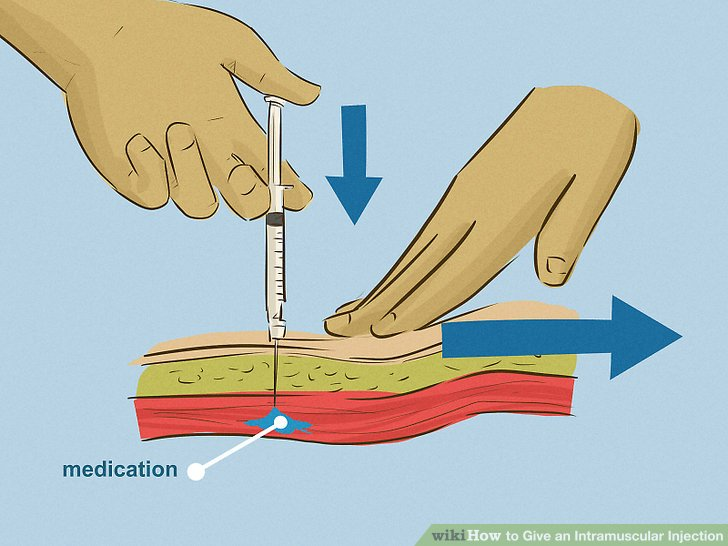
IM =
intramuscularly
Intramuscularly
the injection is given at a 90 degree angle into a muscle
IV =
intravenously
Intravenously
the medication or fluid is given into a vein
IVP =
intravenous push
IVP (Intravenous Push)
medication is injected directly into a vein
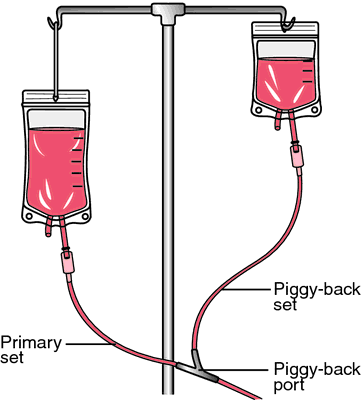
IVPB =
intravenous piggback
IVPB (intravenous piggyback)
medication prepared in a small volume of fluid is attached to an IV (which is already infusing fluid into a client’s vein) at specified times
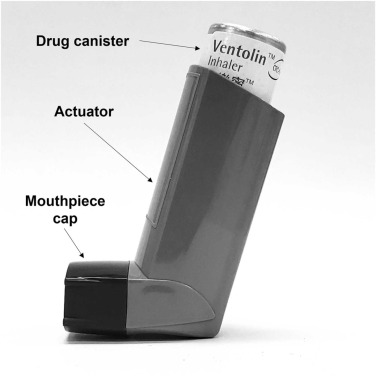
MDI =
metered-dose inhaler
MDI Device
an aerosol device delivers medication by inhalation
NEB =
nebulizer
NGT or ng =
nasogastric tube
NGT or ng
medication is placed in the stomach through a tube in the nose
po or PO
by mouth
pr or PR
in the rectum
Subcutaneously, sub q
the injection is usually given at a 45-degree angle into subcutaneous tissue
SL =
sublingual, under the tongue
S & S =
swish-and-swallow technique
by using tongue and cheek muscles, the client coats his or her mouth with a liquid medication, then swallows
cap, caps =
capsule
CR =
controlled release
LA =
long acting
SA =
sustained action
SR =
slow release or sustained release
DS =
double strength
EC =
enteric coated
el, elix
elixir
contains water, alcohol, sweetener, and medication
sol
solution
the drug is contained in a clear liquid preparation
sp (abbrev) meaning
spirit
alcoholic solution of a volatile substance (ex: spirit of ammonia)
sup, supp (abbrev)
suppository
solid, cylindrically shaped drug that can be inserted into a body opening (e.g., the rectum or vagina)
susp
suspension
contains small, fine particles of the medication that do not dissolve completely in water shake or stir a suspension immediately prior to administration
syr
syrup
contains water, concentrated sugar, and medication
tab, tabs
tablets
medication is compressed or molded into a solid form; additional ingredients are used to shape and color the tablet
tr, tinct
tincture
liquid alcoholic or hydroalcoholic solution of a drug